Eating an egg every day: is it bad for your heart?
Does eating 1 egg every day raise your risk of heart disease?

We checked this verdict against 10 sources, such as published studies and clinical guidelines. · How checked: Operator-approved
Verdicts at a glance
| Claim | Verdict |
|---|---|
| Eating 1 egg every day raises your risk of heart disease (cardiovascular disease) | False · Evidence grade B |
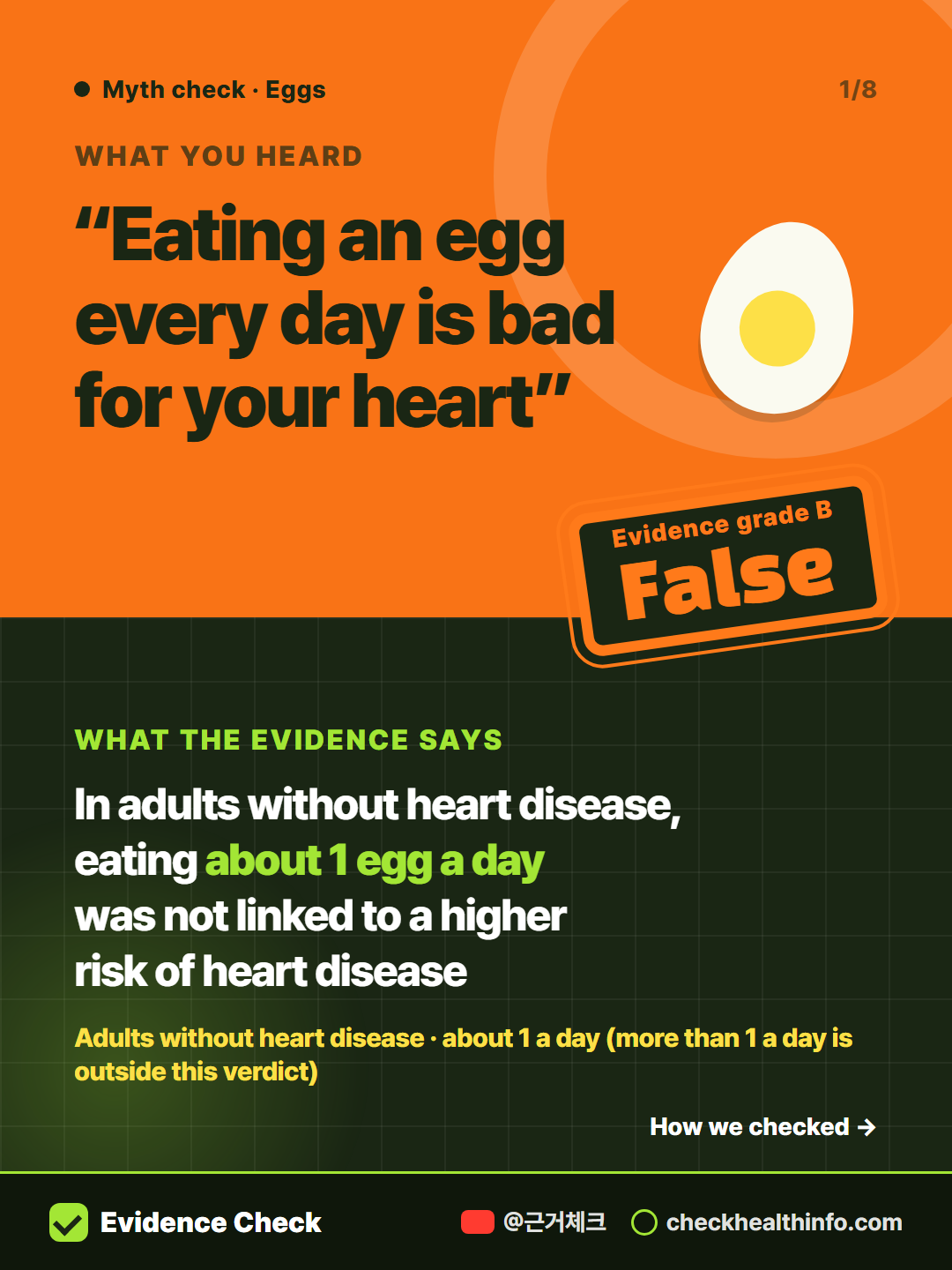
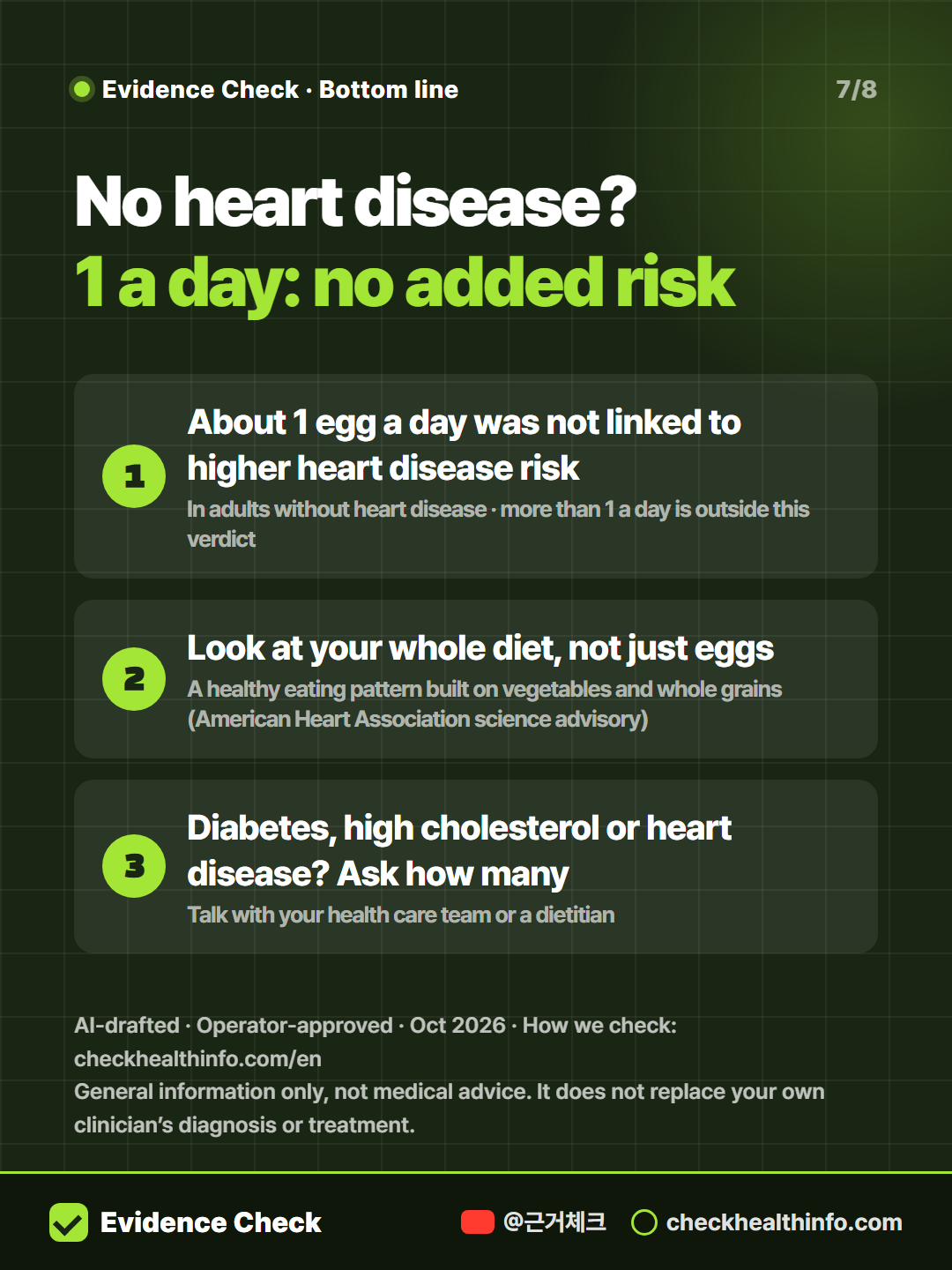
Bottom line — In adults without heart disease, eating about 1 egg a day was not linked to a higher risk of heart disease (cardiovascular disease). So the claim that “eating 1 egg every day raises your risk of heart disease” is false. Eating more than 1 egg a day is outside this verdict, and the picture may be different for people with diabetes. If you have high cholesterol or diabetes, or have had heart disease, ask your health care team or a dietitian how many eggs to eat.
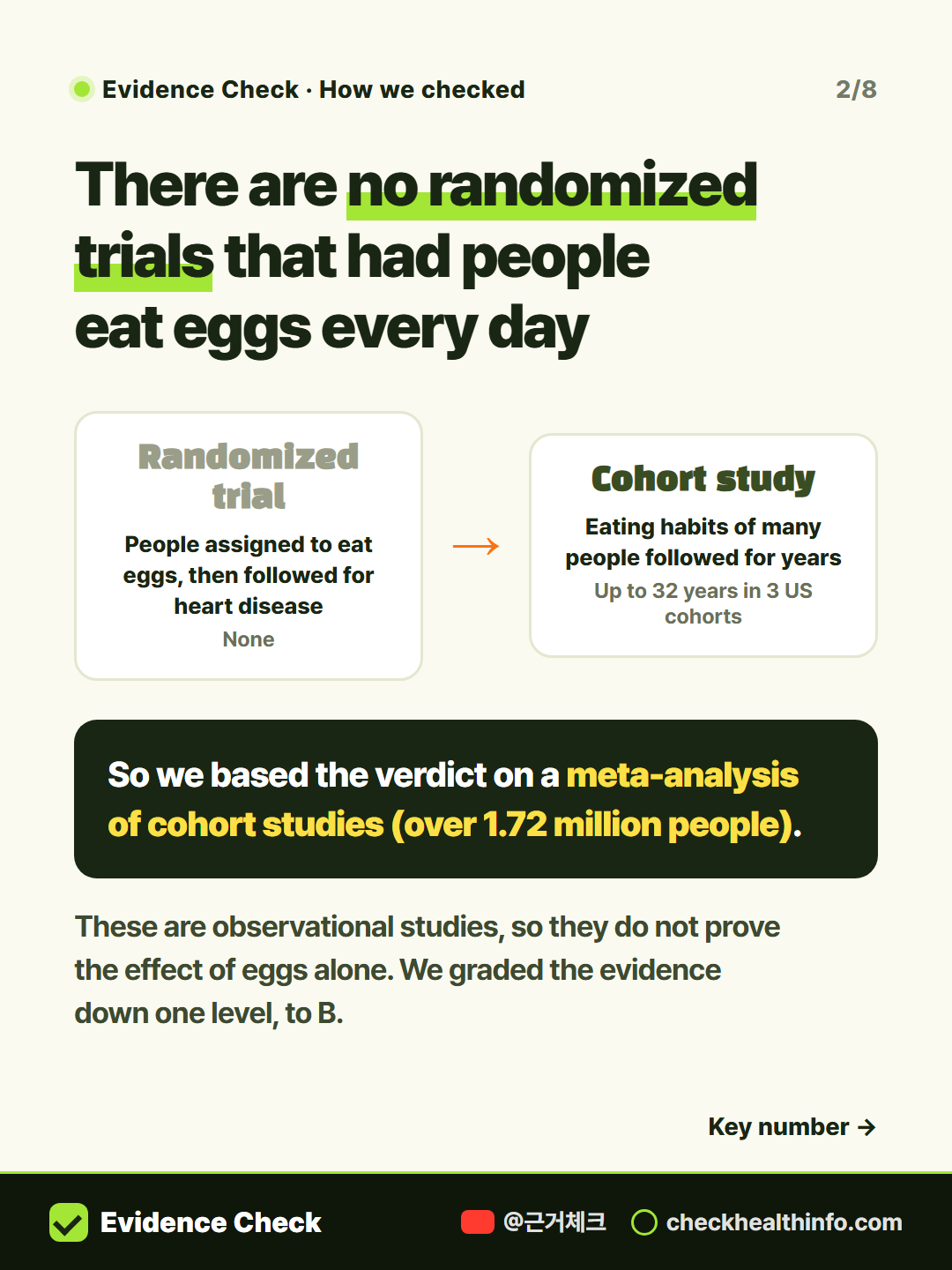
Cohort study — An observational study that records the eating habits of many people and follows them for years. It can show that two things go together, but it is less certain than a randomized trial about cause and effect.
Meta-analysis — An analysis that pools the results of several studies into one estimate.
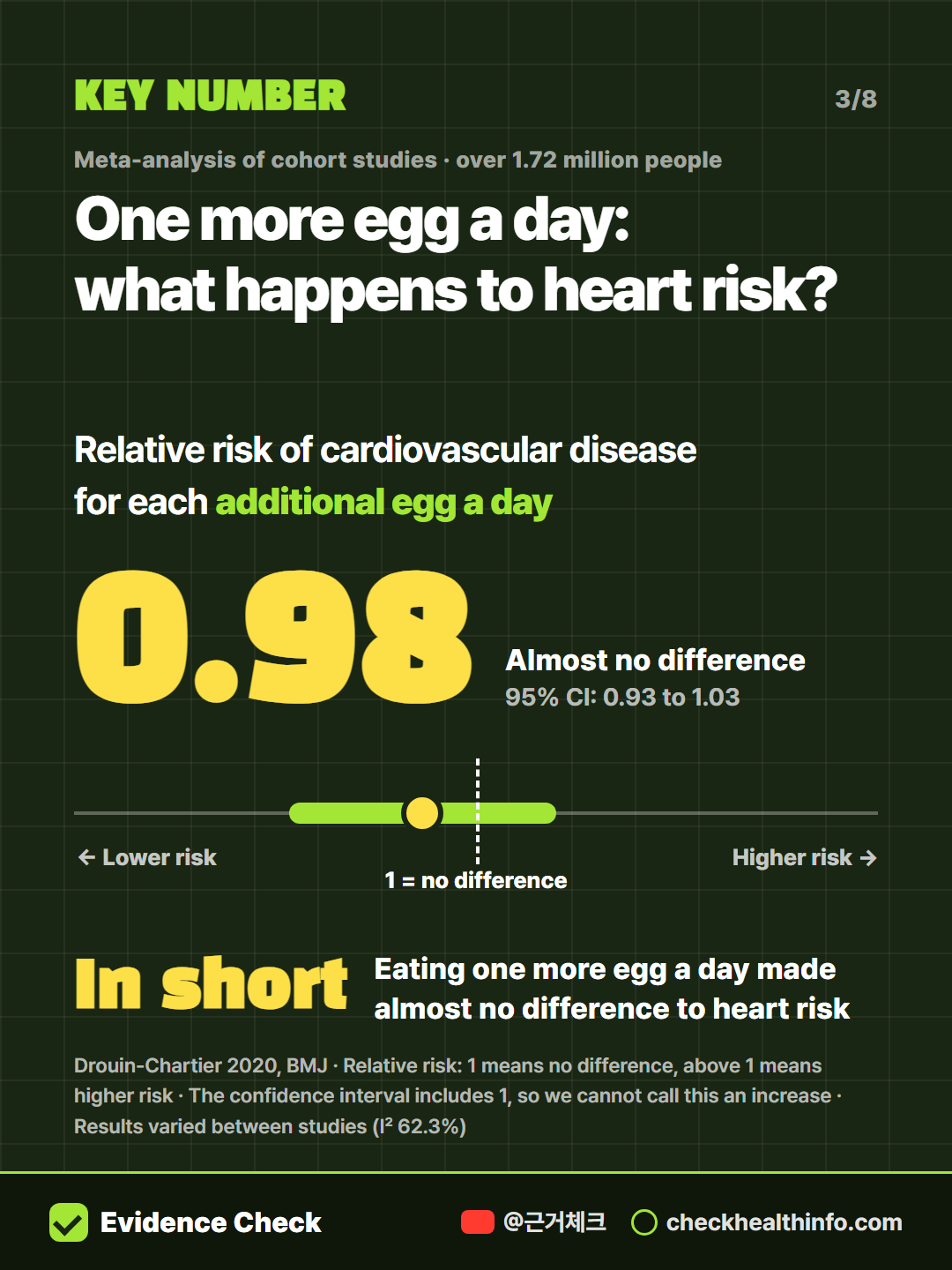
Relative risk — The risk in one group divided by the risk in another group. A value of 1 means no difference; above 1 means higher risk, and below 1 means lower risk.
Hazard ratio — A comparison of how quickly events happen over time in two groups. It is read the same way as relative risk.
95% confidence interval — The range in which the true value likely lies. If it includes 1, we cannot say there is a clear difference.
Summary relative risk — The relative risk a meta-analysis gets by combining the relative risks of several studies.
Claim. “Eating 1 egg every day raises your risk of heart disease (cardiovascular disease)”
False · Evidence grade B
In plain words In adults without heart disease, eating about 1 egg a day did not raise the risk of heart disease. One large analysis found the opposite, but when many studies were pooled, the risk did not go up. Eating more than 1 egg a day is outside this verdict.
- There are no randomized trials that had people eat eggs every day and then tracked heart disease, so we based the verdict on cohort studies that followed the eating habits of many people for years.
- In 3 US cohorts (followed for up to 32 years), people who ate 1 or more eggs a day had about the same risk of cardiovascular disease as those who ate less than 1 egg a month (hazard ratio 0.93, 95% confidence interval 0.82 to 1.05). In other words, people who ate eggs every day and people who hardly ate them had similar risk. [1]
- In the same paper, a meta-analysis of prospective cohort studies (over 1.72 million people) also found that each additional egg a day did not raise the risk of cardiovascular disease (relative risk 0.98, 95% confidence interval 0.93 to 1.03). Results for coronary heart disease (0.96) and stroke (0.99) were similar. In other words, eating one more egg a day made almost no difference to heart risk. [1]
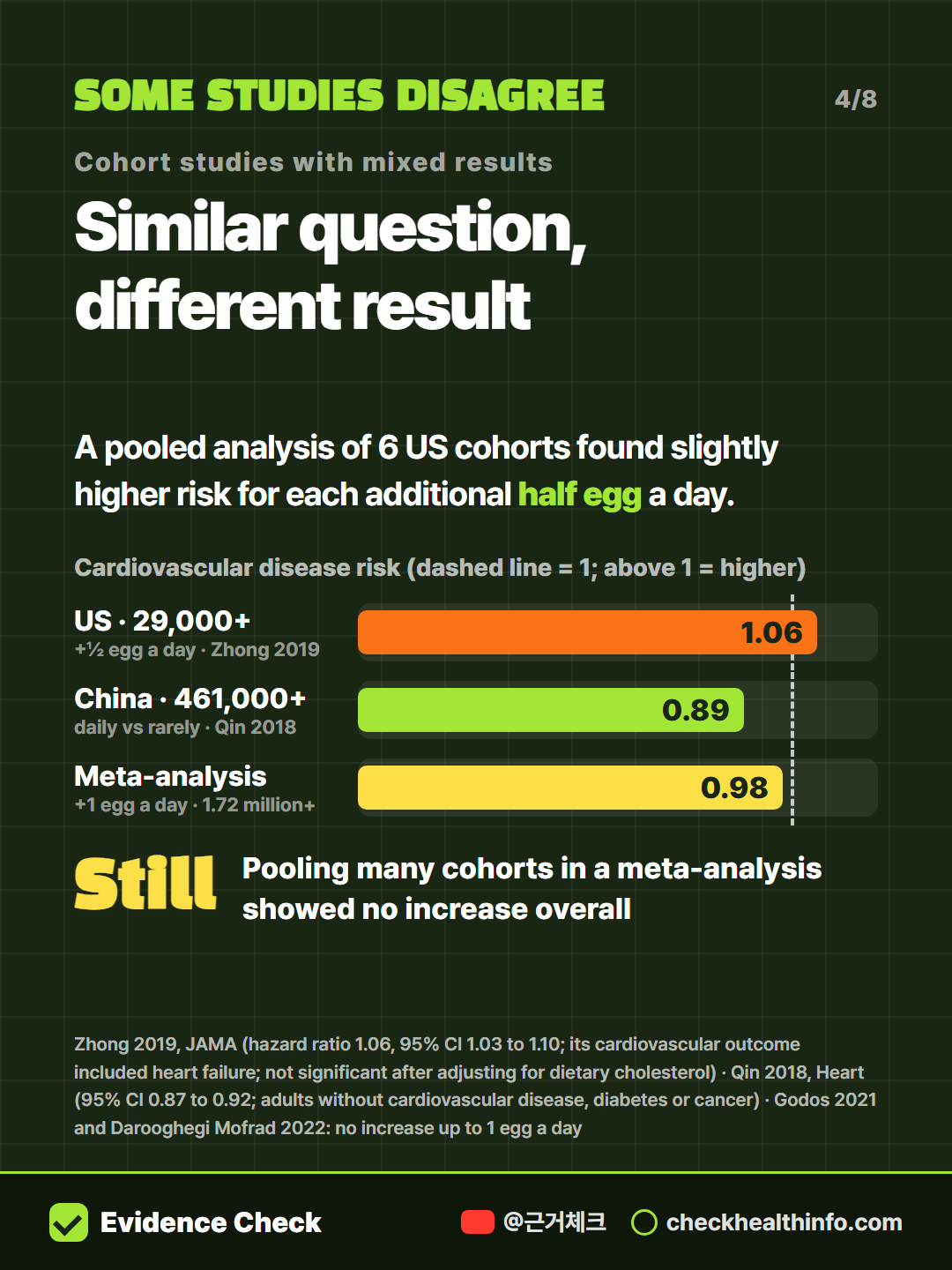
- In Asian cohorts, the risk was slightly lower (0.92, 95% confidence interval 0.85 to 0.99), but the difference between regions was not statistically clear. In a cohort of over 461,000 Chinese adults without cardiovascular disease, diabetes or cancer, people who ate eggs every day (usually 0.76 eggs a day) had a lower risk of cardiovascular disease than those who almost never ate them (hazard ratio 0.89, 95% confidence interval 0.87 to 0.92). In other words, in Asian studies, including a large one from China, the risk was similar or even slightly lower. [1][6]
- Not every study agrees. A pooled analysis of 6 US cohorts (over 29,000 people) found a slightly higher risk of cardiovascular disease for each additional half egg a day (hazard ratio 1.06, 95% confidence interval 1.03 to 1.10). In other words, in this study, people who ate more eggs had slightly higher risk. But in this study, after adjusting for dietary cholesterol, the link with cardiovascular disease was no longer statistically significant (0.99, 95% confidence interval 0.93 to 1.05). [2]
- Still, the meta-analysis that pooled many cohorts showed no increase overall, and other meta-analyses also reported no increase in cardiovascular disease [3] or cardiovascular death [5] up to 1 egg a day.
- In a Korean cohort of 9,248 people aged 40 to 69, egg intake was not linked to new cardiovascular disease either (hazard ratio 1.14, 95% confidence interval 0.87 to 1.49). In other words, Koreans who ate more eggs also did not have clearly higher risk. But most people in this study ate less than 1 egg a day. [7]
- An American Heart Association science advisory (not a clinical guideline) concluded that observational studies from several countries generally did not find a significant link between dietary cholesterol and cardiovascular disease risk. [8]
The best evidence is systematic reviews and meta-analyses of prospective cohort studies, so we started at A. But because these meta-analyses pooled observational studies, not randomized trials, we graded down one level to B under section 1 of our rating method (reason 2: pooled observational studies). The comparison of “1 or more eggs a day vs less than 1 a month” and the analysis of “each additional egg a day” address the claim directly, so we did not grade down for indirectness (reason 1). We also did not grade down for inconsistency (reason 3), but it was a borderline call. Results varied between studies (I² 62.3%), and the pooled analysis of 6 US cohorts found slightly higher risk. But the pooled estimate had a narrow confidence interval (0.93 to 1.03), which rules out a risk increase of more than 3% per egg a day, and other meta-analyses also found no increase, so the conclusions point the same way. Even so, one meta-analysis rated the certainty of this evidence as “low” using GRADE [3]. Because reliable studies (B) contradict the claim, the rating is “False” (section 2 of our rating method).
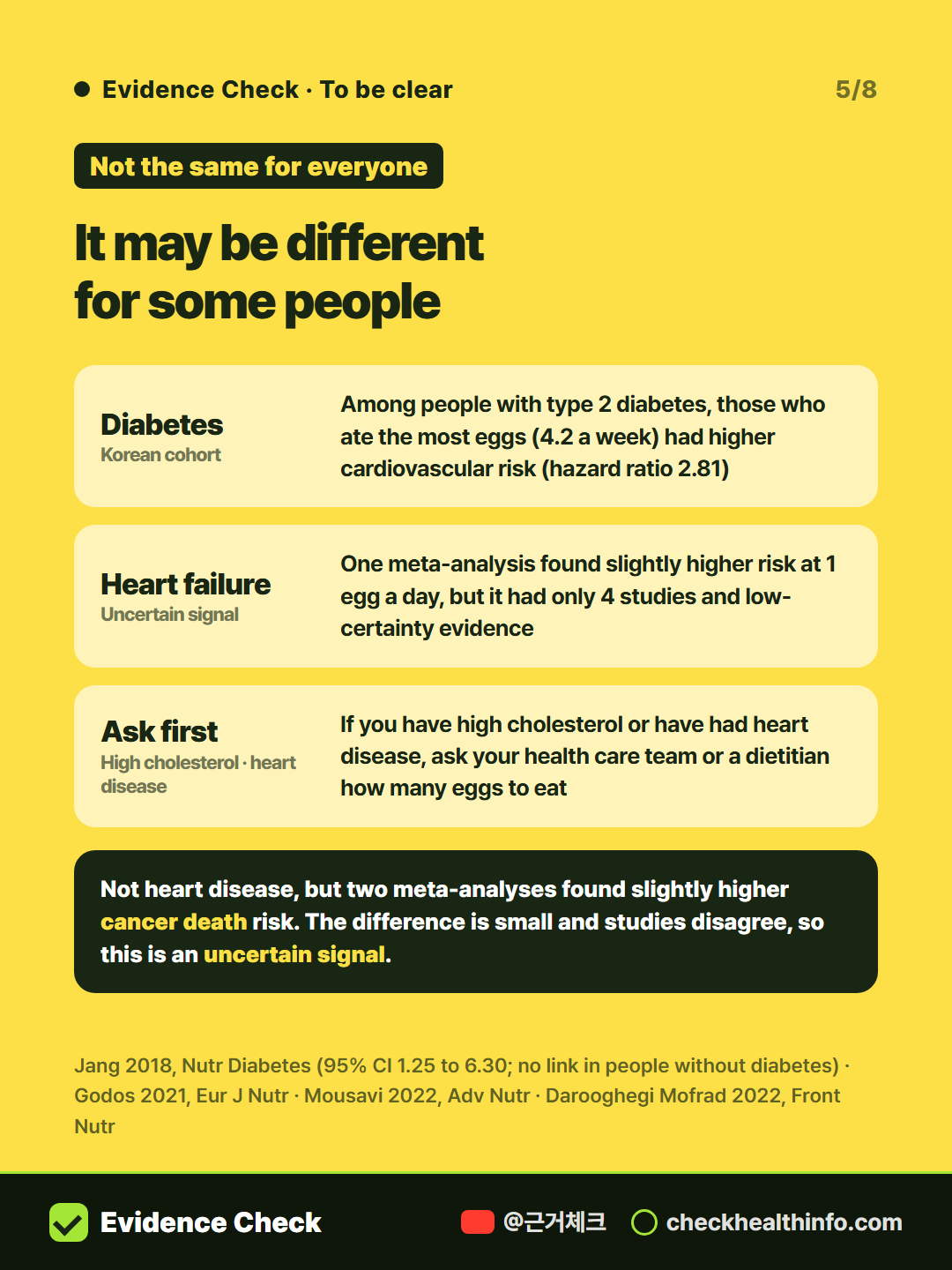
Diabetes — In a Korean cohort, among people with type 2 diabetes, those who ate the most eggs (4.2 a week) had a higher risk of cardiovascular disease than those who ate the fewest (hazard ratio 2.81, 95% confidence interval 1.25 to 6.30). In other words, among people with diabetes, even the group eating less than 1 egg a day (about 4 a week) had higher heart risk than the group that hardly ate eggs. This was a subgroup analysis, so it is not certain. In people without diabetes, there was no link. [7]
New diabetes — In 3 US cohorts, each additional egg a day was linked to a 14% higher risk of developing diabetes, but a meta-analysis of cohorts from many countries found no link overall (relative risk 1.07, 95% confidence interval 0.99 to 1.15). In other words, results differ between studies, so this is uncertain. [9]
Heart failure (uncertain signal) — One meta-analysis found a slightly higher risk of heart failure at 1 egg a day (summary relative risk 1.15, 95% confidence interval 1.02 to 1.30). But it included only 4 studies, and the certainty of the evidence was low. [3]
Cancer death (uncertain signal) — Not heart disease, but two meta-analyses that looked at deaths reported a slightly higher risk of cancer death with more eggs. The difference in risk is small and results differ between studies, so this is not certain. [4][5]
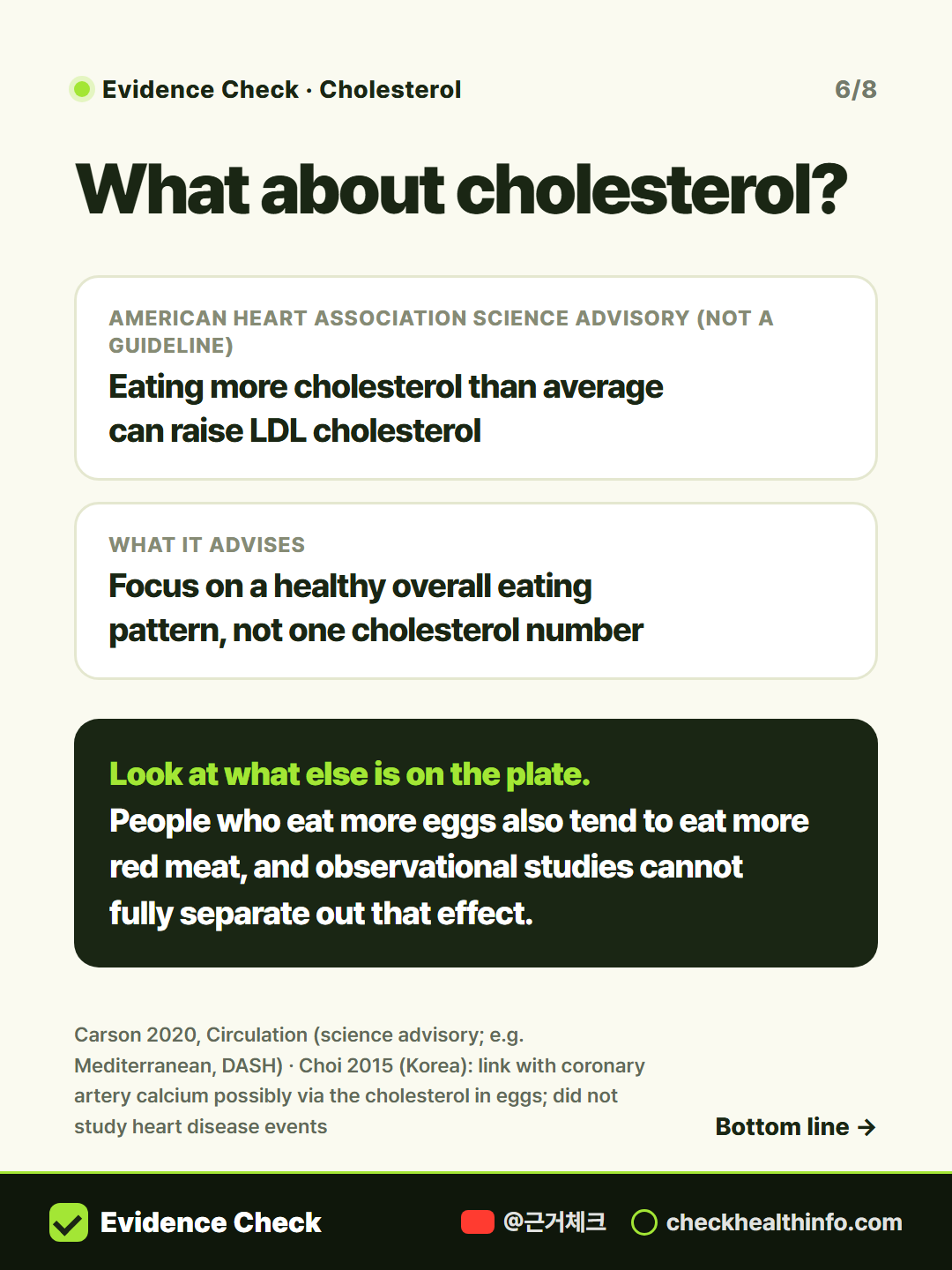
An American Heart Association science advisory (not a clinical guideline) says that eating more cholesterol than average generally raises total and LDL cholesterol, and advises focusing on a healthy overall eating pattern, which is naturally low in cholesterol [8]. In a cross-sectional study of Korean adults at health checkups, each additional egg a day was linked to a higher coronary artery calcium score. This study did not look at heart disease events. When dietary cholesterol was also adjusted for, the link was no longer significant, and the authors suggested the link may run through the cholesterol in eggs (this does not mean the link was not real). [10]
Eggs: what this means for you
- About 1 a day — For adults without heart disease, about 1 egg a day was not linked to a higher risk of heart disease. Eating more than 1 egg a day is outside this verdict.
- What else is on the plate — People who eat more eggs also tend to eat more red meat, and studies could not fully separate out the effects of other foods and lifestyle. Look after your whole eating pattern, not just eggs [8].
- Ask first — If you have high cholesterol or diabetes, or have had heart disease, ask your health care team or a dietitian how many eggs to eat.
Scope: This verdict covers only whether eating about 1 egg a day raises the risk of heart disease (cardiovascular disease) in adults without heart disease. More than 1 egg a day, cholesterol levels, diabetes and death were not part of the claim, so we covered them only as cautions.
Limits of this verdict
- All of these are observational studies, so they do not prove the effect of eggs alone. They cannot fully separate out the effects of other foods and lifestyle, and people with high cholesterol may already have cut back on eggs.
- Results varied between studies (I² 62.3%), and some, such as the pooled analysis of 6 US cohorts, point the other way. One meta-analysis rated the certainty of the evidence as “low.”
- Most people in the Korean cohort ate less than 1 egg a day.
- We could not check the original texts of Korea’s Dietary Reference Intakes or dietary guidelines (Ministry of Health and Welfare) this time, so we did not cite them.
- We set the grade under section 1 of our rating method. We check for new studies in our monthly PubMed review, and if a verdict changes, we record it in our corrections log (in Korean).
Card news
Video (in Korean)
References
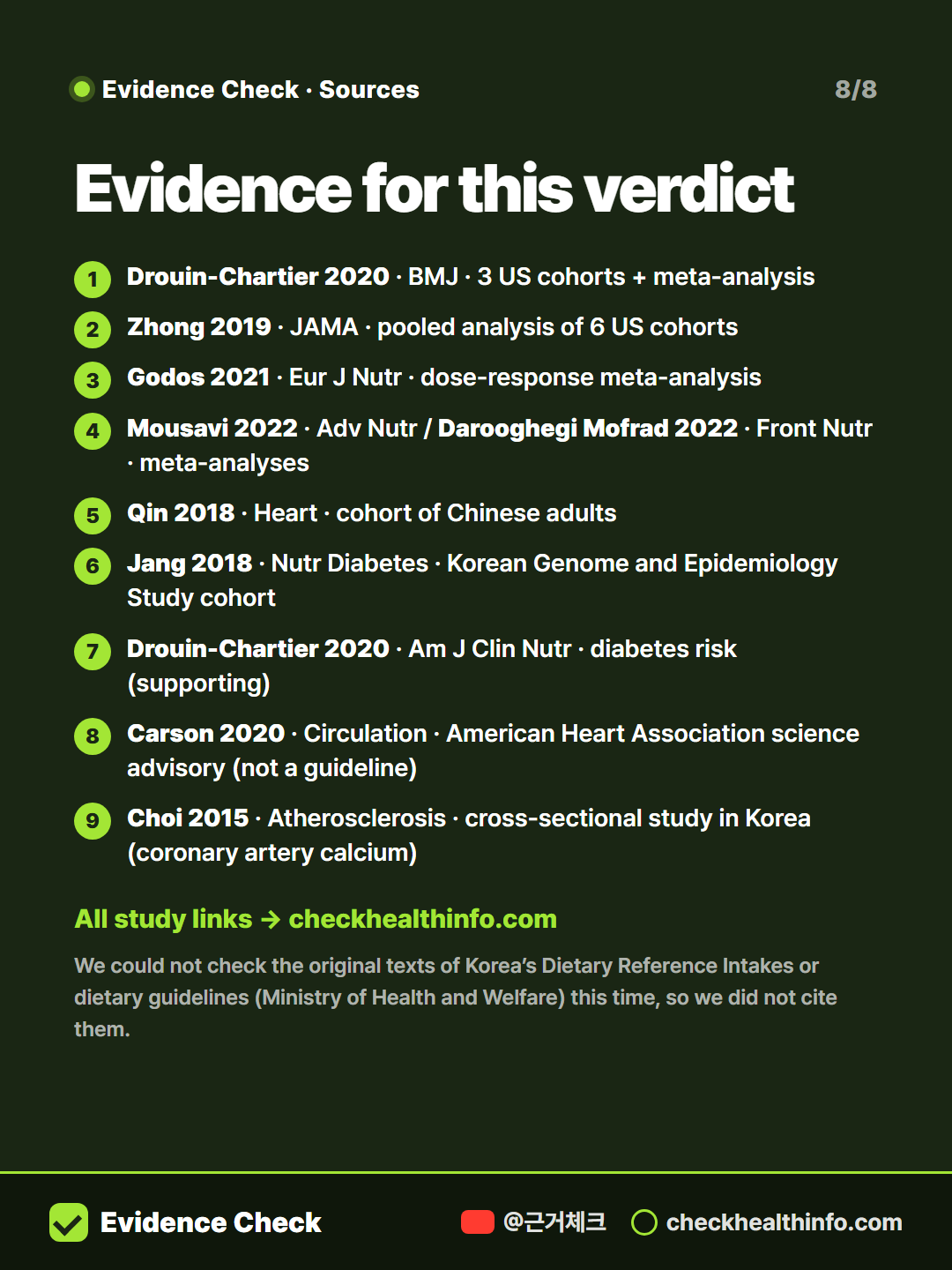
- Drouin-Chartier JP, Chen S, Li Y, et al. Egg consumption and risk of cardiovascular disease: three large prospective US cohort studies, systematic review, and updated meta-analysis. BMJ 2020;368:m513. PMID 32132002. PubMed abstract · Full article · Free full text
- Zhong VW, Van Horn L, Cornelis MC, et al. Associations of Dietary Cholesterol or Egg Consumption With Incident Cardiovascular Disease and Mortality. JAMA 2019;321(11):1081-1095. PMID 30874756. PubMed abstract · Full article · Free full text
- Godos J, Micek A, Brzostek T, et al. Egg consumption and cardiovascular risk: a dose-response meta-analysis of prospective cohort studies. Eur J Nutr 2021;60(4):1833-1862. PMID 32865658. PubMed abstract · Full article · Free full text
- Mousavi SM, Zargarzadeh N, Rigi S, et al. Egg Consumption and Risk of All-Cause and Cause-Specific Mortality: A Systematic Review and Dose-Response Meta-analysis of Prospective Studies. Adv Nutr 2022;13(5):1762-1773. PMID 35396834. PubMed abstract · Full article · Free full text
- Darooghegi Mofrad M, Naghshi S, Lotfi K, et al. Egg and Dietary Cholesterol Intake and Risk of All-Cause, Cardiovascular, and Cancer Mortality: A Systematic Review and Dose-Response Meta-Analysis of Prospective Cohort Studies. Front Nutr 2022;9:878979. PMID 35711545. PubMed abstract · Full article · Free full text
- Qin C, Lv J, Guo Y, et al. Associations of egg consumption with cardiovascular disease in a cohort study of 0.5 million Chinese adults. Heart 2018;104(21):1756-1763. PMID 29785957. PubMed abstract · Full article · Free full text
- Jang J, Shin MJ, Kim OY, et al. Longitudinal association between egg consumption and the risk of cardiovascular disease: interaction with type 2 diabetes mellitus. Nutr Diabetes 2018;8(1):20. PMID 29695709. PubMed abstract · Full article · Free full text
- Carson JAS, Lichtenstein AH, Anderson CAM, et al. Dietary Cholesterol and Cardiovascular Risk: A Science Advisory From the American Heart Association. Circulation 2020;141(3):e39-e53. PMID 31838890. PubMed abstract · Full article
- Drouin-Chartier JP, Schwab AL, Chen S, et al. Egg consumption and risk of type 2 diabetes: findings from 3 large US cohort studies of men and women and a systematic review and meta-analysis of prospective cohort studies. Am J Clin Nutr 2020;112(3):619-630. PMID 32453379. PubMed abstract · Full article · Free full text
- Choi Y, Chang Y, Lee JE, et al. Egg consumption and coronary artery calcification in asymptomatic men and women. Atherosclerosis 2015;241(2):305-12. PMID 26062990. PubMed abstract · Full article
General information only, not medical advice. It does not replace your own clinician’s diagnosis or treatment. If you have high cholesterol or diabetes, or have had heart disease, ask your health care team or a dietitian how many eggs to eat.