Who must not use weight-loss shots
Weight-loss shots (Wegovy, Mounjaro): can I use them, too?

We checked this verdict against 10 sources, such as published studies and clinical guidelines. · How checked: Operator-approved
Verdicts at a glance
| Claim | Verdict |
|---|---|
| Anyone can use weight-loss shots (Wegovy, Mounjaro) | False · Evidence grade A |
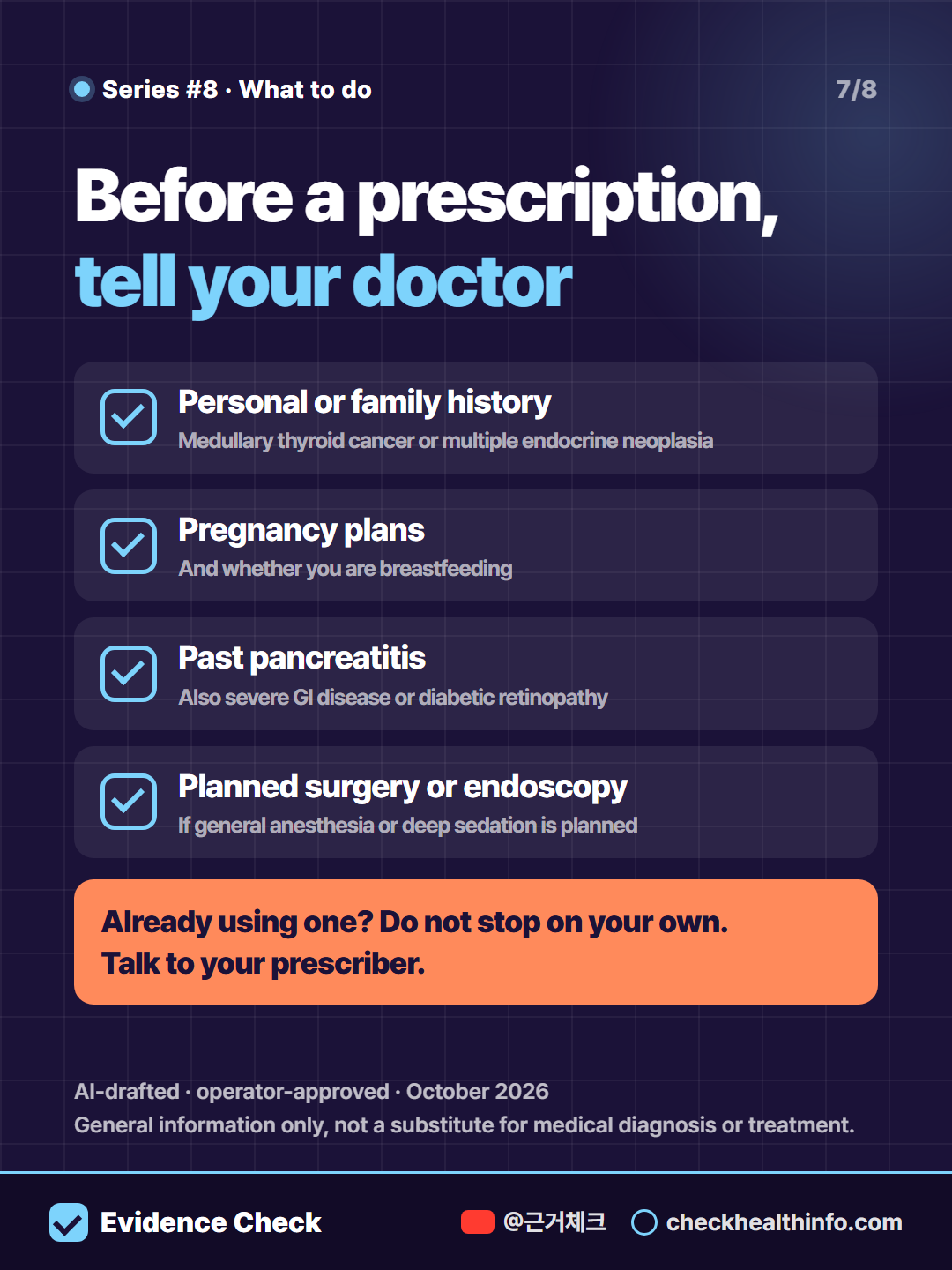
Bottom line — Weight-loss shots such as Wegovy and Mounjaro are not for everyone (False, grade A). The drug labeling defines who can use them (based on body mass index), lists people who must not use them (contraindications), and lists people who need extra caution. These drugs are meant to be used only after a doctor checks that you meet the approved criteria and have no contraindications. If you or a family member has ever had medullary thyroid cancer or multiple endocrine neoplasia, tell your doctor before you get a prescription. If you are already using one of these drugs, do not stop on your own; talk to your prescriber.
Contraindication — A situation in which the labeling says the drug must not be used. It describes people who should not take the drug.
Use with caution — The drug can be used, but the risk may be higher, so extra care is needed.
Body mass index (BMI) — Weight in kilograms divided by the square of height in meters. It is used to set who is eligible for weight-loss drugs.
Odds ratio — A comparison of the odds of an event between two groups. A value above 1 means the odds were higher in the group that used the drug.
Hazard ratio — A comparison of the risk of an event over the follow-up period between two groups. A value above 1 means the risk was higher in the group that used the drug.
95% confidence interval — The range in which the true value is likely to lie. If the range crosses 1, it is hard to say for sure that there is a difference.
Drug names — Semaglutide is the ingredient in Wegovy and Ozempic; tirzepatide is the ingredient in Mounjaro (sold as Zepbound for weight management in the US). We name products only to help you identify the ingredients, not to recommend any product.
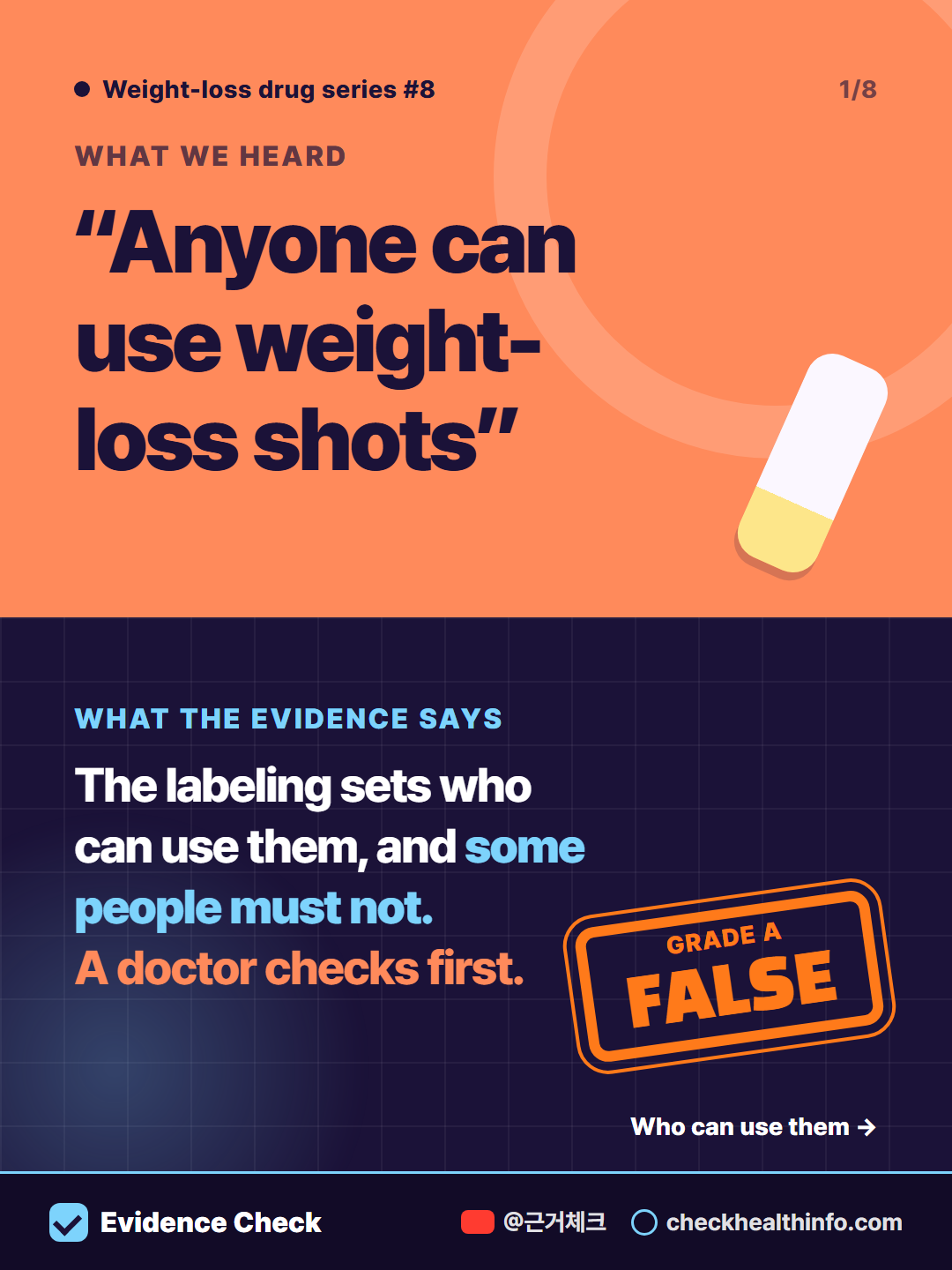
Claim: “Anyone can use weight-loss shots (Wegovy, Mounjaro)”
False · Evidence grade A
In plain terms, weight-loss shots are not for just anyone. The labeling sets out who can use them, and it also lists who must not use them and who needs to be more careful. A doctor checks these points before you start.
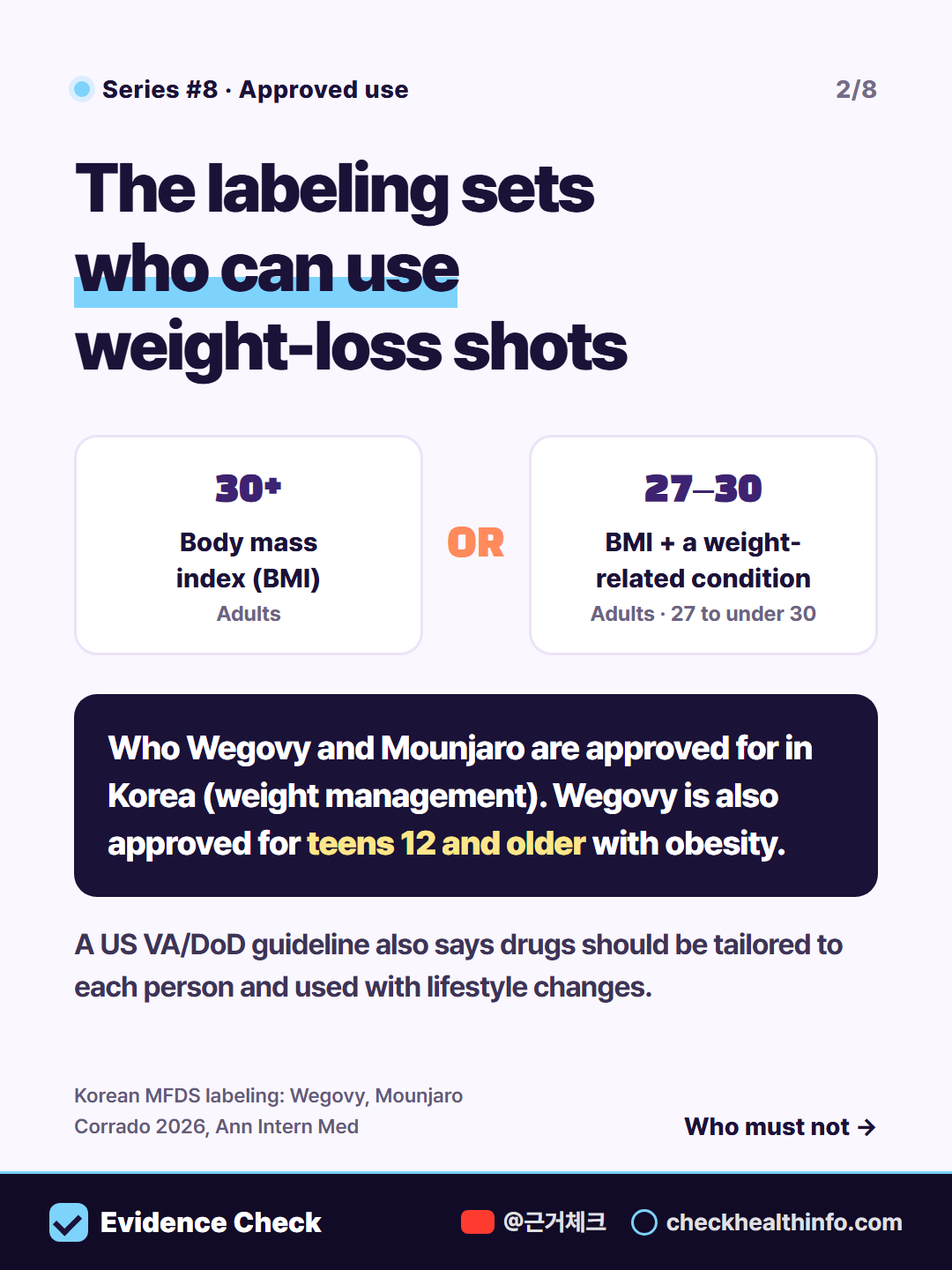
Who can use them — approved use
- In Korea, Wegovy (semaglutide) and Mounjaro (tirzepatide) are approved for weight management in adults with a BMI of 30 or higher, or a BMI of 27 to less than 30 with at least one weight-related health condition. [9] [10]
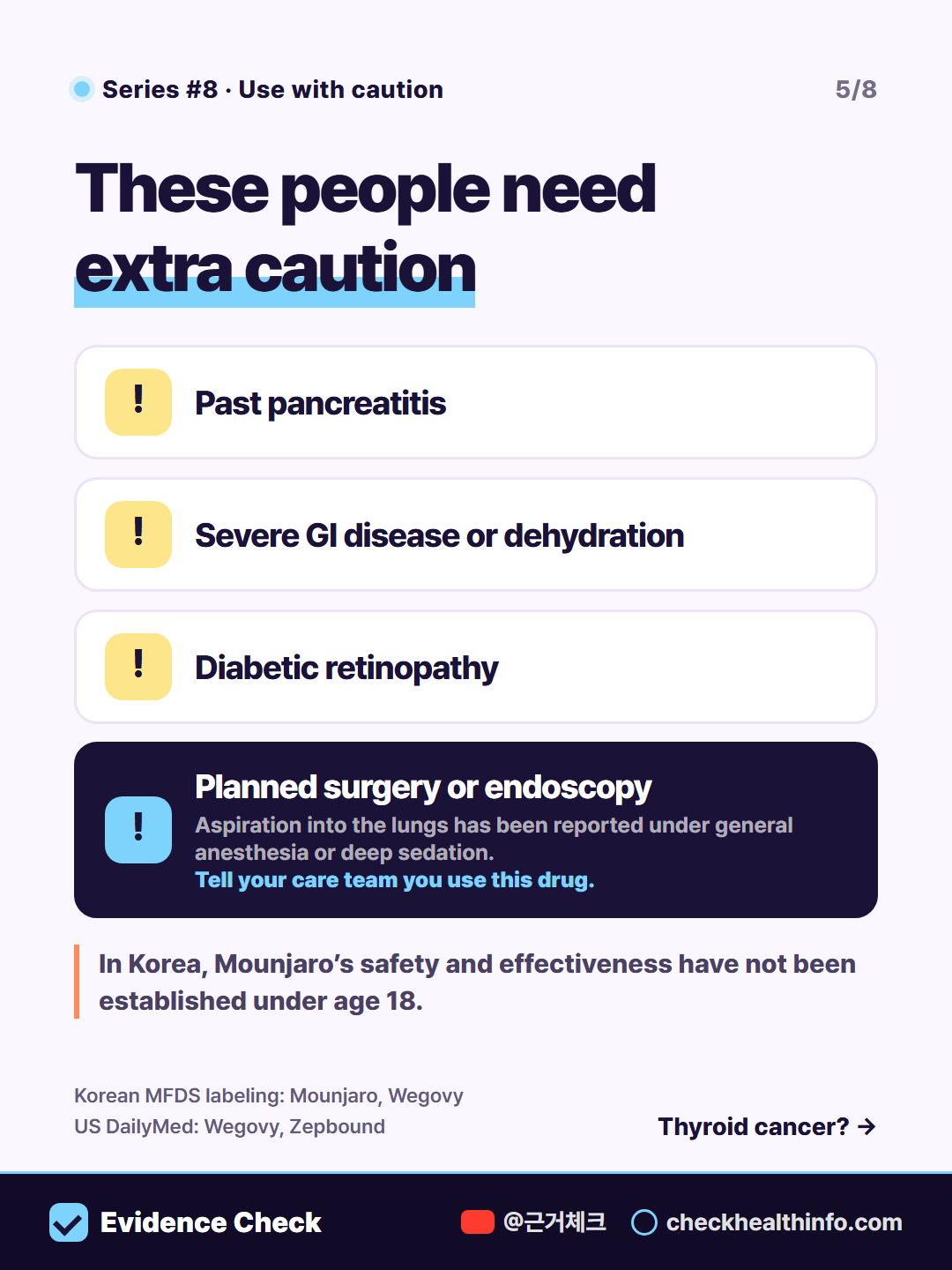
- In Korea, Wegovy is also approved for obesity in adolescents aged 12 and older. In the US, Wegovy injection is also approved for children aged 12 and older with obesity. Safety and effectiveness have not been established for Mounjaro in people under 18 in Korea, or for Zepbound in children in the US. [7] [8] [9] [10]
- A 2025 guideline from the US Department of Veterans Affairs and Department of Defense on managing overweight and obesity in adults strongly recommends comprehensive lifestyle changes as the foundation of treatment, and says drug treatment should be tailored to each person and used together with lifestyle changes. [6]
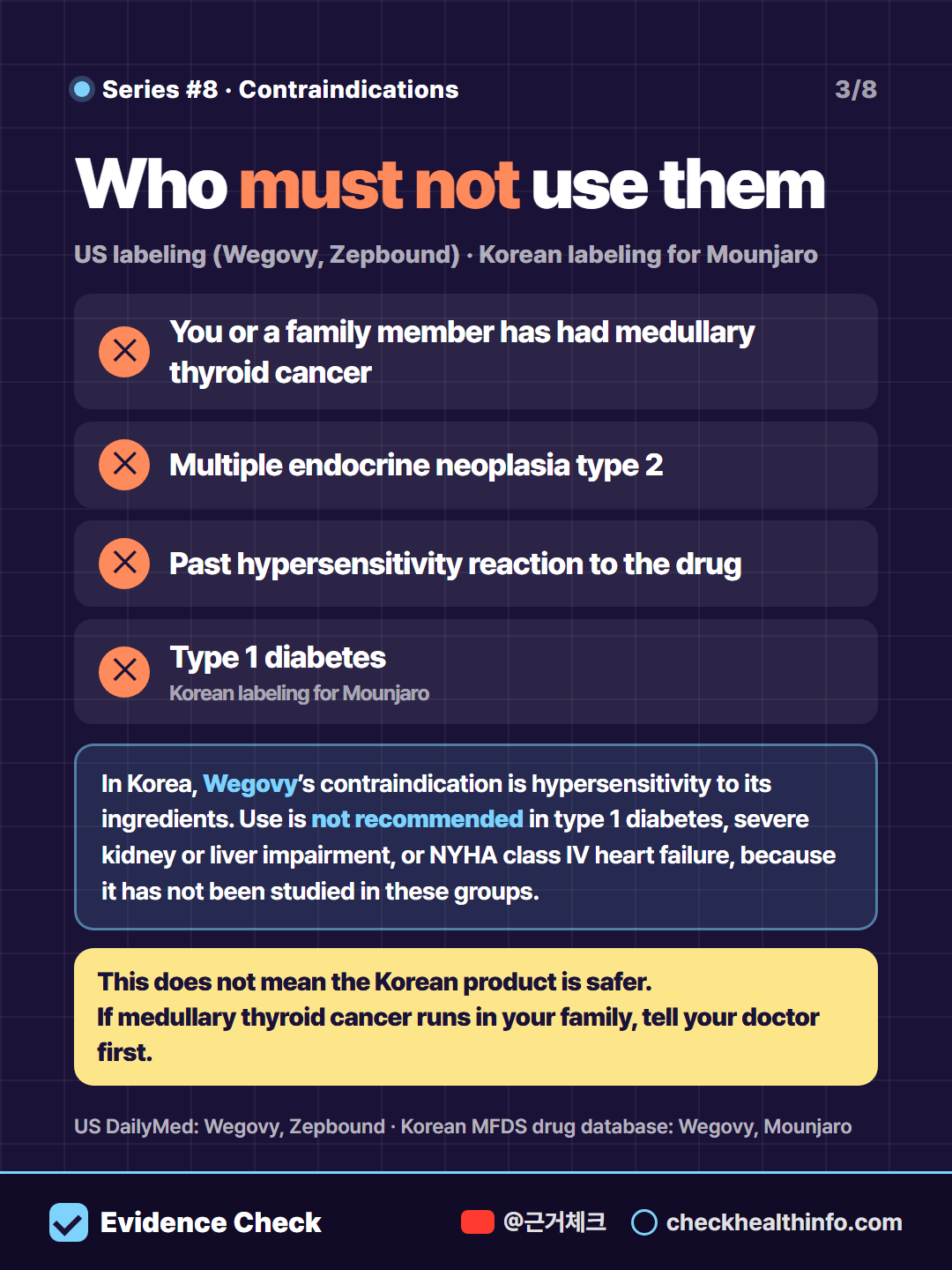
Who must not use them — contraindications
- The US labeling (Wegovy, Zepbound) and the Korean labeling for Mounjaro list the following as contraindications: a personal or family history of medullary thyroid cancer, multiple endocrine neoplasia type 2, and a past hypersensitivity reaction to the drug or its ingredients. [7] [8] [10]
- In Korea, Mounjaro is also contraindicated in people with type 1 diabetes. [10]
- The Korean labeling for Wegovy lists hypersensitivity to the active ingredient or other ingredients as its contraindication. It says use is not recommended in people with type 1 diabetes, severe kidney or liver impairment, or the most severe stage of heart failure (NYHA class IV), because the drug has not been studied in them. [9]
- Contraindications and precautions differ by country and product. The Korean labeling for Wegovy does not list a family history of medullary thyroid cancer as a contraindication, but the same ingredient carries this contraindication in the US. This does not mean the product sold in Korea is safer. If you or a family member has ever had medullary thyroid cancer or multiple endocrine neoplasia, tell your doctor before you get a prescription. [7] [9]
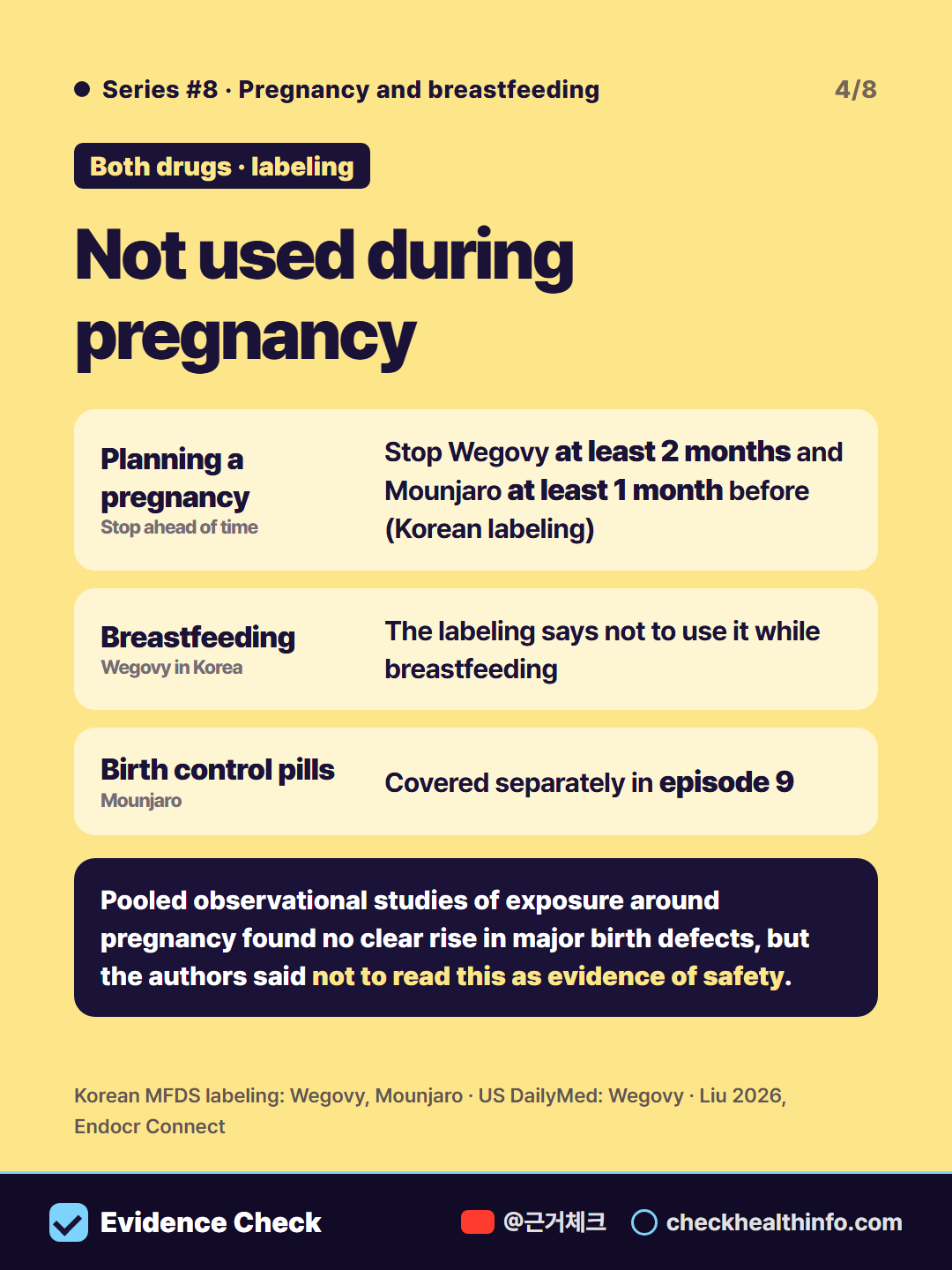
Pregnancy and breastfeeding
- The labeling says neither drug should be used during pregnancy. If you are planning a pregnancy, stop ahead of time: at least 2 months before for Wegovy and at least 1 month before for Mounjaro (Korean labeling). [9] [10] [7]
- The Korean labeling for Wegovy says it should not be used while breastfeeding. [9]
- A meta-analysis of six observational studies (286,599 people) of exposure around the time of pregnancy found a relative risk of major birth defects of 1.02 (95% confidence interval 0.96 to 1.08). In plain terms, birth defects did not clearly increase, but the authors said this should not be read as evidence of safety, because the studies were observational and few pregnancies were exposed. [5]
- Mounjaro and birth control pills are covered separately in episode 9 of the series.
When extra caution is needed
- Use with caution in people who have had pancreatitis, or who have severe gastrointestinal disease, dehydration or diabetic retinopathy (Korean labeling for Mounjaro and Wegovy). [9] [10]
- If you are about to have surgery or an endoscopy with general anesthesia or deep sedation, tell your care team ahead of time that you use this drug. Cases of pulmonary aspiration (food or fluid entering the lungs) have been reported (US labeling and Korean labeling for Wegovy). [7] [8] [9]
Does thyroid cancer increase in people, too?
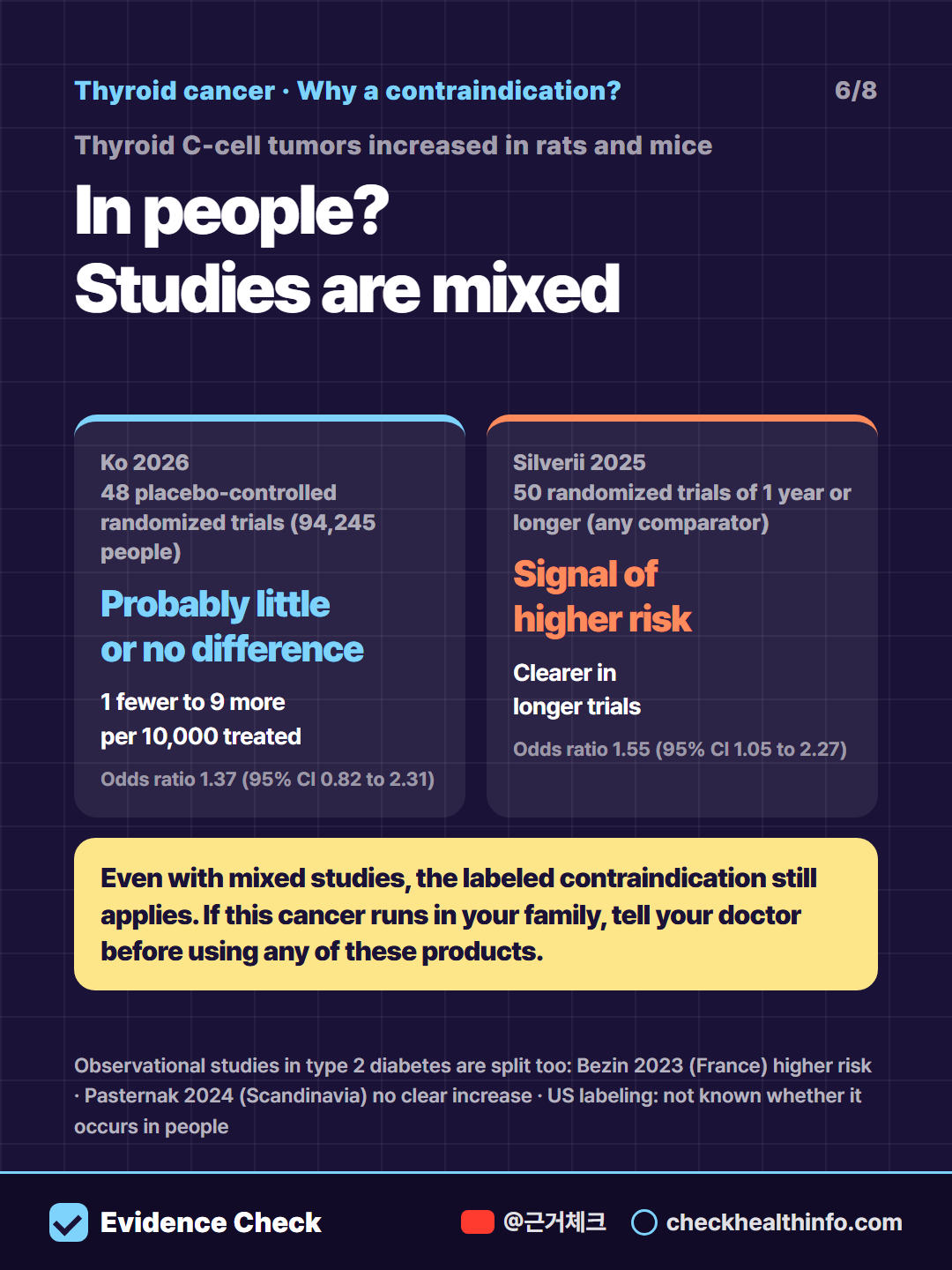
- In rat and mouse studies, thyroid C-cell tumors increased. The US labeling says it is not known whether these drugs cause such tumors in people. The Korean labeling for Wegovy says the relevance to humans is considered low but cannot be completely ruled out. [7] [8] [9]
- A meta-analysis of 48 placebo-controlled randomized trials (94,245 people) found an odds ratio for thyroid cancer of 1.37 (95% confidence interval 0.82 to 2.31), or between 1 fewer and 9 more cases per 10,000 people treated, and concluded that there is probably little or no difference (moderate-certainty evidence). In plain terms, it is hard to say that thyroid cancer clearly increased compared with placebo. However, the trials were not designed to look at cancer, and follow-up was short. [1]
- In contrast, a meta-analysis of 50 randomized trials lasting 1 year or longer, against any comparator, reported a signal of increased thyroid cancer risk (odds ratio 1.55, 95% confidence interval 1.05 to 2.27), and the signal was clearer in longer trials. In plain terms, more thyroid cancers were reported in people who used the drugs in this analysis. Overall cancer did not differ (odds ratio 1.05, 95% confidence interval 0.98 to 1.13). [2]
- Observational studies in people with type 2 diabetes are also split. A nested case-control study using French national health insurance data reported a higher thyroid cancer risk with 1–3 years of use of the GLP-1 drug class (hazard ratio as reported by the authors 1.58, 95% confidence interval 1.27 to 1.95). In plain terms, people who used the drugs for 1–3 years had a higher risk of thyroid cancer in this study. [3]
- A cohort study in three countries (Denmark, Norway and Sweden) found no clear increase (hazard ratio 0.93, 95% confidence interval 0.66 to 1.31; 1.33 vs. 1.46 cases per 10,000 person-years). In plain terms, thyroid cancer was about as common in people who used the drugs as in people who used the comparison drugs. [4]
- So the studies in people do not all point the same way. But this is a separate question from “Can anyone use these drugs?” A contraindication in the labeling still applies, whatever these studies show.
This claim is about what the drug approval itself says, such as who is eligible and who must not use the drugs. So under section 1 of our rating method, we used the labeling from regulators (the US FDA and the Korean Ministry of Food and Drug Safety, or MFDS) as grade A evidence. All of the labeling says the opposite of “anyone”: it sets who is eligible (based on BMI) and lists who must not use the drugs (contraindications) and who should not use them or needs caution. Because reliable evidence contradicts the claim, the rating is “False” under section 2. Why we did not grade it down: the labeling directly addresses who can use the drugs (no indirectness); the verdict rests on the labeling, not on observational studies; and the mixed findings on thyroid cancer answer a separate question, while the contraindications and precautions in the labeling themselves are not in dispute.
Scope: This verdict covers only who can use these drugs and who must not. Weight loss, heart effects, common side effects and cost are covered in other episodes of the series, and Mounjaro and birth control pills in episode 9.
Before you get a prescription, tell your doctor about any personal or family history of medullary thyroid cancer or multiple endocrine neoplasia, pregnancy plans (and whether you are breastfeeding), any past pancreatitis, and any planned surgery or endoscopy. Talk to your prescriber before you start, stop or change these drugs.
Limits of this verdict
- Contraindications and precautions differ by country and product, and labeling can be revised. This article is based on the US DailyMed labeling for Wegovy (revised June 2026) and Zepbound (revised August 2026) and the Korean MFDS drug database labeling for Wegovy and Mounjaro, all checked on 2026-10-17.
- In the Korean labeling for Wegovy, we did not find wording on medullary thyroid cancer or multiple endocrine neoplasia type 2 in sections 1–11 of the precautions for use.
- Both observational studies of thyroid cancer used data from people with type 2 diabetes and looked at the GLP-1 drug class as a whole. There are few data in people on Mounjaro (tirzepatide) alone.
- We did not directly check the Korean Society for the Study of Obesity guideline or the full European Medicines Agency (EMA) product information, so we did not cite them.
- The grade was set under section 1 of our rating method. If the labeling changes or new studies come out, we check during our monthly PubMed review, and any change to the verdict is noted on this page and in our corrections record (in Korean).
Card news
Video (in Korean)
References
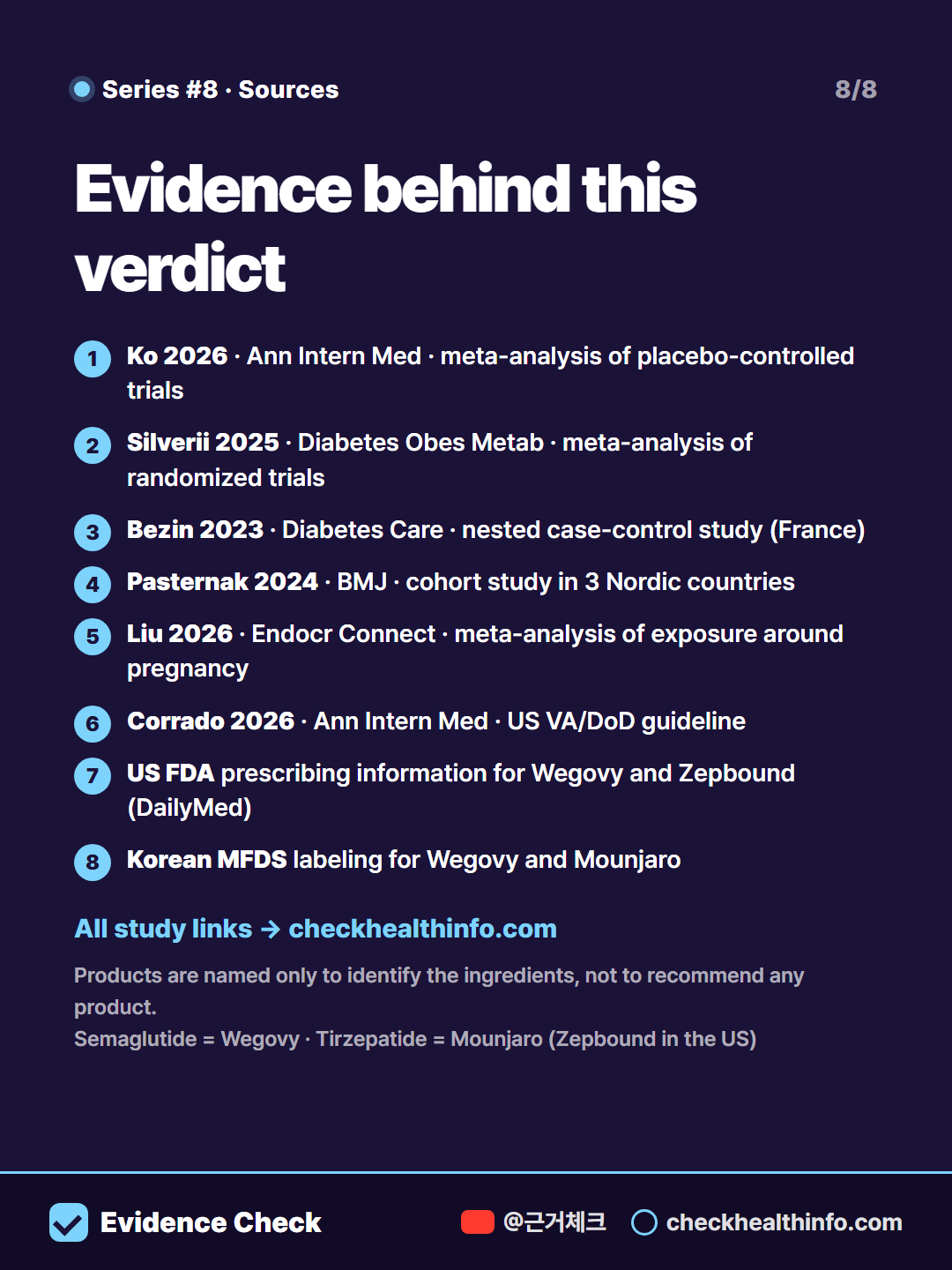
- Ko A, Chang YC, Bahar F, et al. Risk for Cancer With Glucagon-Like Peptide-1 Receptor Agonists and Dual Agonists : A Systematic Review and Meta-analysis. Ann Intern Med 2026;179(2):216-229. PMID 41359966. PubMed abstract · Full article
- Silverii GA, Marinelli C, Bettarini C, et al. GLP-1 receptor agonists and the risk for cancer: A meta-analysis of randomized controlled trials. Diabetes Obes Metab 2025;27(8):4454-4468. PMID 40437949. PubMed abstract · Full article · Free full text
- Bezin J, Gouverneur A, Pénichon M, et al. GLP-1 Receptor Agonists and the Risk of Thyroid Cancer. Diabetes Care 2023;46(2):384-390. PMID 36356111. PubMed abstract · Full article
- Pasternak B, Wintzell V, Hviid A, et al. Glucagon-like peptide 1 receptor agonist use and risk of thyroid cancer: Scandinavian cohort study. BMJ 2024;385:e078225. PMID 38683947. PubMed abstract · Full article · Free full text
- Liu X, Xiong B, Yang R, et al. Periconceptional use of GLP-1 receptor agonists and the risk of major congenital malformations: a systematic review and meta-analysis. Endocr Connect 2026;15(7). PMID 42447044. PubMed abstract · Full article · Free full text
- Corrado RL, Raffa SD, Bauer EM, et al. Adult Overweight and Obesity Management: Updates From the 2025 U.S. Department of Veterans Affairs and U.S. Department of Defense Clinical Practice Guidelines. Ann Intern Med 2026;179(9):1296-1311. PMID 42636450. PubMed abstract · Full article
- US DailyMed — Wegovy (semaglutide) injection and tablets prescribing information (accessed 2026-10-17). Source
- US DailyMed — Zepbound (tirzepatide) prescribing information (accessed 2026-10-17). Source
- Korean MFDS drug database — Wegovy prefilled pen 2.4 mg (semaglutide) labeling (accessed 2026-10-17). Source
- Korean MFDS drug database — Mounjaro KwikPen (tirzepatide) labeling (accessed 2026-10-17). Source
General information only, not medical advice. Do not start, stop or change these medicines without talking to your prescriber. Products are named only to identify the ingredients, not to recommend any product.