Raising your own dose, or buying weight-loss shots online from overseas: is it OK?
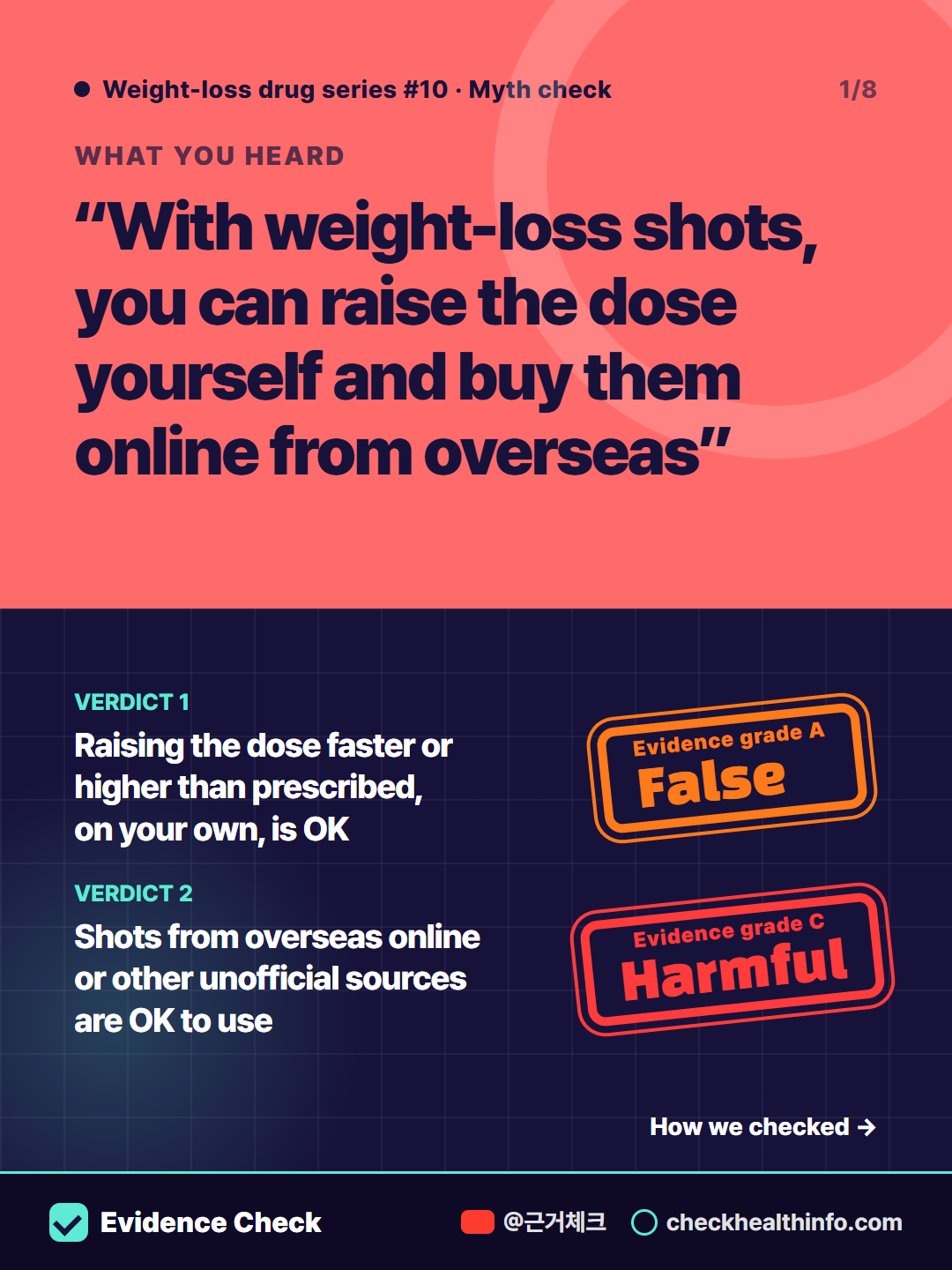
Is it OK to raise the dose of a weight-loss shot on your own, or to use weight-loss shots bought from overseas online sellers?

We checked this verdict against 10 sources, such as published studies and clinical guidelines. · How checked: Operator-approved
Verdicts at a glance
Bottom line — Raising the dose of a weight-loss shot (such as Wegovy or Mounjaro) faster or higher than prescribed, on your own, goes against the drug labeling and can lead to more stomach and gut side effects, so it is not OK (False, A). In lab tests, weight-loss shots bought outside official channels, such as from overseas sellers online, contained a different amount of the drug than the label stated, along with bacterial toxins, and serious side effects have been reported, so using them is harmful (Harmful, C). Use only genuine products that you get from a pharmacy with a doctor’s prescription, and follow your prescriber’s dose-increase schedule. Follow your prescriber’s advice on your own dose.
Labeling — The official information for a drug, approved by a regulator such as Korea’s Ministry of Food and Drug Safety (MFDS) or the US Food and Drug Administration (FDA). It sets out the dose, how to increase it and the precautions.
Randomized trial — A trial in which participants are assigned by chance, like drawing lots, to get the drug or a placebo, and the groups are compared.
Placebo — A shot or pill that looks the same but contains no active drug.
Pharmacovigilance reports — Reports of suspected side effects that health professionals or patients send in voluntarily. They show what kinds of problems happen, but not how often they happen.
Case report — A detailed write-up of what happened to one patient or a few patients.
Endotoxin — A toxic substance that comes from bacteria. Finding it in an injectable drug suggests contamination during manufacturing.
Verdict 1. “It is OK to raise the dose of a weight-loss shot faster or higher than prescribed, on your own”
False · Evidence grade A
In plain words Weight-loss shots are meant to be increased slowly, on a set schedule, to reduce stomach and gut (gastrointestinal) side effects. Raising the dose faster or higher on your own goes against these rules.
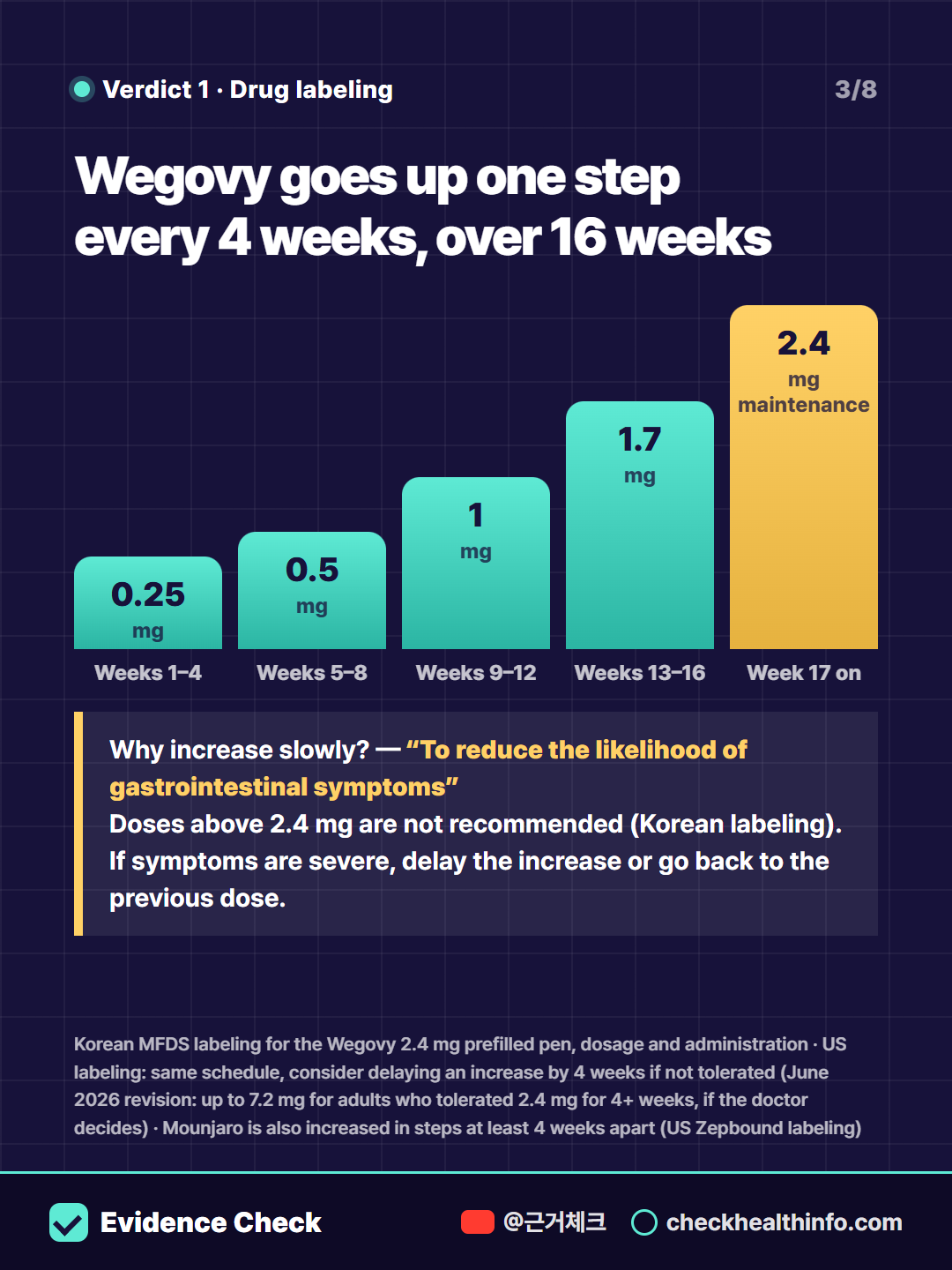
- Wegovy (semaglutide) starts at 0.25 mg once a week and goes up every 4 weeks to 0.5, 1 and 1.7 mg, with the maintenance dose of 2.4 mg from week 17. Korea’s MFDS labeling gives the reason for this slow increase as “to reduce the likelihood of gastrointestinal symptoms.” It says doses above 2.4 mg are not recommended, and that if gastrointestinal symptoms are severe, the dose increase should be delayed or the dose lowered to the previous level (Korean MFDS labeling for Wegovy, in Korean). The US labeling also sets the same dose-increase schedule and says to consider delaying a dose increase by 4 weeks if a dose is not tolerated. In its June 2026 revision, the US labeling allows the dose to go up to a maximum of 7.2 mg for adults who have tolerated 2.4 mg for at least 4 weeks, if their doctor decides it is needed; this too is the prescribing doctor’s decision, not the patient’s (US prescribing information for Wegovy, section 2.2). The US labeling for Zepbound, which has the same active ingredient as Mounjaro (tirzepatide), also starts at 2.5 mg for 4 weeks, allows increases in 2.5 mg steps only after at least 4 weeks on the current dose, and sets a maximum of 15 mg (US prescribing information for Zepbound).
- In a phase 2 randomized trial of semaglutide (415 people, 12 weeks), the share of people who stopped because of nausea, vomiting or other gastrointestinal side effects rose with higher doses and fell when the dose was increased step by step. Based on these results, later phase 3 diabetes trials used dose increases every 4 weeks. [1]
- A systematic analysis of 32 phase 3 clinical trials also found that nausea and diarrhea increased with the dose (vomiting showed a similar trend, but it was not statistically significant). In other words, the higher the dose, and the more it is raised all at once instead of step by step, the more likely the stomach is to be upset. [2]
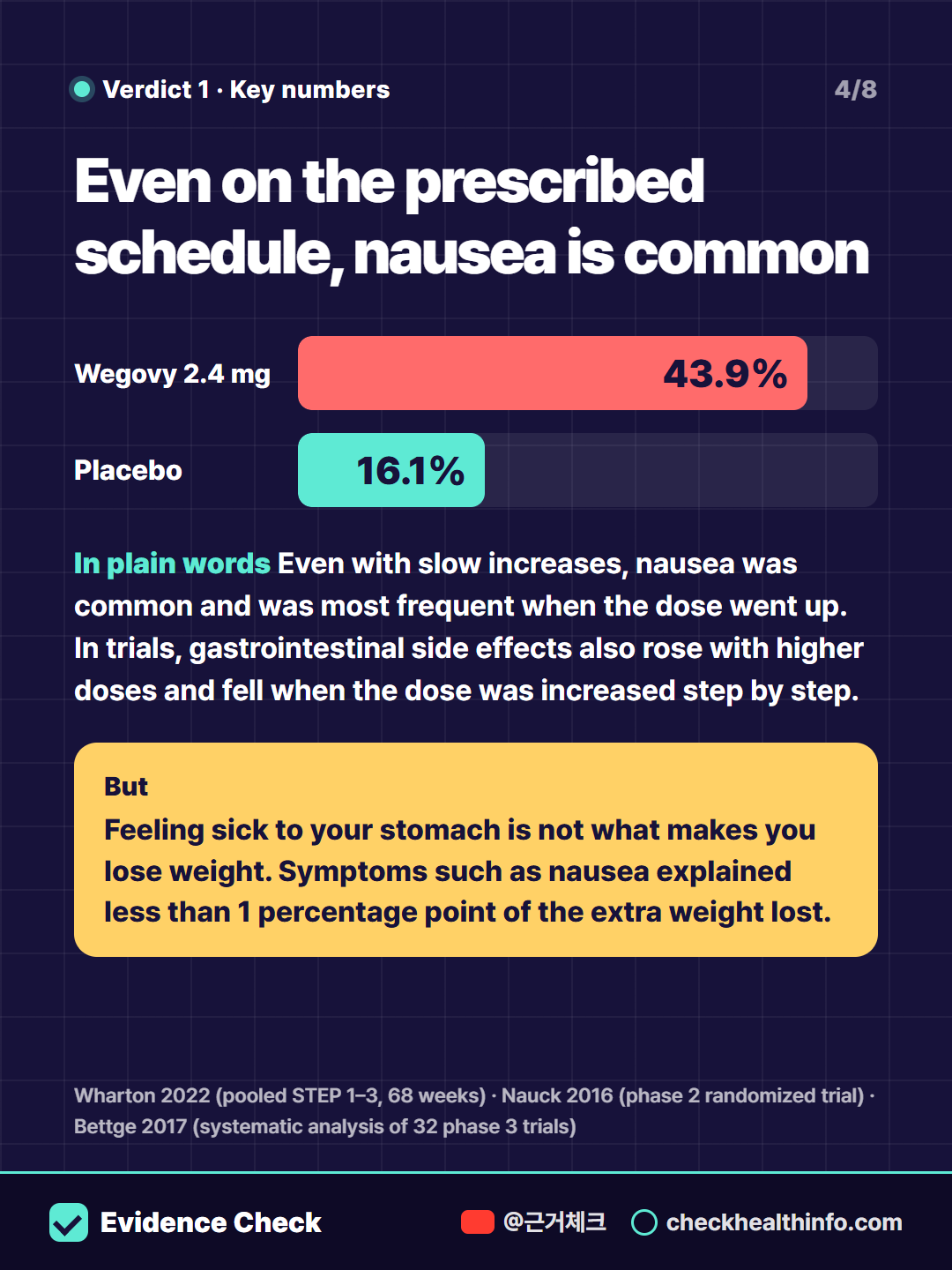
- Even in a pooled analysis of the phase 3 trials of Wegovy 2.4 mg (STEP 1–3), in which the dose was increased slowly as prescribed, nausea occurred in 43.9% of people on Wegovy and 16.1% on placebo. Most cases were mild or moderate and were most common during or right after a dose increase. In other words, even with the prescribed schedule, nausea is common, and it clusters around the times when the dose goes up. [3]
- But feeling sick to your stomach is not what makes you lose weight. In the same analysis, less than 1 percentage point of the extra weight lost compared with placebo was explained by gastrointestinal side effects. [3]
- The US FDA has said it has received reports of people being prescribed doses, dosing frequencies or dose-increase schedules outside the approved labeling (FDA notice). Of 5,713 reports about GLP-1 drugs to US poison centers, 79.9% were dosing errors, and most involved no symptoms or only mild ones [4]. After these drugs were approved for weight loss, reports rose sharply; they were mostly mild gastrointestinal symptoms, but the share of people seen at or referred to a health care facility rose from 23.0% to 33.5% [5].
The dose and how to increase it are part of the drug approval itself, so under section 1 of our rating method, regulator labeling is grade A evidence. The randomized trial data point the same way and do not conflict, so we did not grade down. However, no randomized trial has directly compared people who raised the dose quickly on their own with people who raised it as prescribed.
Verdict 2. “It is OK to use weight-loss shots bought outside official channels, such as from overseas sellers online”
Harmful · Evidence grade C
In plain words Shots bought from overseas online sellers did not contain what the label said, and bacterial toxins were found in them. Some buyers paid and never received anything. Using them could harm your health, so the verdict is “Harmful.”
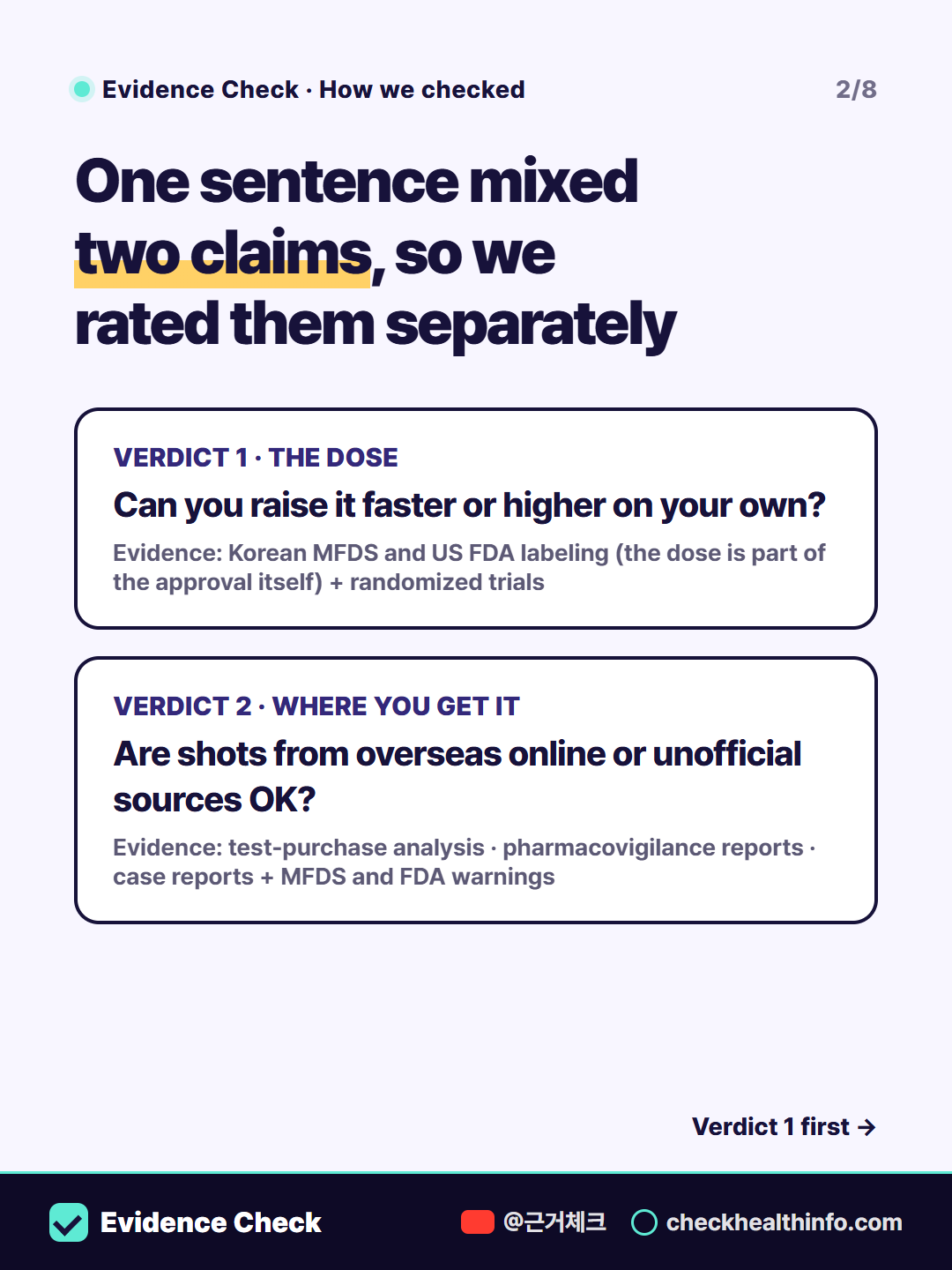
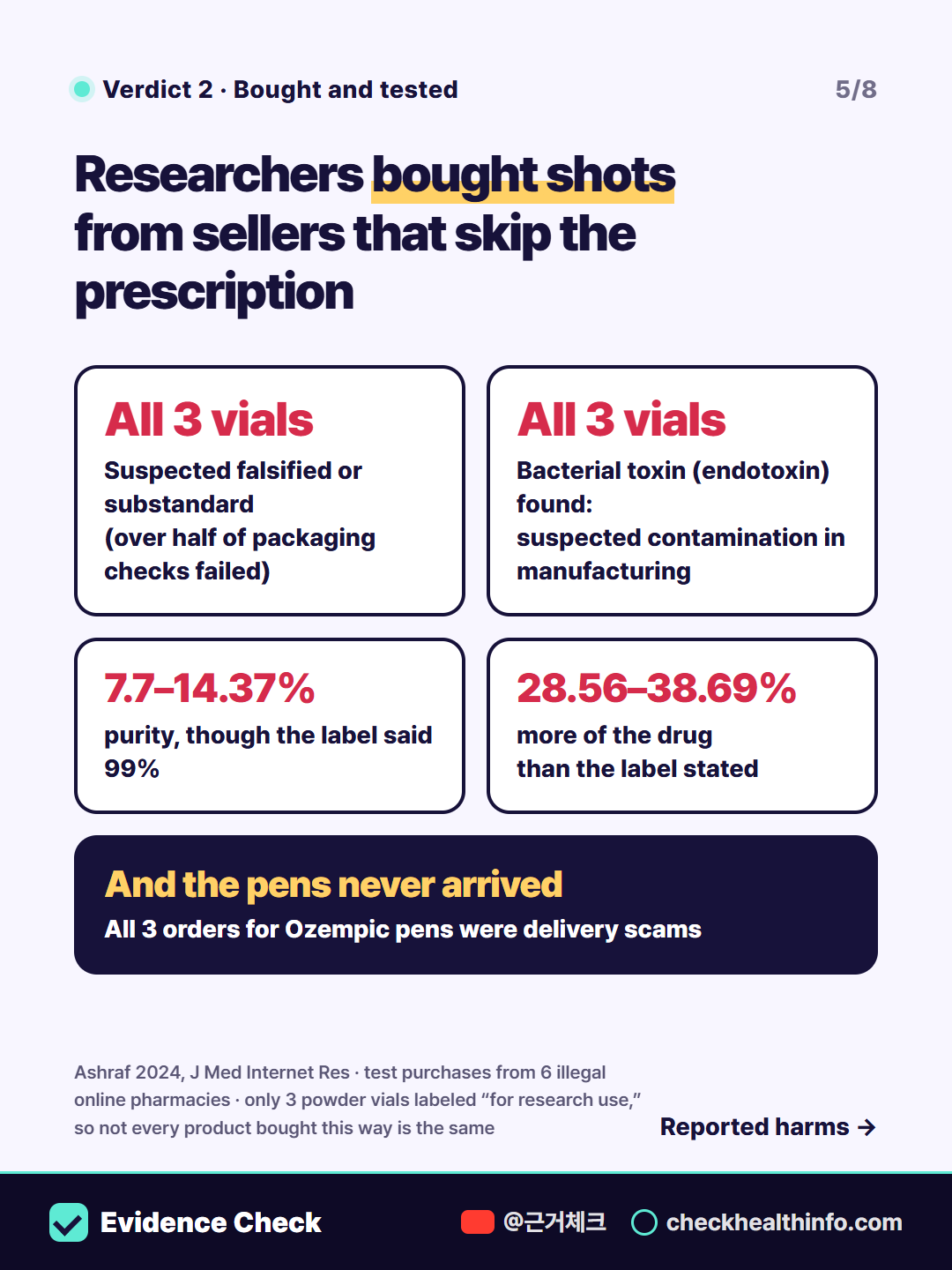
- In a study that made test purchases from 6 illegal online pharmacies selling semaglutide without a prescription, all 3 vials of injectable drug that arrived were suspected to be falsified or substandard. More than half of the packaging check items (59%–63%) did not meet the standards; the vials contained 28.56%–38.69% more of the drug than the label stated; and purity was 7.7%–14.37%, not the 99% stated on the label. Endotoxin was found in all 3 vials, suggesting contamination during manufacturing, and 3 orders for Ozempic pens never arrived at all (delivery scams). The products received were powder vials labeled “for research use.” [6]
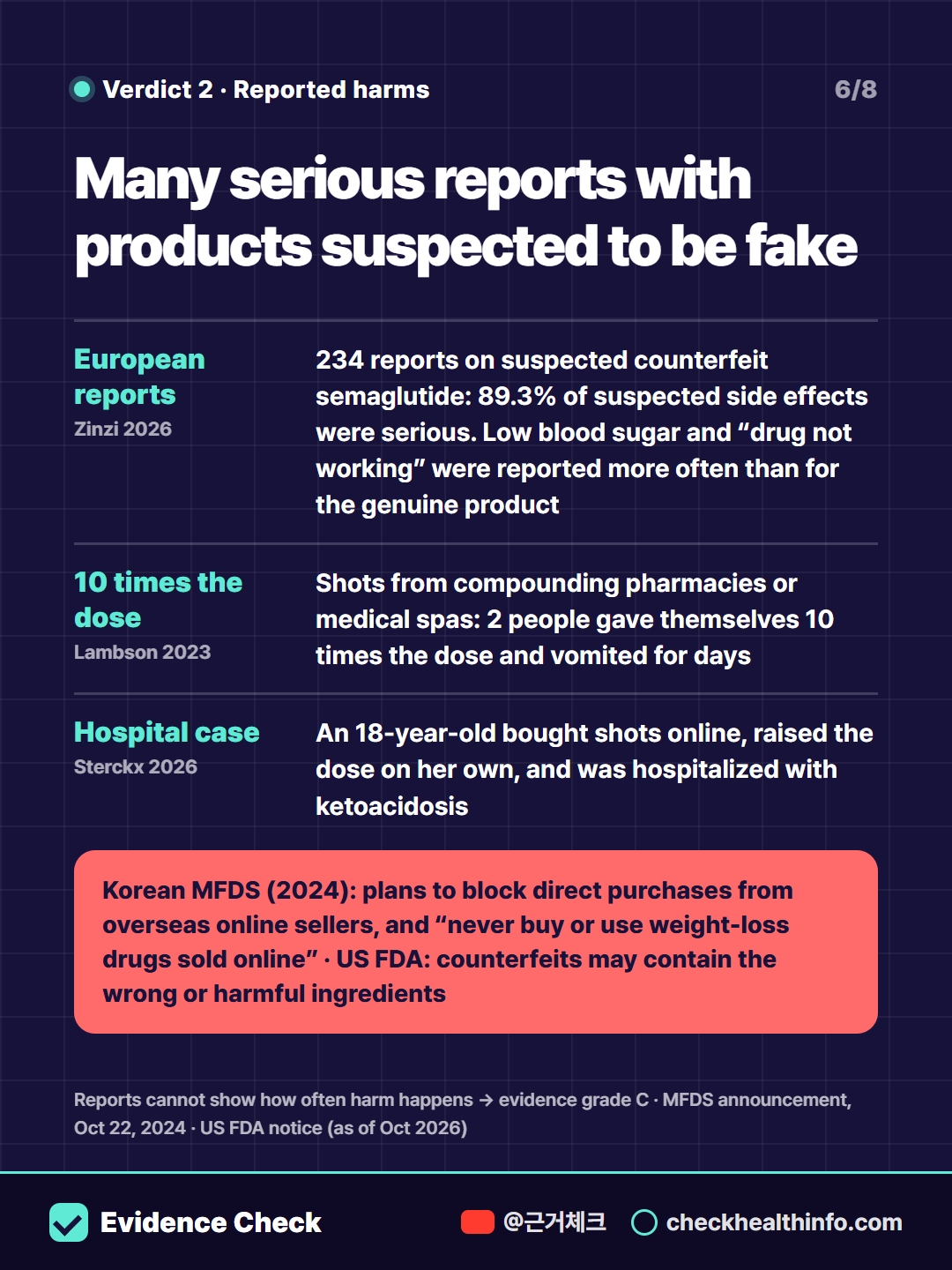
- In 234 reports about suspected counterfeit semaglutide in European pharmacovigilance data, 89.3% of the suspected side effects were classified as serious, and low blood sugar and “drug not working” were reported in a higher share of reports than for the genuine product. In other words, there were many reports of serious side effects with products suspected to be fake. But because these are reports, they cannot tell us how often such problems happen. [7]
- In 3 cases from a US regional poison center (semaglutide obtained from compounding pharmacies or medical spas), 2 people gave themselves 10 times the intended dose, and all 3 had nausea, vomiting and abdominal pain, which in most cases lasted several days. The authors pointed out that vial products lack the safety features of pens, which makes such large overdoses possible [8]. In another case, an 18-year-old woman who bought semaglutide online and raised the dose herself without medical supervision was hospitalized with ketoacidosis [9]. In data from one US regional poison center, 69.2% of reports about GLP-1 drugs were unintentional dosing errors, and the authors pointed to people getting these drugs online or through poorly regulated sources as a public health risk [10].
- The US FDA has warned that compounded drugs are not approved, so their safety, effectiveness and quality have not been reviewed, and that counterfeit Ozempic may contain the wrong ingredient, too little or too much of the active ingredient, or harmful ingredients (FDA notice). In 2024, Korea’s MFDS said it would work with the Korea Customs Service to block GLP-1 weight-loss drugs bought from overseas online sellers from being brought into the country, and urged people never to buy or use weight-loss drugs sold online (news report on the October 22, 2024 announcement, in Korean).
The best available evidence is a small test-purchase analysis (3 vials of injectable drug) plus voluntary pharmacovigilance reports and case reports, so the grade is C under section 1 of our rating method (for the same reason, we did not grade it down further). The notices from Korea’s MFDS and the US FDA are supporting evidence pointing the same way. Grade C means certainty is low about how often harm occurs; it does not mean these products are safe. Using them could cause side effects or other harm to your health, so the verdict is “Harmful” under section 2 of our rating method.
Weight-loss shots: what to do
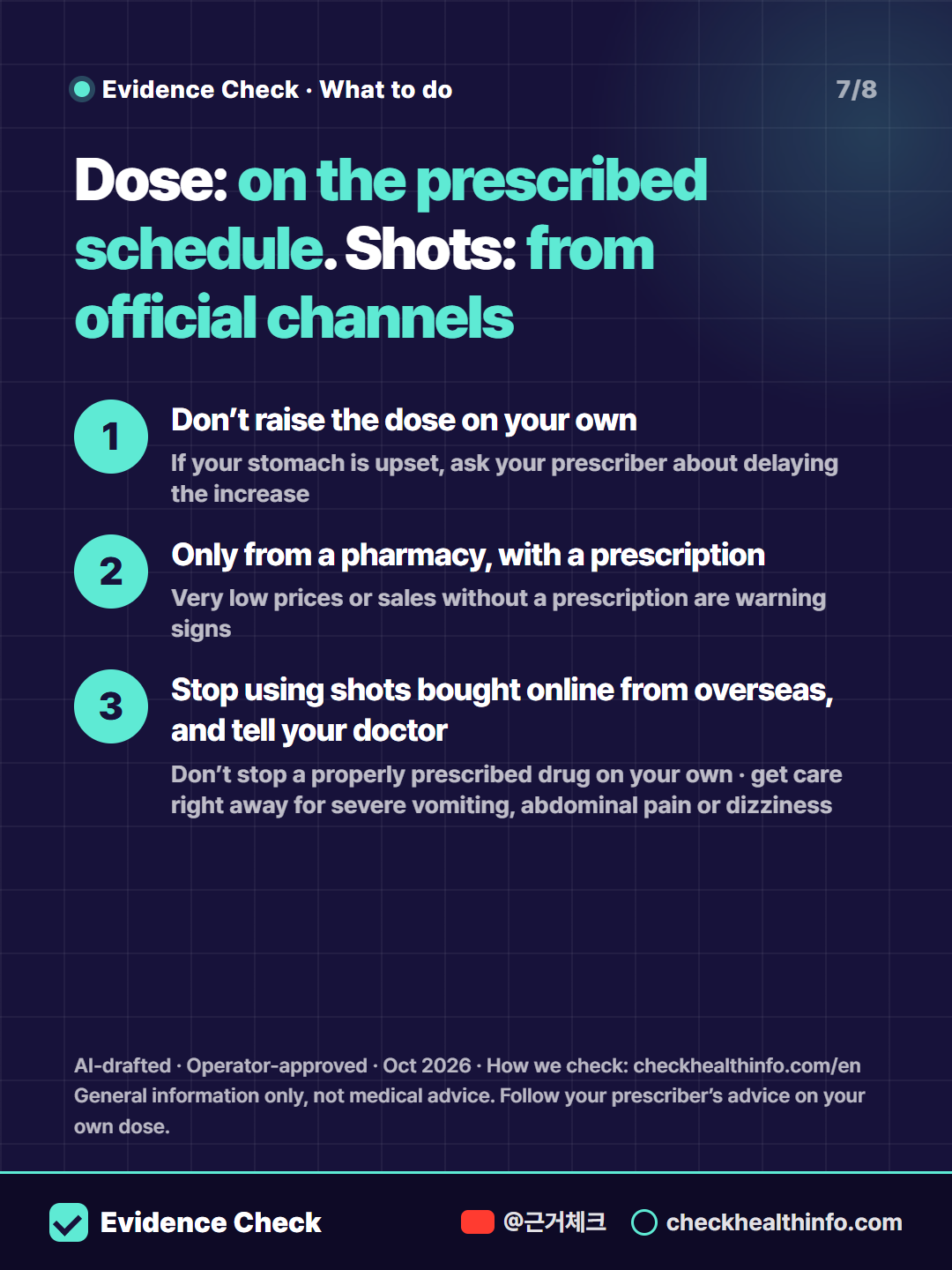
- Follow the prescribed dose schedule — Do not raise the dose on your own. If your stomach is upset, talk with your prescriber about whether to delay the next increase. Do not stop a properly prescribed drug or change its dose on your own because of symptoms.
- Use official channels — Use only products you get from a pharmacy with a doctor’s prescription. Prices that seem too low and sellers who do not require a prescription are warning signs.
- If you have already used a product bought from an overseas or online seller — Do not use any more of it, and tell your doctor (do not stop a properly prescribed drug on your own). If you have severe vomiting, abdominal pain or dizziness, get medical care right away.
Scope: Verdict 1 covers only raising the dose of an approved weight-loss shot faster or higher than prescribed, on your own. Verdict 2 covers only using weight-loss shots bought outside official channels, such as from overseas sellers online. This article does not cover adjusting the dose for any one person.
Limits of this verdict
- No randomized trial has directly compared people who raised the dose quickly on their own with people who raised it as prescribed. Verdict 1 is based on the dose-increase rules in the labeling and on trial data.
- The test-purchase analysis looked at only 3 vials of injectable drug, so we cannot say that all products bought this way are the same. Pharmacovigilance and poison center data are voluntary reports, so they cannot show how often problems actually happen.
- Even genuine (not counterfeit) products bought overseas may have been shipped or stored without proper refrigeration, and there is no way to check. The evidence on compounded drugs (Lambson 2023 and the FDA notice) comes from the US. The products received in the test purchases were powder vials labeled “for research use” (shipped to Hungary and the US), and they may differ from pen products sold overseas.
- We confirmed the MFDS announcement through a news report and could not open the original press release this time. We could not check the original clinical guideline of the Korean Society for the Study of Obesity, so we did not cite it. The US Centers for Disease Control and Prevention (CDC) does not issue recommendations on using weight-loss drugs.
- We set the grades under section 1 of our rating method. We check for new studies in our monthly PubMed review, and if a verdict changes, we record it in our corrections log (in Korean).
Card news
Video (in Korean)
References
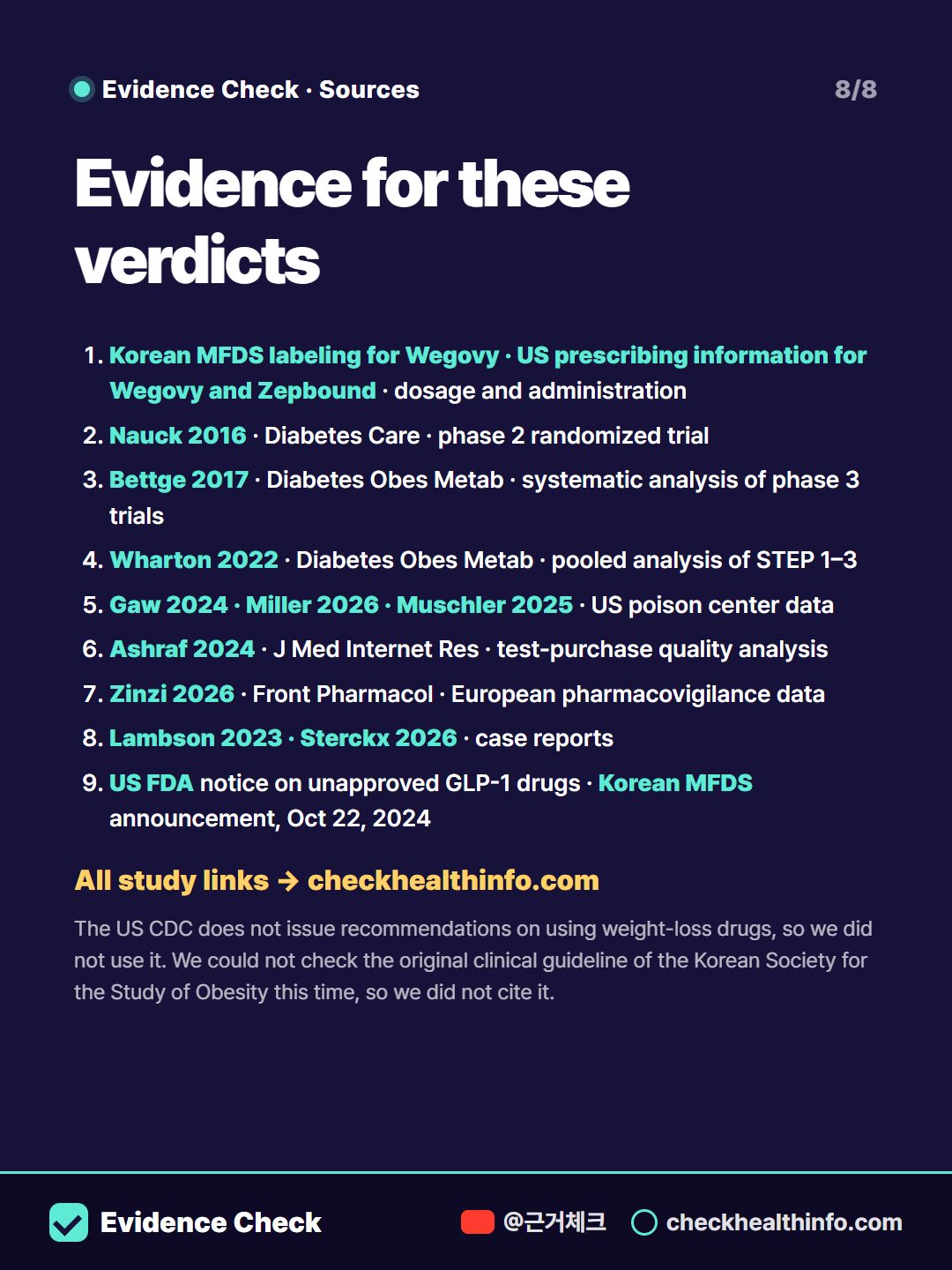
- Nauck MA, Petrie JR, Sesti G, et al. A Phase 2, Randomized, Dose-Finding Study of the Novel Once-Weekly Human GLP-1 Analog, Semaglutide, Compared With Placebo and Open-Label Liraglutide in Patients With Type 2 Diabetes. Diabetes Care 2016;39(2):231-41. PMID 26358288. PubMed abstract · Full article
- Bettge K, Kahle M, Abd El Aziz MS, et al. Occurrence of nausea, vomiting and diarrhoea reported as adverse events in clinical trials studying glucagon-like peptide-1 receptor agonists: A systematic analysis of published clinical trials. Diabetes Obes Metab 2017;19(3):336-347. PMID 27860132. PubMed abstract · Full article
- Wharton S, Calanna S, Davies M, et al. Gastrointestinal tolerability of once-weekly semaglutide 2.4 mg in adults with overweight or obesity, and the relationship between gastrointestinal adverse events and weight loss. Diabetes Obes Metab 2022;24(1):94-105. PMID 34514682. PubMed abstract · Full article · Free full text
- Gaw CE, Hays HL, Kemp CA, et al. Glucagon-Like Peptide-1 Receptor Agonist Cases Reported to United States Poison Centers, 2017-2022. J Med Toxicol 2024;20(2):193-204. PMID 38421490. PubMed abstract · Full article · Free full text
- Miller J, Miller R, Varney SM, et al. National Poison Center Trends in GLP-1 Receptor Agonist Exposures Following FDA Approval for Weight Loss. J Med Toxicol 2026;22(2):275-285. PMID 41634285. PubMed abstract · Full article · Free full text
- Ashraf AR, Mackey TK, Vida RG, et al. Multifactor Quality and Safety Analysis of Semaglutide Products Sold by Online Sellers Without a Prescription: Market Surveillance, Content Analysis, and Product Purchase Evaluation Study. J Med Internet Res 2024;26:e65440. PMID 39509151. PubMed abstract · Full article · Free full text
- Zinzi A, Gaio M, Ruggiero R, et al. Unmasking counterfeit semaglutide: analysis of real-world safety data from EudraVigilance. Front Pharmacol 2026;17:1805842. PMID 42137313. PubMed abstract · Full article · Free full text
- Lambson JE, Flegal SC, Johnson AR. Administration errors of compounded semaglutide reported to a poison control center-Case series. J Am Pharm Assoc (2003) 2023;63(5):1643-1645. PMID 37392810. PubMed abstract · Full article
- Sterckx M, De Keyser L. Euglycemic Ketoacidosis Following the Use of Counterfeit Semaglutide for Weight Loss. Cureus 2026;18(1):e102627. PMID 41773123. PubMed abstract · Full article · Free full text
- Muschler K, Muschalek R, Hoyte C. Characterization of glucagon-like peptide-1 (GLP-1) agonist exposures reported to a single United States poison center. Clin Toxicol (Phila) 2025;63(2):133-136. PMID 39803696. PubMed abstract · Full article
General information only, not medical advice. Follow your prescriber’s advice on your own dose. Do not stop a properly prescribed drug or change its dose on your own; if you have severe vomiting, abdominal pain or dizziness, get medical care right away.