Weight-loss shot side effects: how common are nausea, gallstones and pancreatitis?
With weight-loss injections (semaglutide, tirzepatide), how common are gastrointestinal side effects such as nausea, and do pancreatitis and gallbladder disease really go up?

We checked this verdict against 18 sources, such as published studies and clinical guidelines. · How checked: Operator-approved
Verdicts at a glance
| Claim | Verdict |
|---|---|
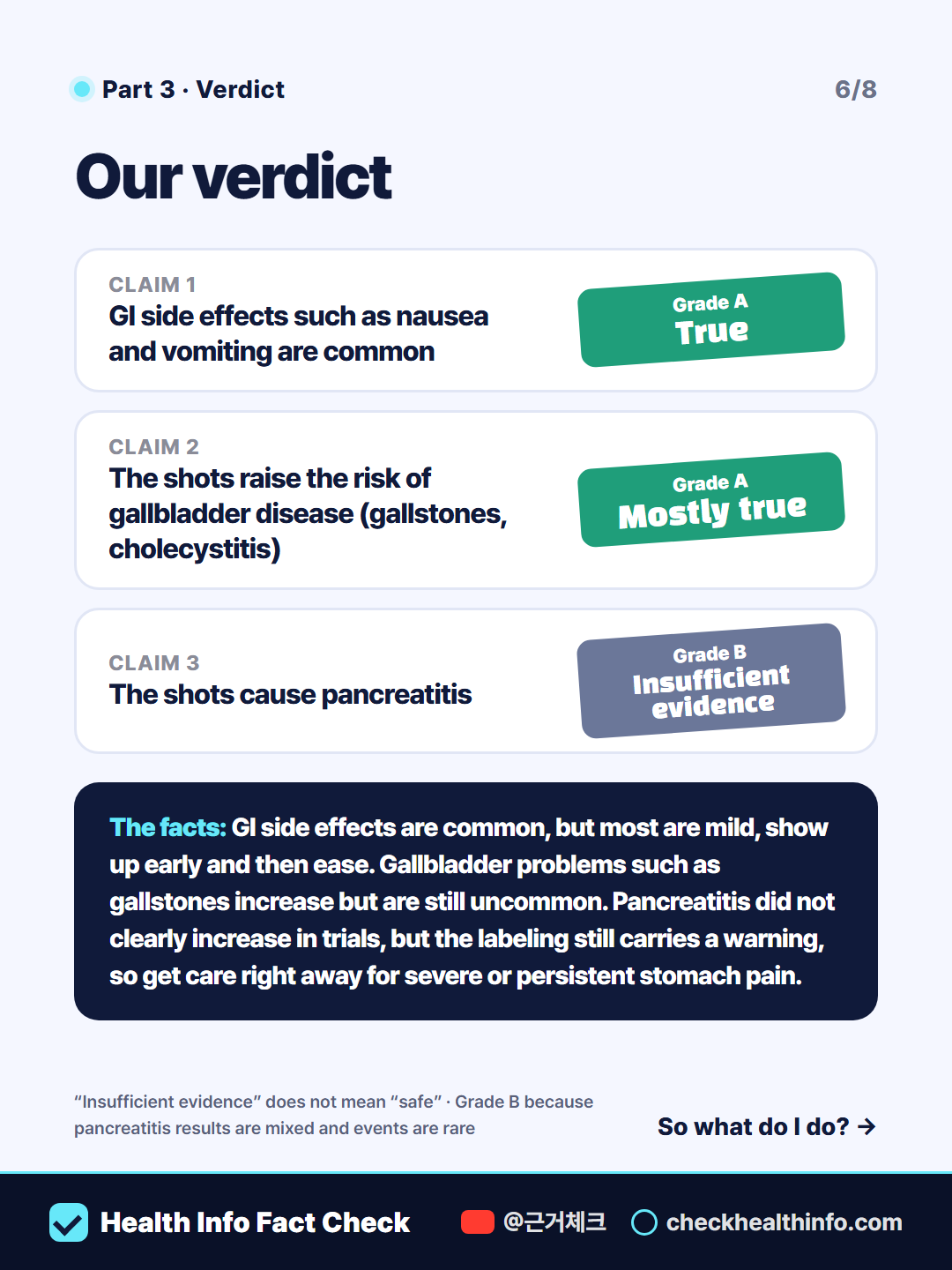
| Weight-loss injections commonly cause gastrointestinal side effects such as nausea and vomiting | True · Evidence grade A |
| Weight-loss injections raise the risk of gallbladder disease (gallstones, cholecystitis) | Mostly true · Evidence grade A |
| Weight-loss injections cause pancreatitis | Insufficient evidence · Evidence grade B |
Bottom line — Gastrointestinal side effects such as nausea, diarrhea and vomiting are common with weight-loss injections (semaglutide and tirzepatide). But most are mild to moderate, and they are most common early on, while the dose is being increased, and then ease. Gallbladder problems such as gallstones and gallbladder inflammation (cholecystitis) did increase in randomized trials, but they are still uncommon: the drugs add only about 2 to 9 gallstone cases per 1,000 people. For pancreatitis, pooled randomized trials did not show a clear increase, so it has not been shown that the drugs raise the risk of pancreatitis (Insufficient evidence). Because pancreatitis is so rare, though, a link cannot be ruled out, and the drug labeling still carries a pancreatitis warning. If you have severe or persistent stomach pain, yellowing of the skin or eyes (jaundice), or a fever, get medical care right away.
Randomized trial — A study that randomly assigns people to the real drug or to a dummy drug (placebo) and compares them. It is the most direct way to show whether a side effect is caused by the drug.
Relative risk — How many times as often something happened in the drug group as in the placebo group. A value above 1 means it happened more often. If a condition is rare to begin with, even a risk that is “several times higher” may add only a few cases.
Odds ratio — Compares the odds (the chance that something happens divided by the chance that it does not) between two groups. For very rare events such as pancreatitis it is close to the relative risk, but it should not be read directly as “times the risk.”
Hazard ratio — Compares how quickly an event occurs over time in two groups. It is often used in observational studies.
95% confidence interval — The range in which the true value likely lies. If the range includes 1, we cannot say for sure whether the risk went up or down.
Drug names — Semaglutide is the active ingredient in Wegovy and Ozempic; tirzepatide is the active ingredient in Mounjaro (sold for weight management in the US as Zepbound); liraglutide is the active ingredient in Saxenda. We name products only so you can tell which ingredient they contain. We do not recommend any specific product.
Claim 1. “Weight-loss injections commonly cause gastrointestinal side effects such as nausea and vomiting”
True · Evidence grade A
In plain terms Many people who take these injections have nausea, diarrhea, vomiting or constipation. But it is usually mild. It is most common early on, while the dose is being increased, and then it eases.
- In a systematic review of 38 randomized trials of GLP-1–based drugs in adults without diabetes (Ann Intern Med 2026), gastrointestinal adverse events occurred in 76.0% of people taking the drugs vs 40.1% of people taking placebo. Stopping the drug because of side effects was also more common (10.7% vs 3.4%). [1]
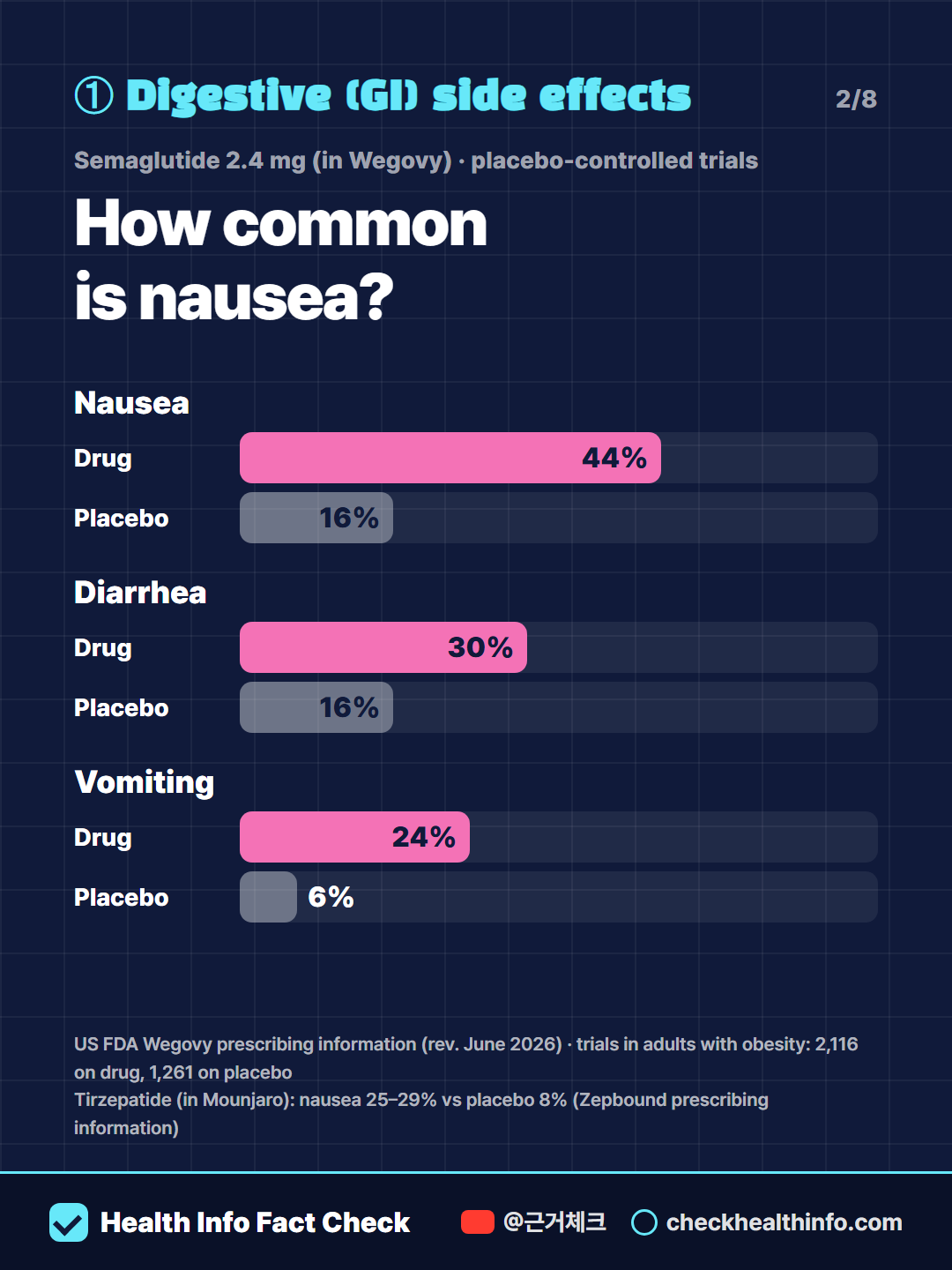
- In the trials in adults with obesity described in the US FDA prescribing information for Wegovy (semaglutide 2.4 mg), nausea occurred in 44% (placebo 16%), diarrhea in 30% (16%), vomiting in 24% (6%) and constipation in 24% (11%). [16] In the Zepbound (tirzepatide) prescribing information, nausea occurred in 25–29% (placebo 8%) and any gastrointestinal adverse event in 56% (placebo 30%). [17]
- In a meta-analysis of 13 randomized trials in people with obesity and without diabetes, gastrointestinal adverse events were 1.86 times as common as with placebo (relative risk; 95% confidence interval 1.56–2.21), and most were mild. [2] A modeling analysis based on pooled randomized trials (7 trials after a 2026 correction) estimated that over 2 years, for every 1,000 people, there would be 118 more cases of constipation, 110 more of vomiting and 100 more of diarrhea than with placebo. [3]
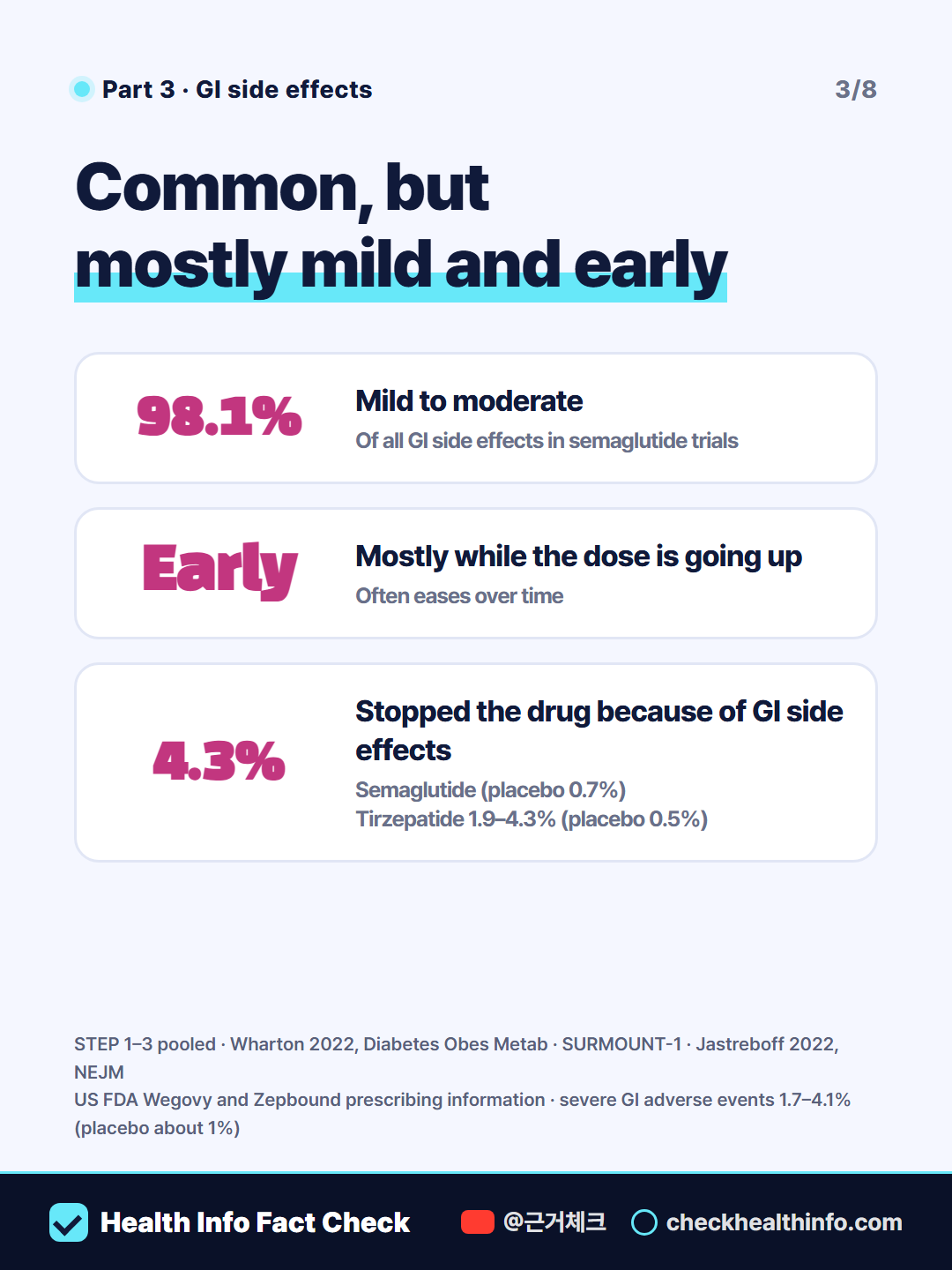
- In a pooled analysis of three semaglutide trials (STEP 1–3), 98.1% of gastrointestinal adverse events were mild to moderate, and most were temporary and occurred mainly while the dose was being increased. In all, 4.3% of people stopped the drug permanently because of gastrointestinal adverse events (Wegovy prescribing information: placebo 0.7%). [4][16] In a tirzepatide trial (SURMOUNT-1), the most common adverse events were also gastrointestinal, and most were mild to moderate and occurred while the dose was being increased. [5]
Scope: Severe gastrointestinal adverse events were also more common with the drugs (Wegovy 4.1% vs 0.9%; Zepbound 1.7–3.1% vs 1%). If vomiting or diarrhea leads to dehydration, sudden (acute) kidney injury can occur in rare cases, and the US Food and Drug Administration (FDA) and Korea’s Ministry of Food and Drug Safety (MFDS) labeling include a caution about this. [16][18] The individual trials we cite were funded by the manufacturers.
Claim 2. “Weight-loss injections raise the risk of gallbladder disease (gallstones, cholecystitis)”
Mostly true · Evidence grade A
In plain terms Gallstones really did increase. But they are uncommon to begin with, so the drugs add only about 2 to 9 gallstone cases per 1,000 people.
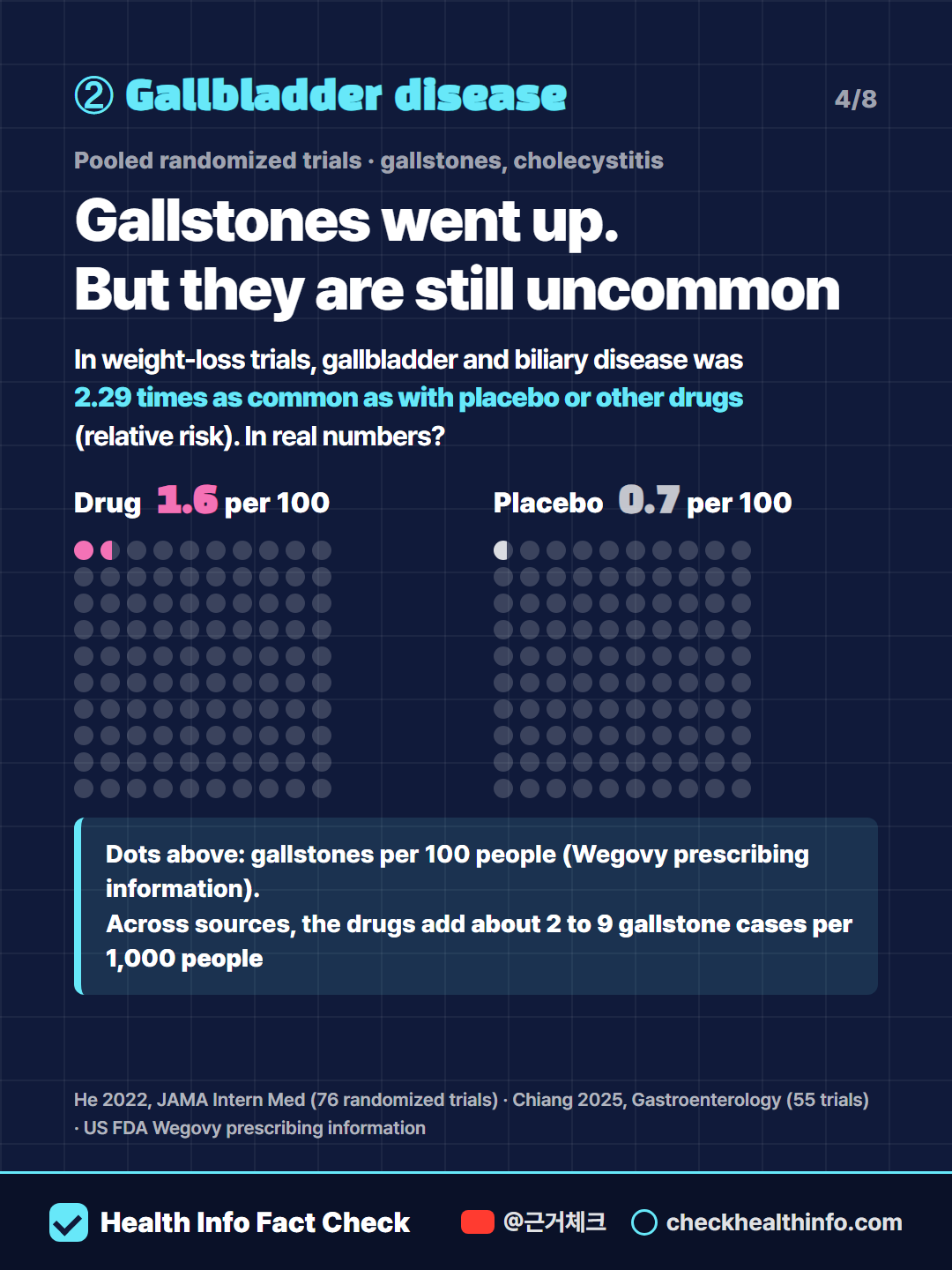
- In a meta-analysis of 76 randomized trials (JAMA Intern Med 2022), the relative risk of gallbladder or biliary disease (vs placebo or other drugs) was 1.37 (95% confidence interval 1.23–1.52); in the 13 trials of the drugs for weight loss, it was 2.29 (1.64–3.18). The risk was higher at higher doses and with longer use. [6]
- In a meta-analysis of 55 placebo-controlled randomized trials (Gastroenterology 2025), the relative risk of gallstones was 1.46 (1.09–1.97), or about 2 more cases per 1,000 people (including trials in people with diabetes). The increase was more pronounced in trials of people with overweight or obesity, but the subgroup difference was not statistically significant. [7] A 2-year estimate from trials in people with obesity and without diabetes also fell within this range (about 2 to 9 per 1,000). [3] In an analysis of 21 trials, mostly cardiovascular outcome trials in high-risk patients, gallbladder disease was 26% more common than in the comparison groups (a relative increase). [8]
- Results differed by drug. In a meta-analysis of trials in people with obesity, semaglutide increased gallstones, but tirzepatide showed no significant increase. [2] In an analysis of tirzepatide trials only, a combined outcome of gallbladder and biliary disease was 1.97 times as common (1.14–3.42) compared with placebo or basal insulin, but gallstones, cholecystitis and biliary disease were each not significantly increased on their own. [9]
- In the US FDA prescribing information for Wegovy, gallstones occurred in 1.6% vs 0.7% with placebo and cholecystitis in 0.6% vs 0.2%, and they were still more common with the drug after accounting for the amount of weight lost. [16] In the Zepbound prescribing information, gallstones occurred in 1.1% vs 1% and cholecystitis in 0.7% vs 0.2%. [17]
- In short, the drugs add about 2 to 9 gallstone cases per 1,000 people (from 2 per 1,000 in the meta-analysis of 55 randomized trials to about 9 per 1,000, the difference between 1.6% and 0.7% in the Wegovy prescribing information). This is not a confidence interval; it places side by side the figures from two sources that differ in the people studied and the length of follow-up.
The finding that the risk goes up is consistent across pooled analyses of randomized trials. But under our rating method, “Mostly true” is used when the size of the effect or the group it applies to is narrower than the claim implies. The drugs add only about 2 to 9 gallstone cases per 1,000 people, results differed somewhat between drugs (semaglutide increased gallstones, while tirzepatide increased only the combined outcome), and rapid, large weight loss itself also raises the risk of gallstones.
Claim 3. “Weight-loss injections cause pancreatitis”
Insufficient evidence · Evidence grade B
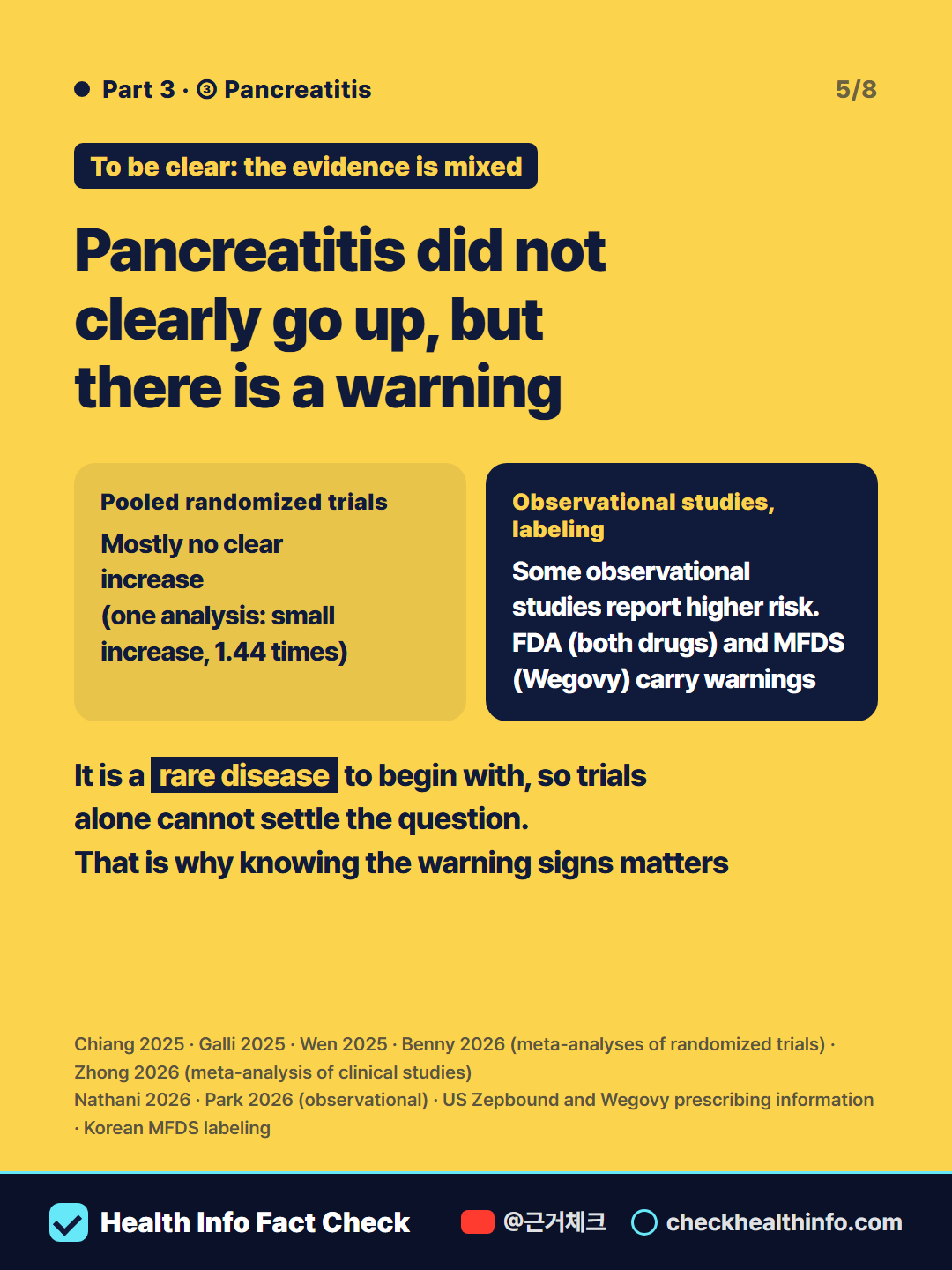
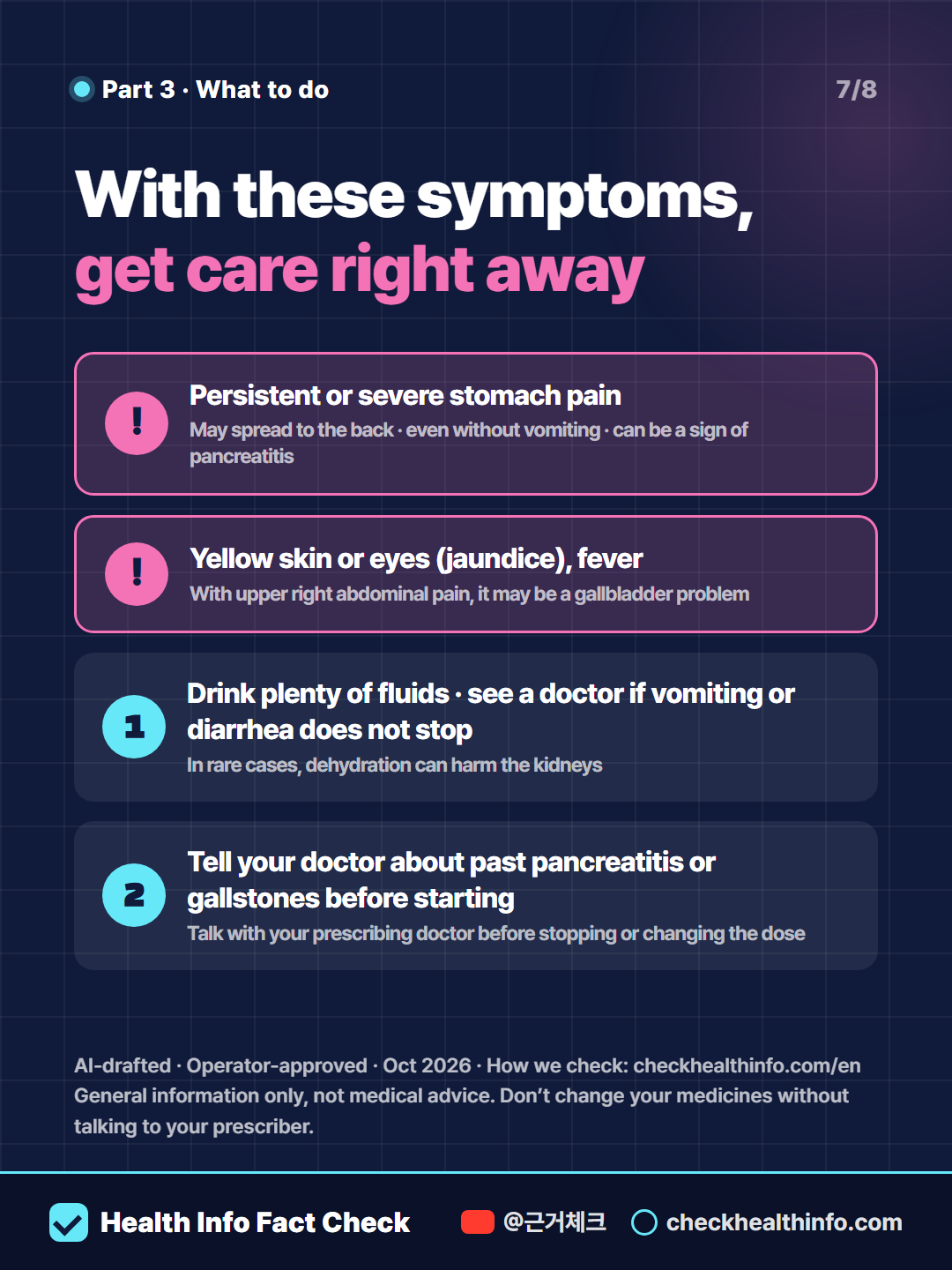
In plain terms When randomized trials are pooled, pancreatitis does not clearly increase, so it has not been shown that the drugs cause pancreatitis. But pancreatitis is so rare that we also cannot say for certain that it does not increase. “Insufficient evidence” does not mean “safe,” and the drug labeling still carries a pancreatitis warning. If you have severe or persistent stomach pain, which can spread to the back, get medical care right away, before your next injection.
- A meta-analysis of 55 placebo-controlled randomized trials concluded that, apart from gallstones and gastroesophageal reflux, the drugs probably have little or no effect on other gastrointestinal and biliary events, including pancreatitis. [7] An analysis of 21 randomized trials also found no difference in pancreatitis. [8]
- In a meta-analysis of 52 studies of the drugs for treating obesity, the odds ratio for pancreatitis was 1.29 (95% confidence interval 0.91–1.84), showing no clear association. [10] In an analysis of tirzepatide trials only, the relative risk was 1.46, but the confidence interval was wide (0.59–3.61). [9] Across 19 randomized trials of tirzepatide, acute pancreatitis was very rare (0.22%). [11]
- In the US FDA prescribing information, acute pancreatitis confirmed by an adjudication committee occurred in 0.2% with Zepbound vs 0.2% with placebo, and at 0.2 cases per 100 person-years with Wegovy vs fewer than 0.1 with placebo. [16][17]
- Some results point the other way. In a meta-analysis of 62 trials (average age 58, including trials in which people were also taking other drugs), the overall relative risk was slightly increased, at 1.44 (95% confidence interval 1.09–1.89). When the trials were split by whether people were taking other background drugs, the results pointed the same way in both groups but were not statistically significant. [12] In an observational study of US electronic health records (patients with diabetes or obesity), the hazard ratio for drug-induced pancreatitis was 2.85 [13], and in an observational study from 13 hospitals in Korea, people who started liraglutide for weight loss had a hazard ratio of 1.40 for a combined outcome of pancreatitis, cholangitis (bile duct inflammation) and gallstones [14]. In observational studies, the groups being compared may have differed from the start, and a diagnosis such as “drug-induced” is more likely to be given to people who are taking the drug.
- A 2026 review that brought the evidence together concluded that the evidence for a causal link is most consistent for gallbladder disease, while for acute pancreatitis it is still uncertain. [15]
The US FDA prescribing information warns that severe or persistent stomach pain, which can spread to the back and may come with or without vomiting, can be a sign of pancreatitis, and that the drug should be stopped if pancreatitis is suspected. Korea’s MFDS labeling for Wegovy also says to stop the drug if pancreatitis is suspected and not to restart it if pancreatitis is confirmed. [16][17][18] If you have ongoing pain in the upper middle or upper right part of your abdomen, a fever, or yellowing of the skin or eyes (jaundice), it may be a gallbladder problem, so get medical care right away as well. If vomiting or diarrhea does not stop, you can become dehydrated, so drink plenty of fluids and see a doctor. If you have had pancreatitis or gallstones, tell your doctor before the drug is prescribed, and talk with the doctor who prescribed it before stopping the drug or changing the dose.
Limitations of this verdict
- Most randomized trials were short, about 1 to 2 years, and many were funded by the drug manufacturers. Rare events such as pancreatitis occurred too seldom in the trials to give certain results.
- Most participants in the trials we cite were from Western countries. We did not cite randomized evidence looking specifically at Korean people this time.
- Several meta-analyses also included trials in people with diabetes, so some of the evidence is indirect for people using these drugs to treat obesity.
- We did not find a summary of a clinical guideline that directly addresses this topic, and we did not cite the Korean labeling for Mounjaro because we could not check it directly.
- The US Centers for Disease Control and Prevention (CDC) does not issue recommendations on using weight-loss drugs. If you see weight-loss drug information described as a “CDC recommendation,” check the source again.
- Grades follow section 1 of our rating method. Claims 1 and 2 are graded A because pooled analyses of randomized trials were consistent. Claim 3 was graded down one level to B because the results were mixed and the events were rare, so the confidence intervals were wide.
- We check for new studies in our monthly PubMed review. If a verdict changes, we will update this page and note the change.
Card news
Video (in Korean)
Easy version (in Korean)
Full evidence (in Korean)
References
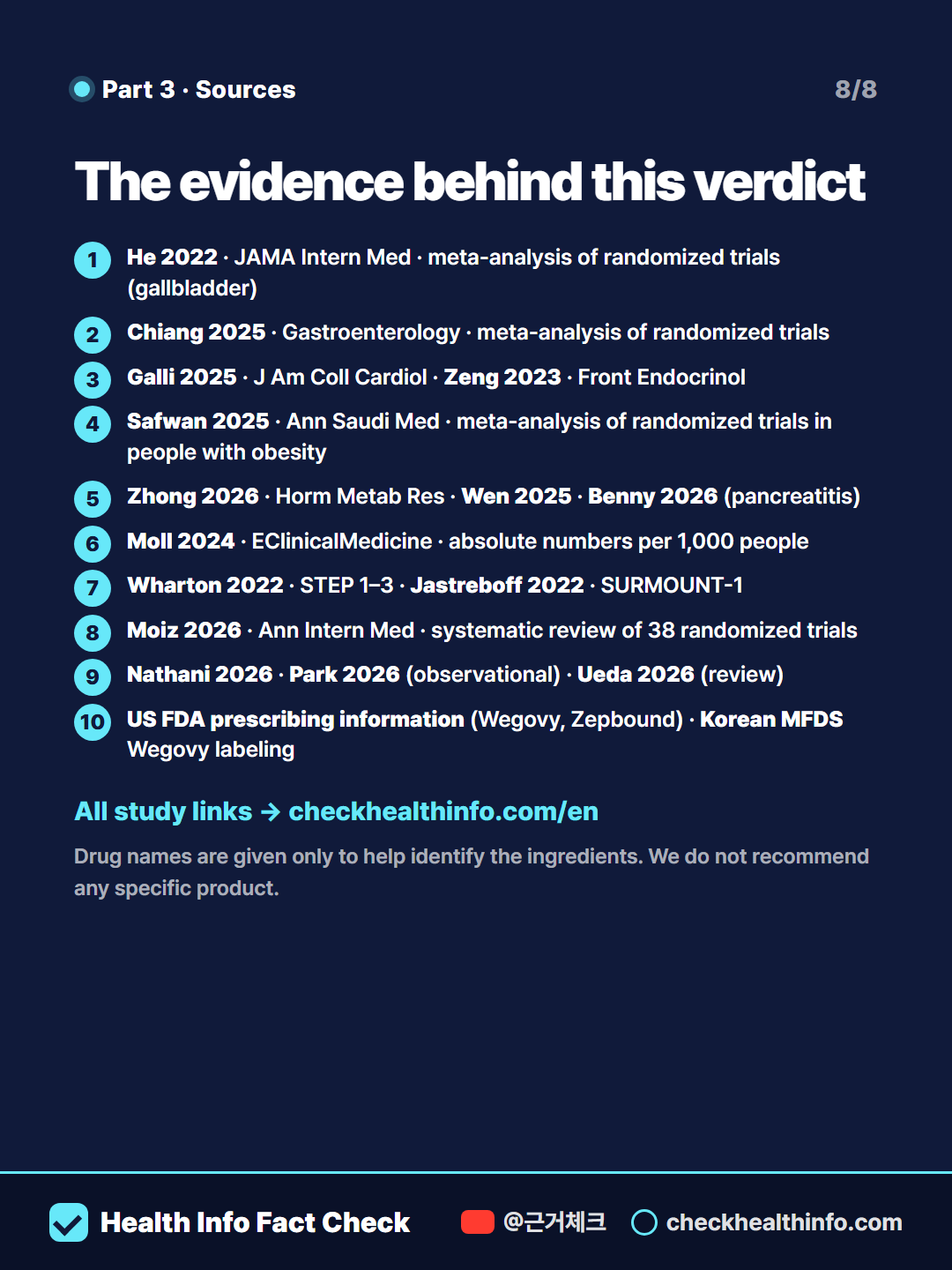
- Moiz A, Filion KB, Samuels AE, et al. Efficacy and Safety of Glucagon-like Peptide-1 Receptor Agonists and Co-agonists for Weight Loss Among Adults Without Diabetes : An Updated Systematic Review. Ann Intern Med 2026. PMID 42673585. PubMed abstract · Full article
- Safwan M, Bourgleh MS, Alotaibi SA, et al. Gastrointestinal safety of semaglutide and tirzepatide vs. placebo in obese individuals without diabetes: a systematic review and meta analysis. Ann Saudi Med 2025;45(2):129-143. PMID 40189856. PubMed abstract · Full article · Free full text
- Moll H, Frey E, Gerber P, et al. GLP-1 receptor agonists for weight reduction in people living with obesity but without diabetes: a living benefit-harm modelling study. EClinicalMedicine 2024;73:102661. PMID 38846069. PubMed abstract · Full article · Free full text
- Wharton S, Calanna S, Davies M, et al. Gastrointestinal tolerability of once-weekly semaglutide 2.4 mg in adults with overweight or obesity, and the relationship between gastrointestinal adverse events and weight loss. Diabetes Obes Metab 2022;24(1):94-105. PMID 34514682. PubMed abstract · Full article · Free full text
- Jastreboff AM, Aronne LJ, Ahmad NN, et al. Tirzepatide Once Weekly for the Treatment of Obesity. N Engl J Med 2022;387(3):205-216. PMID 35658024. PubMed abstract · Full article
- He L, Wang J, Ping F, et al. Association of Glucagon-Like Peptide-1 Receptor Agonist Use With Risk of Gallbladder and Biliary Diseases: A Systematic Review and Meta-analysis of Randomized Clinical Trials. JAMA Intern Med 2022;182(5):513-519. PMID 35344001. PubMed abstract · Full article · Free full text
- Chiang CH, Jaroenlapnopparat A, Colak SC, et al. Glucagon-Like Peptide-1 Receptor Agonists and Gastrointestinal Adverse Events: A Systematic Review and Meta-Analysis. Gastroenterology 2025;169(6):1268-1281. PMID 40499738. PubMed abstract · Full article
- Galli M, Benenati S, Laudani C, et al. Cardiovascular Effects and Tolerability of GLP-1 Receptor Agonists: A Systematic Review and Meta-Analysis of 99,599 Patients. J Am Coll Cardiol 2025;86(20):1805-1819. PMID 40892610. PubMed abstract · Full article
- Zeng Q, Xu J, Mu X, et al. Safety issues of tirzepatide (pancreatitis and gallbladder or biliary disease) in type 2 diabetes and obesity: a systematic review and meta-analysis. Front Endocrinol (Lausanne) 2023;14:1214334. PMID 37908750. PubMed abstract · Full article · Free full text
- Zhong X, Zhao Y, Han M, et al. Effects of Glucagon-Like Peptide-1 Receptor Agonists as Weight Loss Drugs on Pancreatitis and Pancreatic Cancer: A Meta-Analysis. Horm Metab Res 2026;58(9):354-363. PMID 42600634. PubMed abstract · Full article
- Benny O, Agarwal A, Alecock H, et al. Dose-response analysis of tirzepatide and acute pancreatitis: An international systematic review and quantitative meta-analysis of randomised trials. Pancreatology 2026;26(4):552-565. PMID 41927408. PubMed abstract · Full article
- Wen J, Nadora D, Bernstein E, et al. Evaluating the Rates of Pancreatitis and Pancreatic Cancer Among GLP-1 Receptor Agonists: A Systematic Review and Meta-Analysis of Randomised Controlled Trials. Endocrinol Diabetes Metab 2025;8(5):e70113. PMID 40988099. PubMed abstract · Full article · Free full text
- Nathani P, Hamamah S, Velji J, et al. Incidence of Gastrointestinal Adverse Events and Healthcare Resource Utilization in Patients Using Glucagon-Like Peptide-1 Analogs: A Real-World Study. Dig Dis Sci 2026;71(11):5405-5415. PMID 42418075. PubMed abstract · Full article · Free full text
- Park J, Kim JH, Kim YS, et al. GLP-1 Receptor Agonists for Weight Loss and Risk of Major Safety Outcomes: A Multicentre Cohort Study. Diabetes Obes Metab 2026;28(9):8649-8659. PMID 42410329. PubMed abstract · Full article · Free full text
- Ueda P. GLP-1 receptor agonists and serious adverse events: Evidence, uncertainty and clinical implications. J Intern Med 2026. PMID 42851139. PubMed abstract · Full article
- US DailyMed — Wegovy (semaglutide) prescribing information (revised June 2026): adverse reactions; warnings on gallbladder disease, pancreatitis and dehydration (accessed 2026-10-15). Source
- US DailyMed — Zepbound (tirzepatide) prescribing information (revised August 2026): adverse reactions; warnings on gallbladder disease, pancreatitis and dehydration (accessed 2026-10-15). Source
- Korea MFDS drug database — Wegovy 2.4 mg prefilled pen (semaglutide) labeling: dehydration, gallstones, pancreatitis (accessed 2026-10-15). Source
General information only, not medical advice. Do not start, stop or change the dose of these medicines without talking to your doctor. If you have severe or persistent stomach pain, get medical care right away.