Wegovy vs. Mounjaro: which leads to more weight loss?
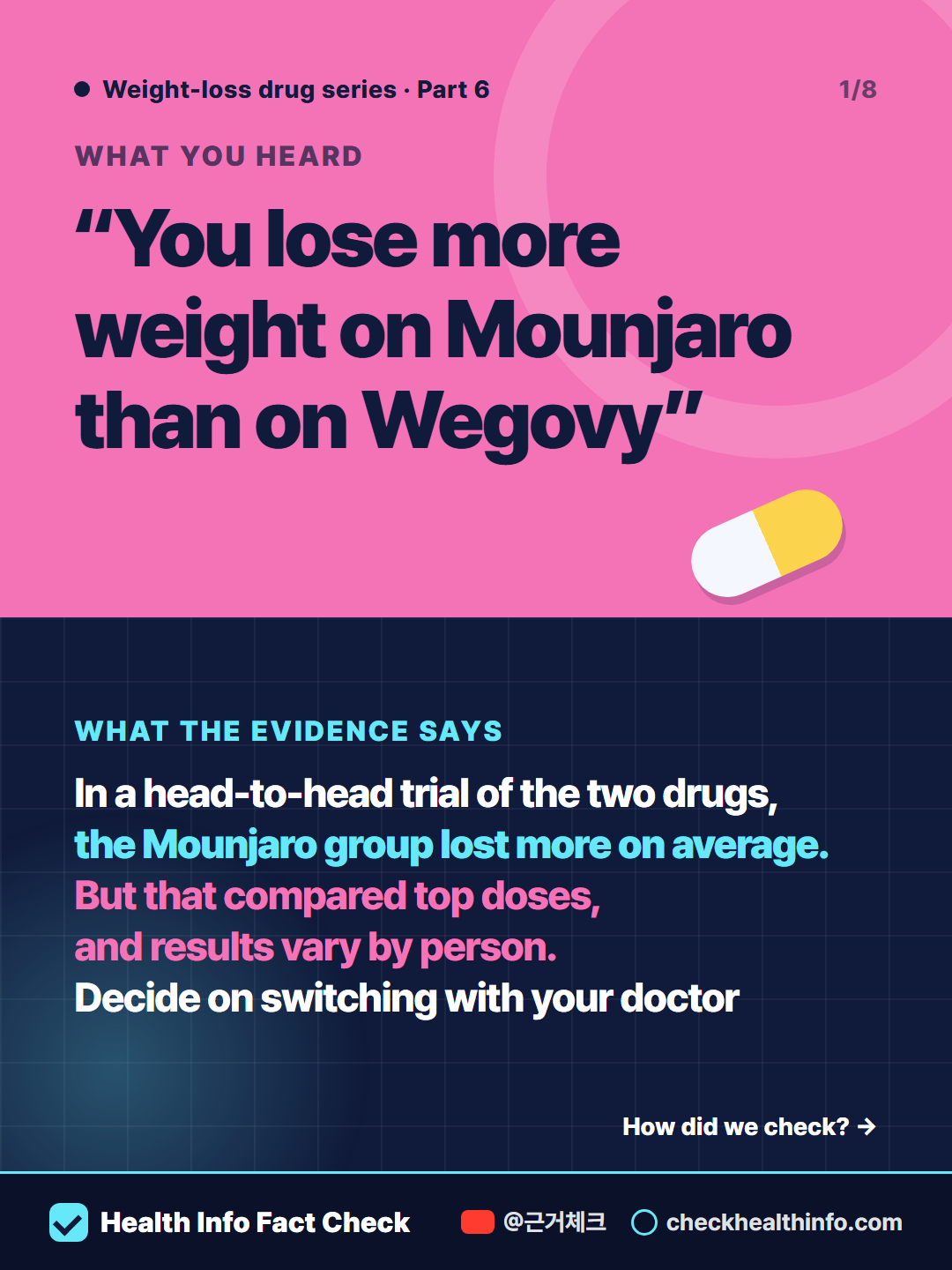
Do people lose more weight on Mounjaro than on Wegovy?

We checked this verdict against 11 sources, such as published studies and clinical guidelines. · How checked: Operator-approved
Verdicts at a glance
| Claim | Verdict |
|---|---|
| You lose more weight on Mounjaro (tirzepatide) than on Wegovy (semaglutide) | Mostly true · Evidence grade A |
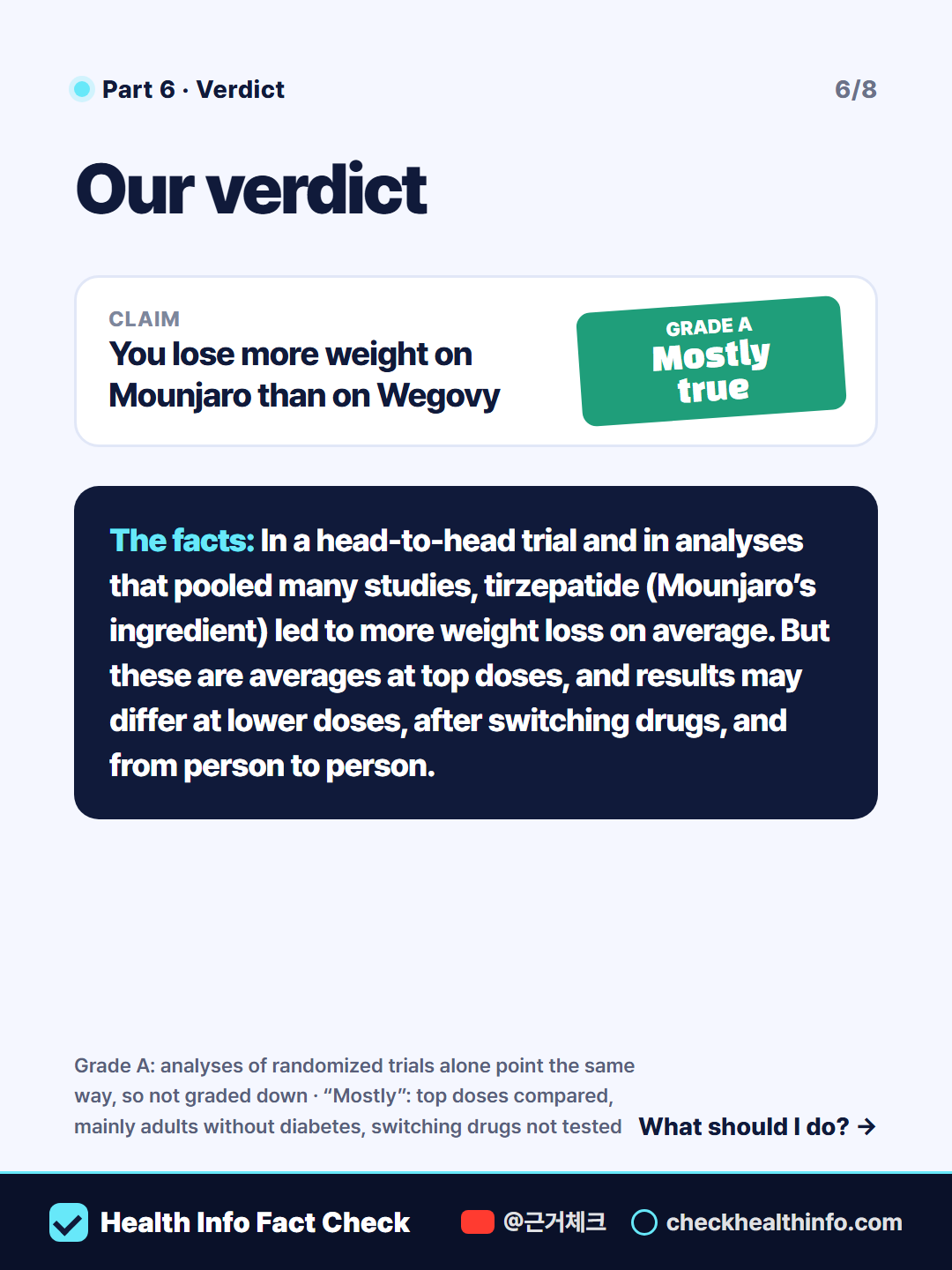
Bottom line — In a trial that compared the two drugs head to head and in analyses that pooled many studies, tirzepatide (the ingredient in Mounjaro) led to more weight loss on average than semaglutide (the ingredient in Wegovy). But these are averages from comparing each person’s highest tolerated dose, the difference was not clear at a lower dose, and these trials did not test switching people from Wegovy to Mounjaro. That is why we rate the claim Mostly true. Talk to your prescriber before switching.
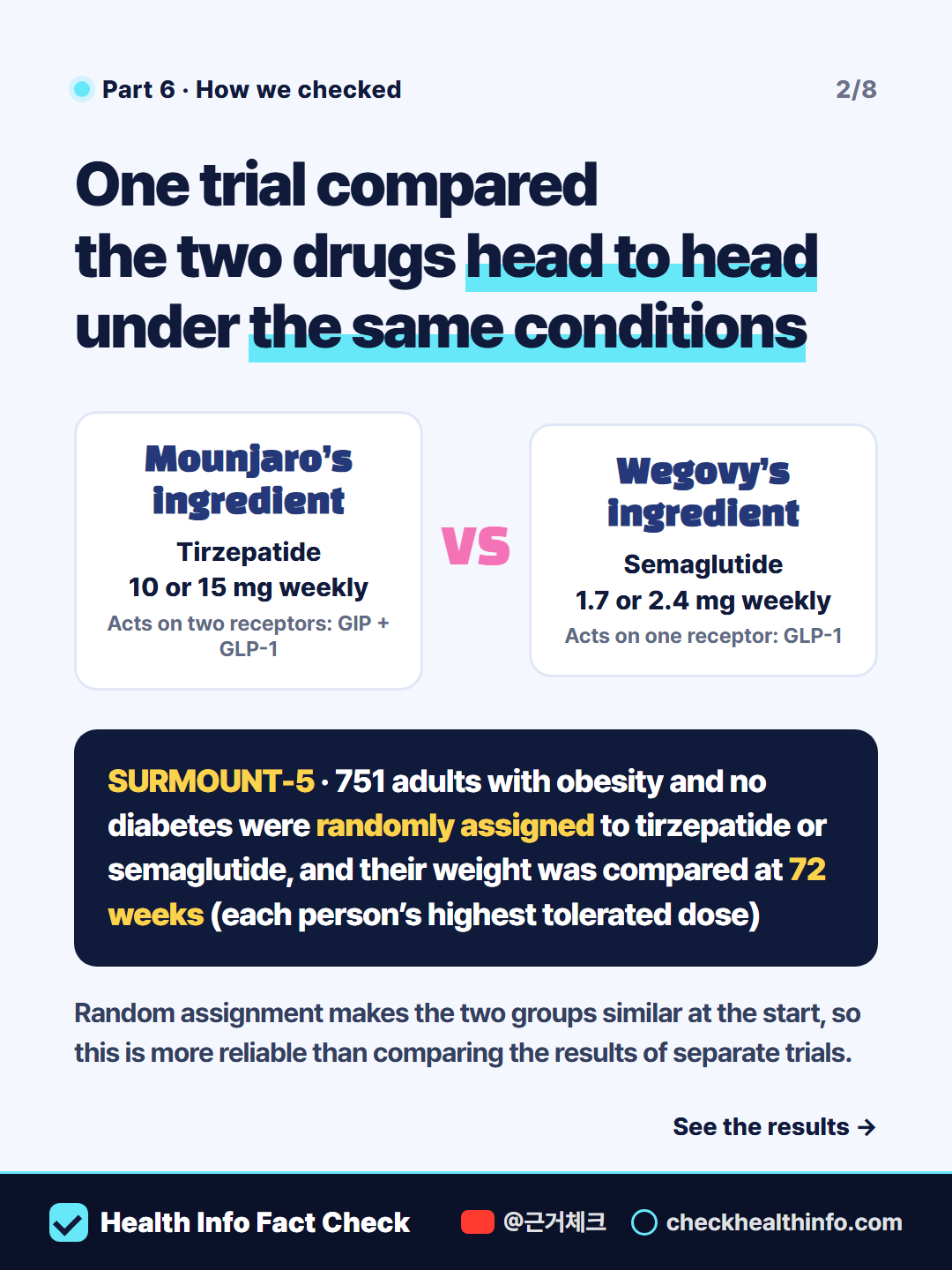
Head-to-head trial — A trial that compares two drugs directly, under the same conditions, within one trial. In the trial discussed here, participants were randomly assigned to get either tirzepatide or semaglutide, and their weight was compared after 72 weeks (a randomized head-to-head trial). Random assignment makes the two groups similar at the start, so differences that appear can be attributed to the drugs. This is more reliable than an “indirect comparison” that lines up the results of separate trials of each drug.
Systematic review and meta-analysis — An analysis that searches for and collects studies on the same question using set methods and, when possible, combines their results.
Network meta-analysis — When few trials have compared two drugs directly, this type of analysis adds trials that compared each drug with placebo or other treatments to the head-to-head trials, so many drugs can be compared at once.
Retrospective cohort study — A study that looks back at the medical records of people who already used the drugs (a type of observational study). Because people were not randomly assigned, the two groups may have differed from the start.
Highest tolerated dose — The highest dose a person can take without side effects becoming too much (maximum tolerated dose). In this trial, doses were raised to tirzepatide 10 mg or 15 mg, or semaglutide 1.7 mg or 2.4 mg.
Percentage points — The difference between two percentages, found by subtracting one from the other.
95% confidence interval — The range in which the true value likely lies. If the whole range is on one side, we conclude that there is a difference.
Relative risk — The rate of an event in one group divided by the rate in the other. A value above 1 means the event happened more often in that group.
Drug names — Semaglutide is the active ingredient in Wegovy and Ozempic; tirzepatide is the ingredient in Mounjaro (in the US, the tirzepatide product for weight management is called Zepbound). We name products only so you can tell which ingredient they contain; we do not recommend any specific product.
Claim. “You lose more weight on Mounjaro (tirzepatide) than on Wegovy (semaglutide)”
Mostly true · Evidence grade A
In plain terms When the two drugs were tested against each other in one trial, people on tirzepatide (the ingredient in Mounjaro) lost more weight on average. But that is the average when each person was taken up to the highest dose they could tolerate, so it does not automatically apply to lower doses, to switching drugs, or to any one person.
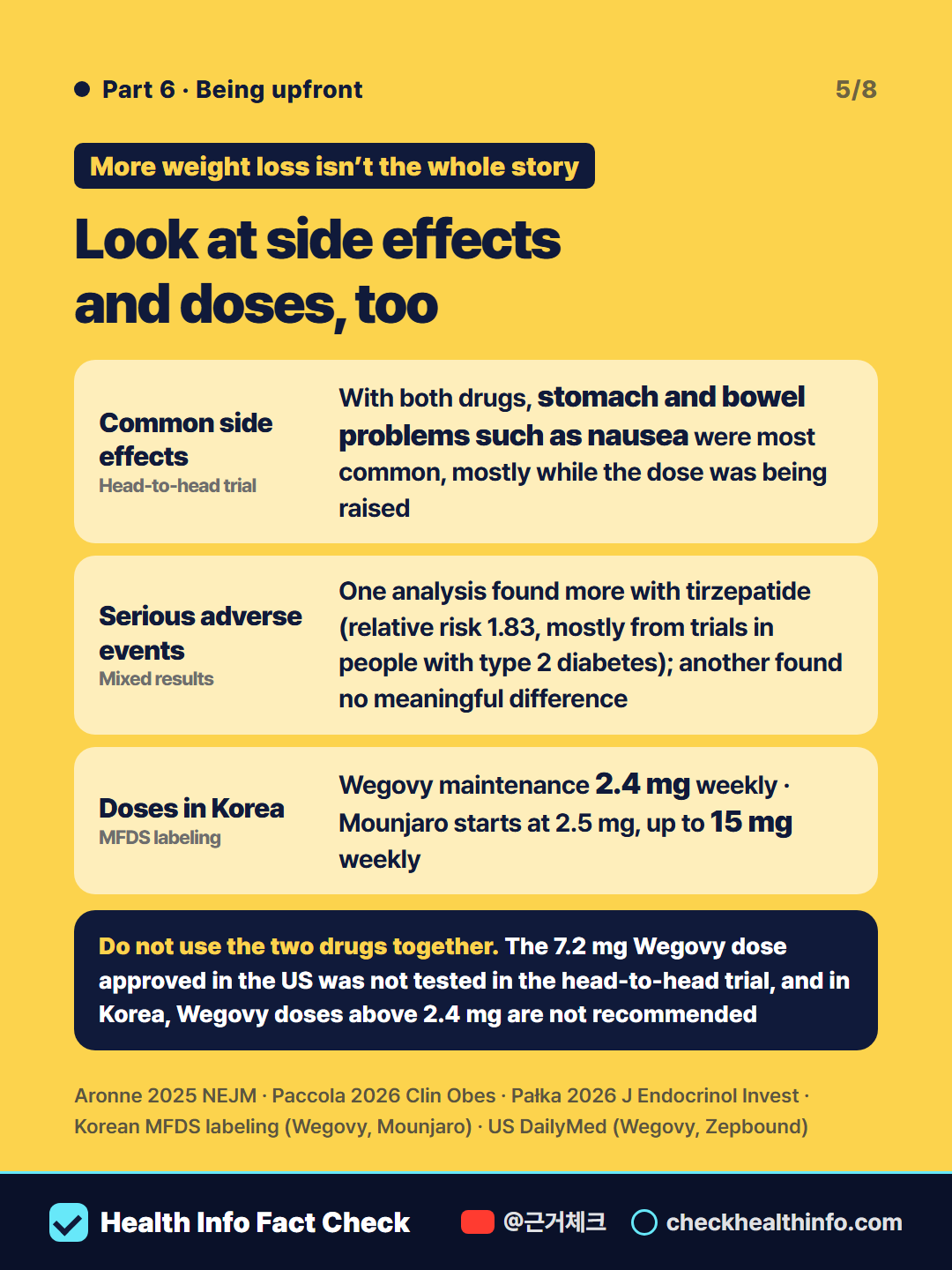
- The two drugs have different active ingredients. Semaglutide acts on one receptor (GLP-1), and tirzepatide acts on two (GIP and GLP-1). Both are approved in Korea for chronic weight management in adults. The Wegovy dose is increased every 4 weeks to a maintenance dose of 2.4 mg once weekly from week 17, and doses above 2.4 mg are not recommended [8]. Mounjaro starts at 2.5 mg once weekly for 4 weeks, then goes up to 5 mg, and the dose is chosen based on response and tolerability, up to a maximum of 15 mg once weekly [9].
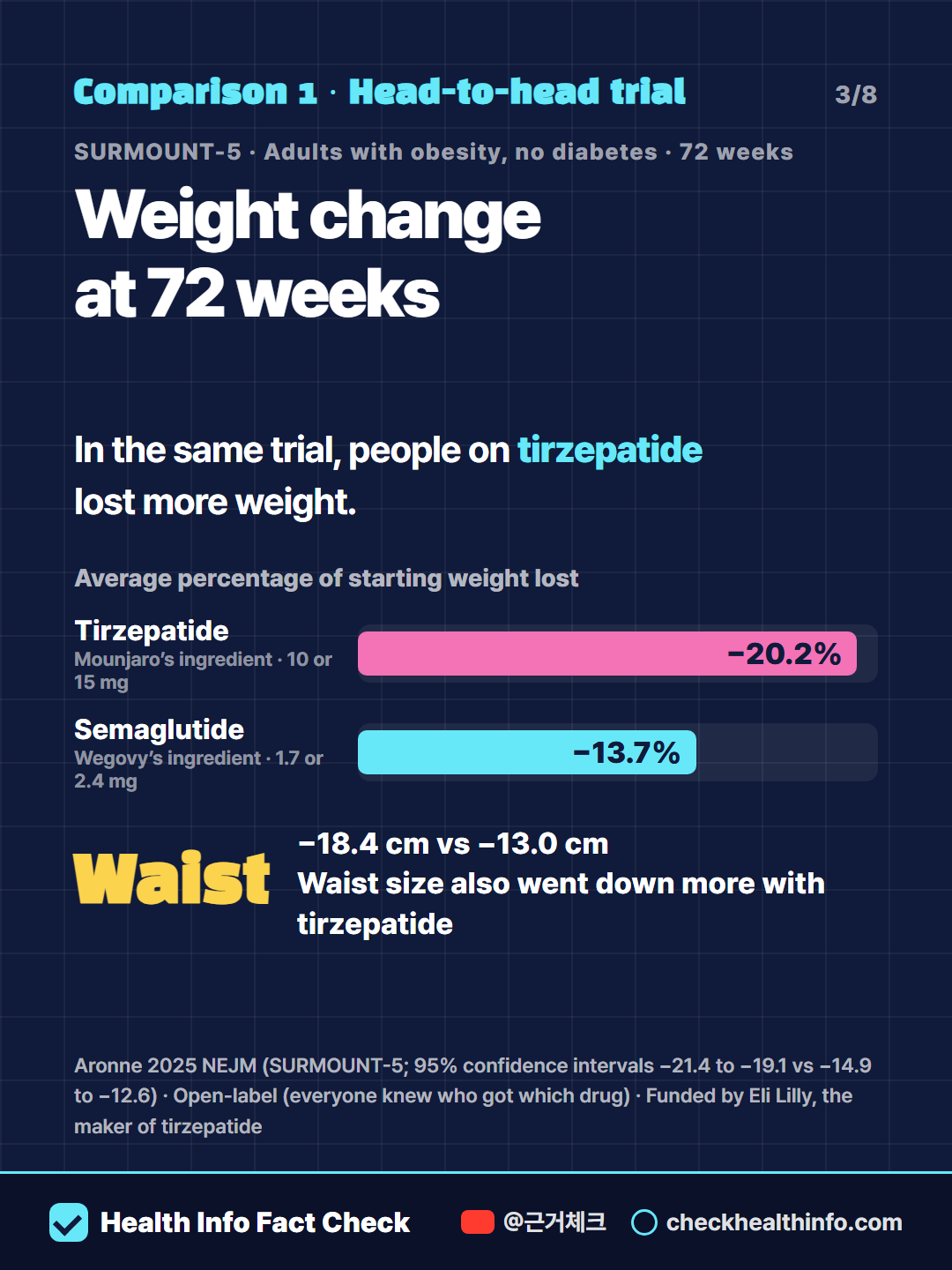
- The head-to-head trial (SURMOUNT-5) randomly assigned 751 adults with obesity and no diabetes, half to each drug, and compared them for 72 weeks. Weight changed by −20.2% with tirzepatide (95% confidence interval −21.4 to −19.1) and −13.7% with semaglutide (95% confidence interval −14.9 to −12.6). Waist size changed by −18.4 cm versus −13.0 cm, and more people on tirzepatide lost at least 10%, 15%, 20% and 25% of their weight. The trial was open-label (participants and researchers knew who got which drug) and was funded by the maker of tirzepatide (Eli Lilly). [1]
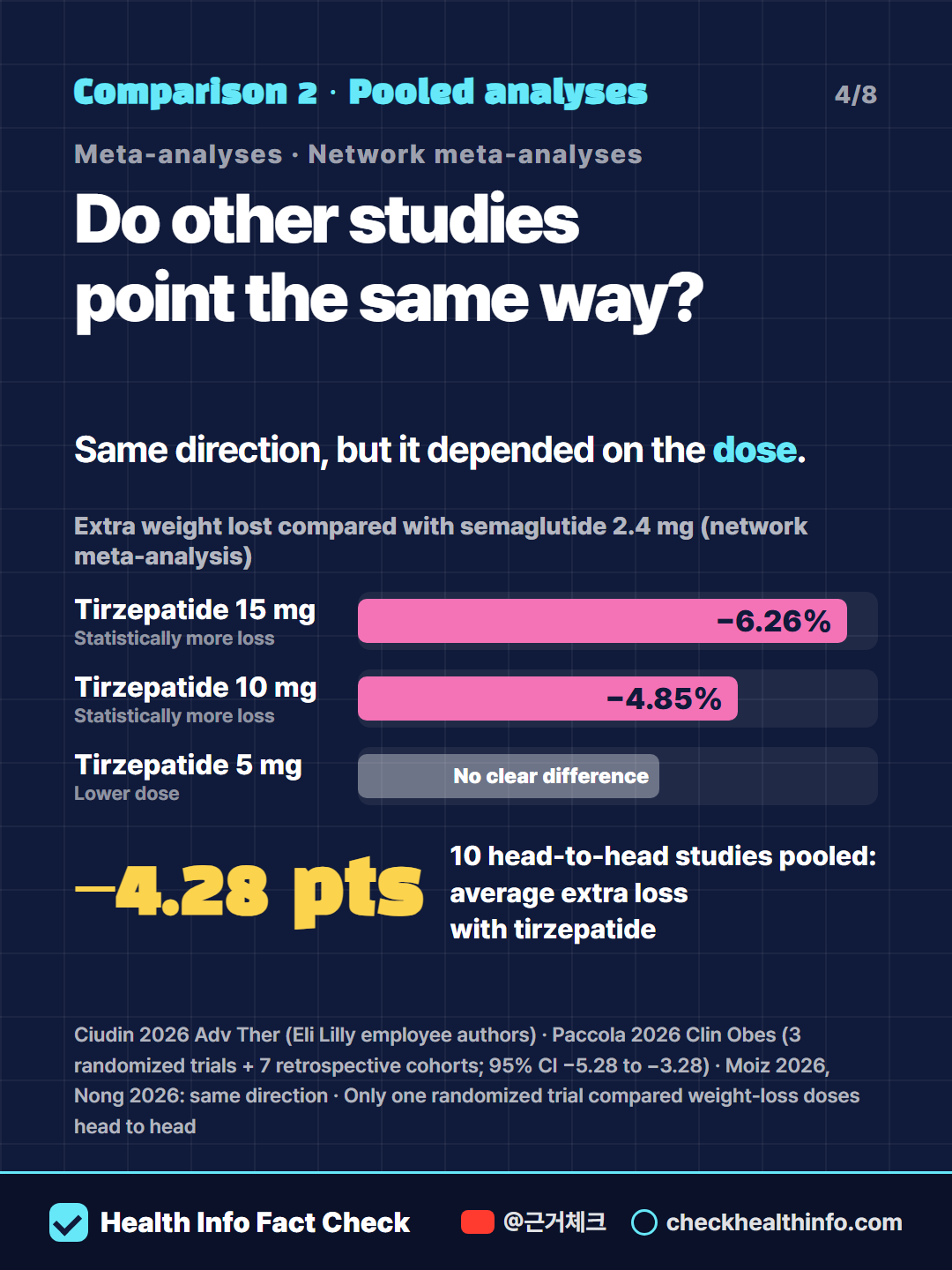
- In a meta-analysis of 10 studies that compared the two drugs directly (41,381 people; 3 randomized trials and 7 retrospective cohort studies), tirzepatide reduced weight by an average of 4.28 percentage points more (95% confidence interval −5.28 to −3.28). The results were the same when the studies were grouped by design and by whether people had type 2 diabetes. [2]
- A systematic review of 38 randomized trials (results were not combined; no industry funding) concluded that in head-to-head trials, tirzepatide reduced weight more than semaglutide. Compared with placebo, the largest extra weight loss in any single trial was −19.0% for tirzepatide and −14.8% for semaglutide injections. [3]
- In a network meta-analysis of 262 randomized trials, 1-year weight loss compared with lifestyle changes alone was −14.9% for tirzepatide (95% confidence interval −16.0 to −13.9) and −9.8% for semaglutide injections (95% confidence interval −10.6 to −9.1) (moderate to high certainty). [4] Another network meta-analysis of phase 3 trials that lasted at least 1 year also ranked tirzepatide 15 mg highest for weight loss. [5] These analyses point the same way, but SURMOUNT-5 is the only randomized trial that compared the two drugs head to head at weight-loss doses.
- It depends on the dose. In a network meta-analysis, tirzepatide 10 mg and 15 mg reduced weight by 4.85% and 6.26% more than semaglutide 2.4 mg, but for the lowest maintenance dose, 5 mg, no clear extra weight loss was reported. Eli Lilly employees were among the authors of this analysis. [6]
- In a trial of 1,879 people with type 2 diabetes (SURPASS-2, 40 weeks), tirzepatide 5, 10 and 15 mg also reduced weight by 1.9 kg, 3.6 kg and 5.5 kg more than semaglutide 1 mg. But the semaglutide dose used was the diabetes dose (1 mg), so this is not a comparison with Wegovy’s weight-loss dose. [7]
The grade starts at A because there is a meta-analysis of studies that compared the two drugs directly and there are analyses of randomized trials only. We did not grade it down because: the evidence compares the two drugs directly within one trial, so it is not indirect (section 1 of our rating method, reason 1); in the meta-analysis of head-to-head studies, 7 of the 10 studies were retrospective cohort studies (observational studies), which on its own would mean grade B, but network meta-analyses of randomized trials alone reached the same conclusion (reason 2); and although the size of the difference varied between studies, the direction and the confidence intervals all fell on the same side (reason 3). Still, the evidence is an average from comparing top doses, the difference was not clear at a low dose (5 mg), the head-to-head trial was in adults without diabetes, and the trials did not test switching people who were already on Wegovy. Because the evidence covers a narrower range than the claim, the rating is “Mostly true” rather than “True” under section 2 of our rating method.
More weight loss isn’t the whole story — side effects
- In the head-to-head trial, the most common side effects with both drugs were stomach and bowel problems such as nausea (gastrointestinal adverse events). Most were mild to moderate and happened mainly while the dose was being raised. [1]
- In the meta-analysis of studies that compared the two drugs directly, there was no difference in stopping the drug because of side effects (relative risk 1.28, p = 0.54), but serious adverse events were more common with tirzepatide (relative risk 1.83, p = 0.007). This result came from 3 randomized trials, most of them in people with diabetes who used semaglutide 1 mg. [2] Another analysis that included only phase 3 trials lasting at least 1 year found no meaningful difference in serious adverse events. [5]
- In the type 2 diabetes trial, serious adverse events occurred in 5–7% of people on tirzepatide and 3% on semaglutide. [7]
- The two drugs are not meant to be used together. The US Zepbound label says using tirzepatide with other tirzepatide-containing products or with any GLP-1 receptor agonist is not recommended [10]. The Korean Wegovy labeling also states that Wegovy must not be used together with other GLP-1 receptor agonists (checked on the drug database of Korea’s Ministry of Food and Drug Safety, MFDS, on 2026-10-17) [8].
- In the US, the Wegovy injection dose can now be increased from 2.4 mg up to a maximum of 7.2 mg [11], but this dose was not studied in the head-to-head trial. In Korea, Wegovy doses above 2.4 mg are not recommended [8].
Scope: This verdict covers only weight loss. The head-to-head trial (SURMOUNT-5) and the diabetes trial (SURPASS-2) were funded by the maker of tirzepatide, and manufacturer employees were among the authors of the dose-by-dose network meta-analysis. A systematic review with no industry funding and analyses by other research groups pointed the same way. Cardiovascular effects, long-term safety and cost are outside the scope of this verdict.
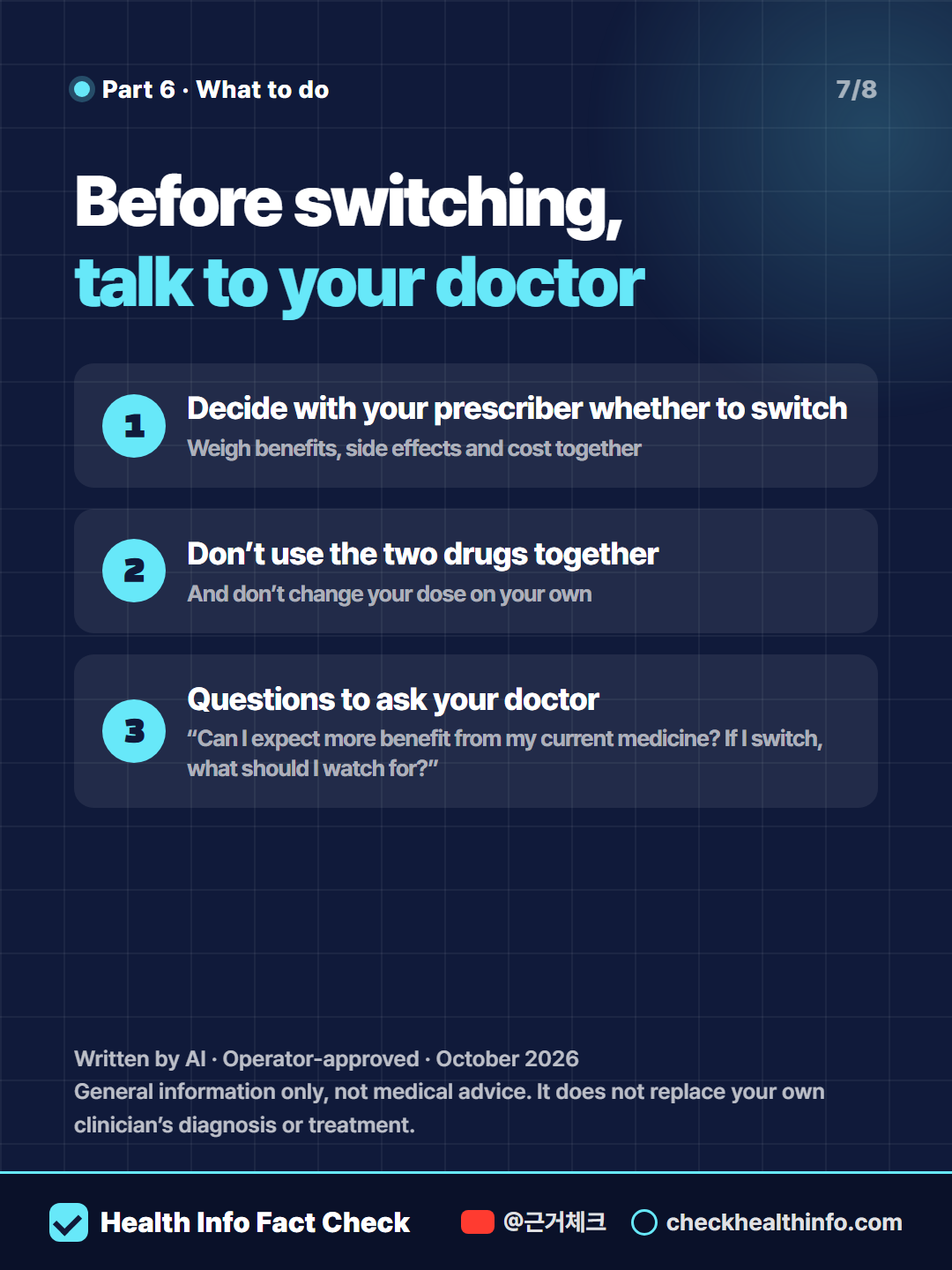
A result that held on average may not apply to you. Do not use the two drugs together or change your dose on your own. At your appointment, ask about benefits, side effects and cost together, for example: “Can I expect more benefit from my current medicine?” and “If I switch, which side effects should I watch for?”
Limits of this verdict
- Only one randomized trial (SURMOUNT-5) compared the two drugs head to head at weight-loss doses, and it enrolled adults without diabetes in the US and Puerto Rico.
- This search did not cover randomized trials of switching people from Wegovy to Mounjaro.
- In the meta-analysis of studies that compared the two drugs directly, 7 of 10 studies were retrospective cohort studies. The results from its randomized trials alone and another analysis of randomized trials only pointed the same way, but only one trial compared the two drugs head to head at weight-loss doses.
- We could not directly check the European Medicines Agency (EMA) approval status or the Korean Society for the Study of Obesity guidelines this time, so we did not cite them.
- The US Centers for Disease Control and Prevention (CDC) does not issue recommendations on using obesity medicines. If you see weight-loss drug information presented as a “CDC recommendation,” check the source again.
- When new studies come out, we check them in our monthly PubMed review, and if a verdict changes, we record it in our corrections log (in Korean).
Card news
Video (in Korean)
References
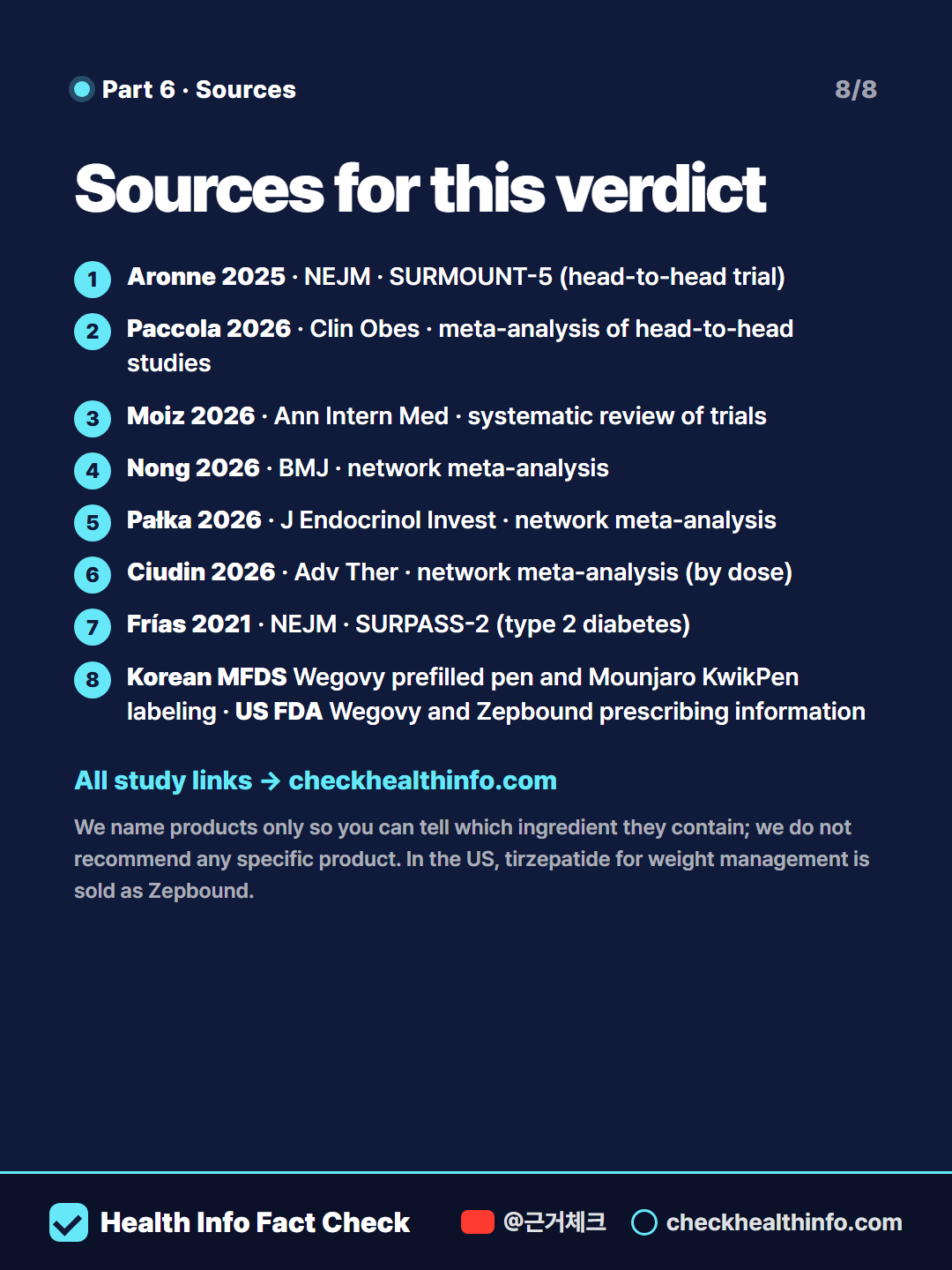
- Aronne LJ, Horn DB, le Roux CW, et al. Tirzepatide as Compared with Semaglutide for the Treatment of Obesity. N Engl J Med 2025;393(1):26-36. PMID 40353578. PubMed abstract · Full article
- Paccola GP, de Oliveira RF, Mochetti MM, et al. Comparative Efficacy of Tirzepatide Versus Semaglutide for Weight Loss in Adults With Overweight or Obesity: A Systematic Review and Meta-Analysis of Head-to-Head Studies. Clin Obes 2026;16(5):e70111. PMID 42670242. PubMed abstract · Full article · Free full text
- Moiz A, Filion KB, Samuels AE, et al. Efficacy and Safety of Glucagon-like Peptide-1 Receptor Agonists and Co-agonists for Weight Loss Among Adults Without Diabetes : An Updated Systematic Review. Ann Intern Med 2026. PMID 42673585. PubMed abstract · Full article
- Nong K, Shi Q, Xie X, et al. Comparative effects of drugs for adults with overweight or obesity: systematic review and network meta-analysis. BMJ 2026;394:e372161. PMID 42419792. PubMed abstract · Full article
- Pałka W, Moćko P, Śladowska K, et al. Analysis of the efficacy and safety of liraglutide, semaglutide, and tirzepatide for the treatment of overweight and obesity: a systematic review and network meta-analysis. J Endocrinol Invest 2026;49(10):2925-2938. PMID 42560457. PubMed abstract · Full article · Free full text
- Ciudin A, Sapin H, Fan L, et al. Comparison of Clinical Efficacy and Safety of Tirzepatide, Liraglutide and Semaglutide in Patients with Obesity and Without T2D: A Bayesian Network Meta-Analysis of Randomised Controlled Trials. Adv Ther 2026;43(5):2090-2105. PMID 41820778. PubMed abstract · Full article · Free full text
- Frías JP, Davies MJ, Rosenstock J, et al. Tirzepatide versus Semaglutide Once Weekly in Patients with Type 2 Diabetes. N Engl J Med 2021;385(6):503-515. PMID 34170647. PubMed abstract · Full article
- Korean MFDS drug database — Wegovy prefilled pen 2.4 mg (semaglutide) labeling (accessed 2026-10-17). Source
- Korean MFDS drug database — Mounjaro KwikPen (tirzepatide) labeling (accessed 2026-10-16). Source
- US DailyMed — Zepbound (tirzepatide) prescribing information (accessed 2026-10-16). Source
- US DailyMed — Wegovy (semaglutide) injection and tablets prescribing information (accessed 2026-10-16). Source
General information only, not medical advice. Do not start, switch, combine or change the dose of these medicines without talking to your prescriber.