Do weight-loss shots burn muscle instead of fat?
How much of the weight lost with weight-loss injections (semaglutide, tirzepatide) is muscle? Do they really burn muscle instead of fat?

We checked this verdict against 14 sources, such as published studies and clinical guidelines. · How checked: Operator-approved
Verdicts at a glance
| Claim | Verdict |
|---|---|
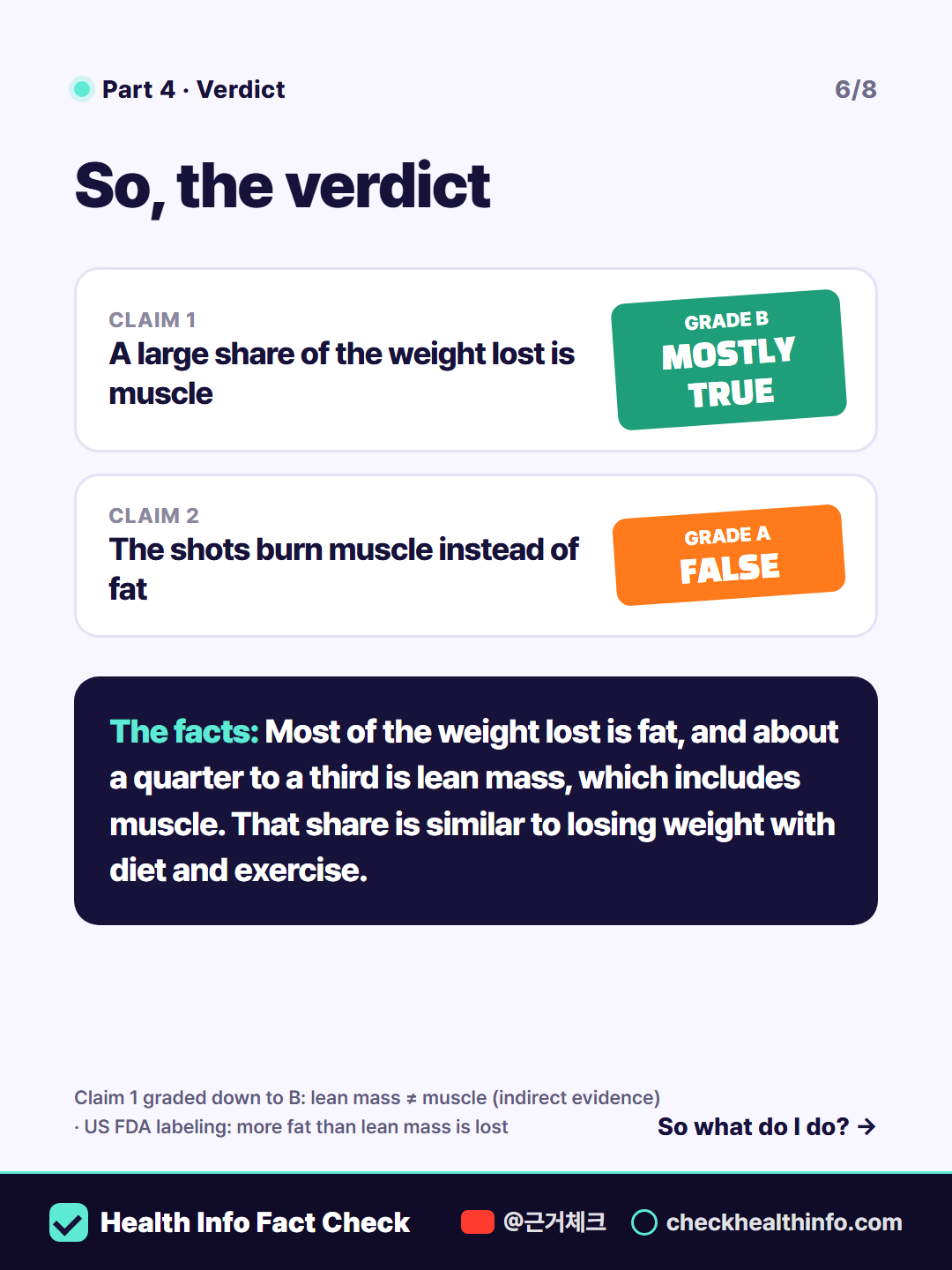
| A large share of the weight lost with weight-loss injections is muscle | Mostly true · Evidence grade B |
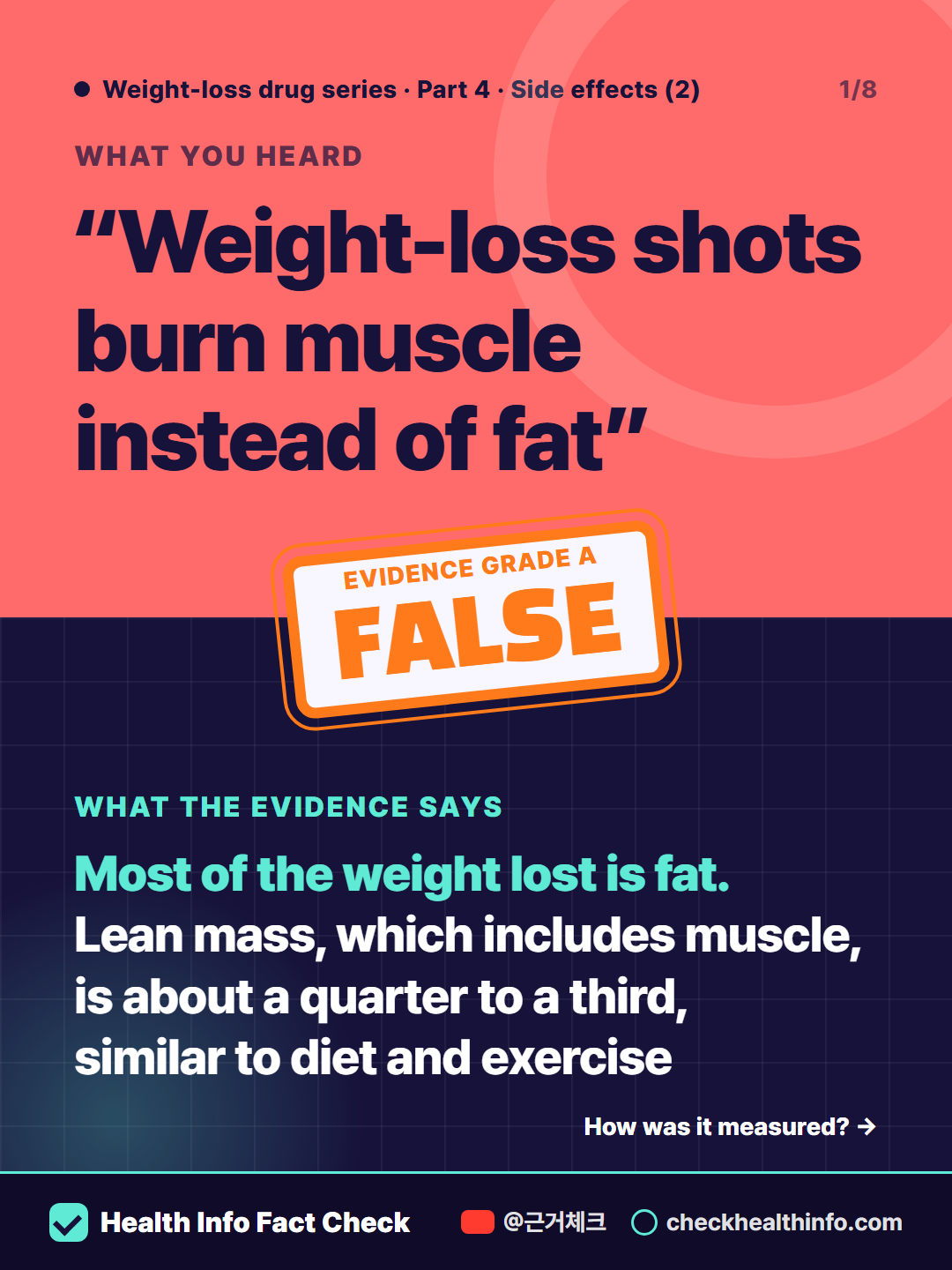
| Weight-loss injections burn muscle instead of fat | False · Evidence grade A |
Bottom line — With weight-loss injections (semaglutide and tirzepatide), most of the weight lost is fat. About a quarter to a third is “lean mass,” which includes muscle. So the claim that the shots burn muscle instead of fat is false, but it is true that some muscle is lost along with fat. For the drugs overall, that share was similar to losing weight with diet and exercise. Get enough protein, add strength training, and if you are an older adult, ask your prescriber about checking your muscle mass and strength.
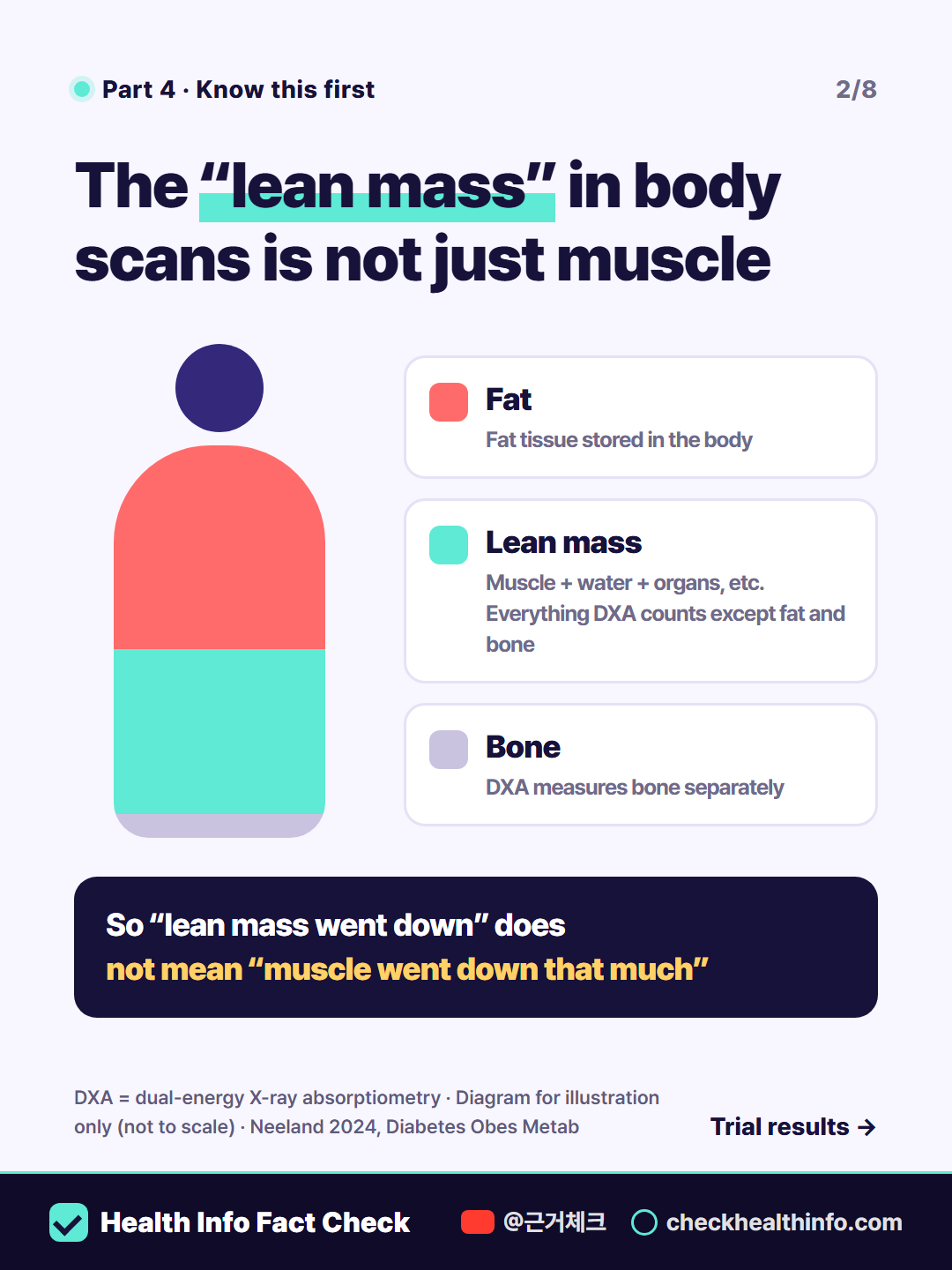
DXA (dual-energy X-ray absorptiometry) — A scan that uses low-dose X-rays to divide the body into fat, lean mass and bone. It is the method most often used in body composition studies.
Lean mass — On DXA, everything that is not fat or bone (some body composition scales also include bone in “lean body mass”). It includes not only muscle but also body water, organs and the water inside fat tissue, so it is not the same as muscle. “Lean mass went down” does not mean “muscle went down by the same amount.”
Meta-analysis — A statistical analysis that combines the results of several studies on the same question.
95% confidence interval — The range in which the true value likely lies. The wider the range, the less certain the result.
Drug names — Semaglutide is the active ingredient in Wegovy and Ozempic; tirzepatide is the active ingredient in Mounjaro (sold for weight management in the US as Zepbound). We name products only so you can tell which ingredient they contain; we do not recommend any specific product.
Claim 1. “A large share of the weight lost with weight-loss injections is muscle”
Mostly true · Evidence grade B
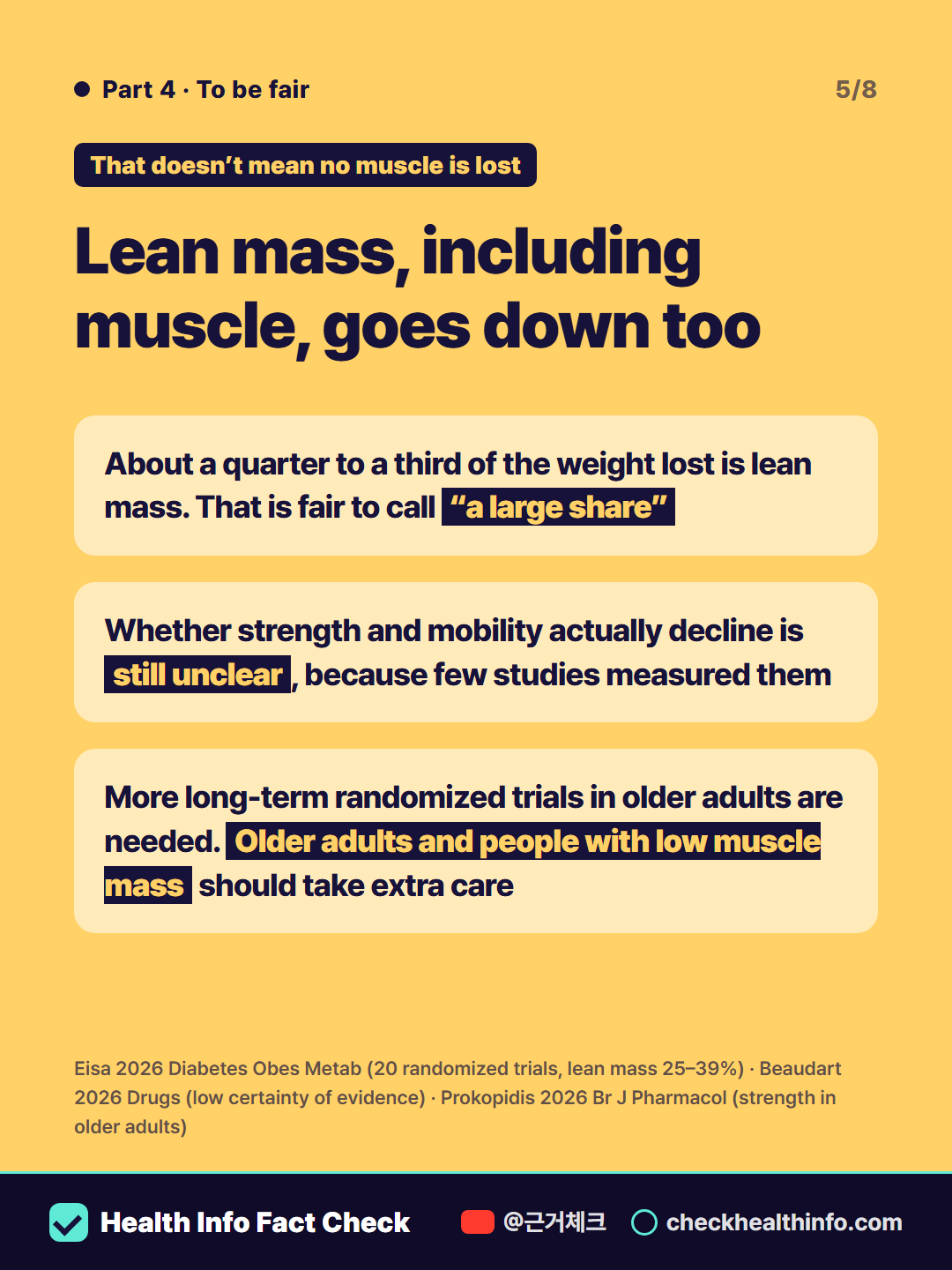
In plain terms About a quarter to a third of the weight lost was lean mass, which includes muscle. Calling that “a large share” is fair, but not all of it is muscle, and most of the rest is fat.
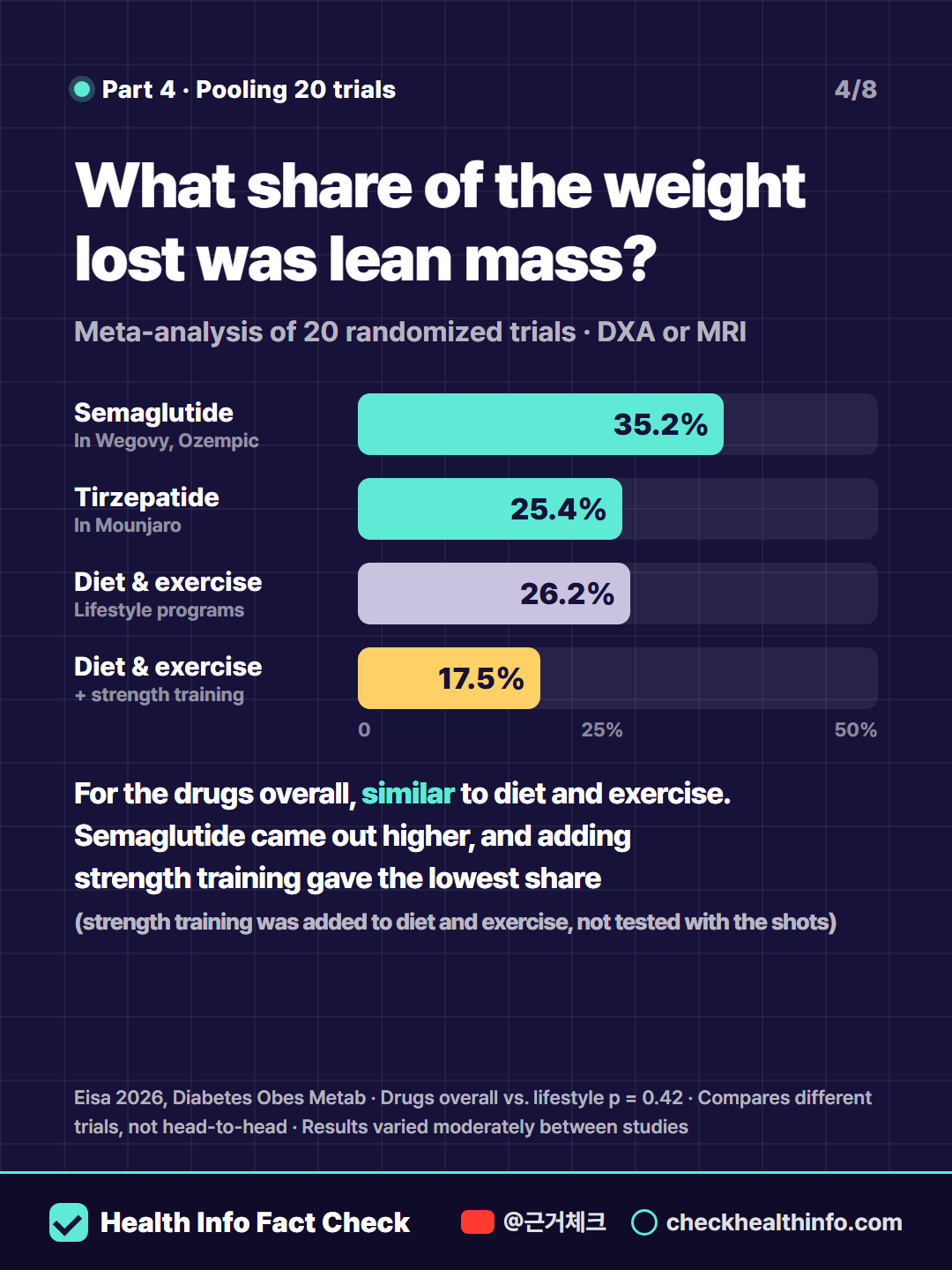
- In a meta-analysis of 20 randomized trials, lean mass made up 25–39% of the weight lost: 35.2% with semaglutide (95% confidence interval 31.5–38.9) and 25.4% with tirzepatide (22.8–28.0). Differences between studies were moderate. [1]
- A network meta-analysis of 22 randomized trials (2,258 people) also found that lean mass was about 25% of the weight lost. Tirzepatide and semaglutide, which led to the most weight loss, ranked among the lowest for preserving lean mass. [2] In another meta-analysis, lean mass was about 28% of the weight lost (95% confidence interval 22–34%), proportionate to the total weight lost (this analysis pooled these drugs together with SGLT2 inhibitors, a class of diabetes drugs, and most participants had diabetes). [3]
- A broader meta-analysis of musculoskeletal health (60 papers) found that lean mass consistently went down, but rated the certainty of that evidence as “low” and judged the loss to be mostly related to weight loss. Whether it leads to lower strength or physical function was uncertain. No clear effect was seen on bone density or fractures. [4]
- The share of weight lost as lean mass varied widely between trials, from about 15% or less to 40–60%. Depending on how it is measured, lean mass can include organs, bone, body fluids and the water inside fat tissue, not just muscle, so it does not always change in step with muscle. [5]
Several pooled analyses consistently found that about a quarter to a third of the weight lost is lean mass, so “a large share” fits the evidence. But in our rating method, “Mostly true” is used when the size of the effect or the group it applies to is narrower than the claim. What went down was not “muscle” but lean mass, which includes muscle; most of the rest was fat; and the share was similar to losing weight with diet and exercise. The grade starts at A because there are meta-analyses of randomized trials, but we graded it down one level to B because most studies did not measure muscle directly; they measured lean mass, which includes muscle (indirect evidence). Individual trials varied, but the pooled estimates of the meta-analyses were similar (25–39%), so we did not grade it down a second level for that.
Claim 2. “Weight-loss injections burn muscle instead of fat”
False · Evidence grade A
In plain terms Most of the weight lost is fat. Lean mass, which includes muscle, also goes down, but much less than fat, and the share of body weight that is lean mass actually went up slightly.
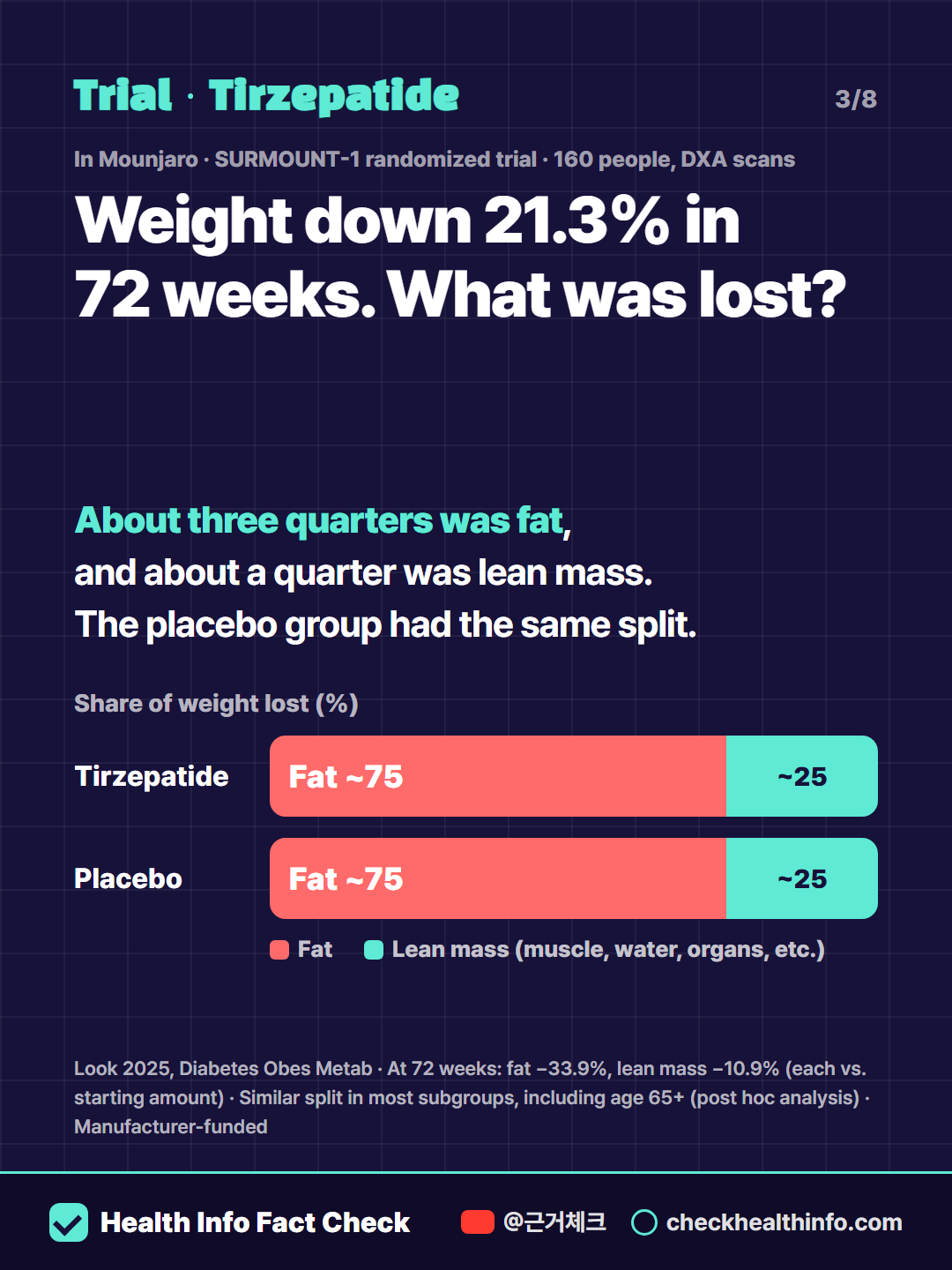
- In a tirzepatide randomized trial (SURMOUNT-1), 160 participants had their body composition measured by DXA. Over 72 weeks, body weight fell by 21.3%, fat mass by 33.9% and lean mass by 10.9% (each compared with the person’s starting amount). About 75% of the weight lost was fat and about 25% was lean mass, and the split was the same in the placebo group. It was also similar in most subgroups, including people aged 65 and older (a post hoc analysis, done after the main trial results). [9]
- In a semaglutide randomized trial (STEP UP), 55 participants had MRI scans. Fat tissue went down 11.1 L more than with placebo (95% confidence interval 5.7–16.5). Lean tissue went down 1.7 L more than with placebo (p = 0.16), and thigh muscle volume went down 1.1 L more (p = 0.07). Because there were few participants, these differences were not statistically significant (they could be due to chance), but the researchers concluded that muscle volume decreased. Fat inside the thigh muscles went down by 0.92 percentage points. Most participants received the high 7.2 mg dose. The number of times people could stand up from a chair in 30 seconds did not go down (13 on average at the start, 15 at 72 weeks). This was a small analysis, with only 6 people in the placebo group. [10]
- In a meta-analysis of 7 randomized trials comparing these drugs with placebo (821 people), the share of body weight that is lean mass actually went up by 1.81 percentage points (95% confidence interval 1.1–2.52). The amount of lean mass itself went down by 1.74 kg. [11] A meta-analysis of 19 randomized trials also found that fat (−2.25 kg) went down more than lean mass (−1.02 kg), and the change in lean mass percentage was similar in people who did and did not take the drugs. [12]
- Compared with other ways of losing weight — In the 20-trial meta-analysis described under Claim 1, when people lost weight through lifestyle programs (diet and exercise), lean mass was 26.2% of the weight lost, not significantly different from the drugs overall (p = 0.42). Semaglutide, however, came out higher than lifestyle programs, at 35.2% (95% confidence interval 31.5–38.9). Adding strength training to a lifestyle program gave the lowest share, 17.5%. Keep in mind that this compares different trials, and differences between studies were moderate, so results may vary from study to study. [1]
- US FDA prescribing information for both semaglutide and tirzepatide also states that the drug “lowers body weight with greater fat mass loss than lean mass loss” (section 12.2, Pharmacodynamics). [13][14]
Scope: The body composition analyses in SURMOUNT-1 and STEP UP were substudies of only some of the participants (160 and 55 people), and both trials were funded by the manufacturers. Few trials measured muscle function, such as strength and mobility, and those that did were short. The more weight a drug takes off, the more lean mass (in kg) may be lost as well.
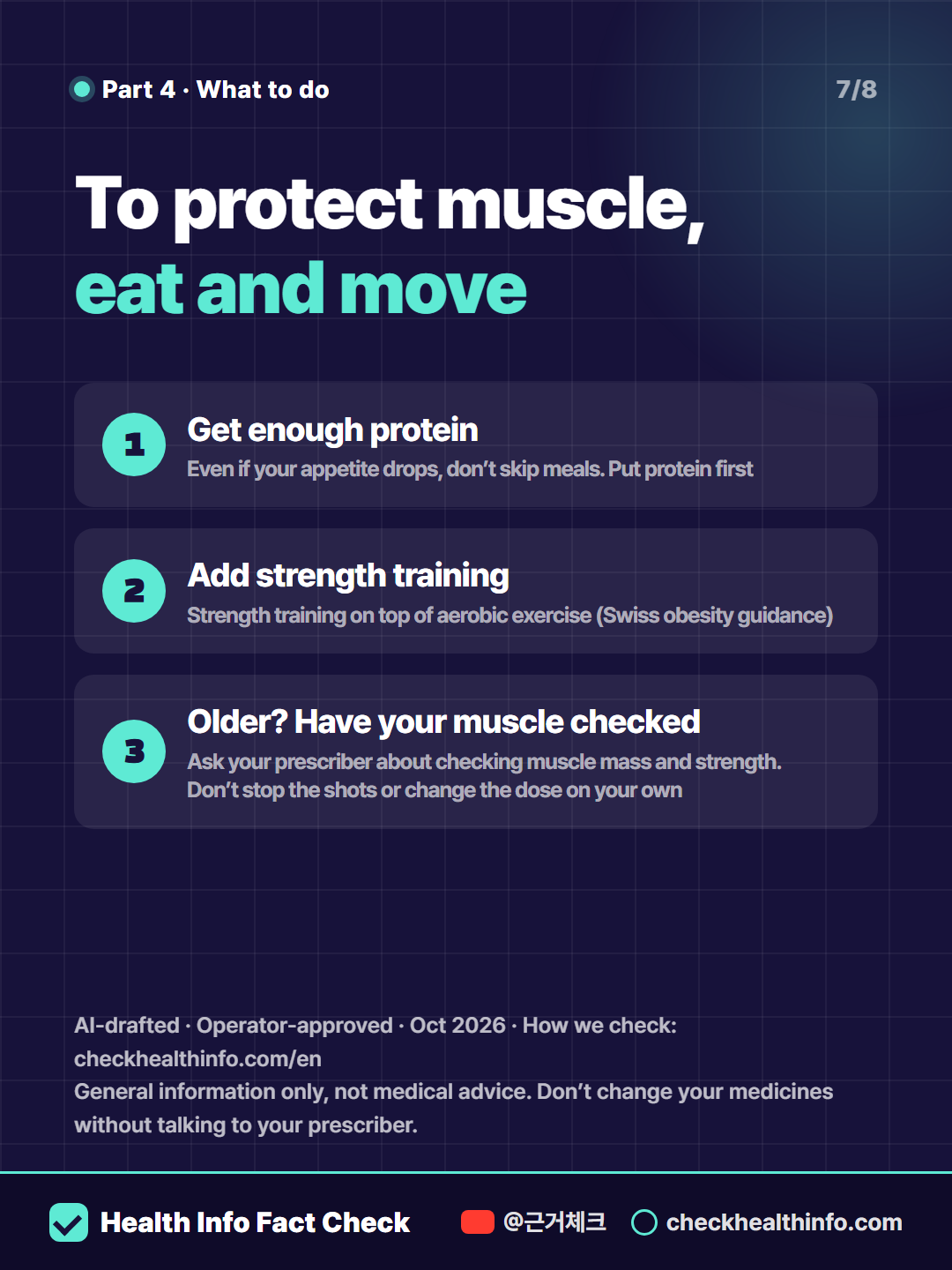
Get enough protein — Even if the shots reduce your appetite, don’t skip meals, and make sure you get protein. The Polish Society of Nutritional Sciences recommends adequate protein intake and regular strength training during incretin treatment to preserve lean mass and muscle function (expert consensus, no formal evidence grading). [7]
Add strength training — Swiss obesity guidance (2026) recommends strength training along with 150–300 minutes a week of moderate-intensity aerobic exercise. In the meta-analysis, adding strength training to a lifestyle program also gave the lowest share of weight lost as lean mass (these trials did not involve the shots). [6][1]
If you are an older adult, have your muscle checked — The Swiss guidance says that for older adults, keeping muscle and bone healthy should take priority over how much weight is lost [6]. Larger, long-term randomized trials in older adults are still needed, and a review notes that observational studies in older adults with diabetes reported a decline in grip strength with long-term semaglutide use [8]. If you already have low muscle mass or are worried about sarcopenia (age-related muscle loss), talk with your prescriber about checking your muscle mass and strength.
Don’t stop the shots or change the dose on your own; talk with your prescriber first.
Limitations of this verdict
- Most studies measured lean mass, not muscle itself. Studies that measured muscle directly with MRI or CT are few and small.
- It is still unclear whether the loss of lean mass leads to lower strength, falls or difficulty with daily activities. Few trials measured muscle function, and those that did were short.
- The comparison between the drugs and lifestyle programs pools different trials; it is not a head-to-head comparison within the same trial.
- Most of the evidence comes from studies outside Korea. We could not directly check the Korean Society for the Study of Obesity guidelines or the Korean Ministry of Food and Drug Safety labeling on body composition, so we did not cite them. DXA substudy numbers from the semaglutide STEP 1 trial were not in the PubMed abstract, so we did not cite them.
- The US Centers for Disease Control and Prevention (CDC) does not issue recommendations on using obesity drugs. If you see weight-loss drug information presented as a “CDC recommendation,” double-check the source.
- Grades follow section 1 of our rating method. Claim 1 has meta-analyses of randomized trials but was graded down one level to B for one reason, indirectness (lean mass ≠ muscle); we did not treat the results as inconsistent because the pooled estimates were similar. Claim 2 is graded A because meta-analyses of randomized trials point the same way.
- We check for new studies in our monthly PubMed review. If a verdict changes, we will update this page and note the change.
Card news
Video (in Korean)
Easy version (in Korean)
Full evidence (in Korean)
References
- Eisa N, Barood O. Lean Mass Changes With Incretin Therapy Versus Lifestyle Intervention: A Systematic Review and Meta-Analysis of Randomised Controlled Trials. Diabetes Obes Metab 2026;28(6):4818-4827. PMID 41877354. PubMed abstract · Full article
- Karakasis P, Patoulias D, Fragakis N, et al. Effect of glucagon-like peptide-1 receptor agonists and co-agonists on body composition: Systematic review and network meta-analysis. Metabolism 2025;164:156113. PMID 39719170. PubMed abstract · Full article
- Jobanputra R, Sargeant JA, Plekhanova T, et al. The Effects of Glucagon-Like Peptide-1 Receptor Agonists and Sodium-Glucose Co-Transporter-2 Inhibitors on Lean Body Mass in Humans: A Systematic Review and Meta-Analysis of Randomised Controlled Trials. Diabetes Metab Res Rev 2026;42(5):e70194. PMID 42319968. PubMed abstract · Full article · Free full text
- Beaudart C, Malréchauffé Y, van Heden S, et al. GLP-1 Receptor Agonists and Musculoskeletal Outcomes: A Systematic Literature Review and Meta-Analysis. Drugs 2026;86(10):1661-1691. PMID 42730869. PubMed abstract · Full article · Free full text
- Neeland IJ, Linge J, Birkenfeld AL. Changes in lean body mass with glucagon-like peptide-1-based therapies and mitigation strategies. Diabetes Obes Metab 2024;26 Suppl 4:16-27. PMID 38937282. PubMed abstract · Full article
- Gerber PA, Collet TH, Favre L, et al. Swiss obesity clinical practice guidance. Swiss Med Wkly 2026;156:5415. PMID 42312974. PubMed abstract · Full article
- Kwaśny A, Słoma-Krześlak M, Kostelecki G, et al. Diet and nutrition in obesity treated with incretin-based therapies: A scientific statement of the Polish Society of Dietetics. Adv Clin Exp Med 2026. PMID 42823936. PubMed abstract · Full article
- Prokopidis K. Glucagon-like peptide-1 receptor agonists and muscle strength changes in older adults: Risks beyond muscle mass reductions. Br J Pharmacol 2026. PMID 41577337. PubMed abstract · Full article
- Look M, Dunn JP, Kushner RF, et al. Body composition changes during weight reduction with tirzepatide in the SURMOUNT-1 study of adults with obesity or overweight. Diabetes Obes Metab 2025;27(5):2720-2729. PMID 39996356. PubMed abstract · Full article · Free full text
- Hjelmesæth J, Bhat S, Garvey WT, et al. Effect of Semaglutide on Thigh Skeletal Muscle Volume, Fat Infiltration and Physical Function in People With Obesity: Secondary Analysis of STEP UP. Diabetes Obes Metab 2026. PMID 42764399. PubMed abstract · Full article
- Laverde LP, Muñoz-Velandia OM, Alfonso D, et al. Effect of GLP-1 receptor agonists at doses for obesity management on muscle health: systematic review and meta-analysis of randomized controlled trials (RCTs). Int J Obes (Lond) 2026;50(8):1638-1646. PMID 42321502. PubMed abstract · Full article · Free full text
- Jiao R, Lin C, Cai X, et al. Characterizing body composition modifying effects of a glucagon-like peptide 1 receptor-based agonist: A meta-analysis. Diabetes Obes Metab 2025;27(1):259-267. PMID 39431379. PubMed abstract · Full article
- US FDA — Wegovy (semaglutide) prescribing information, section 12.2 Pharmacodynamics (accessed 2026-10-15). Source
- US DailyMed — Zepbound (tirzepatide) prescribing information, section 12.2 Pharmacodynamics (accessed 2026-10-15). Source
General information only, not medical advice. Do not start, stop or change the dose of these medicines without talking to your doctor. If you are an older adult or have low muscle mass, ask your prescriber about checking your muscle mass and strength.