Can Wegovy make you go blind? Semaglutide and optic nerve damage (NAION)
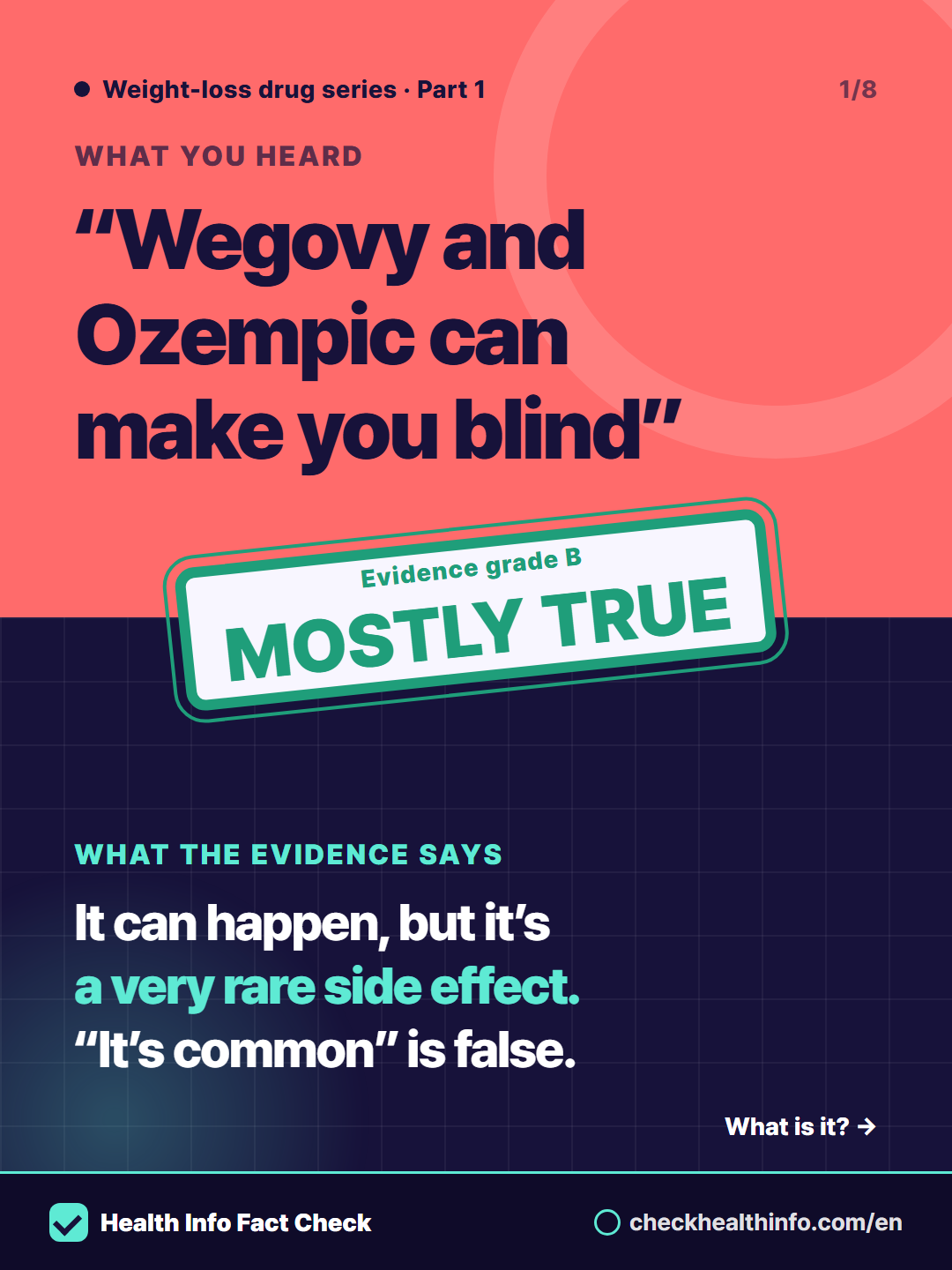
Can semaglutide injections such as Wegovy and Ozempic damage the optic nerve and cause blindness?

We checked this verdict against 17 sources, such as published studies and clinical guidelines. · How checked: Operator-approved
Verdicts at a glance
| Claim | Verdict |
|---|---|
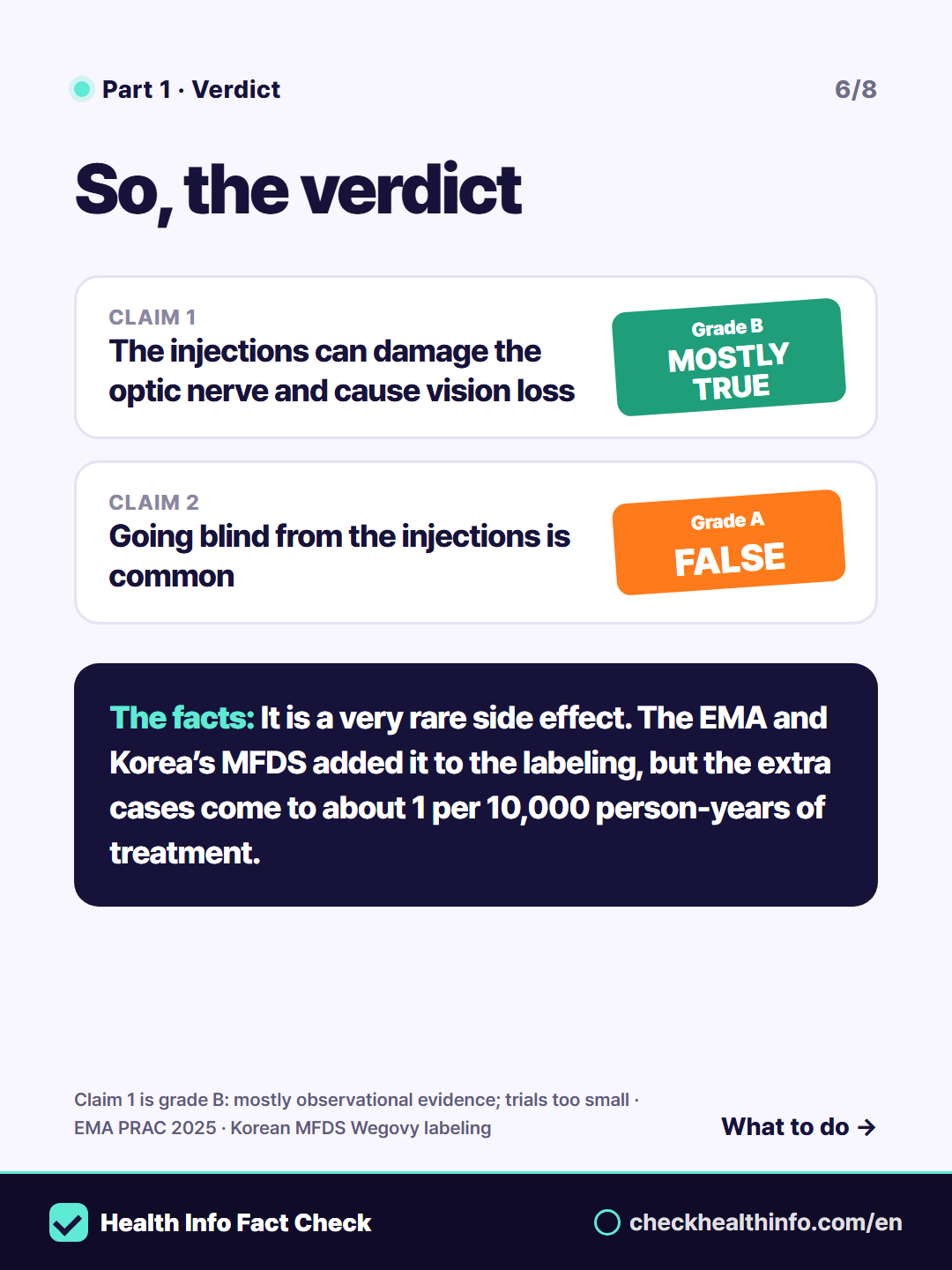
| Wegovy or Ozempic (semaglutide) injections, used for obesity and diabetes, can cause NAION, a condition that damages the optic nerve, and lead to vision loss | Mostly true · Evidence grade B |
| Going blind is common with the obesity and diabetes drugs Wegovy and Ozempic | False · Evidence grade A |
Bottom line — The European Medicines Agency (EMA) and Korea’s Ministry of Food and Drug Safety (MFDS) both recognize that an optic nerve condition called NAION can occur in people taking semaglutide (the active ingredient in Wegovy and Ozempic). But it is a very rare side effect. The extra cases come to about 1 per 10,000 person-years of treatment — roughly 1 extra case when 10,000 people use the drug for a year. It is not as common as the claim “it makes you go blind” suggests. If vision in one eye suddenly becomes blurry or is lost while you are using the drug, get an eye exam right away, even if there is no pain.
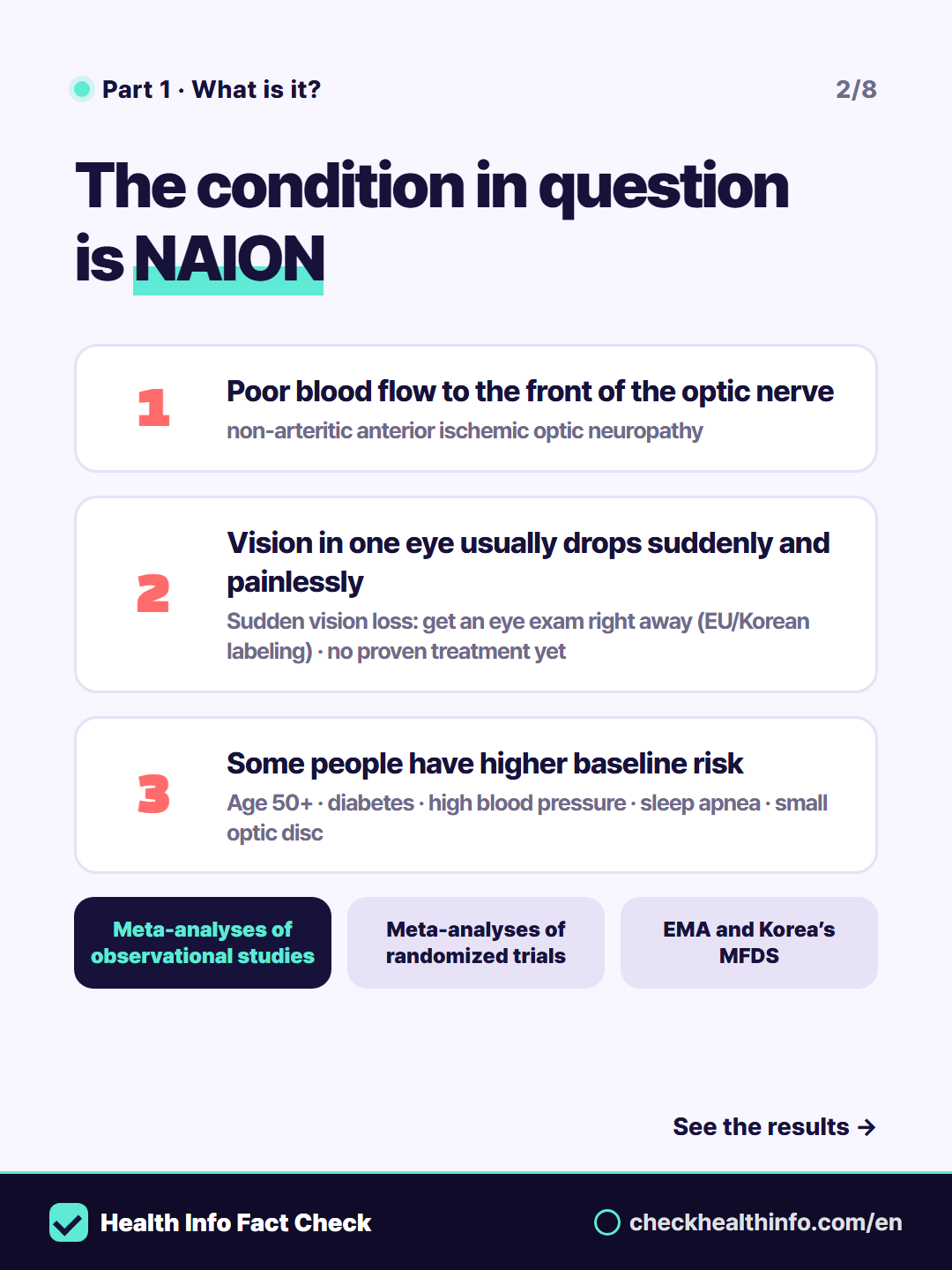
NAION (non-arteritic anterior ischemic optic neuropathy) — A condition caused by poor blood flow to the front part of the optic nerve. It usually causes a sudden, painless loss of vision or visual field in one eye, and vision often does not recover well.
Relative risk, hazard ratio — How many times higher the risk is in people taking the drug than in the comparison group (for example, people taking other diabetes drugs). A hazard ratio compares how often events occur over time. A value of 1 means no difference.
Odds ratio — Compares the odds of an event between two groups. When an event is rare, it can be read much like a relative risk.
Absolute risk — How many people out of a given number actually develop the condition. When a condition is rare to begin with, even a doubling adds only a few cases.
Person-years — The number of people multiplied by the years they were followed. 10,000 person-years is the same as following 10,000 people for 1 year.
95% confidence interval — The range in which the true value likely lies. For ratios such as hazard ratios, if the range includes 1, there is no statistically clear difference.
Drug names — Semaglutide is the active ingredient in Wegovy (for obesity) and Ozempic (for diabetes). We name products only so you can tell which ingredient they contain. We do not recommend any specific product.
Claim 1. “Wegovy or Ozempic injections can damage the optic nerve and cause vision loss”
Mostly true · Evidence grade B
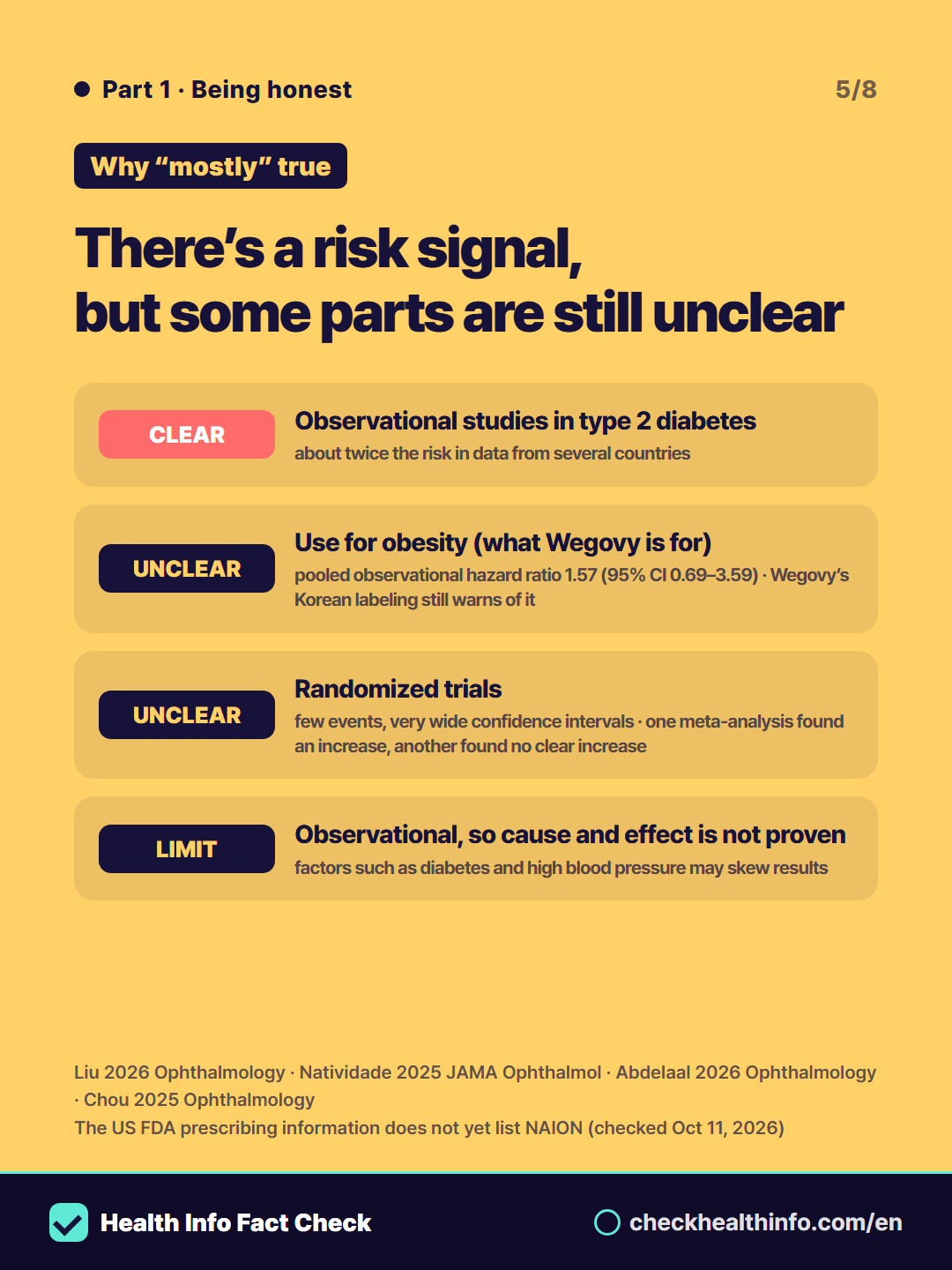
In plain terms Several observational studies of people with type 2 diabetes found about twice as many NAION cases among semaglutide users as among users of other diabetes drugs, and the EMA and Korea’s MFDS have added it to the drug labeling as a side effect. However, in people using it to treat obesity, the link is not yet clear (although Wegovy’s Korean labeling carries the same warning). Randomized trials had few events, so their confidence intervals are very wide, and it has not been proven that the drug causes NAION.
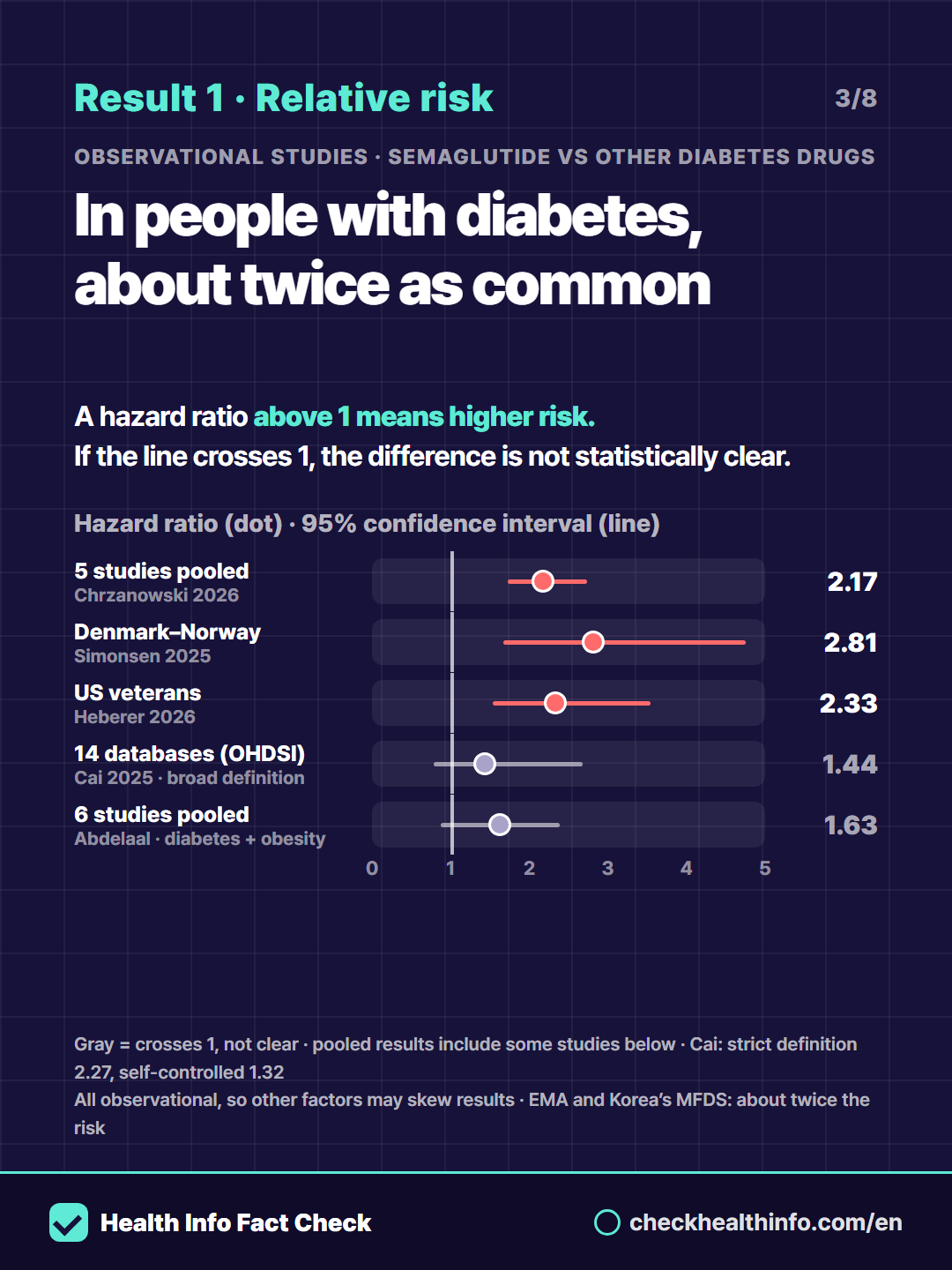
- In a meta-analysis of observational studies in people with type 2 diabetes, the hazard ratio for NAION in semaglutide users compared with users of other glucose-lowering drugs was 2.17 (95% confidence interval 1.73–2.74). The authors rated the certainty of the evidence as “low.” [1]
- In national registry data from Denmark and Norway (compared with people starting SGLT2 inhibitors), the adjusted hazard ratio was 2.81 (95% confidence interval 1.67–4.75) [6]. In data on 102,361 US veterans, it was 2.33 (95% confidence interval 1.54–3.54) [7].
- In a study across 14 databases (OHDSI), when NAION was identified using a broad definition, there was no clear difference from empagliflozin users (hazard ratio 1.44, 95% confidence interval 0.78–2.68); the risk was higher only with a strict definition (2.27, 95% confidence interval 1.16–4.46). An analysis comparing periods when the same people were and were not using the drug found an incidence rate ratio of 1.32 (95% confidence interval 1.14–1.54), and the authors concluded the increase was “smaller than previously reported.” [8] A study of electronic health records from 21 countries also found no clear link in either the diabetes or the obesity group. [9]
- Another meta-analysis of six observational studies found an overall adjusted hazard ratio of 1.63 (95% confidence interval 0.88–2.39), which was not statistically clear. It was 1.70 (95% confidence interval 1.10–2.64) in type 2 diabetes and 0.47 (95% confidence interval 0.19–1.13) in obesity or overweight. The authors said the results were unstable and the certainty was low. [4]
- A meta-analysis that separated studies by use and study design found a risk signal only in observational studies of diabetes (hazard ratio 1.85, 95% confidence interval 1.20–2.85). There was no clear increase in observational studies of weight loss (hazard ratio 1.57, 95% confidence interval 0.69–3.59) or in randomized trials (diabetes: relative risk 1.76, 95% confidence interval 0.43–7.25; weight loss: 2.18, 95% confidence interval 0.33–14.34). [2]
- In a meta-analysis of 78 randomized trials (73,640 people), the odds ratio for NAION was 3.92 (95% confidence interval 1.02–15.02). This was statistically significant, but the confidence interval was very wide, and the authors said the sample was too small to draw conclusions. [3] The EMA also said data from clinical trials point to a slightly higher risk. [14] In a pooled analysis of the manufacturer’s own placebo-controlled trials of semaglutide and liraglutide, confirmed NAION occurred in 3 people on the drugs and 4 on placebo, showing no increase. [11]
- The study that first raised the alarm (2024) used data from patients referred to the neuro-ophthalmology service of a single university hospital. Its hazard ratios were large — 4.28 (diabetes) and 7.64 (overweight or obesity) — but there were few events, and later large studies showed smaller increases. [10]
- In June 2025, the EMA’s Pharmacovigilance Risk Assessment Committee (PRAC) recommended adding NAION to the product information as a “very rare” side effect of semaglutide. [14] Wegovy’s Korean MFDS labeling includes the same information, along with instructions to do an eye exam if sudden vision loss occurs and to stop semaglutide if NAION is confirmed. [15] As of the date we checked (October 11, 2026), the US FDA prescribing information (Wegovy, Ozempic) does not yet mention NAION. [16][17]
- A consensus statement from the North American Neuro-Ophthalmology Society and the American Academy of Ophthalmology summarized that the evidence comes mostly from retrospective observational studies; many studies suggest a possible small increase in risk, though some found no link, and the size of the risk is low. It advised that patients and clinicians decide together whether to start, continue or stop the drug. [5]
Health regulators have recognized it as a side effect, so “it can happen” is correct. But the clear increase in risk is seen in observational studies of people with type 2 diabetes, and it is not yet clear in people using the drug to treat obesity, which is what Wegovy is for. Because these are observational studies, other factors, such as diabetes or high blood pressure, may partly explain the difference. Under our rating method, a meta-analysis that pools observational studies is graded down one level, to B.
Claim 2. “Going blind is common with Wegovy or Ozempic”
False · Evidence grade A
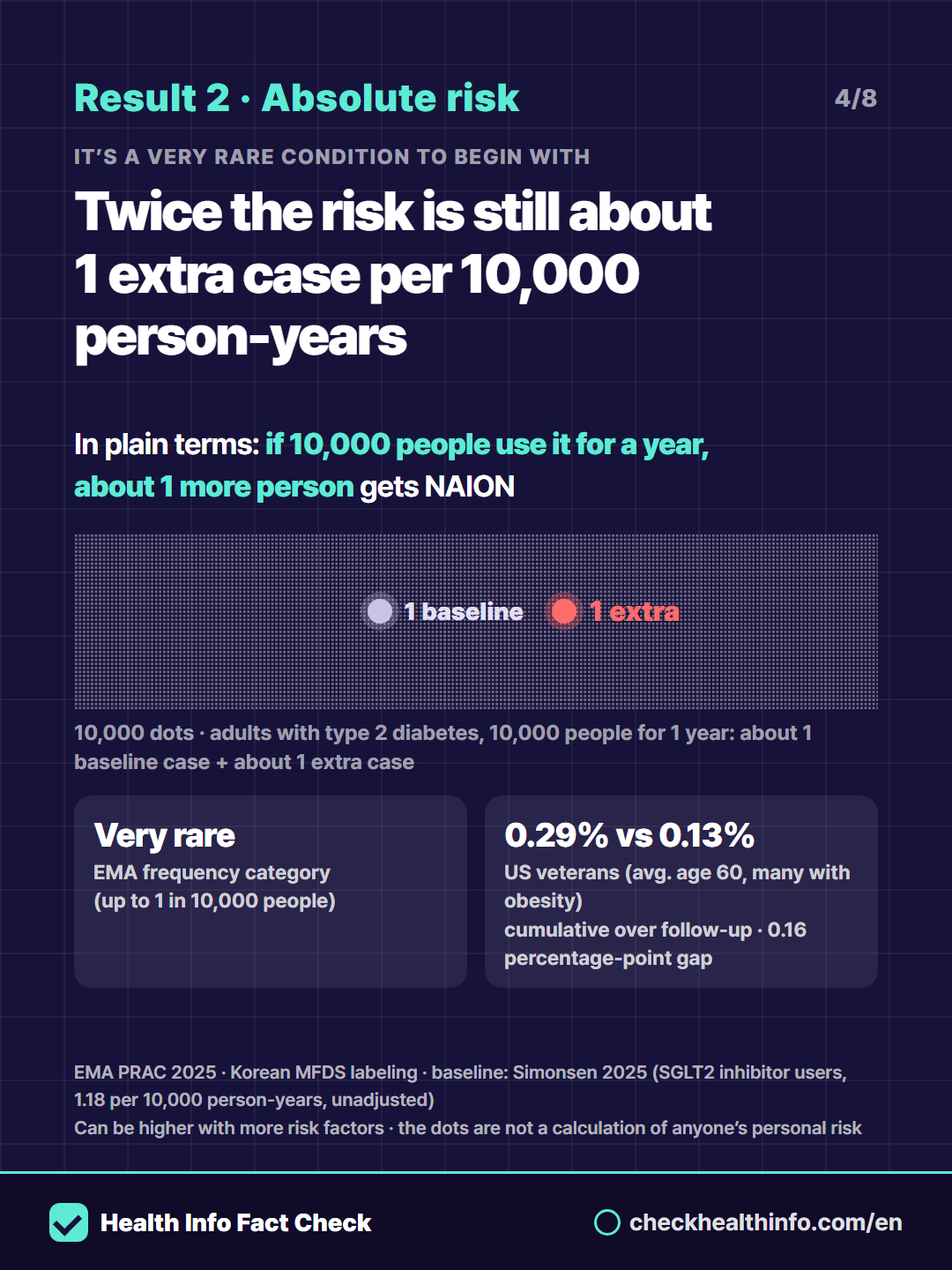
In plain terms “About twice the risk” is a relative risk. NAION is rare to begin with, so the actual number of extra cases is about 1 per 10,000 person-years of treatment.
- The EMA classified its frequency as “very rare” (up to 1 in 10,000 people), as does the side-effect table in Korea’s MFDS labeling. The EMA said that in adults with type 2 diabetes the risk is about twice as high, which corresponds to about 1 extra case per 10,000 person-years of treatment. [14] Korea’s MFDS labeling also states “about 1 additional case per 10,000 person-years of treatment.” [15]
- In the meta-analysis of observational studies in people with diabetes, the absolute increase in risk was 0.014% (95% confidence interval 0.005–0.023%), or about 1 extra case per 7,000 users per year. [1]
- In the Denmark–Norway data, the adjusted increase was 1.41 extra cases per 10,000 person-years (95% confidence interval 0.53–2.29) [6]. In the US veterans data, the share who developed NAION over follow-up was 0.29% with semaglutide vs 0.13% with SGLT2 inhibitors, a difference of 0.16 percentage points. This group was older (average age 60) and many had obesity, and NAION rates were higher than in the other data: 123 vs 67 cases per 100,000 person-years [7].
- NAION typically causes vision loss in one eye. [13] But rare does not mean minor. When it occurs, the vision loss often cannot be reversed, and baseline risk is higher in people who are 50 or older, have diabetes, high blood pressure or sleep apnea, or have a small optic disc. [12][13]
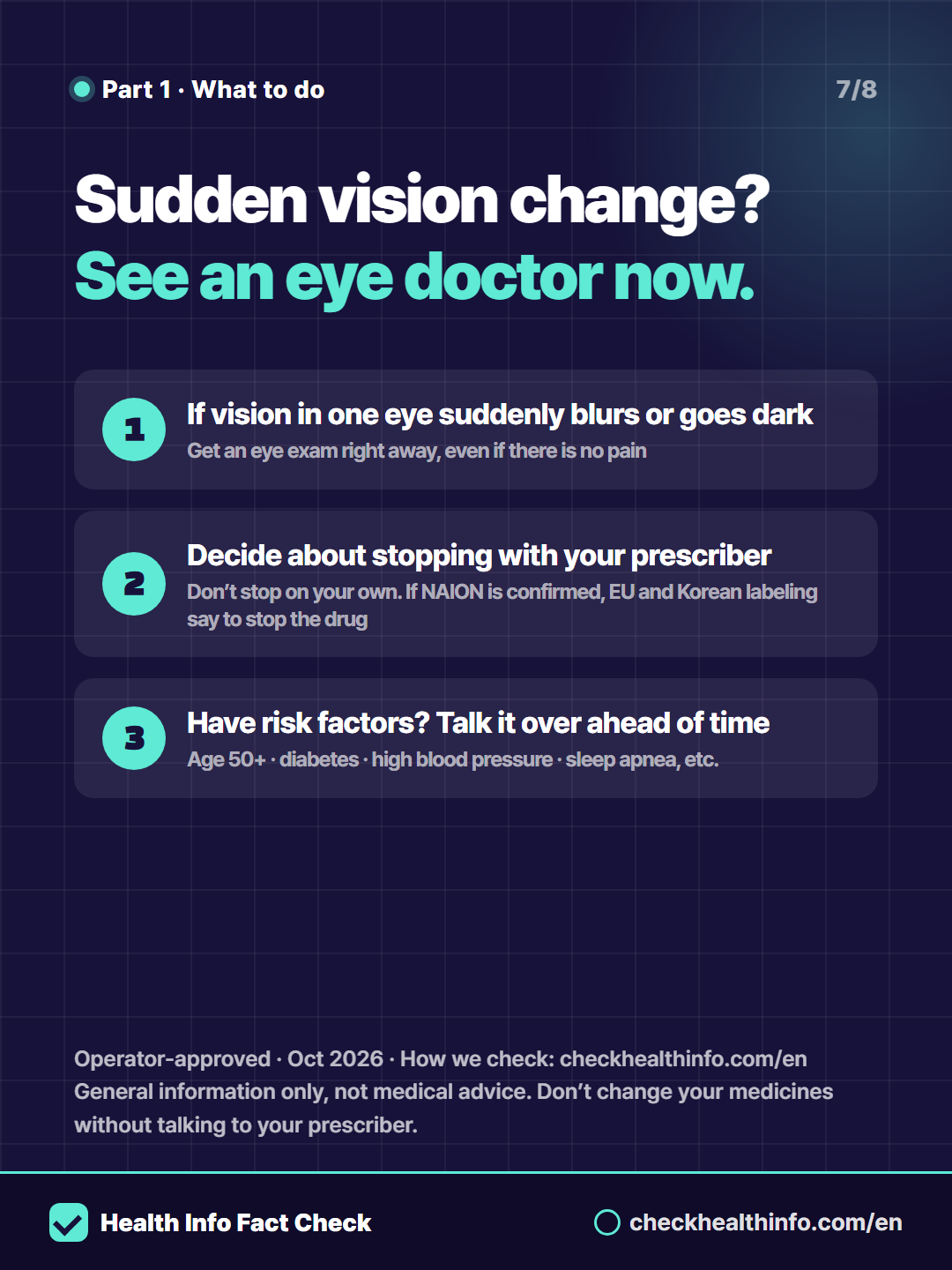
Korea’s MFDS labeling says that if sudden vision loss occurs, an eye exam should be done, and if NAION is confirmed, semaglutide should be stopped [15]. Otherwise, do not decide on your own whether to stop the injections; talk with the doctor who prescribed them. The decision should weigh the benefits of treating diabetes or obesity. If you have risk factors and are worried, talk with your prescribing doctor ahead of time about an eye exam.
Limitations of this verdict
- Most of the evidence showing increased risk comes from observational studies using medical records or insurance claims. NAION was identified by diagnosis codes, so some cases may have been misclassified, and other factors, such as diabetes itself, may partly explain the results.
- Randomized trials were too small to draw conclusions about a rare condition like NAION. The pooled analysis of manufacturer trials (Vilsbøll 2026) was done and published by the manufacturer (Novo Nordisk).
- There is less evidence on people using Wegovy (the obesity-treatment dose) than on people using Ozempic (for diabetes). Tirzepatide (Mounjaro) is outside the scope of this verdict.
- Most of the evidence comes from studies outside Korea. We did not find data on Korean patients this time.
- US lawsuits and media reports are only part of why this claim spread; we did not use them as evidence.
- Grades follow section 1 of our rating method. Claim 1 is graded B because it rests mainly on meta-analyses of observational studies and large cohort studies, and the randomized trials had few events and very wide confidence intervals. Claim 2 is graded A because a meta-analysis that includes randomized trials and the EMA assessment both concluded that the absolute incidence is very low.
- We check for new studies in our monthly PubMed review. If a verdict changes, we will update this page and note the change.
Card news
Video (in Korean)
References
- Chrzanowski J, Walicka M, Burzyński J, et al. Semaglutide-associated risk of nonarteritic anterior ischemic optic neuropathy in patients with type 2 diabetes: A systematic review and meta-analysis of observational studies. PLoS Med 2026;23(5):e1005064. PMID 42166479. PubMed abstract · Full article · Free full text
- Liu Z, Raveendran D, Fourlanos S, et al. Rate and Risk of Nonarteritic Anterior Ischemic Optic Neuropathy with Semaglutide Use for Diabetes and Weight Loss: A Systematic Review and Meta-Analysis. Ophthalmology 2026;133(5):589-598. PMID 41475544. PubMed abstract · Full article
- Natividade GR, Spiazzi BF, Baumgarten MW, et al. Ocular Adverse Events With Semaglutide: A Systematic Review and Meta-Analysis. JAMA Ophthalmol 2025;143(9):759-768. PMID 40810985. PubMed abstract · Full article · Free full text
- Abdelaal A, Abu Serhan H, Alsaadi M, et al. Semaglutide and the Risk of Nonarteritic Ischemic Optic Neuropathy: A Systematic Review and Certainty of Evidence Meta-Analysis. Ophthalmology 2026;133(6):799-810. PMID 41692115. PubMed abstract · Full article
- DeParis SW, Oke I, Gaier ED, et al. Glucagon-Like Peptide-1 Receptor Agonists and the Risk of Non-Arteritic Anterior Ischemic Optic Neuropathy: A Consensus Statement by the North American Neuro-Ophthalmology Society and the American Academy of Ophthalmology. Ophthalmology 2026;133(8):1029-1035. PMID 42132708. PubMed abstract · Full article
- Simonsen E, Lund LC, Ernst MT, et al. Use of semaglutide and risk of non-arteritic anterior ischemic optic neuropathy: A Danish-Norwegian cohort study. Diabetes Obes Metab 2025;27(6):3094-3103. PMID 40098249. PubMed abstract · Full article · Free full text
- Heberer K, Bress AP, Cogill S, et al. New-Onset Nonarteritic Anterior Ischemic Optic Neuropathy and Initiators of Semaglutide in US Veterans With Type 2 Diabetes. JAMA Ophthalmol 2026;144(3):259-264. PMID 41678180. PubMed abstract · Full article · Free full text
- Cai CX, Hribar M, Baxter S, et al. Semaglutide and Nonarteritic Anterior Ischemic Optic Neuropathy. JAMA Ophthalmol 2025;143(4):304-314. PMID 39976940. PubMed abstract · Full article · Free full text
- Chou CC, Pan SY, Sheen YJ, et al. Association between Semaglutide and Nonarteritic Anterior Ischemic Optic Neuropathy: A Multinational Population-Based Study. Ophthalmology 2025;132(4):381-388. PMID 39491755. PubMed abstract · Full article
- Hathaway JT, Shah MP, Hathaway DB, et al. Risk of Nonarteritic Anterior Ischemic Optic Neuropathy in Patients Prescribed Semaglutide. JAMA Ophthalmol 2024;142(8):732-739. PMID 38958939. PubMed abstract · Full article · Free full text
- Vilsbøll T, Arun Kumar D, Aiello LP, et al. Non-arteritic anterior ischaemic optic neuropathy incidence in placebo-controlled clinical trials of liraglutide or semaglutide. Br J Ophthalmol 2026. PMID 42049287. PubMed abstract · Full article
- Ruan F, Gnana B, Mei C, et al. Current review of glucagon-like peptide 1 receptor agonists and risk of nonarteritic anterior ischemic optic neuropathy. J Endocr Soc 2026;10(11):bvag224. PMID 42857401. PubMed abstract · Full article · Free full text
- Ababneh OH, Al-Asmar RK, Fashho ER, et al. Nonarteritic Anterior Ischemic Optic Neuropathy: Review and Update. Neurol Clin 2026;44(2):169-186. PMID 41922029. PubMed abstract · Full article
- European Medicines Agency (EMA) — PRAC: NAION is a very rare side effect of semaglutide medicines (Ozempic, Rybelsus, Wegovy) (June 6, 2025) (accessed 2026-10-11). Source
- Korea MFDS drug database — Wegovy 2.4 mg prefilled pen labeling (accessed 2026-10-11). Source
- US DailyMed — Wegovy prescribing information (June 2026 revision) (accessed 2026-10-11). Source
- US DailyMed — Ozempic prescribing information (accessed 2026-10-11). Source
General information only, not medical advice. If vision in one eye suddenly blurs or is lost, get an eye exam right away. Do not stop or change a medicine without talking to the doctor who prescribed it.