Weight-loss shots and the pill: can Mounjaro make birth control pills less effective?
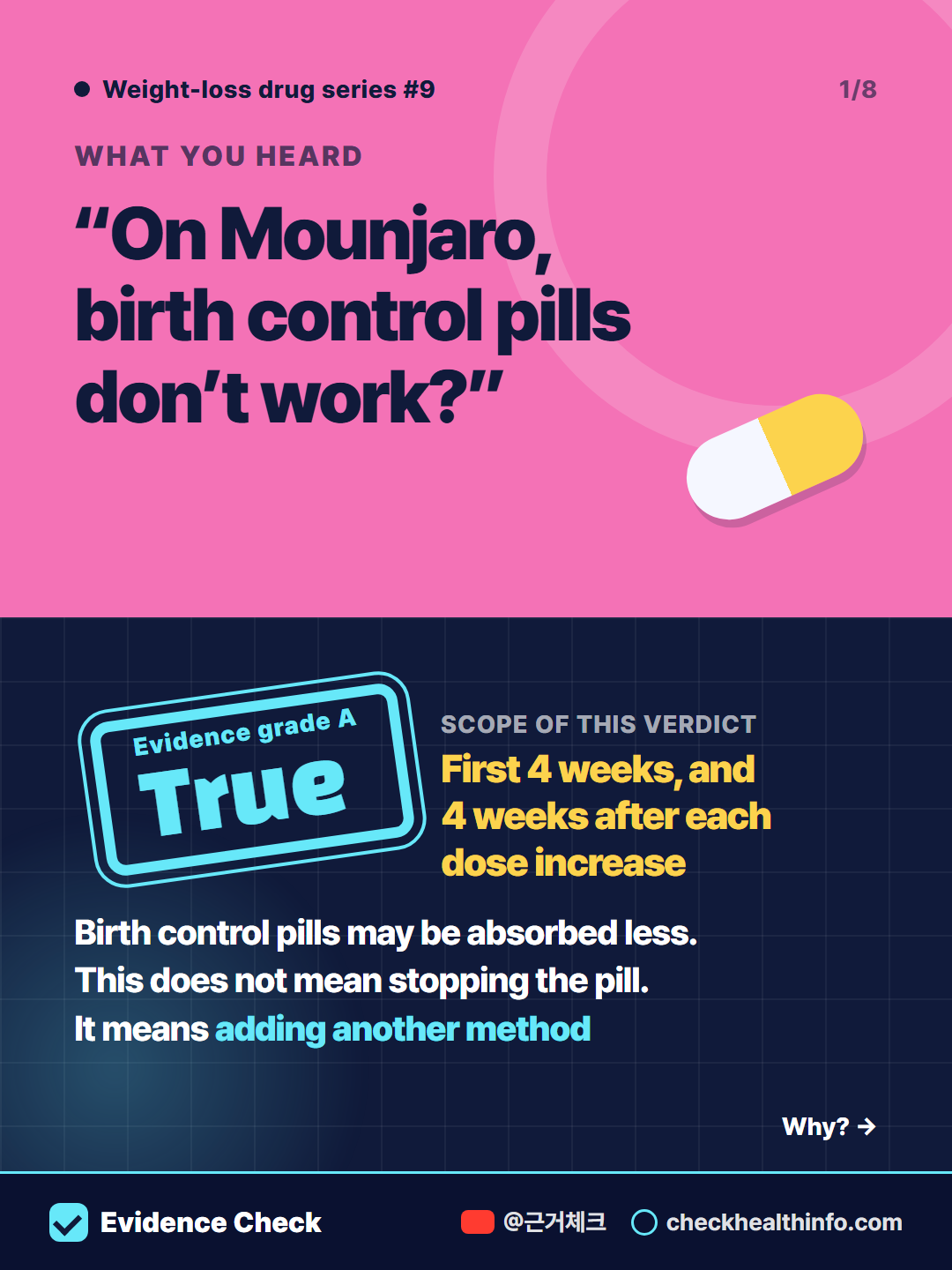
Can using Mounjaro make birth control pills less effective?

We checked this verdict against 8 sources, such as published studies and clinical guidelines. · How checked: Operator-approved
Verdicts at a glance
| Claim | Verdict |
|---|---|
| Using Mounjaro (tirzepatide) can make birth control pills less effective | True · Evidence grade A |
Bottom line — The claim that Mounjaro (tirzepatide) can make birth control pills less effective matches what the drug labeling says (True, A — scope: the first 4 weeks after starting, and 4 weeks after each dose increase, are what matter). Mounjaro slows how fast food leaves the stomach, so a pill taken at the same time is absorbed later and a little less. That is why the labeling advises people who take birth control pills to switch to a non-oral method, or to add a barrier method such as condoms for 4 weeks after starting and for 4 weeks after each dose increase. This does not mean stopping the pill; it means adding another method. We have not yet found any study that looked at how often birth control actually failed (pregnancies). Talk with your prescriber or pharmacist about whether to change your birth control.
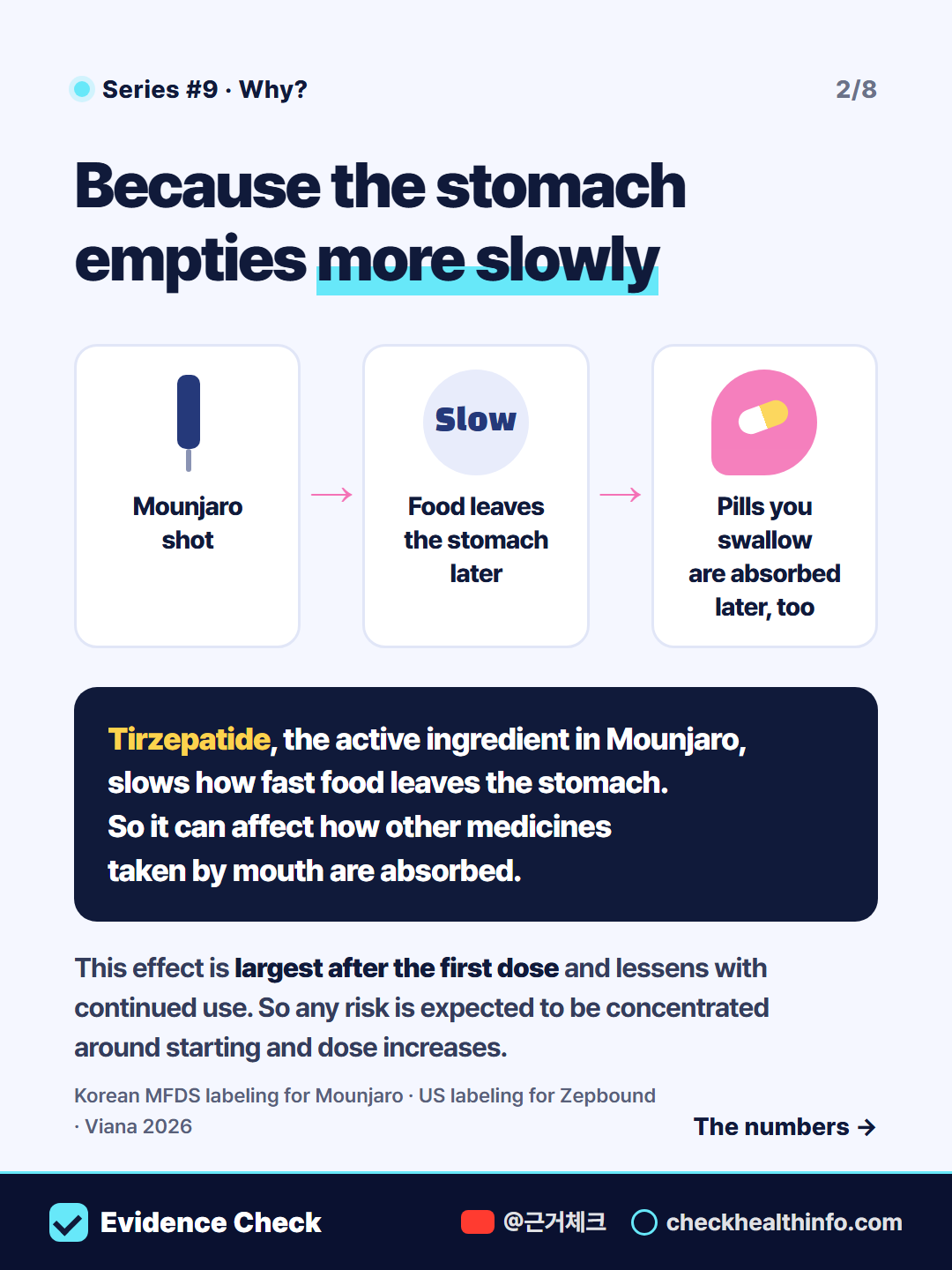
Delayed gastric emptying — Food moves from the stomach to the intestine more slowly. Medicines taken at the same time may also be absorbed later.
Pharmacokinetics — The study of how a drug is absorbed, spread through the body and removed, measured by blood levels. Pharmacokinetic trials look at blood levels; they do not directly measure whether the drug works (here, whether it prevents pregnancy).
Peak blood level (Cmax) — The highest level the drug reaches in the blood after a dose.
AUC (area under the curve) — A measure of the total amount of drug that reaches the body over a set time.
Time to peak level (Tmax) — How long it takes after a dose to reach the peak level.
Non-oral contraception — A birth control method that you do not take by mouth.
Barrier method — A birth control method, such as condoms, that physically blocks sperm.
Drug names — Tirzepatide is the active ingredient in Mounjaro (sold in the US as Zepbound for weight loss); semaglutide is the active ingredient in Wegovy and Ozempic. Products are named only to identify the ingredients, not to recommend any product.
Claim. “Using Mounjaro (tirzepatide) can make birth control pills less effective”
True · Evidence grade A
In plain words Mounjaro can make birth control pills absorb later and a little less. So the labeling advises adding a barrier method such as condoms for 4 weeks after starting and for 4 weeks after each dose increase, or switching to a method you do not take by mouth. It does not mean you should stop the pill on your own.
- Tirzepatide, the active ingredient in Mounjaro, slows how fast food leaves the stomach (delayed gastric emptying). Korea’s drug labeling (Ministry of Food and Drug Safety, MFDS) says this can affect the absorption of medicines taken by mouth at the same time. [6]
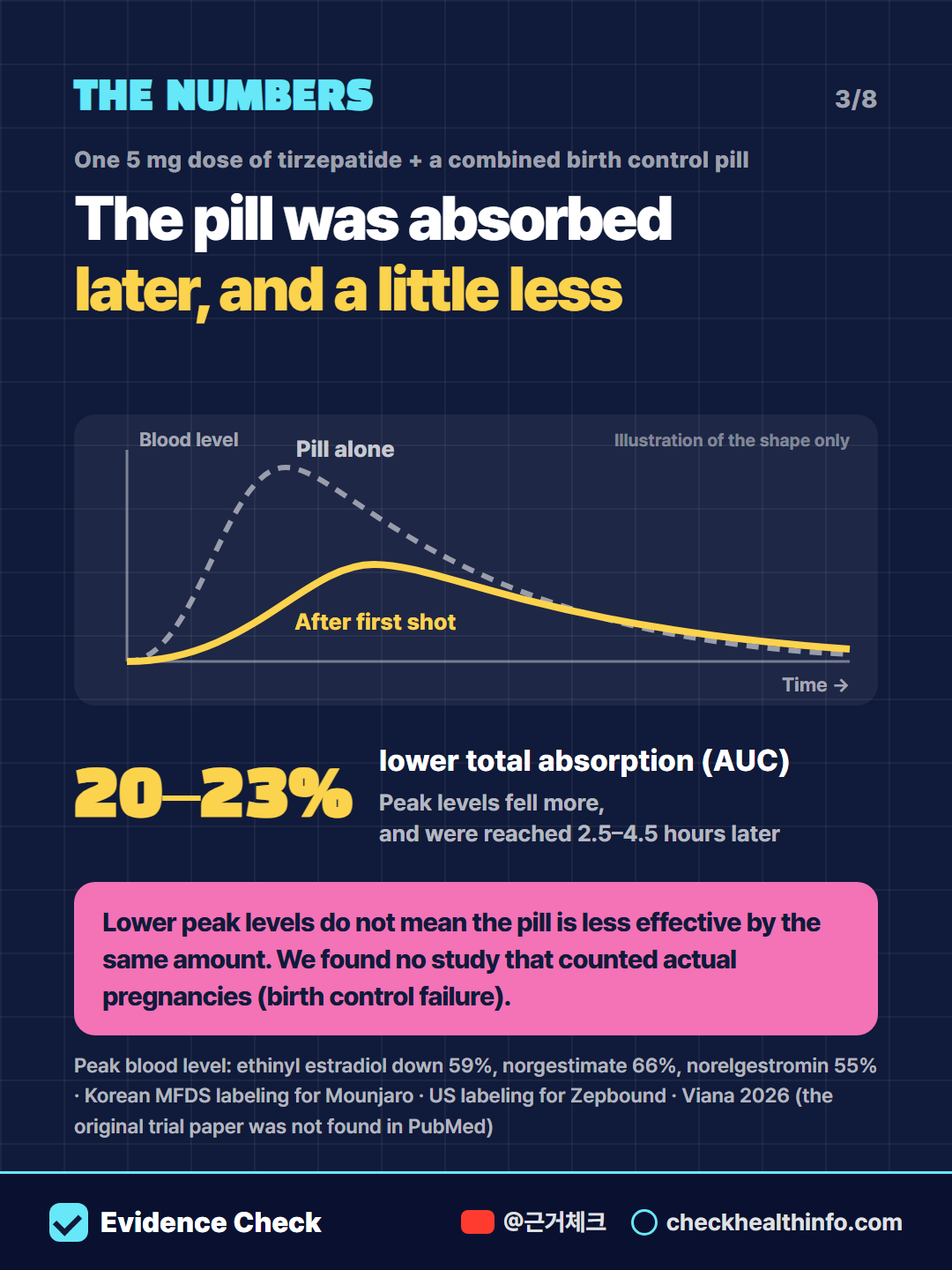
- When a combined birth control pill (ethinyl estradiol 0.035 mg and norgestimate 0.25 mg) was taken after a single 5 mg dose of tirzepatide, the total amount absorbed (AUC) fell by 20%, 21% and 23% for ethinyl estradiol, norgestimate and its active metabolite norelgestromin, respectively. Peak blood levels were 59%, 66% and 55% lower, respectively, and the time to reach the peak was delayed by 2.5 to 4.5 hours. [6] [7] [1] In other words, the pill was absorbed later and a little less. Even though peak levels fell a lot, the drop in total absorption was smaller, so this does not mean the pill became less effective by the same amount.
- The US labeling for Zepbound (tirzepatide) states that, because of this delayed gastric emptying, birth control pills may be less effective. [7]
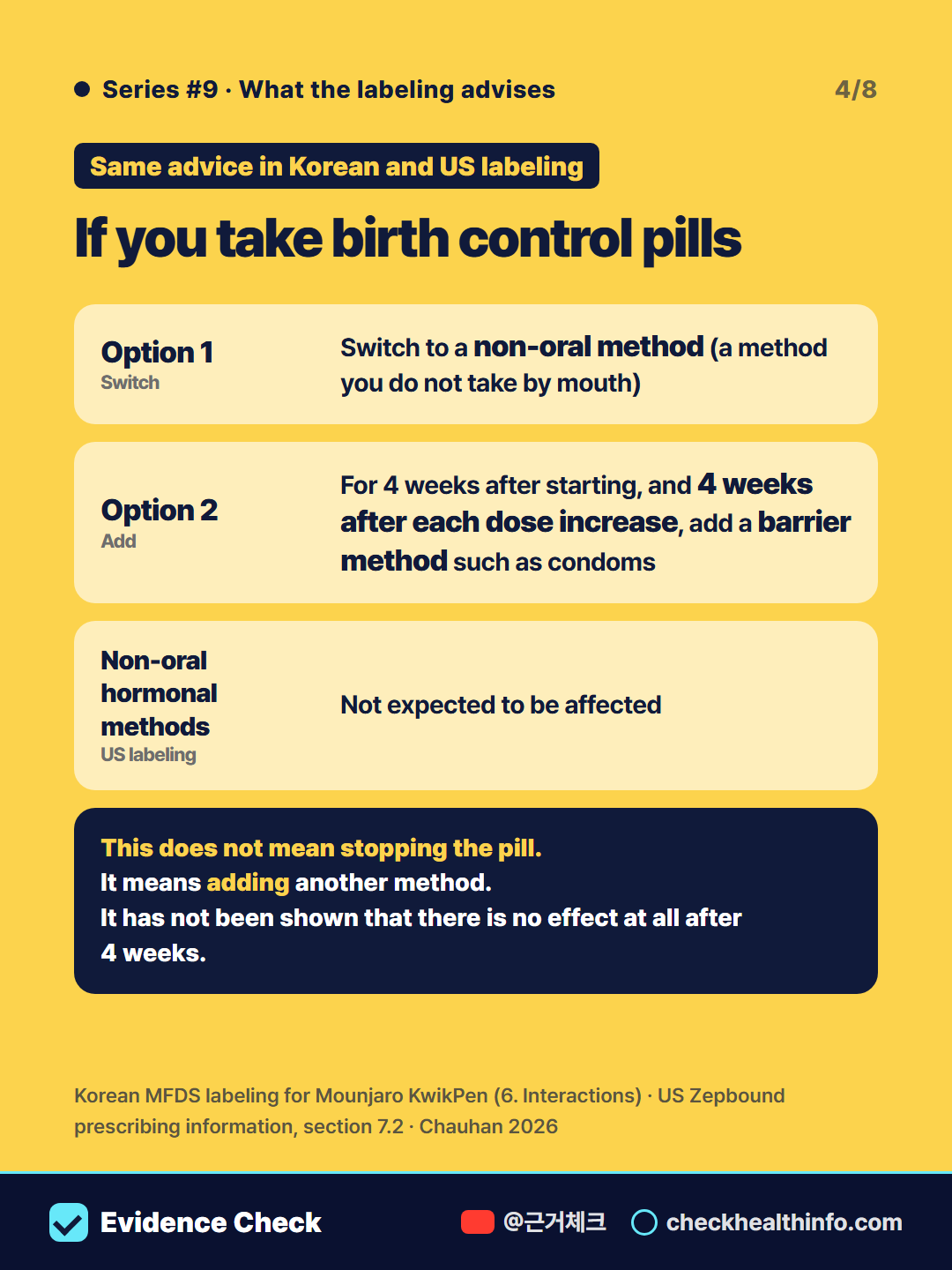
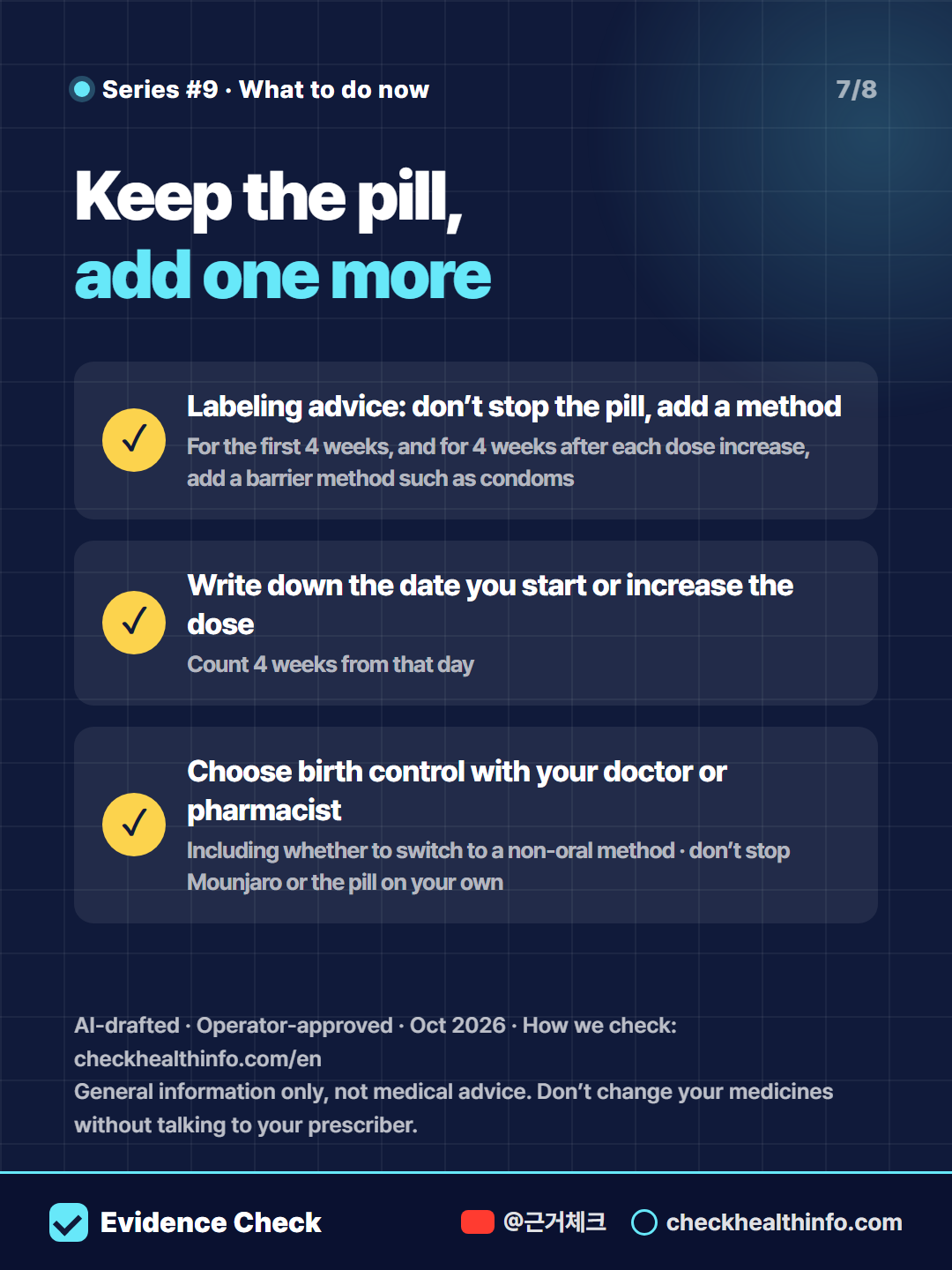
- So both Korea’s MFDS labeling for Mounjaro and the US labeling for Zepbound advise people who take birth control pills to switch to a non-oral method, or to add a barrier method (such as condoms) for 4 weeks after starting, and for 4 weeks after each dose increase. The US labeling states that non-oral hormonal methods are not expected to be affected. [6] [7] A review for obstetrician-gynecologists also says, based on the manufacturer’s guidance, to use backup contraception for 4 weeks after starting or after a dose increase. [2]
- Delayed gastric emptying is greatest after the first dose and lessens with continued use, so any risk is expected to be concentrated around starting and dose increases. [7] [1]
- A review of drug interactions with GLP-1 drugs and tirzepatide says that most interactions caused by delayed gastric emptying were of little clinical importance, but that a clear change in exposure was seen with tirzepatide and birth control pills, which deserves careful attention. [3]
- However, this evidence comes from blood-level (pharmacokinetic) data; we found no study that looked at how often birth control actually failed (pregnancies). A review (Viana 2026) says that whether clinical effectiveness is reduced has not yet been tested, and that this is possible but not proven. [1]
What about Wegovy (semaglutide)?
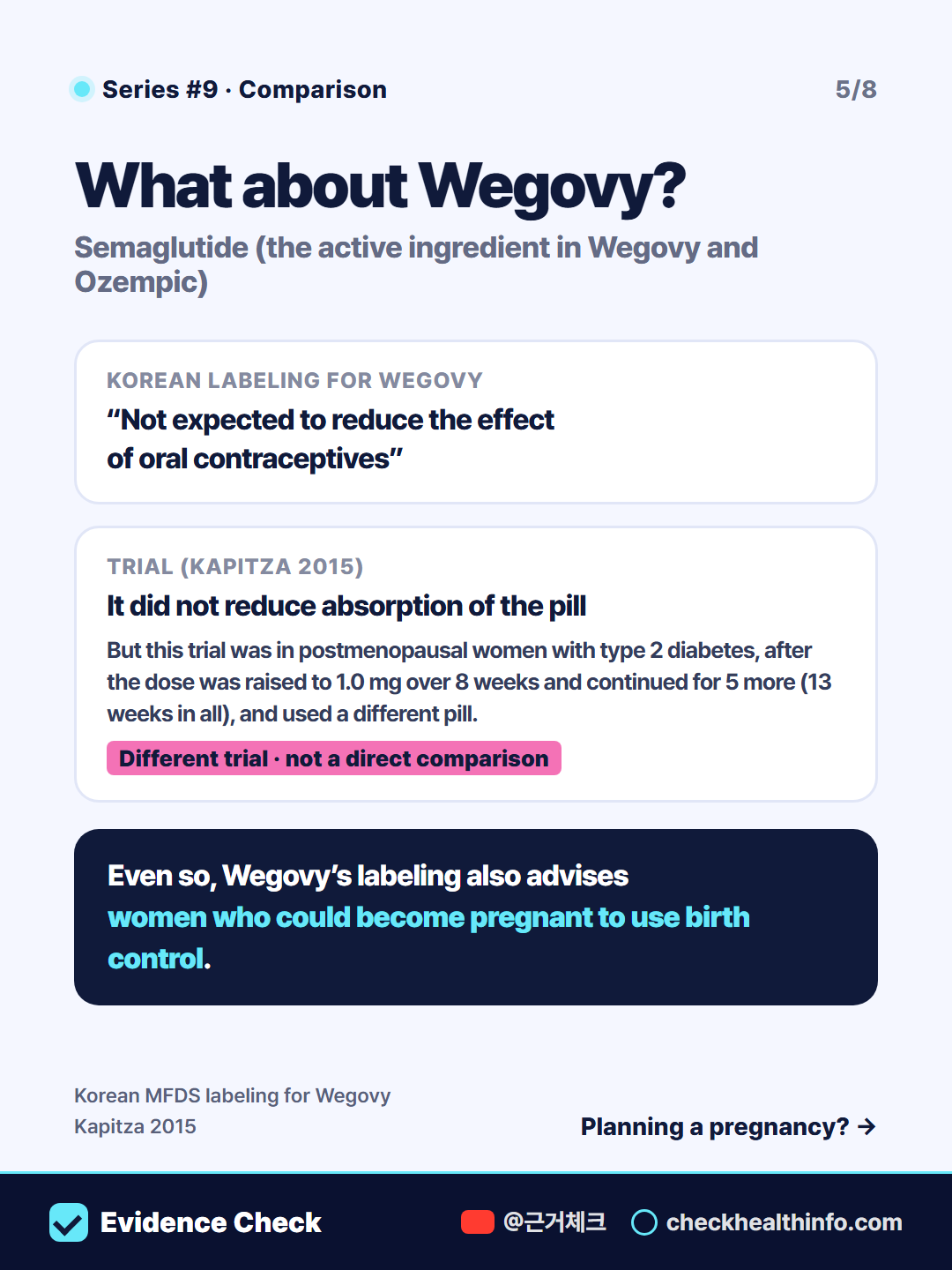
- Korea’s labeling for Wegovy says it is “not expected to reduce the effect of oral contraceptives.” [8]
- A semaglutide trial (Kapitza 2015) gave 43 postmenopausal women with type 2 diabetes semaglutide once a week, starting at 0.25 mg and increasing to 1.0 mg over 8 weeks, then continuing for 5 more weeks (13 weeks in all), and then measured absorption of a different pill (ethinyl estradiol and levonorgestrel). The AUC ratio for ethinyl estradiol was 1.11 (90% confidence interval 1.06 to 1.15), meeting the criteria for bioequivalence, and the AUC ratio for levonorgestrel was 1.20 (1.15 to 1.26). [4] In other words, semaglutide did not reduce absorption of the pill in this trial.
- But this trial differed from the tirzepatide trial (right after the first dose) in its participants (postmenopausal women with diabetes), dose (1.0 mg), timing (steady use at 1.0 mg) and pill, so it is a different trial and cannot be compared directly. It also differs from Wegovy 2.4 mg used by women who could become pregnant.
- Even so, Wegovy’s labeling also advises women who could become pregnant to use birth control while on the drug. [8]
If you are planning a pregnancy
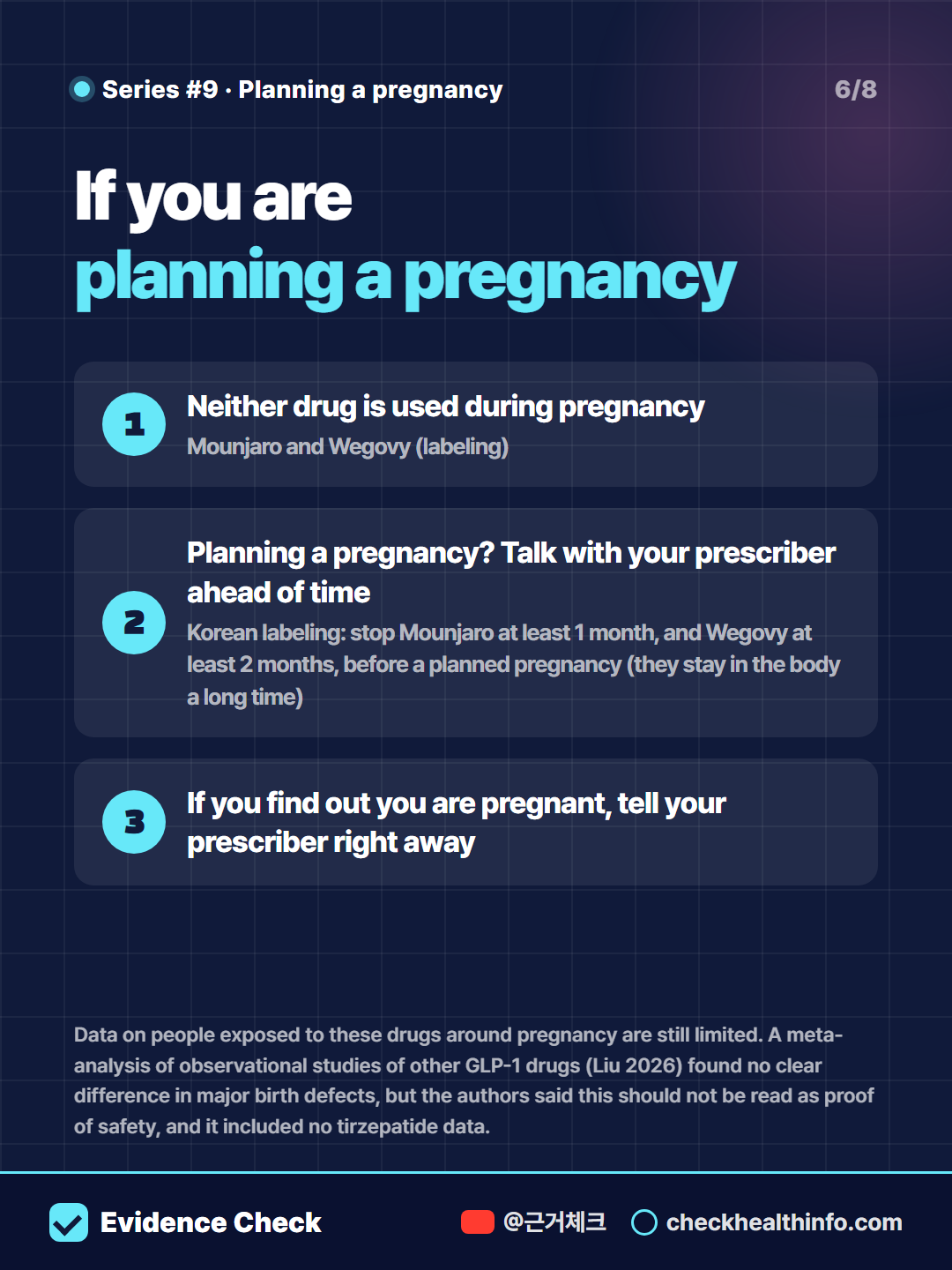
- Neither Mounjaro nor Wegovy is used during pregnancy. [6] [8] The US labeling says to stop the drug when pregnancy is recognized and that weight loss is not recommended during pregnancy. [7]
- Because these drugs stay in the body a long time, Korea’s MFDS labeling says to stop Mounjaro at least 1 month, and Wegovy at least 2 months, before a planned pregnancy. [6] [8] If you are planning a pregnancy, talk with your prescriber ahead of time.
- Data on people exposed to these drugs around pregnancy are still limited. In a meta-analysis of 6 observational studies (286,599 people) of other GLP-1 drugs (such as liraglutide and semaglutide), the relative risk of major birth defects was 1.02 (95% confidence interval 0.96 to 1.08). [5] In other words, this analysis did not show a clear difference in the risk of birth defects. But the authors said that, because the studies were observational and few exposed pregnancies were included, this should not be read as proof of safety, and it included no tirzepatide data.
- If you find out you are pregnant, tell your prescriber right away.
The claim is about a possibility (“can make … less effective”), and both Korea’s MFDS labeling for Mounjaro (may affect absorption) and the US labeling for Zepbound (birth control pills may be less effective) directly state this interaction and the birth control advice. Under section 1 of our rating method, for claims about what the drug approval itself says, such as interactions and birth control advice, regulator labeling is grade A evidence; under section 2, the claim matches the labeling, so it is “True.” The labeling and the PubMed reviews point the same way, so we did not grade down. But grade A refers to the fact that the labeling contains this warning. The warning rests on a single-dose pharmacokinetic trial, and we found no study that counted actual pregnancies (birth control failures), so certainty about actual birth control failure is low. Any risk is expected to be concentrated right after starting and dose increases, so the verdict should be read together with the scope of the labeling advice: the first 4 weeks after starting, and 4 weeks after each dose increase.
Scope: This verdict covers only the interaction between Mounjaro (tirzepatide) and birth control pills, and the labeling advice for people planning a pregnancy. It does not cover choosing a birth control method for any one person.
The labeling advises adding a barrier method such as condoms to birth control pills for 4 weeks after starting Mounjaro and for 4 weeks after each dose increase. Writing down the date you start or increase the dose makes it easier to count the 4 weeks. Talk with your prescriber or pharmacist about whether to switch to a non-oral method and which birth control method is right for you. If you are planning a pregnancy, talk with your prescriber ahead of time. Follow your prescriber’s advice on your own dose or any medicine changes.
Limits of this verdict
- The evidence is blood-level (pharmacokinetic) data. We found no study that looked at how often birth control actually failed (pregnancies).
- The trial looked at only one birth control pill combination and a single 5 mg dose of tirzepatide. We could not find the original trial paper in PubMed, so we used the numbers summarized in the labeling and in a review (Viana 2026).
- It has also not been shown that there is no effect at all after 4 weeks.
- The semaglutide (Wegovy) trial differed in participants, dose, timing and pill, so it cannot be compared directly with the tirzepatide trial.
- Data on exposure around pregnancy are still limited, and the meta-analysis (Liu 2026) included no tirzepatide data.
- We set the grade under section 1 of our rating method. We check for new studies in our monthly PubMed review, and if a verdict changes, we record it in our corrections log (in Korean).
Card news
Video (in Korean)
References
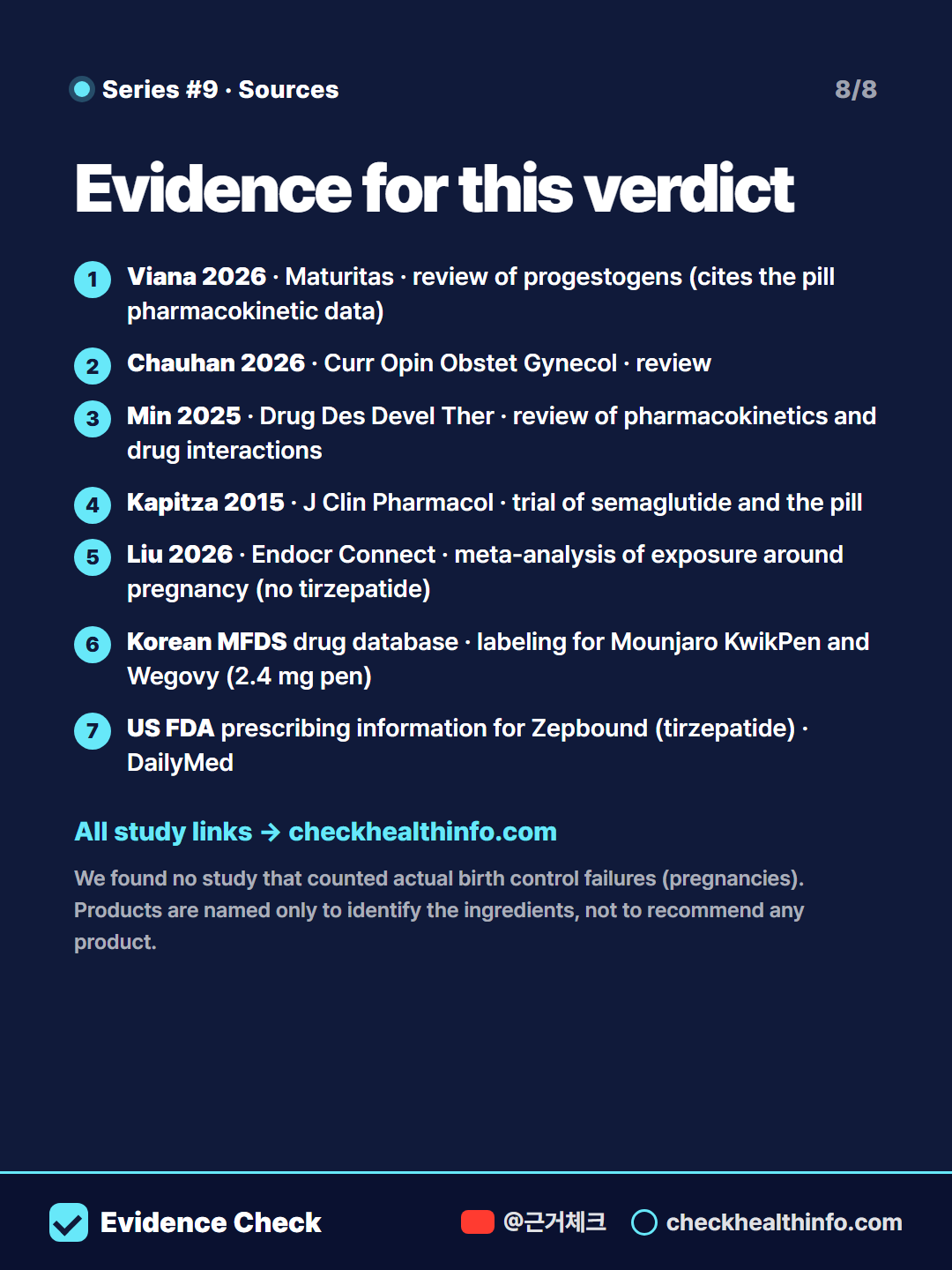
- Viana DPDC, Invitti AL, Jacobsen L, et al. Tirzepatide and oral progestogens: A hypothesis-generating review of a biologically plausible pharmacokinetic interaction in gynaecologic disease control and menopausal hormone therapy. Maturitas 2026;214:109116. PMID 42721915. PubMed abstract · Full article
- Chauhan I. What obgyns need to know about GLP-1 receptor agonists. Curr Opin Obstet Gynecol 2026;38(5):366-373. PMID 42108205. PubMed abstract · Full article
- Min JS, Jo SJ, Lee S, et al. A Comprehensive Review on the Pharmacokinetics and Drug-Drug Interactions of Approved GLP-1 Receptor Agonists and a Dual GLP-1/GIP Receptor Agonist. Drug Des Devel Ther 2025;19:3509-3537. PMID 40330819. PubMed abstract · Full article · Free full text
- Kapitza C, Nosek L, Jensen L, et al. Semaglutide, a once-weekly human GLP-1 analog, does not reduce the bioavailability of the combined oral contraceptive, ethinylestradiol/levonorgestrel. J Clin Pharmacol 2015;55(5):497-504. PMID 25475122. PubMed abstract · Full article · Free full text
- Liu X, Xiong B, Yang R, et al. Periconceptional use of GLP-1 receptor agonists and the risk of major congenital malformations: a systematic review and meta-analysis. Endocr Connect 2026;15(7). PMID 42447044. PubMed abstract · Full article · Free full text
- Korean MFDS drug database — Mounjaro KwikPen (tirzepatide) labeling (accessed 2026-10-17). Source
- US DailyMed — Zepbound (tirzepatide) prescribing information, sections 7.2, 8.3 and 12.3 (revised August 2026) (accessed 2026-10-17). Source
- Korean MFDS drug database — Wegovy 2.4 mg prefilled pen (semaglutide) labeling (accessed 2026-10-17). Source
General information only, not medical advice. Do not stop birth control pills or Mounjaro on your own; talk with your prescriber or pharmacist about whether to change your birth control. Products are named only to identify the ingredients, not to recommend any product.