Stop weight-loss shots and the weight comes back? Should you stay on them?
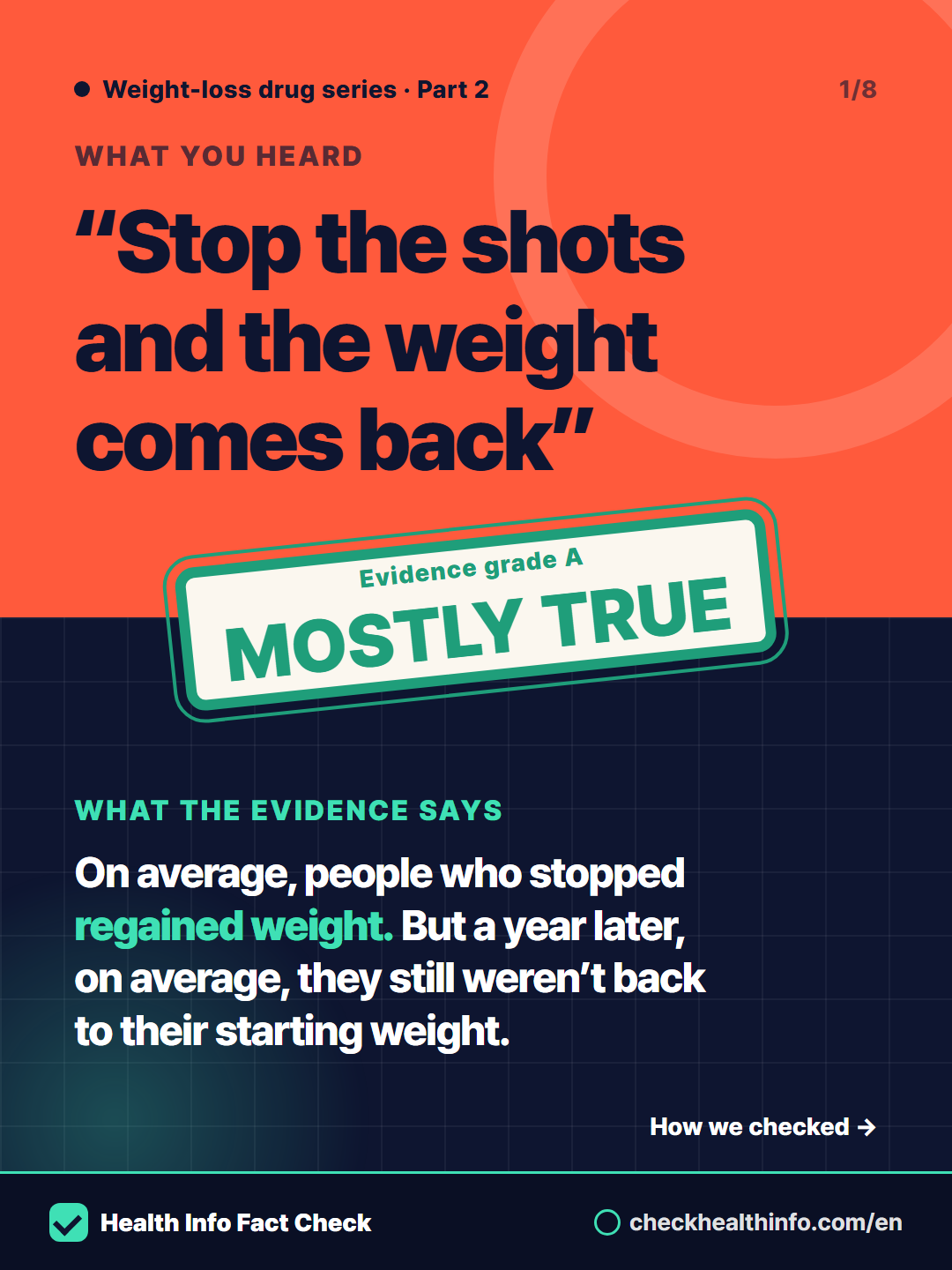
If you stop weight-loss injections (Wegovy, Mounjaro), will the weight come back?

We checked this verdict against 12 sources, such as published studies and clinical guidelines. · How checked: Operator-approved
Verdicts at a glance
| Claim | Verdict |
|---|---|
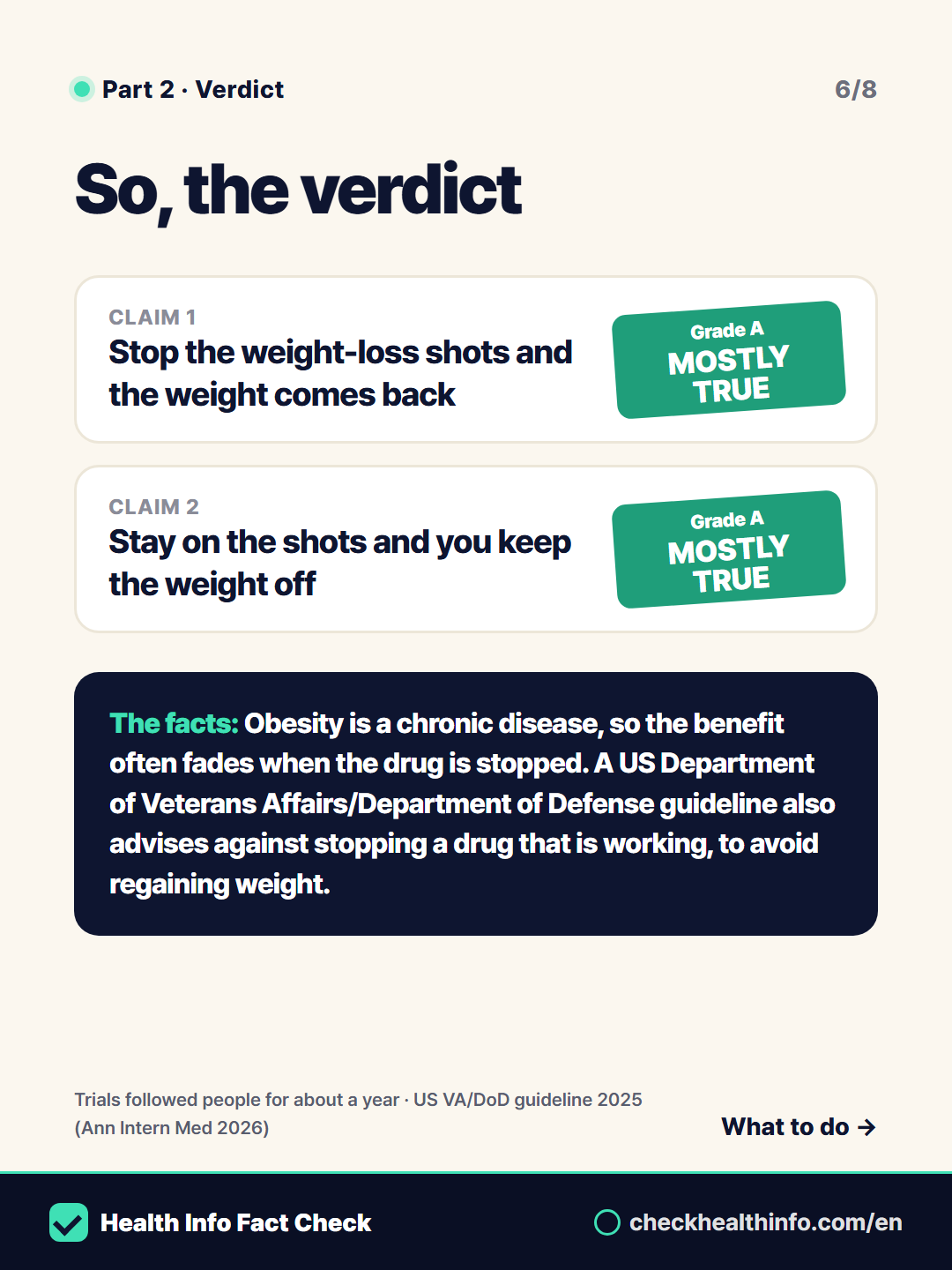
| If you stop weight-loss injections (Wegovy, Mounjaro), the weight comes back | Mostly true · Evidence grade A |
| If you keep taking the injections, you keep the weight off | Mostly true · Evidence grade A |
Bottom line — In randomized trials, people who stopped weight-loss injections (semaglutide or tirzepatide) regained weight on average. However, even a year after stopping, they had not, on average, gone all the way back to their weight before starting the drug. People who kept taking the drug did not regain weight on average over the following year or so (48–52 weeks); in fact, they lost another 5–8%. Obesity is a chronic disease, and the benefit often fades when the drug is stopped, so if you stop, plan it with your prescribing doctor.
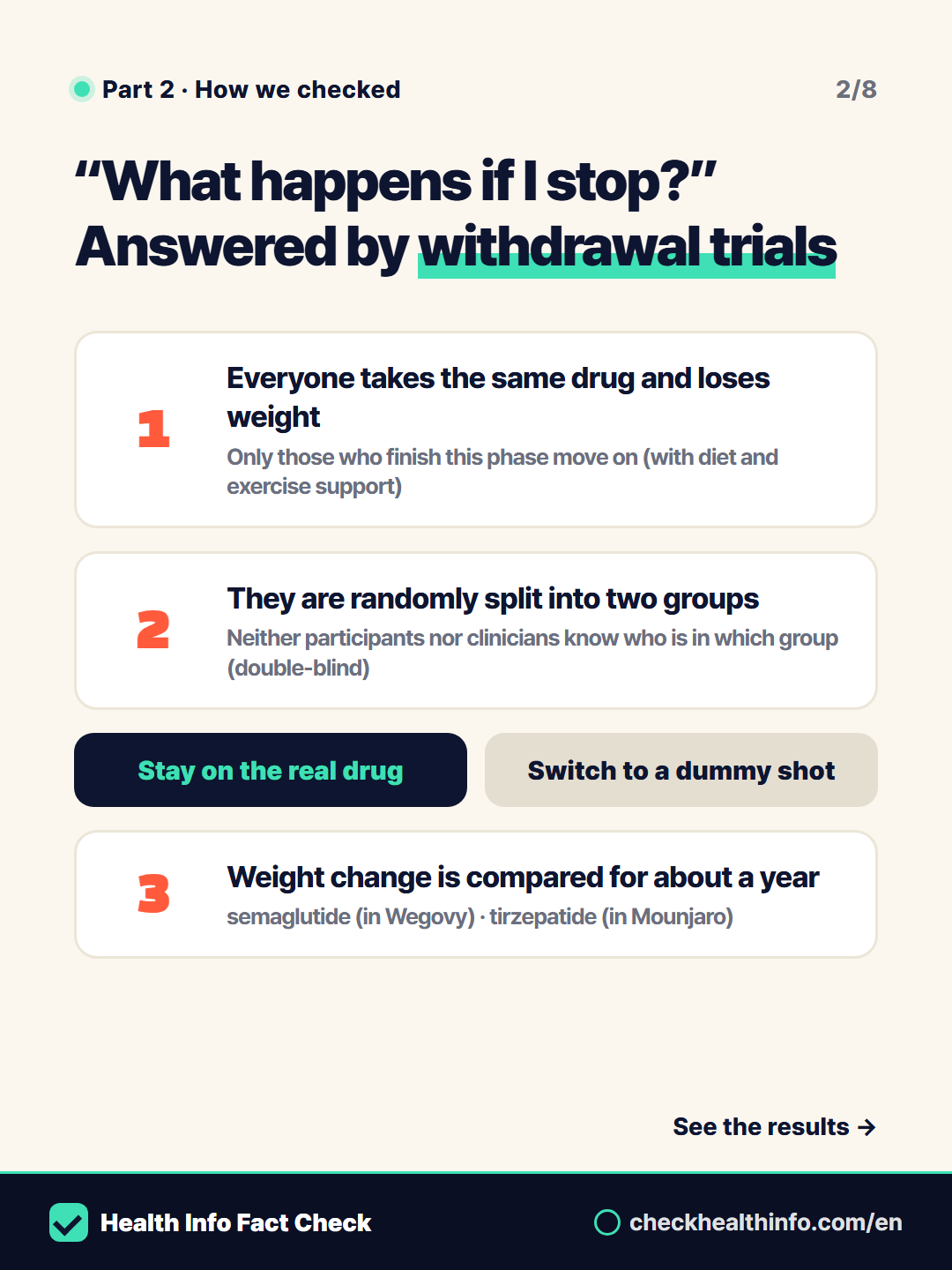
Randomized withdrawal trial — A trial in which everyone is first treated with the same drug, then people are randomly split: one group keeps taking the drug and the other switches to a dummy drug (placebo). It is the most direct way to see what happens when people stop.
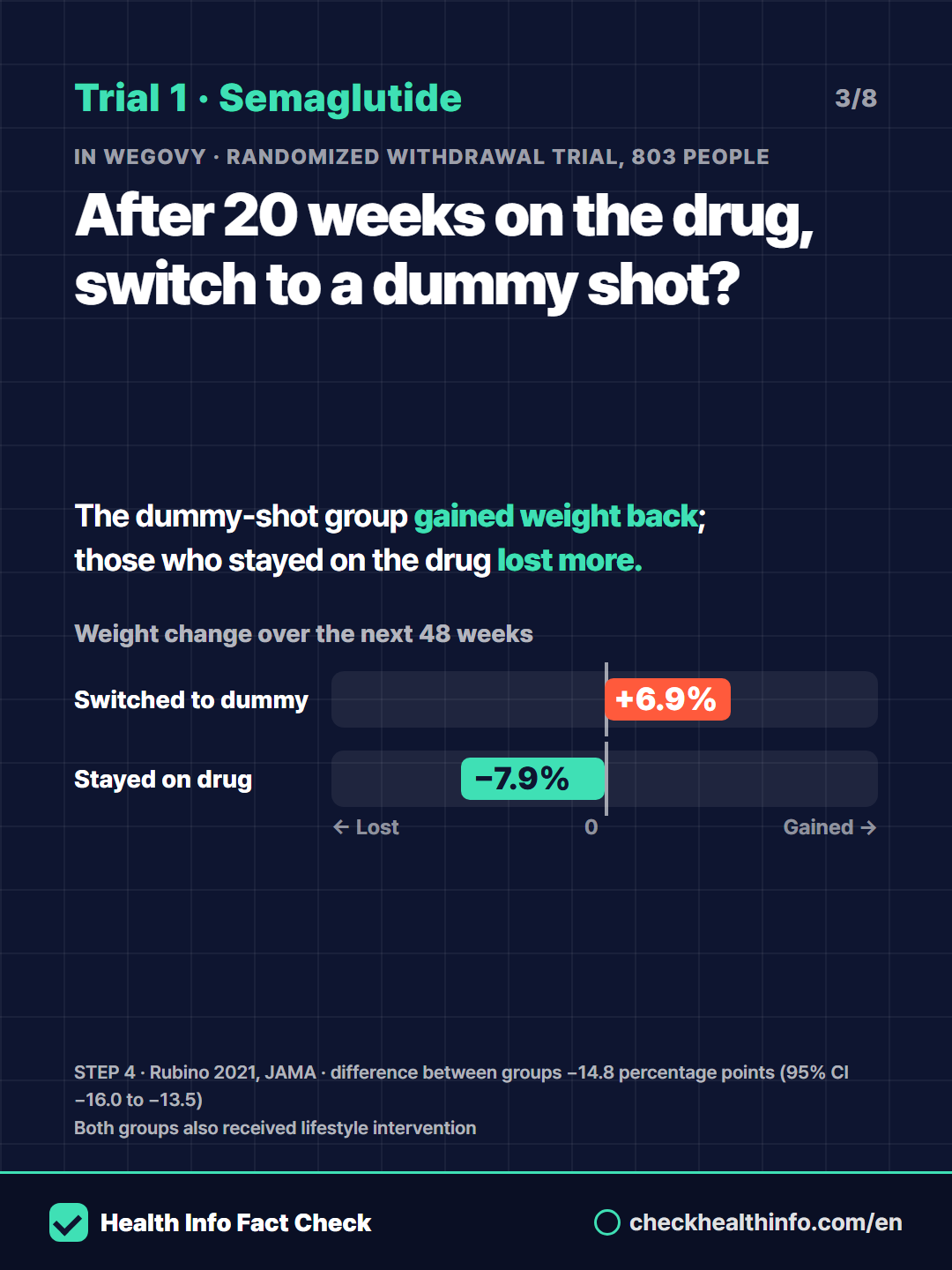
Percentage points — The difference between two percentages, found by subtraction. For example, the difference between −7.9% and +6.9% is 14.8 percentage points.
95% confidence interval — The range in which the true value likely lies. The wider the range, the less certain the result.
Drug names — Semaglutide is the active ingredient in Wegovy, and tirzepatide is the active ingredient in Mounjaro (sold for weight management in the US as Zepbound). We name products only so you can tell which ingredient they contain. We do not recommend any specific product.
Claim 1. “If you stop weight-loss injections, the weight comes back”
Mostly true · Evidence grade A
In plain terms People who stopped regained weight on average. But even a year after stopping, they were still lighter than before they started the drug, and weight regain tended to slow down over time.
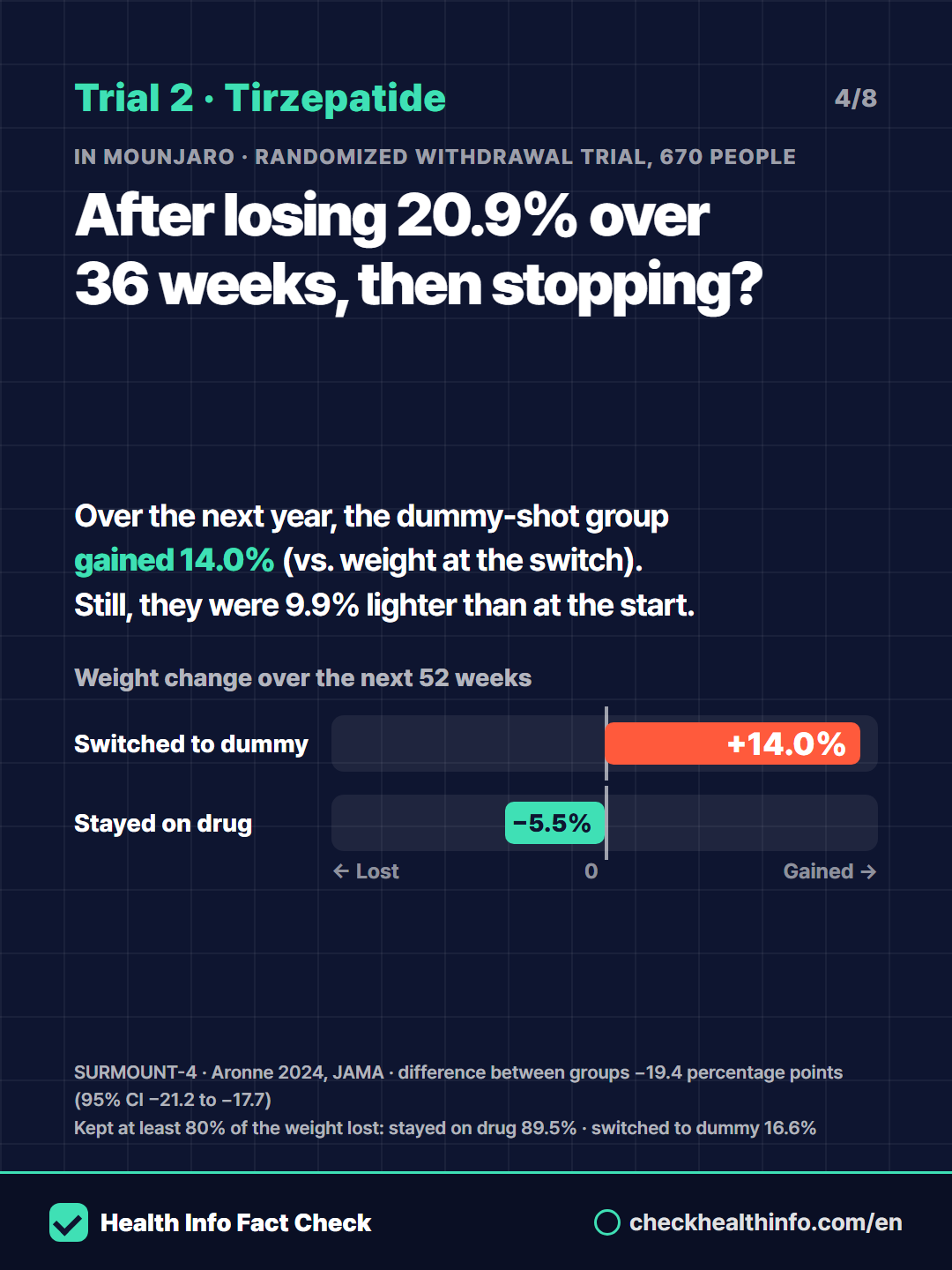
- In a randomized withdrawal trial of tirzepatide (SURMOUNT-4, 670 people), participants lost an average of 20.9% over 36 weeks. Those then switched to placebo regained 14.0% over the next 52 weeks (relative to their weight at the switch). Even so, at week 88 they were still 9.9% lighter than at the start (week 0). Those who kept taking the drug lost another 5.5% (difference −19.4 percentage points, 95% confidence interval −21.2 to −17.7). [6]
- In a randomized withdrawal trial of semaglutide (STEP 4, 803 people), after 20 weeks on the drug, those switched to placebo gained 6.9% over 48 weeks, while those who kept taking it lost another 7.9% (difference −14.8 percentage points, 95% confidence interval −16.0 to −13.5). [5]
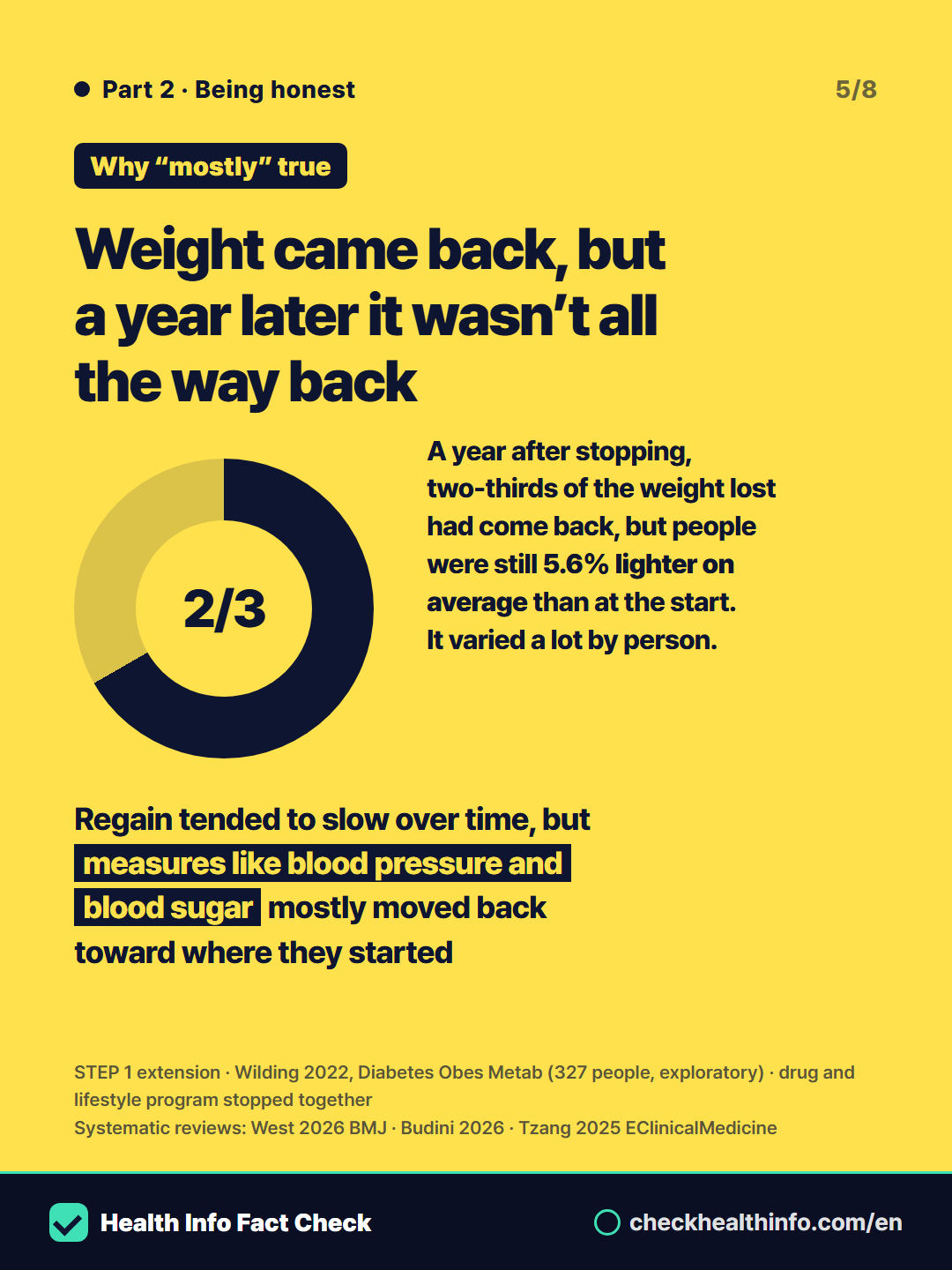
- In an off-treatment extension of a semaglutide trial (STEP 1; 327 people; exploratory analysis), people who lost an average of 17.3% over 68 weeks regained two-thirds of the weight they had lost within a year of stopping both the drug and the lifestyle program. Net weight loss at week 120 was 5.6%, and measures such as blood pressure, blood sugar and cholesterol also mostly moved back toward where they started. [4]
- A systematic review of 37 studies (9,341 people) of weight-management drugs in general, not only GLP-1 drugs (BMJ 2026), found that after stopping, people regained an average of 0.4 kg a month (95% confidence interval 0.3–0.5; 0.3 kg a month compared with control groups within randomized trials), and measures such as blood pressure, blood sugar and cholesterol were estimated to return to where they started within 1.4 years. Regain was faster than after the end of behavioral programs. This analysis included both randomized trials and observational studies. [1]
- A meta-analysis of 18 randomized trials (3,771 people with obesity or diabetes combined) found, in a separate analysis of people with obesity, that after stopping GLP-1 drugs, weight rose by an average of 5.63 kg (95% confidence interval 3.52–7.73) and HbA1c (a measure of average blood sugar) rose by 0.25 percentage points. Waist size, systolic blood pressure and fasting blood sugar also worsened. However, the amount of change varied greatly from study to study. [2]
- An analysis that modeled the weight-regain curve from 6 randomized trials (3,236 people; most included studies had a moderate risk of bias) found that one year after stopping, 60% of the weight lost during treatment had come back. Beyond that point the estimate is an extrapolation, but it projected that regain would level off at 75.3% of the weight lost (95% confidence interval 68.9–81.6), still below the weight before treatment. [3]
The direction — weight comes back — is consistent across several randomized trials and pooled analyses. But under our rating method, “Mostly true” is used when the effect or population is narrower than the claim. In the trials, even a year after stopping, people had not, on average, gone all the way back to their starting weight; the amount varied from person to person (in the tirzepatide trial, 16.6% of those switched to placebo kept at least 80% of the weight they had lost); and most follow-up lasted only about a year.
Claim 2. “If you keep taking the injections, you keep the weight off”
Mostly true · Evidence grade A
In plain terms In randomized trials, people who kept taking the drug not only kept off the weight they had lost but, on average, lost more. A US Department of Veterans Affairs/Department of Defense guideline advises against stopping a drug that is working, to avoid regaining weight.
- In the tirzepatide trial, at week 88, 89.5% of those who kept taking the drug had kept at least 80% of the weight they lost in the first 36 weeks, compared with 16.6% of those switched to placebo. Total weight loss from week 0 to week 88 was 25.3% vs 9.9%. [6]
- In the semaglutide trial, those who kept taking the drug lost another 7.9% over the next 48 weeks. Gastrointestinal side effects were more common in this group (49.1% vs 26.1%). [5]
- Longer trials also showed that weight loss was maintained in those who kept taking the drug. In a 2-year semaglutide trial (STEP 5, 304 people), weight changed by −15.2% at week 104 vs −2.6% with placebo (difference −12.6 percentage points, 95% confidence interval −15.3 to −9.8) [8]. In an analysis of a trial of 17,604 adults with overweight or obesity and cardiovascular disease (SELECT), weight changed by −10.2% vs −1.5% with placebo at week 208, with weight loss maintained for up to 4 years. Because participants had cardiovascular disease, this is indirect evidence [9]. These two trials show only maintenance while people stay on the drug; they did not compare stopping.
- The 2025 US Department of Veterans Affairs/Department of Defense guideline for managing overweight and obesity in adults strongly recommends lifestyle interventions as the foundation of treatment, and advises against stopping a drug that is working, to avoid regaining weight. [7]
- The US FDA has approved both drugs, used together with a reduced-calorie diet and increased physical activity, to reduce body weight and keep it off over the long term[10][11]. The labeling approved by Korea’s Ministry of Food and Drug Safety (MFDS) for Wegovy also says it is to be used for weight management, including weight loss and weight maintenance, as an add-on to a reduced-calorie diet and increased physical activity. [12]
Scope: Both withdrawal trials randomized only people who completed the initial treatment period (803 of 902 in STEP 4; 670 of 783 in SURMOUNT-4) and compared them for only about a year (48–52 weeks). Both trials also included lifestyle interventions. All three trials (the STEP 1 extension, STEP 4 and SURMOUNT-4) were funded by the drug makers, and because gastrointestinal symptoms were more common on the real drug, participants may have guessed which group they were in. Effectiveness and safety over longer use are outside the scope of this verdict.
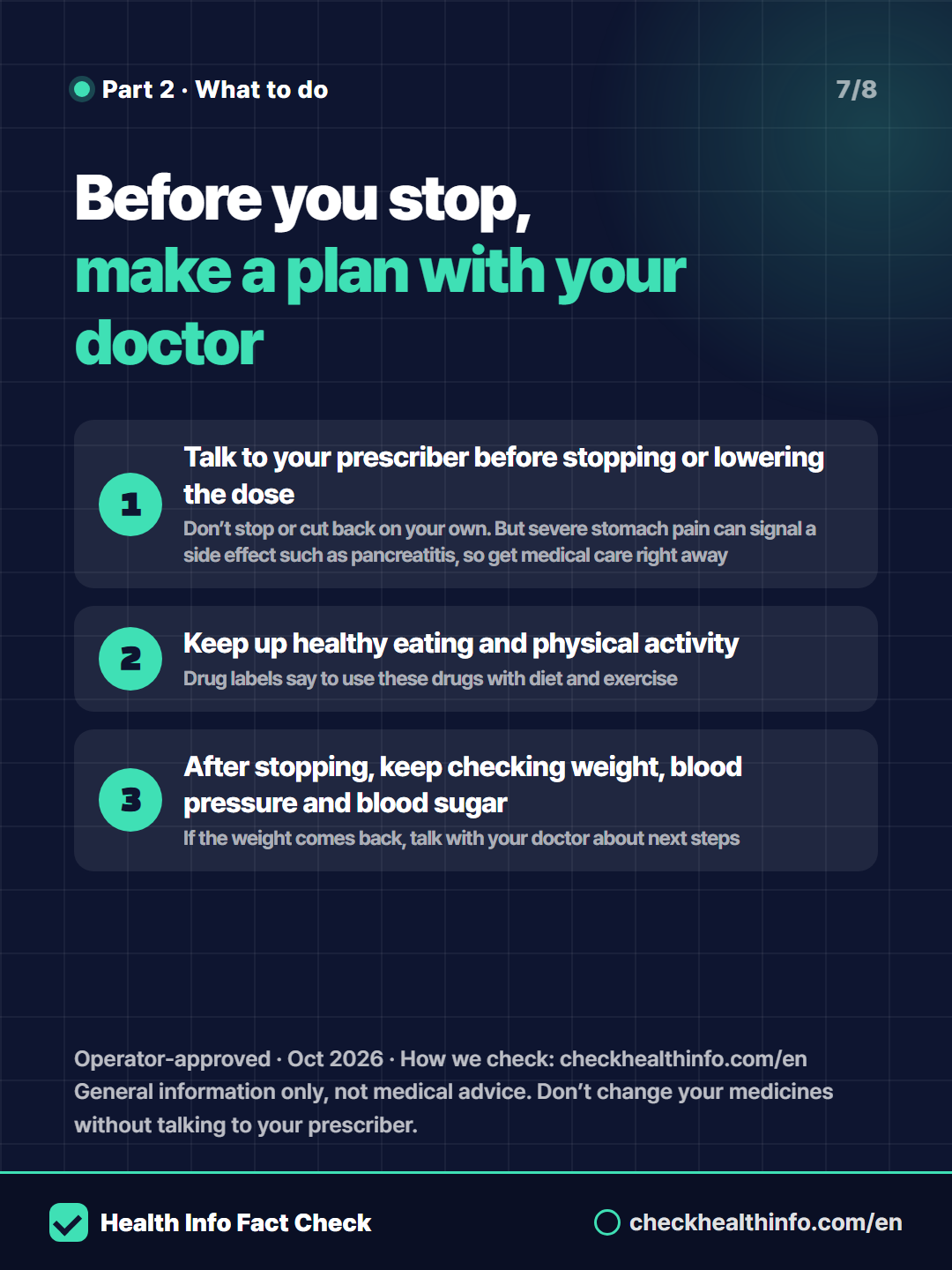
Do not stop or lower the dose on your own. But if you have severe stomach pain, get medical care right away. It could be a sign of a side effect such as pancreatitis. (The US FDA prescribing information tells clinicians to watch for persistent severe abdominal pain, sometimes spreading to the back, with or without vomiting, and to stop the drug if pancreatitis is suspected [10][11].) How long to stay on the drug is decided with your prescribing doctor, weighing benefits, side effects and cost. If you do stop, keep up healthy eating and physical activity, keep track of your weight, blood pressure and blood sugar, and make a plan with your doctor in advance for what to do if the weight comes back.
Limitations of this verdict
- Most withdrawal trials followed people for only about a year. How much weight comes back after that is an estimate.
- Most of the evidence comes from studies outside Korea, which limits how directly it applies to Korean patients. We did not directly check the Korean Society for the Study of Obesity guideline or Mounjaro’s Korean labeling this time, so we did not cite them.
- All of the individual trials we cite (the STEP 1 extension, STEP 4 and SURMOUNT-4) were funded by the drug makers.
- The US Centers for Disease Control and Prevention (CDC) does not issue recommendations on using obesity medicines. If you see information about obesity drugs presented as a “CDC recommendation,” check the source again.
- Grades follow section 1 of our rating method. Claim 1 is graded A because there is a meta-analysis that pooled only randomized trials. Claim 2 is graded A because a guideline advises against stopping a drug that is working.
- We check for new studies in our monthly PubMed review. If a verdict changes, we will update this page and note the change.
Card news
References
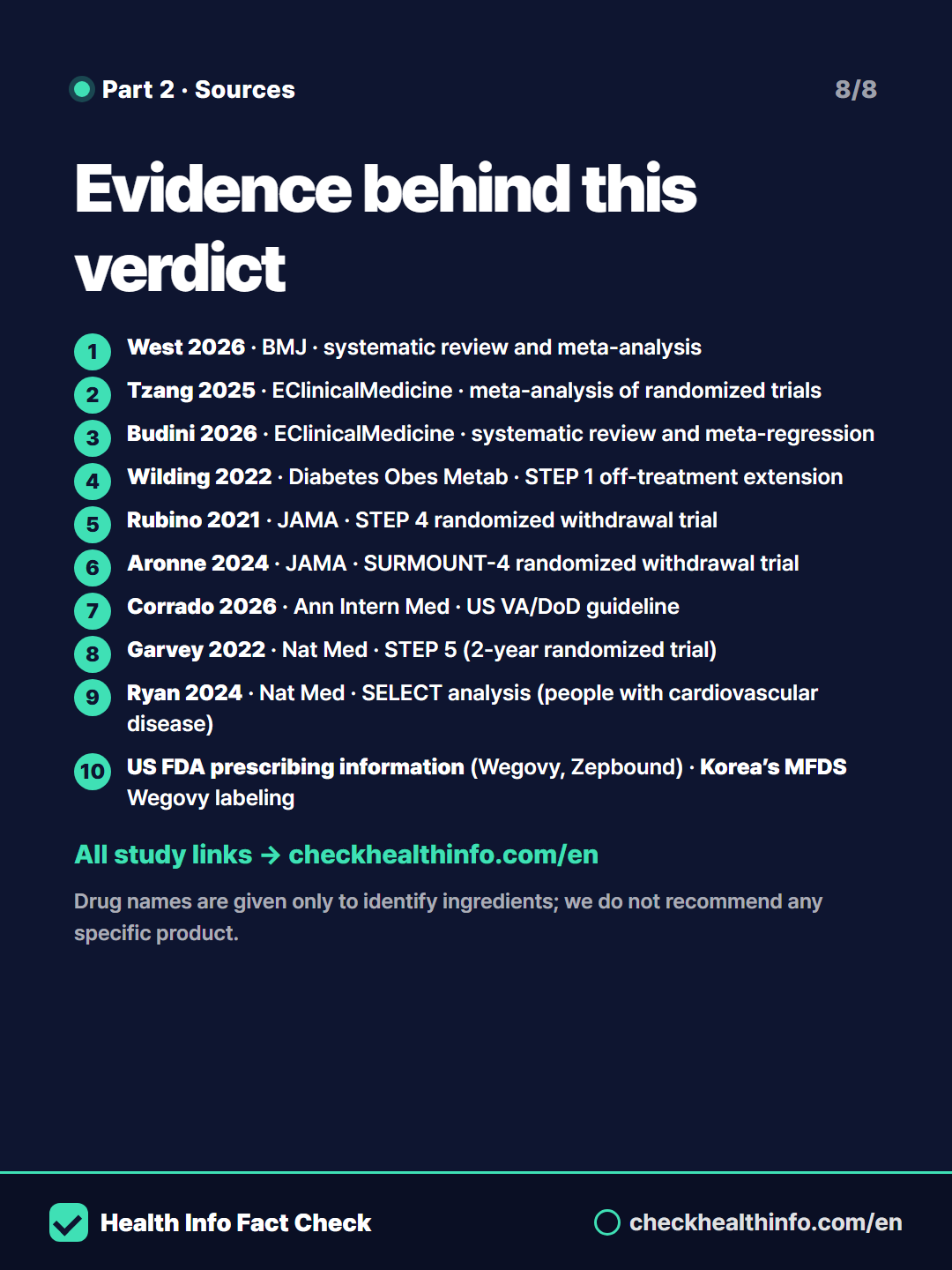
- West S, Scragg J, Aveyard P, et al. Weight regain after cessation of medication for weight management: systematic review and meta-analysis. BMJ 2026;392:e085304. PMID 41500720. PubMed abstract · Full article · Free full text
- Tzang CC, Wu PH, Luo CA, et al. Metabolic rebound after GLP-1 receptor agonist discontinuation: a systematic review and meta-analysis. EClinicalMedicine 2025;90:103680. PMID 41399474. PubMed abstract · Full article · Free full text
- Budini B, Luo S, Tam M, et al. Trajectory of weight regain after cessation of GLP-1 receptor agonists: a systematic review and nonlinear meta-regression. EClinicalMedicine 2026;93:103796. PMID 41938838. PubMed abstract · Full article · Free full text
- Wilding JPH, Batterham RL, Davies M, et al. Weight regain and cardiometabolic effects after withdrawal of semaglutide: The STEP 1 trial extension. Diabetes Obes Metab 2022;24(8):1553-1564. PMID 35441470. PubMed abstract · Full article · Free full text
- Rubino D, Abrahamsson N, Davies M, et al. Effect of Continued Weekly Subcutaneous Semaglutide vs Placebo on Weight Loss Maintenance in Adults With Overweight or Obesity: The STEP 4 Randomized Clinical Trial. JAMA 2021;325(14):1414-1425. PMID 33755728. PubMed abstract · Full article · Free full text
- Aronne LJ, Sattar N, Horn DB, et al. Continued Treatment With Tirzepatide for Maintenance of Weight Reduction in Adults With Obesity: The SURMOUNT-4 Randomized Clinical Trial. JAMA 2024;331(1):38-48. PMID 38078870. PubMed abstract · Full article · Free full text
- Corrado RL, Raffa SD, Bauer EM, et al. Adult Overweight and Obesity Management: Updates From the 2025 U.S. Department of Veterans Affairs and U.S. Department of Defense Clinical Practice Guidelines. Ann Intern Med 2026;179(9):1296-1311. PMID 42636450. PubMed abstract · Full article
- Garvey WT, Batterham RL, Bhatta M, et al. Two-year effects of semaglutide in adults with overweight or obesity: the STEP 5 trial. Nat Med 2022;28(10):2083-2091. PMID 36216945. PubMed abstract · Full article · Free full text
- Ryan DH, Lingvay I, Deanfield J, et al. Long-term weight loss effects of semaglutide in obesity without diabetes in the SELECT trial. Nat Med 2024;30(7):2049-2057. PMID 38740993. PubMed abstract · Full article · Free full text
- US FDA Wegovy prescribing information — indication and pancreatitis warning (accessed 2026-10-12). Source
- US DailyMed Zepbound (tirzepatide) prescribing information — indication and pancreatitis warning (accessed 2026-10-12). Source
- Korea MFDS drug database — Wegovy 2.4 mg prefilled pen labeling (accessed 2026-10-12). Source
General information only, not medical advice. Do not stop or lower the dose of a medicine without talking to the doctor who prescribed it. If you have severe stomach pain, get medical care right away.