Are 80% of strokes preventable?
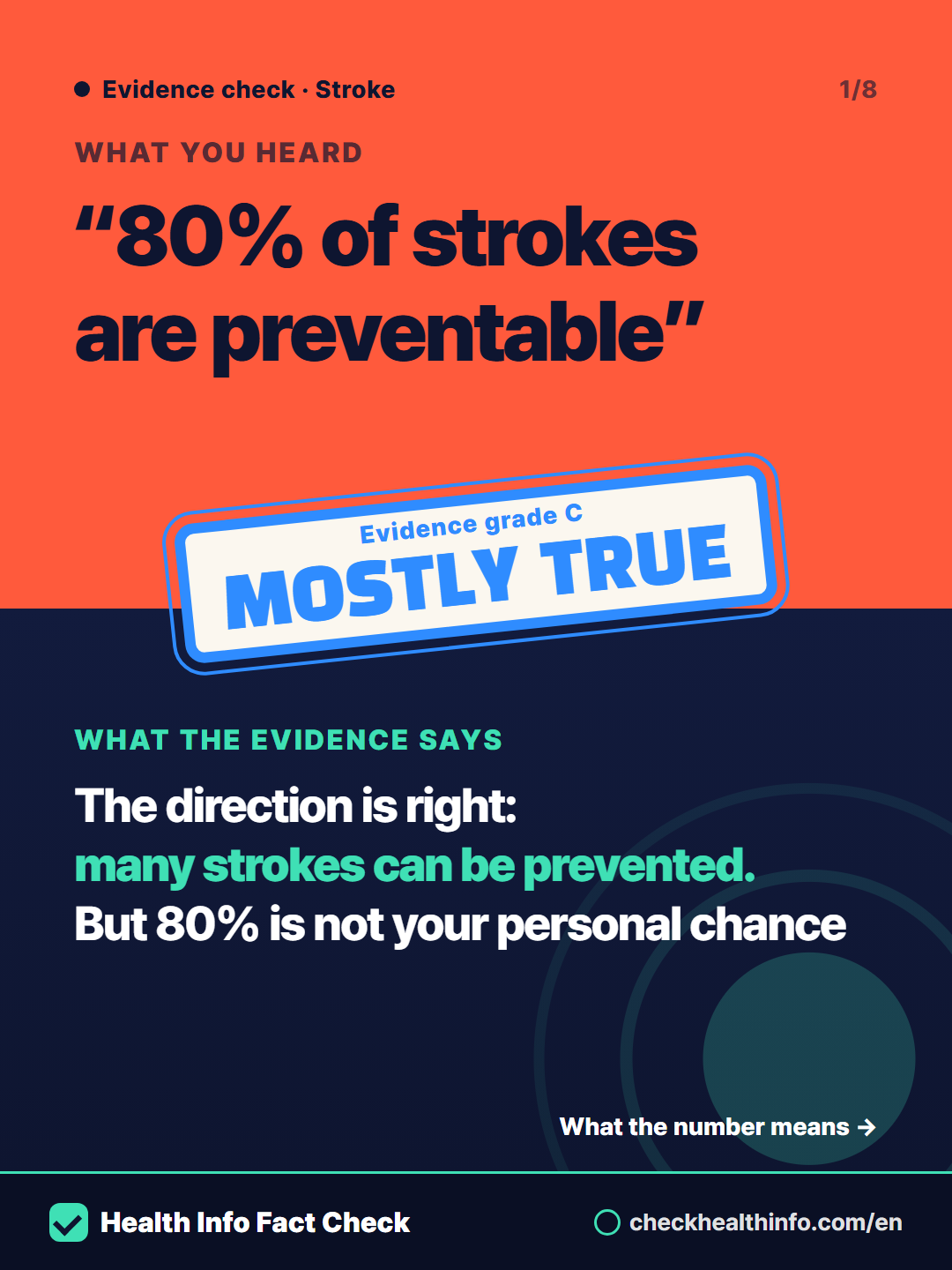
Is it true that most strokes (80%) can be prevented? And what does that number actually mean?

We checked this verdict against 8 sources, such as published studies and clinical guidelines. · How checked: Operator-approved
Verdicts at a glance
| Claim | Verdict |
|---|---|
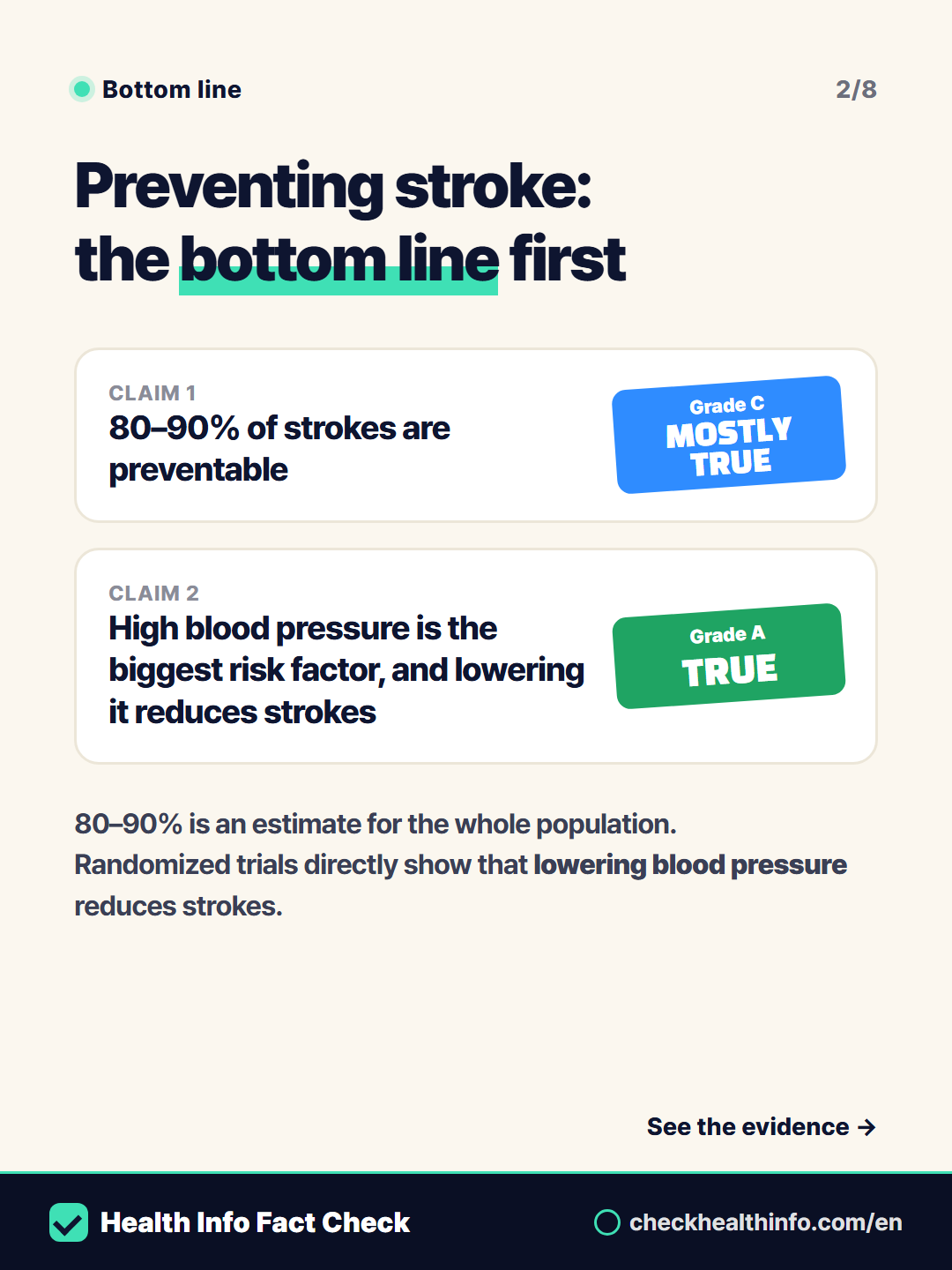
| Most strokes (80–90%) are preventable | Mostly true · Evidence grade C |
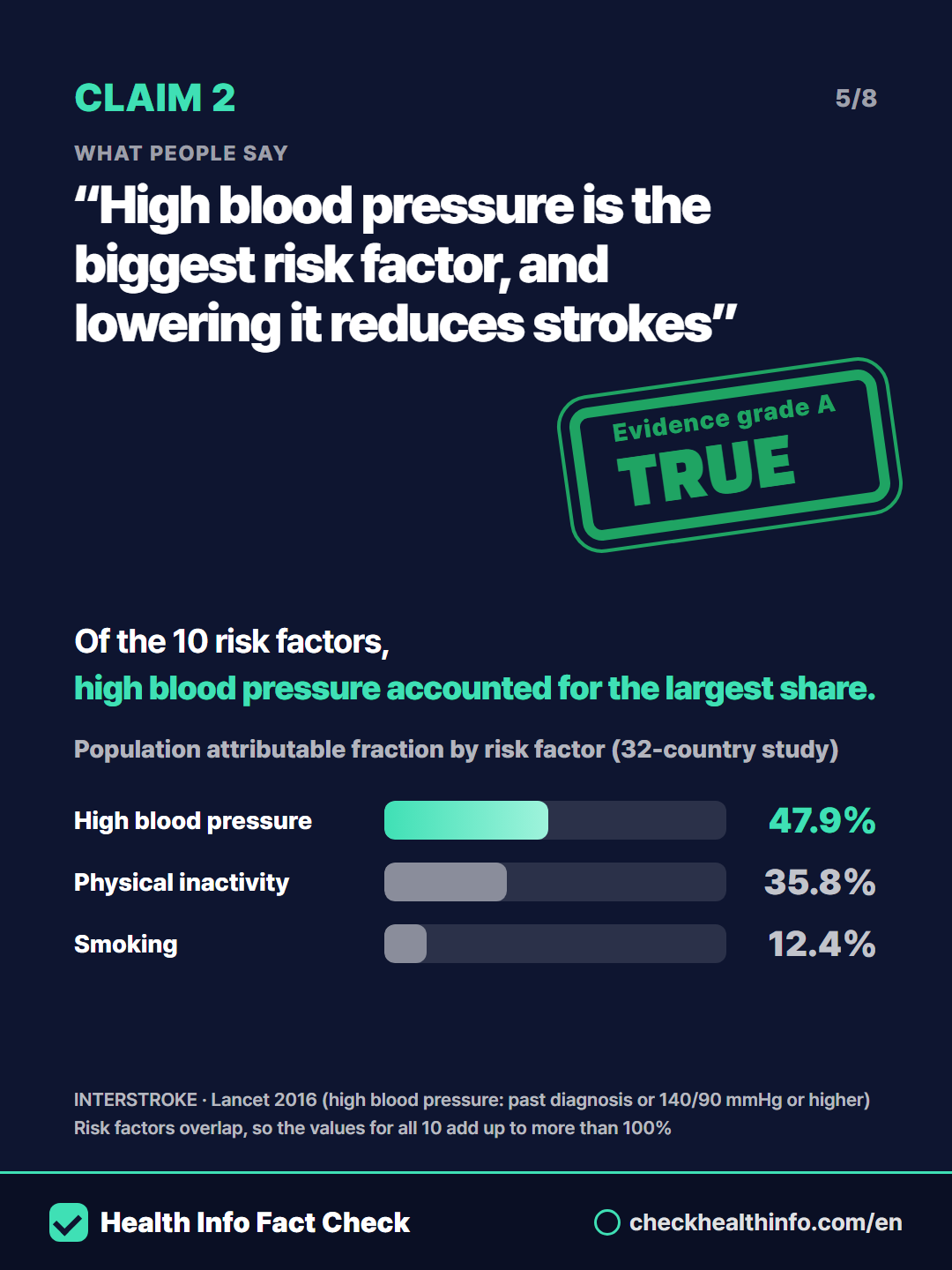
| High blood pressure is the biggest risk factor for stroke, and lowering blood pressure reduces strokes | True · Evidence grade A |
Bottom line — It is true that a large share of strokes is linked to risk factors people can change. But the “80–90%” figure is a population-wide estimate, not the chance that any one person will avoid a stroke. High blood pressure is the biggest risk factor, and randomized trials have shown that lowering blood pressure reduces strokes.
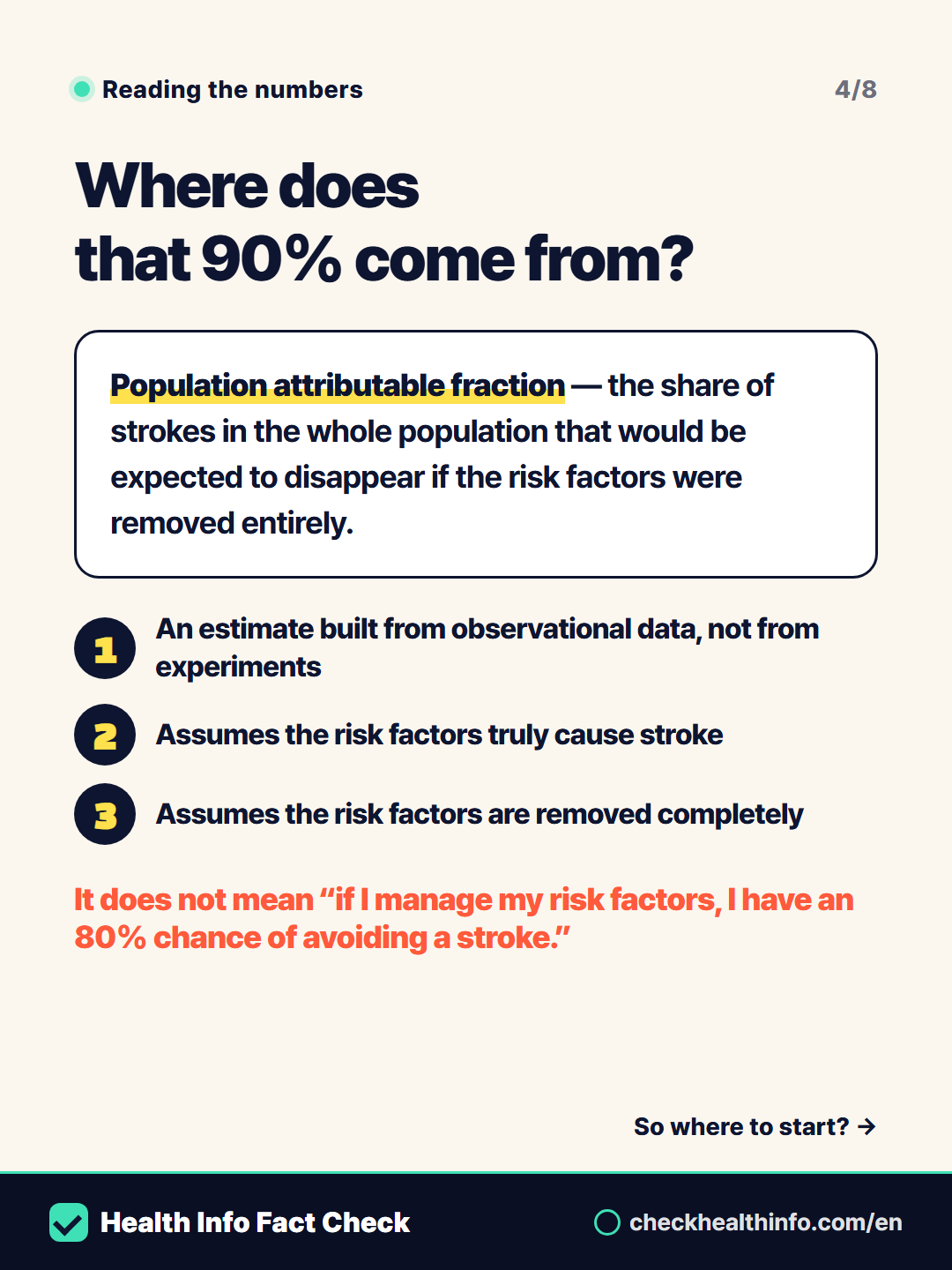
Population attributable fraction (PAF) — The share of cases of a disease in a whole population that would be expected to disappear if a risk factor were removed entirely. It assumes the risk factor truly causes the disease and that it could be removed completely. It is not an individual’s chance of avoiding the disease.
Odds ratio — In a study comparing people with a disease (cases) with people without it (controls), the odds of having a risk factor among cases divided by the odds among controls. A value of 1 means no difference; above 1 means the risk factor was more common among people with stroke, i.e., it is associated with stroke. It does not mean the probability is that many times higher.
Relative risk and hazard ratio — A comparison of how often a disease occurred in two groups. Below 1 means it occurred less often in the group being compared (for example, the group whose blood pressure was lowered).
95% confidence interval — The range in which the true value is likely to lie. The wider the range, the less certain the result.
Disease burden (DALYs, disability-adjusted life years) — The total years of healthy life lost to a disease, through early death or through living with disability.
A Korean news headline said stroke “took 7 million lives in a year, but 80% is preventable.” According to the Global Burden of Disease study, 7.3 million people died of stroke in 2021 (10.7% of all deaths), making it the third leading cause of death [4]. So where does “80% preventable” come from?
Claim 1. “Most strokes (80–90%) are preventable”
Mostly true · Evidence grade C
In plain terms: The direction is right: a large share of strokes can be prevented. But 80–90% is a population-wide estimate calculated on several assumptions.
- The 2024 American Heart Association/American Stroke Association guideline for the primary prevention of stroke states that ischemic and hemorrhagic strokes cause major disability but are, above all, preventable. The guideline’s summary, however, does not give a percentage. [1]
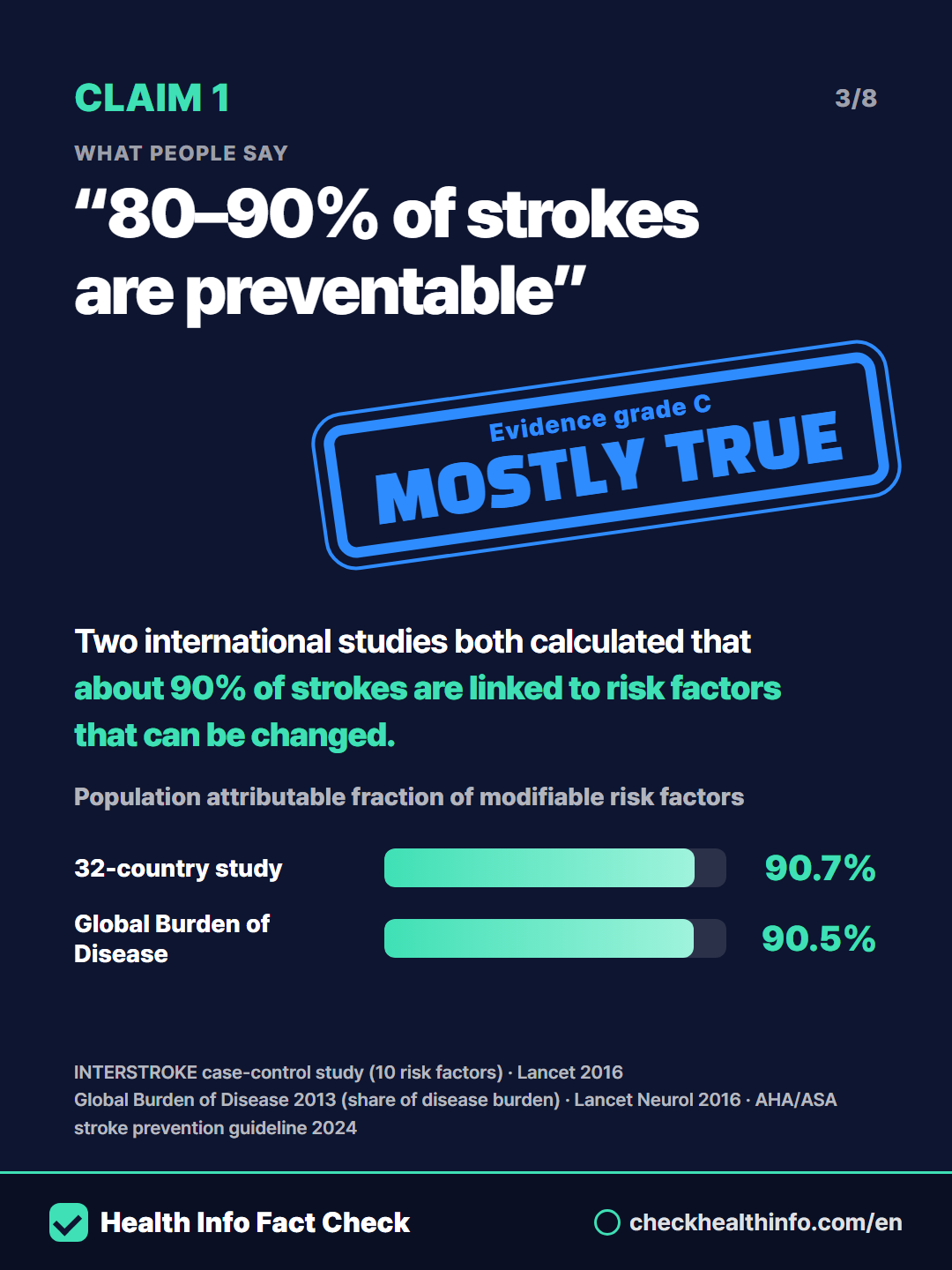
- In a case-control study in 32 countries (INTERSTROKE), the combined population attributable fraction of 10 risk factors (high blood pressure, physical inactivity, blood lipids [apolipoprotein ratio], diet, abdominal obesity, psychosocial factors, smoking, cardiac causes, alcohol and diabetes) was 90.7%. It was 91.5% for ischemic stroke and 87.1% for hemorrhagic stroke, and ranged by region from 82.7% in Africa to 97.4% in Southeast Asia. [2]
- In the Global Burden of Disease study (GBD 2013), 90.5% (95% uncertainty interval 88.5–92.2%) of the burden of stroke was estimated to be attributable to the modifiable risk factors analyzed. Behavioral factors such as smoking, poor diet and physical inactivity accounted for 74.2%. [3]
(1) These figures are estimates built from observational data, not from experiments. Case-control studies ask about past habits after the stroke has happened, so people may misremember, or the illness may have changed their habits. Patients’ blood pressure was also measured in hospital right after the stroke, so it may have been higher than usual.
(2) The figures assume that the risk factors truly cause stroke and that they could be removed completely. In real life, completely removing risk factors is hard.
(3) The Global Burden of Disease figure is a share of disease burden (DALYs), not of the number of strokes.
So do not read it as “if I manage my risk factors, I have an 80–90% chance of avoiding a stroke.” Some factors, such as age and genes, cannot be changed.
Grade: We graded this claim by the evidence that directly addresses the number (80–90%). The guideline (grade A) says only that stroke is preventable; it does not say by how much. The number comes from the Global Burden of Disease study and the 32-country case-control study. The Global Burden of Disease study pools many data sources, so it starts at A. But its figure is built from observational data rather than randomized trials (reason 2 in our rating method), and it is calculated on the assumption that risk factors are removed completely and measures a share of disease burden, not of the number of strokes, so it addresses the claim only indirectly (reason 1). These are two different reasons, so under section 1 of our rating method we lowered the grade one step for each, from A to C. The 32-country case-control study is a single large observational study (B), and it also addresses the claim only indirectly (reason 1), so it is also C. The grade is C not because the studies are small; the two studies agreed closely, both at about 90%.
Claim 2. “High blood pressure is the biggest risk factor for stroke, and lowering blood pressure reduces strokes”
True · Evidence grade A
In plain terms: Among the risk factors for stroke, high blood pressure accounted for the largest share, and randomized trials have confirmed that lowering blood pressure actually reduces strokes.
- In INTERSTROKE, the odds ratio for stroke with high blood pressure (a past diagnosis or blood pressure of 140/90 mmHg or higher) was 2.98 (99% confidence interval 2.72–3.28). The odds ratio compares how common high blood pressure was in people with stroke and in people without stroke; above 1 means it was more common in people with stroke. It should not be read as exactly 2.98 times the risk. The population attributable fraction was 47.9% (99% confidence interval 45.1–50.6%), the largest of the 10 risk factors. Because risk factors overlap, the values for individual factors add up to more than 100%. [2]
- In the Global Burden of Disease study (GBD 2019), high systolic blood pressure was also the leading risk factor, accounting for 55.5% (95% uncertainty interval 48.2–62.0%) of the burden of stroke, followed by high body-mass index (24.3%) and high fasting blood sugar (20.2%). [7]
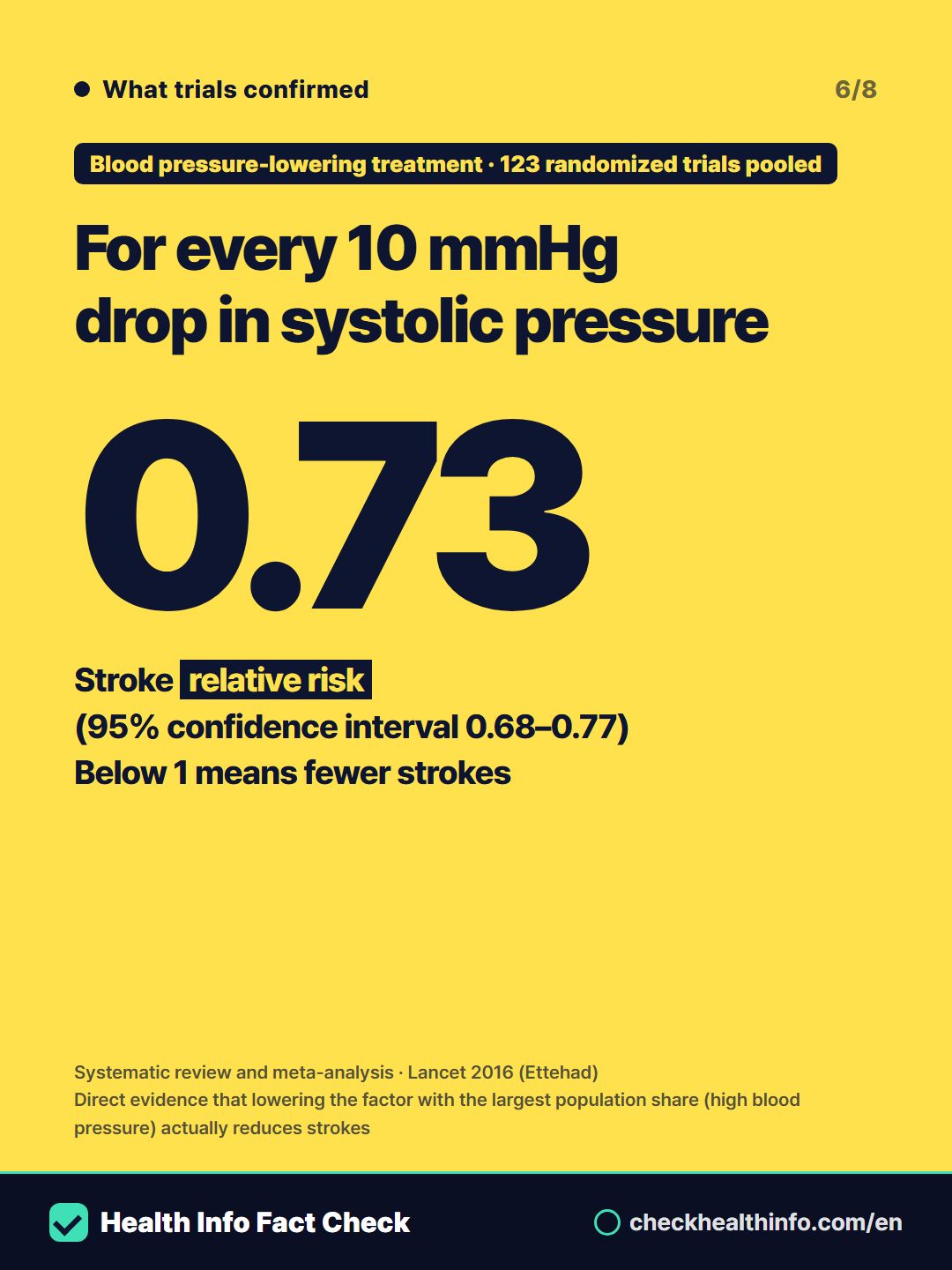
- In a systematic review and meta-analysis of 123 randomized trials of blood pressure-lowering treatment (613,815 participants), every 10 mmHg reduction in systolic blood pressure was associated with a stroke relative risk of 0.73 (95% confidence interval 0.68–0.77). The proportional reduction was similar in trials where starting blood pressure was higher and in those where it was lower. [5]
- A meta-analysis of individual participant data from 48 randomized trials found that a 5 mmHg reduction in systolic blood pressure lowered the risk of major cardiovascular events, including stroke, by about 10%. The hazard ratios were similar in people without cardiovascular disease, 0.91 (95% confidence interval 0.89–0.94), and in those with it, 0.89 (0.86–0.92). [6]
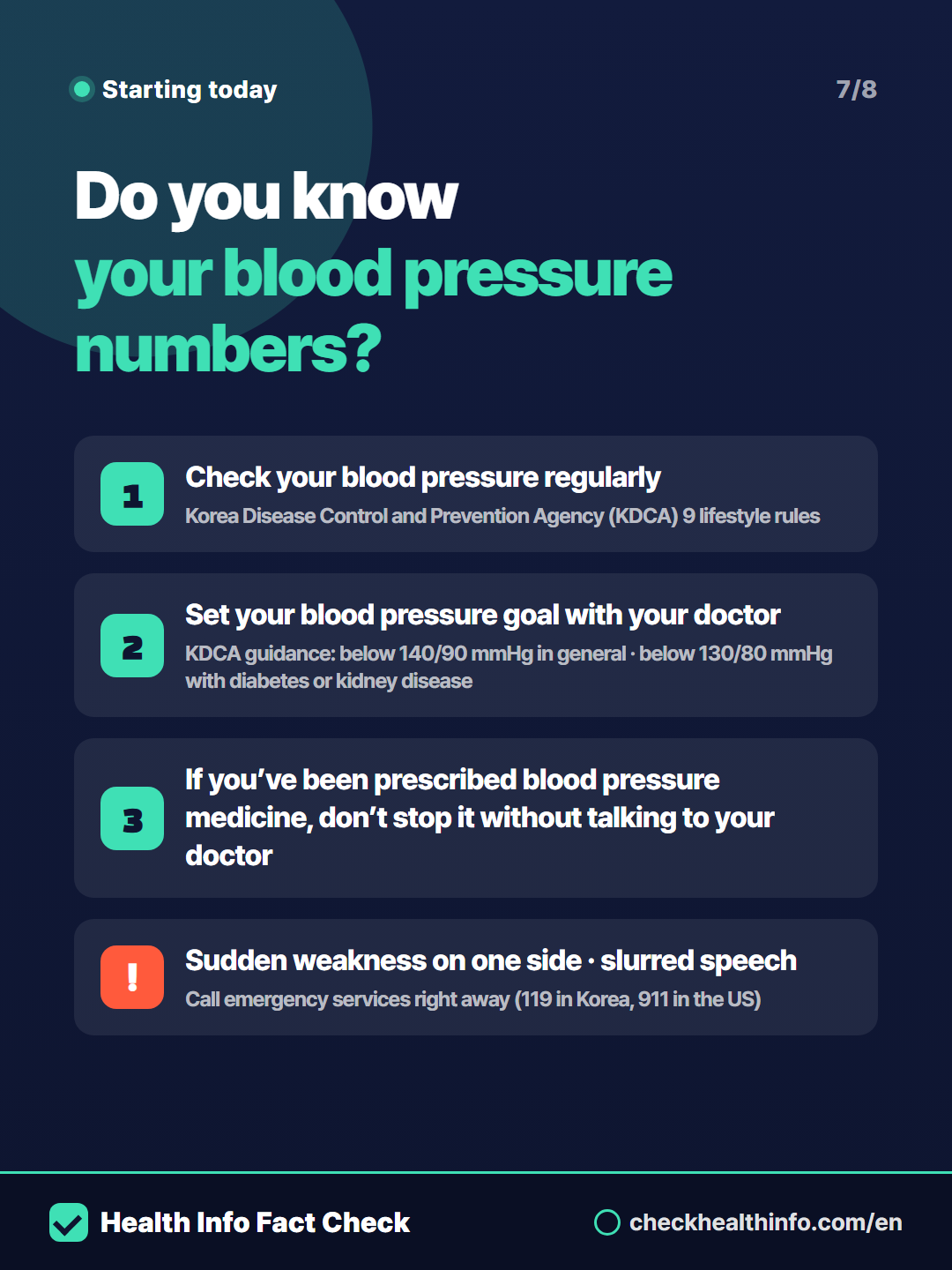
The Korea Disease Control and Prevention Agency’s “9 lifestyle rules for preventing cardiovascular and cerebrovascular disease” recommend: quit smoking; avoid alcohol as much as possible; eat a balanced diet that is not too salty; exercise at least 30 minutes every day; keep a healthy weight and waist size; manage stress; check blood pressure, blood sugar and cholesterol regularly; if you have high blood pressure, diabetes or abnormal blood lipids, improve your lifestyle and, when needed, keep taking your medicines; and call emergency services (119 in Korea) right away if emergency symptoms appear [8]. Korea’s National Health Information Portal gives blood pressure goals for stroke prevention of below 140/90 mmHg in general and below 130/80 mmHg for people with diabetes or kidney disease. Set your own blood pressure goal with your doctor. If you have been prescribed blood pressure medicine, do not stop taking it without talking to your doctor.
Scope: The meta-analyses above are mostly trials of blood pressure medicines. Which medicine to take, and how much, is outside the scope of this article; individual diagnosis and treatment should be discussed with your healthcare provider. If symptoms such as weakness on one side of the body or slurred speech appear suddenly, call emergency services right away (119 in Korea, 911 in the US).
Limitations of this verdict
- All the figures behind “80–90%” are estimates from observational data. None of the studies cited here directly tested whether managing all risk factors actually reduces strokes by that much.
- The 2021 Global Burden of Disease study (GBD 2021) analyzed 23 risk factors, but its abstract does not give the share attributable to all risk factors combined, so we did not use it for this. We cited the 90.5% from GBD 2013, which is in the abstract, instead.
- INTERSTROKE and the Global Burden of Disease studies use data from many countries. The share for each risk factor may differ in Korea and in other countries, including the US.
- We check PubMed for new studies every month, and if a verdict changes we record it in our corrections log (in Korean).
Card news
Video (in Korean)
References
- Bushnell C, Kernan WN, Sharrief AZ, et al. 2024 Guideline for the Primary Prevention of Stroke: A Guideline From the American Heart Association/American Stroke Association. Stroke 2024;55(12):e344-e424. PMID 39429201. PubMed abstract · Full article
- O'Donnell MJ, Chin SL, Rangarajan S, et al. Global and regional effects of potentially modifiable risk factors associated with acute stroke in 32 countries (INTERSTROKE): a case-control study. Lancet 2016;388(10046):761-75. PMID 27431356. PubMed abstract · Full article
- Feigin VL, Roth GA, Naghavi M, et al. Global burden of stroke and risk factors in 188 countries, during 1990-2013: a systematic analysis for the Global Burden of Disease Study 2013. Lancet Neurol 2016;15(9):913-924. PMID 27291521. PubMed abstract · Full article
- . Global, regional, and national burden of stroke and its risk factors, 1990-2021: a systematic analysis for the Global Burden of Disease Study 2021. Lancet Neurol 2024;23(10):973-1003. PMID 39304265. PubMed abstract · Full article · Free full text
- Ettehad D, Emdin CA, Kiran A, et al. Blood pressure lowering for prevention of cardiovascular disease and death: a systematic review and meta-analysis. Lancet 2016;387(10022):957-967. PMID 26724178. PubMed abstract · Full article
- . Pharmacological blood pressure lowering for primary and secondary prevention of cardiovascular disease across different levels of blood pressure: an individual participant-level data meta-analysis. Lancet 2021;397(10285):1625-1636. PMID 33933205. PubMed abstract · Full article · Free full text
- . Global, regional, and national burden of stroke and its risk factors, 1990-2019: a systematic analysis for the Global Burden of Disease Study 2019. Lancet Neurol 2021;20(10):795-820. PMID 34487721. PubMed abstract · Full article · Free full text
- Korea Disease Control and Prevention Agency (KDCA) — 9 lifestyle rules for preventing cardiovascular and cerebrovascular disease (in Korean) (accessed 2026-10-12 (2026-10-13 검수자 재확인: 음주 항목 현행 문구 「술은 가급적 마시지 않습니다」)). Source
General information only, not medical advice. If you have been prescribed blood pressure medicine, do not stop it without talking to your doctor. If you suddenly develop weakness on one side, slurred speech or vision problems, call 911 (119 in Korea) right away.