Taking vitamin D on an empty stomach: does it still get absorbed?
Are vitamin D supplements absorbed better when taken with a meal that contains fat than on an empty stomach?

We checked this verdict against 6 sources, such as published studies and clinical guidelines. · How checked: Operator-approved
Verdicts at a glance
| Claim | Verdict |
|---|---|
| Vitamin D supplements are absorbed better when taken with a meal that contains fat than on an empty stomach | Insufficient evidence · Evidence grade C |
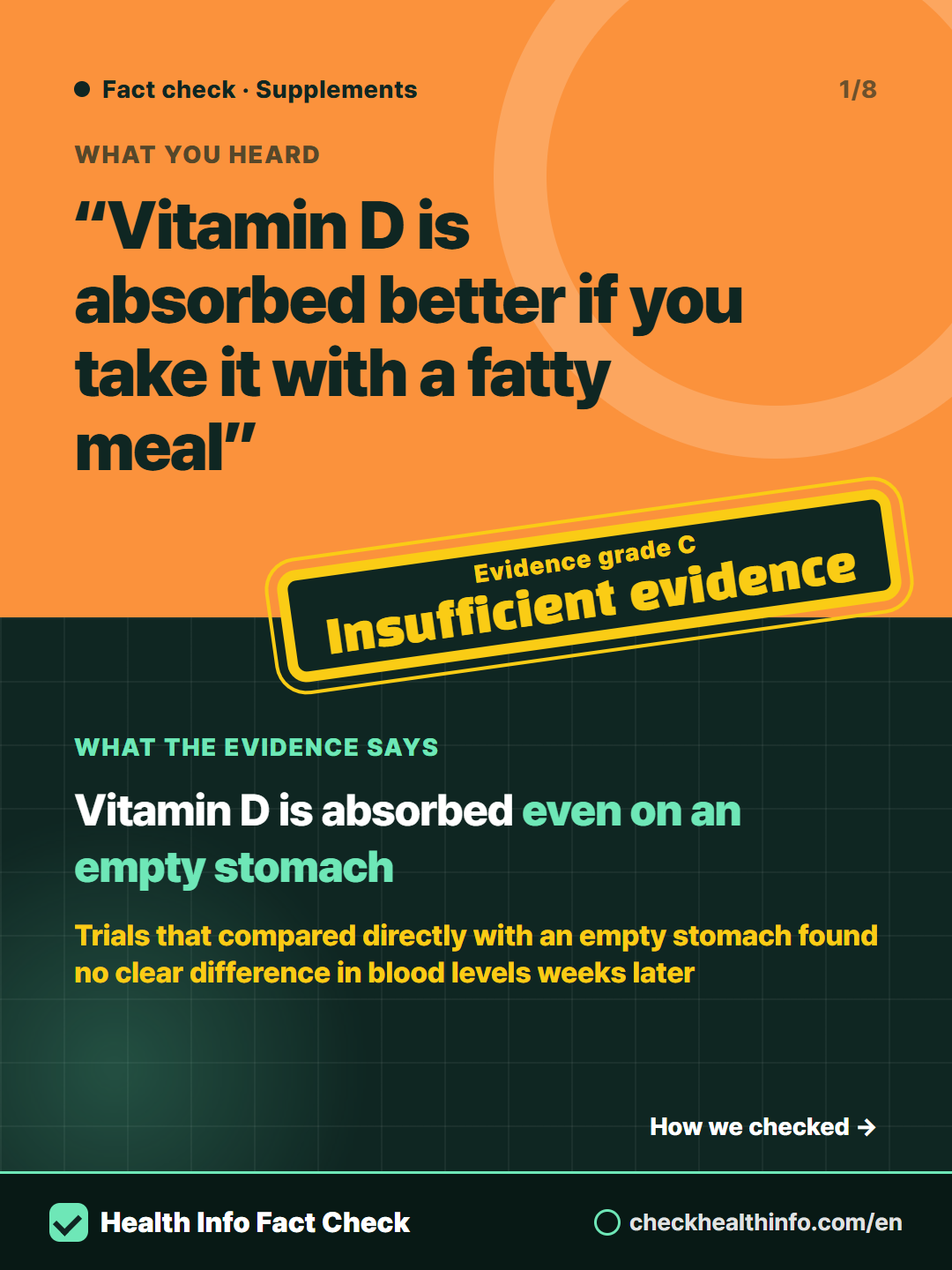
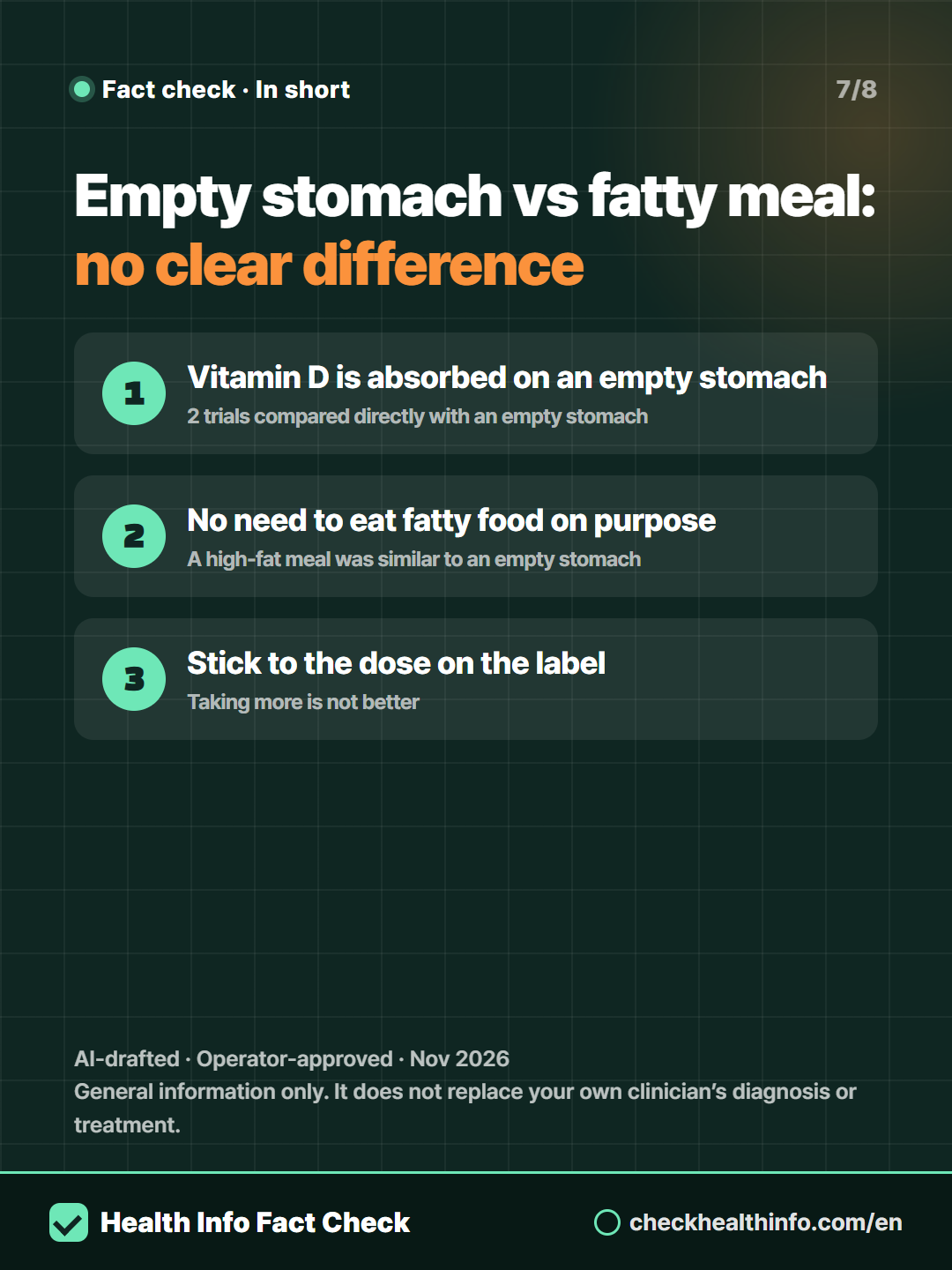
Bottom line — There is not yet enough evidence for the claim that vitamin D supplements are absorbed better when taken with a meal that contains fat than on an empty stomach (evidence grade C). Some trials found that a meal containing fat increased absorption compared with a fat-free or low-fat meal. But in the two randomized trials that compared a meal directly with an empty stomach, a high-fat meal and an empty stomach gave similar results, and blood levels showed no clear difference weeks later. What the evidence does show: vitamin D is absorbed even on an empty stomach. If taking it with a meal is easier for you, that is fine, but based on the trials so far, you do not need to eat fatty food on purpose.
Randomized trial — A study that assigns people to groups by chance (like drawing lots), changes only how the supplement is taken, and compares the results.
Systematic review — A study that uses a set method to find and summarize all the relevant research on a question.
Blood vitamin D3 — The amount of the vitamin D you swallowed that reaches the blood within hours. It reflects absorption directly.
25-hydroxyvitamin D (25(OH)D) — The blood test that reflects the vitamin D stored in your body. When a doctor talks about your “vitamin D level,” this is usually the number they mean.
95% confidence interval — The range in which the true value is likely to lie.
Claim: “Vitamin D supplements are absorbed better when taken with a meal that contains fat than on an empty stomach”
Insufficient evidence · Evidence grade C
In plain terms Vitamin D is absorbed even if you take it on an empty stomach. Some trials suggest fat can help absorption, but trials that compared a meal directly with an empty stomach found no clear difference in blood levels weeks later. So there is not yet enough evidence to say that taking it with a meal makes it absorb better.
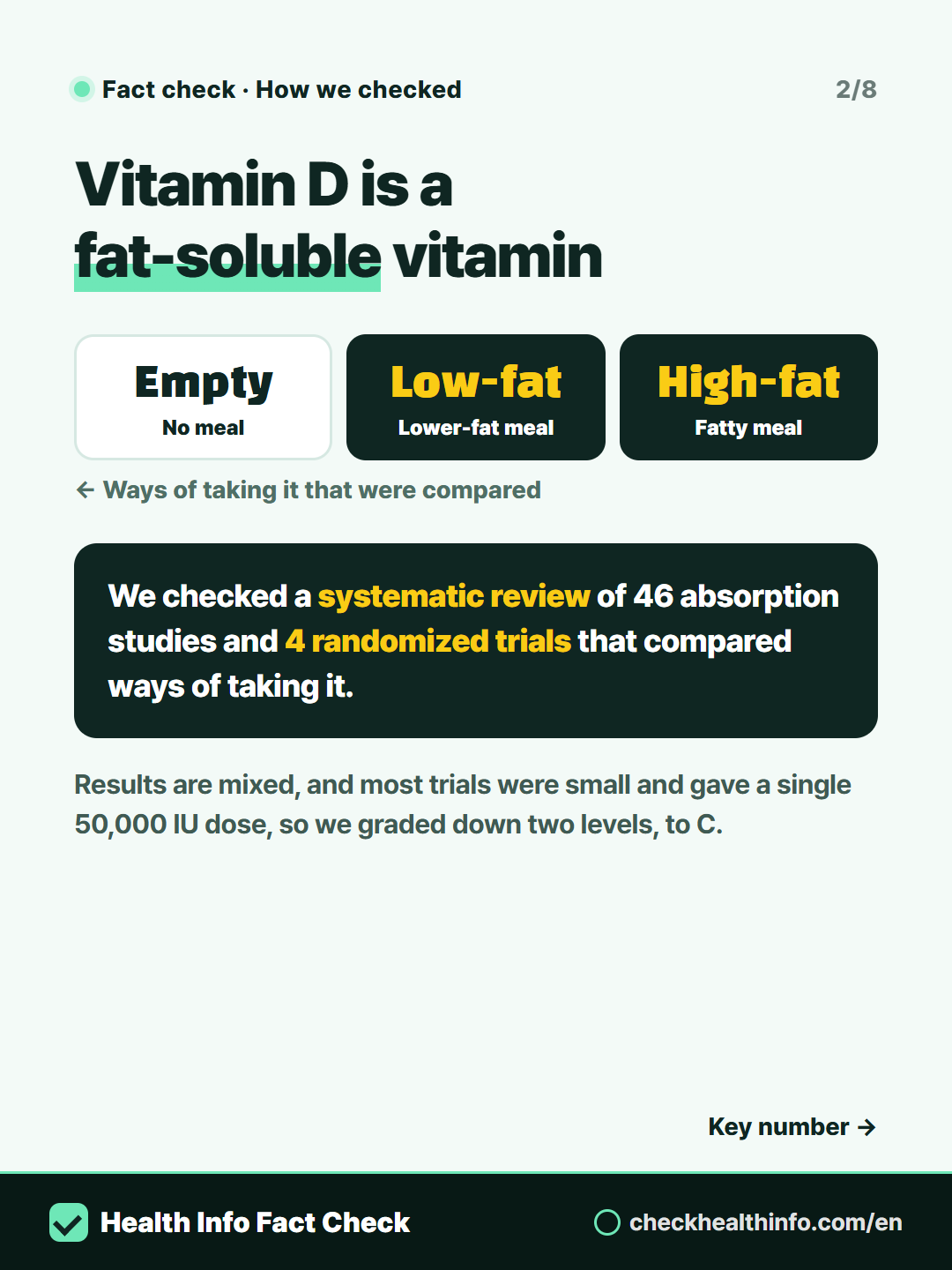
- A systematic review of 46 studies on vitamin D absorption found that vitamin D was better absorbed when taken with meals that contained fat, but that absorption also happened without fat or oil. It noted that data on how vitamin D is absorbed are still scarce. [1]
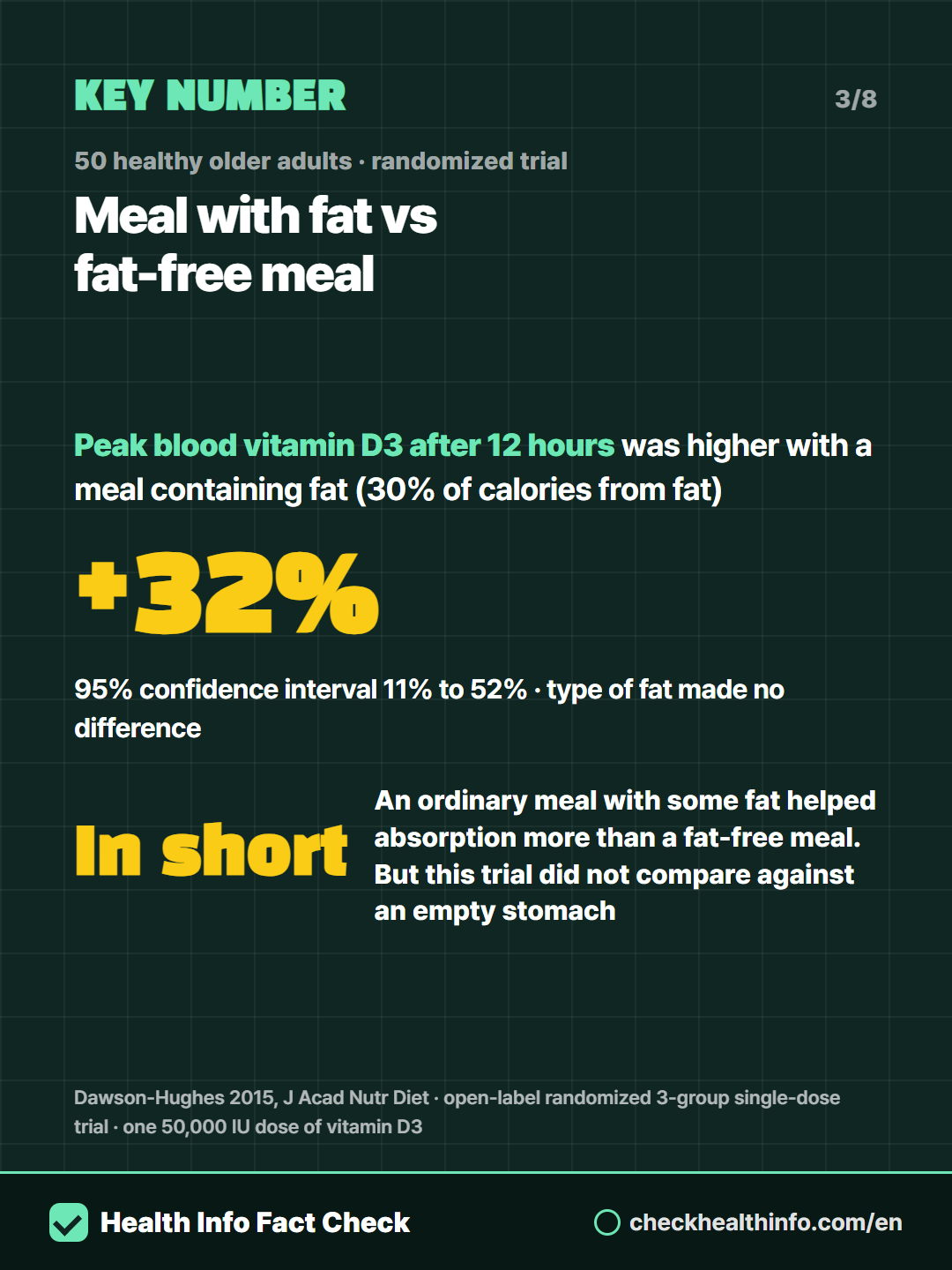
- In a randomized trial of 50 healthy older adults who took a single 50,000 IU dose of vitamin D3, the peak blood vitamin D3 level 12 hours later was 32% higher with a meal containing fat (30% of calories from fat) than with a fat-free meal (95% confidence interval 11% to 52%). The type of fat made no difference. In plain terms, an ordinary meal with some fat helped absorption more than a meal with no fat at all. But this trial did not compare against an empty stomach. [2]
- In a trial of 32 healthy physicians, those who took the dose with a higher-fat meal (25.6 g of fat) had higher serum 25(OH)D after 14 days than those who took it with a low-fat meal (1.7 g of fat): 53.7 vs 33.7 nmol/L. This trial did not include an empty-stomach group either. [5]
But when compared directly with an empty stomach
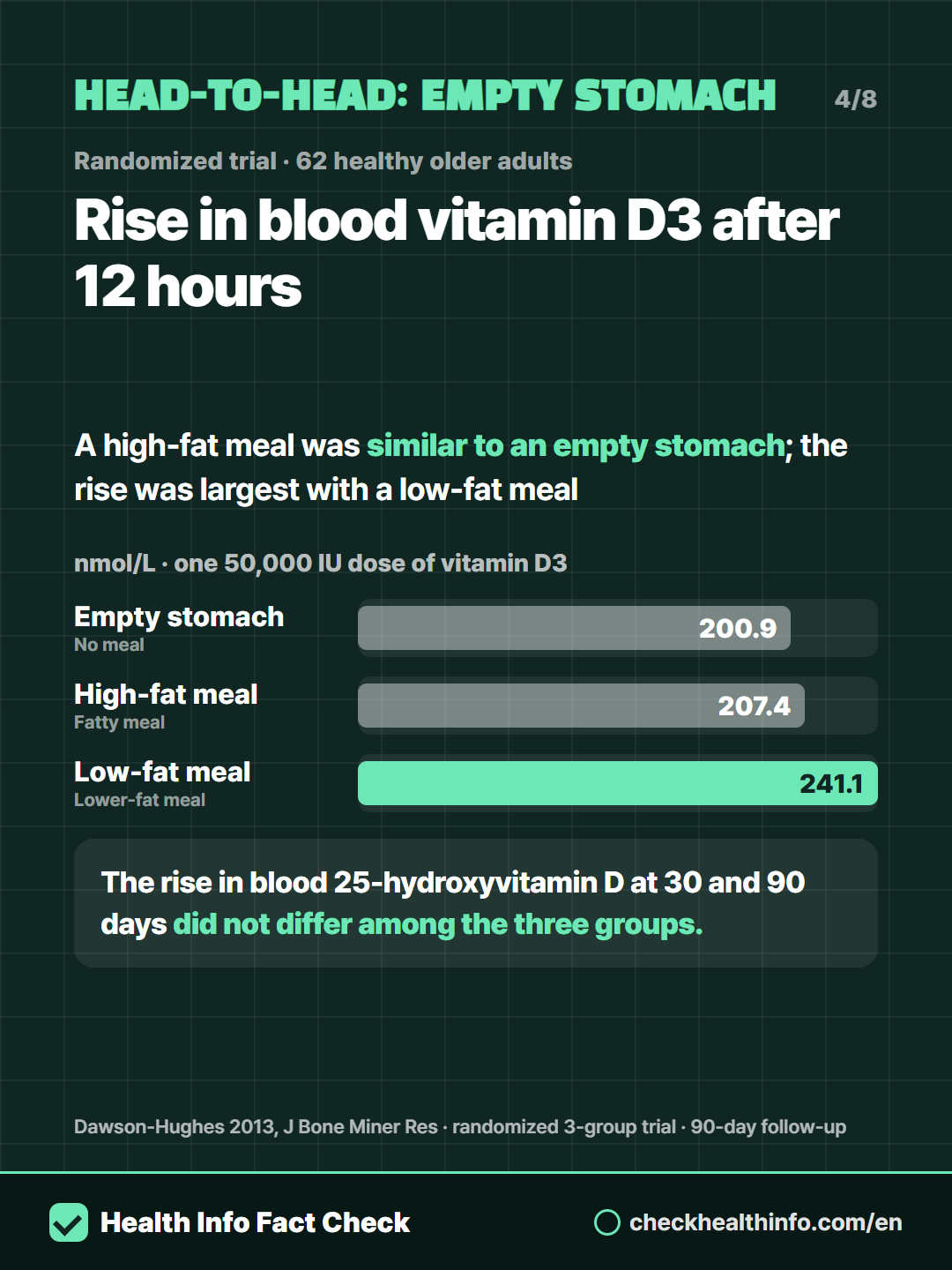
- In a trial that randomly assigned 62 healthy older adults to take 50,000 IU of vitamin D3 on an empty stomach, with a high-fat meal, or with a low-fat meal, the rise in blood vitamin D3 after 12 hours was 200.9, 207.4 and 241.1 nmol/L, respectively. Only the low-fat meal group had a significantly larger rise than the other two groups; the high-fat meal was similar to an empty stomach. The rise in blood 25(OH)D at 30 and 90 days did not differ among the three groups. In plain terms, a fatty meal did no better than an empty stomach, and a month later the amount stored in the body was similar in all three groups. [3]
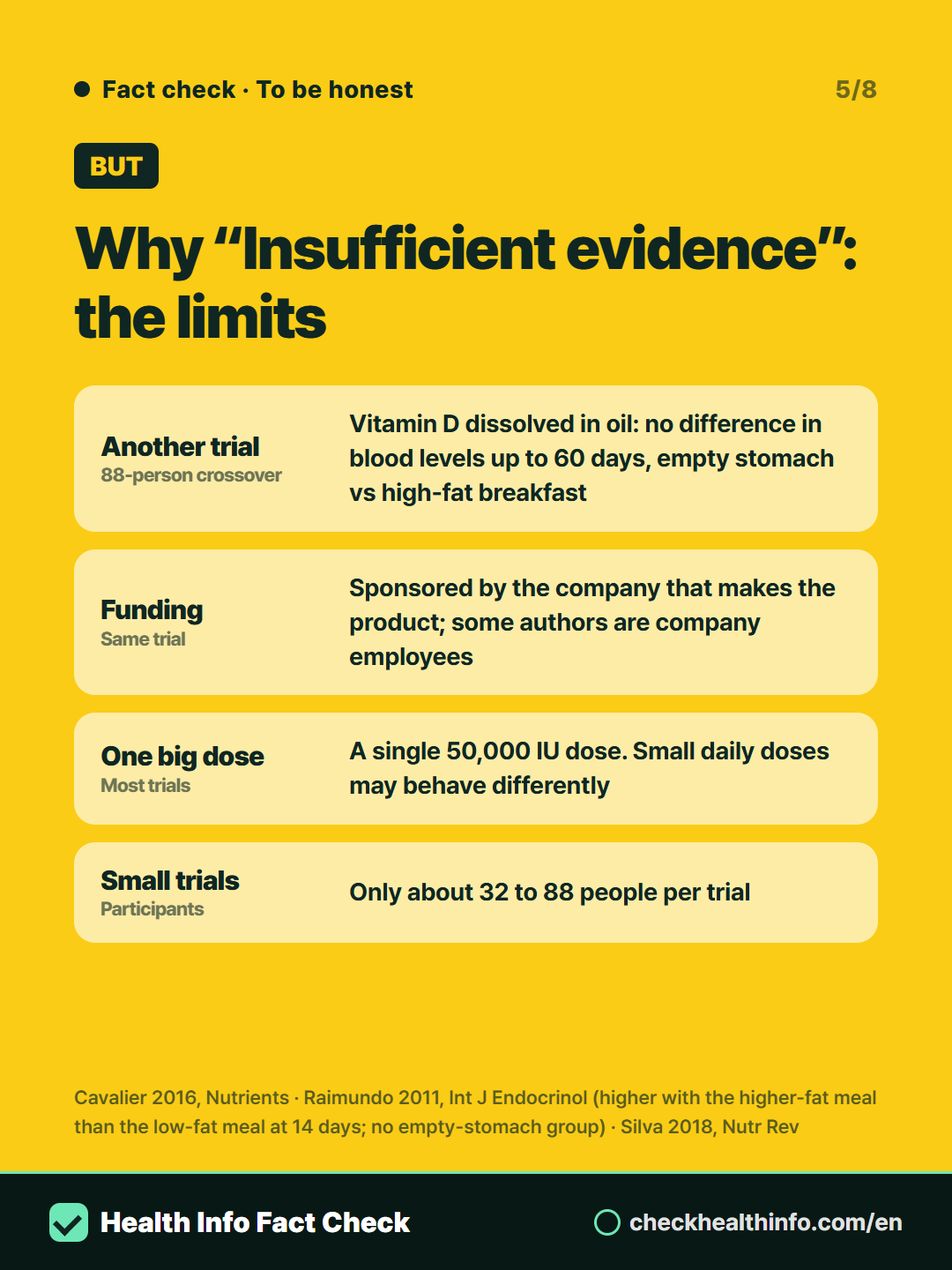
- In a crossover trial, 88 people took 50,000 IU of vitamin D dissolved in oil once on an empty stomach and once with a high-fat breakfast. Blood 25(OH)D levels showed no significant difference up to 60 days. This trial was sponsored by the company that makes the product, and some of the authors are company employees. [4]
The highest level of evidence is a systematic review, so we started at A. But results differed with the amount of fat (only a low-fat meal gave greater short-term absorption than an empty stomach, while a high-fat meal was similar to an empty stomach), blood levels at 30, 60 and 90 days did not differ, and each trial had only 32 to 88 participants. So under reason (3) in section 1 of our rating method (inconsistent or uncertain results), we graded down one level. Most trials also gave a single high dose of 50,000 IU, which is indirect evidence for small daily supplement doses, so under reason (1) (indirectness) we graded down one more level, to C. There are trials in people, but certainty is low and the results do not all point the same way, so we rated the claim neither “True” nor “False” but “Insufficient evidence.” This does not mean the claim is wrong.
How to take vitamin D
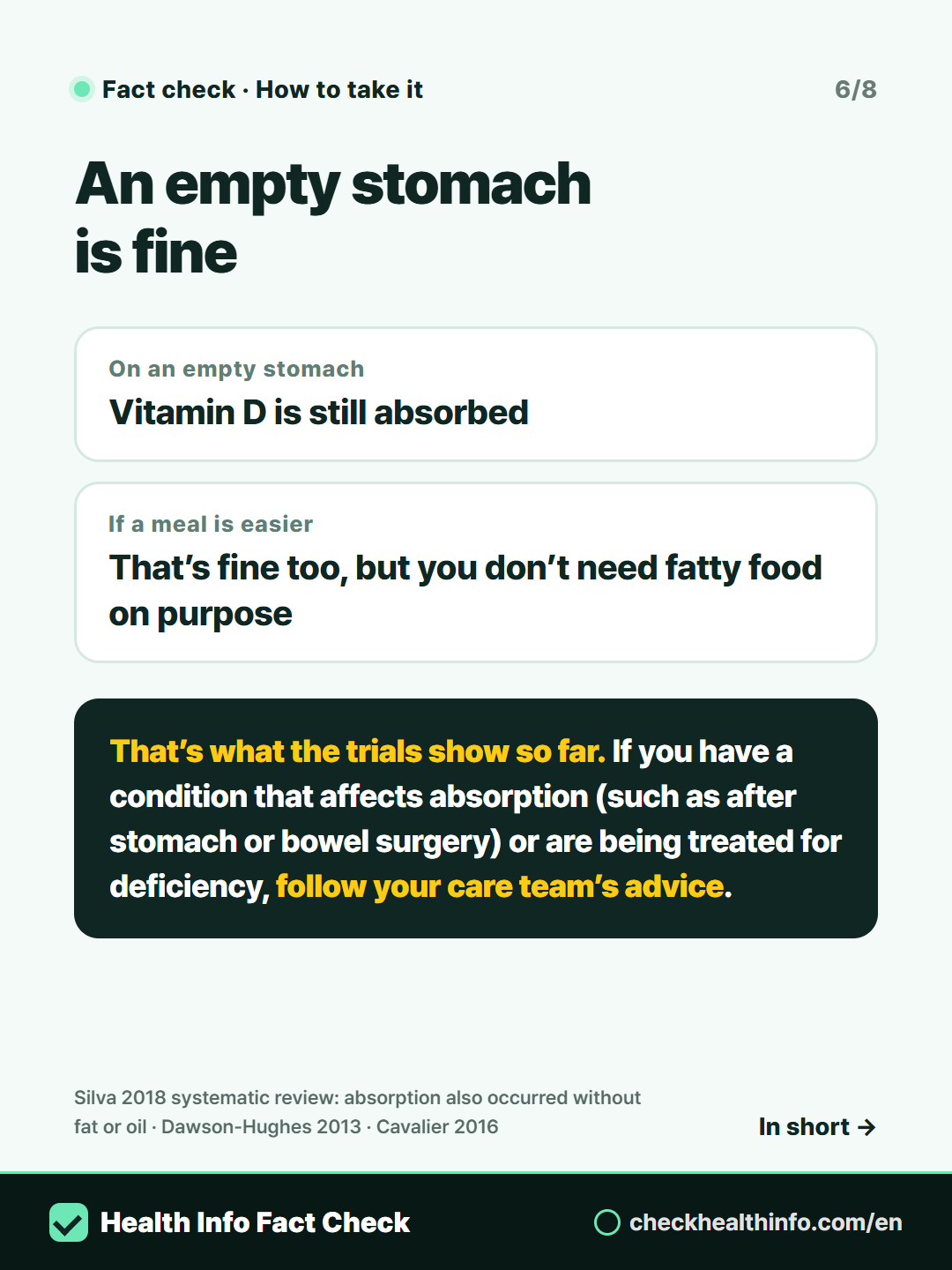
- An empty stomach is fine — Vitamin D is absorbed even on an empty stomach [1][3].
- No need for fatty food — If taking it with a meal is easier, that is fine, but based on the trials so far, you do not need to eat fatty food on purpose.
- Stick to the dose on the label — Taking more is not better.
- Your care team’s advice comes first — If you have a condition that affects absorption (for example, after stomach or bowel surgery), or you are being treated for vitamin D deficiency, follow your care team’s advice on how to take it.
Scope: This verdict covers only how well vitamin D supplements are absorbed when taken with a meal containing fat compared with an empty stomach. It does not cover the effects of vitamin D on bones, immunity or other outcomes, or the right dose.
Limitations of this verdict
- Most trials were small and gave a single high dose of 50,000 IU, so results may differ for people who take about 1,000 IU a day.
- Results may differ by product form (oil-filled capsules or drops vs tablets). The crossover trial that found no difference from an empty stomach used vitamin D dissolved in oil.
- “No difference” means the trials did not find a statistically clear difference; it does not prove the two ways are exactly the same.
- In one report, 17 patients whose levels had not improved with treatment were told to take vitamin D with their largest meal of the day, and their blood 25(OH)D rose on average from 30.5 to 47.2 ng/mL after 2 to 3 months. But there was no comparison group, and only patients who had not responded were included, so we cannot conclude that the meal caused the rise [6].
- We did not find recommendations from health authorities or clinical guidelines on when to take vitamin D, so none are cited. None of the studies were done in Korea; most were in adults in other countries.
- The grade follows section 1 of our rating method. We check PubMed for new studies every month, and if the verdict changes, we record it in our corrections log.
Card news
Video (in Korean)
References
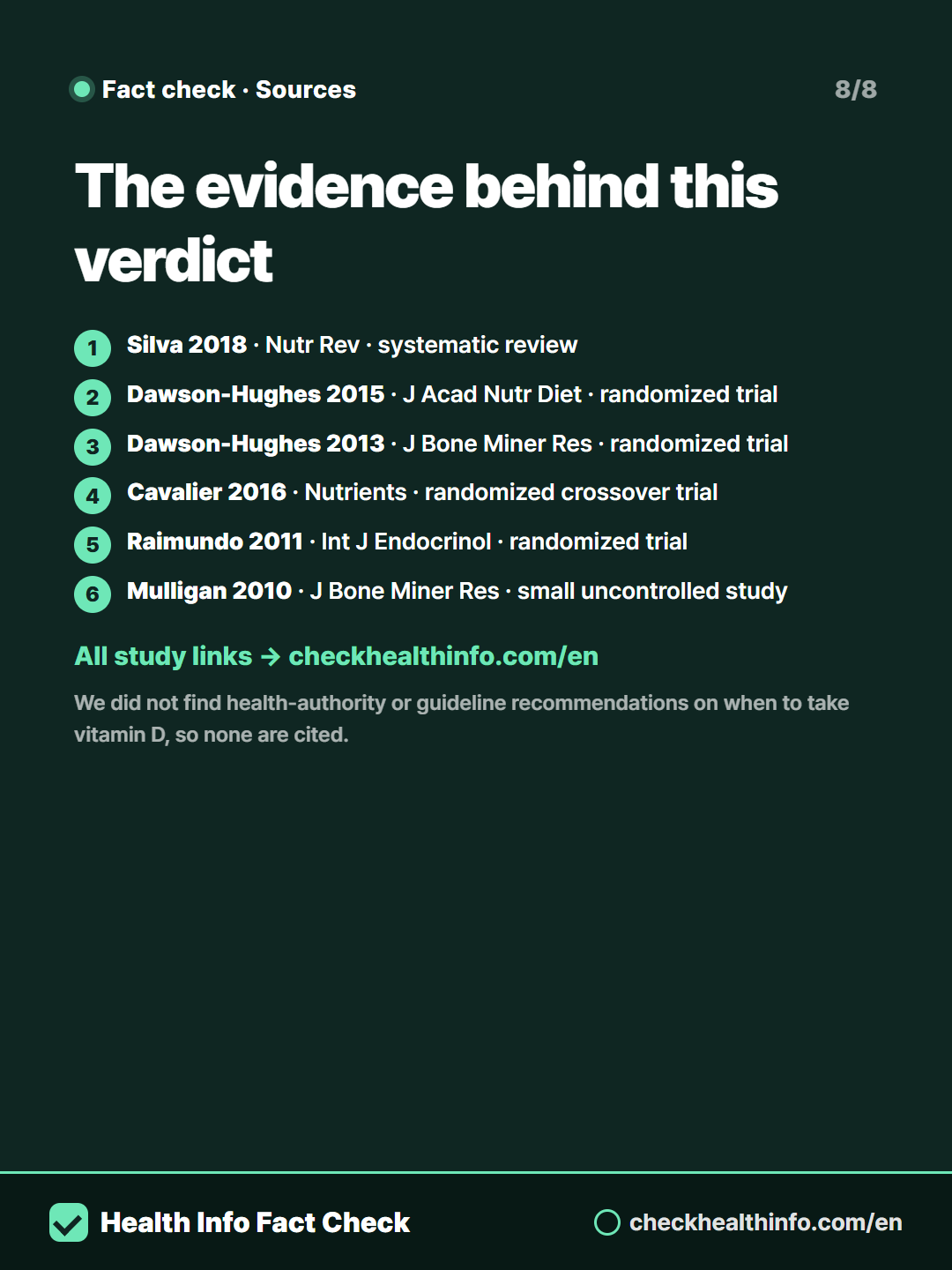
- Silva MC, Furlanetto TW. Intestinal absorption of vitamin D: a systematic review. Nutr Rev 2018;76(1):60-76. PMID 29025082. PubMed abstract · Full article
- Dawson-Hughes B, Harris SS, Lichtenstein AH, et al. Dietary fat increases vitamin D-3 absorption. J Acad Nutr Diet 2015;115(2):225-230. PMID 25441954. PubMed abstract · Full article
- Dawson-Hughes B, Harris SS, Palermo NJ, et al. Meal conditions affect the absorption of supplemental vitamin D3 but not the plasma 25-hydroxyvitamin D response to supplementation. J Bone Miner Res 2013;28(8):1778-83. PMID 23427007. PubMed abstract · Full article
- Cavalier E, Jandrain B, Coffiner M, et al. A Randomised, Cross-Over Study to Estimate the Influence of Food on the 25-Hydroxyvitamin D₃ Serum Level after Vitamin D₃ Supplementation. Nutrients 2016;8(5). PMID 27213447. PubMed abstract · Full article · Free full text
- Raimundo FV, Faulhaber GA, Menegatti PK, et al. Effect of High- versus Low-Fat Meal on Serum 25-Hydroxyvitamin D Levels after a Single Oral Dose of Vitamin D: A Single-Blind, Parallel, Randomized Trial. Int J Endocrinol 2011;2011:809069. PMID 22190928. PubMed abstract · Full article · Free full text
- Mulligan GB, Licata A. Taking vitamin D with the largest meal improves absorption and results in higher serum levels of 25-hydroxyvitamin D. J Bone Miner Res 2010;25(4):928-30. PMID 20200983. PubMed abstract · Full article
General information only, not medical advice. It does not replace your own clinician's diagnosis or treatment. If you have a condition that affects absorption, such as after stomach or bowel surgery, or are being treated for vitamin D deficiency, follow your care team's advice on how to take it.