If you need a drink to fall asleep, does it actually help your sleep?
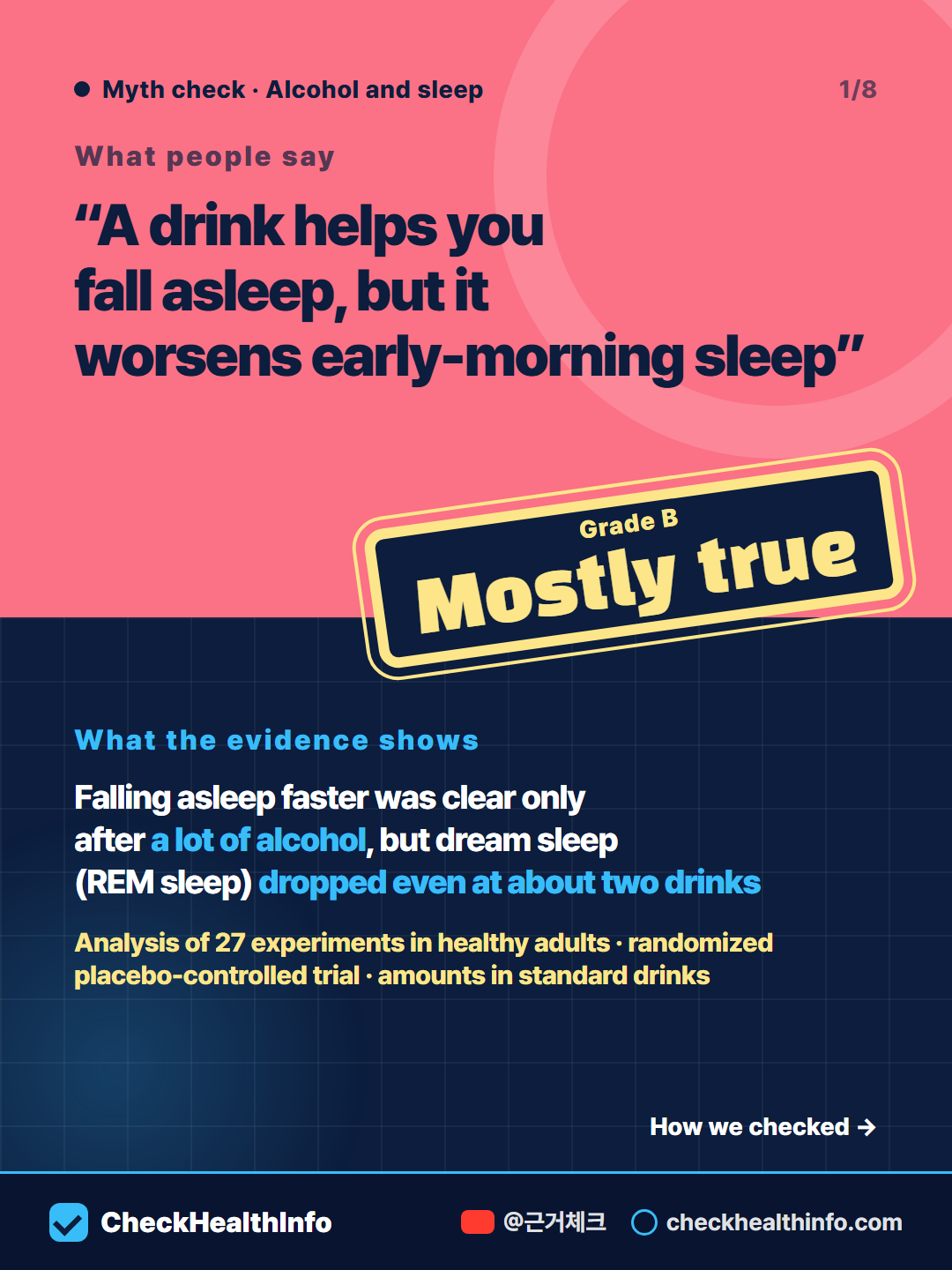
Does alcohol before bed help you fall asleep faster but worsen sleep quality in the second half of the night (dream sleep and waking up)?

We checked this verdict against 12 sources, such as published studies and clinical guidelines. · How checked: AI-drafted · automated evidence checks
Verdicts at a glance
| Claim | Verdict |
|---|---|
| Alcohol before bed helps you fall asleep faster | Mostly true · Evidence grade B |
| Alcohol before bed worsens sleep quality in the second half of the night (REM sleep and waking up) | Mostly true · Evidence grade B |
Bottom line — In an analysis that pooled 27 experiments in which healthy adults drank alcohol before bed and had their sleep measured, falling asleep faster was clear only after a lot of alcohol (about five standard drinks). So the claim that “alcohol before bed helps you fall asleep faster” is Mostly true (it was not clear for one or two drinks). On the other hand, REM sleep, the stage in which most dreaming happens, went down even at a small amount (about two standard drinks) and went down more with more alcohol. Some experiments also found more disrupted sleep in the second half of the night, but in the pooled analysis the time spent awake was still uncertain. So the claim that “alcohol before bed worsens sleep quality in the second half of the night” is also Mostly true.
REM sleep — Sleep in which the eyes move quickly and most dreaming happens. It alternates with deep sleep and is more common in the second half of the night.
Sleep onset latency — The time it takes to fall asleep after going to bed.
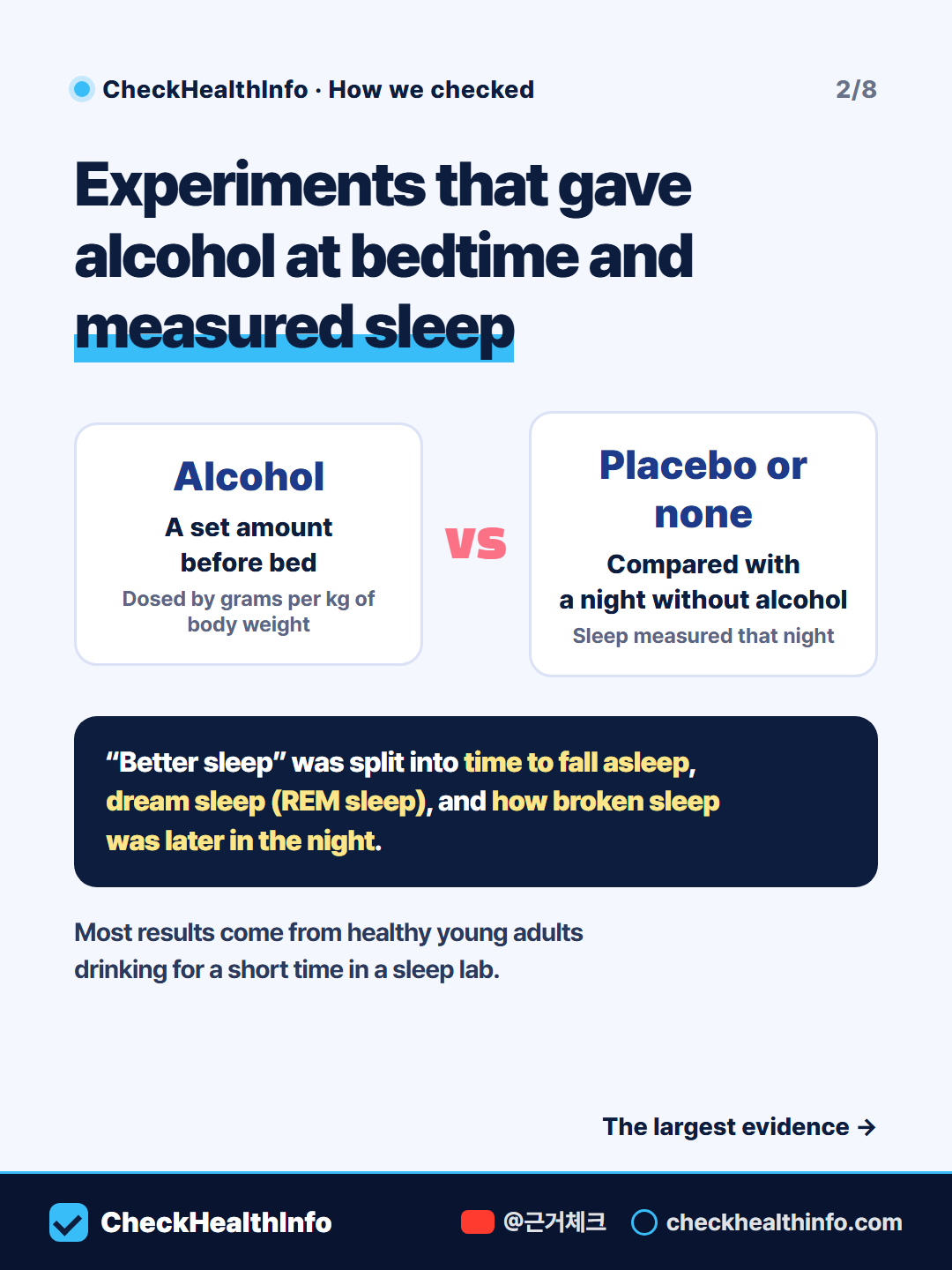
Standard drink — The unit researchers use for one drink. The amount of alcohol differs by country, so it is not exactly the same as one glass of soju or beer in Korea. The studies set the dose in grams of alcohol per kilogram of body weight.
Placebo — A drink that looks like alcohol but contains none. Researchers compare the two so that drinkers do not know which one they had.
Odds ratio — A value that compares the odds of something happening (chance it happens ÷ chance it does not) between two groups. A value above 1 means it was more common in that group.
Verdict 1. “Alcohol before bed helps you fall asleep faster”
Mostly true · Evidence grade B
In plain terms Drinking quite a lot helped people fall asleep faster, but it was not clear that one or two drinks do.
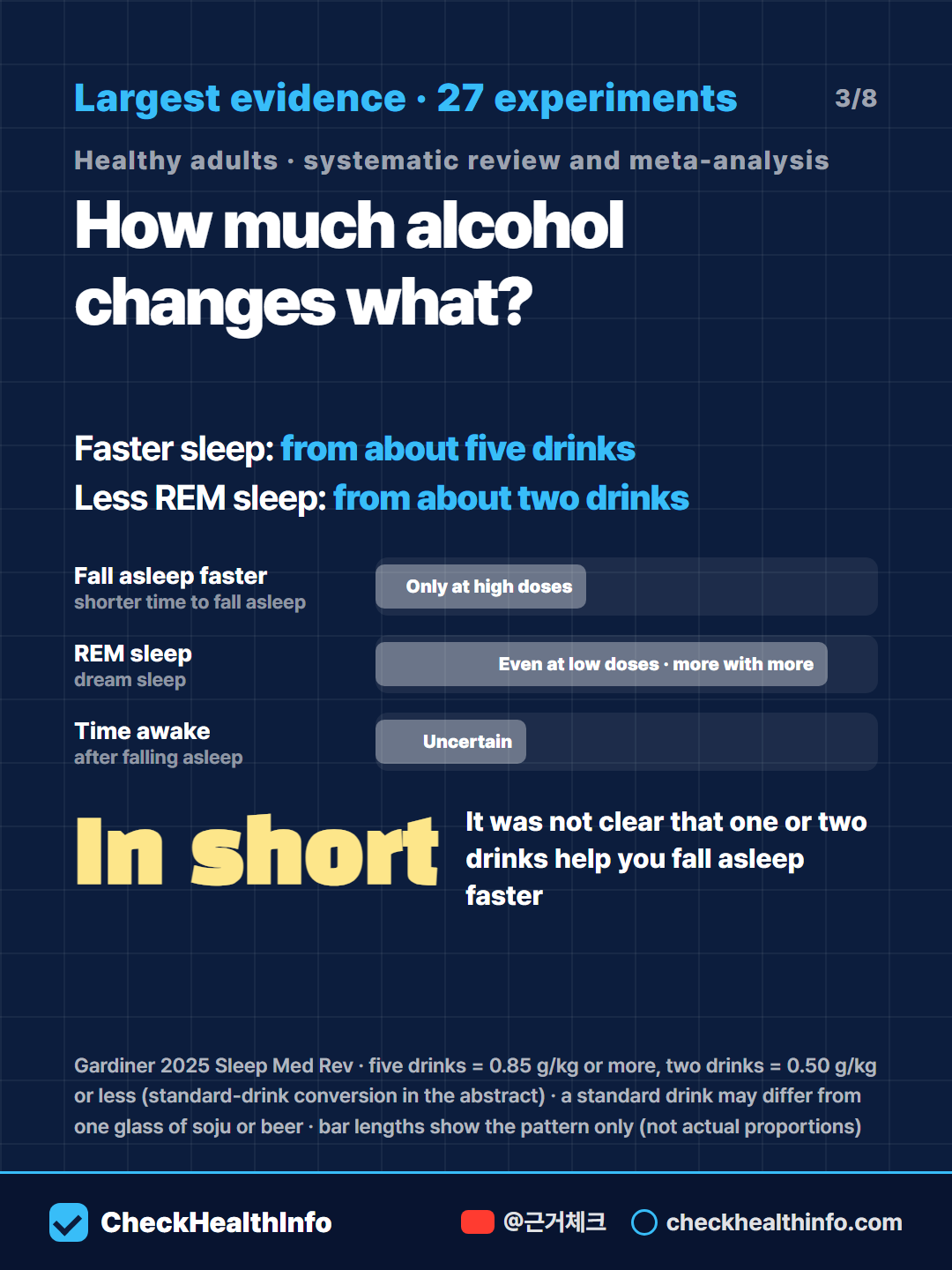
- The largest evidence — In a systematic review and meta-analysis that pooled 27 experiments in healthy adults, a shorter time to fall asleep and a shorter time to reach deep sleep were seen only after a high dose (0.85 g or more per kg of body weight, about five standard drinks). [1]
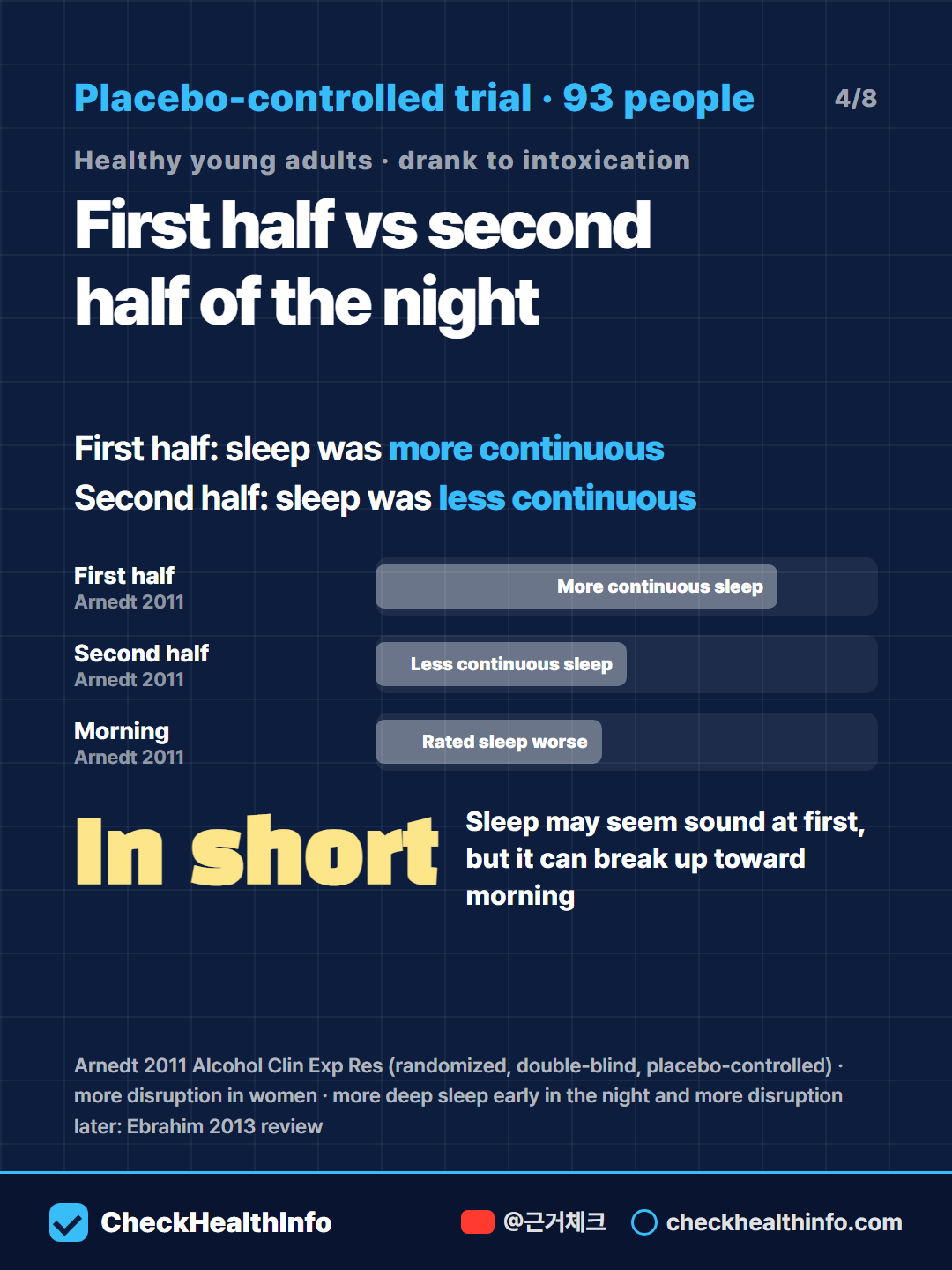
- In a randomized, double-blind, placebo-controlled trial in which 93 healthy young adults drank to intoxication, people also fell asleep faster on the nights they drank alcohol. [3]
- Mixed evidence — An earlier review concluded that people fell asleep faster at all doses. [2] In contrast, a small trial that gave 0.5 g per kg to 20 people with and without insomnia found no change in sleep measures other than less REM sleep. [4]
- In a survey of Japanese adults, 48.3% of men and 18.3% of women said they drank alcohol at least once a week to help them sleep, far more than those who used sleeping pills (4.3% of men and 5.9% of women). Using alcohol as a sleep aid was linked to “difficulty staying asleep.” [9]
Grade: we started at A because the evidence is a meta-analysis of experiments, then lowered it one grade to B (reason 3) because the results differed by dose (only at high doses vs at all doses). The label is “Mostly true” because falling asleep faster was confirmed mainly at high doses.
Verdict 2. “Alcohol before bed worsens sleep quality in the second half of the night (REM sleep and waking up)”
Mostly true · Evidence grade B
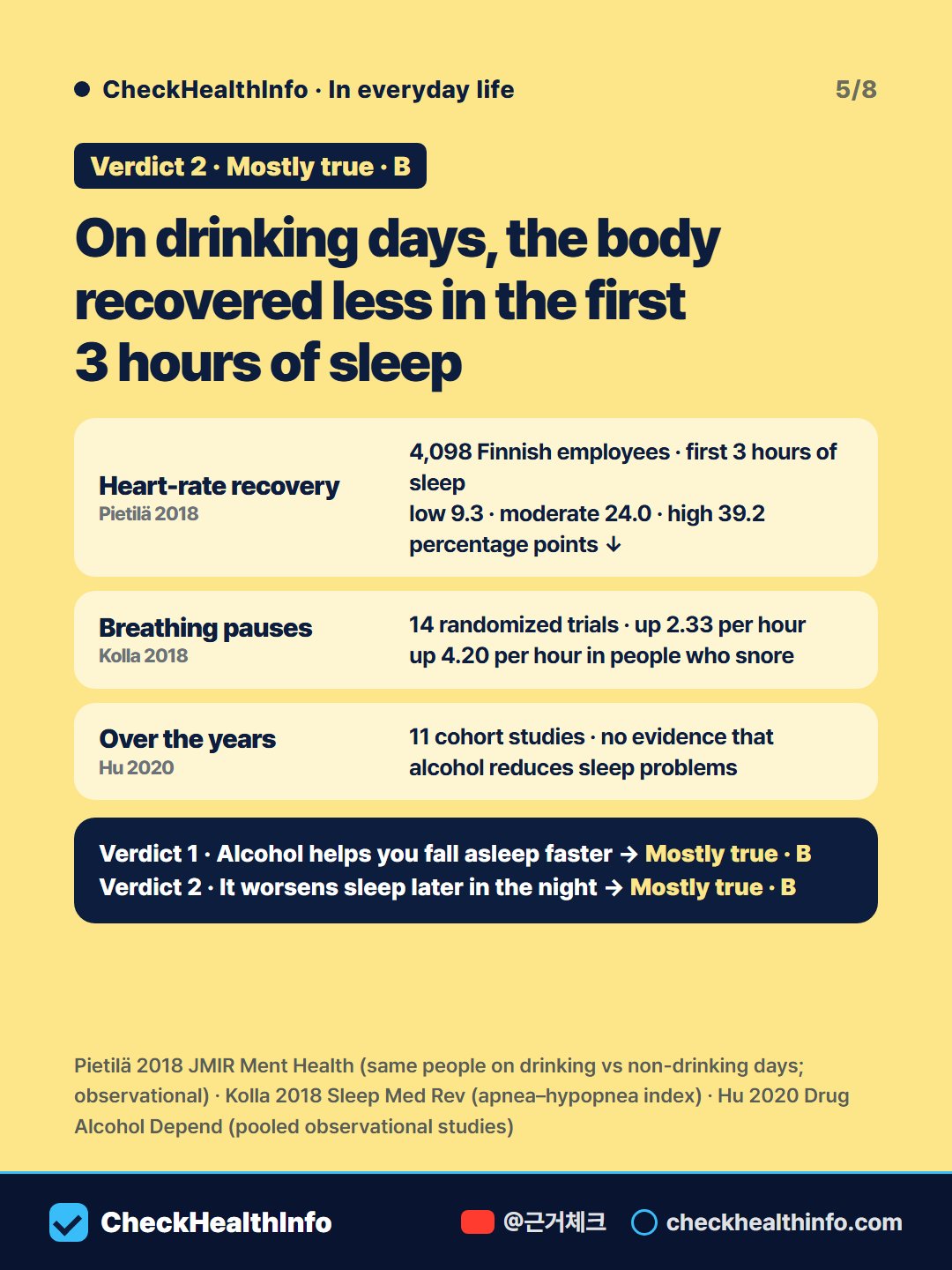
In plain terms Dream sleep (REM sleep) went down even at about two drinks and went down more with more alcohol. Whether people wake up more often later in the night differed between studies.
- REM sleep — In the same meta-analysis, alcohol delayed the start of REM sleep and reduced the amount of REM sleep. This appeared even at a low dose (0.50 g or less per kg, about two standard drinks) and grew larger with more alcohol. [1] The review and the two trials also found less REM sleep. [2][3][4]
- First and second half of the night — The review concluded that alcohol makes sleep more continuous in the first half of the night but more disrupted in the second half. [2] In the randomized placebo-controlled trial, sleep was also more continuous in the first half and less continuous in the second half; time awake over the whole night went up, and people rated their sleep quality lower the next morning (with more disruption in women). [3]
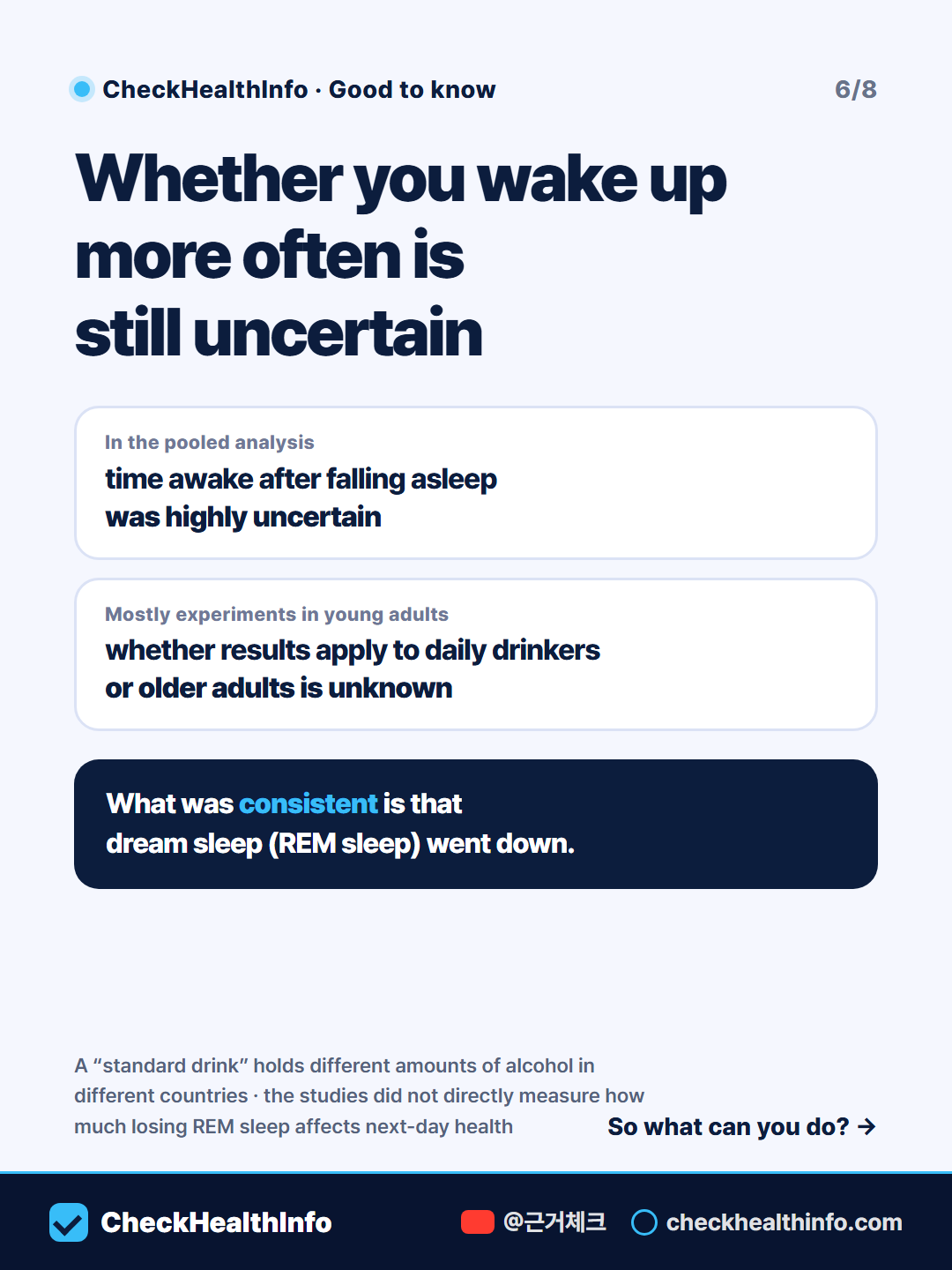
- However — In the meta-analysis, time awake after falling asleep, total sleep time and sleep efficiency were too uncertain to judge. [1]
- Everyday-life data — In an observational study that compared the heart rate of 4,098 Finnish employees on days they drank and days they did not (within the same person), the body’s recovery state in the first 3 hours of sleep fell by 9.3 percentage points after a low amount, 24.0 after a moderate amount and 39.2 after a high amount. [5]
- Snoring and sleep apnea — In a meta-analysis of 14 randomized trials, the number of times breathing stopped or became shallow during sleep went up by 2.33 per hour after drinking (95% confidence interval 1.41 to 3.25), by 4.20 in people who snore, and by 7.10 in people diagnosed with sleep apnea. [6]
- Long-term data — A meta-analysis of 11 cohort studies found no evidence that alcohol reduces sleep problems. For drinking below the heavy-drinking threshold (24 g a day or more for women and 48 g for men, or 4 or more times a week), the odds ratio for new sleep disorders was 1.37 (95% confidence interval 1.22 to 1.54); for heavy drinking it was 1.22 (0.94 to 1.60), which was not clear, and the authors said more research is needed. [7] In a study that followed 6,117 British civil servants for 30 years, at the last survey in older age men who drank more than 21 units a week (about 168 g) had an odds ratio of 1.30 (confidence interval 1.02 to 1.66) for waking several times at night compared with men who did not drink, and men who drank heavily throughout the 30 years also tended to wake up tired or wake several times (this was not clear in women). [8] Because these are observational studies, we cannot conclude that alcohol is the cause.
Grade: we started at A because the evidence is a meta-analysis of experiments. The drop in REM sleep was consistent, but the other half of the claim, “waking up,” was uncertain in the meta-analysis and differed between individual studies, so we lowered it one grade to B (reason 3). The label is “Mostly true” because more waking was confirmed only in some studies.
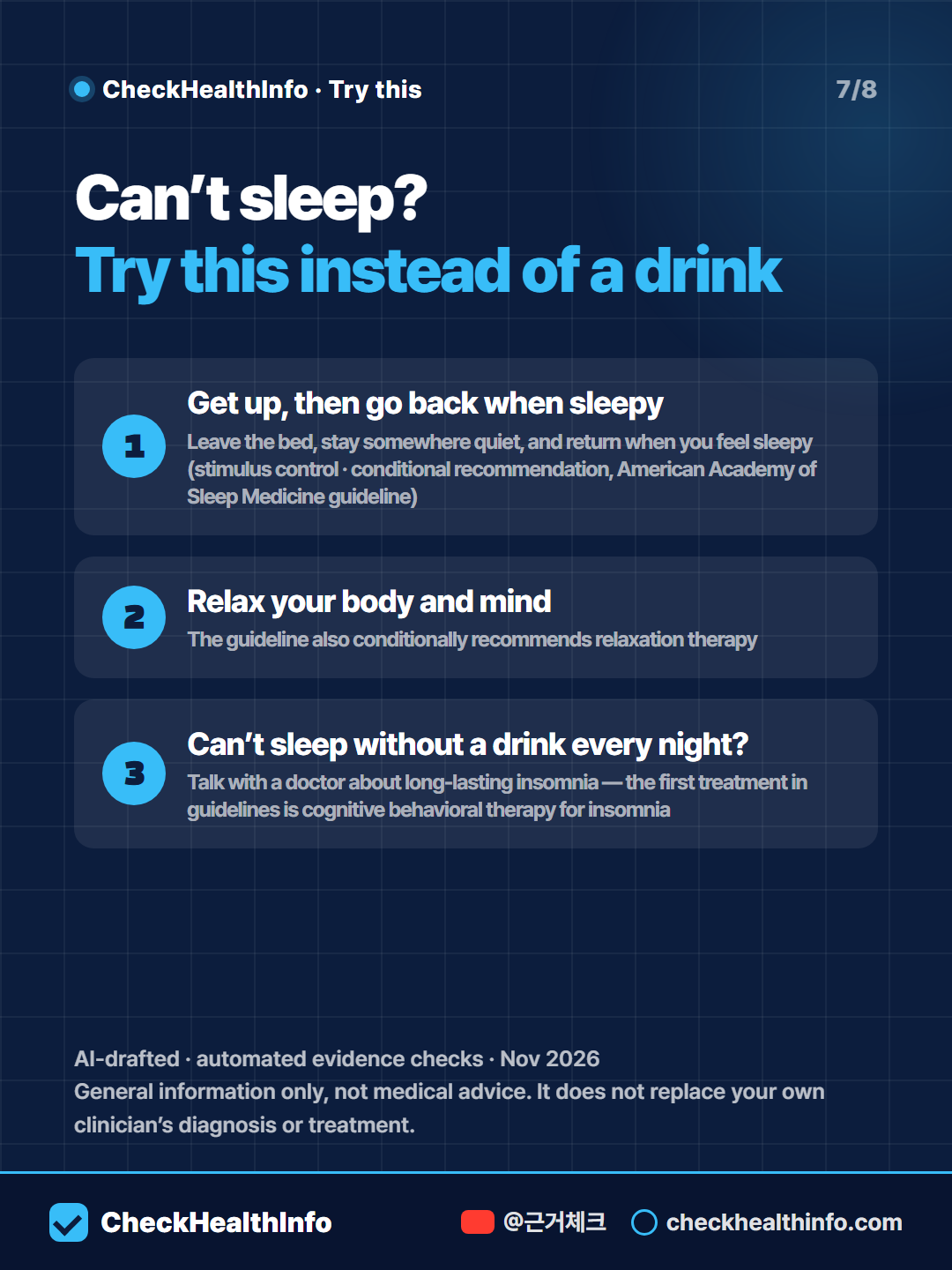
Can’t sleep? Try this instead of a drink
- Get up, then go back to bed when you feel sleepy — If you cannot fall asleep, leave the bed, stay somewhere quiet and return when you feel sleepy. The American Academy of Sleep Medicine guideline conditionally recommends this “stimulus control” for chronic insomnia. [10]
- Relax your body and mind — The same guideline also conditionally recommends relaxation therapy. [10]
- If insomnia lasts a long time — For chronic insomnia, the US guideline strongly recommends cognitive behavioral therapy for insomnia, and the European guideline recommends it as the first treatment. [10][11] The US guideline does not recommend everyday sleep rules (sleep hygiene), such as avoiding caffeine and alcohol, as a treatment for chronic insomnia on their own. This does not mean alcohol is fine. Many studies link each rule to nighttime sleep, but few have directly tested whether each one works in the general population. [10][12]
- If you find it hard to fall asleep without a drink every night — talk with a doctor. When people were allowed to choose, those with insomnia chose alcohol on 67% of nights (vs 22% of people who slept normally, in a small trial). This is a sign that alcohol can easily become a sleep habit. [4]
Scope: this verdict covers how alcohol drunk before bed affects that night’s sleep in healthy adults. It does not cover alcohol dependence and its treatment, sleeping pills or other health effects of alcohol.
Limitations of this verdict
- Most experiments were done in healthy young adults who drank in a sleep lab for one or two nights, so the results may not apply directly to people who drink every day, older adults or people with insomnia.
- The trial in which people drank to intoxication was designed as double-blind, but most participants correctly guessed the nights they drank alcohol, so subjective ratings such as morning sleep quality may have been affected by expectations (sleep-test measures are less affected).
- A “standard drink” in research holds different amounts of alcohol in different countries, so it is not exactly the same as one glass of soju or beer in Korea.
- These studies did not directly measure how much less REM sleep affects next-day tiredness or health.
- The heart-rate study, the British cohort and the cohort meta-analysis are observational, so we cannot conclude that alcohol is the cause. Some authors of the heart-rate study work for a heart-rate analysis company, and that company’s recovery measure was used as the outcome. The abstracts of the two guidelines do not address alcohol directly, so we used them only as supporting evidence.
- This article does not suggest using alcohol as a sleep aid, and it is not medical advice to stop drinking.
- We set the grade according to section 1 of our rating method. We check for new studies in our monthly PubMed review, and if a verdict changes we record it in our corrections log.
Card news
Video (in Korean)
References
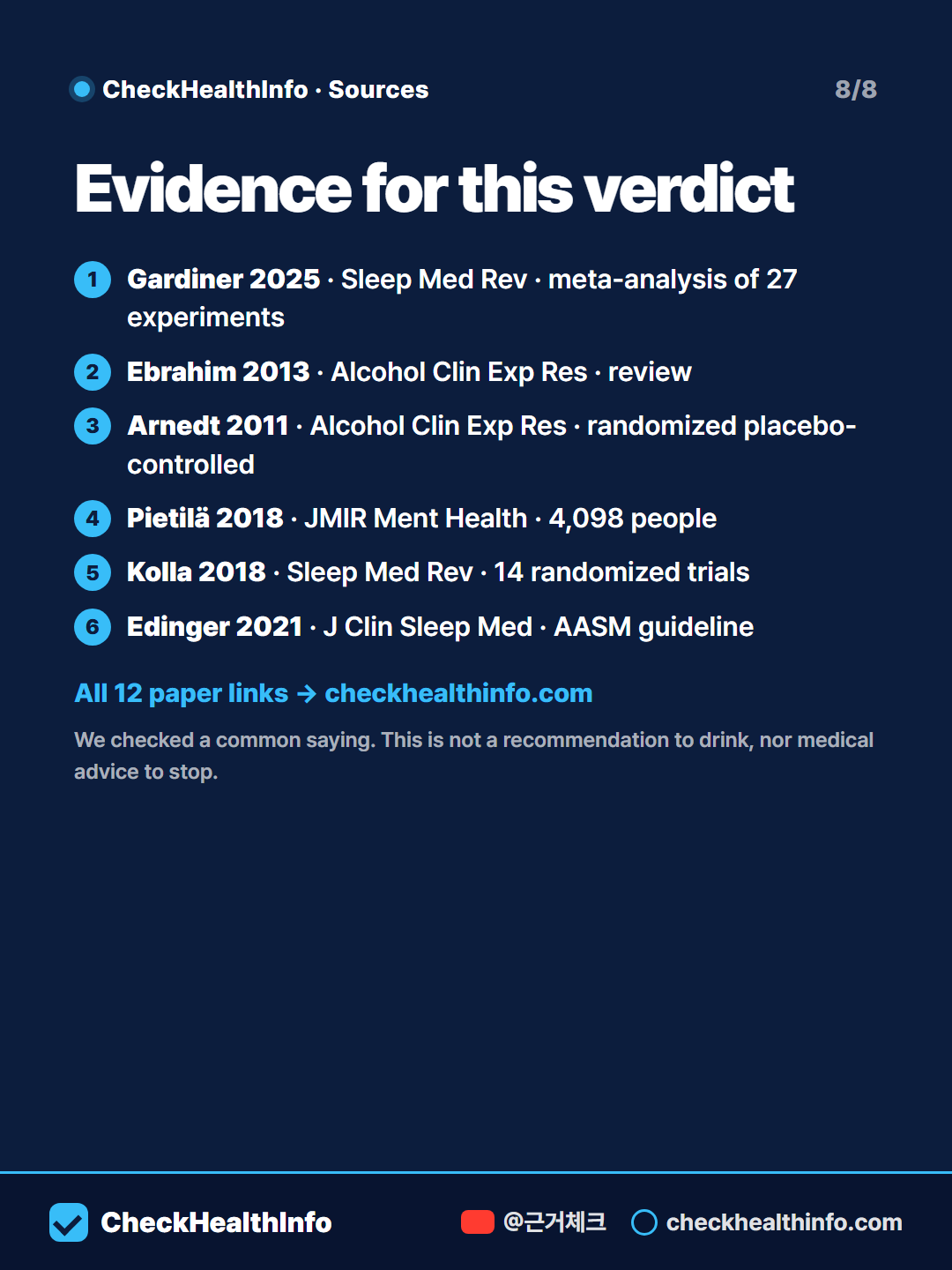
- Gardiner C, Weakley J, Burke LM, et al. The effect of alcohol on subsequent sleep in healthy adults: A systematic review and meta-analysis. Sleep Med Rev 2025;80:102030. PMID 39631226. PubMed abstract · Full article
- Ebrahim IO, Shapiro CM, Williams AJ, et al. Alcohol and sleep I: effects on normal sleep. Alcohol Clin Exp Res 2013;37(4):539-549. PMID 23347102. PubMed abstract · Full article
- Arnedt JT, Rohsenow DJ, Almeida AB, et al. Sleep following alcohol intoxication in healthy, young adults: effects of sex and family history of alcoholism. Alcohol Clin Exp Res 2011;35(5):870-878. PMID 21323679. PubMed abstract · Full article · Free full text
- Roehrs T, Papineau K, Rosenthal L, et al. Ethanol as a hypnotic in insomniacs: self administration and effects on sleep and mood. Neuropsychopharmacology 1999;20(3):279-286. PMID 10063488. PubMed abstract · Full article
- Pietilä J, Helander E, Korhonen I, et al. Acute Effect of Alcohol Intake on Cardiovascular Autonomic Regulation During the First Hours of Sleep in a Large Real-World Sample of Finnish Employees: Observational Study. JMIR Ment Health 2018;5(1):e23. PMID 29549064. PubMed abstract · Full article · Free full text
- Kolla BP, Foroughi M, Saeidifard F, et al. The impact of alcohol on breathing parameters during sleep: A systematic review and meta-analysis. Sleep Med Rev 2018;42:59-67. PMID 30017492. PubMed abstract · Full article · Free full text
- Hu N, Ma Y, He J, et al. Alcohol consumption and incidence of sleep disorder: A systematic review and meta-analysis of cohort studies. Drug Alcohol Depend 2020;217:108259. PMID 32927195. PubMed abstract · Full article
- Britton A, Fat LN, Neligan A. The association between alcohol consumption and sleep disorders among older people in the general population. Sci Rep 2020;10(1):5275. PMID 32210292. PubMed abstract · Full article · Free full text
- Kaneita Y, Uchiyama M, Takemura S, et al. Use of alcohol and hypnotic medication as aids to sleep among the Japanese general population. Sleep Med 2007;8(7-8):723-732. PMID 17512790. PubMed abstract · Full article
- Edinger JD, Arnedt JT, Bertisch SM, et al. Behavioral and psychological treatments for chronic insomnia disorder in adults: an American Academy of Sleep Medicine clinical practice guideline. J Clin Sleep Med 2021;17(2):255-262. PMID 33164742. PubMed abstract · Full article · Free full text
- Riemann D, Espie CA, Altena E, et al. The European Insomnia Guideline: An update on the diagnosis and treatment of insomnia 2023. J Sleep Res 2023;32(6):e14035. PMID 38016484. PubMed abstract · Full article
- Irish LA, Kline CE, Gunn HE, et al. The role of sleep hygiene in promoting public health: A review of empirical evidence. Sleep Med Rev 2015;22:23-36. PMID 25454674. PubMed abstract · Full article · Free full text
General information only, not medical advice. It does not replace your own clinician’s diagnosis or treatment. If you find it hard to fall asleep without a drink every night, or your insomnia lasts a long time, talk with a doctor. This is not a suggestion to use alcohol as a sleep aid, and it is not medical advice to stop drinking.