Can a handful of almonds before meals reverse prediabetes?
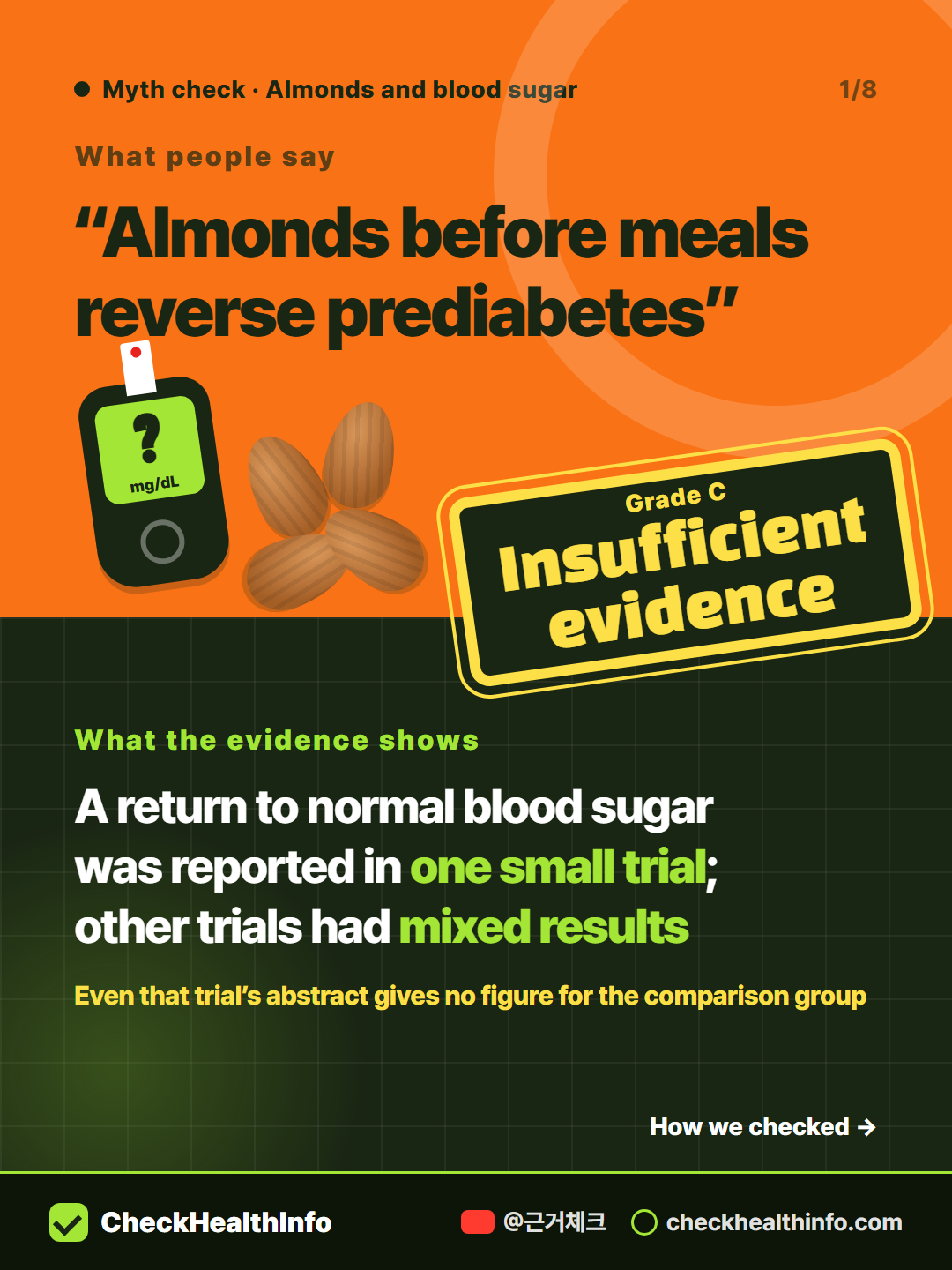
If people with prediabetes eat almonds before meals, does their blood sugar return to normal?

We checked this verdict against 9 sources, such as published studies and clinical guidelines. · How checked: AI-drafted · automated evidence checks
Verdicts at a glance
| Claim | Verdict |
|---|---|
| If people with prediabetes eat almonds before meals, their blood sugar returns to normal | Insufficient evidence · Evidence grade C |
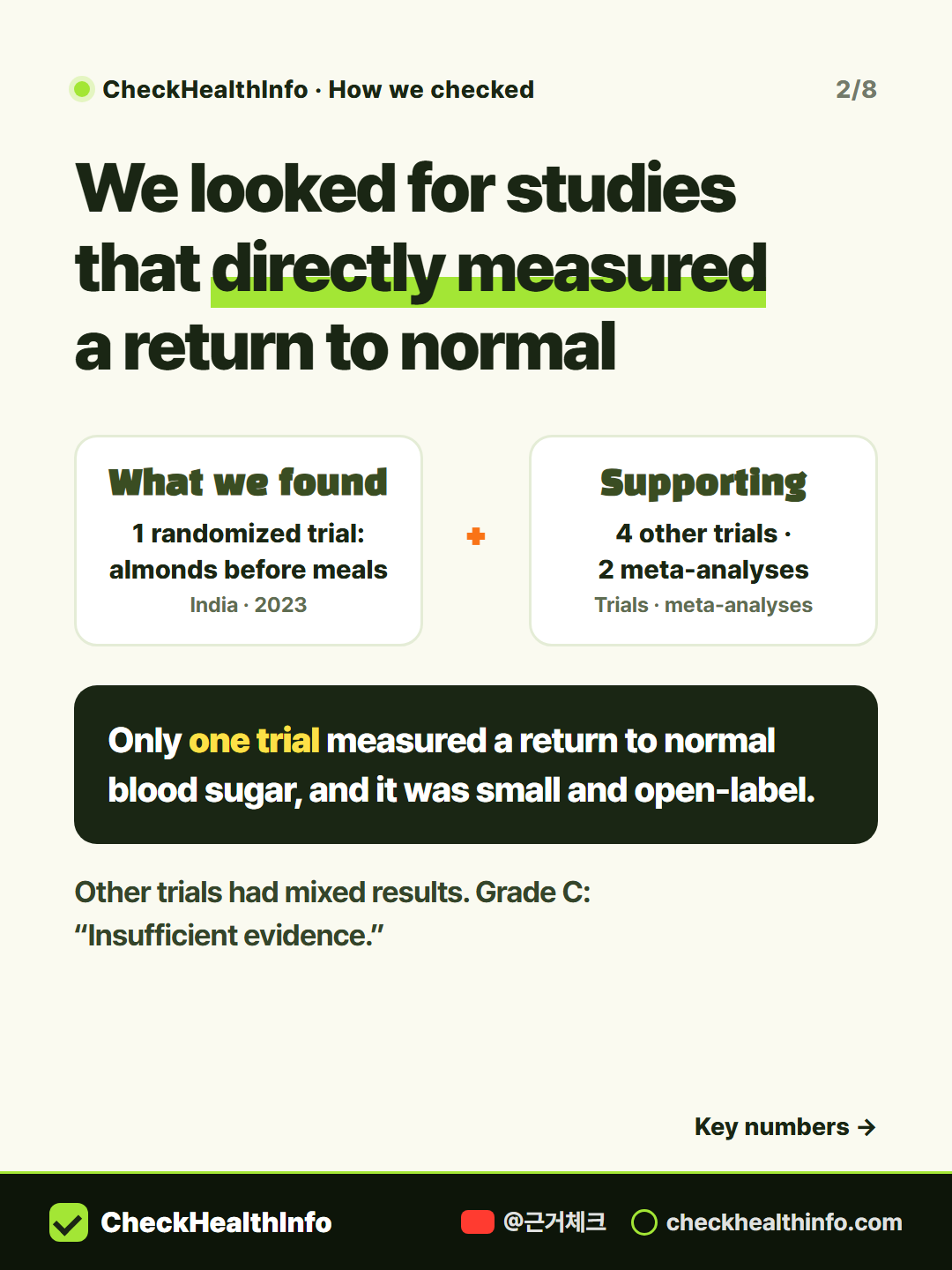
Bottom line — Only one small randomized trial, from India, directly measured whether eating almonds before meals returns blood sugar to normal in people with prediabetes. In that trial, 7 of 30 people (23.3%) in the almond group returned to normal blood sugar, but the abstract does not say how many did so in the comparison group. Other trials had mixed results, and meta-analyses of almond and nut trials found no clear improvement in fasting glucose or HbA1c. So the claim that “eating almonds before meals returns blood sugar to normal in prediabetes” is rated Insufficient evidence (this does not mean it is false).
Prediabetes — Blood sugar that is higher than normal but not high enough to be diagnosed as diabetes.
HbA1c — A blood test that reflects your average blood sugar over the past 2–3 months.
Insulin resistance (HOMA-IR) — A measure, calculated from fasting glucose and insulin, of how poorly the body responds to insulin. Higher values mean more resistance.
Randomized trial — A study in which participants are assigned to groups by chance and then compared.
Open-label trial — A trial in which participants and researchers know who is in which group, so expectations can affect the results.
Crossover trial — A trial in which the same people try each diet in turn, in separate periods.
Meta-analysis — An analysis that pools the results of several studies into one estimate.
95% confidence interval — The range in which the true value is likely to lie. If the range includes 0, we cannot be confident there is a real difference.
Claim. “If people with prediabetes eat almonds before meals, their blood sugar returns to normal”
Insufficient evidence · Evidence grade C
In plain terms A return to normal blood sugar with almonds was reported in only one small trial that did not report results for its comparison group, and other trials had mixed results. That is why we rated it “Insufficient evidence.”
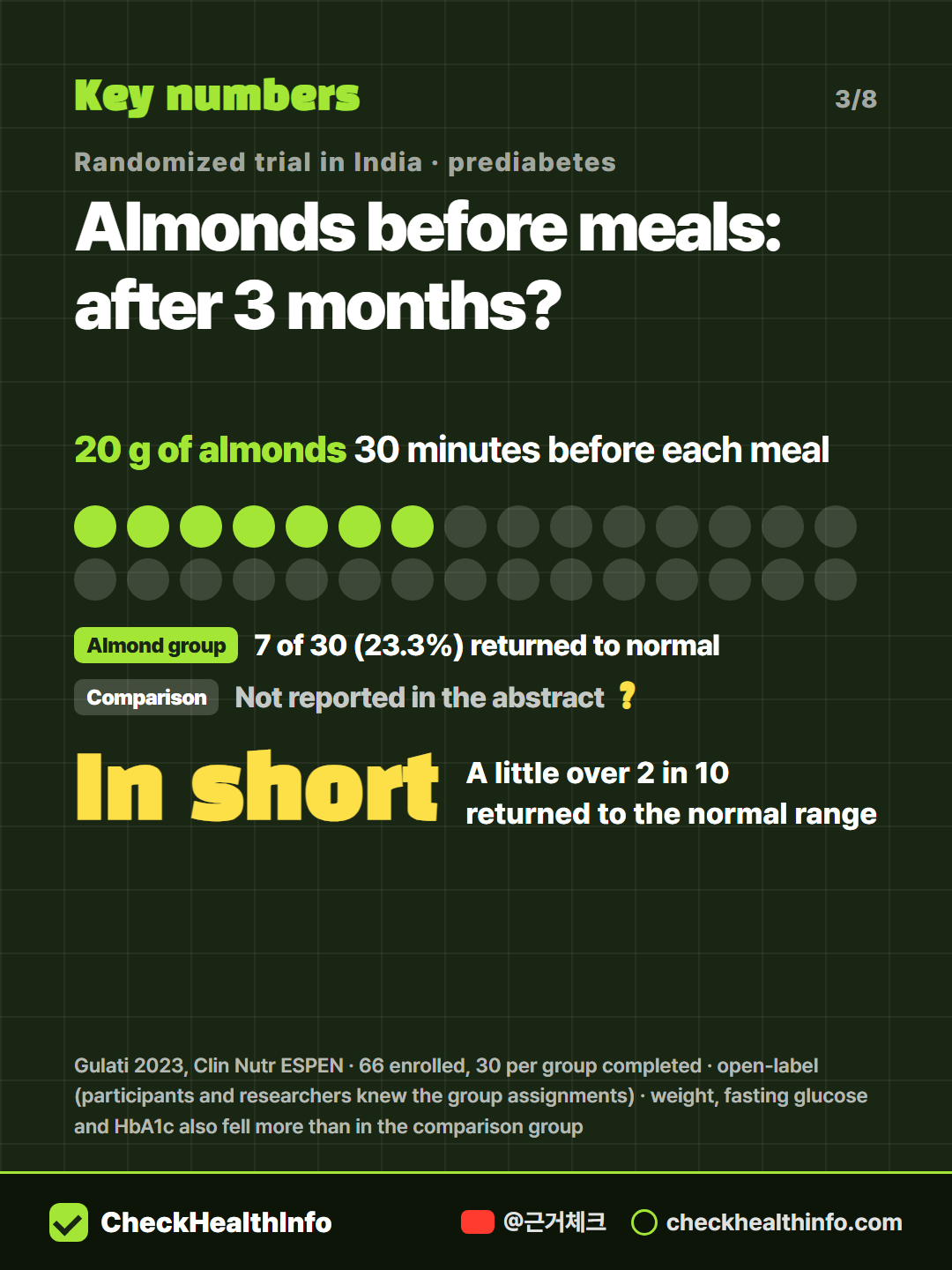
- A randomized trial in Indian adults enrolled 66 people with prediabetes and assigned them to eat 20 g of almonds 30 minutes before each meal or to a comparison group; 30 people in each group completed 3 months. Weight, waist circumference, fasting glucose, HbA1c and insulin resistance fell more in the almond group than in the comparison group, and 7 of 30 people (23.3%) in the almond group returned to normal blood sugar. In plain terms, a little over 2 in 10 people who ate almonds for 3 months returned to the normal range. However, the abstract does not say how many people in the comparison group returned to normal, the trial was open-label (participants and researchers knew the group assignments), and it was small. [1]
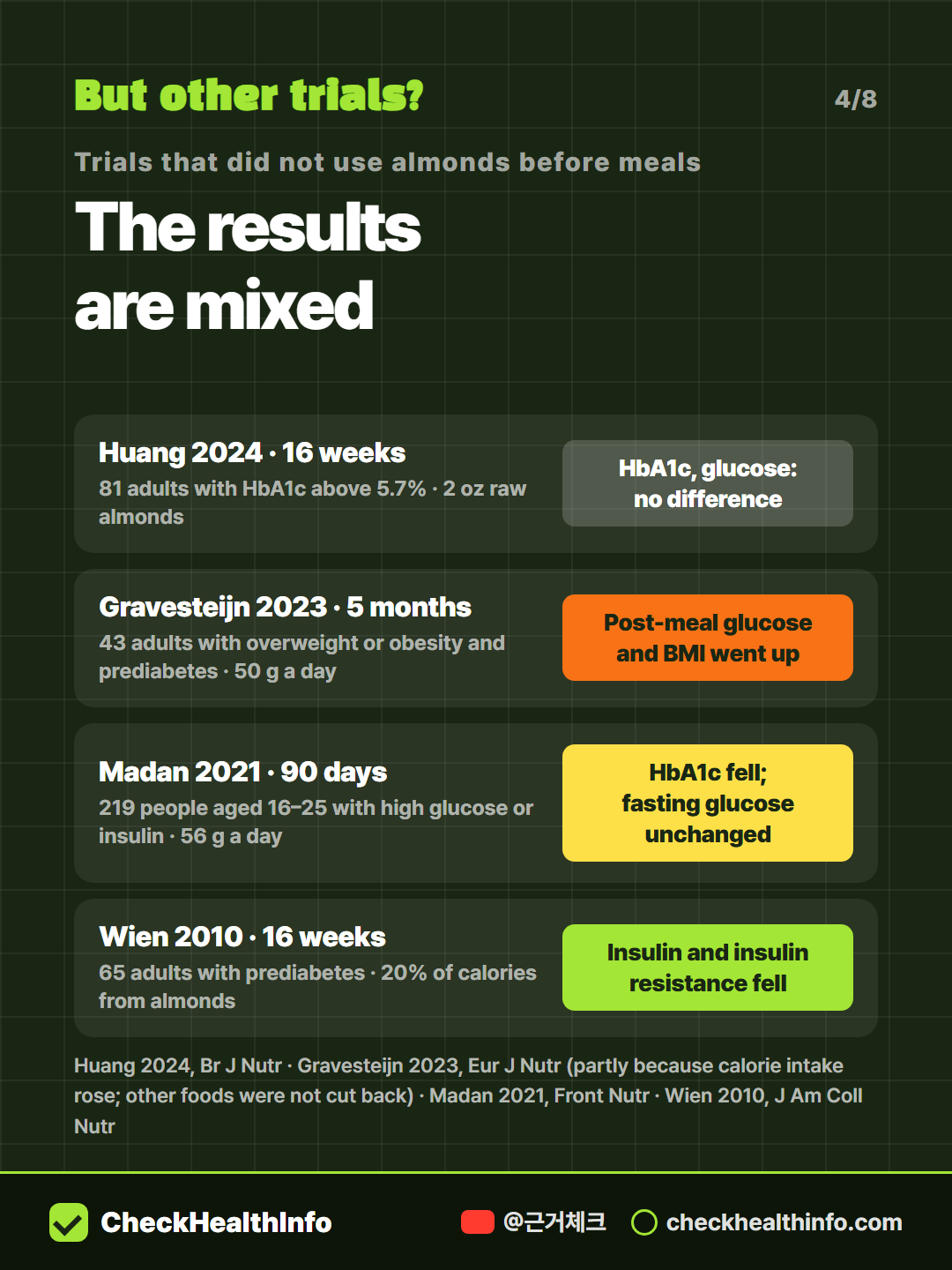
- Other trials, however, had different results. In a trial in which 81 adults with HbA1c above 5.7% ate 2 oz of raw almonds (or a snack with the same calories) for 16 weeks, HbA1c and blood sugar did not differ. This trial also included people in the diabetes range. [2]
- In a crossover trial in which 43 adults with overweight or obesity and prediabetes ate 50 g of almonds a day for 5 months, insulin sensitivity actually fell, and post-meal blood sugar and body mass index rose (partly because calorie intake rose, since other foods were not cut back). Neither this trial nor the previous one had people eat almonds before meals. [3]
- On the other hand, in a trial in which 219 Indian adolescents and young adults with high blood sugar or insulin ate 56 g of almonds a day for 3 months (the comparison group ate a cereal-and-legume snack with the same calories), HbA1c fell, but fasting glucose did not change in the almond group. [4]
- In a trial in which 65 adults with prediabetes followed a diet with 20% of calories from almonds for 16 weeks, insulin and insulin resistance were lower than in the comparison group. [5]
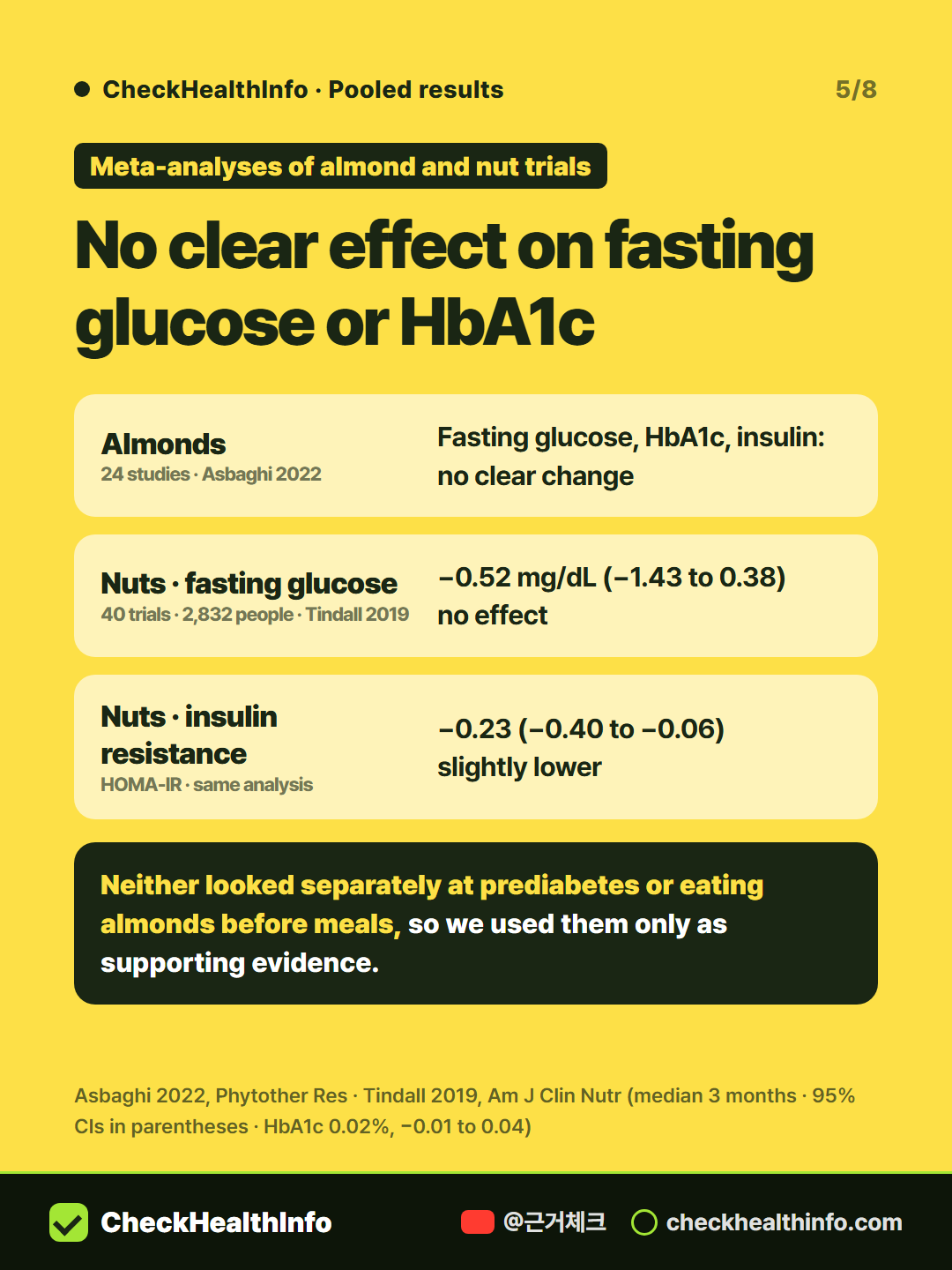
A meta-analysis of 24 randomized studies of almonds found that almonds did not clearly change fasting glucose, HbA1c, insulin or insulin resistance. [6]
A meta-analysis of 40 randomized trials of nuts (2,832 people; median 3 months) found no effect on fasting glucose (mean difference −0.52 mg/dL; 95% confidence interval −1.43 to 0.38) or HbA1c (0.02%; −0.01 to 0.04), and slightly lower insulin resistance (HOMA-IR −0.23; −0.40 to −0.06) and fasting insulin (−0.40 μIU/mL; −0.73 to −0.07). [7]
Neither analysis looked separately at prediabetes or at eating almonds before meals.
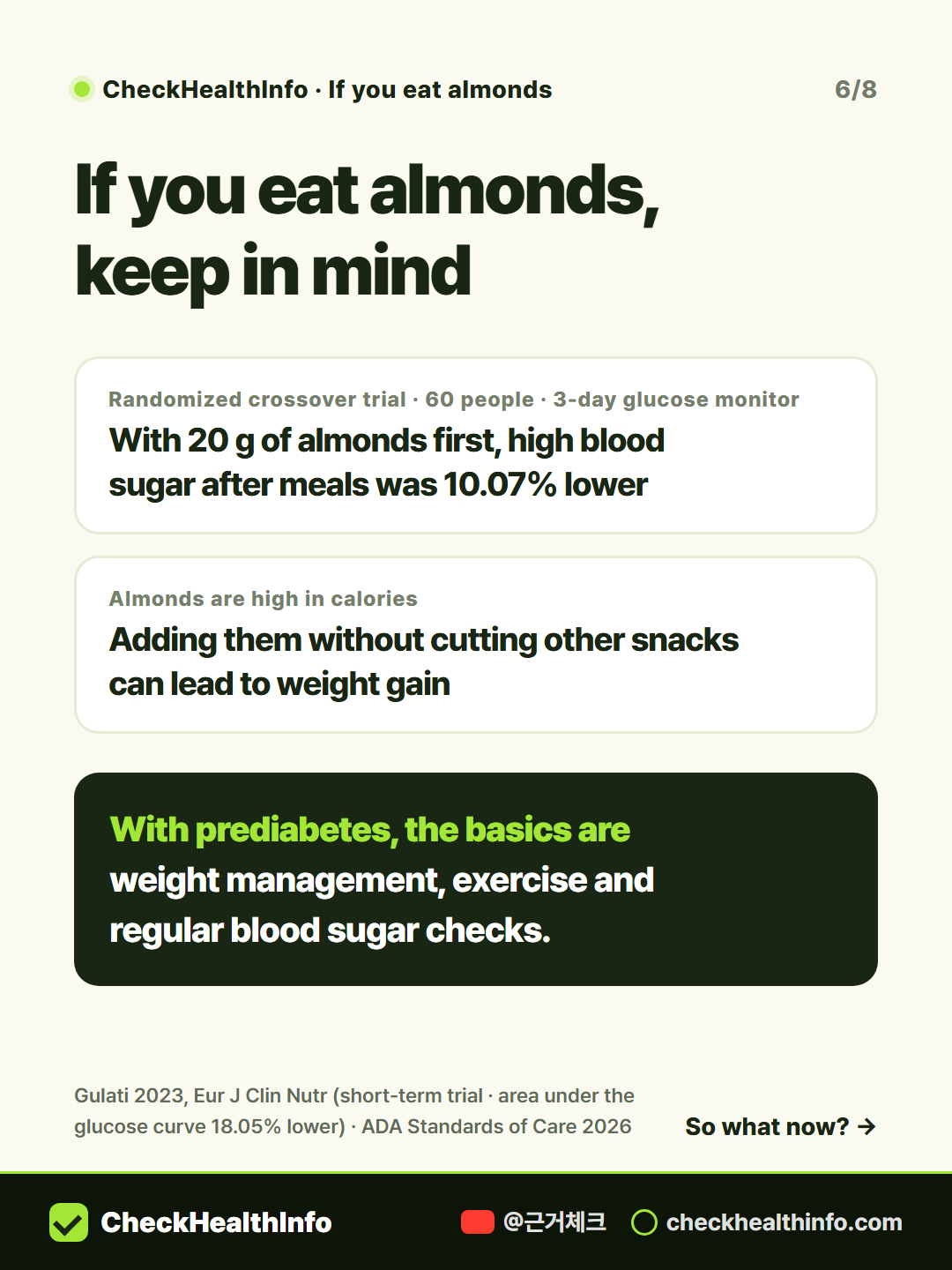
In short trials, 20 g of almonds eaten before a meal lowered blood sugar after the meal. In a crossover trial by the same Indian research group (60 people with prediabetes), eating almonds first led to an 18.05% lower area under the blood sugar curve after a glucose drink, and 10.07% less high blood sugar after meals over 3 days of continuous glucose monitoring. [8]
In plain terms, the rise and fall of blood sugar after a meal was somewhat smaller. This trial did not measure whether prediabetes returned to normal over months.
If you eat almonds
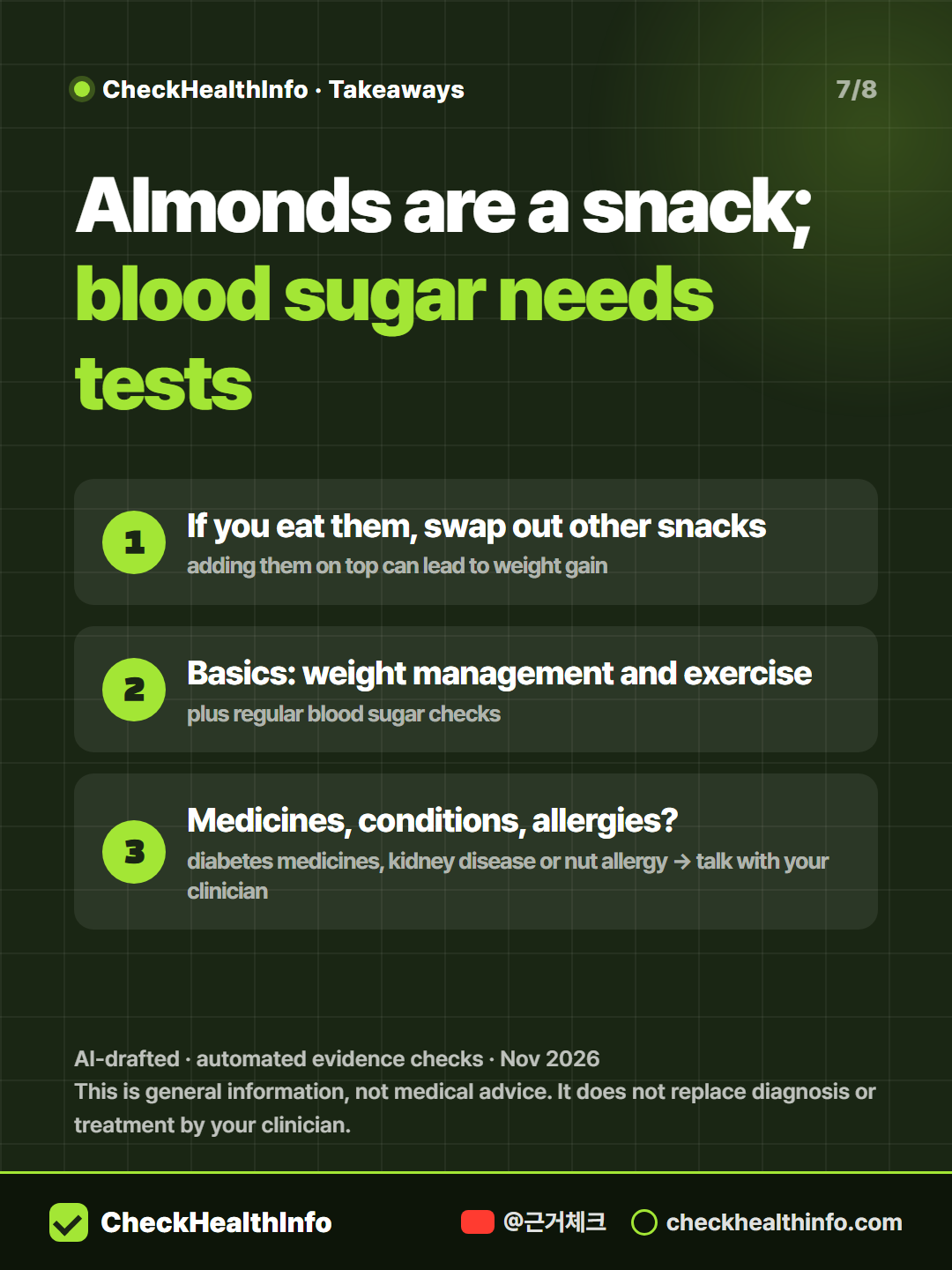
- Eat them instead of other snacks — almonds are high in calories, so adding them without cutting back on other snacks can lead to weight gain.
- The basics are lifestyle and testing — with prediabetes, lifestyle changes such as weight management and exercise, plus regular blood sugar checks, are the foundation. [9]
- If you take diabetes medicines or have kidney disease or a nut allergy — talk with your clinician.
Scope: This rating covers how eating almonds (especially before meals) affects blood sugar measures and a return to normal blood sugar in people with prediabetes. It does not cover diabetes treatment or medicines.
Limitations
- Only one trial directly measured a return to normal blood sugar. It was a small open-label trial (30 people per group completed), and its abstract does not give the rate of return to normal blood sugar in the comparison group.
- The other longer-term randomized trials did not have people eat almonds before meals, and they differed in who took part (including people in the diabetes range, and adolescents and young adults), in amounts and in length, so the results are mixed.
- The meta-analyses did not look separately at prediabetes, eating before meals or a return to normal blood sugar, so we used them only as supporting evidence.
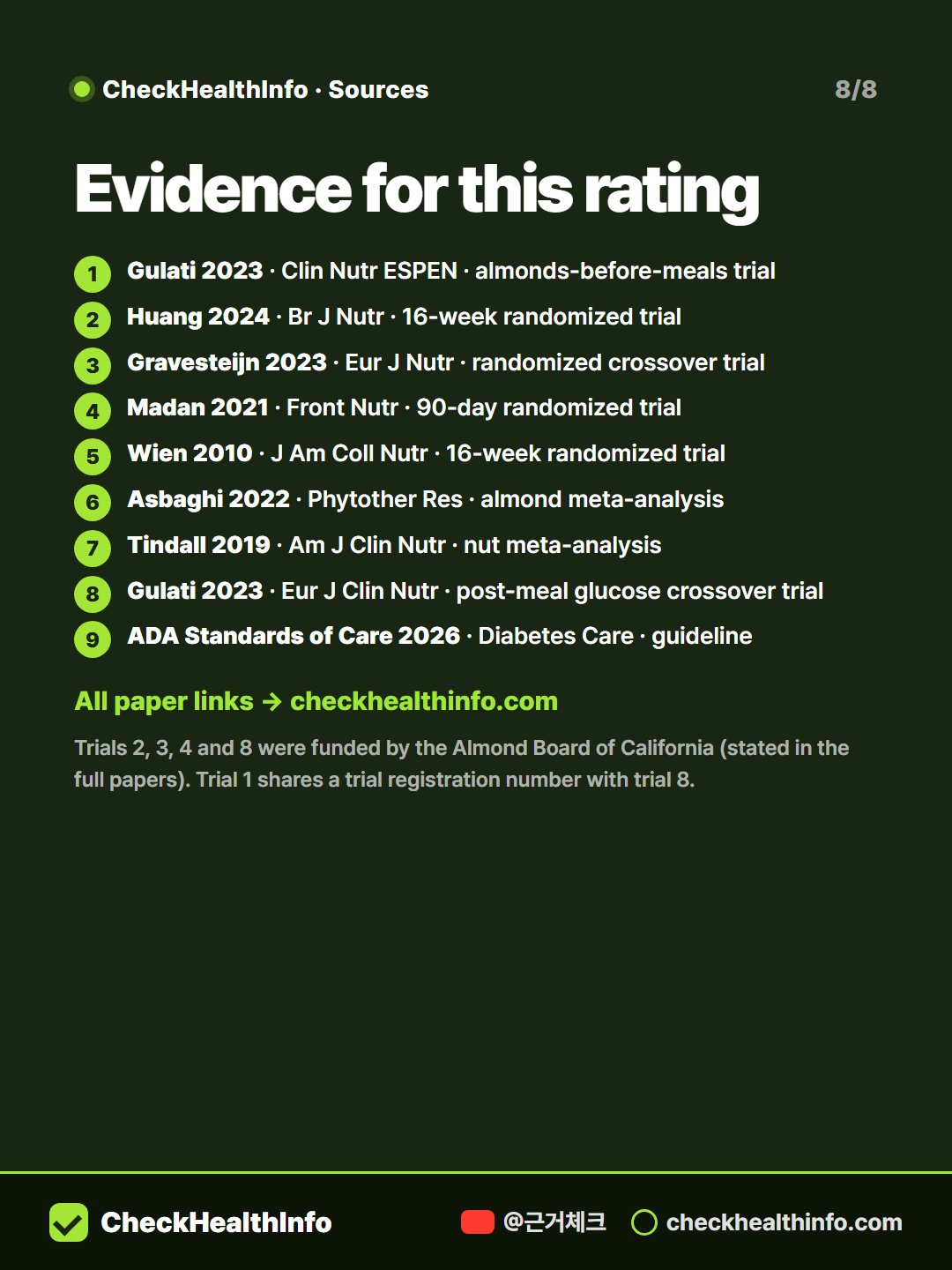
- Of the trials we cited, Huang 2024, Gravesteijn 2023, Madan 2021 and Gulati 2023 (Eur J Clin Nutr) were funded by the Almond Board of California (stated in the full papers). Gulati 2023 (Clin Nutr ESPEN) uses the same trial registration number (NCT04769726) as the Eur J Clin Nutr trial. Some funded trials found no difference or unfavorable results.
- The statement in the Gulati 2023 (Clin Nutr ESPEN) abstract that the results were similar to those of a medicine compares them with values from other studies, not within the same trial.
- The grade follows section 1 of our rating method. We check PubMed monthly for new studies, and any change in the rating is recorded in our corrections log.
Card news
Video (in Korean)
References
- Gulati S, Misra A, Tiwari R, et al. Premeal almond load decreases postprandial glycaemia, adiposity and reversed prediabetes to normoglycemia: A randomized controlled trial. Clin Nutr ESPEN 2023;54:12-22. PMID 36963852. PubMed abstract · Full article
- Huang LC, Henderson GC, Mattes RD. Effects of daily almond consumption on glycaemia in adults with elevated risk for diabetes: a randomised controlled trial. Br J Nutr 2024;132(10):1289-1299. PMID 39431574. PubMed abstract · Full article · Free full text
- Gravesteijn E, Mensink RP, Plat J. The effects of long-term almond consumption on whole-body insulin sensitivity, postprandial glucose responses, and 48 h continuous glucose concentrations in males and females with prediabetes: a randomized controlled trial. Eur J Nutr 2023;62(6):2661-2672. PMID 37258943. PubMed abstract · Full article · Free full text
- Madan J, Desai S, Moitra P, et al. Effect of Almond Consumption on Metabolic Risk Factors-Glucose Metabolism, Hyperinsulinemia, Selected Markers of Inflammation: A Randomized Controlled Trial in Adolescents and Young Adults. Front Nutr 2021;8:668622. PMID 34249987. PubMed abstract · Full article · Free full text
- Wien M, Bleich D, Raghuwanshi M, et al. Almond consumption and cardiovascular risk factors in adults with prediabetes. J Am Coll Nutr 2010;29(3):189-97. PMID 20833991. PubMed abstract · Full article
- Asbaghi O, Moodi V, Neisi A, et al. The effect of almond intake on glycemic control: A systematic review and dose-response meta-analysis of randomized controlled trials. Phytother Res 2022;36(1):395-414. PMID 34841609. PubMed abstract · Full article
- Tindall AM, Johnston EA, Kris-Etherton PM, Petersen KS. The effect of nuts on markers of glycemic control: a systematic review and meta-analysis of randomized controlled trials. Am J Clin Nutr 2019;109(2):297-314. PMID 30722007. PubMed abstract · Full article · Free full text
- Gulati S, Misra A, Tiwari R, et al. Beneficial effects of premeal almond load on glucose profile on oral glucose tolerance and continuous glucose monitoring: randomized crossover trials in Asian Indians with prediabetes. Eur J Clin Nutr 2023;77(5):586-595. PMID 36732571. PubMed abstract · Full article · Free full text
- American Diabetes Association Professional Practice Committee for Diabetes. 3. Prevention or Delay of Diabetes and Associated Comorbidities: Standards of Care in Diabetes-2026. Diabetes Care 2026;49(Supplement_1):S50-S60. PMID 41358891. PubMed abstract · Full article · Free full text
General information only, not medical advice. It does not replace your own clinician’s diagnosis or treatment. If you take diabetes medicines or have kidney disease or a nut allergy, talk with your clinician.