Avocado instead of butter on toast: better for your arteries?
Is spreading avocado instead of butter on your bread better for your heart and blood vessels?

We checked this verdict against 9 sources, such as published studies and clinical guidelines. · How checked: Operator-approved
Verdicts at a glance
| Claim | Verdict |
|---|---|
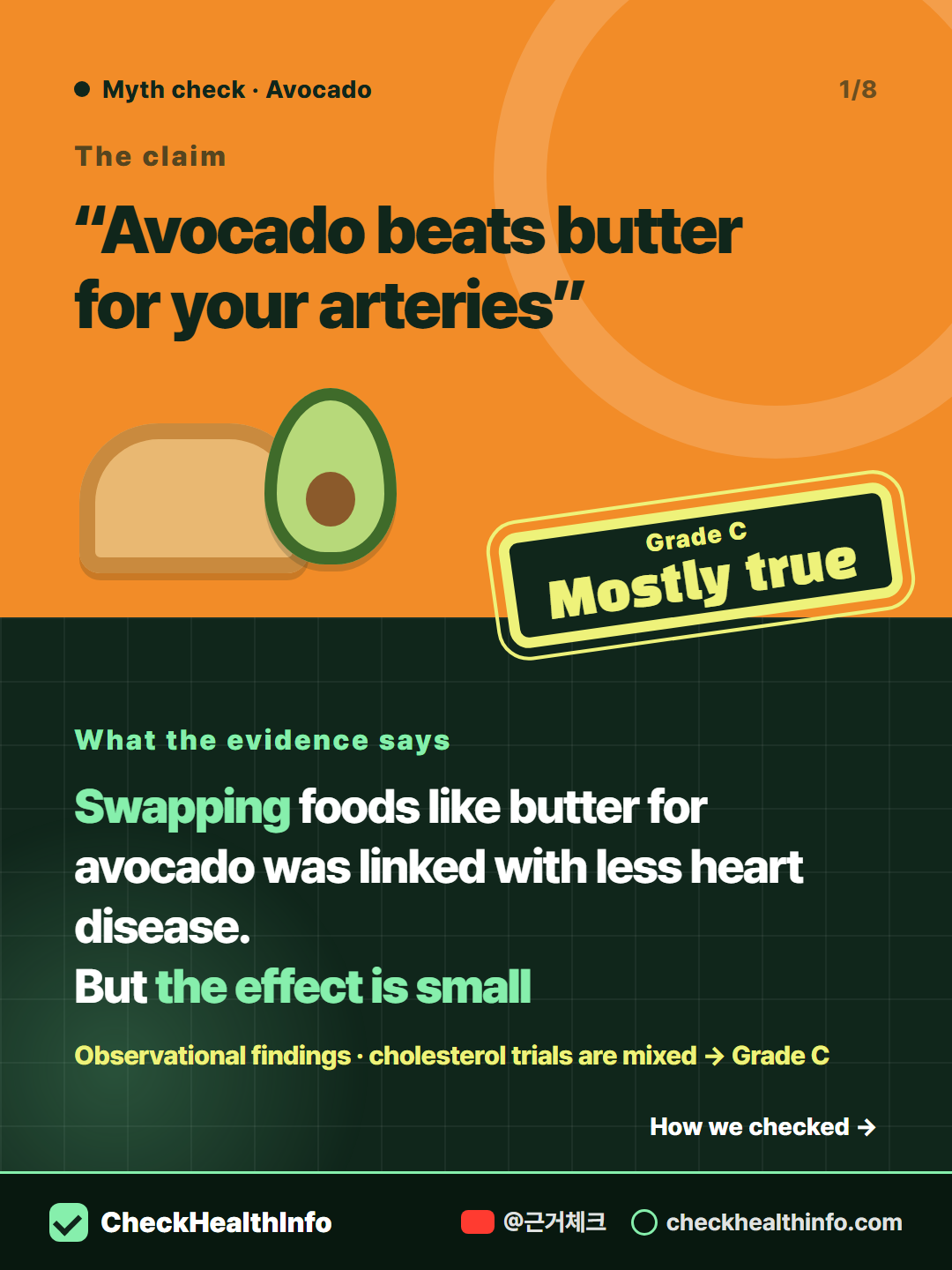
| Eating avocado instead of butter on bread is better for your heart and blood vessels | Mostly true · Evidence grade C |
Bottom line — In a statistical model, swapping saturated-fat foods such as butter for avocado was linked with less heart disease (observational evidence). Avocado may also lower cholesterol a little, but how much varies from study to study. So the claim that “avocado instead of butter on bread is better for your heart and blood vessels” is rated Mostly true, Evidence grade C. The effect is small, though, and in a large trial where people simply added avocado without swapping, risk factors such as an inflammation marker and visceral fat barely changed.
Saturated and unsaturated fat — Butter and fatty meat are high in saturated fat. Vegetable oils, nuts and avocado are high in unsaturated fat. Avocado is especially rich in monounsaturated fat.
LDL cholesterol — Often called “bad” cholesterol; higher levels are linked with heart and blood vessel disease.
Cohort study — An observational study that follows many people over time. It shows what tends to go together, but is less certain than a randomized trial about cause and effect.
Meta-analysis — An analysis that pools the results of several studies into one estimate.
Hazard ratio / relative risk — The ratio of how often a disease occurred in two groups. A value of 1 means no difference; below 1 means lower risk.
95% confidence interval — The range in which the true value is likely to lie.
Claim. “Eating avocado instead of butter on bread is better for your heart and blood vessels”
Mostly true · Evidence grade C
In plain terms Swapping foods like butter for avocado was linked with slightly less heart disease. But this comes from observational research, so we can’t be sure avocado was the reason, and the cholesterol trials are mixed. That is why the grade is C.
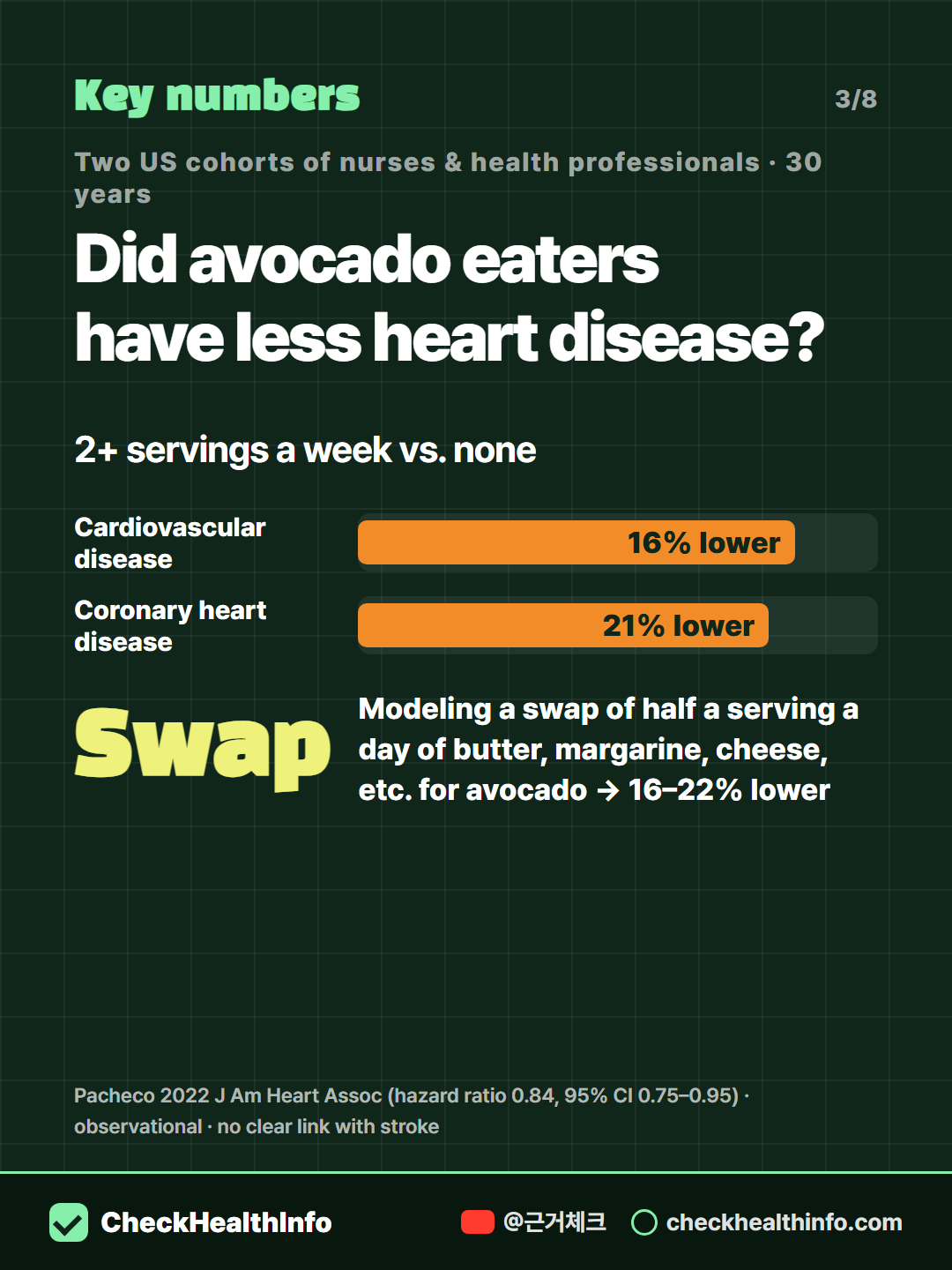
- In two cohorts of US nurses and health professionals (free of cancer, heart disease and stroke at the start) followed for 30 years, eating avocado at least twice a week, compared with not eating it, was linked with a 16% lower risk of cardiovascular disease (hazard ratio 0.84; 95% confidence interval 0.75–0.95) and a 21% lower risk of coronary heart disease (0.79; 0.68–0.91). There was no clear link with stroke. In a statistical model that swapped half a serving a day of margarine, butter, eggs, yogurt, cheese or processed meats for the same amount of avocado, cardiovascular risk was 16–22% lower. In plain terms, when the researchers modeled replacing some butter-type foods with avocado, heart disease came out slightly lower. This did not follow people who actually changed their diet. [1]
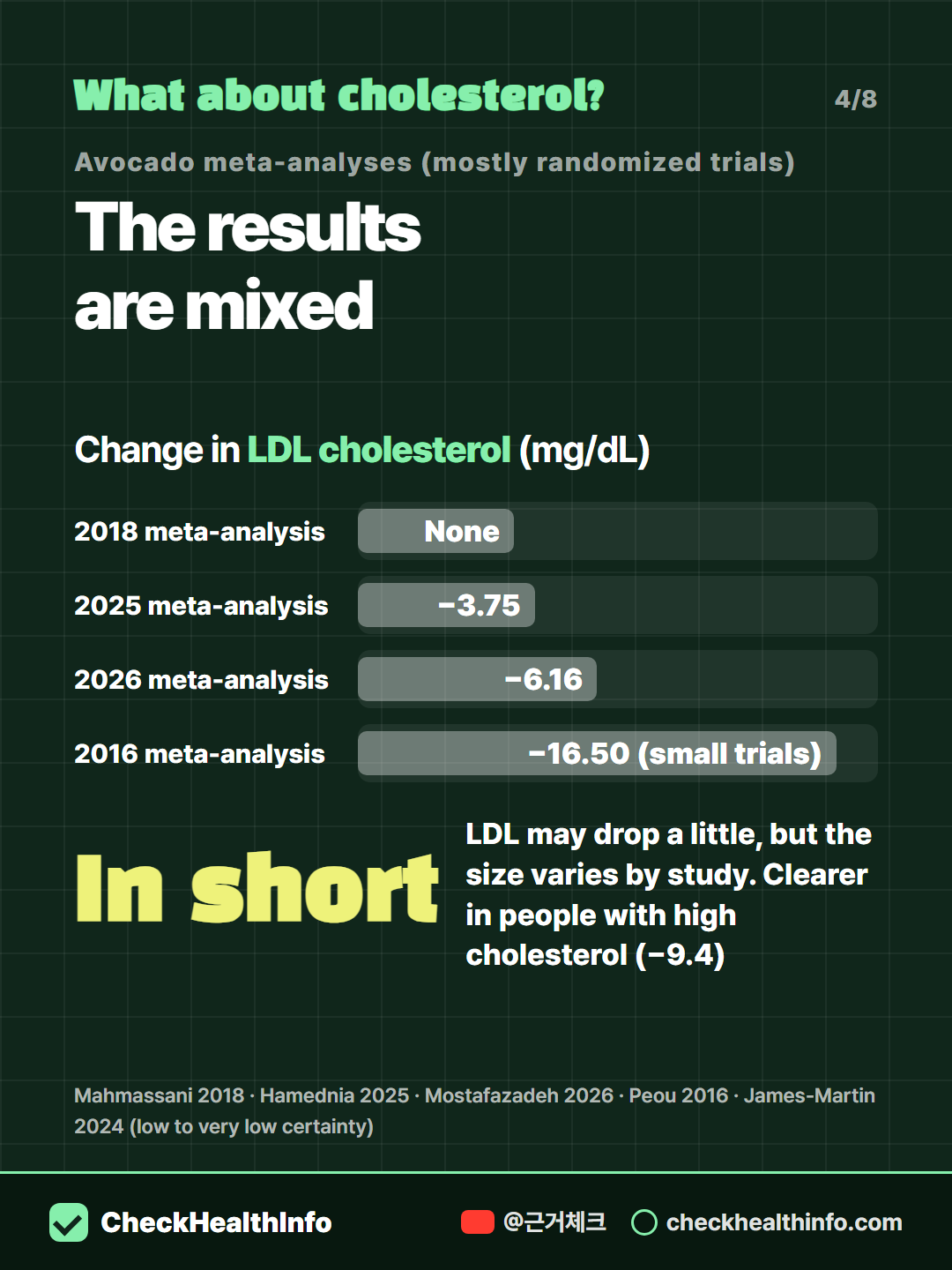
- For cholesterol, a meta-analysis of randomized trials found that LDL cholesterol was on average 6.16 mg/dL lower with avocado (95% confidence interval −9.87 to −2.44), and a dose-response analysis linked lower LDL with intakes above 250 g a day. [2] Another meta-analysis (9 randomized trials, 503 people) found no clear overall difference in LDL; LDL was 9.4 mg/dL lower only in people with high cholesterol (low to very low certainty). [3]
- Meta-analyses of avocado trials disagree. A 2018 meta-analysis (18 studies, 481 people) found no difference in LDL or total cholesterol [4]; a 2025 meta-analysis (10 randomized trials) found LDL 3.75 mg/dL lower but no difference in total cholesterol [5]; and a 2016 meta-analysis of small trials (10 trials, 229 people) found LDL 16.50 mg/dL lower and recommended replacing other fats with avocado rather than simply adding it. [6] In plain terms, avocado may lower cholesterol a little, but how much varies by study.
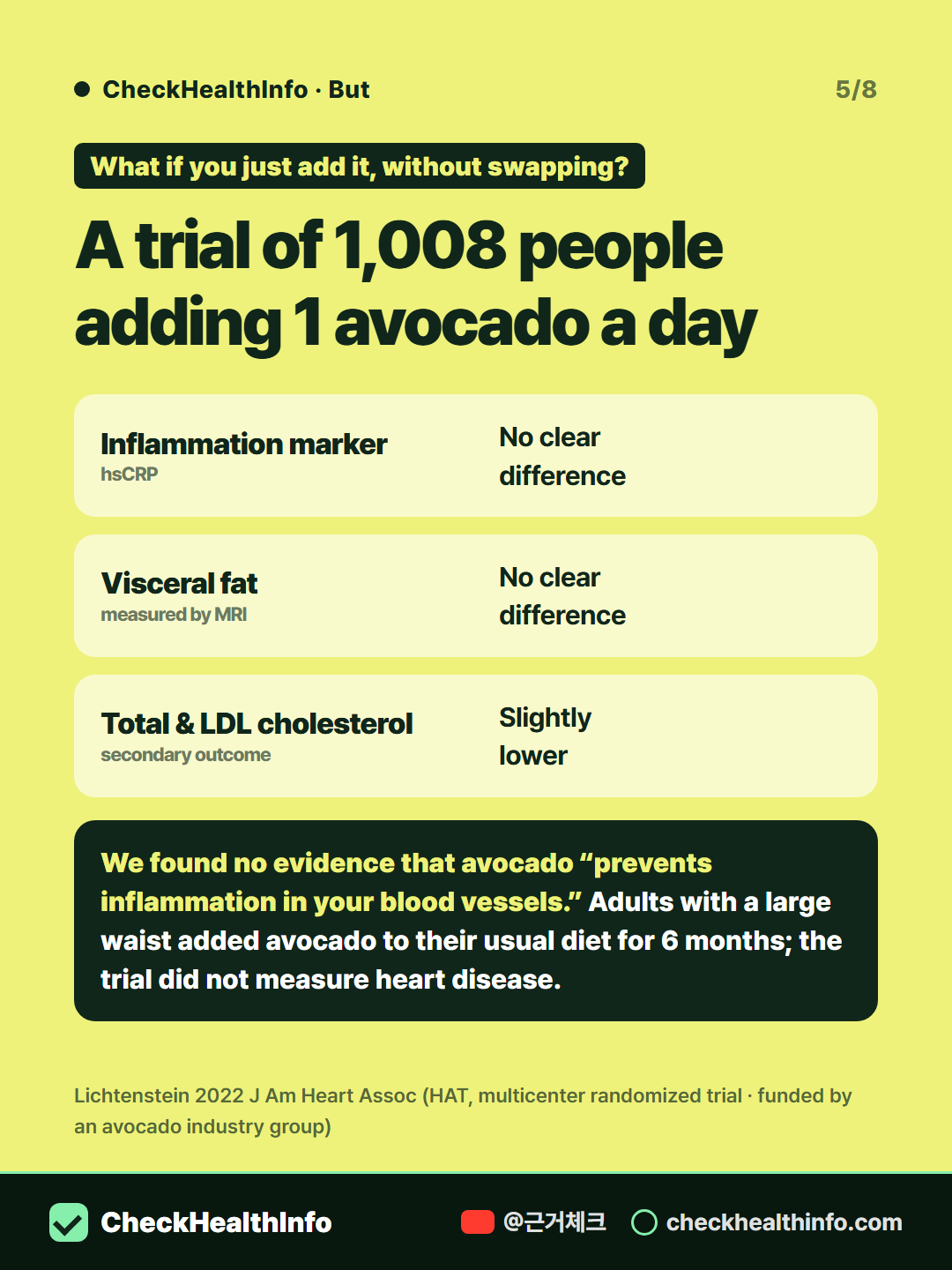
In a multicenter randomized trial in which people added avocado without swapping it for anything (1,008 adults with a large waist; 6 months; one large avocado a day on top of their usual diet), visceral fat, liver fat, an inflammation marker (hsCRP) and components of the metabolic syndrome did not clearly differ from the usual diet. Only total and LDL cholesterol were slightly lower (described by the researchers as “nominally significant”). Body weight did not differ either. The trial did not measure heart disease, and it was funded by an avocado industry group. [7] The inflammation marker (CRP) also showed no clear difference in the 2018 and 2025 meta-analyses. [4][5]
In plain terms, we found no evidence that avocado “prevents inflammation in your blood vessels”; it matters when it replaces other fatty foods.
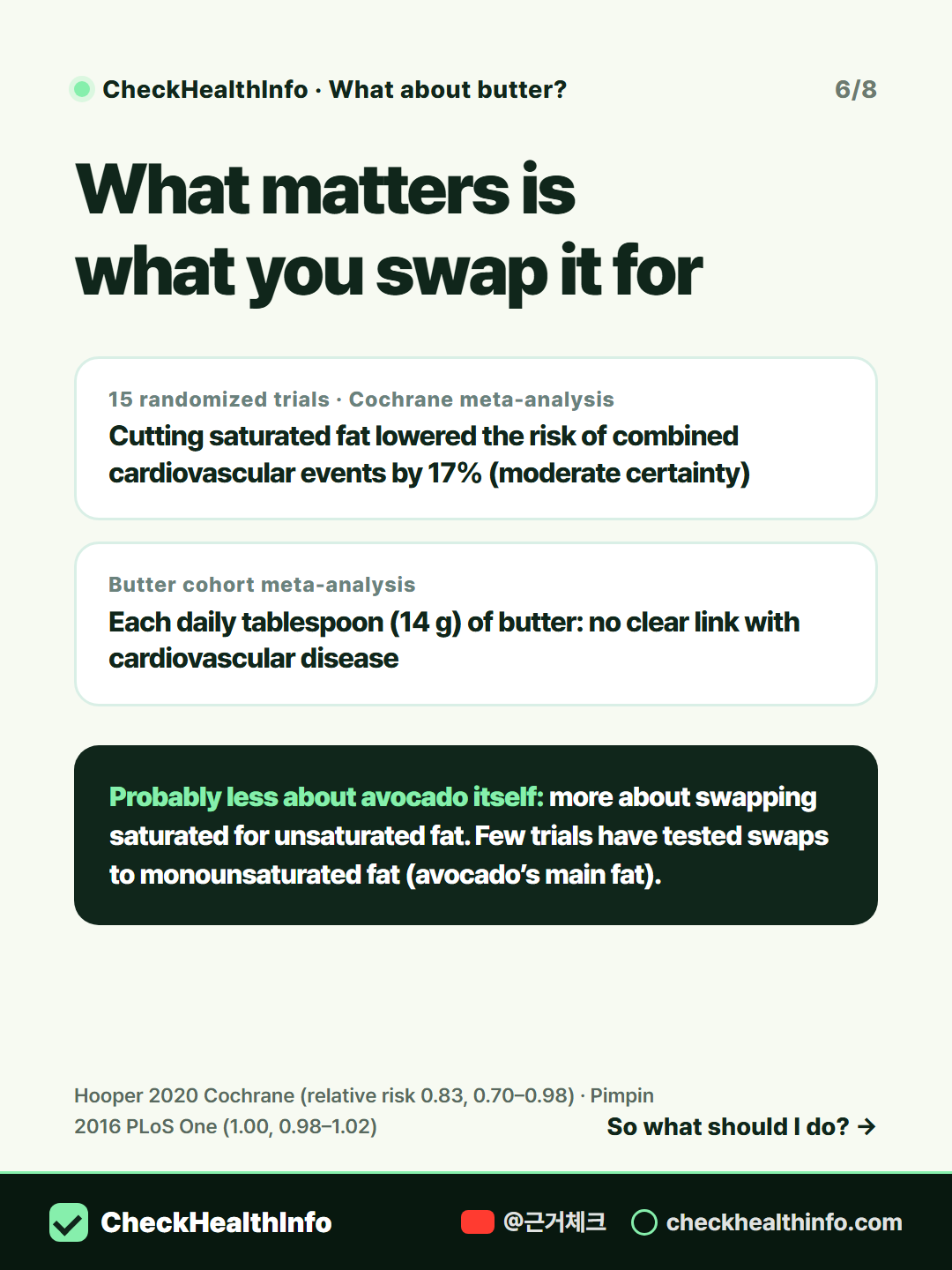
A Cochrane meta-analysis of 15 randomized trials (56,675 people, at least 24 months) found that cutting saturated fat lowered the risk of combined cardiovascular events by 17% (12 trials, 53,758 people; relative risk 0.83; 95% confidence interval 0.70–0.98; moderate certainty). However, the effect of replacing those calories with monounsaturated fat (the main fat in avocado) was unclear because there were very few data, and death from any cause did not clearly differ (0.96; 0.90–1.03). [8]
A meta-analysis of cohort studies on butter itself (15 country-specific cohorts, no randomized trials) analyzed cardiovascular disease in 4 cohorts and found no clear link per tablespoon (14 g) a day (relative risk 1.00; 95% confidence interval 0.98–1.02). There was a weak link with death from any cause (1.01; 1.00–1.03). [9] This does not mean a tablespoon of butter is directly harmful; what you replace it with matters.
According to the full text of [1], the result for swapping butter alone was no longer clear after correcting for multiple comparisons, and avocado was not better than other plant fats such as olive oil or nuts. The benefit looks less like something special about avocado and more like swapping animal and saturated-fat foods for unsaturated-fat foods, although few trials have tested swapping to monounsaturated fat.
What you can do
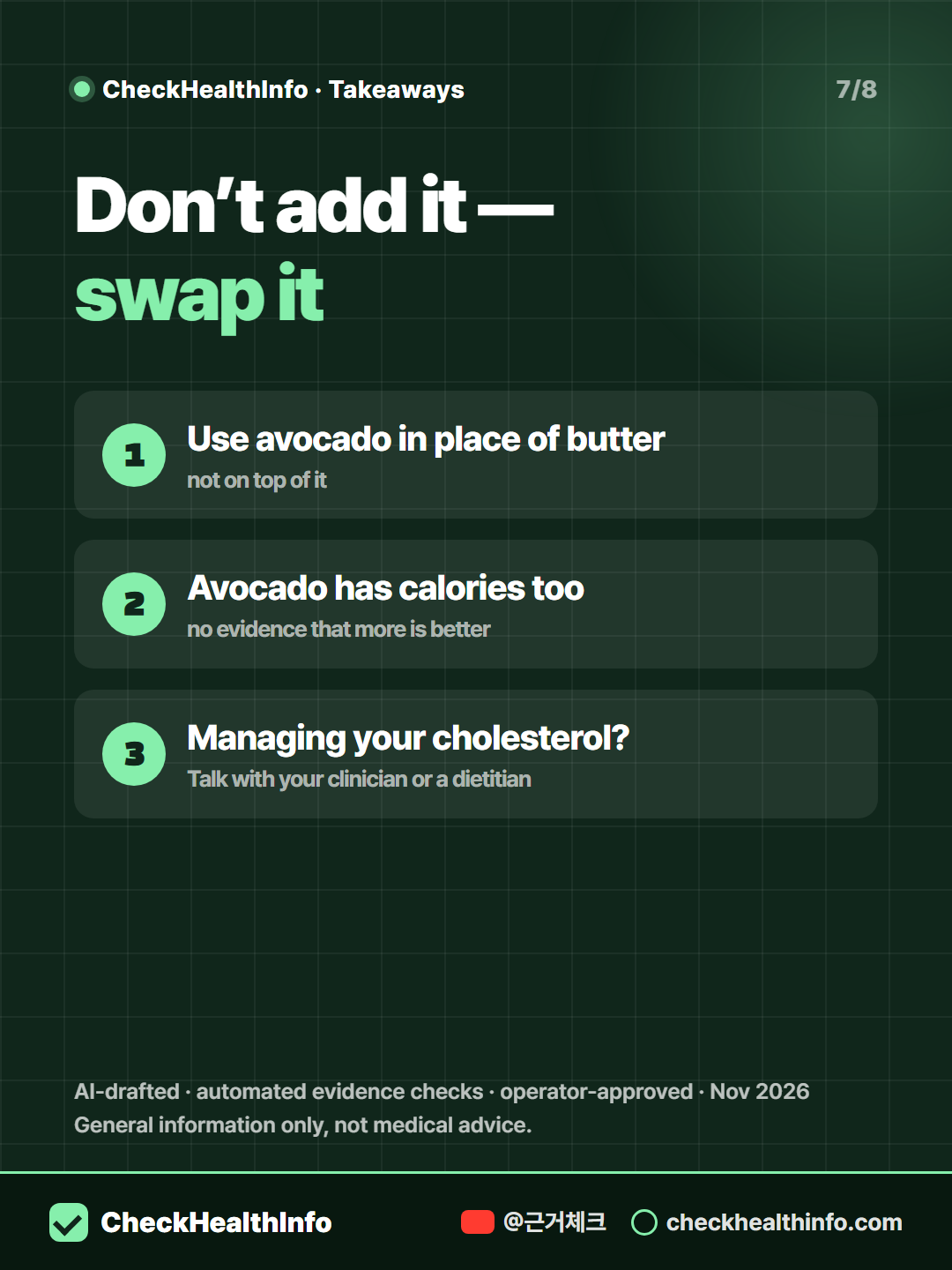
- Use avocado in place of butter — spread it instead of butter, not on top of it.
- Avocado has calories too — there is no evidence that eating more is better.
- Managing cholesterol or heart disease through diet? — talk with your clinician or a dietitian.
Scope: This rating covers swapping foods such as butter for avocado and its relationship with cardiovascular disease and cholesterol. The claim that avocado “prevents inflammation in your blood vessels” is not rated separately; we report only the inflammation-marker results.
Limitations of this rating
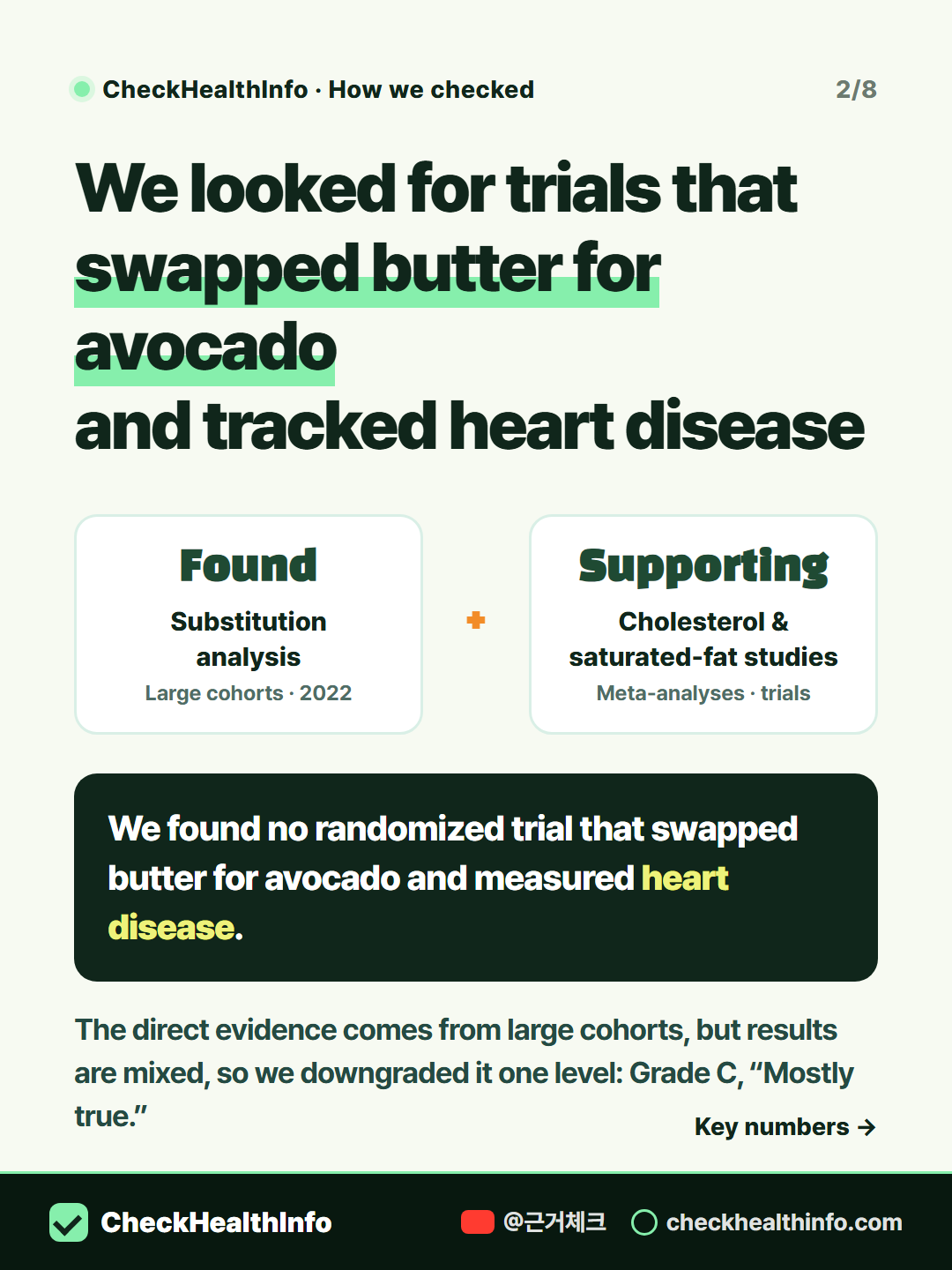
- We found no randomized trial that swapped butter for avocado and measured heart disease. The direct evidence comes from large cohorts (B), but because the butter-only result was not clear after correction and the cholesterol trials disagree, we downgraded it one level to C.
- The cohorts were US health professionals who tend to be health-conscious, and diet was measured by questionnaire. Other differences such as lifestyle cannot be fully ruled out, and the substitution analysis is a statistical estimate, not a trial in which people actually changed their diet.
- The cholesterol meta-analyses did not look separately at whether the comparison diet was butter, and they looked only at risk markers such as cholesterol, not at heart disease itself.
- We did not find studies done specifically in Korean people.
- The grade follows section 1 of our rating method. We check PubMed monthly for new research, and any change in a rating is logged in our corrections log.
Card news
Video (in Korean)
References
- Pacheco LS, Li Y, Rimm EB, et al. Avocado Consumption and Risk of Cardiovascular Disease in US Adults. J Am Heart Assoc 2022;11(7):e024014. PMID 35352568. PubMed abstract · Full article · Free full text
- Mostafazadeh P, Etesamnia S, Nasiraei-Moghadam M, et al. Exploring the effect of avocado on lipid profile modulation: a systematic review and dose-response and meta-analysis of clinical trials. Crit Rev Food Sci Nutr 2026;66(4):780-790. PMID 40749705. PubMed abstract · Full article
- James-Martin G, Brooker PG, Hendrie GA, et al. Avocado Consumption and Cardiometabolic Health: A Systematic Review and Meta-Analysis. J Acad Nutr Diet 2024;124(2):233-248.e4. PMID 36565850. PubMed abstract · Full article
- Mahmassani HA, Avendano EE, Raman G, et al. Avocado consumption and risk factors for heart disease: a systematic review and meta-analysis. Am J Clin Nutr 2018;107(4):523-536. PMID 29635493. PubMed abstract · Full article
- Hamednia S, Shouhani Z, Tavakol S, et al. Effects of Avocado Products on Cardiovascular Risk Factors in Adults: A GRADE-Assessed Systematic Review and Meta-Analysis. Food Sci Nutr 2025;13(7):e70547. PMID 40612140. PubMed abstract · Full article
- Peou S, Milliard-Hasting B, Shah SA. Impact of avocado-enriched diets on plasma lipoproteins: A meta-analysis. J Clin Lipidol 2016;10(1):161-71. PMID 26892133. PubMed abstract · Full article
- Lichtenstein AH, Kris-Etherton PM, Petersen KS, et al. Effect of Incorporating 1 Avocado Per Day Versus Habitual Diet on Visceral Adiposity: A Randomized Trial. J Am Heart Assoc 2022;11(14):e025657. PMID 35861827. PubMed abstract · Full article · Free full text
- Hooper L, Martin N, Jimoh OF, et al. Reduction in saturated fat intake for cardiovascular disease. Cochrane Database Syst Rev 2020;8(8):CD011737. PMID 32827219. PubMed abstract · Full article · Free full text
- Pimpin L, Wu JH, Haskelberg H, et al. Is Butter Back? A Systematic Review and Meta-Analysis of Butter Consumption and Risk of Cardiovascular Disease, Diabetes, and Total Mortality. PLoS One 2016;11(6):e0158118. PMID 27355649. PubMed abstract · Full article · Free full text
General information only, not medical advice. It does not replace your own clinician’s diagnosis or treatment. If you are managing cholesterol or heart disease through diet, talk with your clinician or a dietitian.