Eating blueberries every day: will it help your memory?
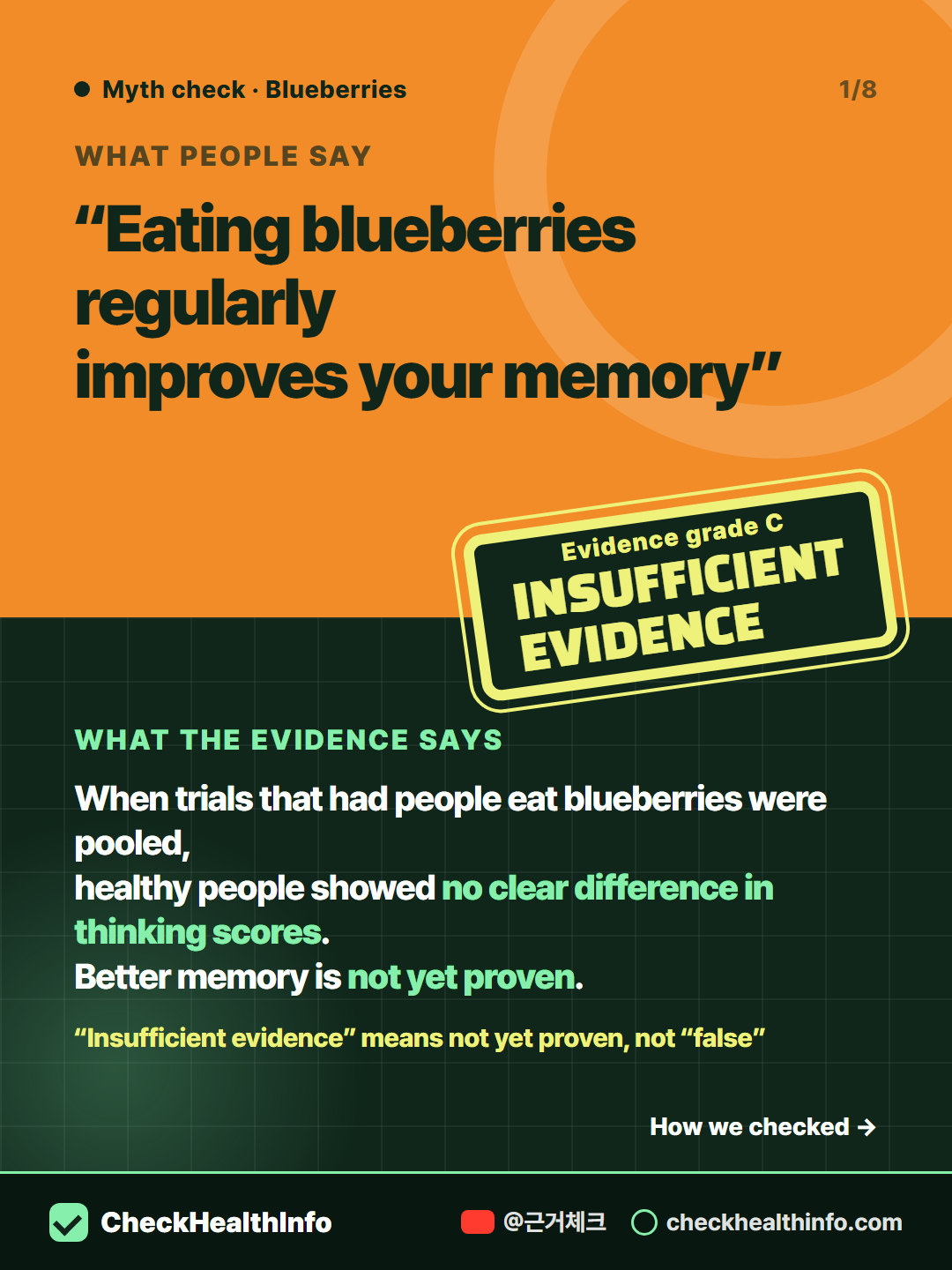
If you eat blueberries regularly, will your memory (cognitive function) improve?

We checked this verdict against 9 sources, such as published studies and clinical guidelines. · How checked: AI-drafted · automated evidence checks
Verdicts at a glance
| Claim | Verdict |
|---|---|
| Eating blueberries regularly improves your memory (cognitive function) | Insufficient evidence · Evidence grade C |
Bottom line — When randomized trials that had people eat blueberries were pooled, healthy people showed no clear difference in thinking scores. So the claim that “eating blueberries regularly improves your memory” is rated “Insufficient evidence.” In fact, it has not been shown that blueberries improve memory. There are only a few small trials in which some memory scores improved slightly in older adults whose memory had started to decline. This does not mean the claim is false; it means it has not yet been proven. Enjoy blueberries as fruit, and if you are worried about your memory, get it checked.
Randomized trial — A study that assigns people by chance to eat blueberries or a look-alike placebo and then compares the groups. It is the best way to show cause and effect.
Meta-analysis — An analysis that pools the results of several studies into a single estimate.
Standardized mean difference — A way to compare two groups when studies used different tests, by putting the scores on the same scale. A value of 0 means no difference.
95% confidence interval — The range in which the true value is likely to fall. If the range includes 0, we cannot say for sure that there is a difference.
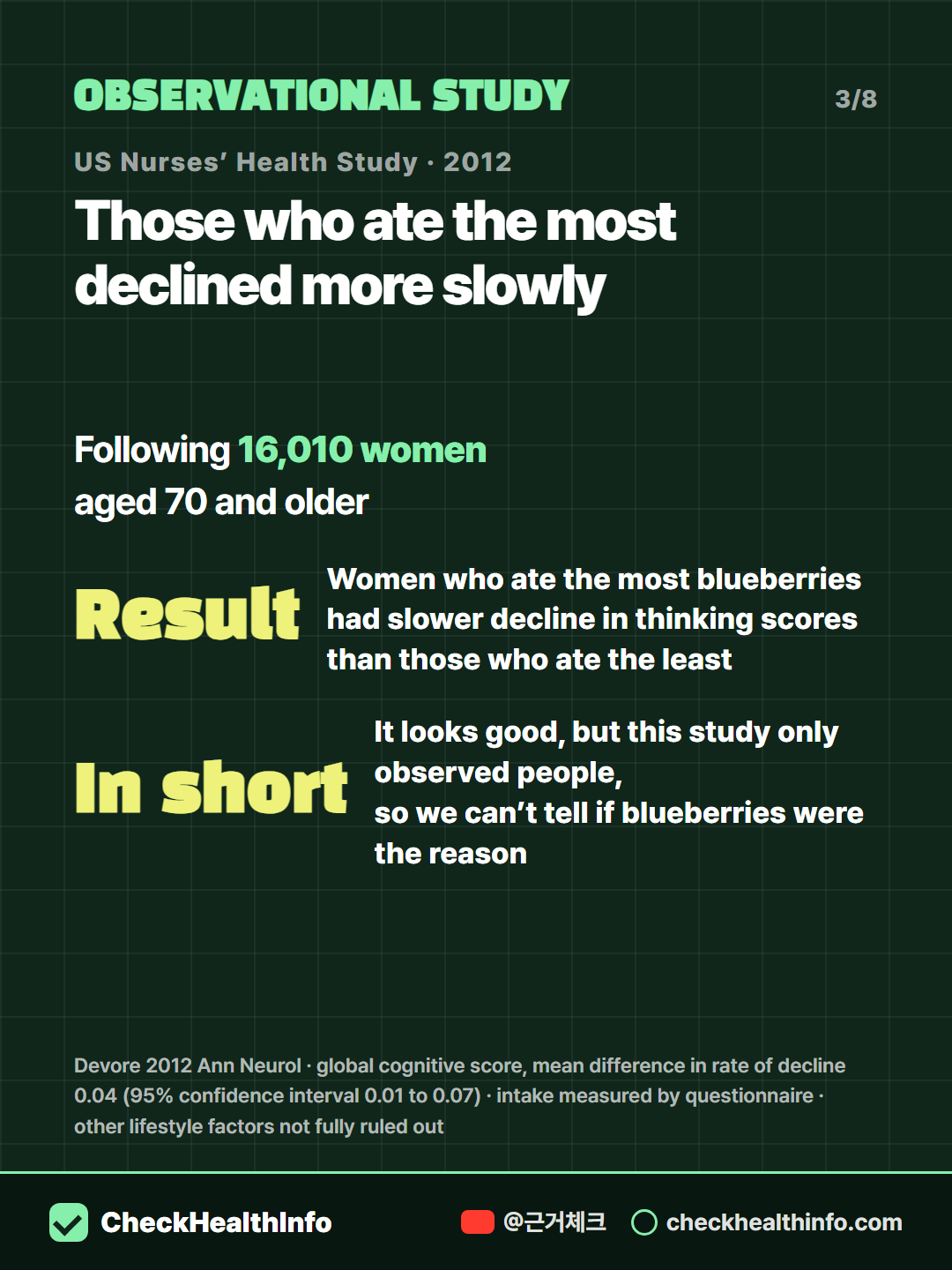
Observational (cohort) study — A study that only follows and observes people. It shows that two things go together, but it is less certain than a randomized trial about cause and effect.
Claim. “Eating blueberries regularly improves your memory (cognitive function)”
Insufficient evidence · Evidence grade C
In plain words In a study that only observed people, those who ate the most blueberries looked better off. But when trials that actually had people eat blueberries were pooled, no clear benefit was found in healthy people. In older adults whose memory had started to decline, only some memory scores improved a little, and the studies were small.
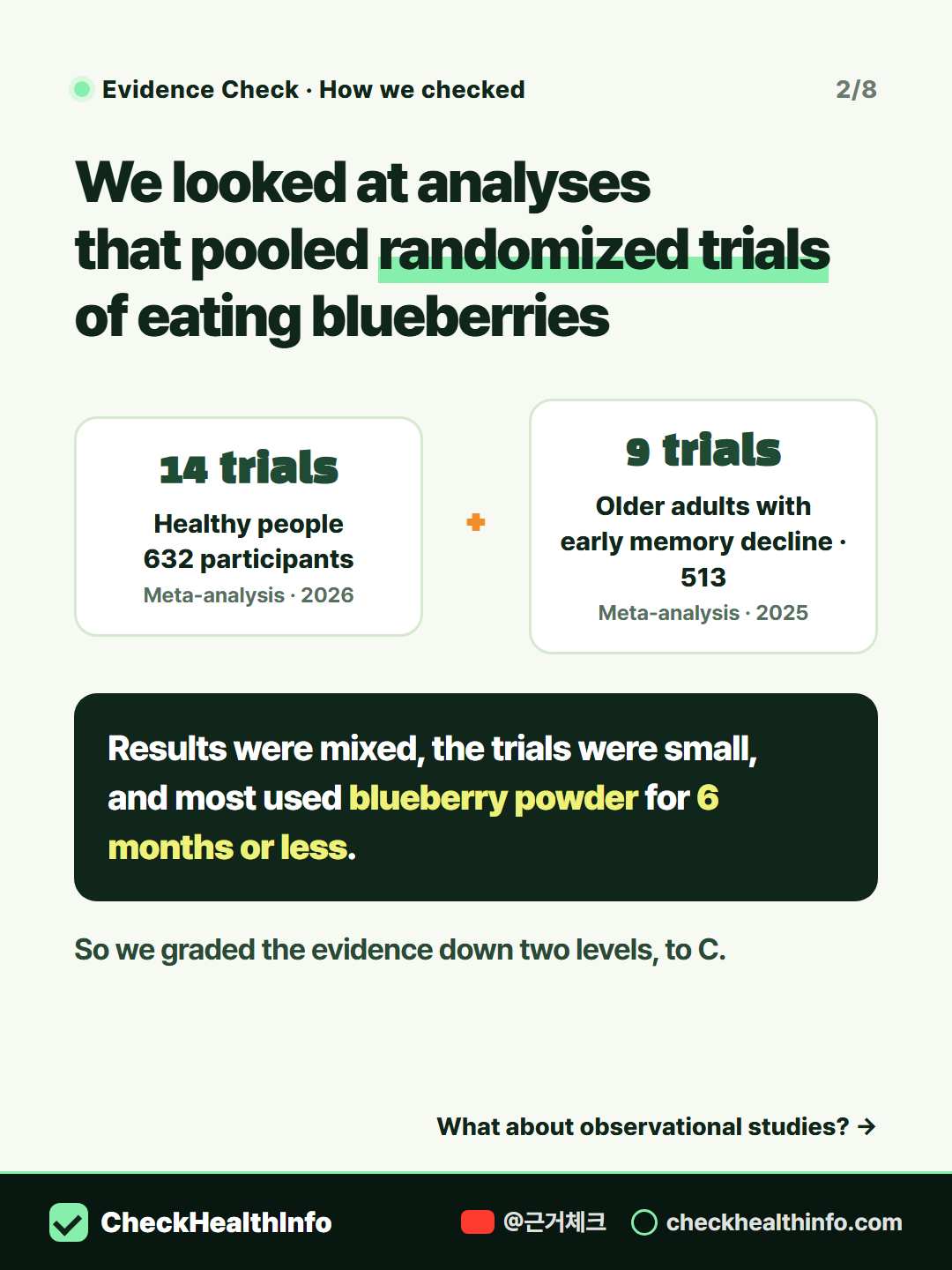
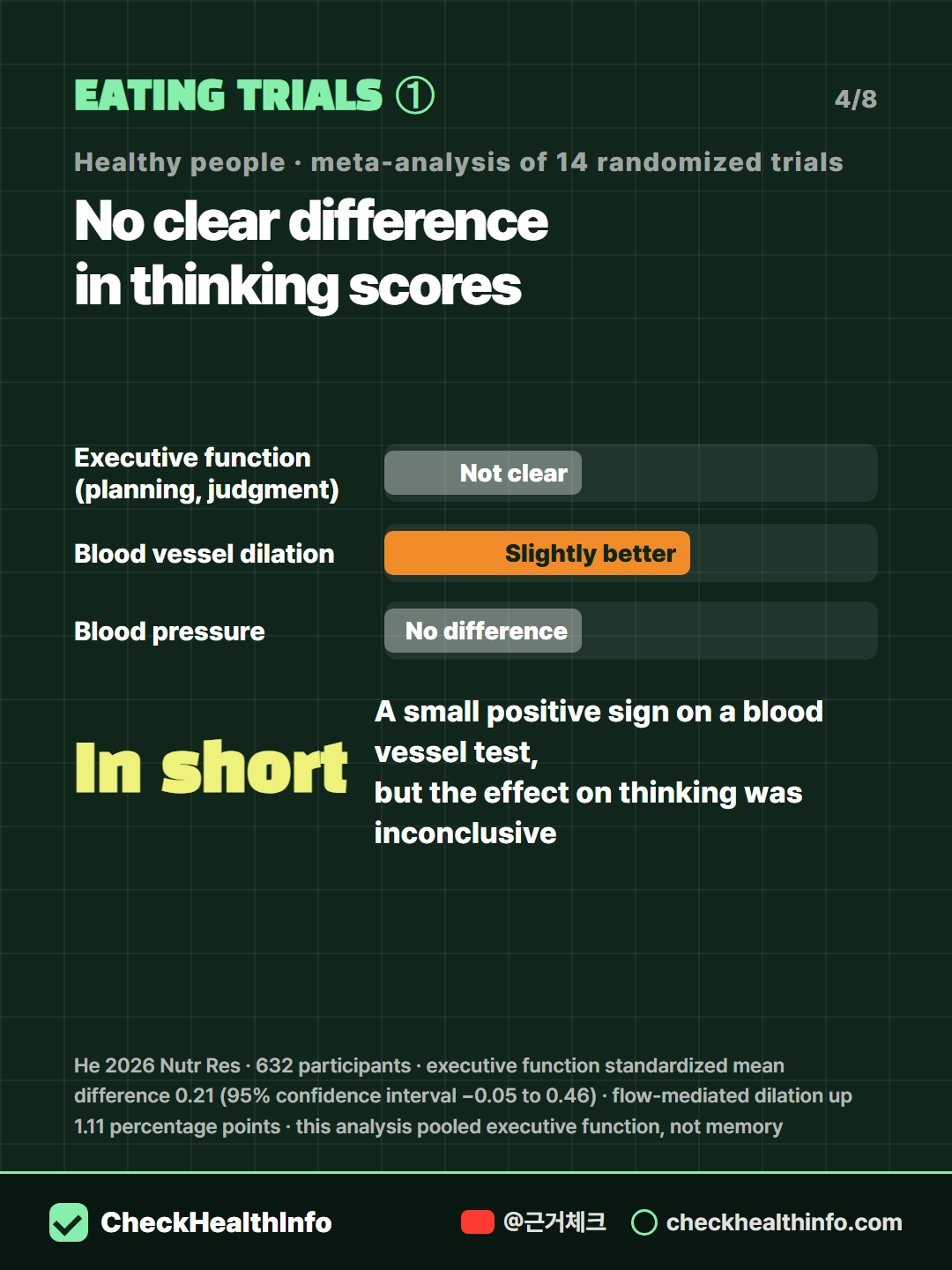
- Healthy people — A meta-analysis of 14 randomized trials (632 participants) found that blueberries raised flow-mediated dilation (FMD, a measure of how well blood vessels widen) by an average of 1.11 percentage points (95% confidence interval 0.50 to 1.72), but did not change blood pressure. There was no statistically clear effect on executive function (thinking skills such as planning and judgment) (standardized mean difference 0.21, 95% confidence interval −0.05 to 0.46). The authors called the effect on thinking inconclusive. The thinking outcome this analysis pooled was executive function, not memory. In plain words, there was a small positive sign on a blood vessel test, but better thinking scores in healthy people were not shown. [1]
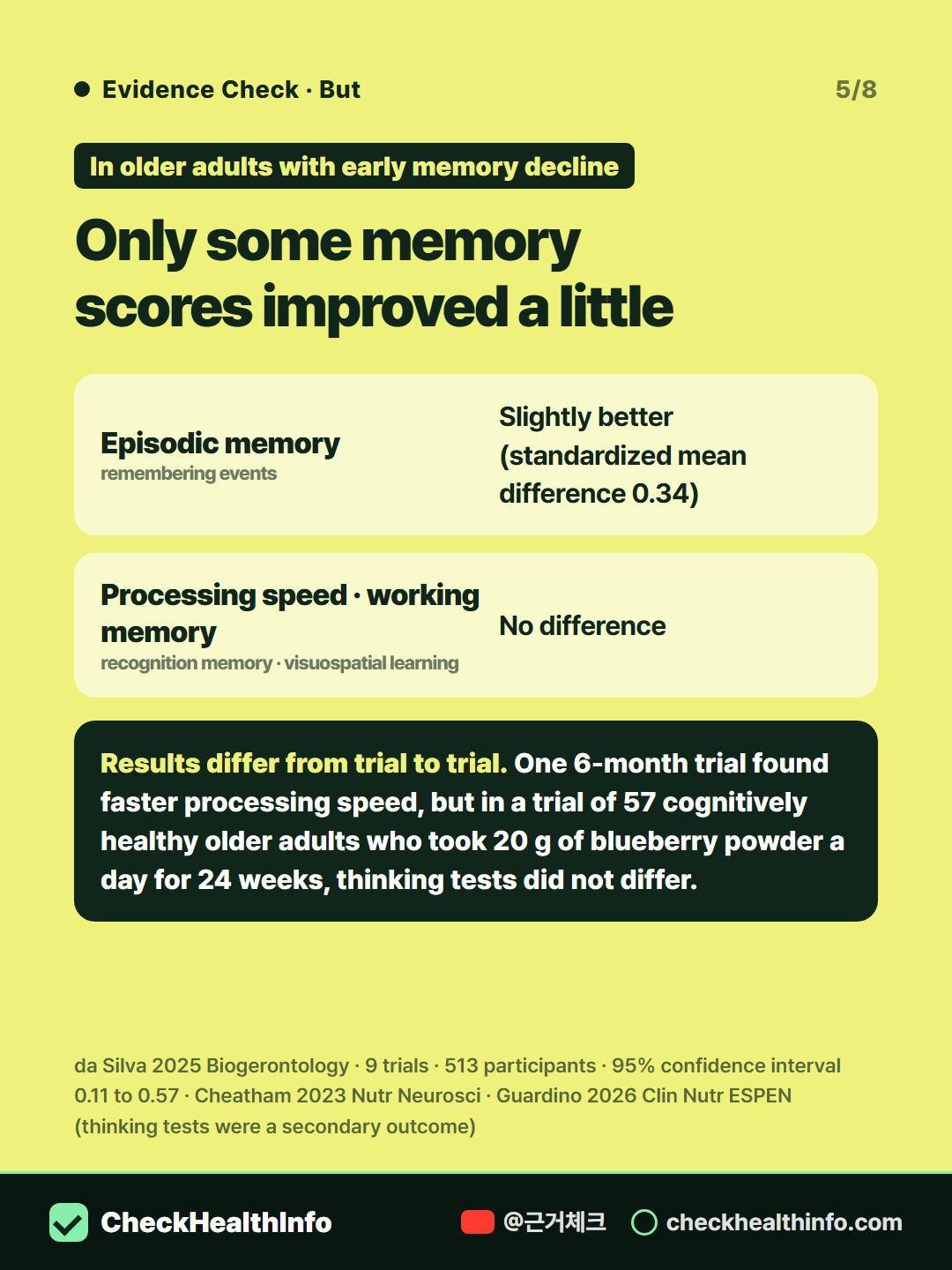
- Older adults whose memory had started to decline — A meta-analysis of 9 randomized trials (513 participants) in older adults with mild cognitive impairment or subjective cognitive decline found a small improvement in episodic memory (remembering events you experienced) (standardized mean difference 0.34, 95% confidence interval 0.11 to 0.57). In mild cognitive impairment, verbal memory also improved slightly (0.30, 95% confidence interval 0.01 to 0.60), but processing speed, recognition memory, visuospatial learning and working memory did not differ. In plain words, only some of the memory tests improved a little. [2]
- The most recent trial — In a randomized, double-blind trial that gave 57 cognitively healthy older adults 20 g of freeze-dried blueberry powder a day for 24 weeks, thinking tests, which were a secondary outcome, did not differ from placebo (the main outcome, blood markers of brain damage, did not differ either; the trial was not designed to detect differences in thinking). [3]
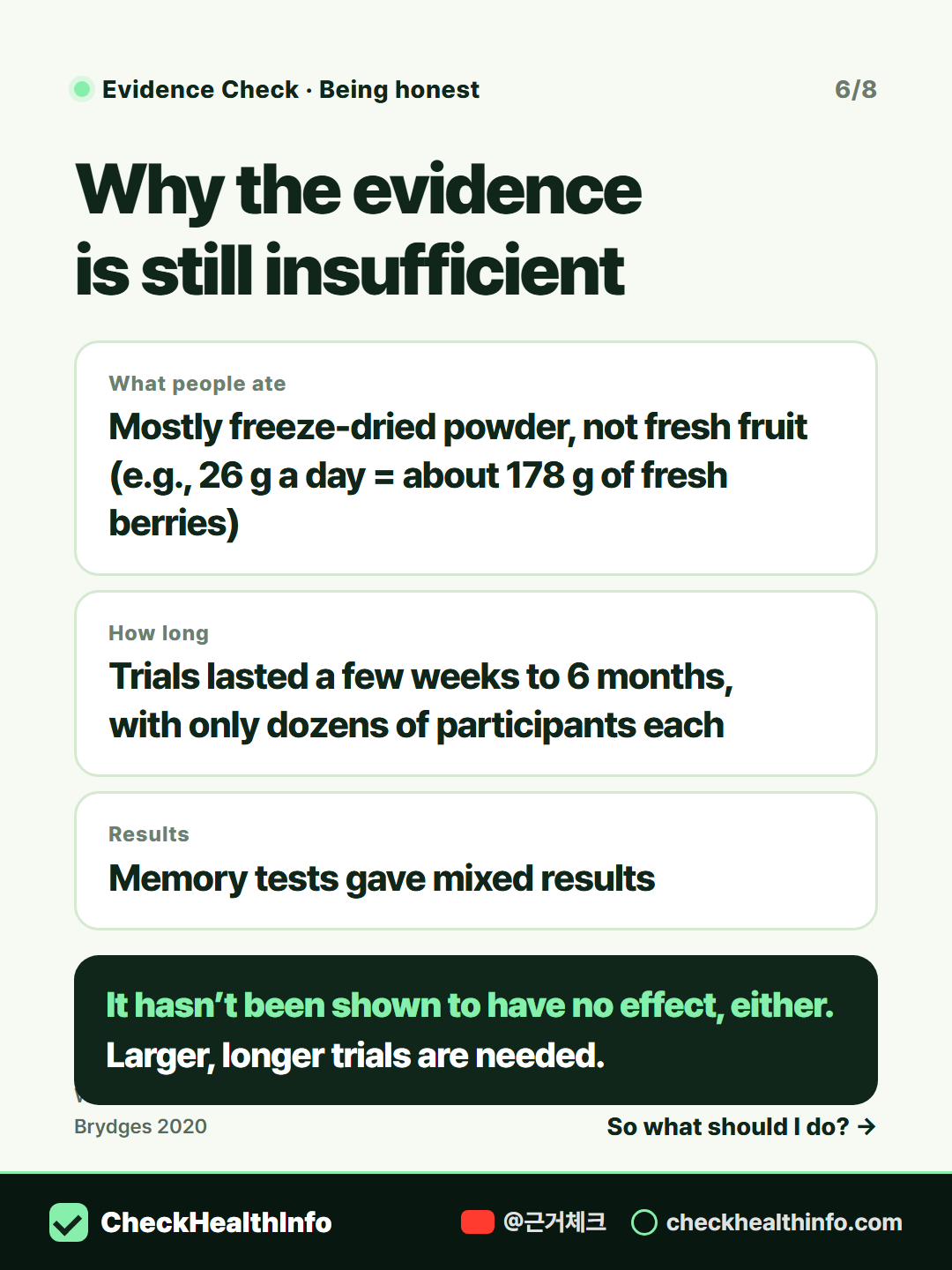
The highest level of evidence is meta-analyses of randomized trials, so we started at A. But (3) the results are mixed and uncertain: in healthy people the confidence interval for the effect included 0, in older adults with cognitive decline only some tests improved, and each trial had only dozens of participants. So we graded down one level. The evidence is also (1) indirect: most trials used freeze-dried powder or extract rather than fresh blueberries and lasted 6 months or less, so they do not directly show what happens when people eat blueberries “regularly” over a long time, and the thinking outcome in the healthy-people meta-analysis was executive function, not memory. So we graded down one more level, to C (section 1 of our rating method). The claim has neither been shown to have no effect nor been consistently confirmed, so it is rated “Insufficient evidence” (section 2).
Individual trials — In a 12-week trial of 61 healthy adults aged 65 to 80 who took 26 g of freeze-dried wild blueberry powder a day (equivalent to about 178 g of fresh fruit), immediate recall (remembering words just heard) and accuracy on a task-switching test were better than with placebo. [4] In a 6-month trial in older adults with cognitive decline (44 on blueberries, 42 on placebo), processing speed improved. [5] But when trials in older adults with cognitive decline were pooled, processing speed did not differ, so results vary from trial to trial.
An observational study — In a cohort study that followed 16,010 US women nurses aged 70 and older, those who ate the most blueberries had a slower decline in their overall thinking score than those who ate the least (mean difference 0.04, 95% confidence interval 0.01 to 0.07). The researchers described the difference for berries such as blueberries and strawberries as equivalent to delaying cognitive aging by up to 2.5 years. But because intake was measured by questionnaire in an observational study, the influence of other lifestyle habits of people who eat a lot of berries could not be fully ruled out. [6]
In plain words, there are some encouraging signs, but they are not yet consistent enough to say that eating blueberries improves memory.
How to enjoy blueberries
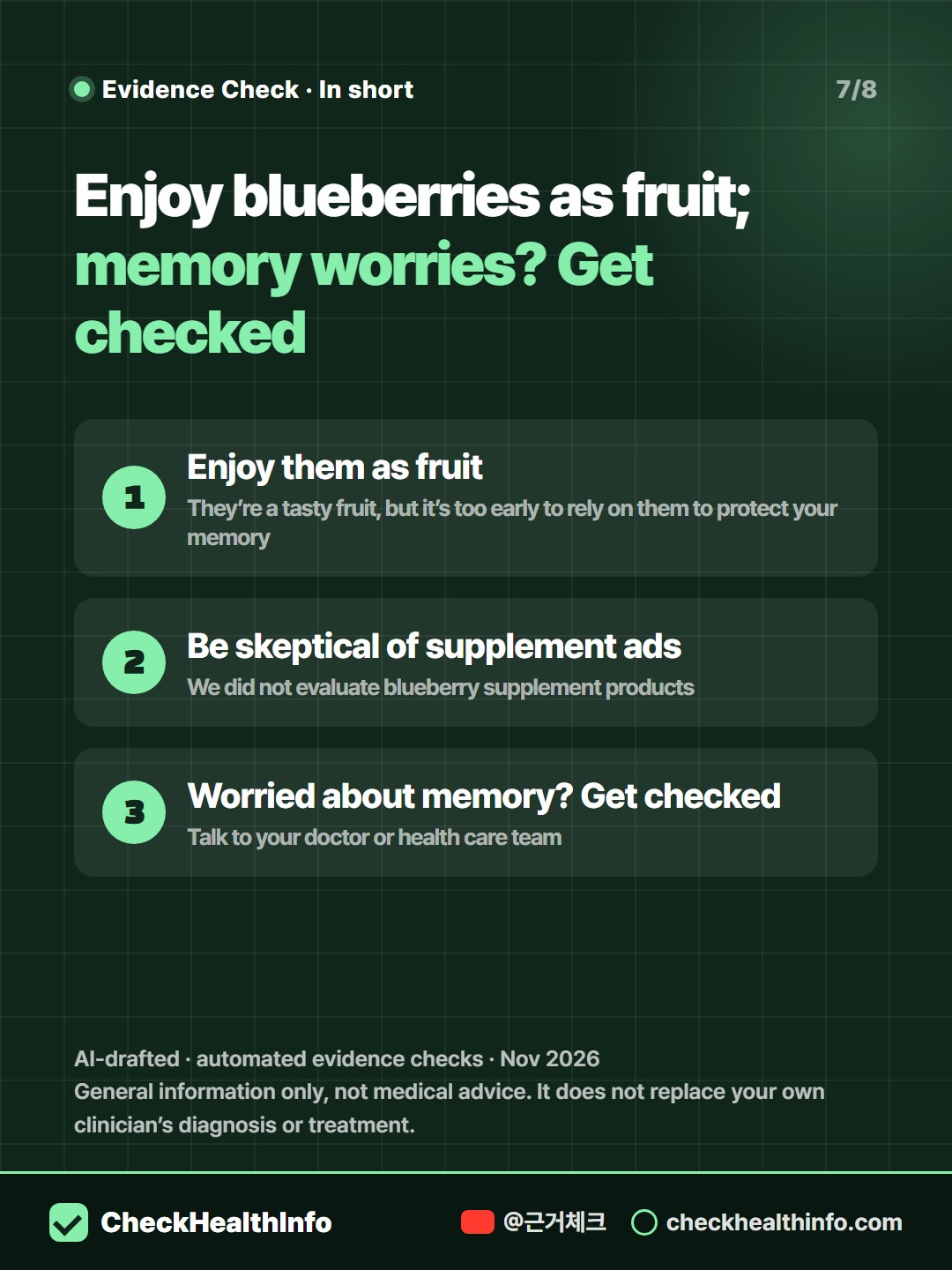
- Enjoy them as fruit — Blueberries are a good fruit to enjoy, but it is too early to rely on them alone to protect your memory.
- Be skeptical of supplement ads — Most studies used freeze-dried powder, and this verdict does not evaluate blueberry supplement products.
- Worried about your memory? Get checked — Rather than relying on blueberries, talk to your doctor or health care team about getting your memory checked.
Scope: This verdict covers only whether eating blueberries (fresh fruit, freeze-dried powder or extract) regularly improves memory or cognitive function. It does not cover blueberry supplement products or the treatment of dementia.
Limitations of this verdict
- The trials were small (dozens of people each) and used different tests, doses and durations. A systematic review of randomized trials also said large differences in study design and dose made comparisons difficult [7], and another small meta-analysis found no difference in mood or attention tests, with only one working memory test showing a difference [8]. A published letter criticizing that systematic review argued that there is no meta-analytic evidence that blueberries improve thinking or mood [9].
- The 12-week trial (Wood 2023) has a 2025 correction notice. We checked the correction: the baseline characteristics table and some analyses were corrected, but the abstract figures cited here were not affected. The paper has not been retracted.
- Most studies were in older adults in Western countries; we did not find studies in Korean adults.
- The grade follows section 1 of our rating method. We check PubMed every month for new studies, and if the verdict changes, we record it in our corrections log.
Card news
Video (in Korean)
Easy version (in Korean)
Full evidence (in Korean)
References
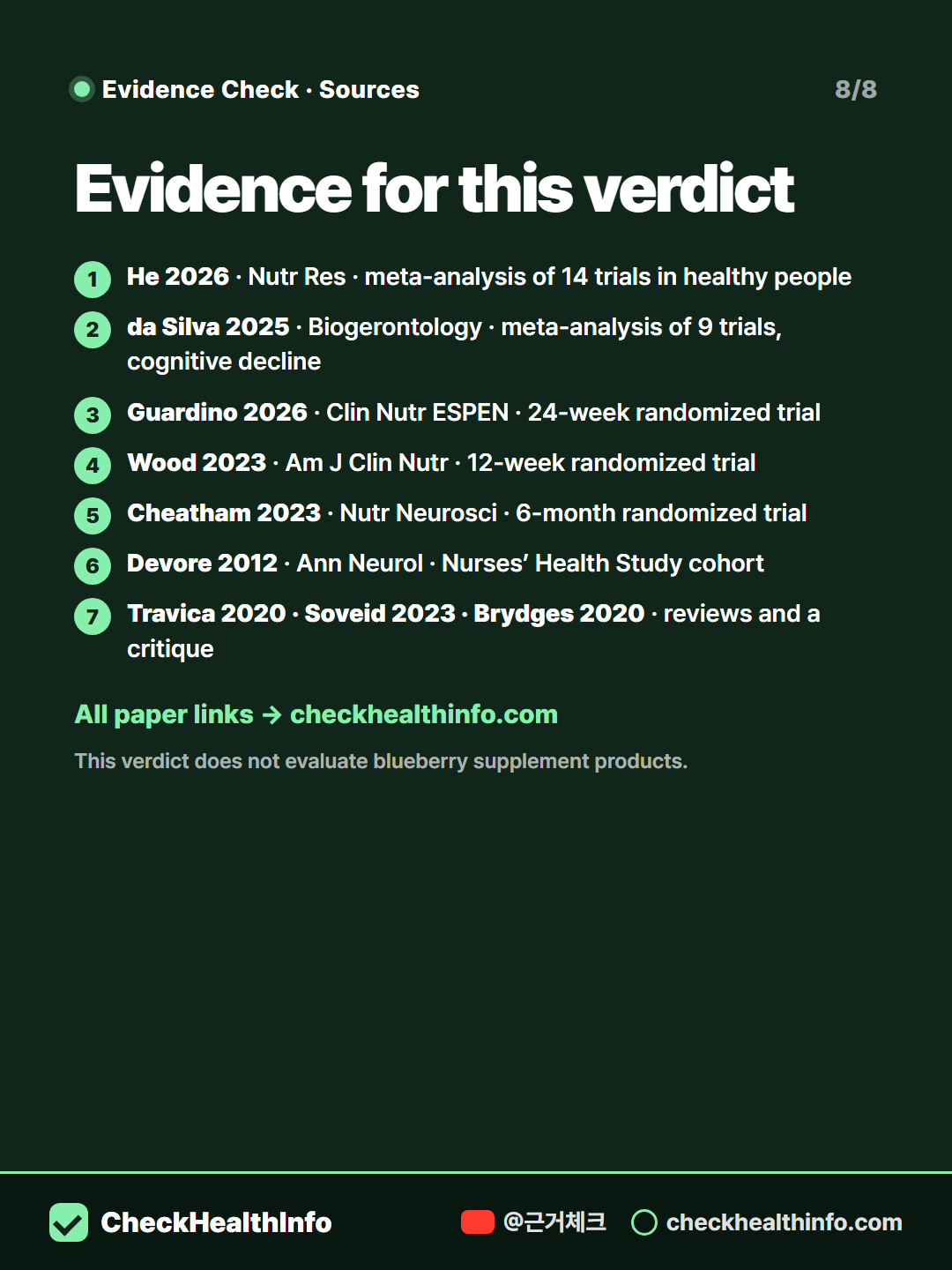
- He Y, Yang J, Zhang S, et al. Blueberry consumption enhances vascular function but not cognitive abilities in healthy individuals: a systematic review and meta-analysis. Nutr Res 2026;149:162-177. PMID 41974068. PubMed abstract · Full article
- da Silva ABN, de Oliveira GM, Gallo Ruelas M, et al. Blueberries for brainpower: A systematic review and meta-analysis with Bayesian post hoc analysis of RCTS exploring cognitive function in the elderly with prior cognitive decline. Biogerontology 2025;26(5):171. PMID 40856863. PubMed abstract · Full article
- Guardino ET, Gabriel O, Mukamal KJ, et al. Effects of a 24-week intervention with freeze-dried blueberries on brain health in older adults: A randomized double-blind, placebo-controlled trial. Clin Nutr ESPEN 2026;74:103377. PMID 42251891. PubMed abstract · Full article
- Wood E, Hein S, Mesnage R, et al. Wild blueberry (poly)phenols can improve vascular function and cognitive performance in healthy older individuals: a double-blind randomized controlled trial. Am J Clin Nutr 2023;117(6):1306-1319. PMID 36972800. PubMed abstract · Full article
- Cheatham CL, Canipe LG, Millsap G, et al. Six-month intervention with wild blueberries improved speed of processing in mild cognitive decline: a double-blind, placebo-controlled, randomized clinical trial. Nutr Neurosci 2023;26(10):1019-1033. PMID 36066009. PubMed abstract · Full article
- Devore EE, Kang JH, Breteler MM, et al. Dietary intakes of berries and flavonoids in relation to cognitive decline. Ann Neurol 2012;72(1):135-43. PMID 22535616. PubMed abstract · Full article
- Travica N, D'Cunha NM, Naumovski N, et al. The effect of blueberry interventions on cognitive performance and mood: A systematic review of randomized controlled trials. Brain Behav Immun 2020;85:96-105. PMID 30999017. PubMed abstract · Full article
- Soveid N, Barkhidarian B, Moradi S, et al. The Potential Effect of Blueberry on Cognitive Health and Mood State based on Human Intervention Studies: Systematic Review and Mini Meta-Analysis. CNS Neurol Disord Drug Targets 2023;22(7):1090-1101. PMID 35676847. PubMed abstract · Full article
- Brydges CR, Gaeta L. There is no meta-analytic evidence of blueberries improving cognitive performance or mood. Brain Behav Immun 2020;85:192. PMID 31610217. PubMed abstract · Full article
General information only, not medical advice. It does not replace your own clinician’s diagnosis or treatment. If you are worried about your memory, talk to your doctor or health care team.