Is walking alone enough to keep your bones strong?
Can walking alone protect bone density? Do resistance (strength) training and impact exercise raise bone density more?

We checked this verdict against 20 sources, such as published studies and clinical guidelines. · How checked: AI-drafted · automated evidence checks
Verdicts at a glance
| Claim | Verdict |
|---|---|
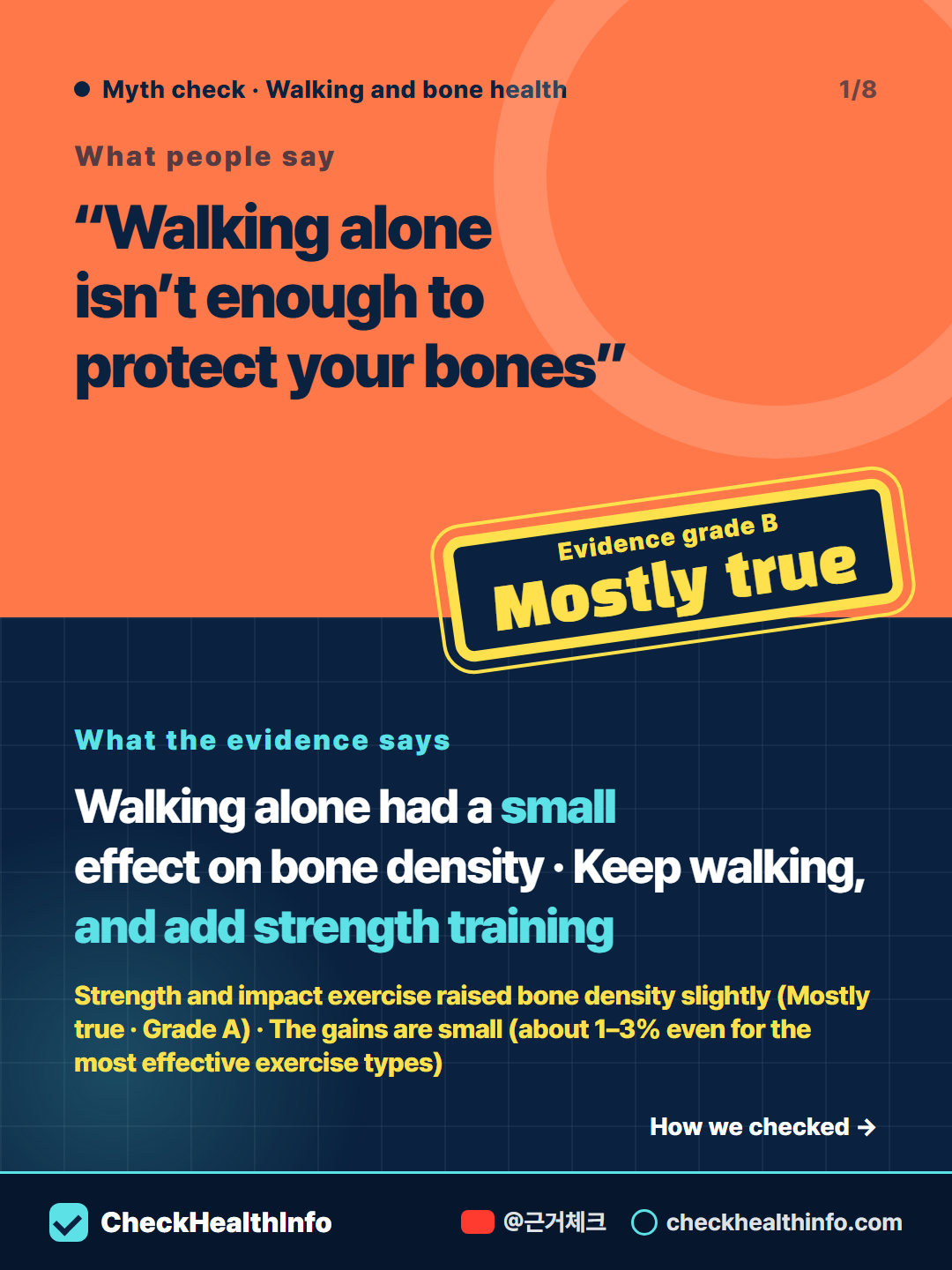
| Walking alone isn’t enough to protect bone density | Mostly true · Evidence grade B |
| Resistance (strength) training and impact exercise increase bone density | Mostly true · Evidence grade A |
Bottom line — In pooled analyses of walking-program trials, walking alone had no clear effect on lumbar spine bone density and only a small benefit at the femoral neck (hip) when people walked for longer periods. So the claim that “walking alone isn't enough to protect bone density” is rated Mostly true. In several meta-analyses, resistance (strength) training and impact exercise such as jumping slightly raised bone density or slowed its loss, so “resistance and impact exercise increase bone density” is also rated Mostly true — but even for the most effective types of exercise, the gain over people who did not exercise was small, about 1–3%, and it varied by site. This does not mean you should stop walking: keep walking, and add strength and balance training.
Bone mineral density (BMD) — A measure of how densely minerals such as calcium are packed into bone. It is a surrogate marker used to estimate the risk of breaking a bone in a fall.
Osteoporosis and osteopenia — Osteoporosis is a marked loss of bone density; osteopenia (low bone mass) is a milder loss.
Femoral neck — The narrow part of the thigh bone just below the hip joint, where hip fractures commonly occur in older age.
Resistance and impact exercise — Resistance (strength) training works the muscles against dumbbells, machines or body weight. Impact exercise, such as jumping, puts a brief, large force on the bones when you land.
Meta-analysis — An analysis that combines the results of several trials on the same question and recalculates them together.
Relative risk and rate ratio — How many times higher one group's risk or event rate is than another's. A value of 1 means no difference; the further below 1, the lower.
Odds ratio — A comparison of the odds of an event between two groups. A value of 1 means no difference.
95% confidence interval (CI) — The range in which the true result plausibly lies. If the range for a difference includes 0 (or 1 for a ratio), the difference is not considered statistically clear.
Bone health in Korea
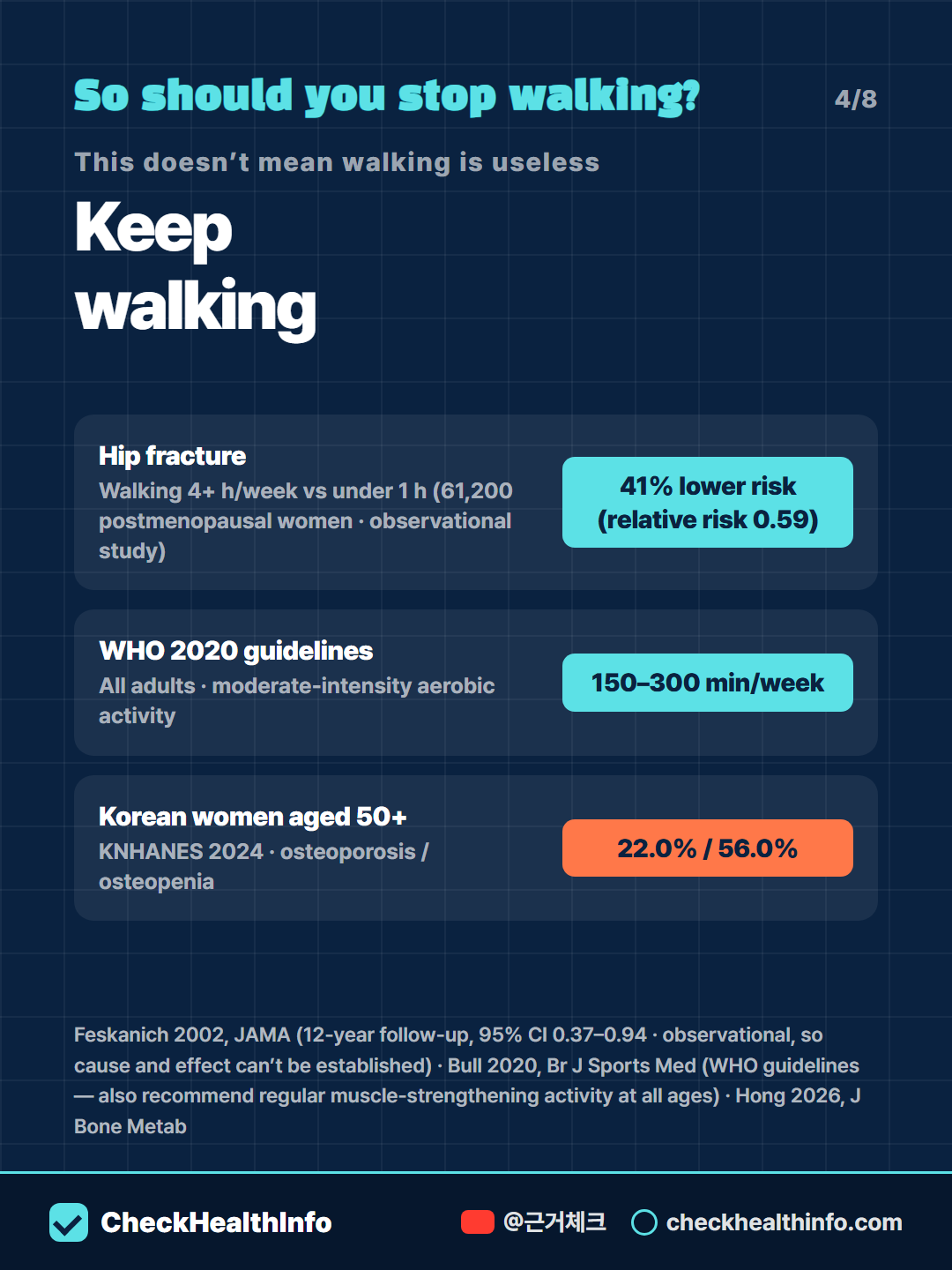
In bone density testing from the 2024 Korea National Health and Nutrition Examination Survey (KNHANES), the prevalence of osteoporosis among Korean adults aged 50 and older was 14.6%: 22.0% in women and 4.9% in men. Osteopenia (low bone mass) affected 56.0% of women. [5]
Claim 1. “Walking alone isn't enough to protect bone density”
Mostly true · Evidence grade B
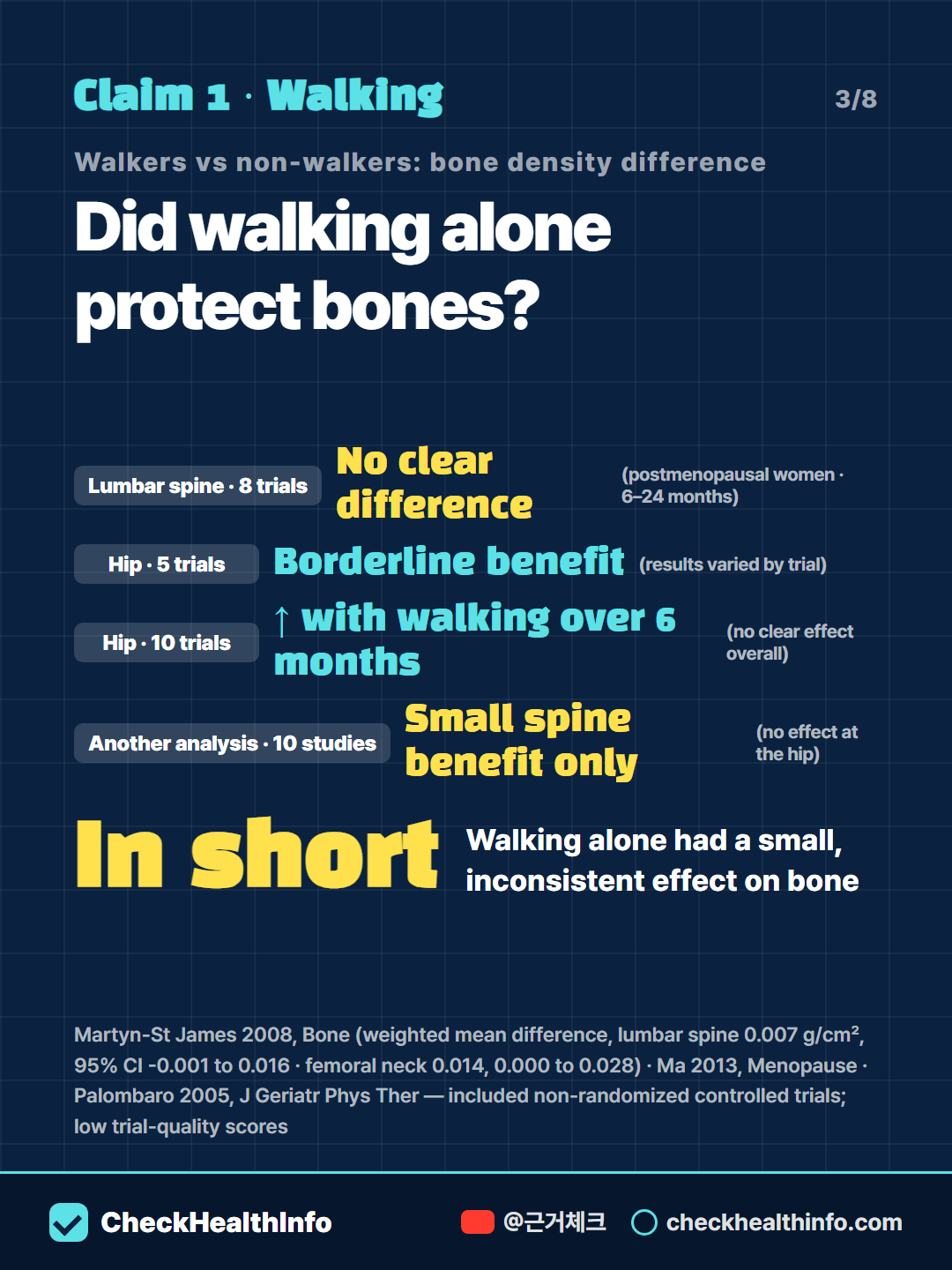
In plain terms Walking alone had a small effect on protecting bone, and the effect was inconsistent from one site to another.
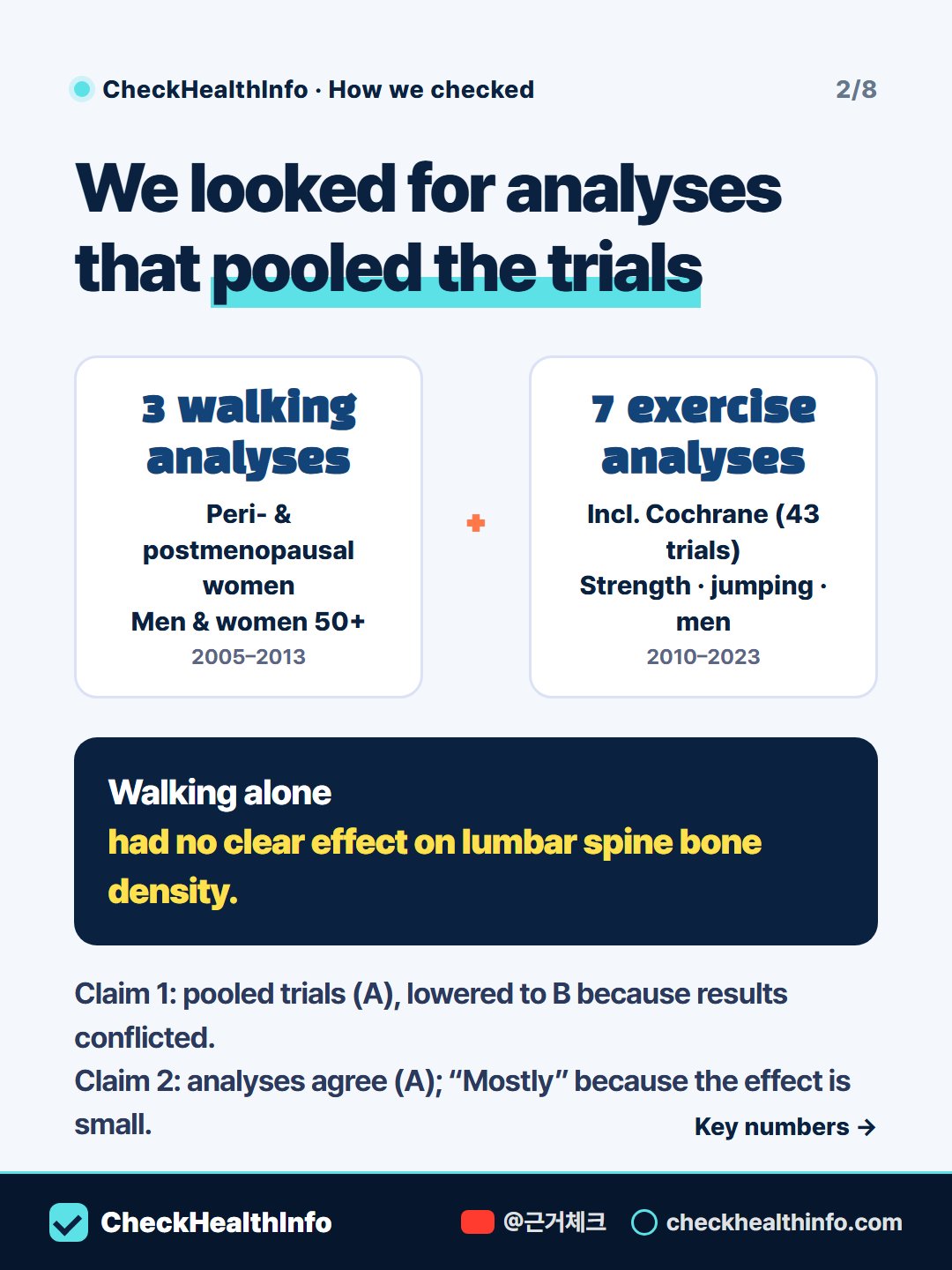
- Eight walking trials in postmenopausal women — In a meta-analysis of controlled walking-program trials (6–24 months) in previously inactive postmenopausal women, lumbar spine bone density showed no clear change (weighted mean difference 0.007 g/cm², 95% CI -0.001 to 0.016). Femoral neck bone density showed a borderline benefit (0.014 g/cm², 95% CI 0.000 to 0.028), but results varied across trials. The authors judged the femoral neck benefit to be meaningful but concluded that other exercise that puts more load on bone may be needed. [1]
- Ten trials including perimenopausal women — There was no clear effect on spine, wrist or whole-body bone density; femoral neck bone density increased only in trials where people walked for more than 6 months. [2]
- A conflicting result — A meta-analysis of ten studies in men and women aged 50 and older and postmenopausal women found a small but significant benefit at the lumbar spine and no effect at the femur or heel. The authors said walking alone is unlikely to prevent bone loss at every site. [3]
- International consensus — An international consensus statement for people with osteoporosis strongly recommends multicomponent exercise that includes resistance and balance training, and advises against aerobic exercise alone without resistance and balance training. [6]
Evidence grade: We started from meta-analyses of walking trials (A) and lowered the grade one level to B under reason 3 in our rating method: the results conflicted (the spine and hip effects differed between analyses, and results also varied between trials). The label is “Mostly true” — walking alone had no clear effect at the spine, but walking for longer gave a small hip benefit, and most study participants were perimenopausal or postmenopausal women.
So should you stop walking? — No
- In an observational study that followed 61,200 postmenopausal U.S. nurses (mostly white) for 12 years, women who walked 4 or more hours a week and did no other exercise had a 41% lower risk of hip fracture than women who walked less than 1 hour a week (relative risk 0.59, 95% CI 0.37–0.94). Because it is observational, we can't conclude that walking caused the difference, and it applies only indirectly to Korean readers. [4]
- The WHO 2020 physical activity guidelines recommend 150–300 minutes a week of moderate-intensity aerobic activity for all adults, plus regular muscle-strengthening activity at all ages. Walking is an easy way to meet the aerobic target. [18]
Claim 2. “Resistance and impact exercise increase bone density”
Mostly true · Evidence grade A
In plain terms Strength and impact exercise could slow bone loss or slightly increase bone density — but the gains were small.
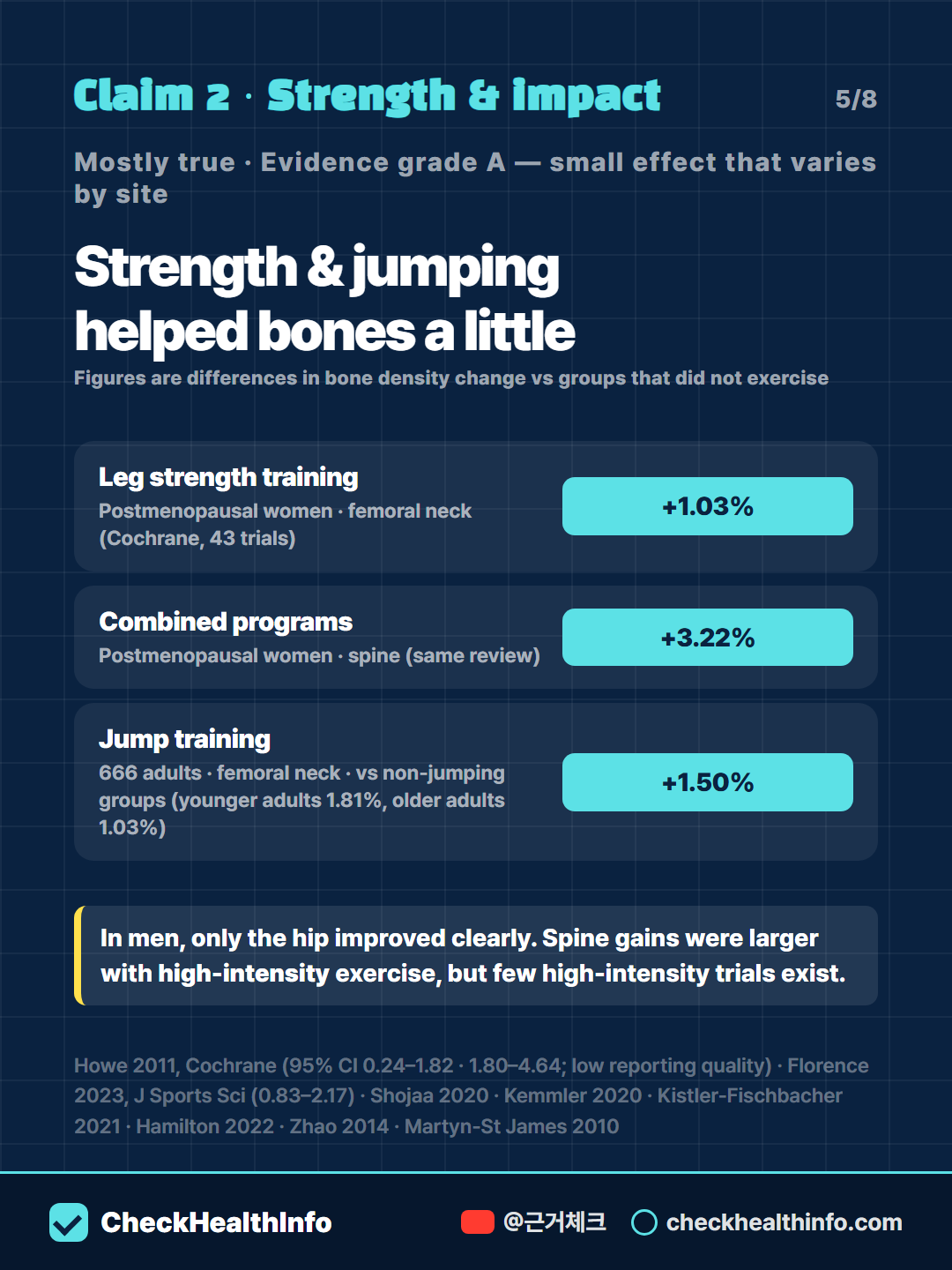
- Cochrane review — In a review of 43 randomized exercise trials in postmenopausal women (4,320 participants), the most effective intervention for femoral neck bone density was progressive resistance training for the legs (mean difference in percentage change 1.03%, 95% CI 0.24–1.82). For the spine, combined exercise programs were most effective (3.22%, 95% CI 1.80–4.64). The authors said the effect was relatively small but possibly important. [7]
- Resistance training alone — A meta-analysis of 17 controlled trials of dynamic resistance exercise in postmenopausal women found small to moderate significant effects on lumbar spine (standardized mean difference 0.54), femoral neck (0.22) and total hip (0.48) bone density. In another analysis by the same group, weight-bearing exercise, resistance exercise and combinations of the two were all effective. [8] [9]
- Intensity — In a meta-analysis by intensity, the lumbar spine effect was larger with high-intensity exercise (mean difference 0.031 g/cm² vs 0.012 for moderate and 0.010 for low), and resistance training (possibly with impact exercise) appeared to be the most effective stimulus. However, few high-intensity trials exist, and no high-intensity effect was found at the femoral neck. [10]
- Jumping (impact exercise) — A meta-analysis of 18 jump-training trials in adults (666 participants) found that femoral neck bone density changed 1.50% more than in groups that did not jump (95% CI 0.83–2.17), with effects in both younger (1.81%) and older adults (1.03%) (the abstract does not say whether the two groups differed significantly). Total hip bone density increased only in younger adults. In premenopausal women, jumping raised femoral neck and greater trochanter bone density, and programs combining impact and resistance exercise raised both lumbar spine and femoral neck bone density. [11] [12] [13]
- Men — A meta-analysis of randomized exercise trials in men found a significant benefit only for femoral neck bone density (Hedges’ g 0.21, a small effect), with no clear effect at the lumbar spine. [14]
Evidence grade: Several meta-analyses of randomized trials addressed bone density directly and pointed the same way in postmenopausal women, premenopausal women and men, so the grade is A. The label is “Mostly true” — even for the most effective exercise types, the effect was small (about 1–3%) and varied by site and population, so the size and scope of “increase” are narrower than the claim implies. In many trials, the control group lost bone density while the exercise group lost less or gained slightly.
But what about fractures, which matter more than bone density?
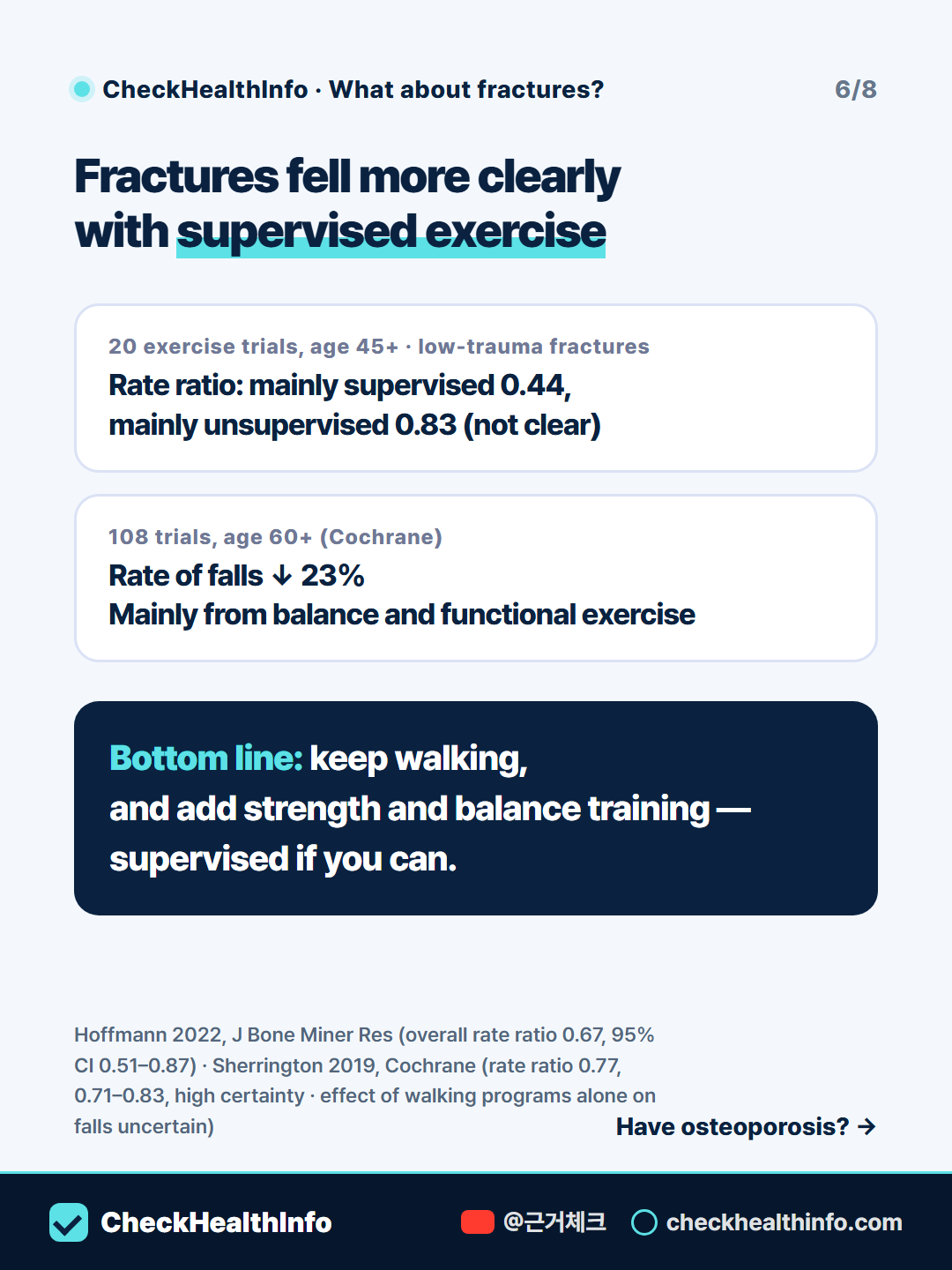
- In a meta-analysis of 20 exercise trials in people aged 45 and older, low-trauma fractures were less frequent in exercise groups (rate ratio 0.67, 95% CI 0.51–0.87). The rate ratio was 0.44 (95% CI 0.27–0.73) for mainly supervised exercise and 0.83 (95% CI 0.60–1.14) — not a clear reduction — for mainly unsupervised exercise. Because this compares different trials grouped together, we can't conclude that supervision itself caused the difference. [19]
- In a Cochrane review of 108 randomized exercise trials in people aged 60 and older, exercise reduced the rate of falls by 23% (rate ratio 0.77, 95% CI 0.71–0.83; high certainty). It may also reduce the number of people with fall-related fractures (relative risk 0.73, 95% CI 0.56–0.95), but with low certainty. The effect came mainly from balance and functional exercise; the effect of walking programs on falls was uncertain. [20]
- These studies looked at fractures and falls rather than bone density, so they were not used to grade the claims.
If you have osteoporosis, is jumping safe?
- In a randomized trial of 101 postmenopausal women with low bone mass, those who did supervised high-intensity resistance and impact training for 30 minutes twice a week for 8 months gained 2.9% in lumbar spine bone density, while the home-based low-intensity group lost 1.2%. The only adverse event was one mild lower-back muscle spasm, and a re-analysis of spine images found no new vertebral fractures. However, the women were screened in advance for conditions that affect bone and trained under close supervision. [15] [16]
- The Exercise and Sports Science Australia position statement advises against bending forward at the spine while carrying a load, and recommends adapting impact exercise for people with arthritis or frailty. It also recommends getting enough calcium and vitamin D alongside exercise. [17]
- The international consensus statement noted that there is still not enough evidence to quantify the risks of exercise in people with osteoporosis or vertebral fractures. [6]
What to do, starting today
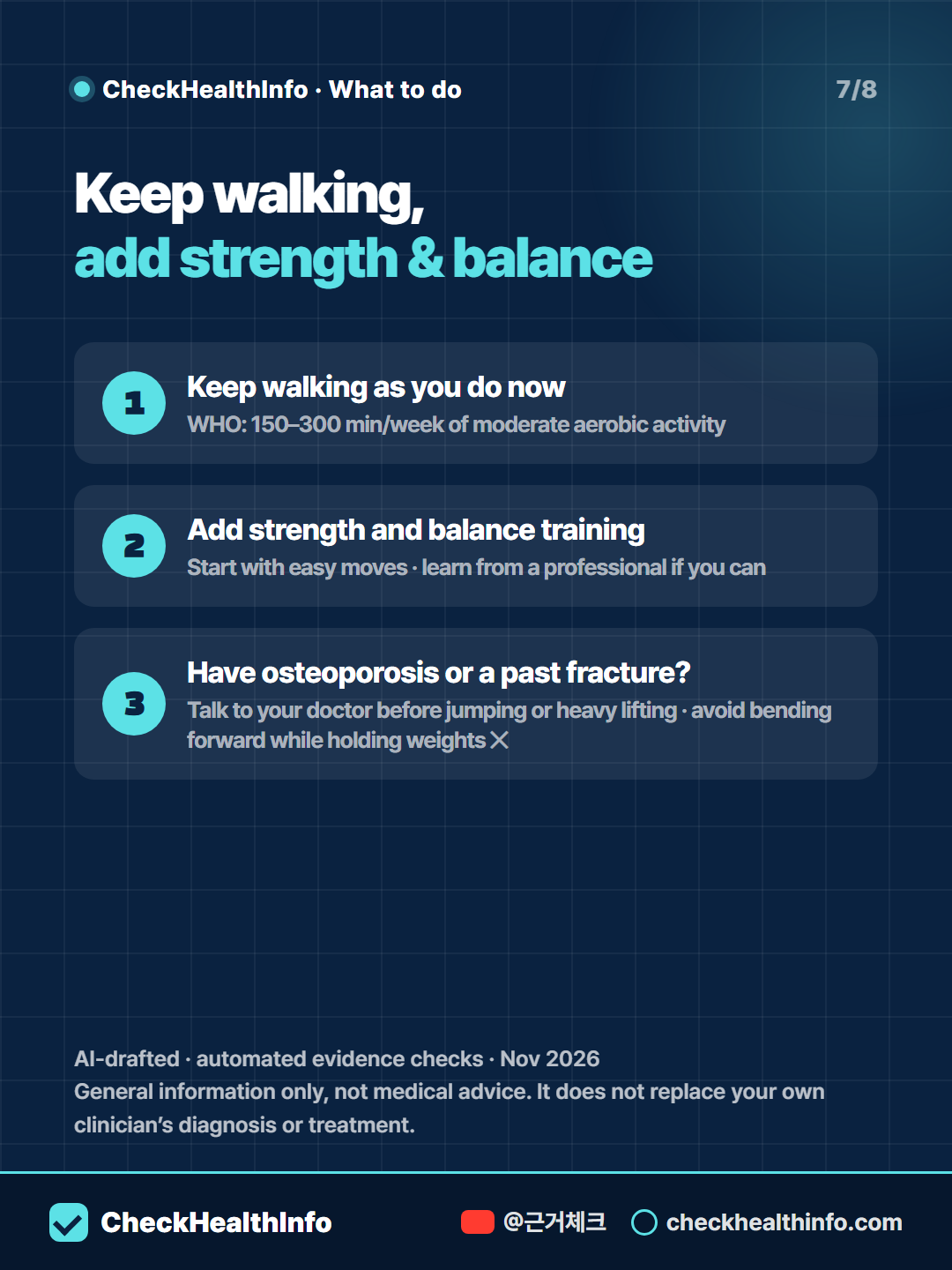
- Keep walking — Walking alone has a small effect on bone density, but there is no reason to stop. [4] [18]
- Add strength training — WHO recommends regular muscle-strengthening activity at all ages. In the studies, the effective approach was resistance training with gradually increasing load, but how heavy to go depends on your condition: if you're new to it, start with easy moves and, if you can, learn from a professional. [7] [18]
- Add balance training too, ideally supervised — Balance exercise reduced falls, and fractures fell more clearly in trials of supervised exercise. [19] [20]
- If you have osteoporosis or a past fracture — Talk to your doctor before starting jumping or heavy exercise. The same applies if you have arthritis or frailty. [17]
Scope: This check covers the relationship between exercise (walking, resistance and impact exercise) and bone density. It does not cover osteoporosis treatment and is not an individual exercise prescription.
Limitations of this check
- Walking trials mostly involved perimenopausal or postmenopausal women, included non-randomized controlled trials, and had low trial-quality scores (Jadad 0–3 out of 5). Walking speed, duration and length of program also differed between trials. [1] [2] In another broad analysis of exercise trials, weight-bearing exercise (which can include walking) also had a small effect on bone density, so this verdict applies only to trials that looked at walking on its own. [9]
- Two meta-analyses of jumping and impact exercise reported signs of publication bias. [12] [13]
- Bone density is a surrogate marker for fracture risk. The link between walking and hip fracture comes from an observational study, so it can't be called causal. [4]
- The Cochrane review rated the reporting quality of included studies (randomization method, allocation concealment, blinding, dropouts) as low, and in the few studies that reported fractures as adverse events, there was no clear difference in the number of fractures (odds ratio 0.61, 95% CI 0.23–1.64). [7]
- The resistance-training meta-analysis did not find results strong enough to recommend specific exercise methods. [8] The high-intensity trial was a single study of 101 women and can't be applied directly to people exercising on their own. [15]
- The fracture meta-analysis also included non-randomized controlled trials, and the fracture reduction with unsupervised exercise was not clear. [19]
- Grades follow section 1 of our grading method. We check PubMed monthly for new studies, and if a verdict changes we record it in our corrections log.
Card news
Video (in Korean)
References
- Martyn-St James M, Carroll S. Meta-analysis of walking for preservation of bone mineral density in postmenopausal women.. Bone 2008;43(3):521-31. PMID 18602880. PubMed abstract · Full article
- Ma D, Wu L, He Z. Effects of walking on the preservation of bone mineral density in perimenopausal and postmenopausal women: a systematic review and meta-analysis.. Menopause 2013;20(11):1216-26. PMID 24149921. PubMed abstract · Full article
- Palombaro KM. Effects of walking-only interventions on bone mineral density at various skeletal sites: a meta-analysis.. J Geriatr Phys Ther 2005;28(3):102-7. PMID 16386172. PubMed abstract · Full article
- Feskanich D, Willett W, Colditz G. Walking and leisure-time activity and risk of hip fracture in postmenopausal women.. JAMA 2002;288(18):2300-6. PMID 12425707. PubMed abstract · Full article
- Hong N, Ha J, Yoo JI, et al. Trends in Osteoporosis Prevalence in Korea Using Korea National Health and Nutrition Examination Survey (KNHANES) 2024 and 2008-2011: The KSBMR KNHANES DXA Task Force Report.. J Bone Metab 2026;33(2):141-151. PMID 42014038. PubMed abstract · Full article
- Giangregorio LM, Papaioannou A, Macintyre NJ, et al. Too Fit To Fracture: exercise recommendations for individuals with osteoporosis or osteoporotic vertebral fracture.. Osteoporos Int 2014;25(3):821-35. PMID 24281053. PubMed abstract · Full article
- Howe TE, Shea B, Dawson LJ, et al. Exercise for preventing and treating osteoporosis in postmenopausal women.. Cochrane Database Syst Rev 2011;2011(7):CD000333. PMID 21735380. PubMed abstract · Full article
- Shojaa M, von Stengel S, Kohl M, et al. Effects of dynamic resistance exercise on bone mineral density in postmenopausal women: a systematic review and meta-analysis with special emphasis on exercise parameters.. Osteoporos Int 2020;31(8):1427-1444. PMID 32399891. PubMed abstract · Full article
- Kemmler W, Shojaa M, Kohl M, et al. Effects of Different Types of Exercise on Bone Mineral Density in Postmenopausal Women: A Systematic Review and Meta-analysis.. Calcif Tissue Int 2020;107(5):409-439. PMID 32785775. PubMed abstract · Full article
- Kistler-Fischbacher M, Weeks BK, Beck BR. The effect of exercise intensity on bone in postmenopausal women (part 2): A meta-analysis.. Bone 2021;143:115697. PMID 33357834. PubMed abstract · Full article
- Florence GE, Oosthuyse T, Bosch AN. Skeletal site-specific effects of jump training on bone mineral density in adults: a systematic review and meta-analysis.. J Sports Sci 2023;41(23):2063-2076. PMID 38305252. PubMed abstract · Full article
- Zhao R, Zhao M, Zhang L. Efficiency of jumping exercise in improving bone mineral density among premenopausal women: a meta-analysis.. Sports Med 2014;44(10):1393-402. PMID 24981245. PubMed abstract · Full article
- Martyn-St James M, Carroll S. Effects of different impact exercise modalities on bone mineral density in premenopausal women: a meta-analysis.. J Bone Miner Metab 2010;28(3):251-67. PMID 20013013. PubMed abstract · Full article
- Hamilton BR, Staines KA, Kelley GA, et al. The Effects of Exercise on Bone Mineral Density in Men: A Systematic Review and Meta-Analysis of Randomised Controlled Trials.. Calcif Tissue Int 2022;110(1):41-56. PMID 34382100. PubMed abstract · Full article
- Watson SL, Weeks BK, Weis LJ, et al. High-Intensity Resistance and Impact Training Improves Bone Mineral Density and Physical Function in Postmenopausal Women With Osteopenia and Osteoporosis: The LIFTMOR Randomized Controlled Trial.. J Bone Miner Res 2018;33(2):211-220. PMID 28975661. PubMed abstract · Full article
- Watson SL, Weeks BK, Weis LJ, et al. High-intensity exercise did not cause vertebral fractures and improves thoracic kyphosis in postmenopausal women with low to very low bone mass: the LIFTMOR trial.. Osteoporos Int 2019;30(5):957-964. PMID 30612163. PubMed abstract · Full article
- Beck BR, Daly RM, Singh MA, et al. Exercise and Sports Science Australia (ESSA) position statement on exercise prescription for the prevention and management of osteoporosis.. J Sci Med Sport 2017;20(5):438-445. PMID 27840033. PubMed abstract · Full article
- Bull FC, Al-Ansari SS, Biddle S, et al. World Health Organization 2020 guidelines on physical activity and sedentary behaviour.. Br J Sports Med 2020;54(24):1451-1462. PMID 33239350. PubMed abstract · Full article
- Hoffmann I, Shojaa M, Kohl M, et al. Exercise Reduces the Number of Overall and Major Osteoporotic Fractures in Adults. Does Supervision Make a Difference? Systematic Review and Meta-Analysis.. J Bone Miner Res 2022;37(11):2132-2148. PMID 36082625. PubMed abstract · Full article
- Sherrington C, Fairhall NJ, Wallbank GK, et al. Exercise for preventing falls in older people living in the community.. Cochrane Database Syst Rev 2019;1(1):CD012424. PMID 30703272. PubMed abstract · Full article
General information only, not medical advice. It does not replace your own clinician’s diagnosis or treatment. If you have osteoporosis or have had a fracture, talk with your doctor before starting jumping or heavy exercise. The same applies if you have arthritis or frailty.