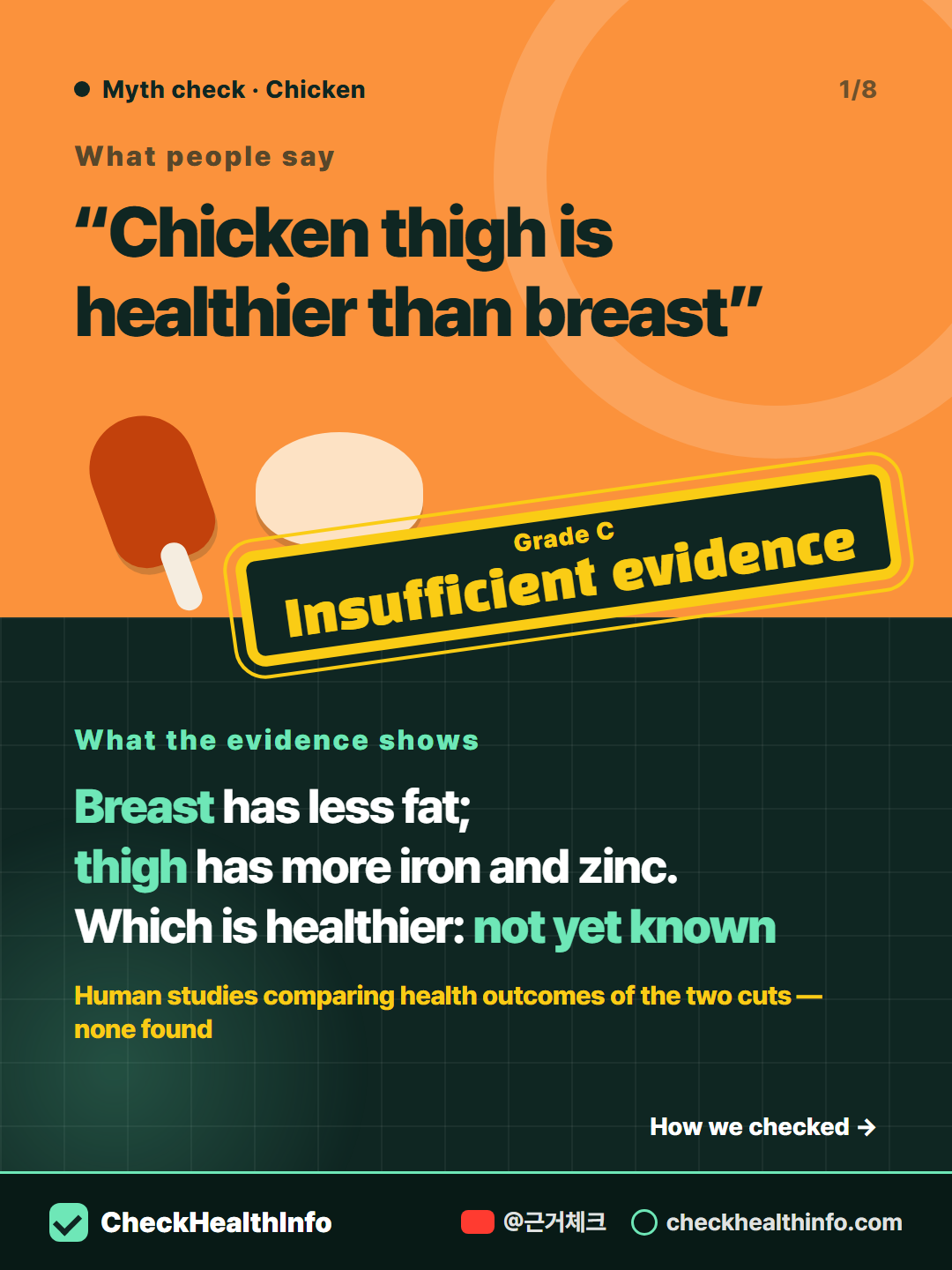
Is chicken thigh healthier than chicken breast?
Is eating chicken thigh instead of dry chicken breast better for your health?

We checked this verdict against 4 sources, such as published studies and clinical guidelines. · How checked: AI-drafted · automated evidence checks
Verdicts at a glance
| Claim | Verdict |
|---|---|
| Chicken thigh (dark meat) is healthier than chicken breast (white meat) | Insufficient evidence · Evidence grade C |
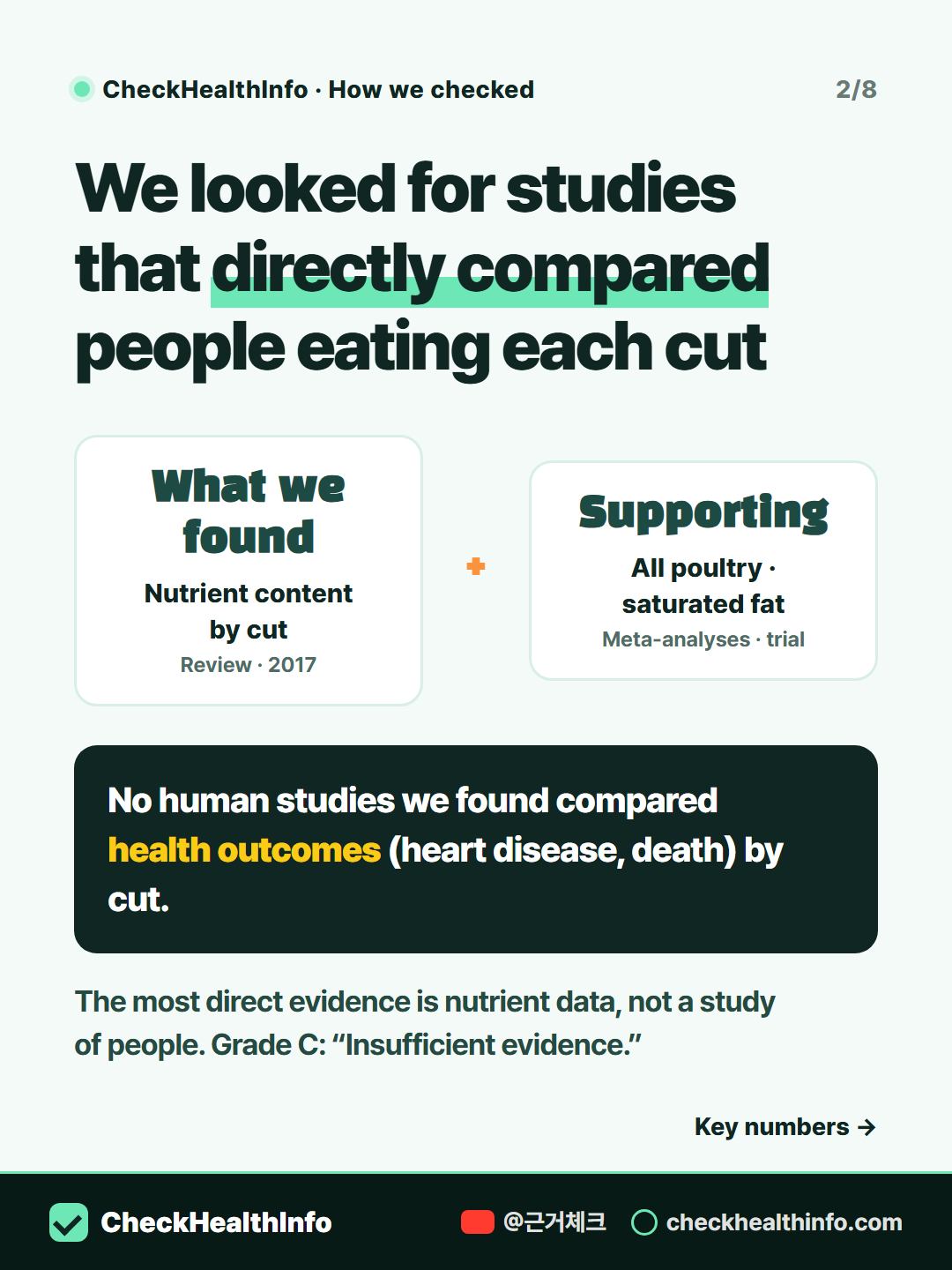
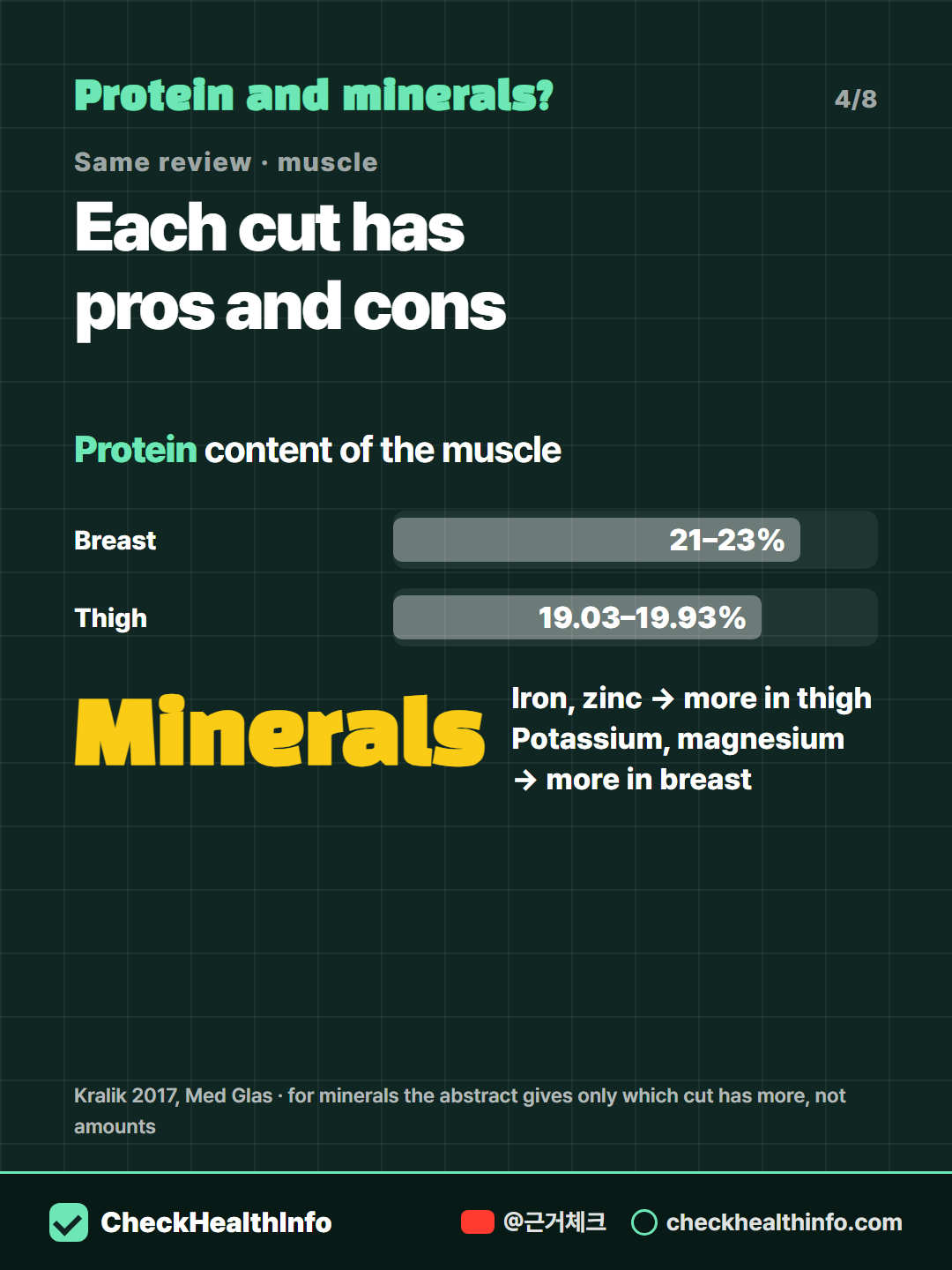
Bottom line — We found no studies that directly compared health outcomes (such as heart disease or death) in people who ate chicken thigh versus chicken breast. So the claim that “chicken thigh is healthier than chicken breast” is rated Insufficient evidence (this does not mean it is false). Here is what the evidence shows: both cuts are about 19–23% protein; breast has less fat, while thigh has more iron and zinc, so each has pros and cons. Whether one cut is better for your health has not been shown in human studies.
White meat and dark meat — Paler meat such as chicken breast is called white meat; darker meat such as the thigh is called dark meat.
Saturated fat — A type of fat found in large amounts in fatty meat and butter; it tends to raise LDL (“bad”) cholesterol.
Meta-analysis — An analysis that pools the results of several studies into one estimate.
Cohort study — An observational study that follows many people over time. It shows what tends to go together, but is less certain than a randomized trial about cause and effect.
Relative risk — The ratio of how often a disease occurred in two groups. A value of 1 means no difference; below 1 means lower risk, and above 1 means higher risk.
95% confidence interval — The range in which the true value is likely to lie. If the range includes 1, we cannot be confident there is a real difference.
Claim. “Chicken thigh (dark meat) is healthier than chicken breast (white meat)”
Insufficient evidence · Evidence grade C
In plain terms No study has directly compared the health of people eating each cut, and the nutrient content cuts both ways, so we can’t say one is “healthier.” That is why we rated it “Insufficient evidence.”
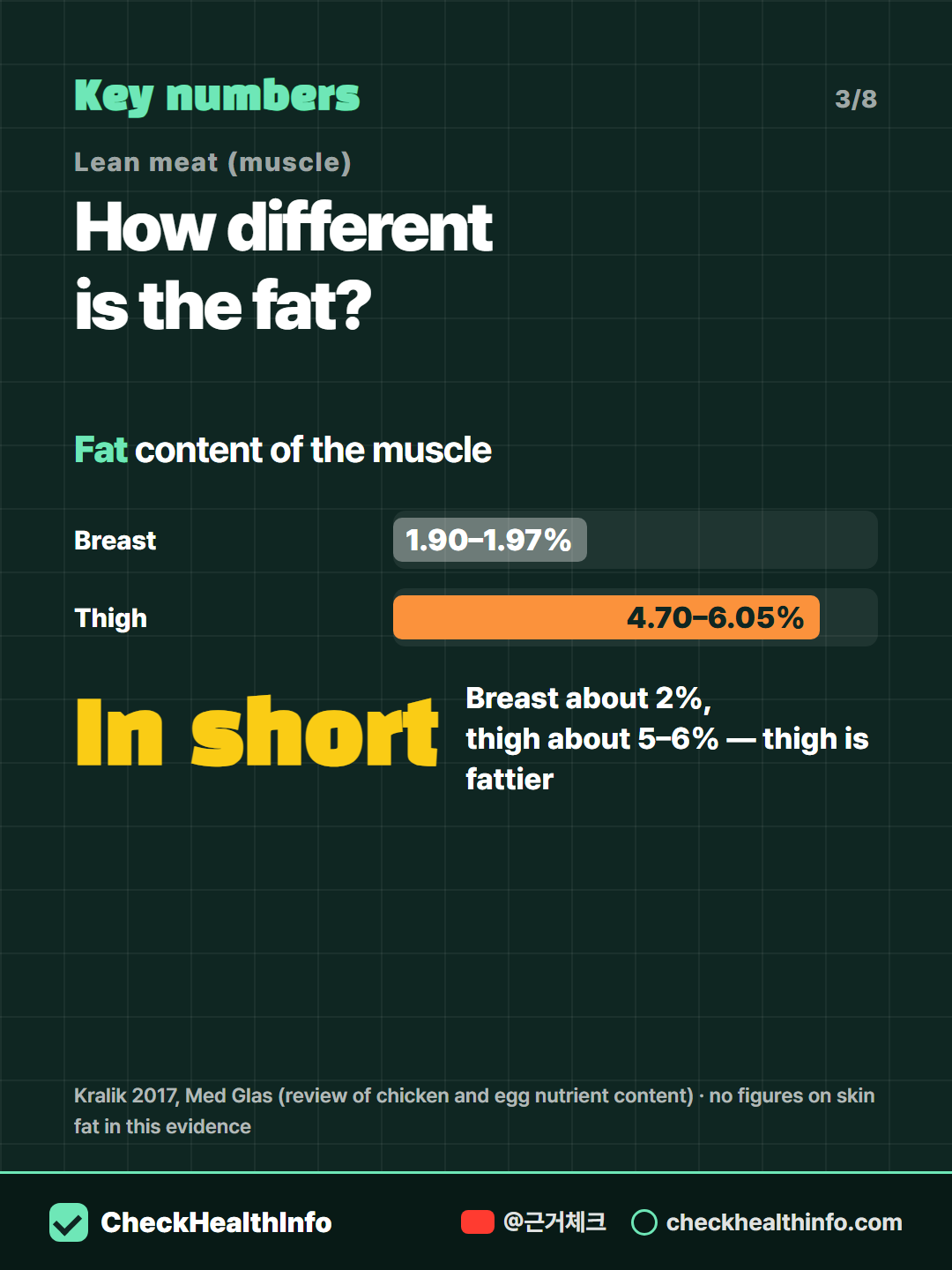
- In a review of the nutrient content of chicken, breast muscle contained 21–23% protein and 1.90–1.97% fat, while thigh muscle contained 4.70–6.05% fat and 19.03–19.93% protein. White meat (breast) had more potassium and magnesium, and dark meat (thigh) had more zinc and iron. In plain terms, thigh meat is fattier but has more iron and zinc (the abstract does not say how much more), while breast meat has less fat and slightly more protein. [1]
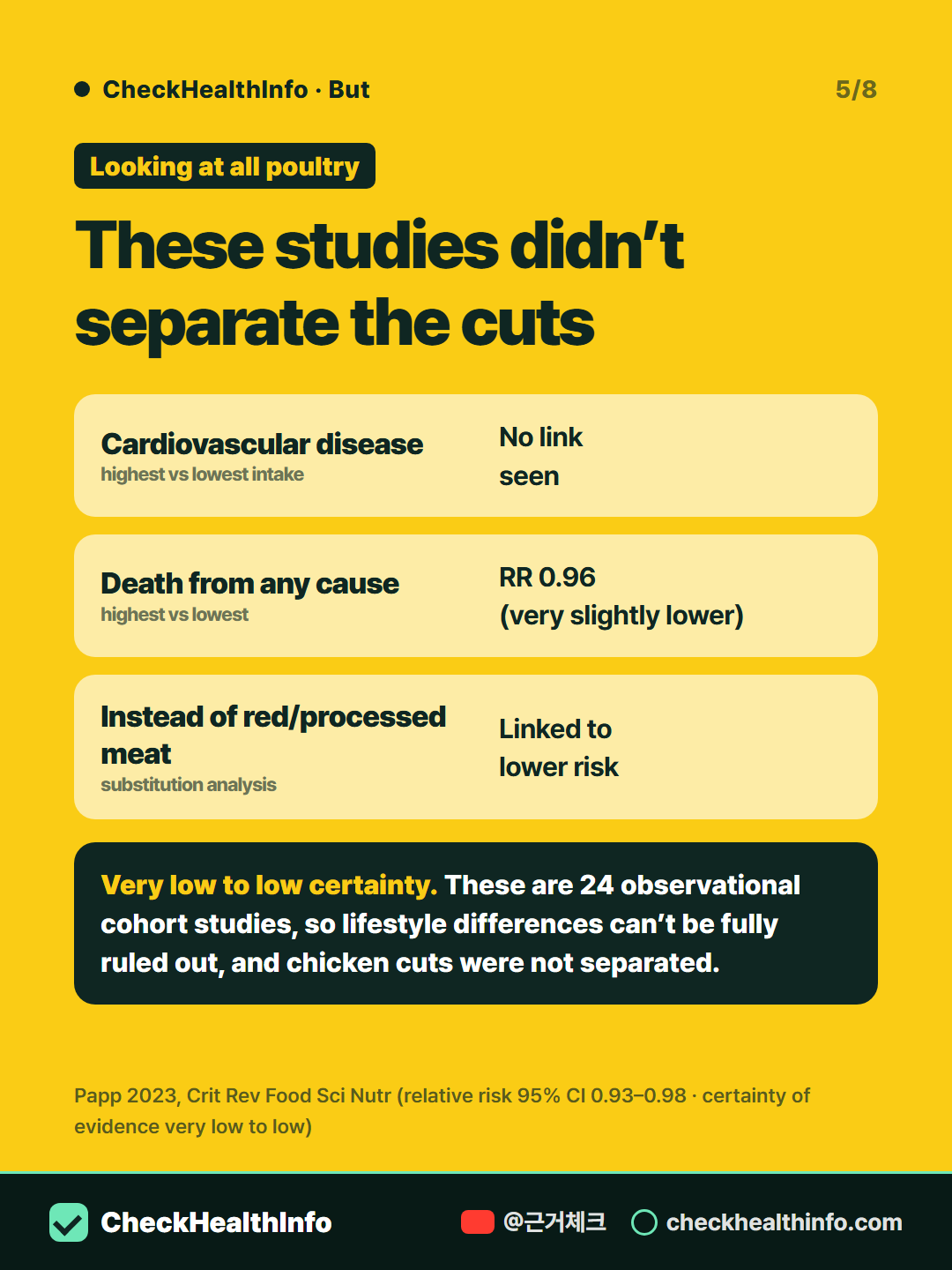
- Looking at poultry as a whole, a meta-analysis of 24 prospective cohort studies found that people who ate the most poultry did not have a clearly different risk of cardiovascular disease, coronary heart disease or stroke than those who ate the least. Their risk of death from any cause was very slightly lower (relative risk 0.96; 95% confidence interval 0.93–0.98). Replacing red or processed meat with poultry was linked with lower risk of death and cardiovascular disease, but the certainty of evidence was very low to low, and the studies did not separate chicken cuts. [2]
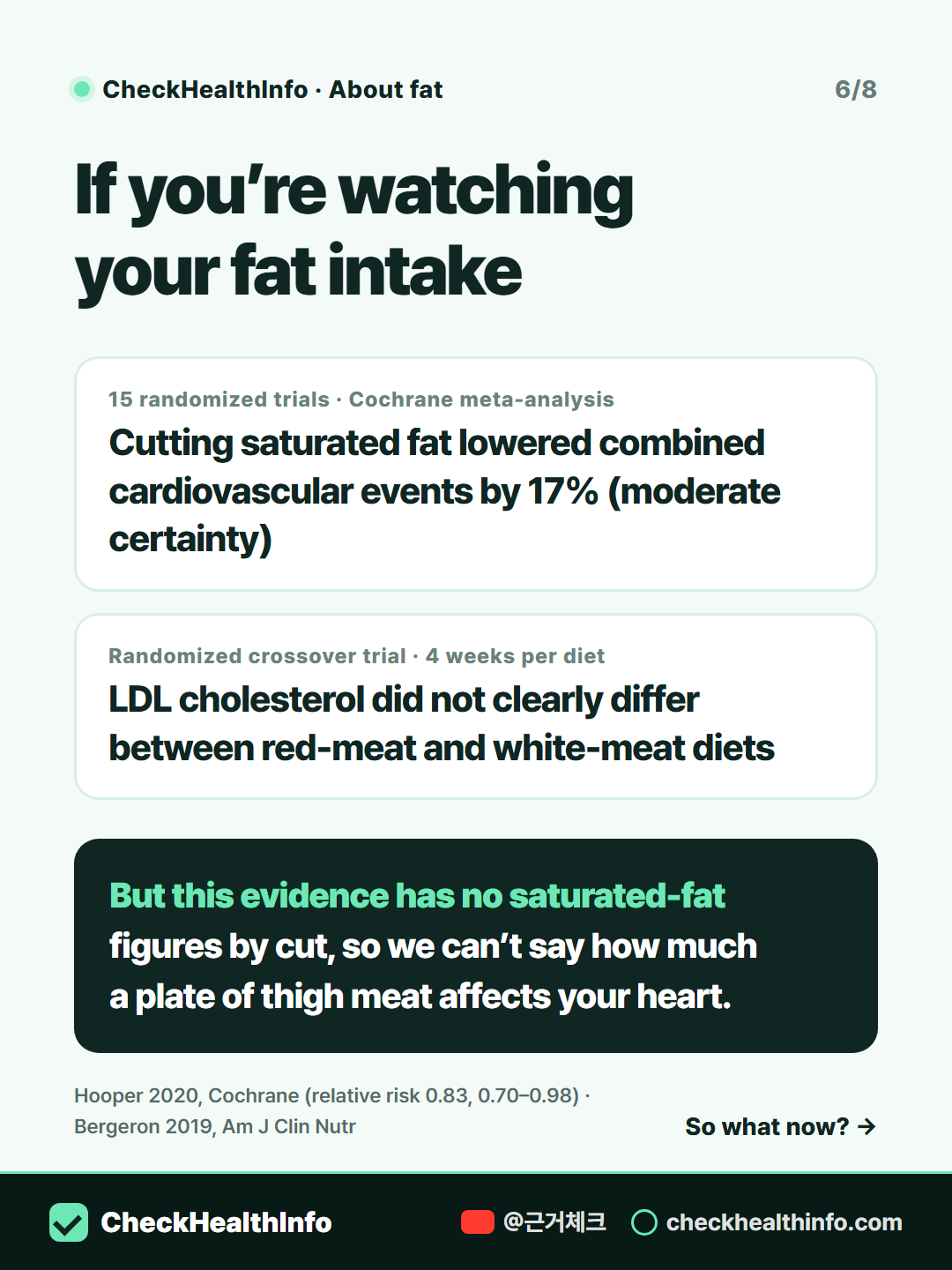
There is separate evidence on fat. A Cochrane meta-analysis of 15 randomized trials (56,675 people, at least 24 months) found that cutting saturated fat in the diet lowered the risk of combined cardiovascular events by 17% (12 trials, 53,758 people; relative risk 0.83; 95% confidence interval 0.70–0.98; moderate certainty; results varied a lot between trials: I² 67%). Death from any cause, however, did not clearly differ (0.96; 0.90–1.03). [3]
In plain terms, steadily cutting saturated fat may modestly reduce heart and blood vessel events. But the nutrient data here give only total fat, not saturated fat, by cut, so we can’t say how much a plate of thigh meat affects your heart.
In a randomized crossover trial in healthy adults (61 people on a high-saturated-fat diet and 52 on a low-saturated-fat diet; 4 weeks per diet), LDL cholesterol did not clearly differ between red-meat and white-meat diets. LDL cholesterol was higher on both meat diets than on non-meat protein diets, and it was higher on high-saturated-fat diets regardless of the protein source. This trial did not separate chicken cuts. [4]
How the two cuts compare
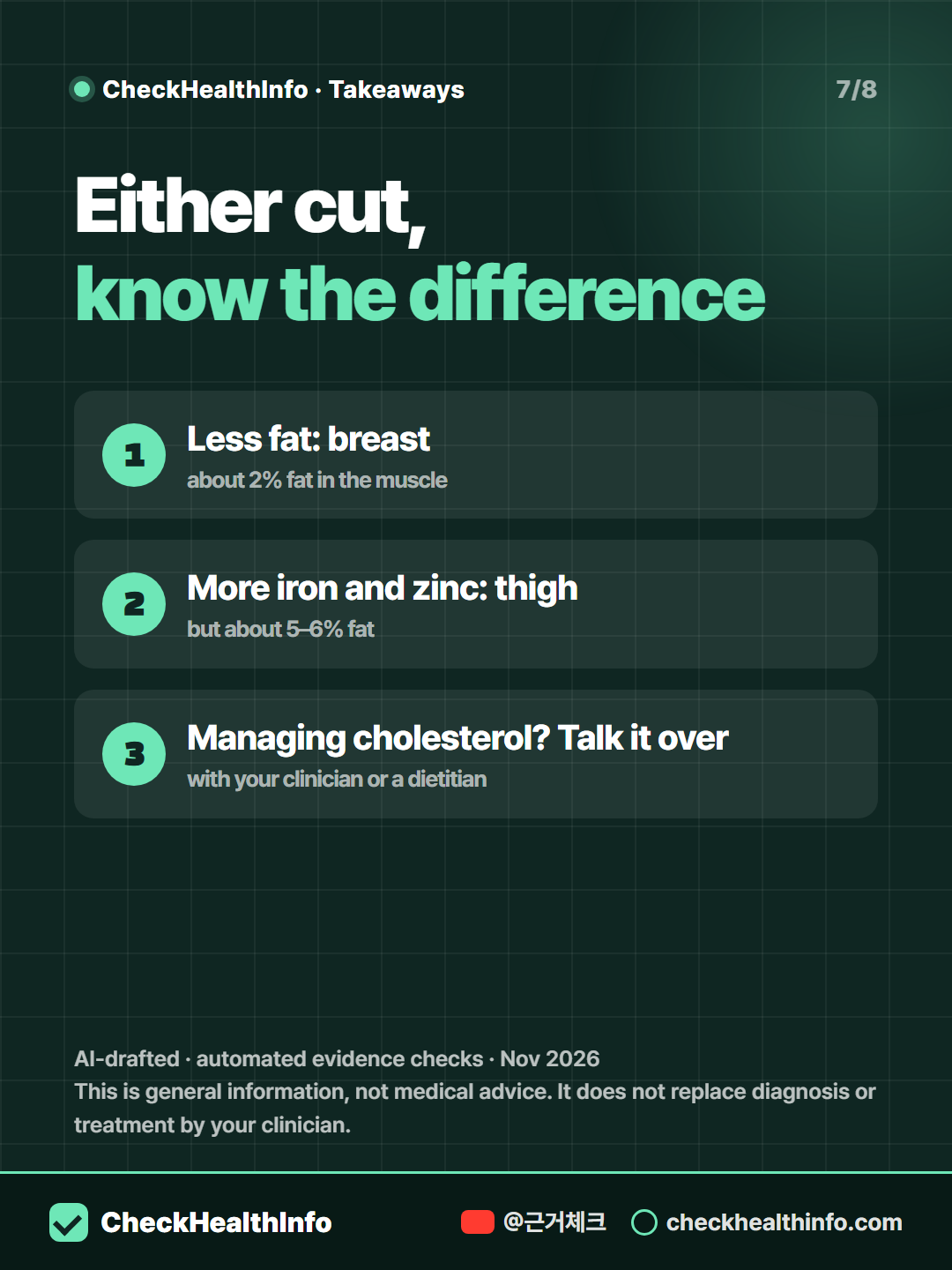
- If you want less fat — breast is the leaner cut (about 2% fat in the muscle).
- If you want more iron and zinc — thigh has more, but it also has more fat (about 5–6% in the muscle).
- If you are managing cholesterol or heart disease through diet — talk with your clinician or a dietitian.
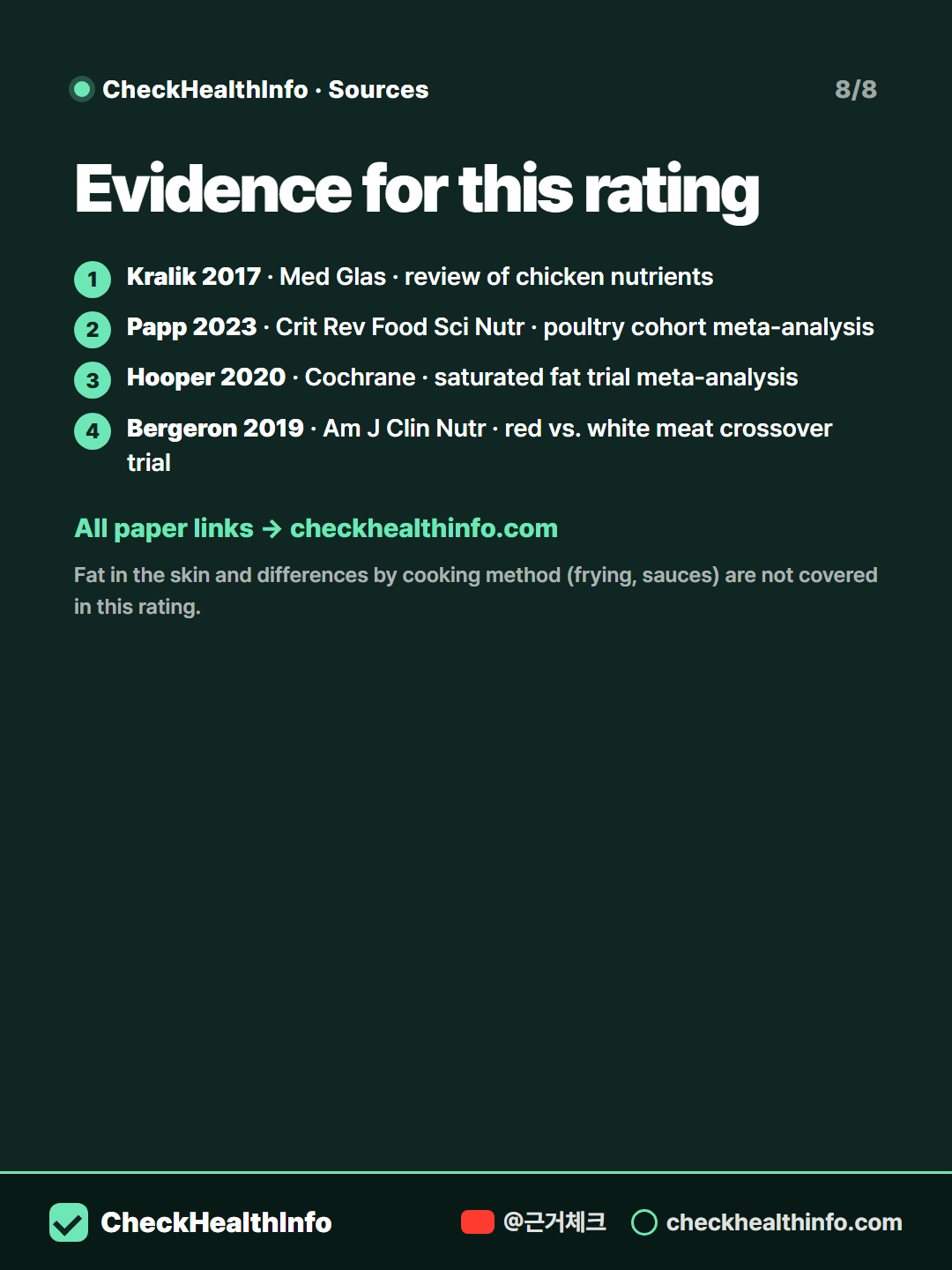
Scope: This rating covers the nutrient content of lean chicken thigh and breast meat (muscle), and the links between poultry, saturated fat and health outcomes. It does not cover fat in the skin or differences by cooking method such as frying or sauces.
Limitations
- We found no studies directly comparing health outcomes in people eating each cut. The most direct evidence is nutrient data (not a study of people’s health), so the grade is C.
- The nutrient figures are for muscle (lean meat); this evidence has no figures for fat in the skin or for differences by cooking method. For iron, zinc, potassium and magnesium, the abstract gives only which cut has more, not the amounts.
- The poultry cohort studies are observational, so the influence of lifestyle and other factors cannot be fully ruled out, and they did not separate chicken cuts. The substitution analysis is a statistical estimate, not a trial in which people actually changed their diet.
- A correction has been published for the red- vs. white-meat trial (PMID 31505551); the paper has not been retracted. Each diet lasted 4 weeks, so it measured only intermediate markers such as LDL cholesterol.
- The nutrient review comes from Croatian researchers, and we found no studies of Korean adults specifically.
- The grade follows section 1 of our rating method. We check PubMed monthly for new studies, and any change in the rating is recorded in our corrections log.
Card news
Video (in Korean)
References
- Kralik G, Kralik Z. Poultry products enriched with nutricines have beneficial effects on human health. Med Glas (Zenica) 2017;14(1):1-7. PMID 27917847. PubMed abstract · Full article
- Papp RE, Hasenegger V, Ekmekcioglu C, et al. Association of poultry consumption with cardiovascular diseases and all-cause mortality: a systematic review and dose response meta-analysis of prospective cohort studies. Crit Rev Food Sci Nutr 2023;63(15):2366-2387. PMID 34542332. PubMed abstract · Full article
- Hooper L, Martin N, Jimoh OF, et al. Reduction in saturated fat intake for cardiovascular disease. Cochrane Database Syst Rev 2020;8(8):CD011737. PMID 32827219. PubMed abstract · Full article · Free full text
- Bergeron N, Chiu S, Williams PT, et al. Effects of red meat, white meat, and nonmeat protein sources on atherogenic lipoprotein measures in the context of low compared with high saturated fat intake: a randomized controlled trial. Am J Clin Nutr 2019;110(1):24-33. PMID 31161217. PubMed abstract · Full article · Free full text
General information only, not medical advice. It does not replace your own clinician’s diagnosis or treatment. If you are managing cholesterol or heart disease through diet, talk with your clinician or a dietitian.