Taking collagen — does it help skin wrinkles and hydration?
Does taking oral collagen (low-molecular-weight collagen peptides) improve skin hydration, elasticity and wrinkles?

We checked this verdict against 9 sources, such as published studies and clinical guidelines. · How checked: AI-drafted · automated evidence checks
Verdicts at a glance
| Claim | Verdict |
|---|---|
| Oral low-molecular-weight collagen (collagen peptides) improves skin hydration, elasticity and wrinkles | Insufficient evidence · Evidence grade C |
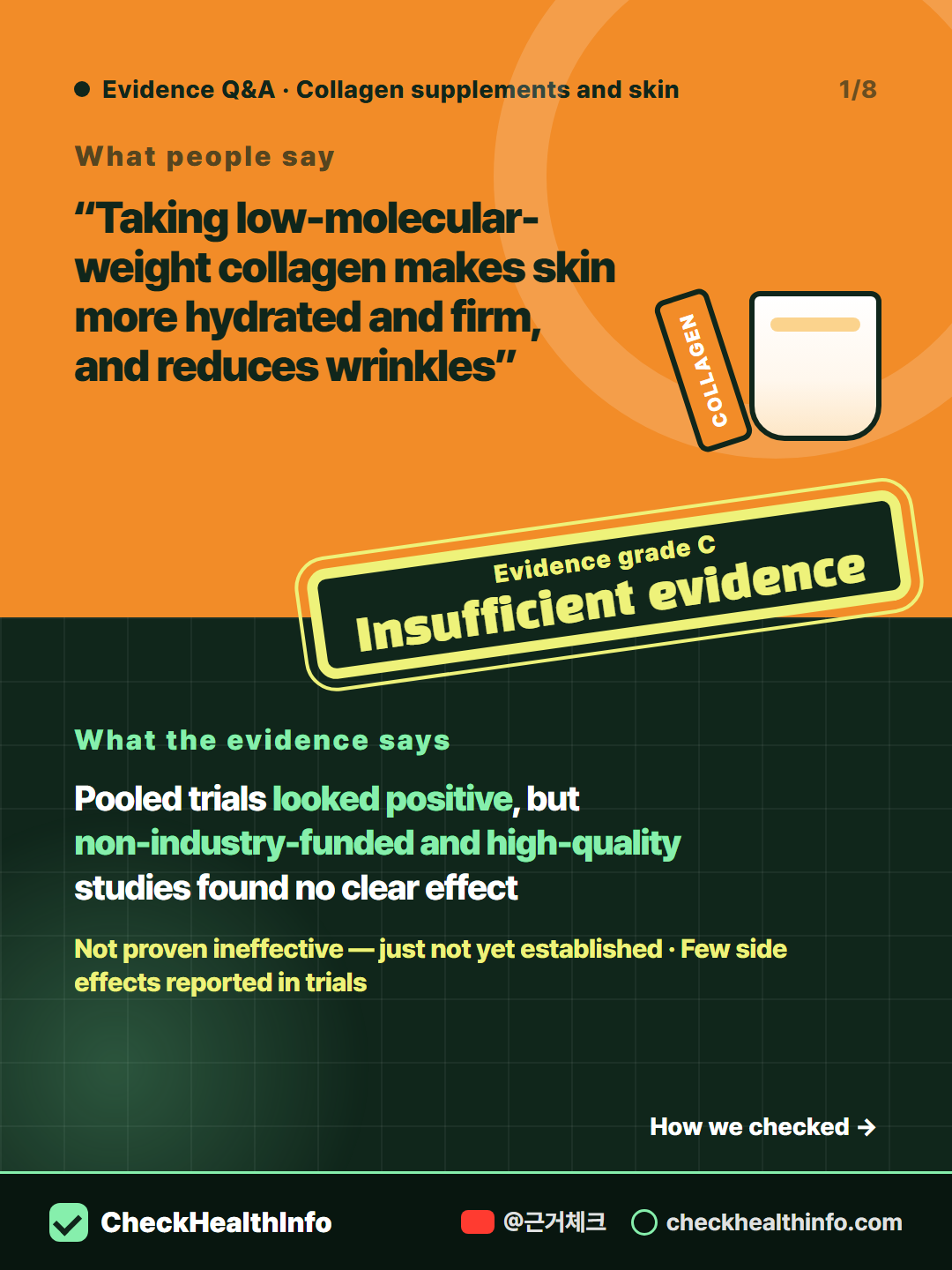
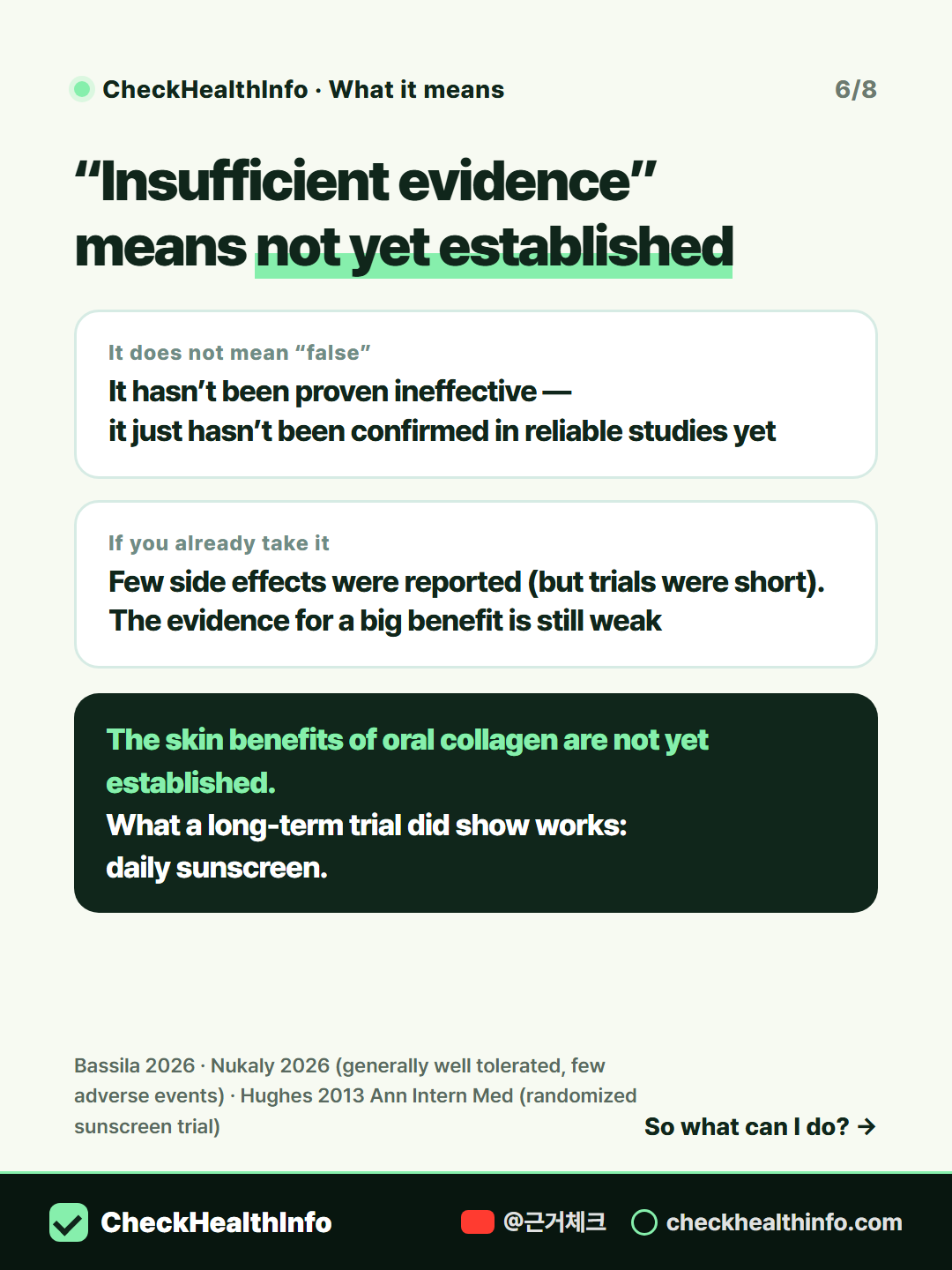
Bottom line — The claim that oral collagen (hydrolyzed collagen, sold as “low-molecular-weight collagen peptides”) improves skin hydration, elasticity and wrinkles is rated Insufficient evidence (Evidence grade C). When placebo-controlled randomized trials are pooled, hydration, elasticity and wrinkles appear to improve. But among studies not funded by pharmaceutical companies, none of the three improved, and high-quality studies showed no significant effect either. In short, the skin benefits of oral collagen are not yet established — it has not been proven ineffective, and few side effects were reported in trials. For slowing skin aging, daily sunscreen use has been shown to work in a 4.5-year randomized trial.
Hydrolyzed collagen (collagen peptides) — Collagen broken into small pieces so it is easier to take. It is also marketed as “low-molecular-weight collagen.”
Placebo — A look-alike product with no active ingredient, used to separate real effects from expectation.
Meta-analysis — A study that statistically combines results from several trials on the same question.
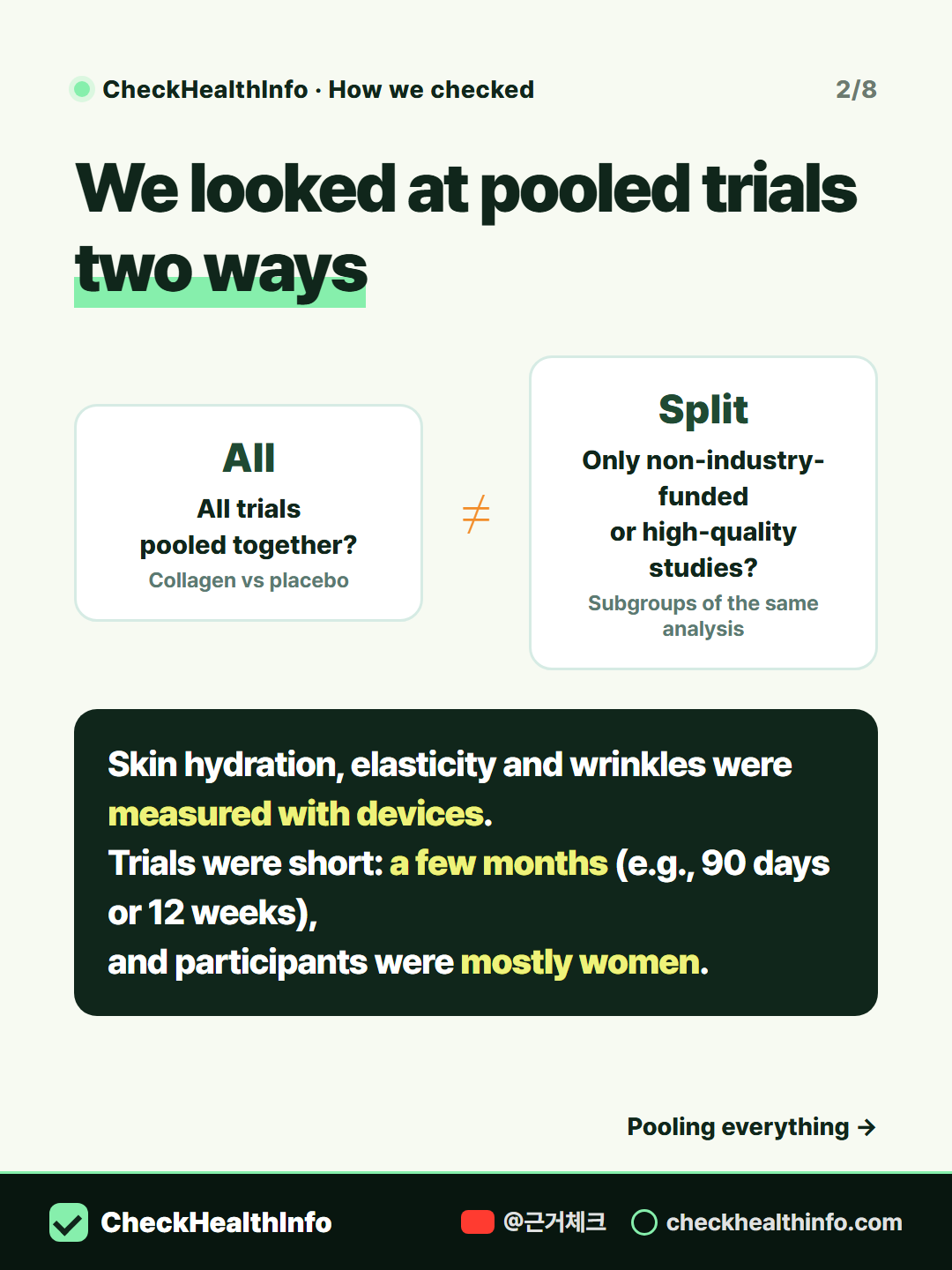
Subgroup analysis — Re-analyzing pooled trials separately by a feature, such as who funded them or how well they were done.
SMD (standardized mean difference) — A way to compare results measured with different devices on one common scale. Zero means no difference.
Collagen recently came up in the news as a dietary-supplement ingredient, so we rechecked the popular claim that “taking low-molecular-weight collagen makes skin more hydrated and firm, and reduces wrinkles.” Hydration, elasticity and wrinkles are the same kind of claim, tested in the same studies, so we give one verdict and describe the differences between measures separately.
Verdict. “Oral low-molecular-weight collagen (collagen peptides) improves skin hydration, elasticity and wrinkles”
Insufficient evidence · Evidence grade C
In plain terms Pooling all the trials made collagen look effective, but in studies without industry funding and in high-quality studies, no effect was confirmed. “Insufficient evidence” does not mean “false”; it means the evidence in people is not yet strong enough.
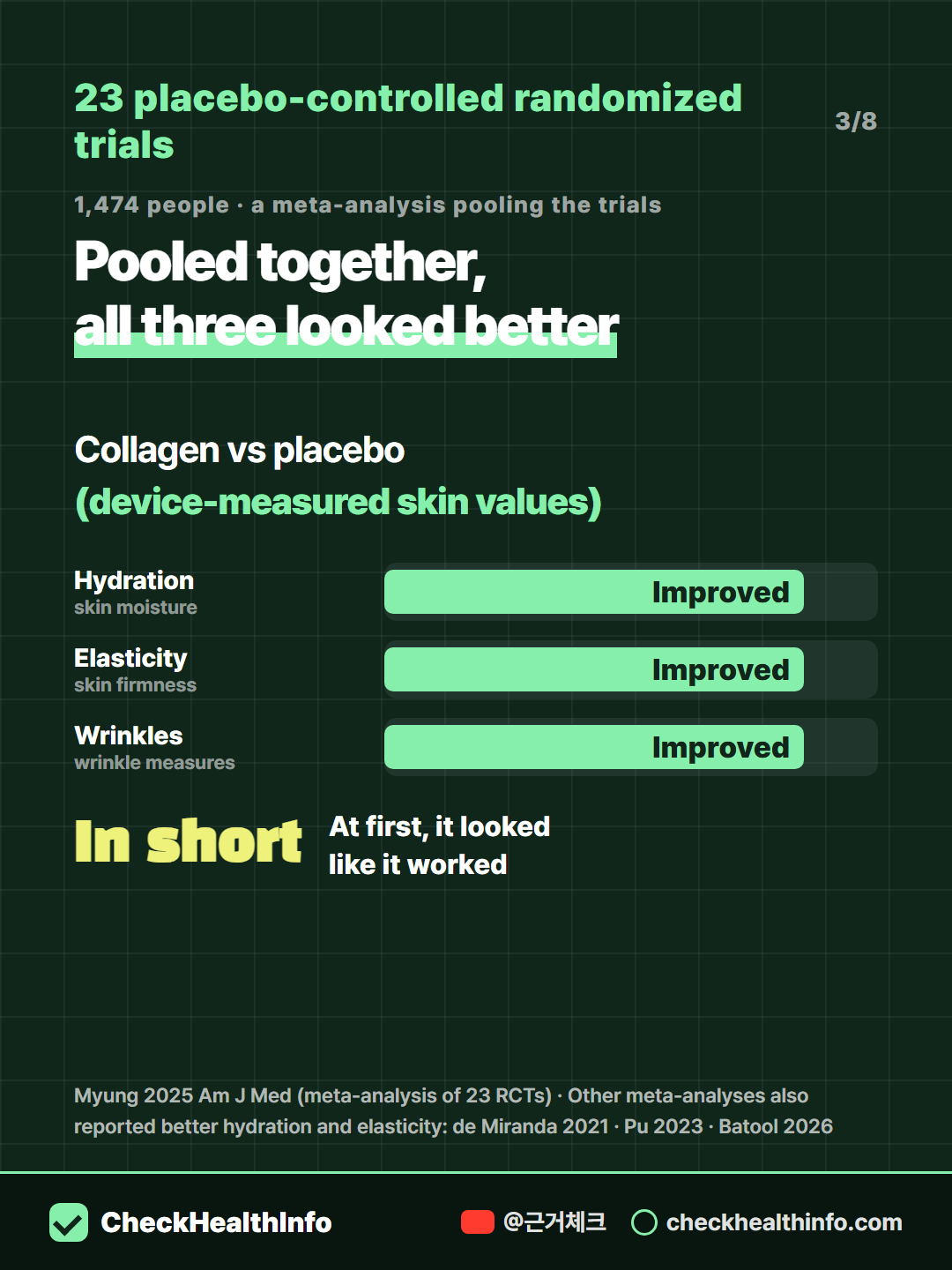
- A meta-analysis of 23 placebo-controlled randomized trials (1,474 people) found that, overall, collagen supplements significantly improved skin hydration, elasticity and wrinkles. [1]
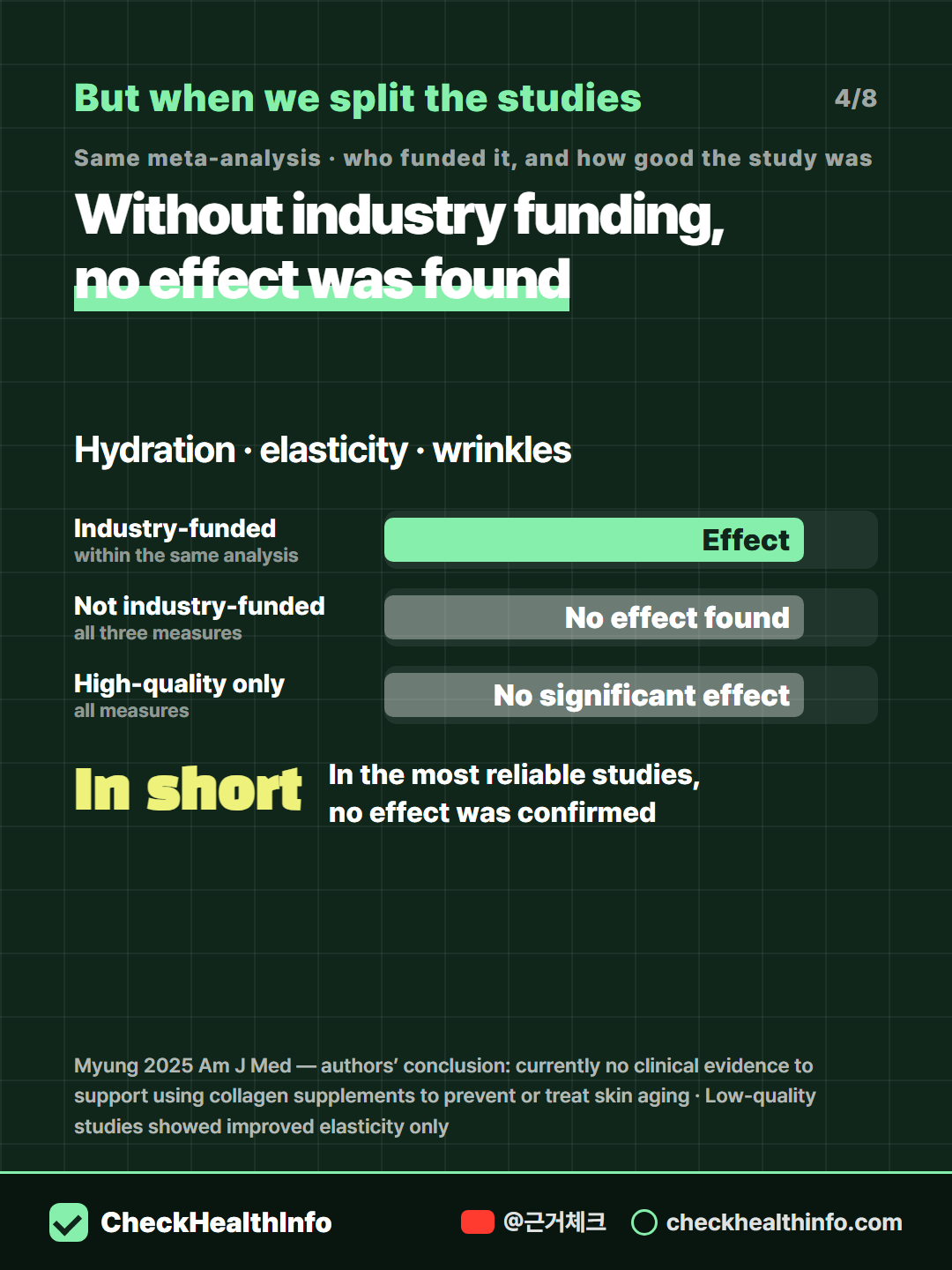
- But in the same analysis, studies not funded by pharmaceutical companies showed no effect on hydration, elasticity or wrinkles; only industry-funded studies did. High-quality studies showed no significant effect on any measure, while low-quality studies showed improved elasticity only. The authors concluded that there is currently no clinical evidence to support using collagen supplements to prevent or treat skin aging. [1]
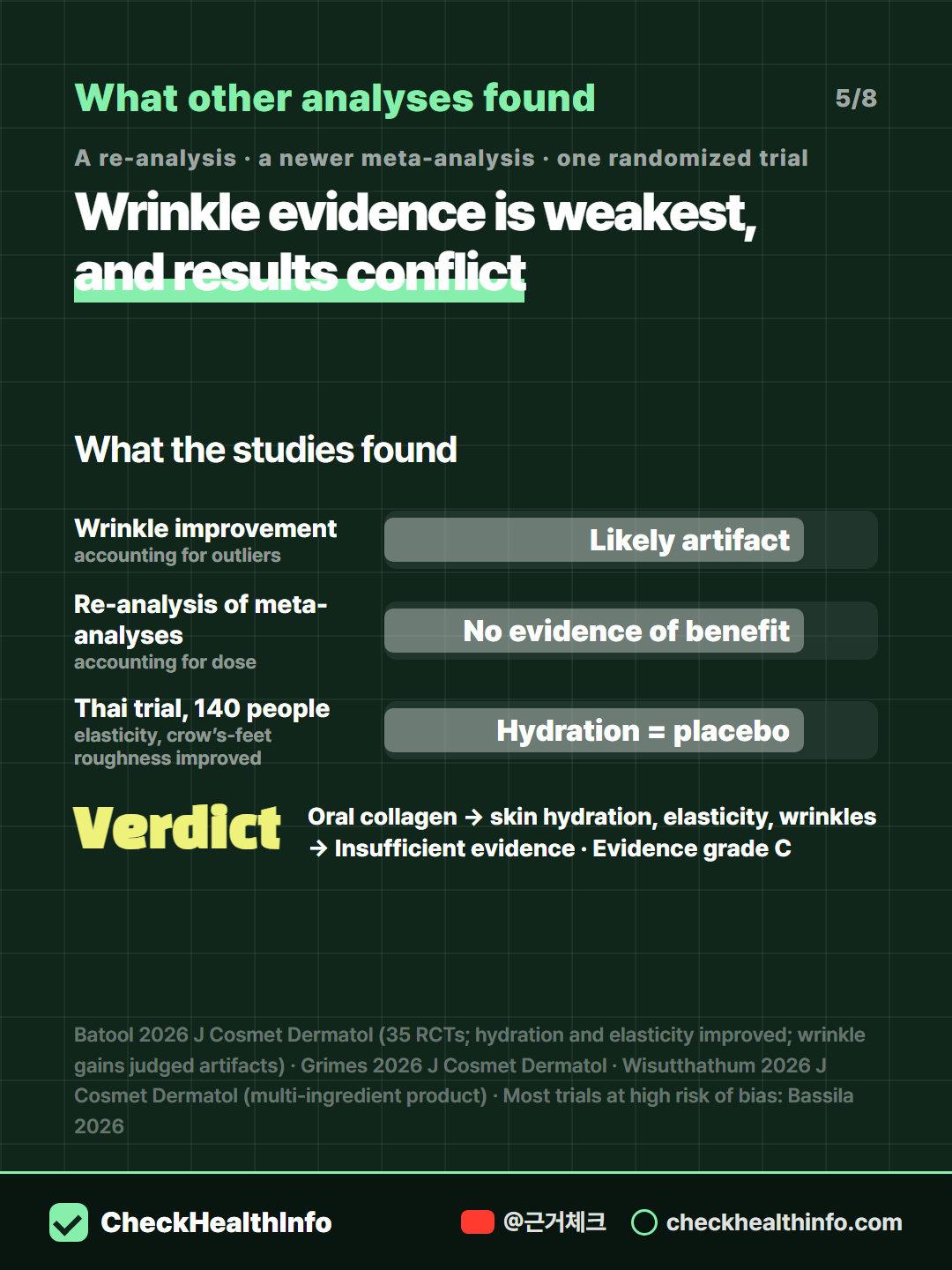
- A newer meta-analysis of 35 randomized trials (2,534 people) found device-measured improvements in hydration (SMD 0.44; 95% confidence interval 0.15–0.73) and elasticity (SMD 0.62; 95% CI 0.15–1.10), with elasticity requiring at least 12 weeks. However, it judged apparent improvements in wrinkles, roughness and dermal density to be statistical artifacts driven by highly influential outliers and marked differences between studies (heterogeneity). [2] In plain terms, hydration and elasticity improved somewhat on device measurements in some analyses, but the evidence that wrinkles decrease is the weakest.
- A re-analysis of two earlier meta-analyses found that data from the original studies had been reported inaccurately and that different measures had been combined inappropriately; after accounting for dose, it found no evidence of benefit. [3]
- Some meta-analyses did report benefits. One pooling 26 trials (1,721 people) found better hydration and elasticity than placebo but noted several sources of bias in the included trials [4]; another pooling 19 studies (1,125 people; 95% women; ages 20–70) concluded that 90 days of intake improved skin-aging measures. [5] A systematic review of 25 randomized trials reported improvement in hydration in 10 of 15 trials, elasticity in 10 of 13, and wrinkles in 9 of 10, but rated most included trials at high risk of bias. [6]
- In a 12-week randomized trial of 140 Thai adults, hydration rose in both the collagen and placebo groups, with no difference between them; the authors said the increase may reflect factors beyond the product itself, such as fluid intake or behavior. Elasticity and crow’s-feet roughness improved more with collagen (a product combining collagen with other ingredients). [8]
Grade: The most direct evidence is meta-analyses of randomized trials (a design that starts at grade A). But the results conflict (overall analyses show an effect; non-industry-funded studies, high-quality studies and a re-analysis do not), and the evidence is indirect: outcomes are device measurements, most participants were women, and trials lasted only a few months (e.g., 90 days, 12 weeks) — so it is hard to tell whether ordinary adults taking commercial “low-molecular-weight collagen” would see visible wrinkle improvement. With two reasons to downgrade, we lowered the grade two levels to C. Because no reliable (grade A or B) evidence shows that collagen is ineffective, the label is “Insufficient evidence,” not “False.”
Evidence grades run from A (high) to D (very low). Meta-analyses start at A but drop one level for each reason such as conflicting or indirect results. See our rating method for details.
If you take collagen, consider this
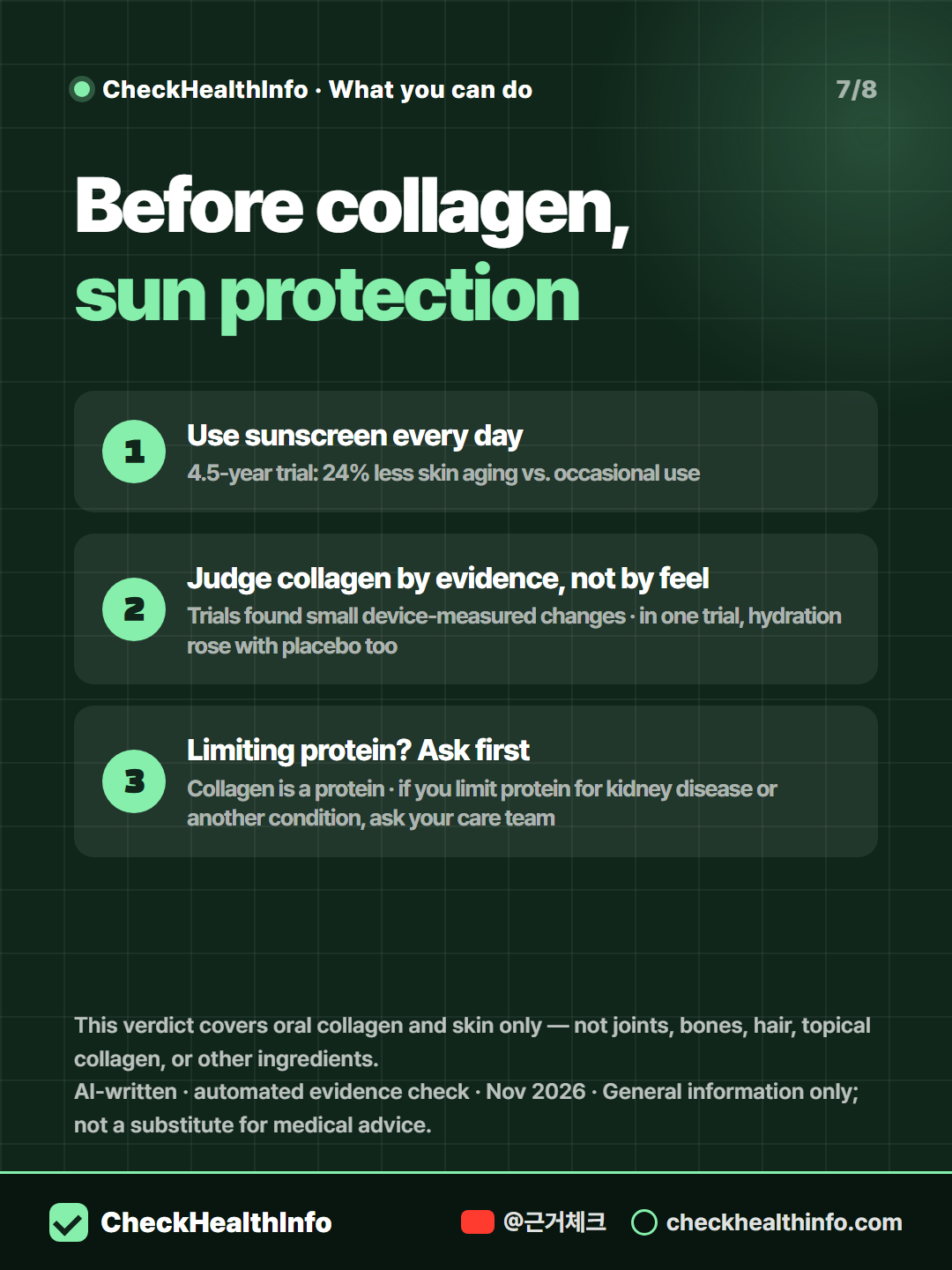
- If skin aging is your concern, use sunscreen every day — in a randomized trial of 903 Australian adults under 55, the daily-sunscreen group showed no detectable increase in skin aging after 4.5 years, and skin aging was 24% less than in the group using sunscreen at their own discretion (relative odds 0.76; 95% CI 0.59–0.98). In the same trial, beta-carotene supplements had no overall effect. [9]
- If you already take collagen, judge it by the evidence, not by feel — trials reported few side effects overall [6] [7], but they were short, so the effects and safety of long-term use are unknown. The changes seen in trials were small, device-measured differences, and in one trial hydration also rose in the placebo group. [8] When deciding whether to keep taking it, remember that how your skin feels is not a reliable way to tell whether it works.
- Collagen is a protein, so if you limit protein because of kidney disease or another condition, check with your care team before taking it (general guidance).
Scope: This verdict covers oral collagen and skin (hydration, elasticity, wrinkles) only. It does not cover joints, bones, nails, hair, topical collagen, cosmetic procedures, or other ingredients in collagen products (such as hyaluronic acid or vitamin C).
Limitations
- Whether molecular size (“low-molecular-weight”) or collagen source (fish, pork, etc.) changes the effect was not settled in the studies we reviewed. In one meta-analysis, the effect on hydration varied by source and duration, while elasticity did not differ by source. [4]
- A meta-analysis of 19 trials of oral and topical peptides found a small overall wrinkle reduction, driven largely by oral polypeptides. Hydration and brightness improved, and effects on elasticity and density were inconsistent. That analysis also included peptides other than collagen. [7]
- Trial results were mostly device measurements of skin moisture, elasticity and wrinkles, which may differ from changes you see in the mirror or feel yourself. Most participants were women. [5]
- This article was prompted by a news report. We do not evaluate any media outlet, person or product, and we did not cover other claims in the same report.
- Grades follow section 1 of our rating method. We check PubMed monthly for new studies; if a verdict changes, we log it in our corrections.
Card news
Video (in Korean)
References
- Myung SK, Park Y. Effects of Collagen Supplements on Skin Aging: A Systematic Review and Meta-Analysis of Randomized Controlled Trials. Am J Med 2025;138(9):1264-1277. PMID 40324552. PubMed abstract · Full article
- Batool A, Abbas MS, Farooq R, et al. Oral Collagen Peptides and Skin Rejuvenation: A Systematic Review and an Updated Meta-Analysis of Randomized Controlled Trials. J Cosmet Dermatol 2026;25(7):e71041. PMID 43047141. PubMed abstract · Full article
- Grimes DR, Mahto A. Hydrolyzed Collagen for Skin Aging Meta-Analyses Are Unreliable. J Cosmet Dermatol 2026;25(10):e71208. PMID 43047302. PubMed abstract · Full article
- Pu SY, Huang YL, Pu CM, et al. Effects of Oral Collagen for Skin Anti-Aging: A Systematic Review and Meta-Analysis. Nutrients 2023;15(9). PMID 37432180. PubMed abstract · Full article
- de Miranda RB, Weimer P, Rossi RC. Effects of hydrolyzed collagen supplementation on skin aging: a systematic review and meta-analysis. Int J Dermatol 2021;60(12):1449-1461. PMID 33742704. PubMed abstract · Full article
- Bassila C, Bassila JC, Slim M. Efficacy and safety of hydrolyzed collagen supplementation on skin health outcomes: a systematic literature review of randomized controlled trials. Eur J Clin Nutr 2026;80(9):867-885. PMID 42342959. PubMed abstract · Full article
- Nukaly HY, Halawani IR, Irtaza HM, et al. Oral and topical peptides for skin aging: systematic review and meta-analysis of randomized controlled trials. Front Med (Lausanne) 2026;13:1618306. PMID 41924746. PubMed abstract · Full article
- Wisutthathum S, Pimjuk P, Yeesibsean N, et al. Safety and Efficacy of a Hydrolyzed Collagen Formulation (HYCOS) for Facial Skin Elasticity and Wrinkles: A Randomized, Double-Blind, Placebo-Controlled Trial. J Cosmet Dermatol 2026;25(9):e71121. PMID 43047132. PubMed abstract · Full article · Free full text
- Hughes MC, Williams GM, Baker P, et al. Sunscreen and prevention of skin aging: a randomized trial. Ann Intern Med 2013;158(11):781-90. PMID 23732711. PubMed abstract · Full article
General information only, not a substitute for professional medical advice, diagnosis, or treatment. Collagen is a protein — if you limit protein because of kidney disease or another condition, talk with your health care team before taking it.