Does eating a varied diet lower your diabetes risk?
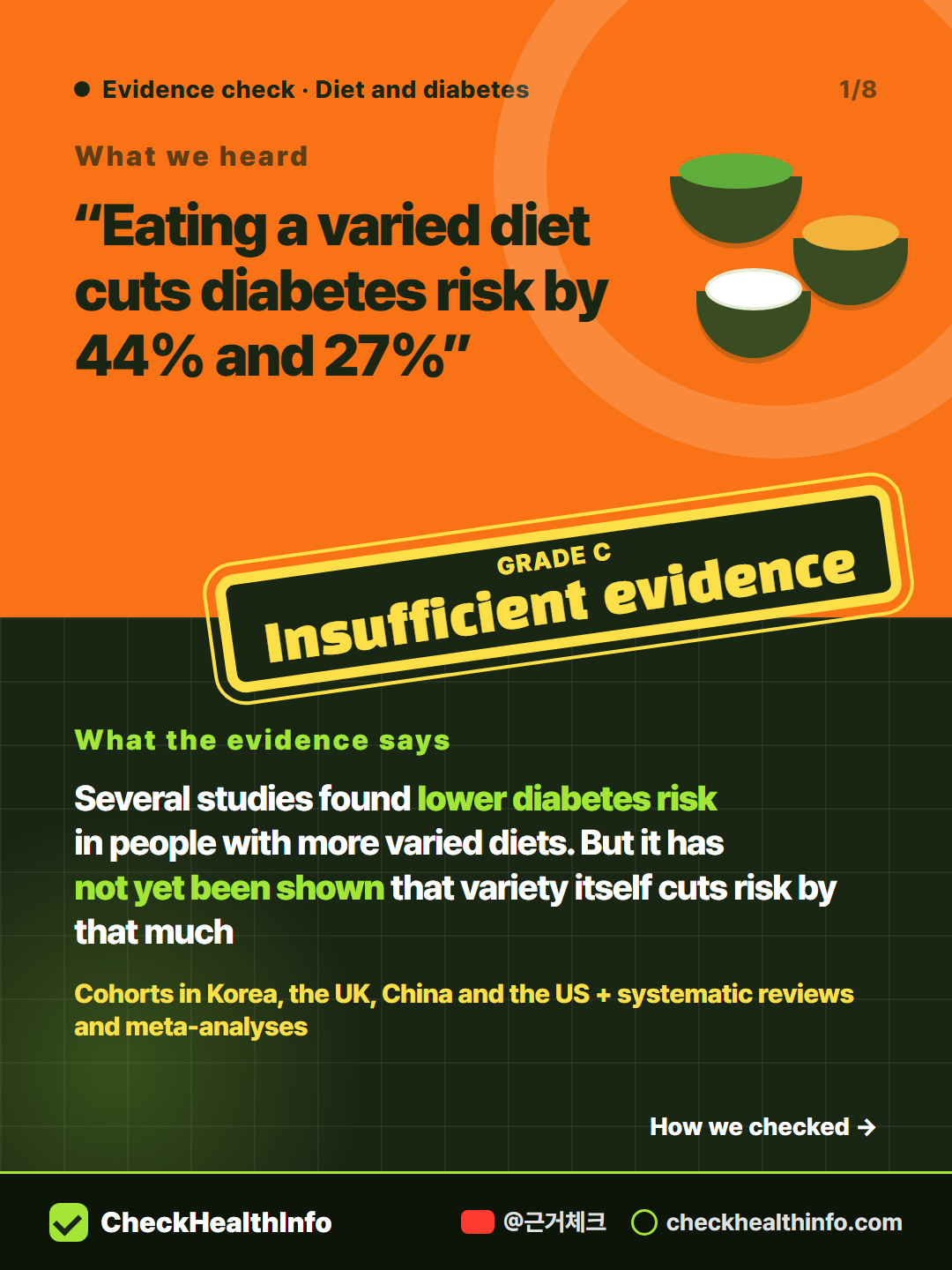
Does eating a wide variety of foods lower the risk of type 2 diabetes by 44% in men and 27% in women?

We checked this verdict against 9 sources, such as published studies and clinical guidelines. · How checked: AI-drafted · automated evidence checks
Verdicts at a glance
| Claim | Verdict |
|---|---|
| Eating a wide variety of foods lowers the risk of type 2 diabetes by 44% in men and 27% in women | Insufficient evidence · Evidence grade C |
Bottom line — Several observational studies, including one in Korea, have found lower diabetes risk in people who eat a more varied diet. The figures “44% for men and 27% for women” also come from a real Korean study. But it has not yet been clearly shown that eating a varied diet itself lowers risk by that much, and results differ from study to study. So the claim that “eating a wide variety of foods lowers the risk of type 2 diabetes by 44% in men and 27% in women” is rated Insufficient evidence (this does not mean it is false). What was more consistently linked to lower risk was not how many kinds of food people ate but what they ate: diets built around vegetables, legumes, fruits and fish, in other words, diet quality.
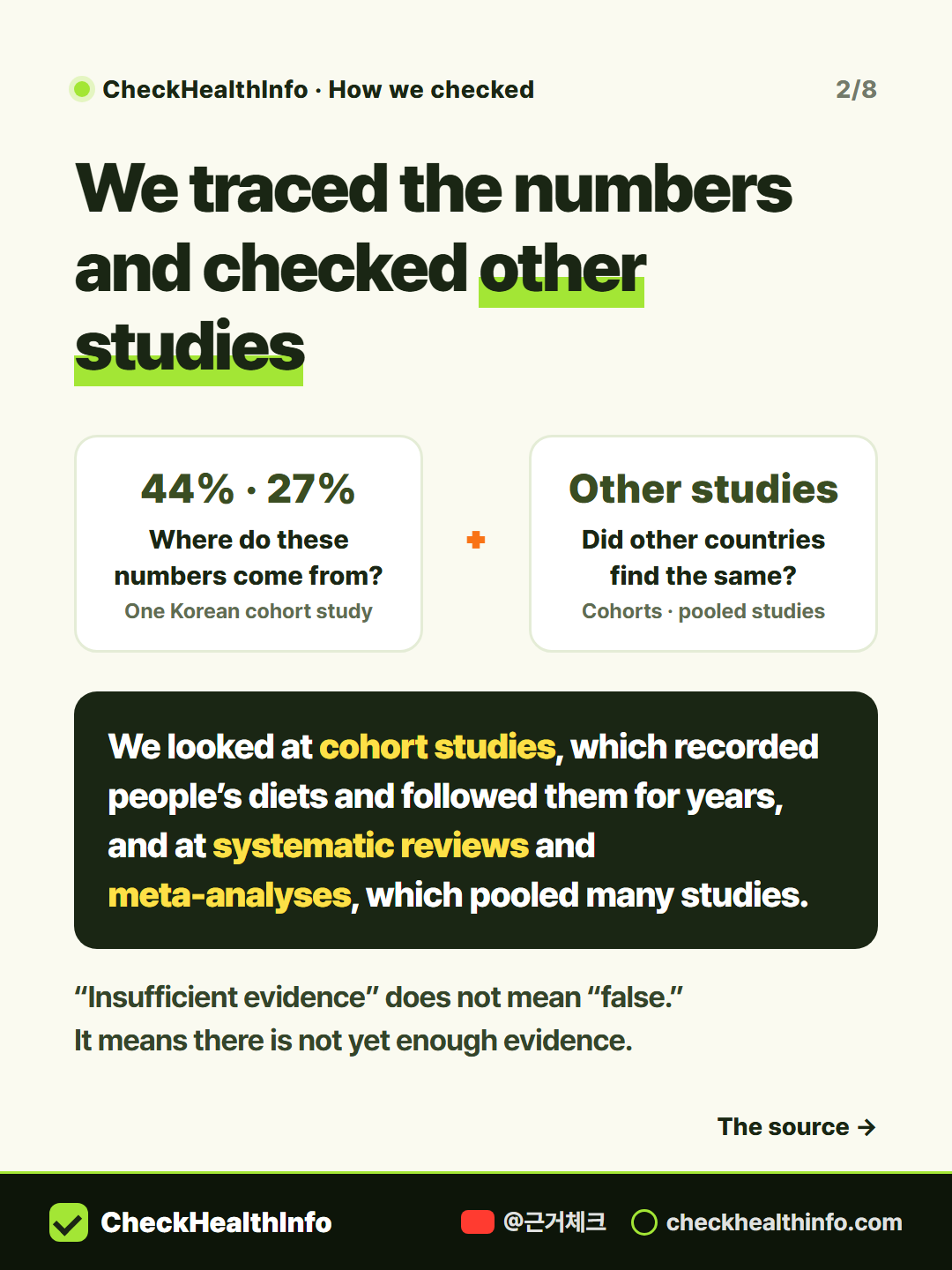
Cohort study — An observational study that first records people’s habits (here, their diets) and then follows them for years to see who develops a disease. It is not an experiment that can confirm cause and effect.
Dietary diversity score — A score for how evenly someone eats from different food groups (grains, vegetables, fruit, meat and fish, milk and dairy, and so on). Studies calculate it in different ways.
Incidence rate ratio, hazard ratio — The rate of disease in one group divided by the rate in another. A value of 0.56 means the risk was 44% lower than in the comparison group.
Systematic review, meta-analysis — An analysis that gathers many studies using a set method and summarizes them, or pools their results into one estimate.
95% confidence interval — The range in which the true value is likely to lie. If the range for a ratio crosses 1, we cannot be confident there is a real difference.
Verdict. “Eating a wide variety of foods lowers the risk of type 2 diabetes by 44% in men and 27% in women”
Insufficient evidence · Evidence grade C
In plain terms Several studies found a link between eating a more varied diet and lower diabetes risk, but it has not yet been confirmed that eating a varied diet is what lowered the risk by that much. So we rated it “Insufficient evidence”: it has not yet been clearly shown.
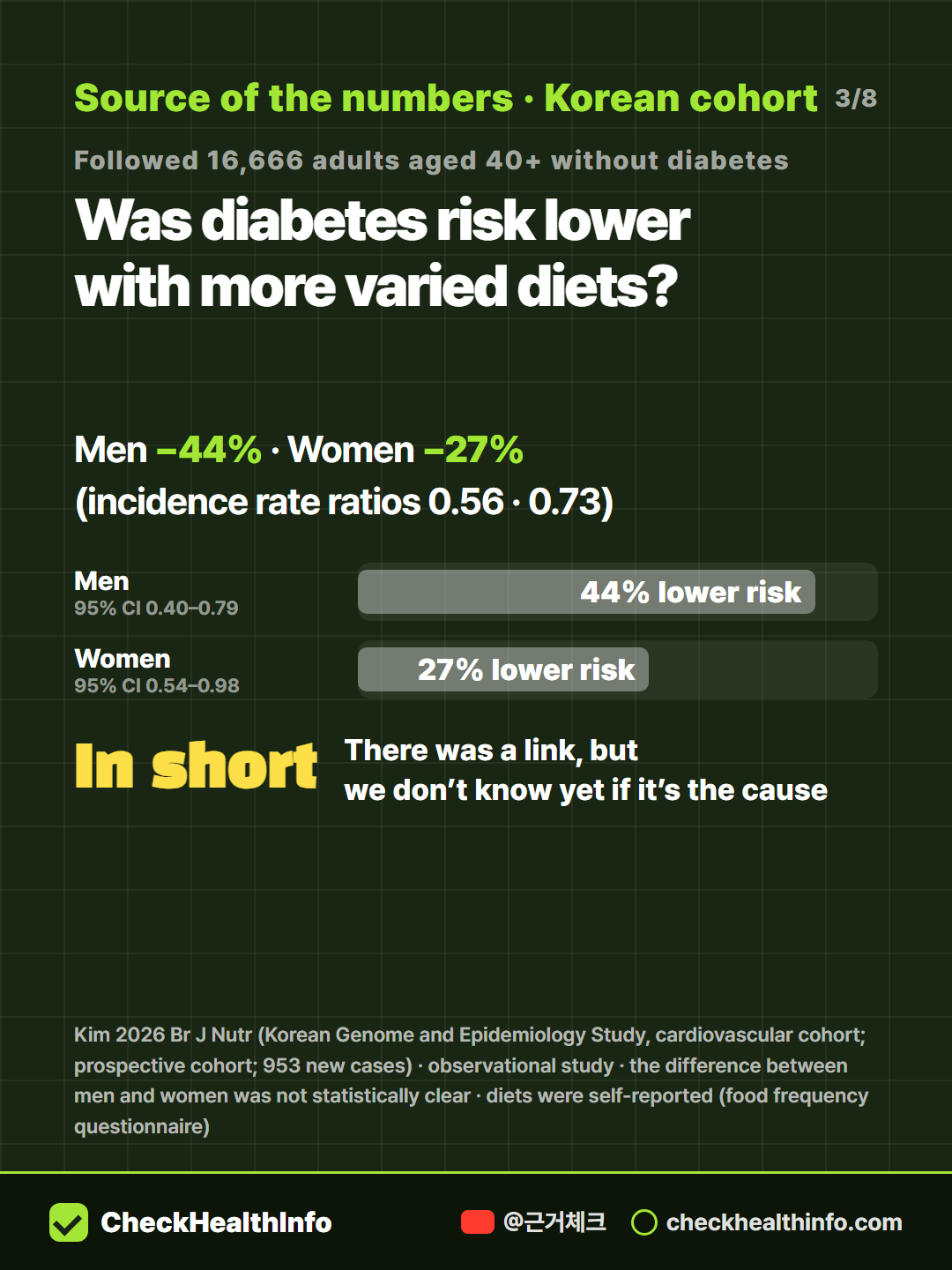
- Where the numbers come from — Researchers repeatedly recorded the diets of 16,666 Korean adults aged 40 or older who did not have diabetes and followed them over time; 953 developed type 2 diabetes. The higher the overall dietary diversity score, the lower the risk of diabetes, with incidence rate ratios of 0.56 in men (95% confidence interval 0.40 to 0.79) and 0.73 in women (0.54 to 0.98). In plain terms, people who ate a more varied diet had a 44% lower risk (men) and a 27% lower risk (women) than people who ate a less varied diet. [1]
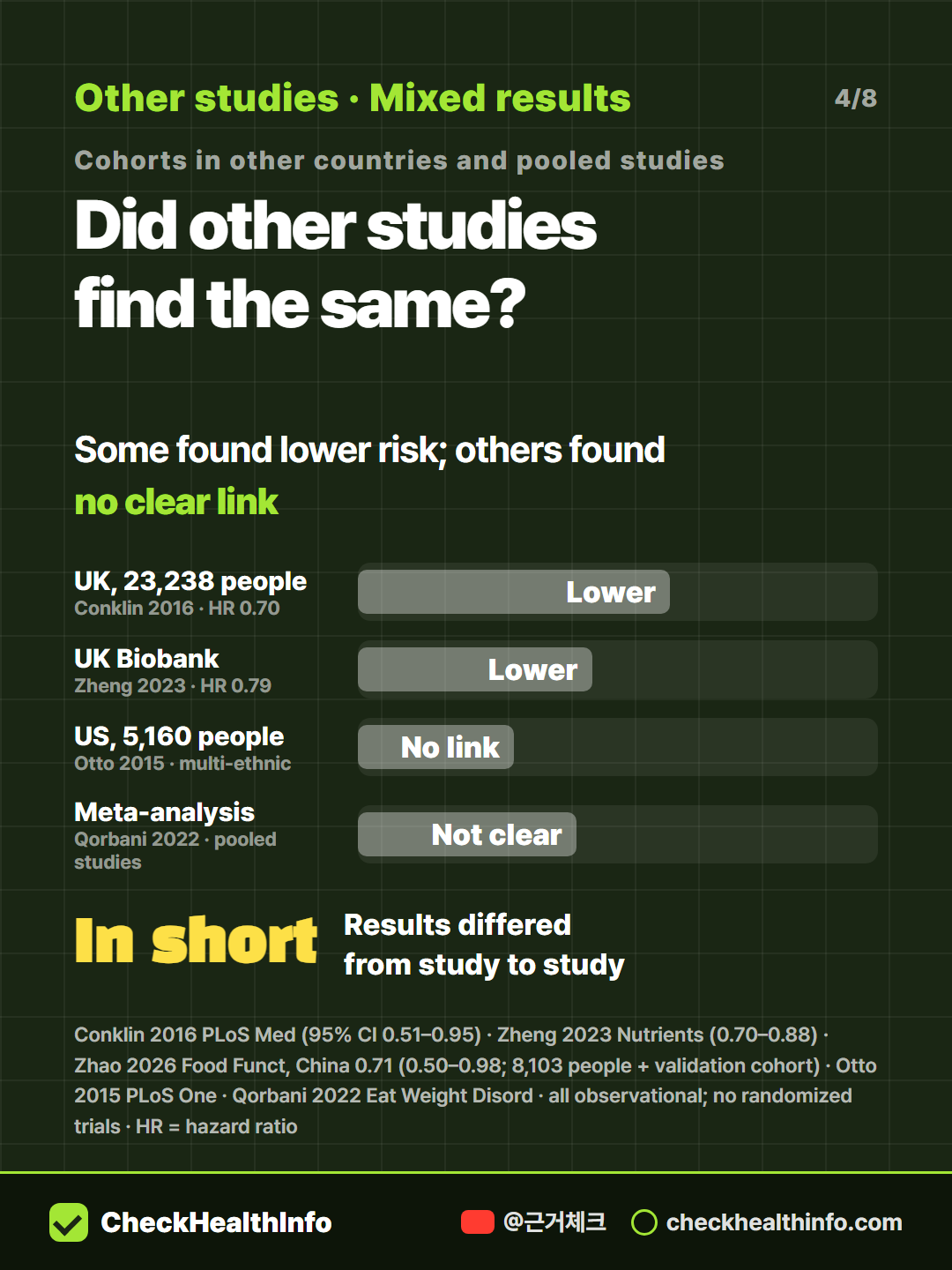
- Cohorts in other countries pointed in a similar direction. In a study that followed 23,238 UK adults for 10 years (median), people who ate from all five food groups had a hazard ratio of 0.70 (95% confidence interval 0.51 to 0.95) compared with those who ate from three groups or fewer; [2] in 181,360 people in UK Biobank, it was 0.79 (0.70 to 0.88); [3] and in a Chinese study (a cohort of 8,103 people plus a validation cohort), it was 0.71 (0.50 to 0.98). [4]
- A systematic review of longitudinal studies also concluded that greater variety across food groups, and within fruits and vegetables, was linked to lower risk of type 2 diabetes, but the effect depended on how variety was defined and which factors were adjusted for. [7]
- But the results were not always the same. In a multi-ethnic US cohort (5,160 people aged 45–84), the number of different foods people ate and how evenly they ate them were not linked to new cases of diabetes, while higher diet quality (a healthy-eating score) was linked to lower diabetes risk. [5] A meta-analysis of observational studies also found no statistically clear link between variety scores and diabetes. [6] A systematic review of diet quality scores that include a variety component found inconsistent links with diabetes and concluded that the evidence is still insufficient. [8]
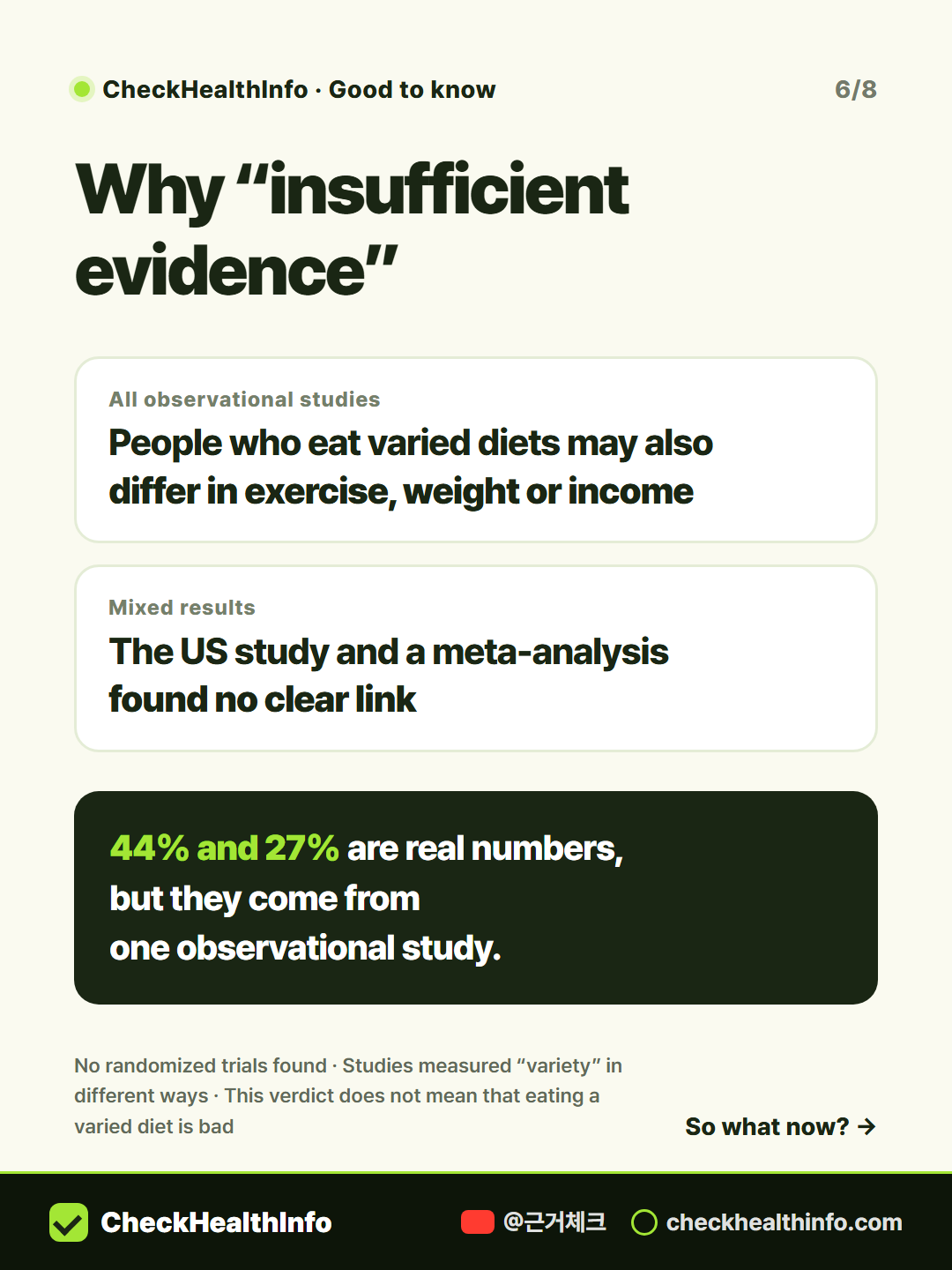
- All of these are observational studies. People who eat a varied diet may also differ in other ways, such as income, education, exercise and weight, and even when researchers adjust for these factors, it is hard to rule them all out. We found no trials that randomly assigned people to a more or less varied diet and looked at new cases of diabetes.
Grade: It starts at A (systematic reviews and meta-analyses of dietary diversity and diabetes), but we lowered it two steps to C for two separate reasons: (2) all the pooled studies were observational, and (3) the results were inconsistent (lower risk in cohorts in Korea, the UK and China; no clear link in a US cohort or a meta-analysis).
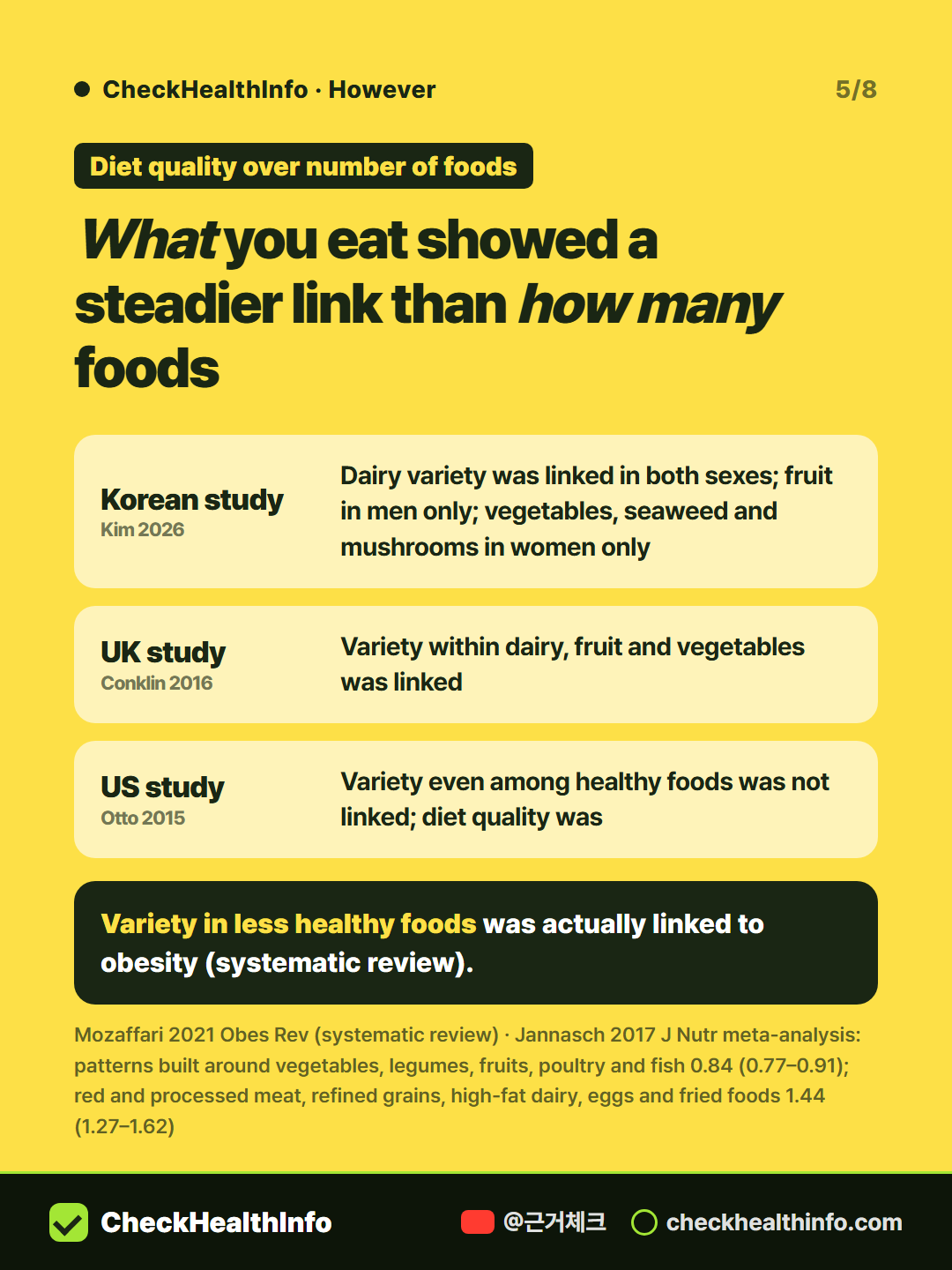
Results for variety within food groups were not consistent either. In the Korean study, variety within milk and dairy was linked to lower diabetes risk in both men and women, variety in fruit only in men, and variety in vegetables, seaweed and mushrooms only in women. [1] In the UK study, variety within dairy (hazard ratio 0.61), fruit (0.69) and vegetables (0.67) was linked to lower risk. [2] But in the US cohort, variety was not linked to diabetes even when it was measured using healthy foods only; what was linked was diet quality, not variety. [5]
In contrast, variety in less healthy foods was actually linked to obesity. [7] In the US cohort, the more dissimilar foods people ate, the more their waist circumference increased. [5]
In a meta-analysis of dietary patterns, patterns built around vegetables, legumes, fruits, poultry and fish had a relative risk of diabetes of 0.84 (0.77 to 0.91), while patterns built around red and processed meat, refined grains, high-fat dairy, eggs and fried foods had a relative risk of 1.44 (1.27 to 1.62). These results also come from pooled observational studies. [9]
If you are worried about diabetes and want to change how you eat
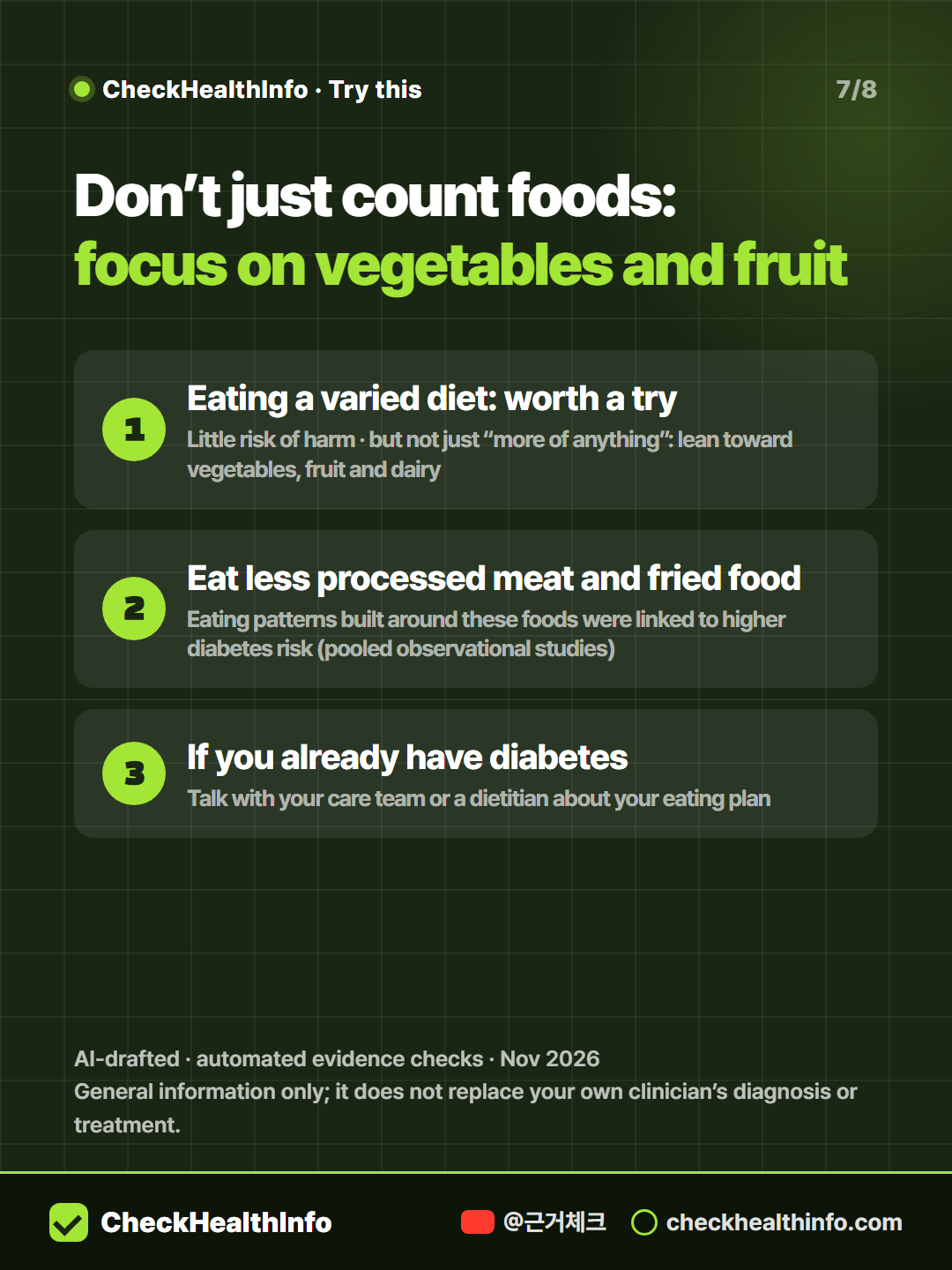
- Eat a varied diet — This habit carries little risk, so it is worth a try. But don’t rely on the number of foods alone: rather than “more of anything,” spread your choices across vegetables, fruit, and milk and dairy.
- Eat fewer meals built around processed meat, fried foods and refined grains — Eating patterns built around these foods were linked to higher diabetes risk (pooled observational studies). [9]
- If you already have diabetes — Talk with your care team or a dietitian about your eating plan.
Scope: This verdict covers the link between dietary diversity and new cases of type 2 diabetes in healthy adults. It does not cover gestational diabetes or diet as treatment for people who already have diabetes.
Limitations of this verdict
- The 44% and 27% figures are observed values from a single Korean cohort study, and the abstract does not state what the overall diversity score was compared against (for example, highest vs. lowest group). [1]
- In this study, the difference between men and women (the interaction by sex) was not statistically clear. We cannot conclude that the effect is larger in men. [1]
- Diets were self-reported (food frequency questionnaires), so they may differ from what people actually ate, and studies measured “variety” in different ways, so their numbers are hard to compare directly.
- In the UK study, a diet that included all five food groups cost 18% more per day. [2]
- We did not find any clinical practice guideline abstracts that directly addressed dietary diversity scores and diabetes prevention.
- Grades follow section 1 of our rating method. We check PubMed for new studies every month, and if a verdict changes, we record it in our corrections log.
Card news
Video (in Korean)
References
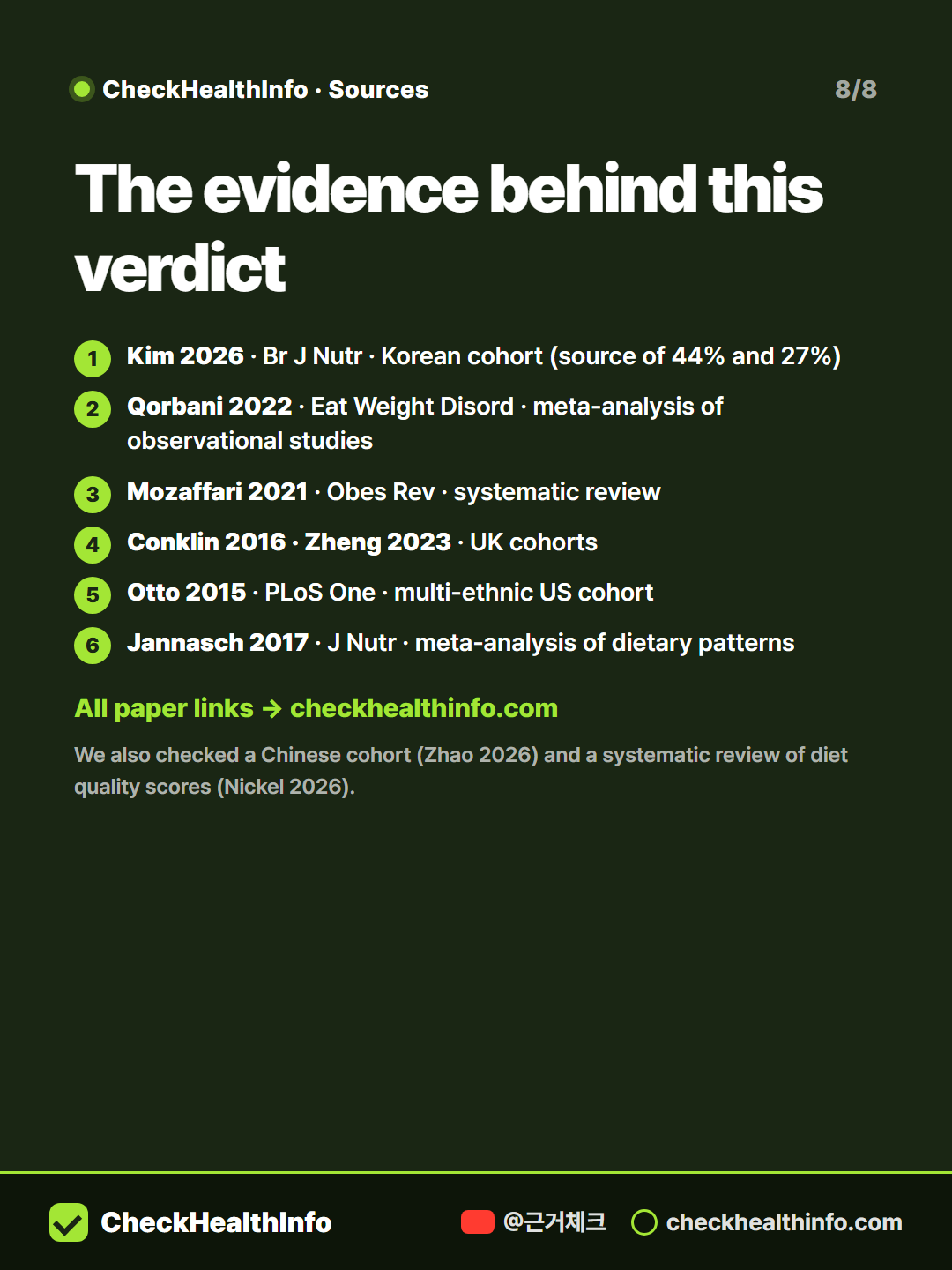
- Kim MJ, Woo HW, Shin MH, et al. Dietary diversity and type 2 diabetes risk: evidence from a prospective Korean cohort study. Br J Nutr 2026:1-10. PMID 42878000. PubMed abstract · Full article
- Conklin AI, Monsivais P, Khaw KT, et al. Dietary Diversity, Diet Cost, and Incidence of Type 2 Diabetes in the United Kingdom: A Prospective Cohort Study. PLoS Med 2016;13(7):e1002085. PMID 27433799. PubMed abstract · Full article · Free full text
- Zheng G, Cai M, Liu H, et al. Dietary Diversity and Inflammatory Diet Associated with All-Cause Mortality and Incidence and Mortality of Type 2 Diabetes: Two Prospective Cohort Studies. Nutrients 2023;15(9):2120. PMID 37432291. PubMed abstract · Full article · Free full text
- Zhao B, Li Y, Li S, et al. Associations of dietary diversity with type 2 diabetes in two Chinese cohorts: a multi-omics study. Food Funct 2026;17(11):5142-5151. PMID 42171301. PubMed abstract · Full article
- Otto MC, Padhye NS, Bertoni AG, et al. Everything in Moderation--Dietary Diversity and Quality, Central Obesity and Risk of Diabetes. PLoS One 2015;10(10):e0141341. PMID 26517708. PubMed abstract · Full article · Free full text
- Qorbani M, Mahdavi-Gorabi A, Khatibi N, et al. Dietary diversity score and cardio-metabolic risk factors: an updated systematic review and meta-analysis. Eat Weight Disord 2022;27(1):85-100. PMID 33772731. PubMed abstract · Full article
- Mozaffari H, Hosseini Z, Lafrenière J, et al. The role of dietary diversity in preventing metabolic-related outcomes: Findings from a systematic review. Obes Rev 2021;22(6):e13174. PMID 33615679. PubMed abstract · Full article
- Nickel DV, Jannasch F, Schulze MB. Systematic review of diet quality scores including diet diversity in relation to major chronic diseases, obesity and mortality in healthy adults. Eur J Nutr 2026;65(4). PMID 42047829. PubMed abstract · Full article · Free full text
- Jannasch F, Kröger J, Schulze MB. Dietary Patterns and Type 2 Diabetes: A Systematic Literature Review and Meta-Analysis of Prospective Studies. J Nutr 2017;147(6):1174-1182. PMID 28424256. PubMed abstract · Full article
General information only, not medical advice. It does not replace your own clinician’s diagnosis or treatment. If you already have diabetes, talk with your care team or a dietitian about your eating plan.