No time to exercise? Can a few minutes of vigorous movement a day make a difference?
Do “exercise snacks” — brief, vigorous bursts of activity lasting 1–2 minutes, spread through the day — improve cardiorespiratory fitness? Can these bursts also help you live longer or keep your heart healthy?

We checked this verdict against 21 sources, such as published studies and clinical guidelines. · How checked: AI-drafted · automated evidence checks
Verdicts at a glance
| Claim | Verdict |
|---|---|
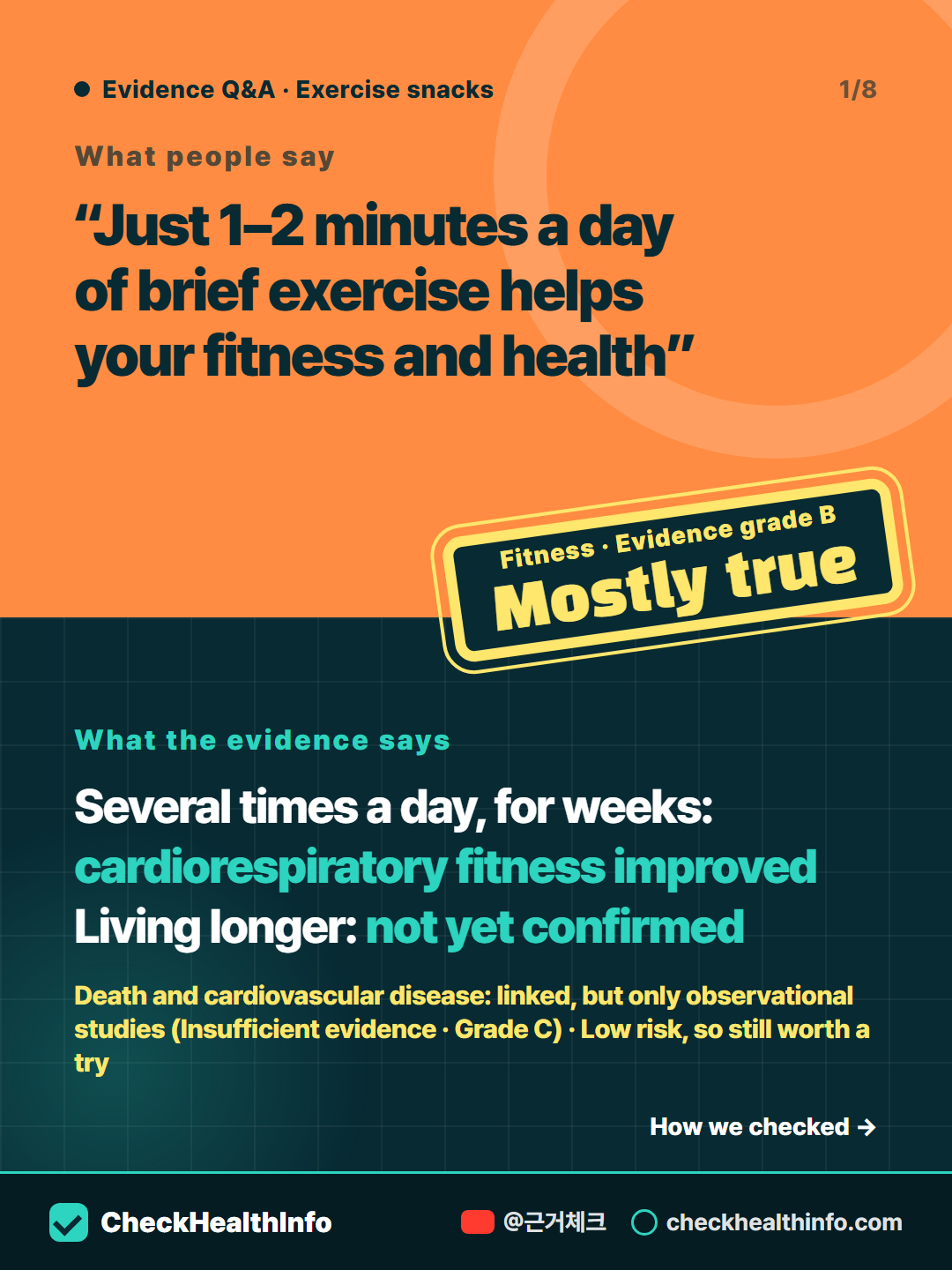
| Doing “exercise snacks” — vigorous bursts of about a minute, several times a day — for a few weeks improves cardiorespiratory fitness | Mostly true · Evidence grade B |
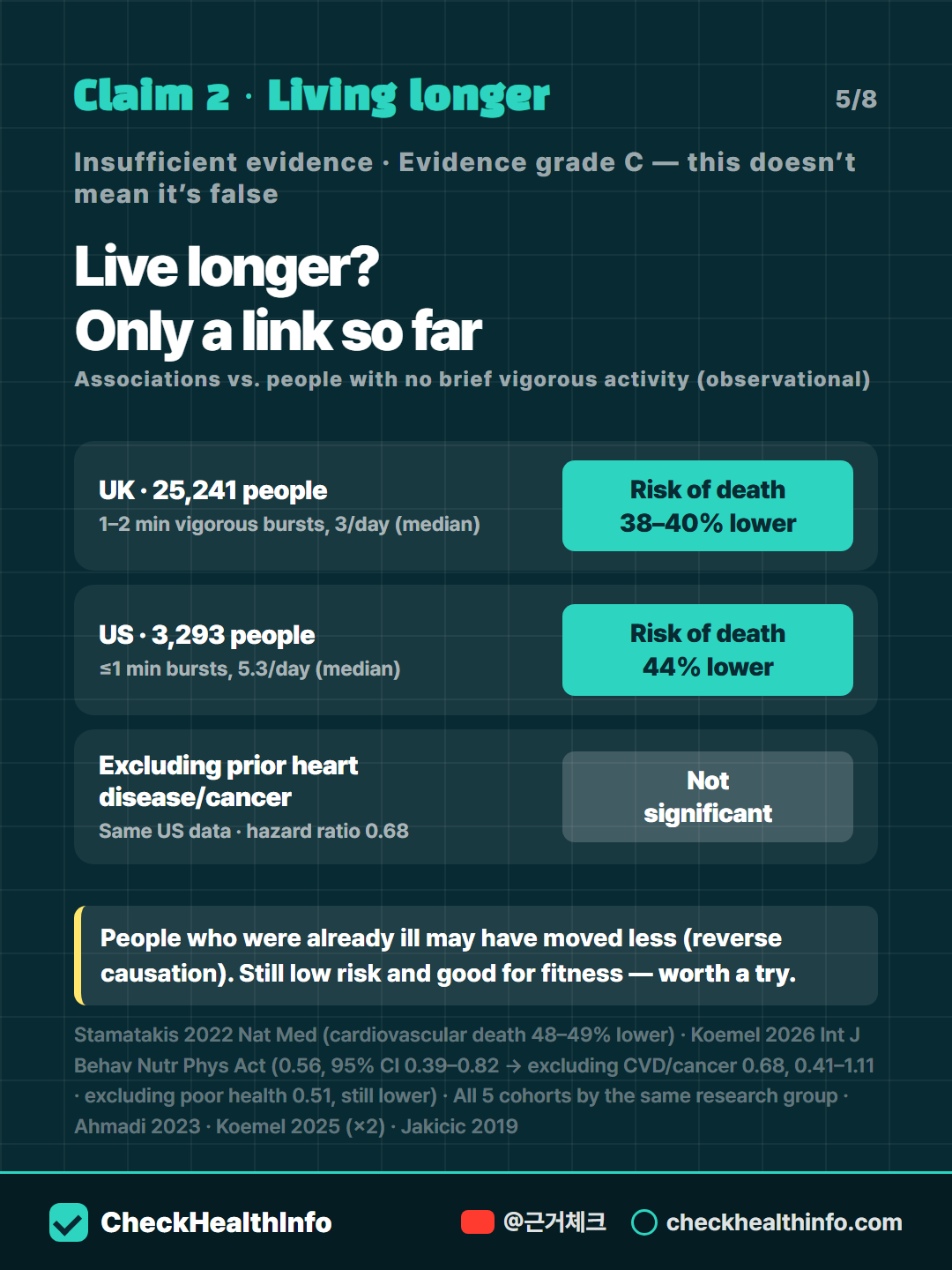
| A few minutes a day of brief, vigorous everyday movement lowers the risk of early death or cardiovascular disease | Insufficient evidence · Evidence grade C |
Bottom line — In randomized trials and their meta-analyses, people who did “exercise snacks” — brief bursts of vigorous exercise lasting about a minute, several times a day, for several weeks — improved their cardiorespiratory fitness. So the claim that “a few weeks of exercise snacks improves cardiorespiratory fitness” is rated Mostly true, although most participants were previously inactive young and middle-aged adults and the trials were small and short. The claim that “brief vigorous bursts of everyday activity lower the risk of early death or cardiovascular disease” is rated Insufficient evidence. Several cohort studies found that people with more of these bursts had lower risk, but all were observational, and the link faded when people with existing disease were excluded. The benefit isn’t certain, but because it is low-risk and helps fitness, brief vigorous movement in daily life is worth a try.
Exercise snacks — Short bouts of exercise (usually about a minute) spread across the day. Trials used stair climbing, high knees in place and sit-to-stands from a chair.
Vigorous intermittent lifestyle physical activity (VILPA) — Brief bursts of vigorous movement that happen during daily life rather than planned exercise (brisk walking, climbing stairs with shopping bags). Studies measure them with wrist-worn activity trackers.
Cardiorespiratory fitness and VO2max — Cardiorespiratory fitness is how well the heart and lungs can deliver oxygen to the body. Maximal (or peak) oxygen uptake, VO2max, is the most oxygen the body can use and is the standard measure of this fitness.
Meta-analysis — An analysis that combines the results of several studies on the same question and recalculates the overall effect.
Effect size (Hedges’ g) — A value that puts results measured in different units on the same scale. Zero means no difference; roughly 0.2 is small, 0.5 moderate and 0.8 or more large.
Hazard ratio — How many times higher or lower the risk is in one group than in another. A value of 1 means no difference; below 1 means lower risk.
95% confidence interval — The range within which the true result plausibly lies. If the range for a difference includes 0 (or 1 for a ratio), the difference is not considered statistically significant.
Publication bias — Studies that find a benefit are more likely to be published than those that don’t, so pooled results can look bigger than the true effect.
Reverse causation — When cause and effect run the other way. For example, people may move less because they are already ill, not become ill because they move less.
What are exercise snacks, and what do guidelines say?
- The WHO 2020 physical activity guidelines recommend that all adults get 150–300 minutes of moderate-intensity or 75–150 minutes of vigorous-intensity aerobic activity a week, and state that some physical activity is better than none. [21]
- A systematic review for the 2018 US Physical Activity Guidelines Advisory Committee concluded that activity in bouts shorter than 10 minutes is also associated with a range of health outcomes, including death. However, the evidence for bouts under 10 minutes came from cross-sectional and cohort studies; the randomized studies in that review only looked at bouts of 10 minutes or longer. [17]
- A scoping review of 32 studies on exercise snacks found that they appeared feasible and safe, but most of the evidence came from small trials. [20]
Claim 1. “Doing ‘exercise snacks’ — vigorous bursts of about a minute, several times a day — for a few weeks improves cardiorespiratory fitness”
Mostly true · Evidence grade B
In plain terms When inactive people did brief bouts of exercise several times a day for a few weeks, their heart-and-lung fitness scores (VO2max) went up. But the trials were small and short, and in older adults the improvements were mostly in leg strength and balance rather than cardiorespiratory fitness.
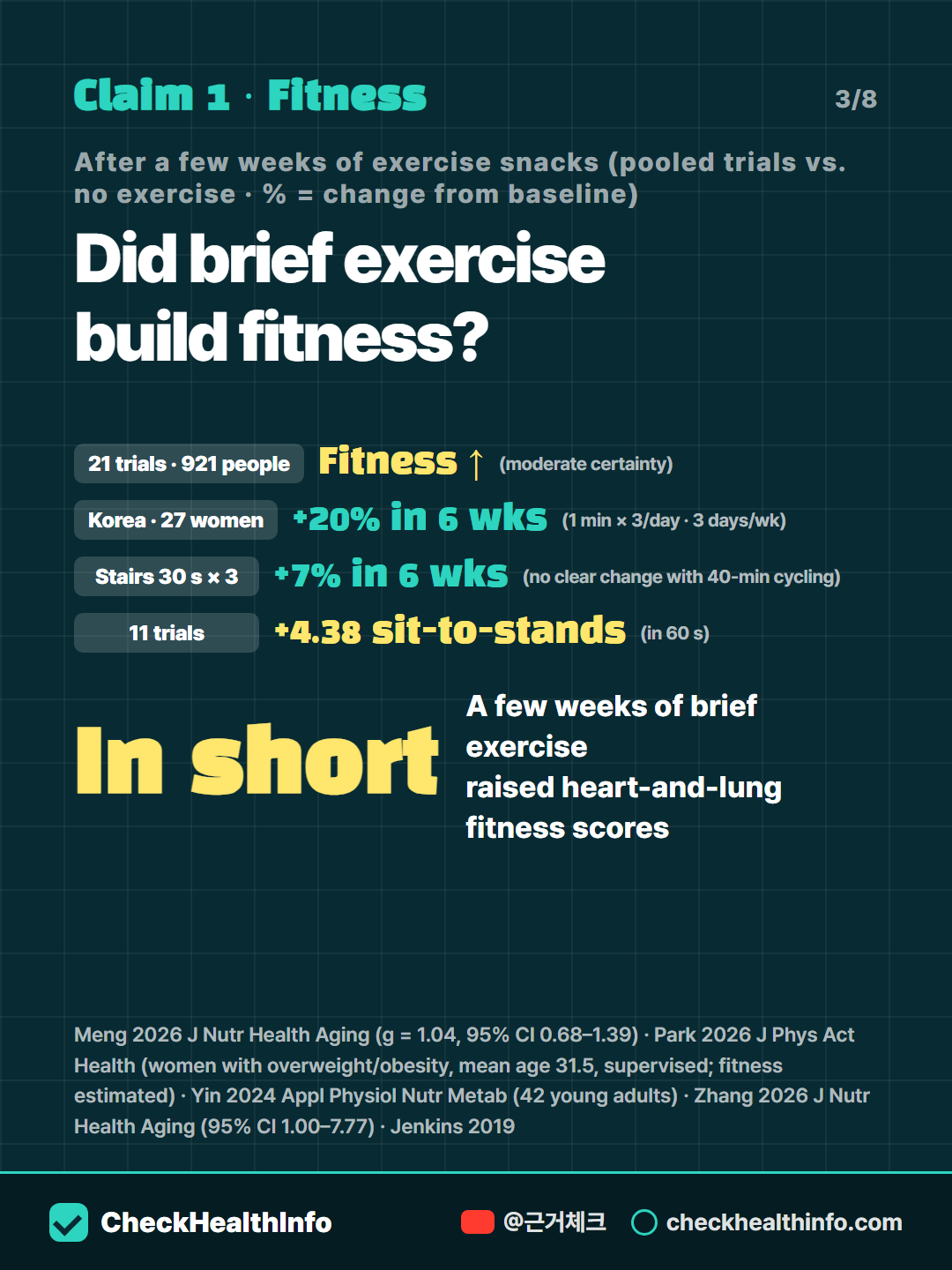
- 21 randomized trials (921 people) — VO2max improved clearly in the exercise snack groups (g = 1.04, 95% CI 0.68–1.39; moderate certainty), as did peak power output (g = 0.68). In studies where the average participant was over 50, the improvement in VO2max was not statistically clear, while peak power improved at all ages; the authors said the age findings need confirmation with individual participant data. Body fat percentage actually rose (low certainty), and there was no clear effect on blood lipids. [1]
- 11 randomized trials (472 people) — VO2max increased, and the number of sit-to-stands from a chair in 60 seconds rose by an average of 4.38. [2]
- A trial in Korea — Twenty-seven women with overweight or obesity (mean age 31.5) did supervised one-minute bouts (stair climbing, jump squats and high knees) three times a day, three days a week, for six weeks. Their estimated cardiorespiratory fitness rose by 20% (from 30.3 to 36.3 mL/kg/min) and their muscle strength index by 33%, and body weight, body fat percentage and waist circumference fell. Metabolic markers did not change. [5]
- Two stair-climbing trials — Inactive young adults who vigorously climbed three flights of stairs (60 steps) three times a day, three days a week, for six weeks had a higher peak oxygen uptake afterward than a no-exercise group (the increase was modest). [6] In another trial of 42 young adults, a group doing 30-second all-out stair climbs three times a day for six weeks raised peak oxygen uptake by 7% (mean difference 2.5 mL/kg/min, 95% CI 1.2–3.7), while a group doing 40 minutes of moderate-intensity cycling showed no significant change. [7]
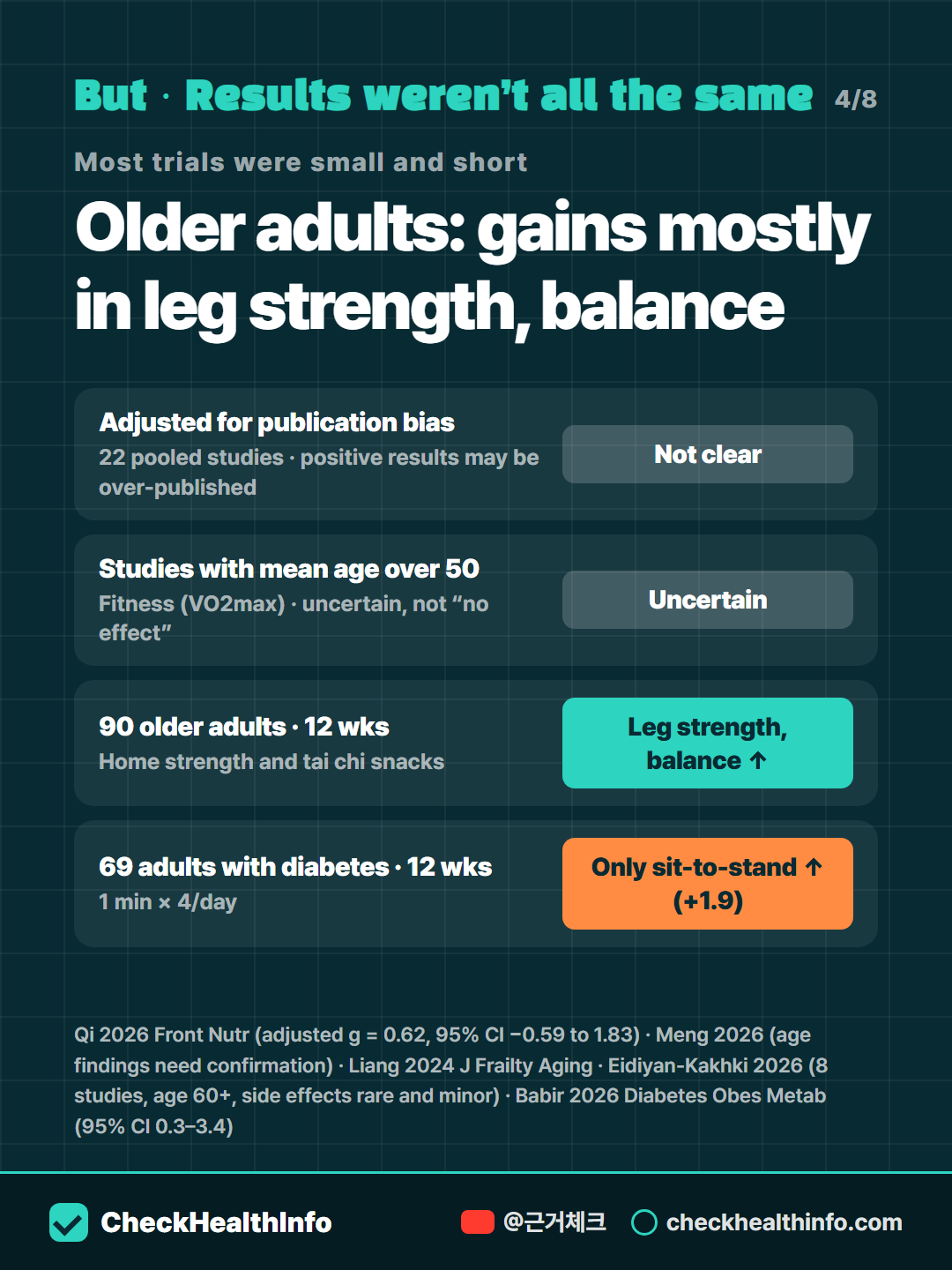
- Older adults — In a 12-week randomized trial of 90 prefrail older adults with reduced strength and balance, home-based strength and tai chi snacks improved lower-body strength and balance, and in a subset tested in person, overall physical function scores were also better. [9] A review of eight studies (317 people) of home-based exercise snacks in adults aged 60 and older also found generally better lower-body strength, balance and mobility; adherence was high (about 80–115%), and side effects were rare and minor. [10]
However, the results were not all the same.
- In a meta-analysis of 22 studies (994 people), the effect on VO2max looked large at first (g = 1.24), but after adjusting for publication bias it was no longer statistically significant (g = 0.62, 95% CI −0.59 to 1.83). The authors urged caution in interpreting it. [3]
- In a 12-week trial of 69 insufficiently active adults with type 2 diabetes (mean age 58), people who did four one-minute vigorous bouts a day on at least five days a week improved only in sit-to-stand performance compared with a light-stretching group (1.9 more repetitions); estimated VO2max, HbA1c and other outcomes did not differ. [8]
- A meta-analysis combining strength, power and function (nine studies, 313 people) found a small overall effect (g = 0.37), with low certainty. [4]
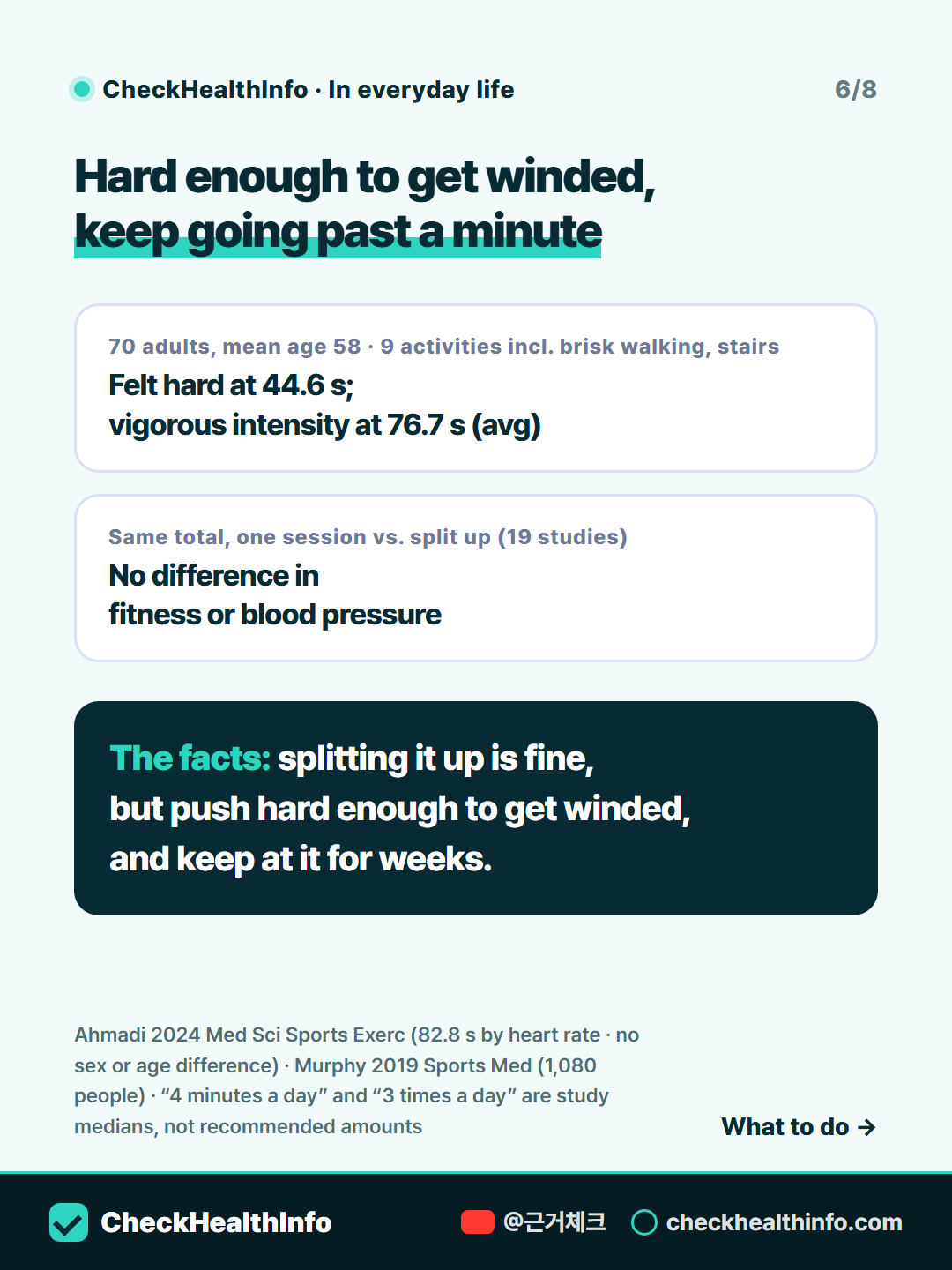
- A meta-analysis comparing the same amount of exercise done in one session versus split into several bouts a day (19 studies, 1,080 people) found no difference in cardiorespiratory fitness or blood pressure. If you can’t do it all at once, splitting up the same total gave similar results. [11]
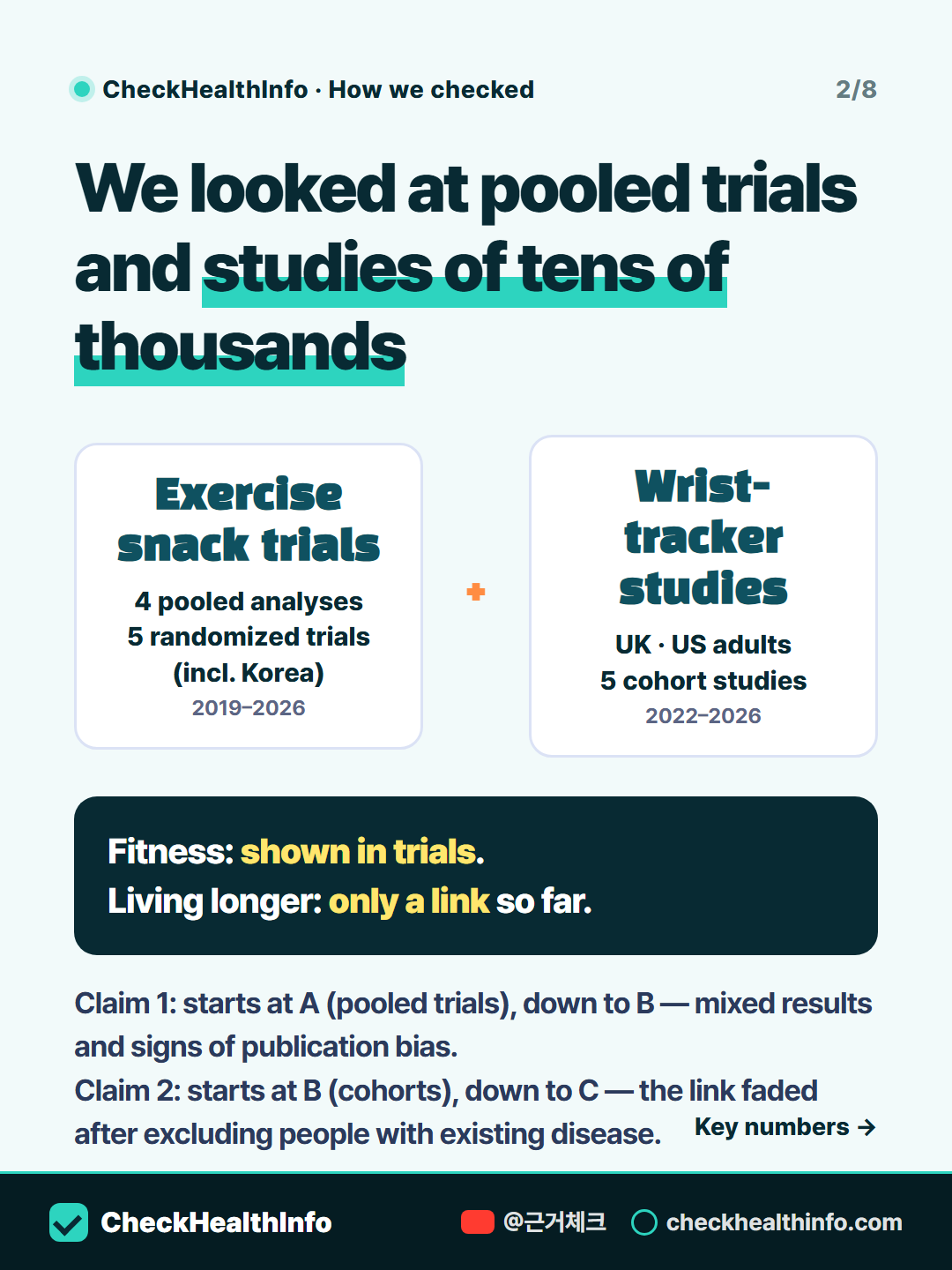
Evidence grade: We started from meta-analyses of randomized trials of exercise snacks (A) and lowered the grade one level to B under reason 3 in our rating method (uncertain results): results varied widely between trials, one analysis was no longer significant after adjusting for publication bias, and most trials were small and short. Label: “Mostly true” — the evidence points the same way, but participants were mostly previously inactive young and middle-aged adults, and in studies with an average age over 50 the gain in cardiorespiratory fitness was not clear, so the people and scope covered are narrower than the claim.
Claim 2. “A few minutes a day of brief, vigorous everyday movement lowers the risk of early death or cardiovascular disease”
Insufficient evidence · Evidence grade C
In plain terms People who habitually moved vigorously in short bursts tended to live longer and have less cardiovascular disease, but it has not yet been shown in trials that the movement itself is the reason. This does not mean the claim is false.
- 25,241 adults in the UK — In a cohort of non-exercisers who wore wrist trackers and were followed for an average of 6.9 years, people who had 1–2 minute bursts of vigorous everyday activity three times a day (the median) had a 38–40% lower risk of death from any cause and from cancer, and a 48–49% lower risk of death from cardiovascular disease, than those with none. About 4.4 minutes a day (the median) was linked to a 26–30% lower risk of death from any cause. [12]
- Length and intensity of bursts — In an analysis of the same data, bouts of 1 to under 3 minutes were linked to a lower risk of death than bouts under 1 minute (hazard ratio 0.66, 95% CI 0.53–0.81), and bouts under 1 minute were linked to lower cardiovascular risk only when at least 15% of the bout was vigorous. [13]
- People who sit a lot — Among people sitting more than 11.4 hours a day, sitting time was no longer linked to major cardiovascular events in those who also had about 4.1 minutes of vigorous everyday activity a day [14]; for death, the figure was 3.4 minutes a day. [15]
- 3,293 adults in the US — People who had vigorous bursts of 1 minute or less 5.3 times a day (the median) had a 44% lower risk of death (hazard ratio 0.56, 95% CI 0.39–0.82). [16]
However, when the same US study excluded people who already had cardiovascular disease or cancer, the link weakened and was no longer statistically significant (hazard ratio 0.68, 95% CI 0.41–1.11). The authors said reverse causation — people who were already ill moving less — may explain at least part of the result. In an analysis that excluded people in poor health, though, the link held (hazard ratio 0.51, 95% CI 0.29–0.87). [16] The four UK studies used the same UK Biobank data, and all five cohort analyses, including the US one, came from the same research group, so they are not independent confirmations. Some of the researchers disclosed advisory roles and equity in a physical activity company. [14]
- Short-term effects — A meta-analysis of 20 randomized crossover trials (392 people) in adults with metabolic disorders (type 2 diabetes, overweight or obesity) found that breaking up prolonged sitting with 2–5 minutes of light- to moderate-intensity movement at least every 30 minutes lowered post-meal blood glucose (g = −0.37, 95% CI −0.53 to −0.22; moderate certainty) and insulin. These are effects within a single day and do not show that people live longer. [18]
Evidence grade: We started from the evidence that most directly addresses the claim — large wrist-tracker cohort studies (B) — and lowered the grade one level to C under reason 3 in our rating method (uncertain results): the link faded after excluding people with existing disease, and all five studies came from the same research group. The systematic review of bouts under 10 minutes (Jakicic 2019) is supporting evidence that shows an association from observational studies only. Label: “Insufficient evidence” — the association was consistent, but there is not yet trial evidence in people showing that brief bursts lower that risk.
Two common misunderstandings
- “Four minutes a day and you’re done” — No. Figures such as “three times a day” or “4.4 minutes a day” are study medians or calculated values, not recommended amounts. The WHO recommendation is still 150–300 minutes of moderate-intensity activity a week. [12] [21]
- “Any one minute of movement will do” — In the UK data, short bursts were linked to lower risk when they included vigorous intensity, and longer bouts were linked to lower risk than very short ones. These are associations, not proof of cause. [13]
Applying it to everyday life
- When 70 adults (mean age 58) did nine everyday activities, such as brisk walking, uphill walking, stair climbing, cycling and carrying loads of 5% or 10% of body weight, it took an average of 76.7 seconds to reach vigorous intensity by oxygen uptake and 82.8 seconds by heart rate, and 44.6 seconds for it to feel hard. Times did not differ by sex or age. In plain terms, you need to keep going a little after it starts to feel hard before your body reaches the vigorous zone. [19]
- Vigorously climbing three flights of stairs (60 steps) was one bout in the stair trial. [6]
What you can do starting today
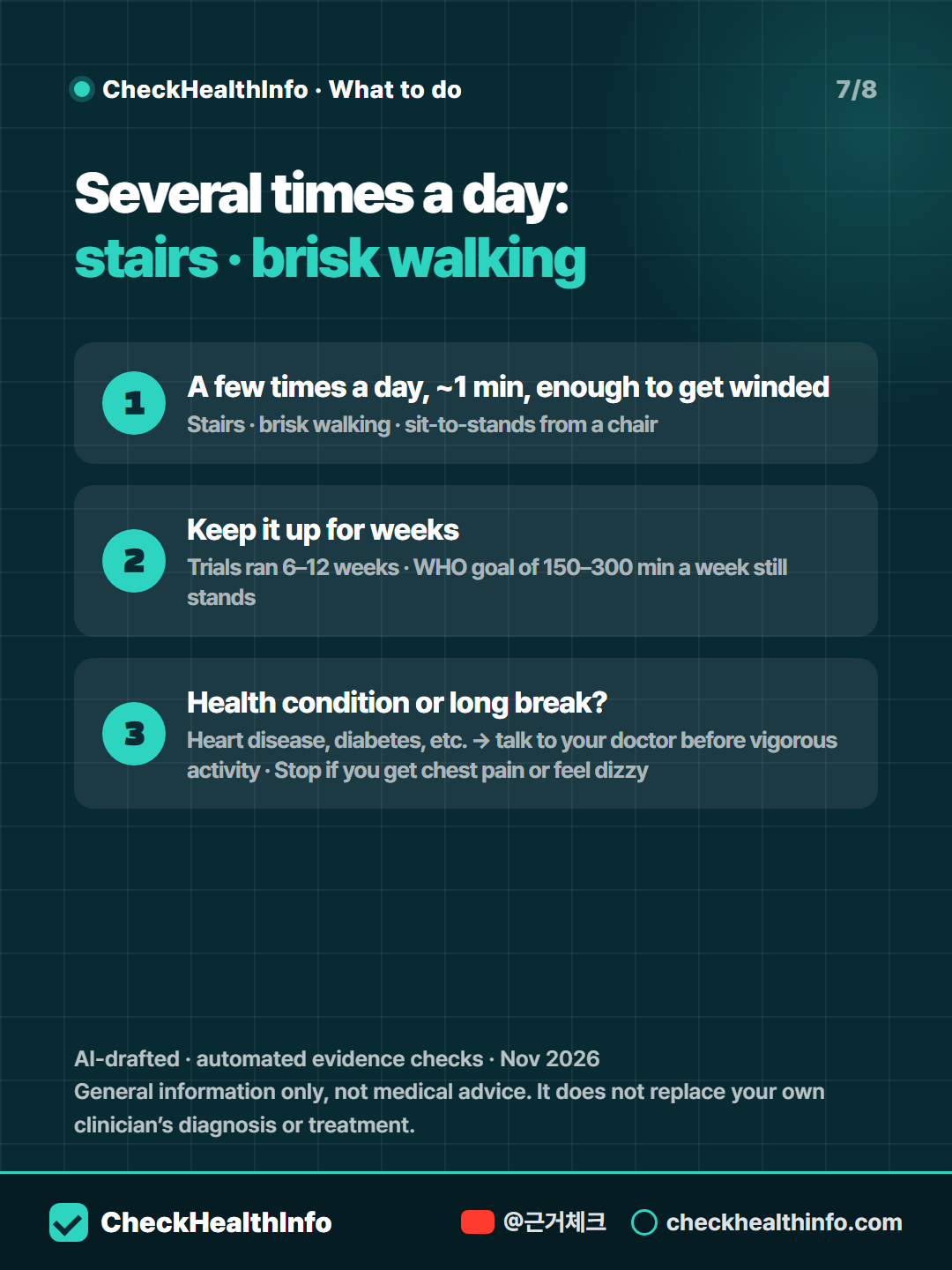
- A few times a day, about a minute, hard enough to get winded — Trials used bouts of 30 seconds to 1 minute. Our interpretation: if you can, try to keep going for more than a minute. Use whatever you can do — stairs, brisk walking, or sit-to-stands from a chair. [1] [19]
- Keep it up for weeks — Most trials lasted 6–12 weeks. Keep the bigger goal of 150 minutes a week, and fill it in with short bouts if that’s easier. [11] [21]
- If you have a health condition or haven’t exercised in a while — If you have heart disease, diabetes or another condition, or haven’t exercised for a long time, talk to your doctor before doing vigorous activity. Stop right away if you get chest pain, feel very short of breath or feel dizzy.
Scope: This verdict covers brief exercise (exercise snacks and brief vigorous everyday movement) and its relationship with cardiorespiratory fitness, death and cardiovascular disease. It does not cover medicines or treatment and is not an individual exercise prescription.
Limitations of this verdict
- Most exercise snack trials were small (dozens of participants) and short (6–12 weeks), and definitions of bout length, number of bouts per day and intensity differed between studies. In some trials VO2max was estimated rather than measured directly. [1] [3] [5] [8]
- Results for body fat and blood lipids were inconsistent across studies. [1] [2] [3]
- All evidence on death and cardiovascular disease is observational, and the type of movement was classified from tracker data by machine learning. Participants were adults in the UK and the US, so the findings may not apply equally to people elsewhere. [12] [16]
- Few exercise snack trials have looked specifically at people with chronic health conditions. [8] [20]
- Grades follow section 1 of our rating method. We check new studies in our monthly PubMed review, and if a verdict changes we record it in our corrections log.
Card news
Video (in Korean)
References
- Meng L, Li Y, Chen J, et al. Effects of exercise snacks on cardiorespiratory fitness, body composition, and blood lipids in adults across different age groups: a systematic review and meta-analysis. J Nutr Health Aging 2026;30(10):100940. PMID 42571752. PubMed abstract · Full article · Free full text
- Zhang D, Sun S, Ding Y, et al. Effectiveness of exercise snacks on physical function: a systematic reviews with meta-analysis of randomized controlled trials. J Nutr Health Aging 2026;30(5):100837. PMID 41950555. PubMed abstract · Full article · Free full text
- Qi K, Wang Q, Xu D, et al. The effect of exercise snacks on cardiorespiratory fitness, body composition, metabolic health, and muscle strength in sedentary individuals: a systematic review and meta-analysis. Front Nutr 2026;13:1883923. PMID 42865602. PubMed abstract · Full article · Free full text
- Wang Y, Lin R, Wang M, et al. Effects of exercise snacking on neuromuscular performance in insufficiently active adults: A systematic review and meta-analysis. Complement Ther Med 2026;101:103423. PMID 42607816. PubMed abstract · Full article
- Park J, Han M, Lee S, et al. Feasibility and Effects of Exercise Snacks on Fitness and Body Composition in Women With Overweight or Obesity: A Randomized Controlled Trial. J Phys Act Health 2026:1-8. PMID 42887881. PubMed abstract · Full article
- Jenkins EM, Nairn LN, Skelly LE, et al. Do stair climbing exercise "snacks" improve cardiorespiratory fitness?. Appl Physiol Nutr Metab 2019;44(6):681-684. PMID 30649897. PubMed abstract · Full article
- Yin M, Deng S, Chen Z, et al. Exercise snacks are a time-efficient alternative to moderate-intensity continuous training for improving cardiorespiratory fitness but not maximal fat oxidation in inactive adults: a randomized controlled trial. Appl Physiol Nutr Metab 2024;49(7):920-932. PMID 38569204. PubMed abstract · Full article
- Babir FJ, Marcotte-Chénard A, Sandilands RE, et al. Exercise Snacks Are Feasible to Perform in the Real World and Improve Physical Capacity for Adults Living With Non-Insulin Treated Type 2 Diabetes: A Randomised Trial. Diabetes Obes Metab 2026;28(10):9294-9303. PMID 42502209. PubMed abstract · Full article · Free full text
- Liang IJ, Perkin OJ, Williams S, et al. The Efficacy of 12-Week Progressive Home-Based Strength and Tai-Chi Exercise Snacking in Older Adults: A Mixed-Method Exploratory Randomised Control Trial. J Frailty Aging 2024;13(4):572-581. PMID 39574284. PubMed abstract · Full article
- Eidiyan-Kakhki MM, Rajabi H, Amani-Shalamzari S, et al. The safety, acceptability, and effectiveness of home-based 'exercise snacking' for improving physical function of older adults: a systematic review. Eur Geriatr Med 2026;17(4):1873-1888. PMID 42295664. PubMed abstract · Full article
- Murphy MH, Lahart I, Carlin A, et al. The Effects of Continuous Compared to Accumulated Exercise on Health: A Meta-Analytic Review. Sports Med 2019;49(10):1585-1607. PMID 31267483. PubMed abstract · Full article · Free full text
- Stamatakis E, Ahmadi MN, Gill JMR, et al. Association of wearable device-measured vigorous intermittent lifestyle physical activity with mortality. Nat Med 2022;28(12):2521-2529. PMID 36482104. PubMed abstract · Full article · Free full text
- Ahmadi MN, Hamer M, Gill JMR, et al. Brief bouts of device-measured intermittent lifestyle physical activity and its association with major adverse cardiovascular events and mortality in people who do not exercise: a prospective cohort study. Lancet Public Health 2023;8(10):e800-e810. PMID 37777289. PubMed abstract · Full article
- Koemel NA, Ahmadi MN, Biswas RK, et al. Can incidental physical activity offset the deleterious associations of sedentary behaviour with major adverse cardiovascular events?. Eur J Prev Cardiol 2025;32(1):77-85. PMID 39325719. PubMed abstract · Full article
- Koemel NA, Ahmadi MN, Biswas RK, et al. Device-captured incidental physical activity, sedentary behaviour and all-cause mortality risk. J Epidemiol Community Health 2025;79(10):753-757. PMID 40490316. PubMed abstract · Full article
- Koemel NA, Ahmadi MN, Biswas RK, et al. Vigorous intermittent lifestyle physical activity (VILPA) and mortality risk among US adults: a wearables-based national cohort study. Int J Behav Nutr Phys Act 2026;23(1). PMID 41612409. PubMed abstract · Full article · Free full text
- Jakicic JM, Kraus WE, Powell KE, et al. Association between Bout Duration of Physical Activity and Health: Systematic Review. Med Sci Sports Exerc 2019;51(6):1213-1219. PMID 31095078. PubMed abstract · Full article · Free full text
- Peng Y, Kong H, Wang Q, et al. Acute Effects of Exercise Snacks on Glucose and Lipid Metabolic Outcomes in Individuals with Metabolic Disorders: A Systematic Review and Meta-Analysis. Diabetes Metab Syndr Obes 2026;19:624200. PMID 42707187. PubMed abstract · Full article · Free full text
- Ahmadi MN, Holtermann A, Tudor-Locke C, et al. Time to Elicit Physiological and Exertional Vigorous Responses from Daily Living Activities: Setting Foundations of an Empirical Definition of VILPA. Med Sci Sports Exerc 2024;56(12):2413-2420. PMID 39160703. PubMed abstract · Full article
- Jones MD, Clifford BK, Stamatakis E, et al. Exercise Snacks and Other Forms of Intermittent Physical Activity for Improving Health in Adults and Older Adults: A Scoping Review of Epidemiological, Experimental and Qualitative Studies. Sports Med 2024;54(4):813-835. PMID 38190022. PubMed abstract · Full article
- Bull FC, Al-Ansari SS, Biddle S, et al. World Health Organization 2020 guidelines on physical activity and sedentary behaviour. Br J Sports Med 2020;54(24):1451-1462. PMID 33239350. PubMed abstract · Full article · Free full text
General information only, not medical advice. It does not replace your own clinician’s diagnosis or treatment. If you have a chronic condition such as heart disease or diabetes, or haven’t exercised for a long time, talk with your doctor before doing vigorous activity. Stop right away if you have chest pain, severe shortness of breath or dizziness.