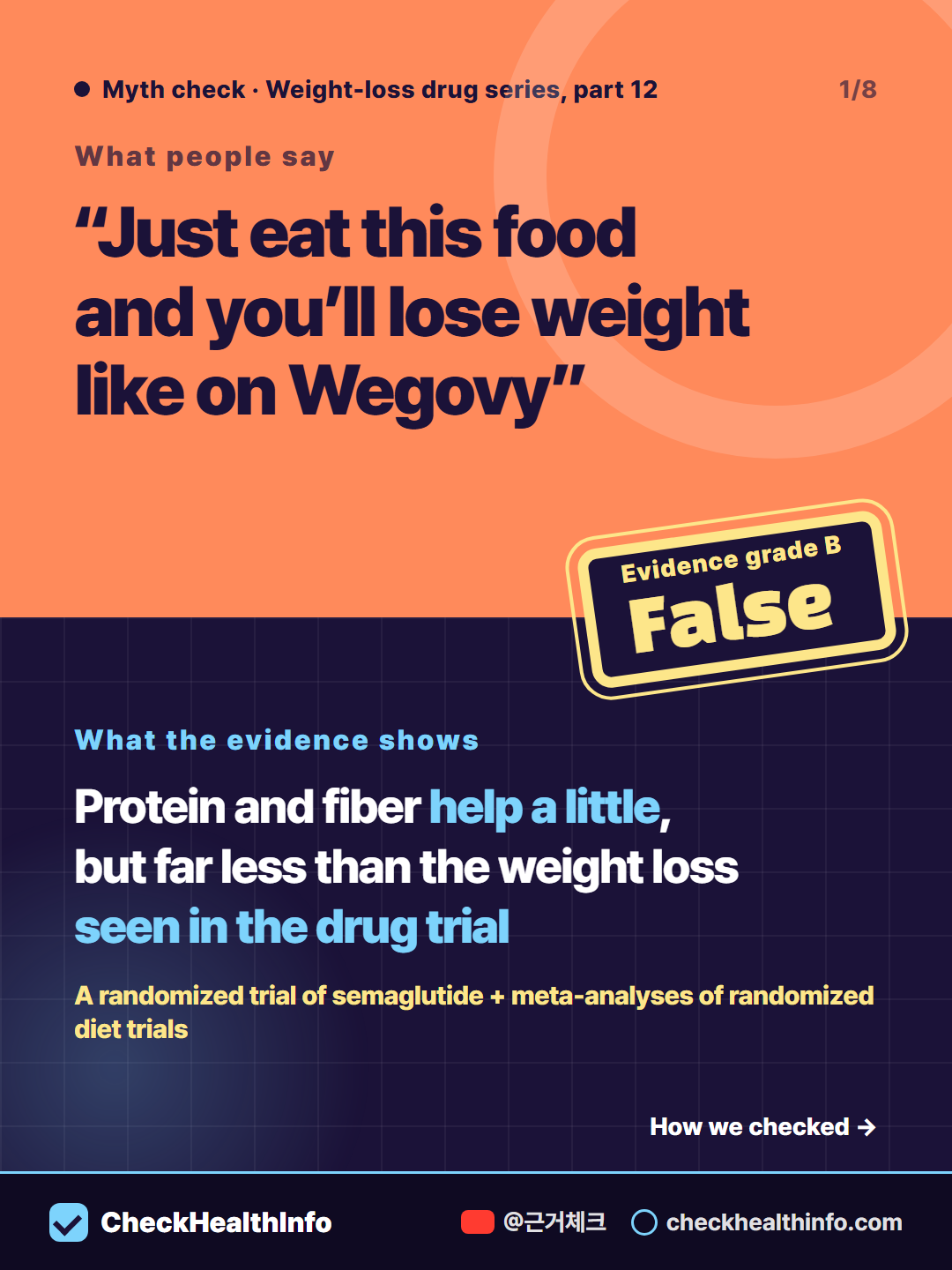
“Natural Wegovy”: can food do the same?
Can foods said to boost the body’s GLP-1, such as fiber and protein, produce weight loss like Wegovy?

We checked this verdict against 7 sources, such as published studies and clinical guidelines. · How checked: AI-drafted · automated evidence checks
Verdicts at a glance
| Claim | Verdict |
|---|---|
| Foods said to boost the body’s GLP-1, such as fiber and protein, can produce weight loss like Wegovy (semaglutide) on their own | False · Evidence grade B |
Bottom line — The claim that “foods said to boost the body’s GLP-1, such as fiber and protein, can produce weight loss like Wegovy (semaglutide)” is rated “False.” Here is what the evidence shows: diets with more protein or fiber can lead to slightly more weight loss when you are cutting calories, but the effect is far smaller than the weight loss seen in semaglutide trials. We found no trial that compared food and the drug head to head, and the evidence that foods raise GLP-1 is still uncertain.
GLP-1 — a hormone released by the gut after eating that is involved in feeling full and in blood sugar control. Wegovy (semaglutide) is a drug that mimics this hormone.
Randomized trial — a study that assigns people to groups by chance, like drawing lots, and compares them. It is the best way to show cause and effect.
Systematic review · meta-analysis — a study that gathers all relevant studies using set methods, appraises them, and combines their results.
Placebo — a dummy treatment that looks the same but has no active ingredient, used to isolate the effect of the drug.
95% confidence interval (CI) — the range in which the true value is likely to lie.
Claim. “Food alone can produce weight loss like Wegovy”
False · Evidence grade B
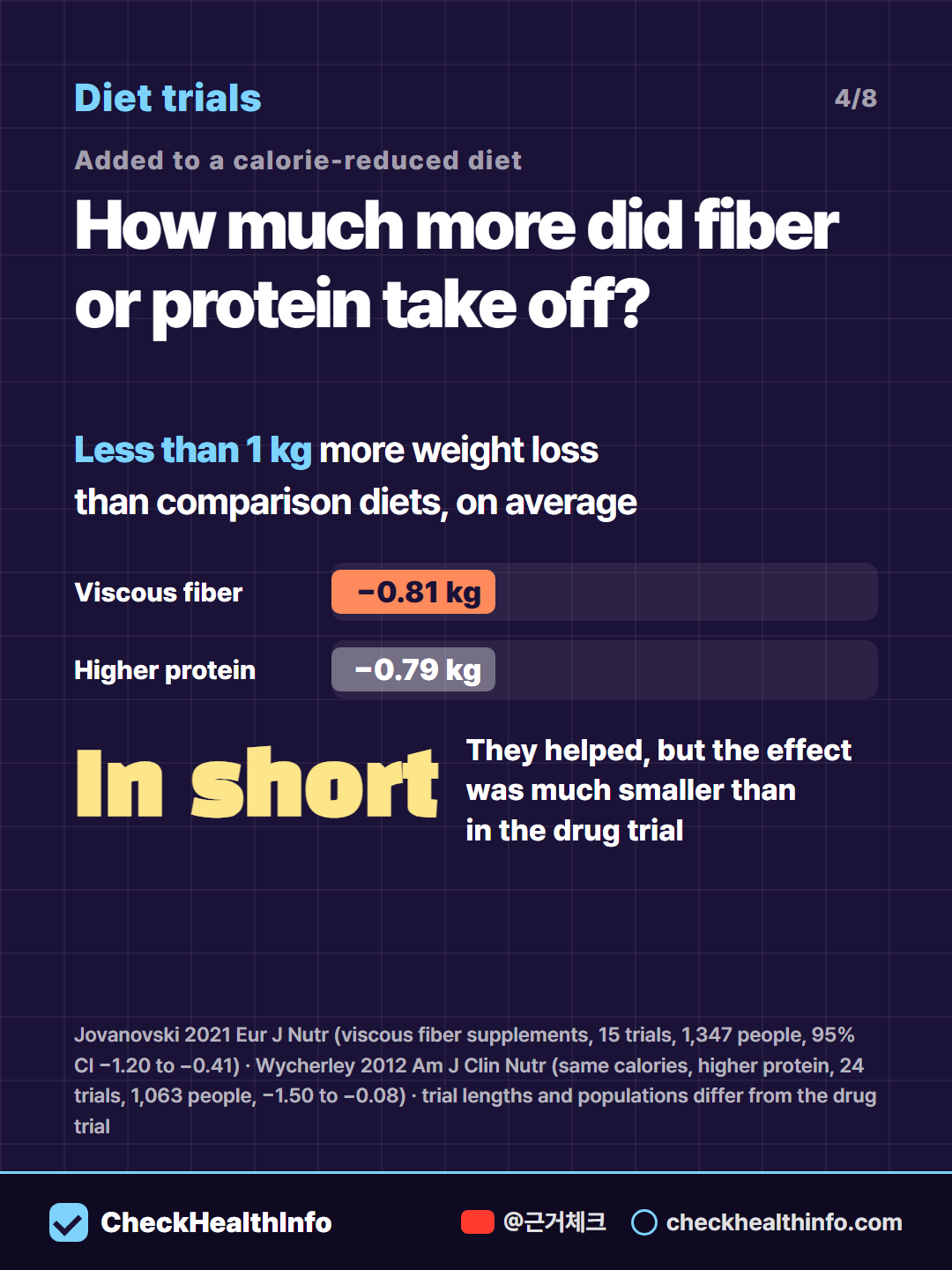
In plain terms In two diet meta-analyses, the extra weight loss averaged less than 1 kg; in the semaglutide trial, people on the drug lost 12.7 kg more than those on placebo. These come from different trials, though, so we can’t say exactly how many times bigger one is.
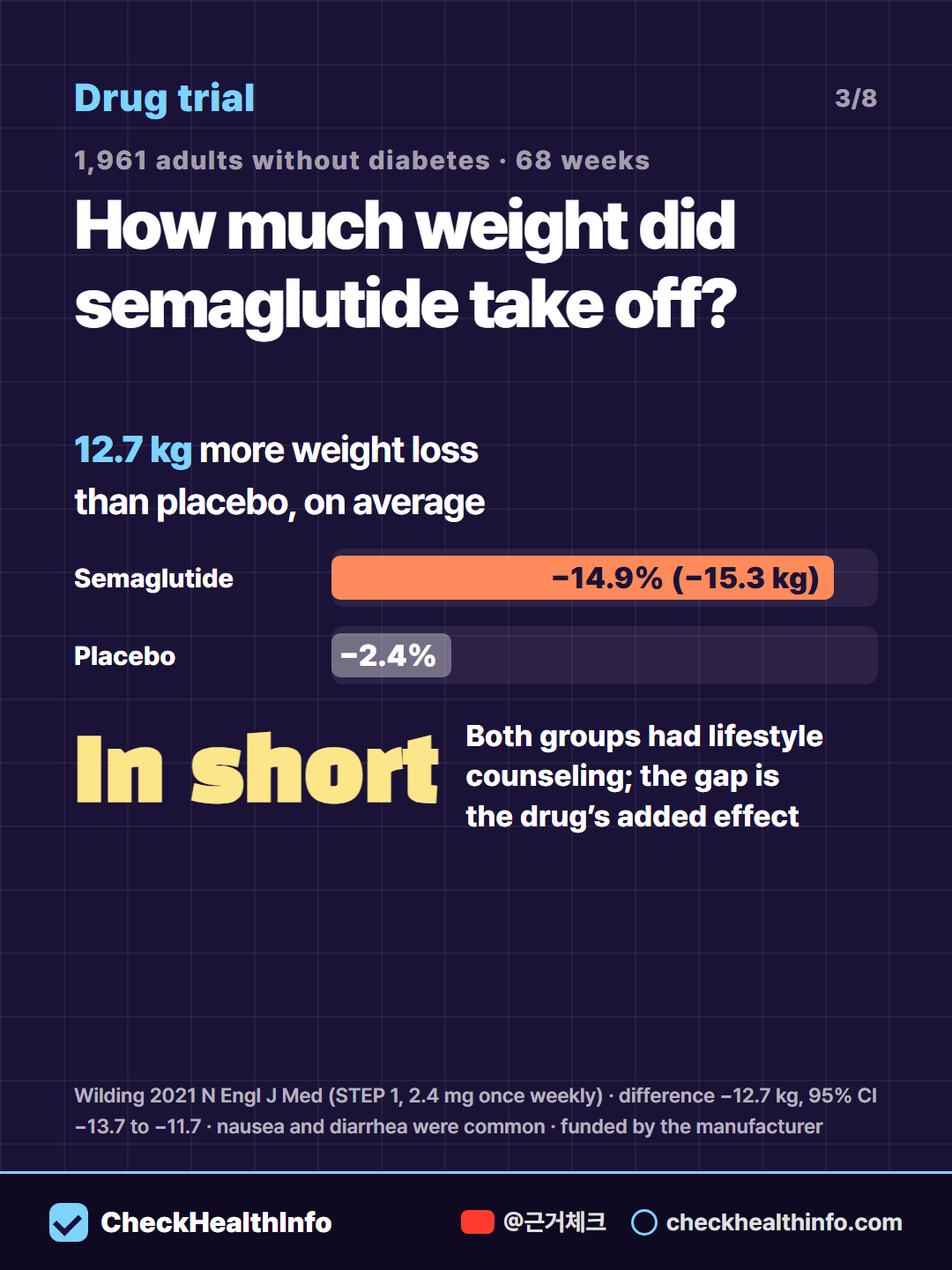
- In a randomized trial of semaglutide 2.4 mg once weekly plus lifestyle counseling (STEP 1, 1,961 adults with overweight or obesity and without diabetes), body weight fell by an average of 14.9% over 68 weeks, compared with 2.4% on placebo (difference 12.4 percentage points, 95% CI 11.5 to 13.4). In kilograms, that was 15.3 kg vs 2.6 kg, a difference of 12.7 kg (95% CI 11.7 to 13.7). Nausea and diarrhea were the most common side effects. [1]
- A meta-analysis of 15 randomized trials (1,347 people) that added viscous (sticky, gel-forming) fiber to a calorie-reduced diet found 0.81 kg (95% CI 0.41 to 1.20) more weight loss than the comparison diets. Body fat also fell by 1.39 percentage points more, with no difference in waist size. [2]
- A meta-analysis of 24 trials (1,063 people, average 12.1 weeks) that compared higher-protein and standard-protein diets with the same calorie target found 0.79 kg (95% CI 0.08 to 1.50) more weight loss and 0.87 kg more fat loss with higher protein. Three of five studies reported greater fullness with higher protein. In plain terms, adding protein or fiber helped a little, but by less than 1 kg. [3]
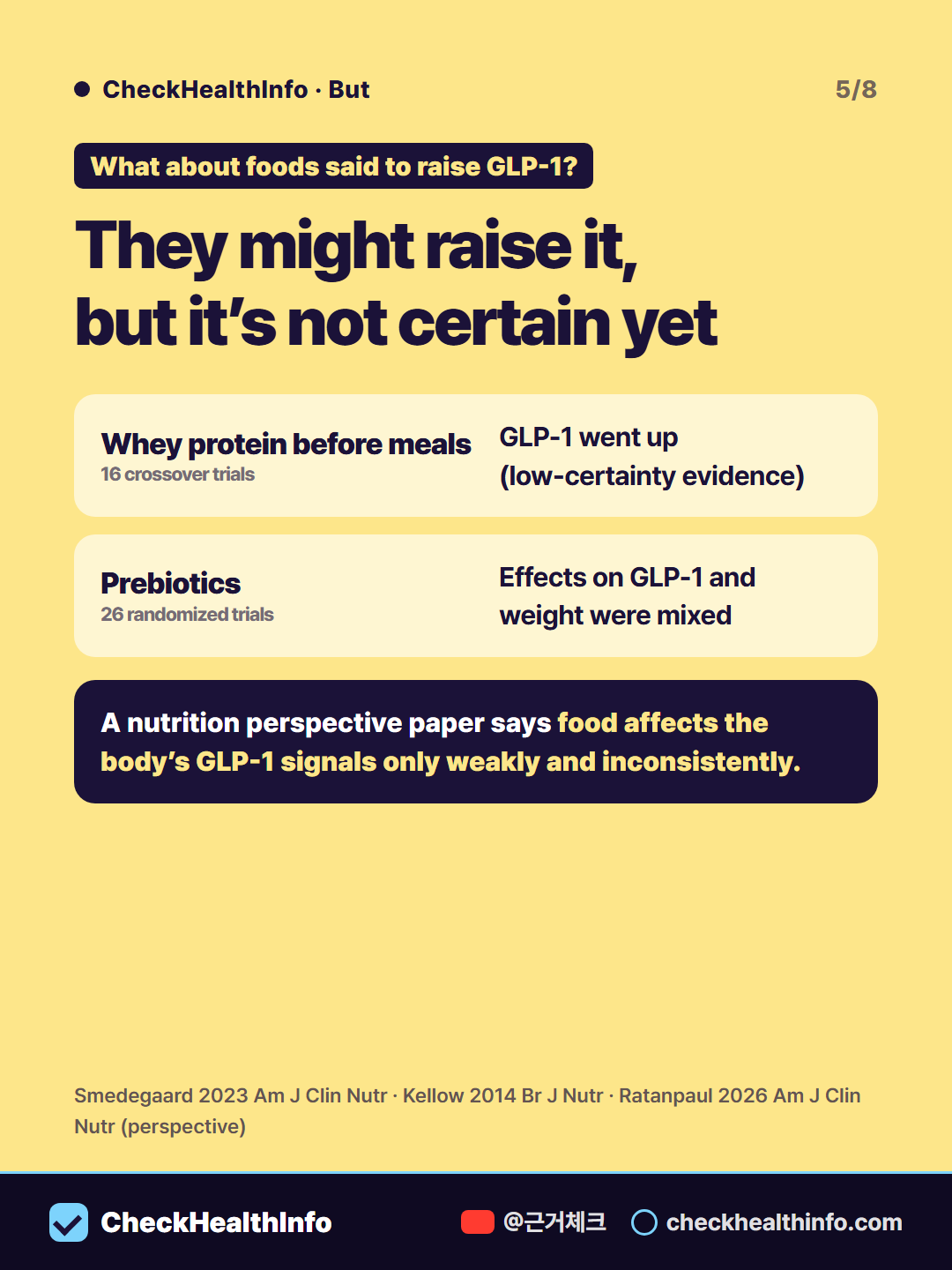
- A meta-analysis of 16 crossover trials (244 people) of whey protein taken just before a meal found that GLP-1 rose, but the certainty of that evidence was low and long-term effects have not been shown. [4] A review of 26 randomized trials of prebiotics found slightly better fullness, but mixed effects on GLP-1 and body weight. [5]
- A review that summarized meta-analyses of obesity medications reported that, compared with placebo, people on semaglutide lost an extra 11.4% of their body weight (5 trials, 4,421 people). [7] A nutrition perspective paper argued that food affects the body’s GLP-1 signals only weakly and inconsistently. [6]
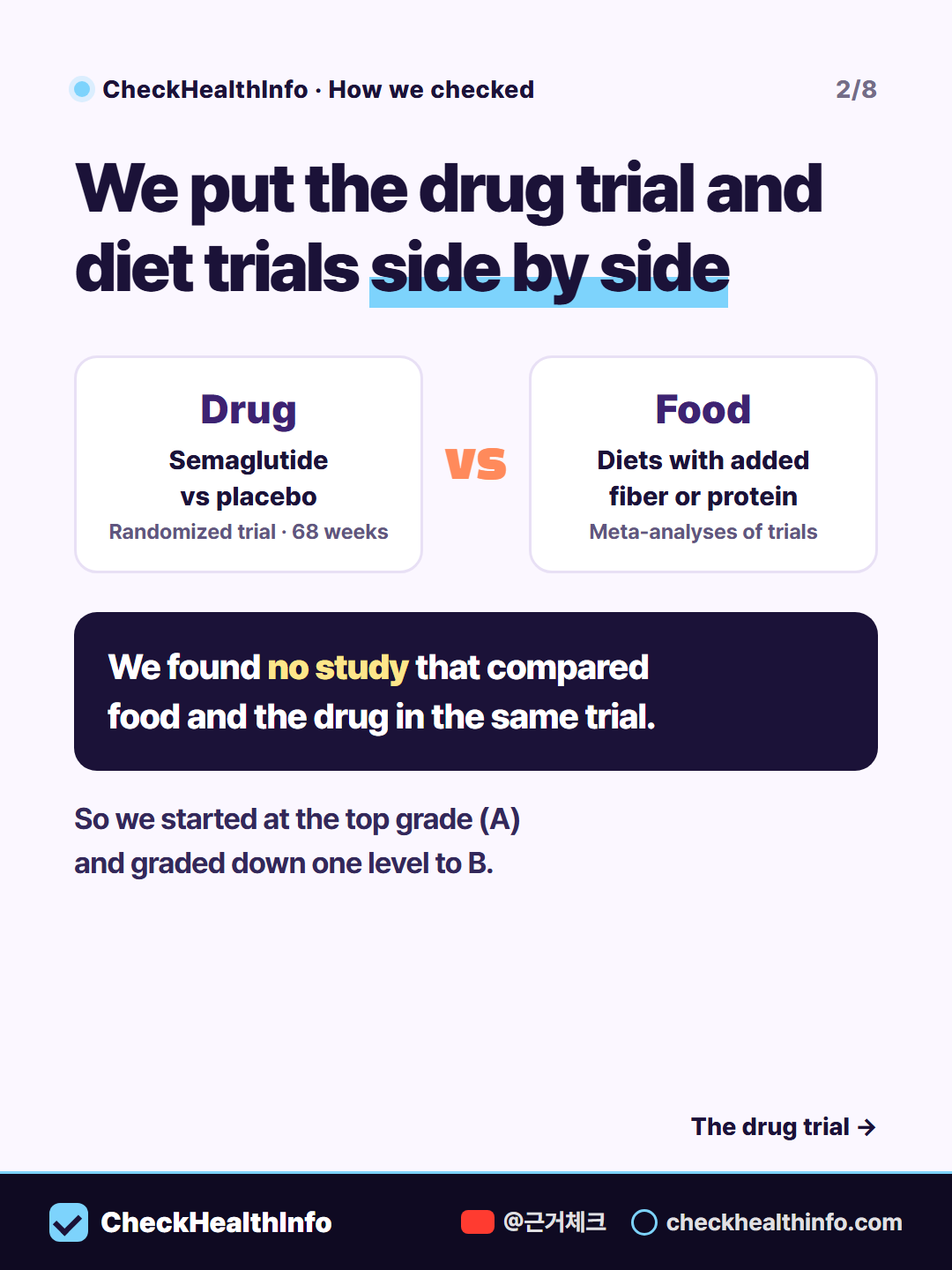
The best evidence here is meta-analyses of randomized trials and a large randomized trial, so we started at A. But we found no randomized trial that compared food and semaglutide in the same study; we are placing results from different trials side by side (different people, lengths and comparison groups: STEP 1 ran 68 weeks against placebo, while the diet meta-analyses covered trials lasting at least 4 weeks in one and 12.1 weeks on average in the other). That makes the evidence indirect (reason (1) in section 1 of our rating method; down one grade), so the grade is B. Even so, the gap is very large — the upper ends of the diet confidence intervals (1.20 kg and 1.50 kg) are far from the lower end of the drug trial’s interval (11.7 kg) — so there is no evidence for “the same effect,” and the rating is “False.” The idea that these foods “boost GLP-1” is offered as the reason behind the claim, so we did not split it into a separate verdict; we describe its uncertainty below.
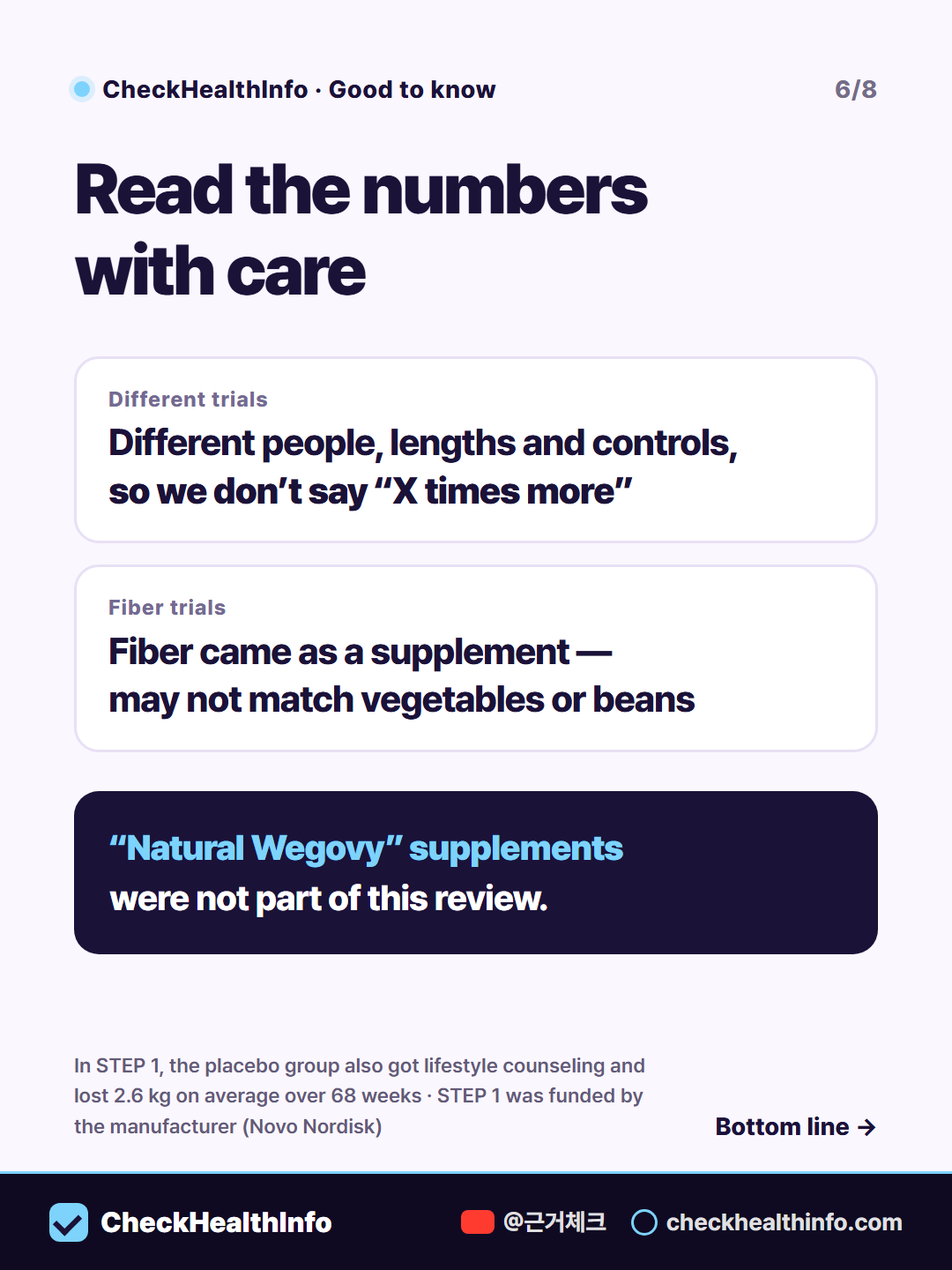
Different trials — The trials differ in who took part (STEP 1 enrolled adults with a BMI of 30 or higher, or 27 or higher with a weight-related condition), how long they lasted, and what they were compared with, so we do not divide one number by another to say “X times more.” In STEP 1, the placebo group also got lifestyle counseling and lost 2.6 kg on average over 68 weeks. [1]
Fiber was a supplement — The fiber meta-analysis looked at viscous fiber supplements added to a calorie-reduced diet, so the results may not apply to everyday foods such as vegetables, beans or whole grains. [2]
Evidence that foods raise GLP-1 — The rise in GLP-1 after whey protein before meals is low-certainty evidence [4], and the effects of prebiotics on GLP-1 and weight were mixed [5]. The perspective paper is not a systematic review. [6]
The drug trial — STEP 1 was funded by the manufacturer (Novo Nordisk), and its results are averages. Side effects such as nausea and diarrhea were common. [1]
So how far can food go?
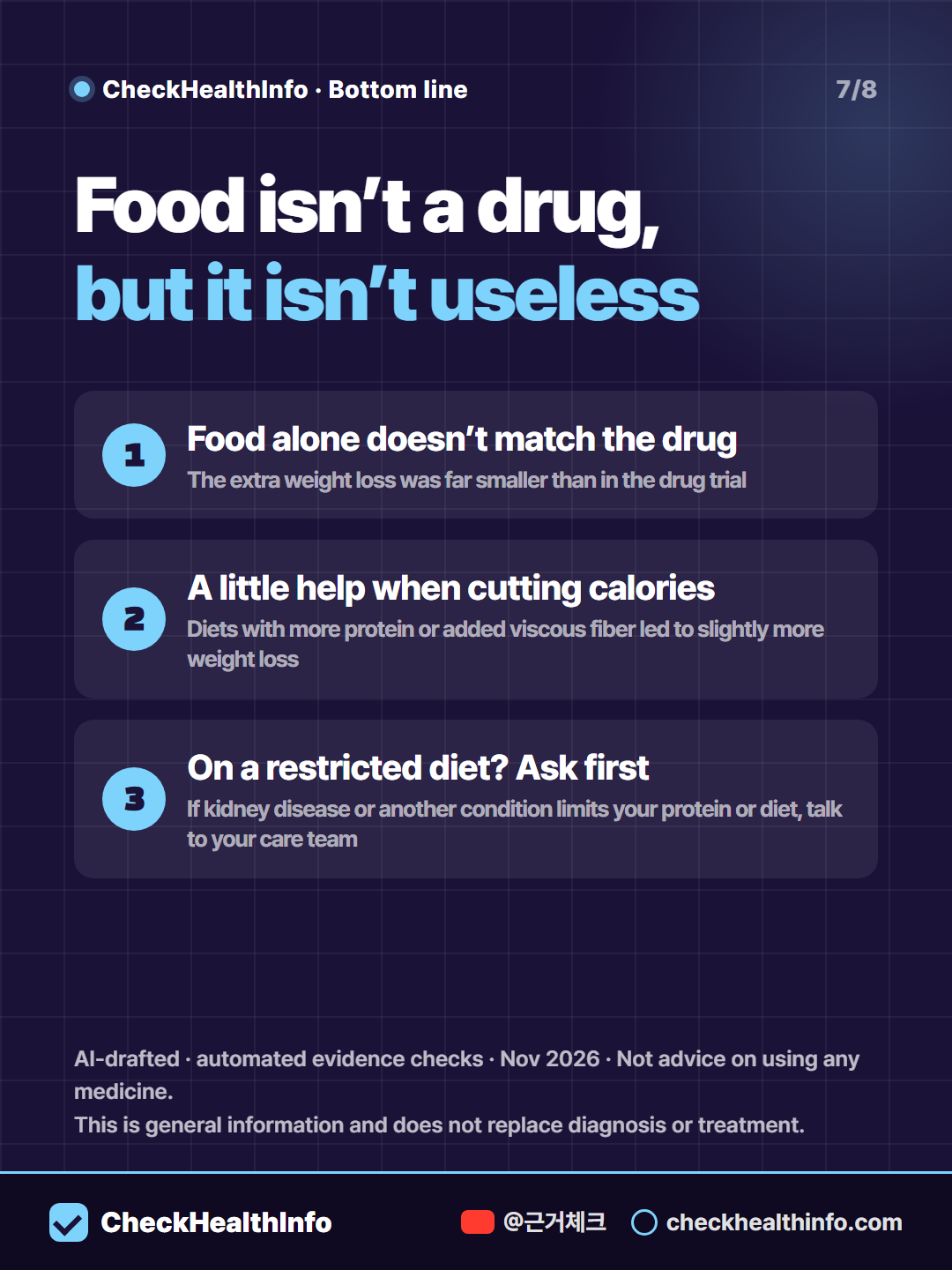
- Food alone doesn’t match the drug — The extra weight loss from food was far smaller than the weight loss in the drug trial.
- A little help when cutting calories — Diets with more protein at the same calories, or with added viscous fiber, led to slightly more weight loss. [2] [3]
- On a restricted diet? Ask first — If kidney disease or another condition limits your protein or diet, talk to your care team before changing what you eat. This article is not advice on whether to start or stop any medicine; if you take one, talk to the clinician who prescribes it.
Scope: This review compares the size of the weight effect of foods such as fiber and protein with the weight loss seen in semaglutide trials. It does not cover supplements sold as a “natural Wegovy” (such as berberine) or how to use any medicine (starting, stopping or dosing).
Limits of this review
- We found no randomized trial that compared food and the drug head to head.
- Most diet trials were short (at least 4 weeks in one meta-analysis, 12.1 weeks on average in the other), so they do not cover the same length of time as the 68-week drug trial.
- The grade follows section 1 of our rating method. We check for new studies in our monthly PubMed review, and if the rating changes we record it in our corrections log.
Card news
Video (in Korean)
References
- Wilding JPH, Batterham RL, Calanna S, et al. Once-Weekly Semaglutide in Adults with Overweight or Obesity. N Engl J Med 2021;384(11):989-1002. PMID 33567185. PubMed abstract · Full article
- Jovanovski E, Mazhar N, Komishon A, et al. Effect of viscous fiber supplementation on obesity indicators in individuals consuming calorie-restricted diets: a systematic review and meta-analysis of randomized controlled trials. Eur J Nutr 2021;60(1):101-112. PMID 32198674. PubMed abstract · Full article
- Wycherley TP, Moran LJ, Clifton PM, et al. Effects of energy-restricted high-protein, low-fat compared with standard-protein, low-fat diets: a meta-analysis of randomized controlled trials. Am J Clin Nutr 2012;96(6):1281-98. PMID 23097268. PubMed abstract · Full article
- Smedegaard S, Kampmann U, Ovesen PG, et al. Whey Protein Premeal Lowers Postprandial Glucose Concentrations in Adults Compared with Water-The Effect of Timing, Dose, and Metabolic Status: a Systematic Review and Meta-analysis. Am J Clin Nutr 2023;118(2):391-405. PMID 37536867. PubMed abstract · Full article
- Kellow NJ, Coughlan MT, Reid CM. Metabolic benefits of dietary prebiotics in human subjects: a systematic review of randomised controlled trials. Br J Nutr 2014;111(7):1147-61. PMID 24230488. PubMed abstract · Full article
- Ratanpaul V. From mouth to colon: a framework for engineering food matrices to engage the satiety cascade and endogenous GLP-1 signaling. Am J Clin Nutr 2026;124(5):101535. PMID 42772453. PubMed abstract · Full article
- Gudzune KA, Kushner RF. Medications for Obesity: A Review. JAMA 2024;332(7):571-584. PMID 39037780. PubMed abstract · Full article
This is general information, not medical advice, and it does not replace diagnosis or treatment by your own clinician. It is not advice on whether to start or stop any medicine — if you take one, talk to the clinician who prescribes it. If kidney disease or another condition limits your diet, talk to your care team before changing what you eat.