Does living near a park lower your dementia risk?
Does having more green space (parks, woods, trees) around your home lower your risk of dementia?

We checked this verdict against 7 sources, such as published studies and clinical guidelines. · How checked: AI-drafted · automated evidence checks
Verdicts at a glance
| Claim | Verdict |
|---|---|
| More green space around your home lowers your risk of dementia | Insufficient evidence · Evidence grade C |
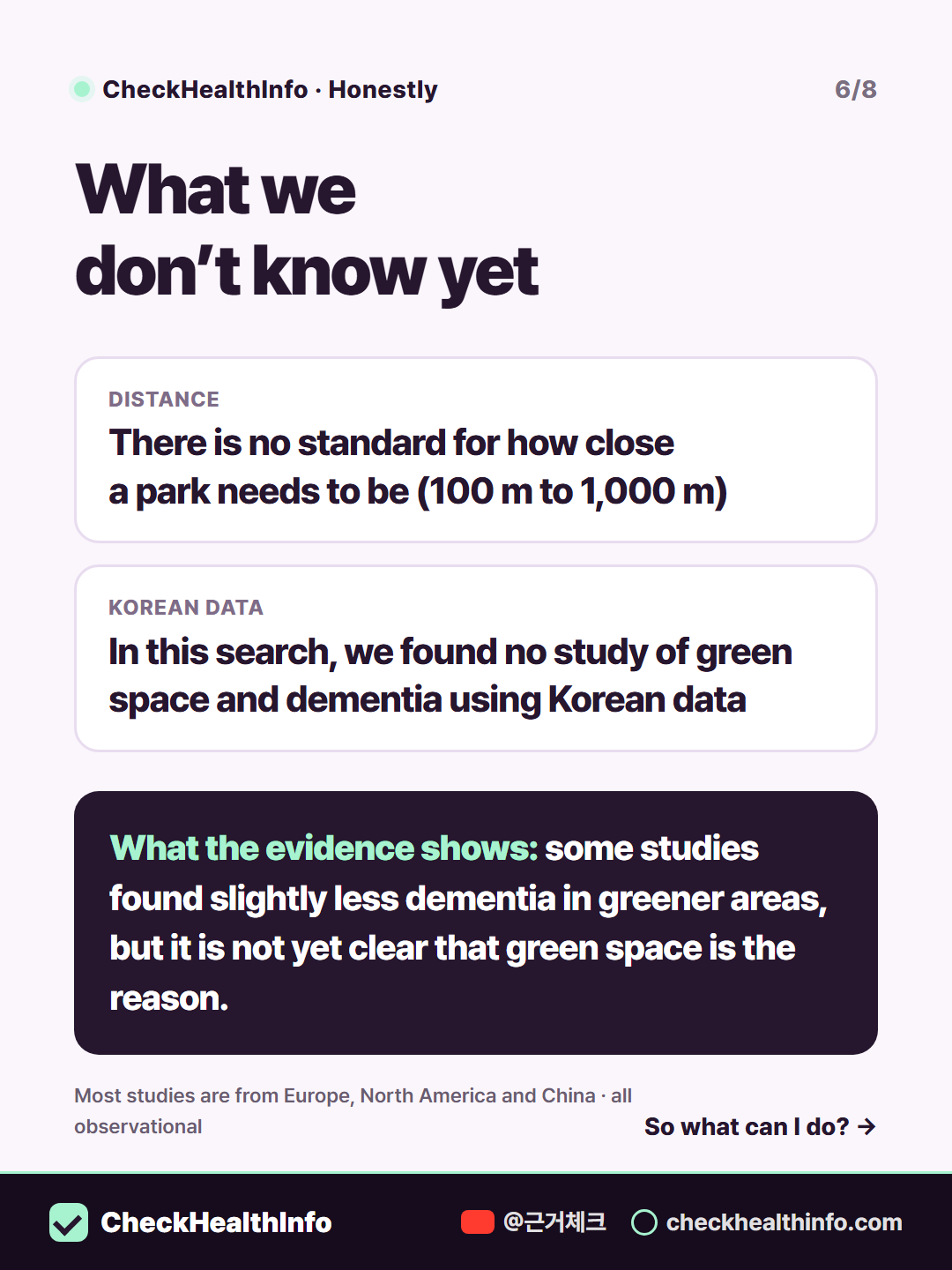
Bottom line — All the studies on green space around the home and dementia are observational, and their results are mixed. So the claim that “more green space around your home lowers your risk of dementia” is rated “Insufficient evidence.” That does not mean it is false. Here is what the evidence shows: several studies found slightly less dementia in people who lived with more green space nearby, but a meta-analysis found no association when it compared the greenest and least green areas, and it is not yet clear whether green space itself has any effect.
Green space (NDVI) — A satellite-based measure of how much of the ground is covered by plants. Studies measured it within 100 m to 1,000 m of each person’s home.
Cohort study — An observational study that follows many people over a long time. It shows that two things go together, but it is less certain than a randomized trial about cause and effect.
Meta-analysis and umbrella review — A meta-analysis pools the results of several studies. An umbrella review pools existing meta-analyses.
Hazard ratio and odds ratio — Both compare how likely an outcome is in one group versus another. A value of 1 means no difference; less than 1 means lower risk. It does not mean one person’s own chance changes by that amount.
Interquartile range — The spread of the middle half of people when green space is ranked from least to most. “Per interquartile-range increase” means a difference in green space equal to the gap between the 25th and 75th percentiles.
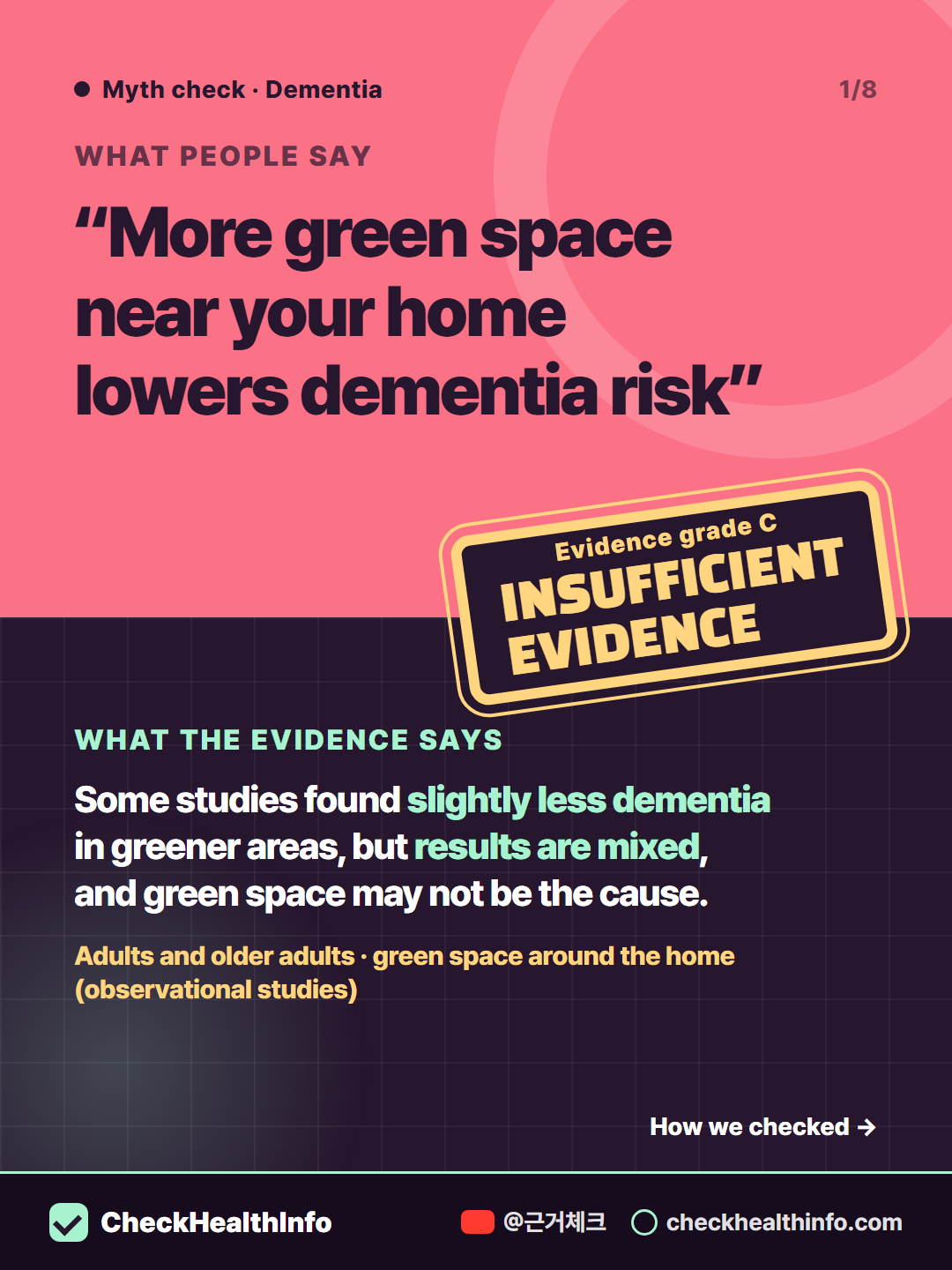
Claim. “More green space around your home lowers your risk of dementia”
Insufficient evidence · Evidence grade C
In plain words Some studies found slightly less dementia in people living in greener neighborhoods, but others did not. Other factors may explain the link, so we cannot yet say that parks protect against dementia.
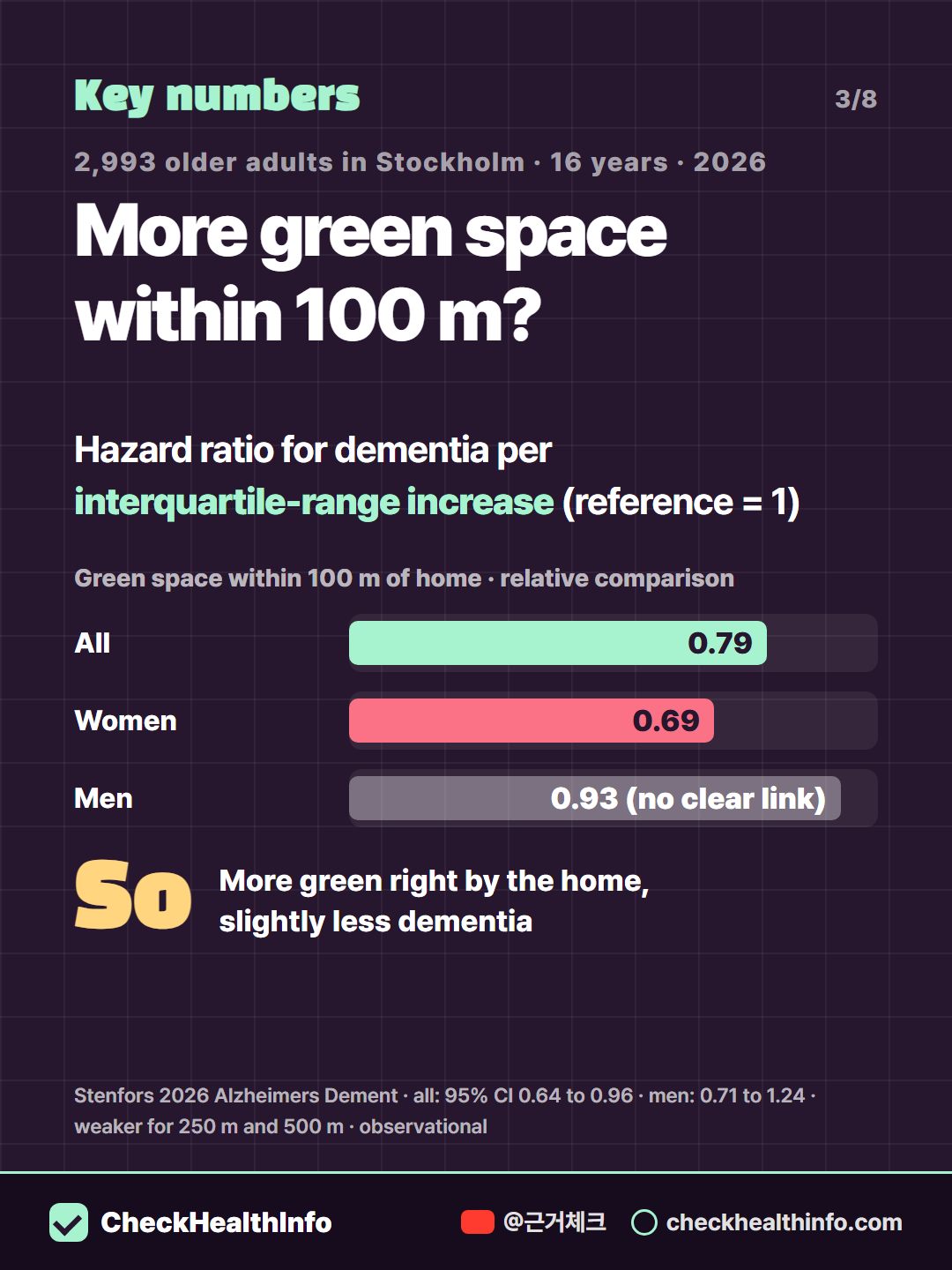
- A cohort that followed 2,993 older adults in Stockholm, Sweden, for 16 years recorded 477 new cases of dementia. For each interquartile-range increase in green space within 100 m of home, the hazard ratio for dementia was 0.79 (95% confidence interval 0.64 to 0.96). The association weakened for wider areas (250 m and 500 m). It was clear in women (0.69) but not in men (0.93, 95% confidence interval 0.71 to 1.24). In plain words, people with more greenery right outside their homes developed dementia slightly less often. [4]
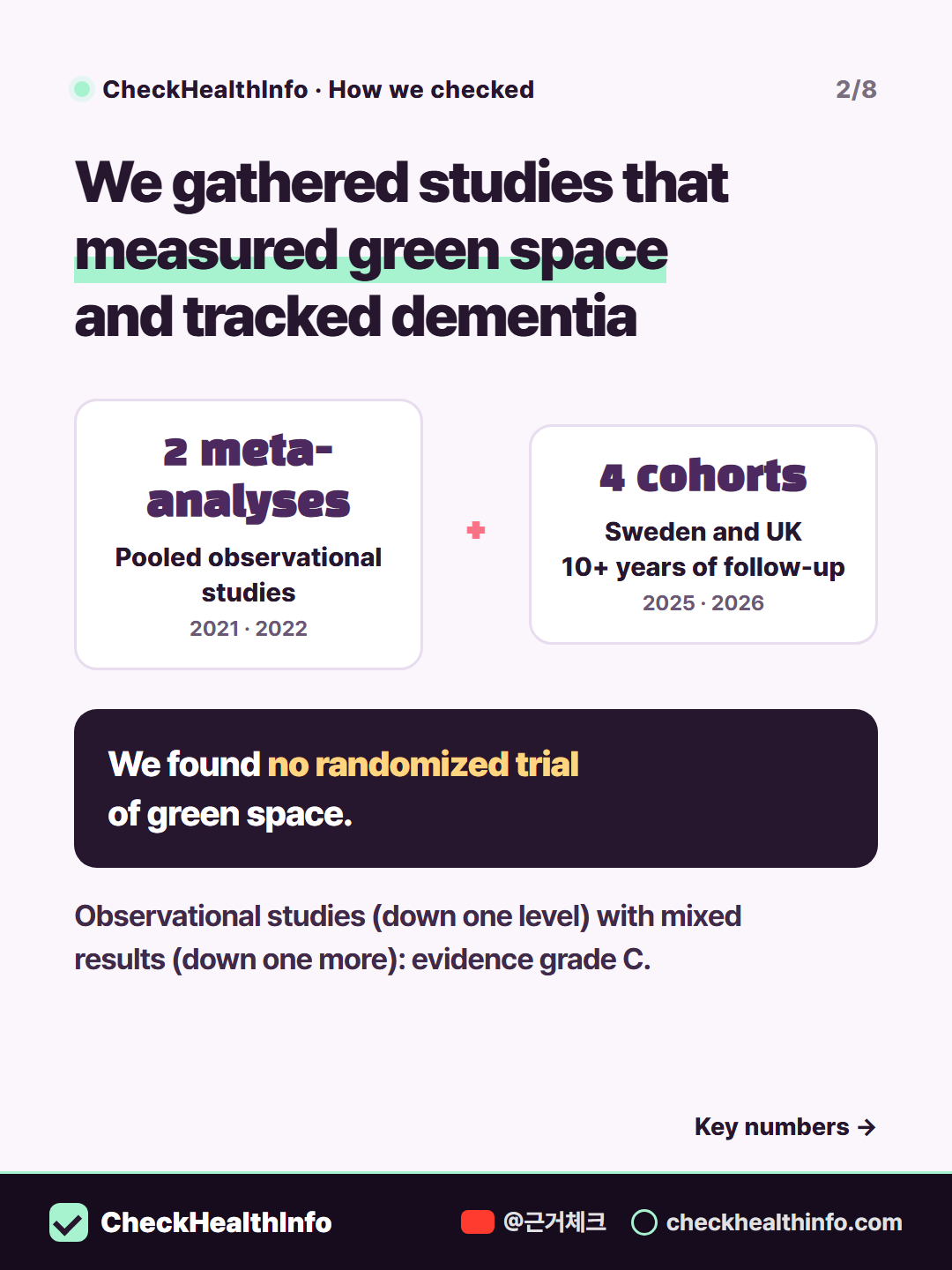
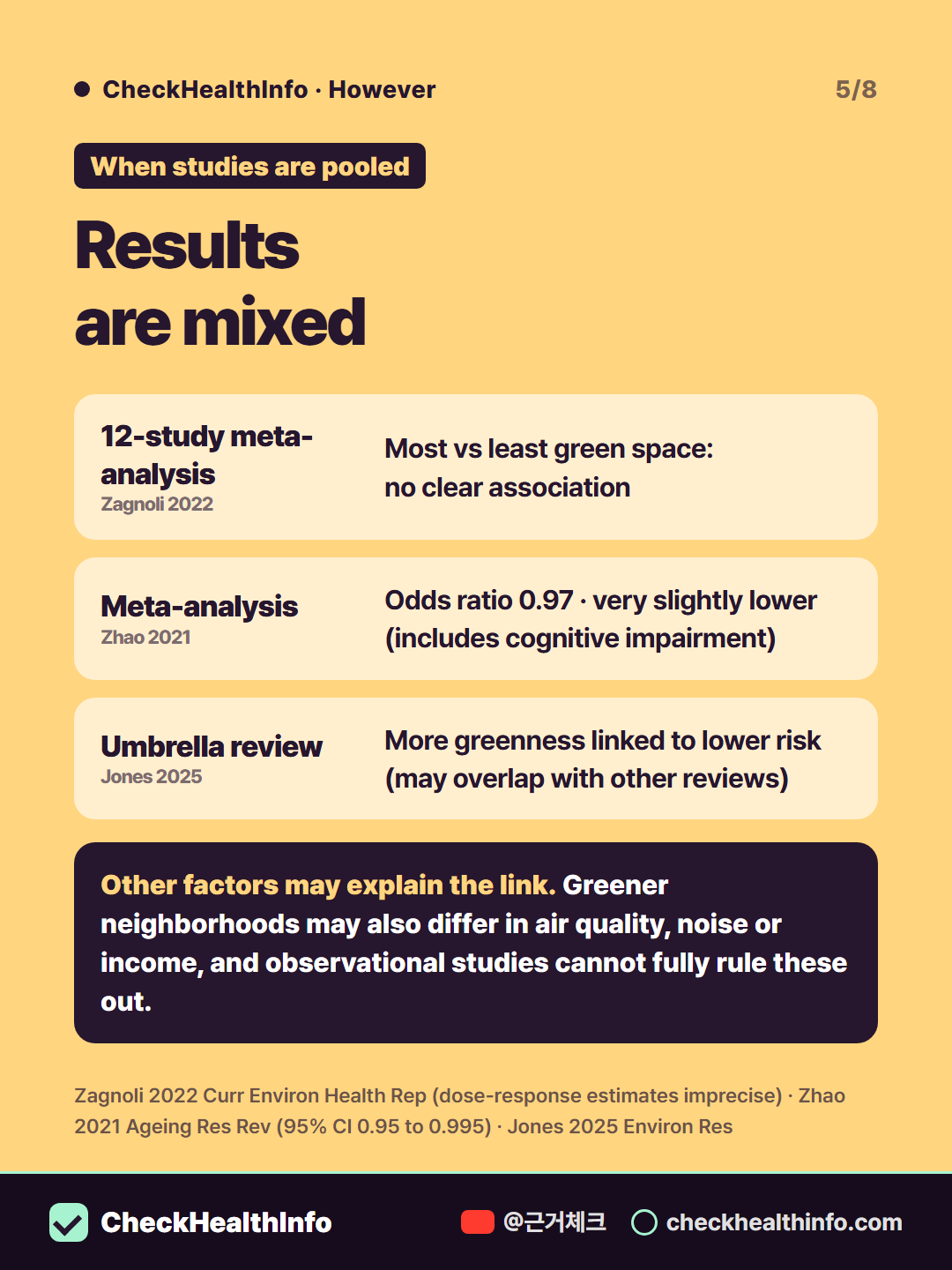
- However, a meta-analysis of twelve observational studies found no association with dementia when it compared people with the most and the least green space. It saw a slightly lower risk at moderate levels of green space, but the estimates were imprecise, and the authors named exposure misclassification and unmeasured confounding as limitations. [1]
- Another meta-analysis of environmental factors found that more green space was linked to very slightly lower odds of cognitive impairment or dementia (odds ratio 0.97, 95% confidence interval 0.95 to 0.995). In plain words, any difference was very small. This result combines cognitive impairment and dementia. [2] An umbrella review of meta-analyses also reported that more neighborhood greenness went with lower dementia risk, but it may include the same studies as those meta-analyses, so we did not count it as separate evidence. [3]
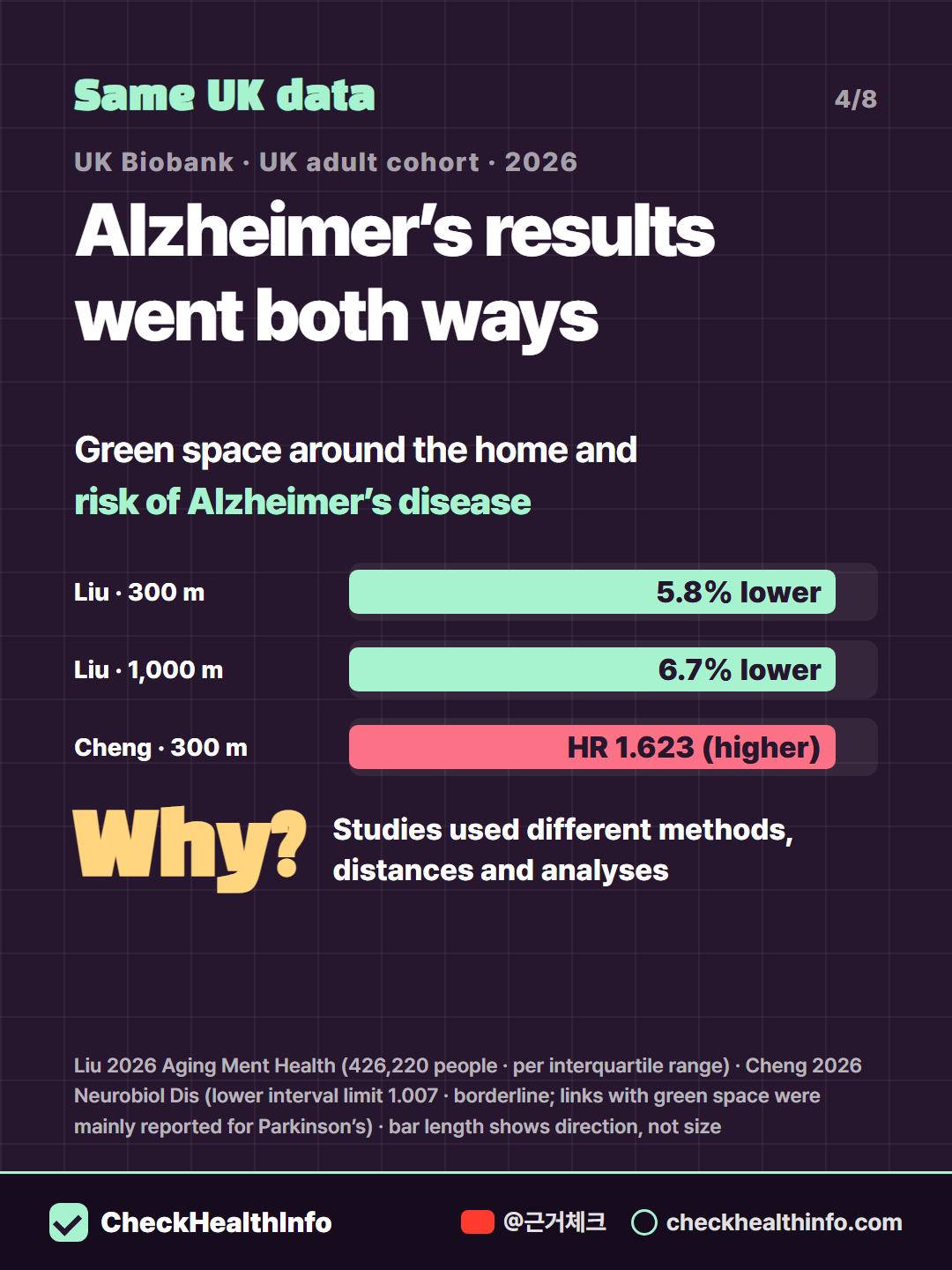
- Two studies using the same UK Biobank data also disagreed. In one study of 426,220 people, each interquartile-range increase in green space within 300 m was linked to a 5.8% lower risk of Alzheimer’s disease, and within 1,000 m a 6.7% lower risk. [5] In another study, green space within 300 m was linked to a higher risk of Alzheimer’s disease (hazard ratio 1.623, interval 1.007 to 2.615 — a borderline result with a lower limit close to 1; that study looked at Parkinson’s disease, Alzheimer’s disease and multiple sclerosis, and links with green space were mainly reported for Parkinson’s disease). [6]
The highest level of evidence is meta-analyses of observational studies and an umbrella review, so we started at A. We found no trial that randomly assigned green space, and all the studies are observational, so under section 1 of our rating method (reason 2: observational studies) we lowered the grade one step to B. The results conflict (reason 3), so we lowered it one more step to C. We did not lower it for indirectness (reason 1), because the studies looked directly at green space around the home and new cases of dementia. There is not yet enough evidence in people that green space itself lowers dementia risk, so the rating is “Insufficient evidence” (section 2: this does not mean the claim is false).
A UK Biobank study followed 187,724 adults aged 60 to 73 for an average of 13 years. People who were more physically active outdoors had a lower risk of dementia (hazard ratio 0.84, 95% confidence interval 0.78 to 0.90), and this link was stronger in areas with more green space within 300 m of home (hazard ratio 0.73 vs 0.86). This is also an observational study, and it did not measure park use itself. [7]
How to think about it
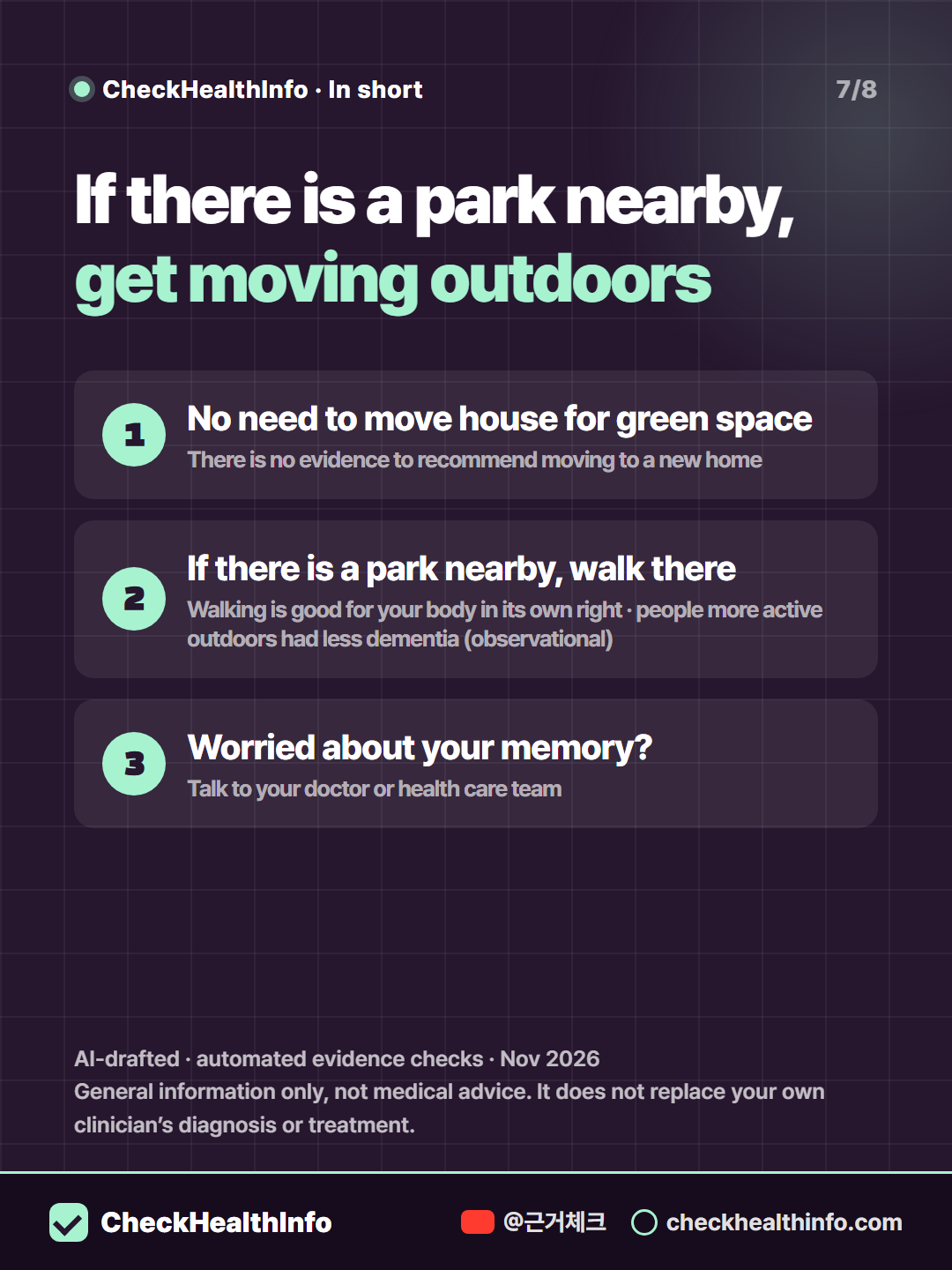
- You do not need to move to a greener neighborhood — There is no evidence to recommend moving to a new home, and there is no standard for how close a park needs to be.
- If there is a park nearby, go for a walk — We do not know whether it prevents dementia, but walking is good for your body in its own right.
- If you are worried about your memory — Talk to your doctor or health care team.
Scope: This verdict covers only the amount of green space around people’s homes and whether they later develop dementia or Alzheimer’s disease. It does not cover garden or forest programs for people who already have dementia, time spent in parks, or water areas (blue space).
Limitations of this verdict
- All the studies are observational, so they cannot prove that green space itself has an effect. Greener neighborhoods may also differ in income, education, air pollution or noise (a general limitation of observational studies), and these factors are hard to rule out completely.
- Studies measured green space in different ways (satellite vegetation index or land-use maps) and over different distances, so their results are hard to compare directly.
- Most of the studies come from Europe, North America and China. In this search we did not find a study of green space and new dementia cases using Korean data.
- We did not find recommendations from the Korea Disease Control and Prevention Agency (KDCA) or the World Health Organization (WHO) on dementia prevention that address green space directly, so we did not cite any.
- The grade follows section 1 of our rating method. We check PubMed every month for new studies, and if the verdict changes we record it in our corrections log.
Card news
Video (in Korean)
Easy version (in Korean)
References
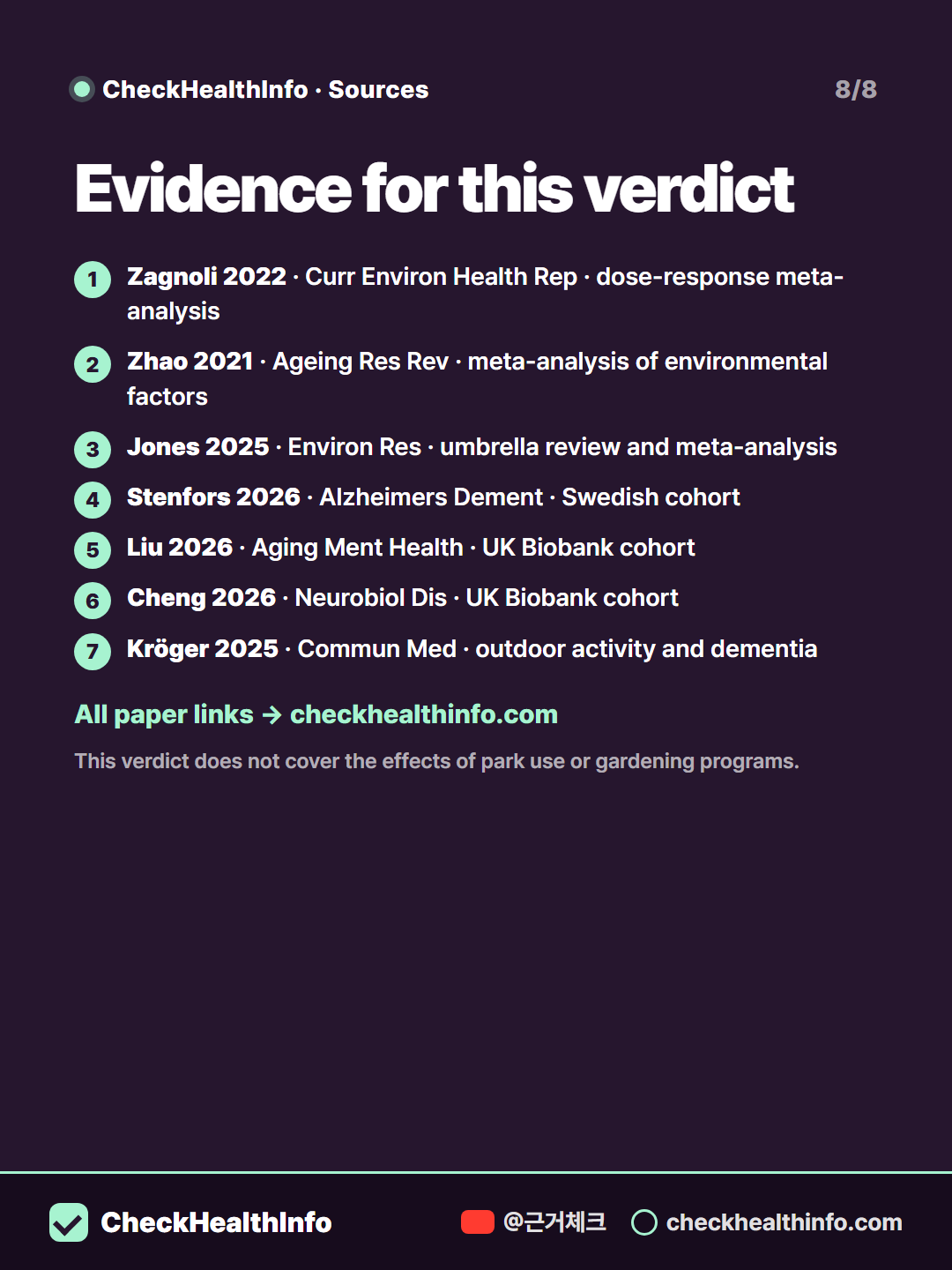
- Zagnoli F, Filippini T, Jimenez MP, et al. Is Greenness Associated with Dementia? A Systematic Review and Dose-Response Meta-analysis. Curr Environ Health Rep 2022;9(4):574-590. PMID 35857243. PubMed abstract · Full article · Free full text
- Zhao YL, Qu Y, Ou YN, et al. Environmental factors and risks of cognitive impairment and dementia: A systematic review and meta-analysis. Ageing Res Rev 2021;72:101504. PMID 34755643. PubMed abstract · Full article
- Jones A, Ali MU, Mayhew A, et al. Environmental risk factors for all-cause dementia, Alzheimer's disease dementia, vascular dementia, and mild cognitive impairment: An umbrella review and meta-analysis. Environ Res 2025;270:121007. PMID 39889875. PubMed abstract · Full article
- Stenfors CUD, Wu J, Grande G, et al. Precision residential greenspace, urban environmental exposures, and incident dementia among older adults in Sweden: A 16-year cohort study. Alzheimers Dement 2026;22(10):e71835. PMID 42805935. PubMed abstract · Full article · Free full text
- Liu X, Zhang Y, Zhang X, et al. Associations between residential environments and the risk of incident Alzheimer's disease and mild cognitive impairment: a 13-year prospective cohort study with 426,220 participants. Aging Ment Health 2026:1-16. PMID 42251690. PubMed abstract · Full article
- Cheng B, Cheng S, Wei W, et al. Residential green space, natural environment, domestic garden, and the risk of Parkinson's disease: A prospective cohort study. Neurobiol Dis 2026;221:107334. PMID 41759830. PubMed abstract · Full article
- Kröger B, Wang HX, Ekblom Ö, et al. Outdoor physical activity, residential green spaces and the risk of dementia in the UK Biobank cohort. Commun Med (Lond) 2025;5(1):389. PMID 40962877. PubMed abstract · Full article · Free full text
General information only, not medical advice. It does not replace your own clinician’s diagnosis or treatment. If you are worried about your memory, talk to your doctor or health care team.