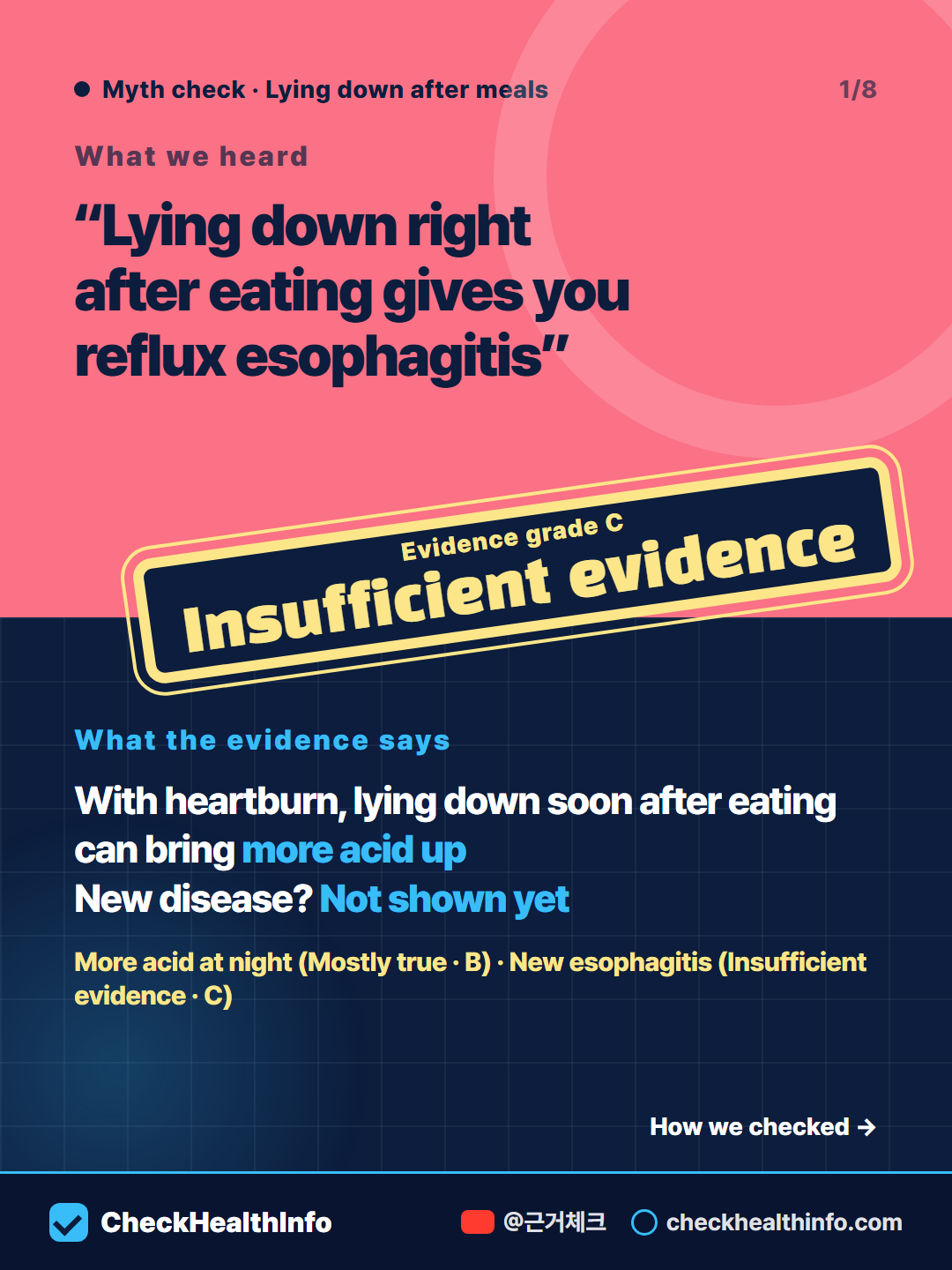
Does lying down right after eating give you reflux esophagitis?
If you lie down right after a meal, or go to bed soon after dinner, does acid reflux increase, and does that cause reflux esophagitis?

We checked this verdict against 14 sources, such as published studies and clinical guidelines. · How checked: AI-drafted · automated evidence checks
Verdicts at a glance
| Claim | Verdict |
|---|---|
| Lying down (going to bed) soon after dinner brings more stomach acid up into the esophagus at night | Mostly true · Evidence grade B |
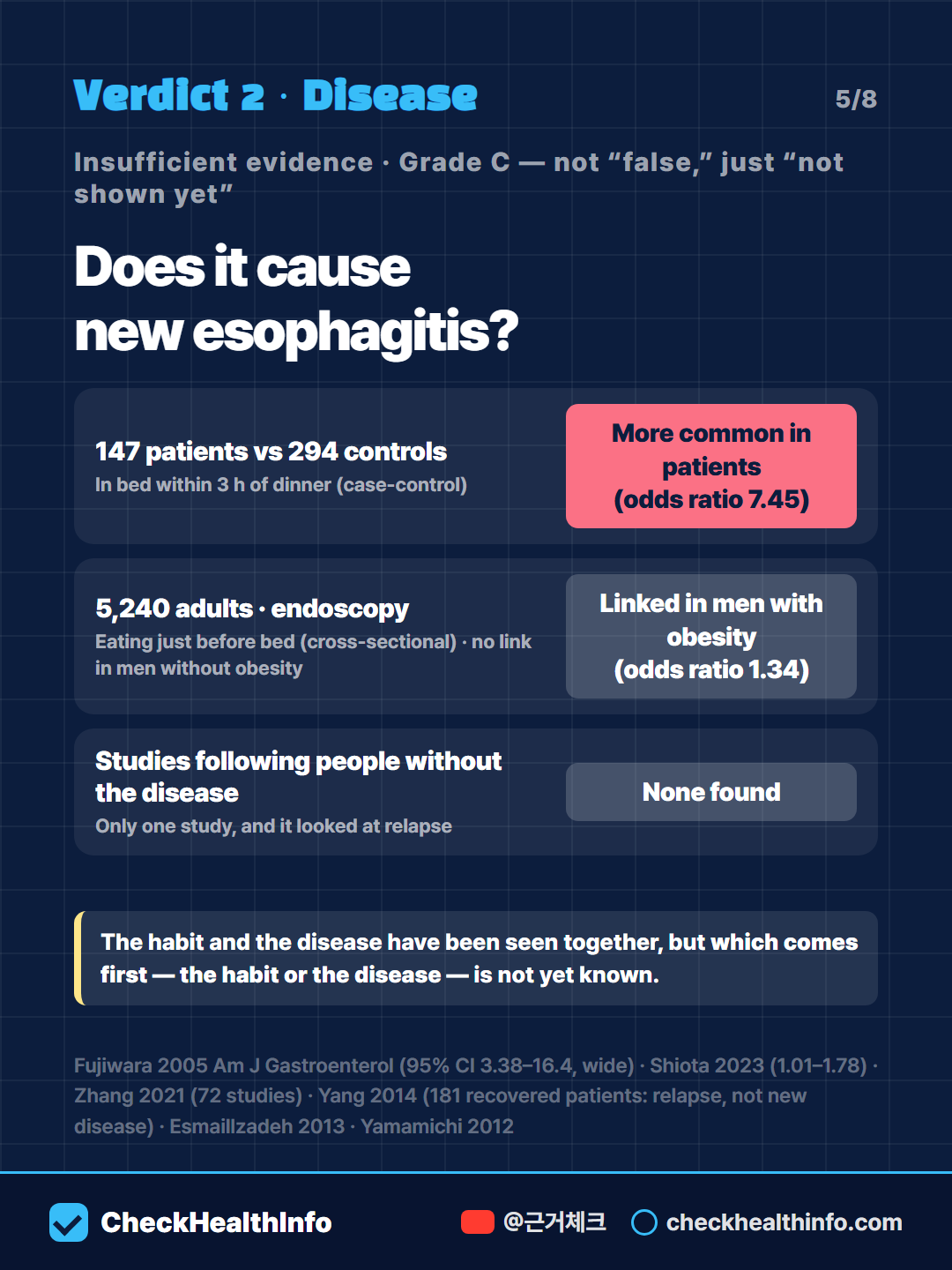
| So the habit of lying down right after eating causes reflux esophagitis in people who did not have it before | Insufficient evidence · Evidence grade C |
Bottom line — If you have reflux symptoms such as heartburn, eating dinner and then lying down soon after brings more stomach acid up into your esophagus at night. But it has not been shown that the habit of lying down right after eating causes reflux esophagitis in people who did not have it before. So the claim that “lying down right after eating gives you reflux esophagitis” is rated Insufficient evidence (this does not mean it is false). If you get heartburn, finishing dinner at least 3 hours before bed is low-risk and may help reduce nighttime reflux, so it is worth a try.
Acid reflux — When stomach contents and acid flow back up into the esophagus. Typical symptoms are a burning feeling in the chest (heartburn) and sour liquid coming up.
Reflux esophagitis (erosive esophagitis) — Damage to the lining of the esophagus caused by reflux that can be seen on endoscopy. When there are symptoms but no visible damage, it is called non-erosive reflux disease (NERD).
pH monitoring — A test that places a small sensor in the esophagus to measure how long acid comes up.
Randomized crossover trial — A trial in which the same people go through both conditions, with the order decided by chance.
Case-control and cross-sectional studies — Observational studies that compare the past habits of people with and without a disease, or look at habits and disease at a single point in time. They cannot easily tell which came first.
Odds ratio — A number that compares the odds of something between two groups. Above 1 means it is more common in that group; it is not the same as how many times the risk goes up.
95% confidence interval — The range in which the true value is likely to lie. The wider the range, the less certain the result.
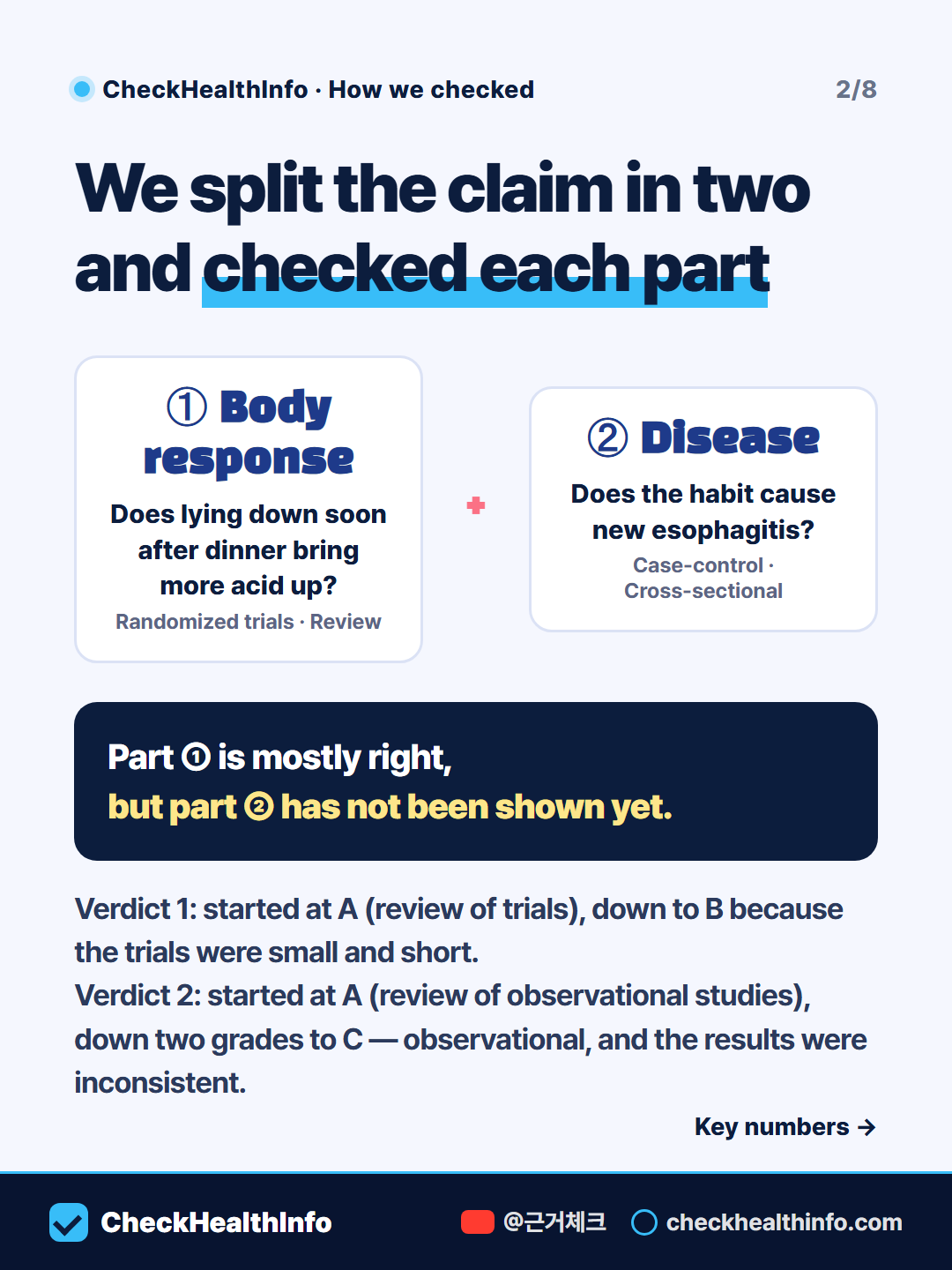
This claim mixes two different questions, so we gave two separate verdicts: (1) does lying down soon after dinner bring more acid up at night (the body’s response), and (2) does that habit therefore cause the disease reflux esophagitis in people who did not have it (new disease)?
Verdict 1. “Lying down (going to bed) soon after dinner brings more stomach acid up into the esophagus at night”
Mostly true · Evidence grade B
Simply put If you lie down on a full stomach, acid can flow back up into the esophagus more easily. But this was shown in people who already had reflux symptoms, and the trials were small and short, so we rated it “Mostly true.”
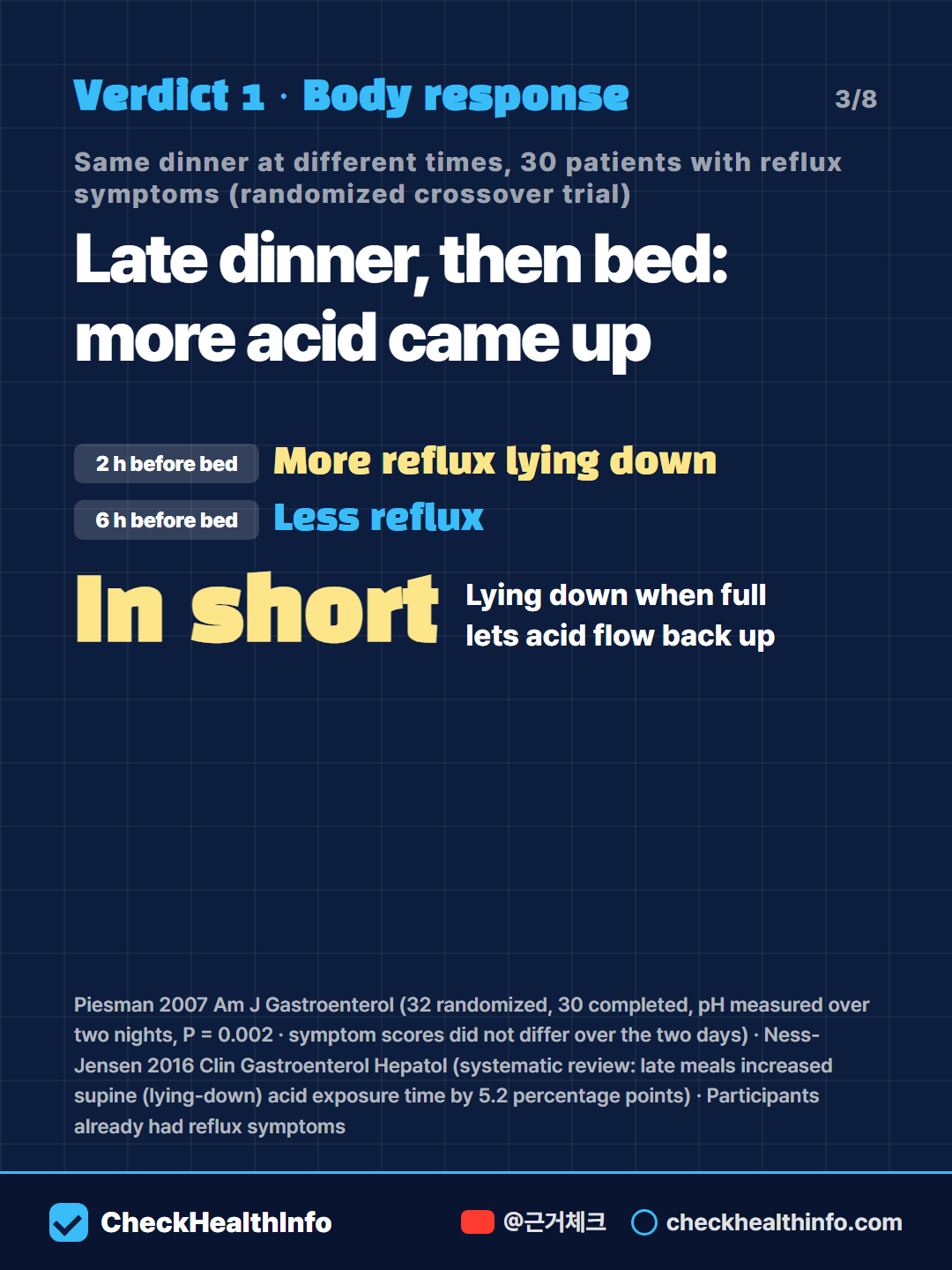
- In a randomized crossover trial, 32 patients with reflux symptoms ate the same dinner 6 hours before bed on one night and 2 hours before bed on the other (in random order), and the acidity of their esophagus was measured over two nights (30 completed). On the late-dinner night, there was clearly more acid reflux while lying down. This was also true for people with a hiatal hernia and those who were overweight. However, total symptom scores did not differ between the two days. In addition, 37% of the participants already had esophagitis on endoscopy, and they had more reflux lying down even after the early dinner. [2]
- A systematic review of lifestyle interventions reported that in randomized trials, late evening meals increased the share of time acid was in the esophagus while lying down, compared with early meals (a 5.2-percentage-point change), and that raising the head of the bed reduced acid exposure while lying down from 21% to 15%. It concluded that avoiding late evening meals and raising the head of the bed are effective for nighttime reflux. [1]
- A systematic review of 31 clinical trials on treating nighttime reflux symptoms also recommended a step-by-step approach starting with raising the head of the bed, leaving a longer gap between dinner and bedtime, and lying on the left side. [3] In the full text of its guideline (not the abstract), the American College of Gastroenterology (ACG) suggests avoiding meals within 2–3 hours of bedtime and raising the head of the bed for nighttime symptoms (both conditional recommendations, low level of evidence). [4]
Grade: We started at A (a systematic review that included randomized trials). The trials were small (30 completed) and short (two nights), and in the same trial acid reflux increased but symptom scores did not differ, so the result is uncertain and we lowered it one grade to B. The fact that the trials included only people who already had reflux symptoms is reflected in the “Mostly true” label.
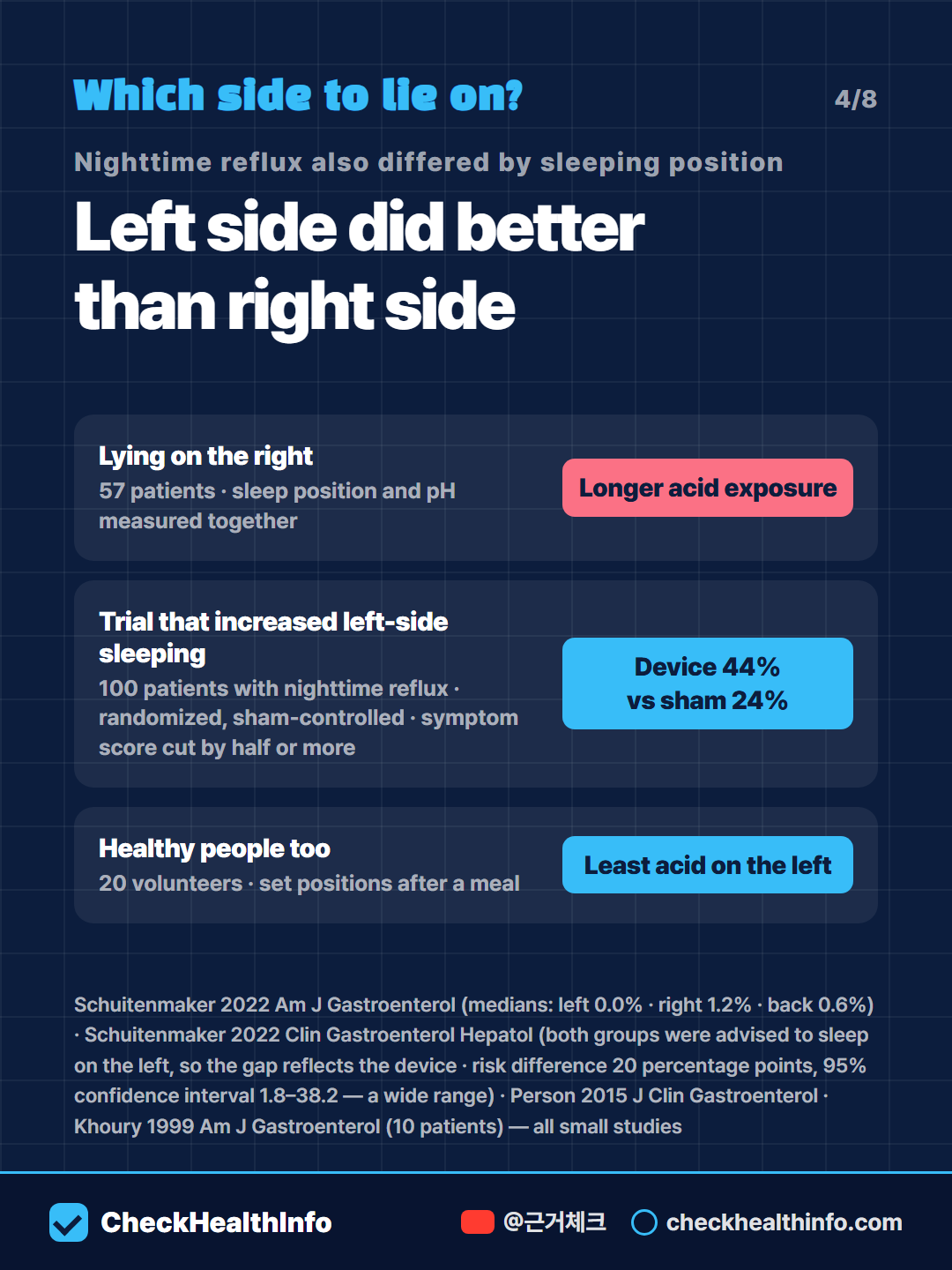
In a study of 10 patients with nighttime reflux, lying on the right side was linked to longer acid exposure and slower acid clearance from the esophagus. [7] In a study that recorded the sleeping positions of 57 patients, acid exposure was also shorter on the left side than on the right side or the back (medians 0.0%, 1.2% and 0.6%). [6] In a trial in which 20 healthy volunteers lay in set positions after a meal, acid exposure was lowest when lying on the left and highest on the right. [8] In a trial of 100 patients with nighttime reflux, all of whom were advised to sleep on their left side, participants were randomly given a device that vibrated when they lay on their right side (or a sham device). People with the real device spent 60.9% of their sleep time on their left side (vs 38.5% with the sham device), and 44% had their nighttime reflux score cut by half or more, compared with 24% with the sham device (risk difference 20 percentage points, 95% confidence interval 1.8 to 38.2). [5] All of these are small studies.
Verdict 2. “So the habit of lying down right after eating causes reflux esophagitis in people who did not have it before”
Insufficient evidence · Evidence grade C
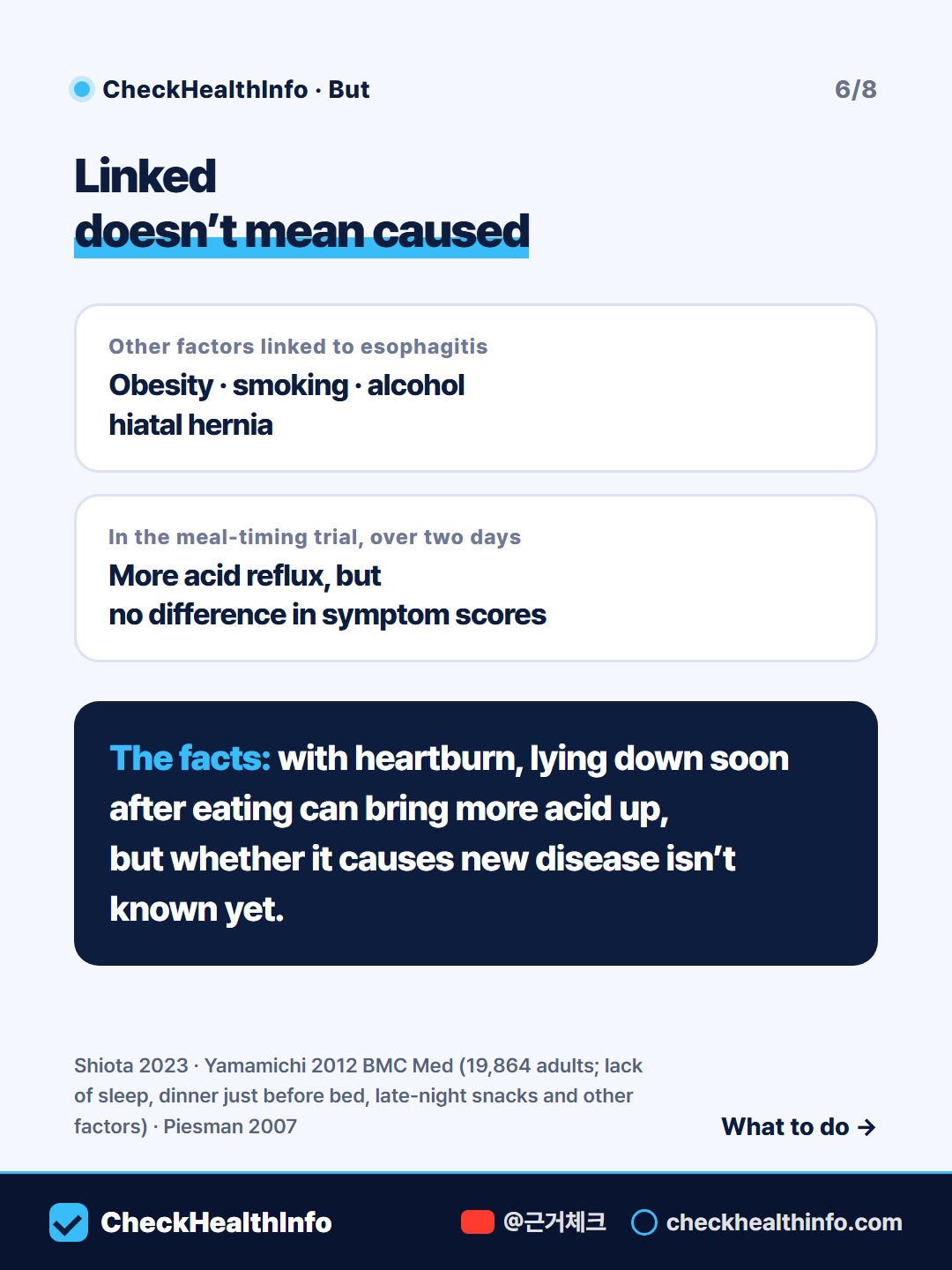
Simply put The habit of going to bed soon after dinner was often found together with reflux disease, but it has not been shown that the habit causes the disease. That is why we rated it “Insufficient evidence.” This does not mean it is false — only that it has not been clearly shown yet.
- In a case-control study comparing 147 patients with gastroesophageal reflux disease and 294 people without symptoms, those who went to bed within 3 hours of dinner had an odds ratio of 7.45 (95% confidence interval 3.38 to 16.4) for reflux disease compared with those who waited 4 hours or more. Simply put, going to bed soon after dinner was far more common among the patients. The pattern was the same for both non-erosive reflux disease and erosive esophagitis. [10]
- In a cross-sectional study of 5,240 people who had an endoscopy during health checkups, 676 (12.9%) had erosive esophagitis. In men with obesity, eating just before bed was linked to erosive esophagitis (odds ratio 1.34, 95% confidence interval 1.01 to 1.78), but in men without obesity it was not a linked factor (smoking, alcohol and hiatal hernia were). [11]
- In a cross-sectional study of 4,763 adults, those with a long gap between meals and sleep had lower odds of reflux symptoms (odds ratio 0.73, 95% confidence interval 0.57 to 0.95). [13] In a cross-sectional study of 19,864 adults, eating dinner just before bed and a habit of late-night snacking were linked to reflux symptom scores, along with lack of sleep and other factors. [12]
- In a prospective study that followed 181 patients who had recovered after reflux treatment, 47 (26.0%) relapsed, and going to bed within 3 hours of dinner was the only factor significantly linked to relapse. However, this result concerns relapse, not new disease. [14]
- A systematic review of 72 studies on diet, lifestyle and reflux disease also reported that a dinner-to-bed gap of less than 3 hours and late-night snacking were linked to reflux disease, but the studies differed too much to be pooled into one estimate, and the authors said further studies are needed to confirm the findings. [9]
Grade: We started at A (a systematic review of studies), but (1) the studies it collected were observational (case-control and cross-sectional), and (2) the figure for the dinner-to-bed gap comes essentially from one study’s odds ratio of 7.45 with a wide 95% confidence interval, while another study found a link in men with obesity but not in men without obesity, so the results were inconsistent. For these two different reasons, we lowered it two grades to C. We did not find any study in PubMed that followed people without the disease over time to see whether the habit leads to new esophagitis (there is only one prospective study, on relapse after recovery [14]).
If you tend to lie down soon after dinner
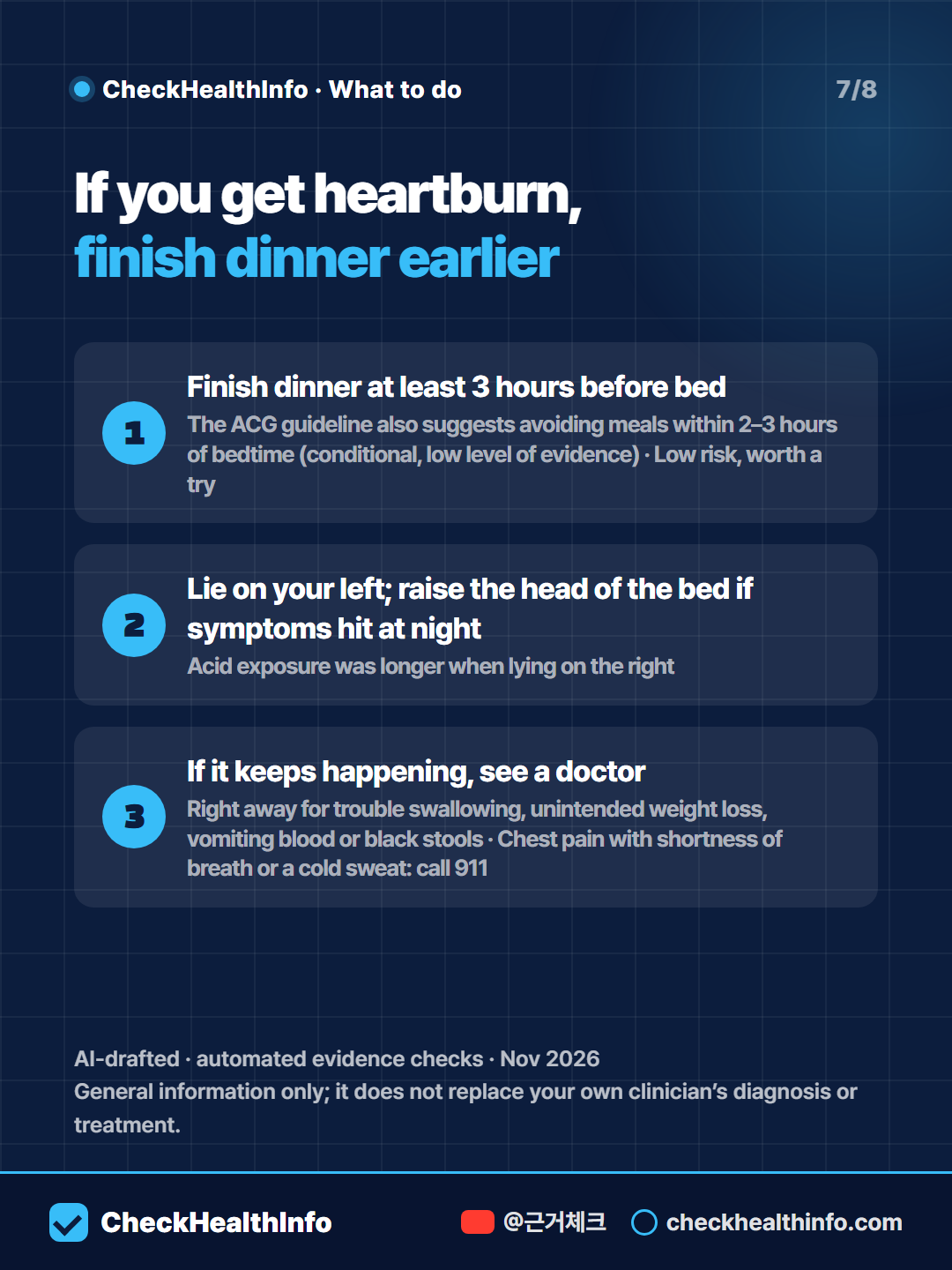
- If you get heartburn, finish dinner at least 3 hours before bed — more acid came up on nights when people ate 2 hours before bed [2], and the ACG guideline also suggests avoiding meals within 2–3 hours of bedtime (low level of evidence). [4] It is not certain, but it is low-risk and worth a try.
- Lie on your left side, and raise the head of the bed if symptoms are worse at night — acid exposure was longer when lying on the right [6], and raising the head of the bed reduced acid exposure while lying down. [1]
- See a doctor if symptoms continue — See a doctor if heartburn or sour liquid comes up often. Go right away if you have trouble swallowing, are losing weight without trying, vomit blood or have black stools. If chest pain comes with shortness of breath or a cold sweat, call 911 or go to the emergency room right away.
Scope: This verdict covers how the timing of lying down after meals and sleeping position relate to acid reflux and reflux esophagitis. It does not cover types of food; the effects of weight, smoking or alcohol; or medicines (acid suppressants).
Limitations of this verdict
- The meal-timing trial was small, included only adults who already had reflux symptoms and lasted just two nights, so the results may not apply directly to people without symptoms.
- Most studies for Verdict 2 were case-control or cross-sectional studies that asked about habits by questionnaire, so they cannot tell whether the habit or the disease came first, and they cannot fully separate the role of other factors such as obesity, smoking and alcohol.
- The ACG guideline’s specific recommendations are in its full-text recommendation table, not in the abstract, so we used them only as supporting evidence.
- Grades follow section 1 of our rating method. We check PubMed for new studies every month, and if a verdict changes, we record it in our corrections log.
Card news
Video (in Korean)
References
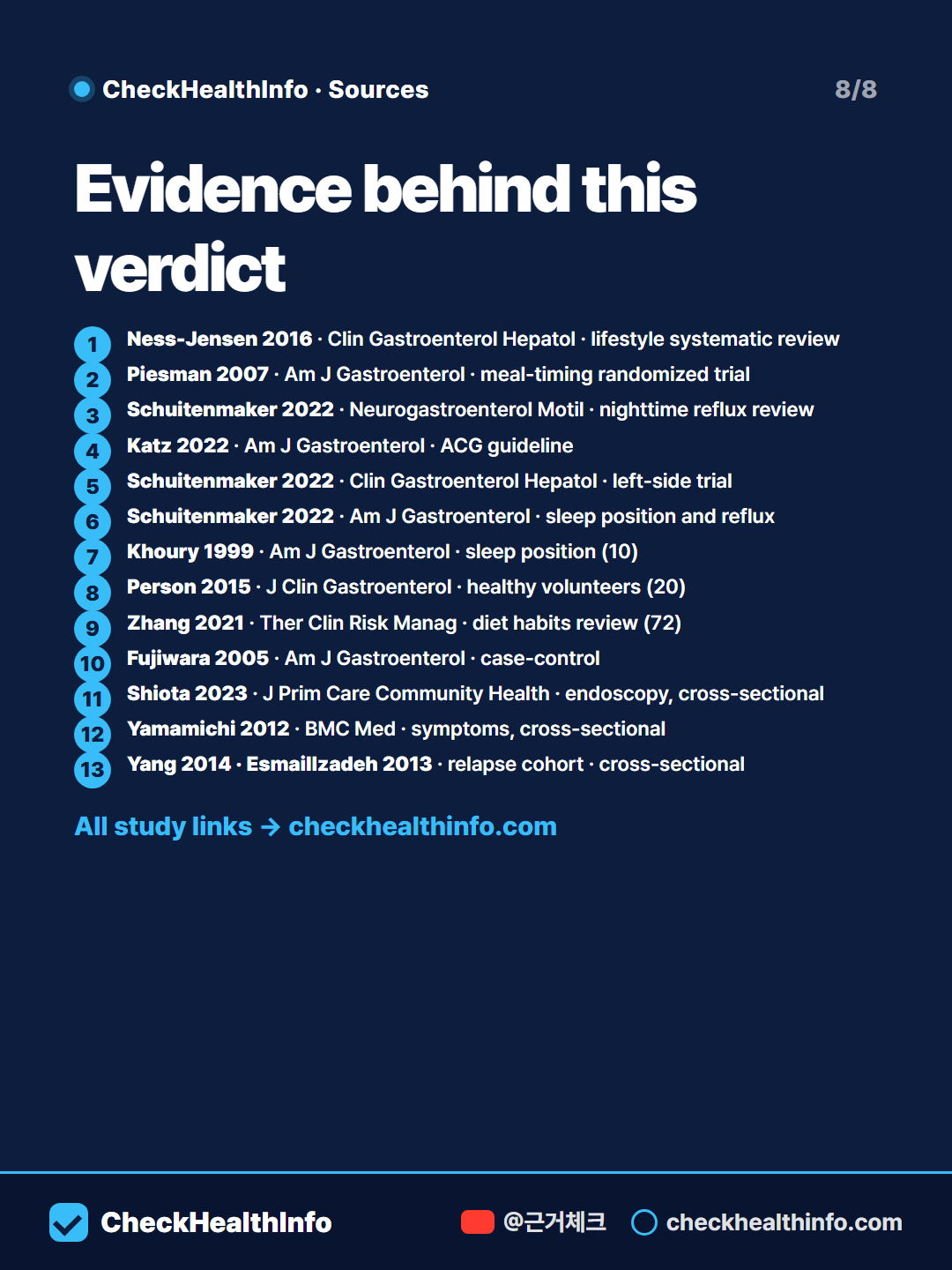
- Ness-Jensen E, Hveem K, El-Serag H, et al. Lifestyle Intervention in Gastroesophageal Reflux Disease. Clin Gastroenterol Hepatol 2016;14(2):175-82.e1-3. PMID 25956834. PubMed abstract · Full article · Free full text
- Piesman M, Hwang I, Maydonovitch C, et al. Nocturnal reflux episodes following the administration of a standardized meal. Does timing matter?. Am J Gastroenterol 2007;102(10):2128-34. PMID 17573791. PubMed abstract · Full article
- Schuitenmaker JM, Kuipers T, Smout AJPM, et al. Systematic review: Clinical effectiveness of interventions for the treatment of nocturnal gastroesophageal reflux. Neurogastroenterol Motil 2022;34(12):e14385. PMID 35445777. PubMed abstract · Full article · Free full text
- Katz PO, Dunbar KB, Schnoll-Sussman FH, et al. ACG Clinical Guideline for the Diagnosis and Management of Gastroesophageal Reflux Disease. Am J Gastroenterol 2022;117(1):27-56. PMID 34807007. PubMed abstract · Full article · Free full text
- Schuitenmaker JM, Kuipers T, Oude Nijhuis RAB, et al. Sleep Positional Therapy for Nocturnal Gastroesophageal Reflux: A Double-Blind, Randomized, Sham-Controlled Trial. Clin Gastroenterol Hepatol 2022;20(12):2753-2762.e2. PMID 35301135. PubMed abstract · Full article
- Schuitenmaker JM, van Dijk M, Oude Nijhuis RAB, et al. Associations Between Sleep Position and Nocturnal Gastroesophageal Reflux: A Study Using Concurrent Monitoring of Sleep Position and Esophageal pH and Impedance. Am J Gastroenterol 2022;117(2):346-351. PMID 34928874. PubMed abstract · Full article
- Khoury RM, Camacho-Lobato L, Katz PO, et al. Influence of spontaneous sleep positions on nighttime recumbent reflux in patients with gastroesophageal reflux disease. Am J Gastroenterol 1999;94(8):2069-73. PMID 10445529. PubMed abstract · Full article
- Person E, Rife C, Freeman J, et al. A Novel Sleep Positioning Device Reduces Gastroesophageal Reflux: A Randomized Controlled Trial. J Clin Gastroenterol 2015;49(8):655-9. PMID 26053170. PubMed abstract · Full article
- Zhang M, Hou ZK, Huang ZB, et al. Dietary and Lifestyle Factors Related to Gastroesophageal Reflux Disease: A Systematic Review. Ther Clin Risk Manag 2021;17:305-323. PMID 33883899. PubMed abstract · Full article · Free full text
- Fujiwara Y, Machida A, Watanabe Y, et al. Association between dinner-to-bed time and gastro-esophageal reflux disease. Am J Gastroenterol 2005;100(12):2633-6. PMID 16393212. PubMed abstract · Full article
- Shiota S, Shibata A, Horinouchi N, et al. Lifestyle Factors Associated With Erosive Esophagitis in Japanese Individuals With and Without Obesity Undergoing Health Checkups. J Prim Care Community Health 2023;14:21501319231205383. PMID 37846060. PubMed abstract · Full article · Free full text
- Yamamichi N, Mochizuki S, Asada-Hirayama I, et al. Lifestyle factors affecting gastroesophageal reflux disease symptoms: a cross-sectional study of healthy 19864 adults using FSSG scores. BMC Med 2012;10:45. PMID 22554226. PubMed abstract · Full article · Free full text
- Esmaillzadeh A, Keshteli AH, Feizi A, et al. Patterns of diet-related practices and prevalence of gastro-esophageal reflux disease. Neurogastroenterol Motil 2013;25(10):831-e638. PMID 23895231. PubMed abstract · Full article
- Yang JH, Kang HS, Lee SY, et al. Recurrence of gastroesophageal reflux disease correlated with a short dinner-to-bedtime interval. J Gastroenterol Hepatol 2014;29(4):730-5. PMID 24224689. PubMed abstract · Full article
General information only, not medical advice. It does not replace your own clinician’s diagnosis or treatment. See a doctor if you often have heartburn or sour-tasting fluid coming up into your throat or mouth. Get medical care right away if you have trouble swallowing, are losing weight without trying, vomit blood or have black stools. If chest pain comes with shortness of breath or a cold sweat, call 911 (119 in Korea) right away. This article does not cover medicines (such as acid-reducing drugs).