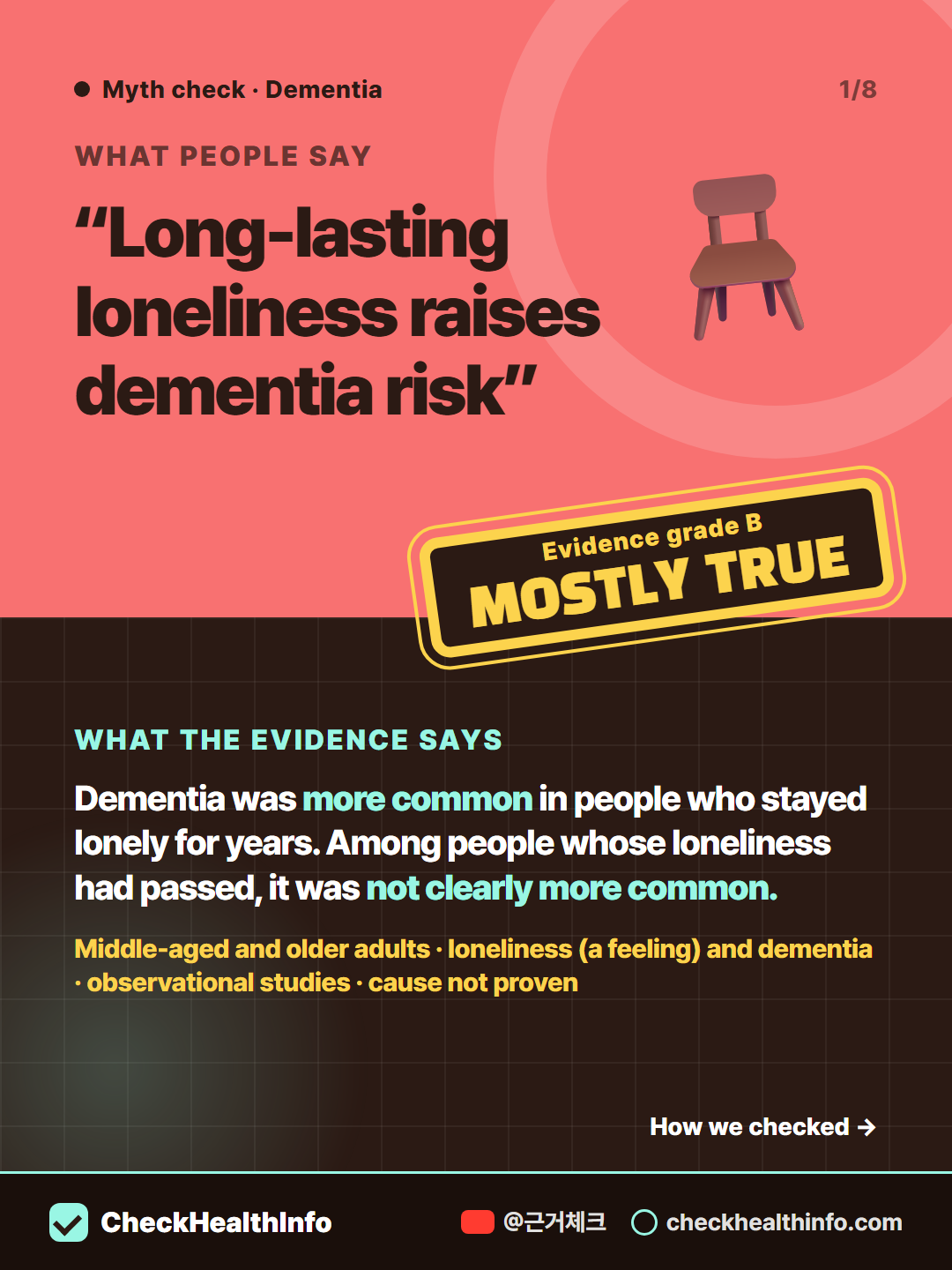
Does long-lasting loneliness raise dementia risk? Is brief loneliness OK?
Does feeling lonely for a long time (chronic loneliness) raise the risk of dementia? And is loneliness that comes and then passes unrelated to dementia risk?

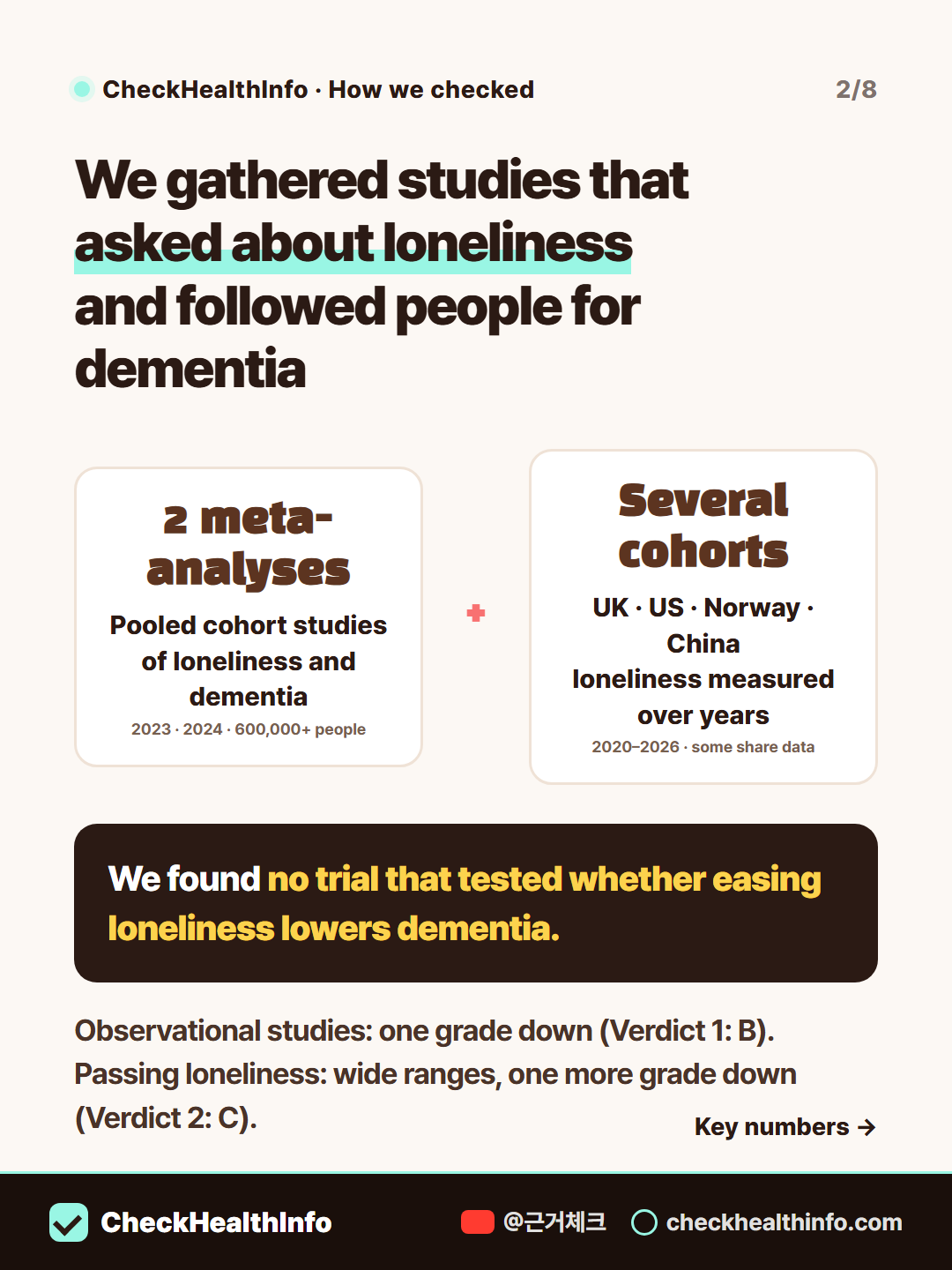
We checked this verdict against 11 sources, such as published studies and clinical guidelines. · How checked: AI-drafted · automated evidence checks
Verdicts at a glance
| Claim | Verdict |
|---|---|
| People who feel lonely for a long time (chronic loneliness) develop dementia more often | Mostly true · Evidence grade B |
| Among people whose loneliness passed, dementia risk was not clearly higher | Mostly true · Evidence grade C |
Bottom line — Study after study, in several countries, found more dementia in people who were lonely, especially those whose loneliness lasted for years. So the claim that “people who feel lonely for a long time (chronic loneliness) develop dementia more often” is rated “Mostly true” (evidence grade B). But all of these studies are observational, so it is not yet clear whether loneliness itself causes dementia. The claim that “among people whose loneliness passed, dementia risk was not clearly higher” is also rated “Mostly true” (evidence grade C). Still, the studies are few and the results partly conflict, so we cannot say passing loneliness is entirely unrelated — and it does not apply to loneliness that has only just begun. Easing loneliness has not been shown to prevent dementia, but it carries little risk, so it is worth trying.
Loneliness — The subjective feeling of not being as connected to other people as you would like.
Social isolation — An objective state you can count from the outside, such as living alone or seeing few people. You can live alone without feeling lonely, and feel lonely while living with family.
Cohort study — An observational study that follows many people over time. It shows that two things go together, but is less certain than a randomized trial about cause and effect.
Meta-analysis — An analysis that combines the results of several studies.
Hazard ratio · relative risk · odds ratio — Numbers that compare how often something happens in two groups. A value of 1 means no difference; above 1 means it happened more often in the first group. An odds ratio compares odds rather than risk, so it is not exactly the same as a percent increase in risk. These are relative numbers; they do not tell you how much one person's own chance changes.
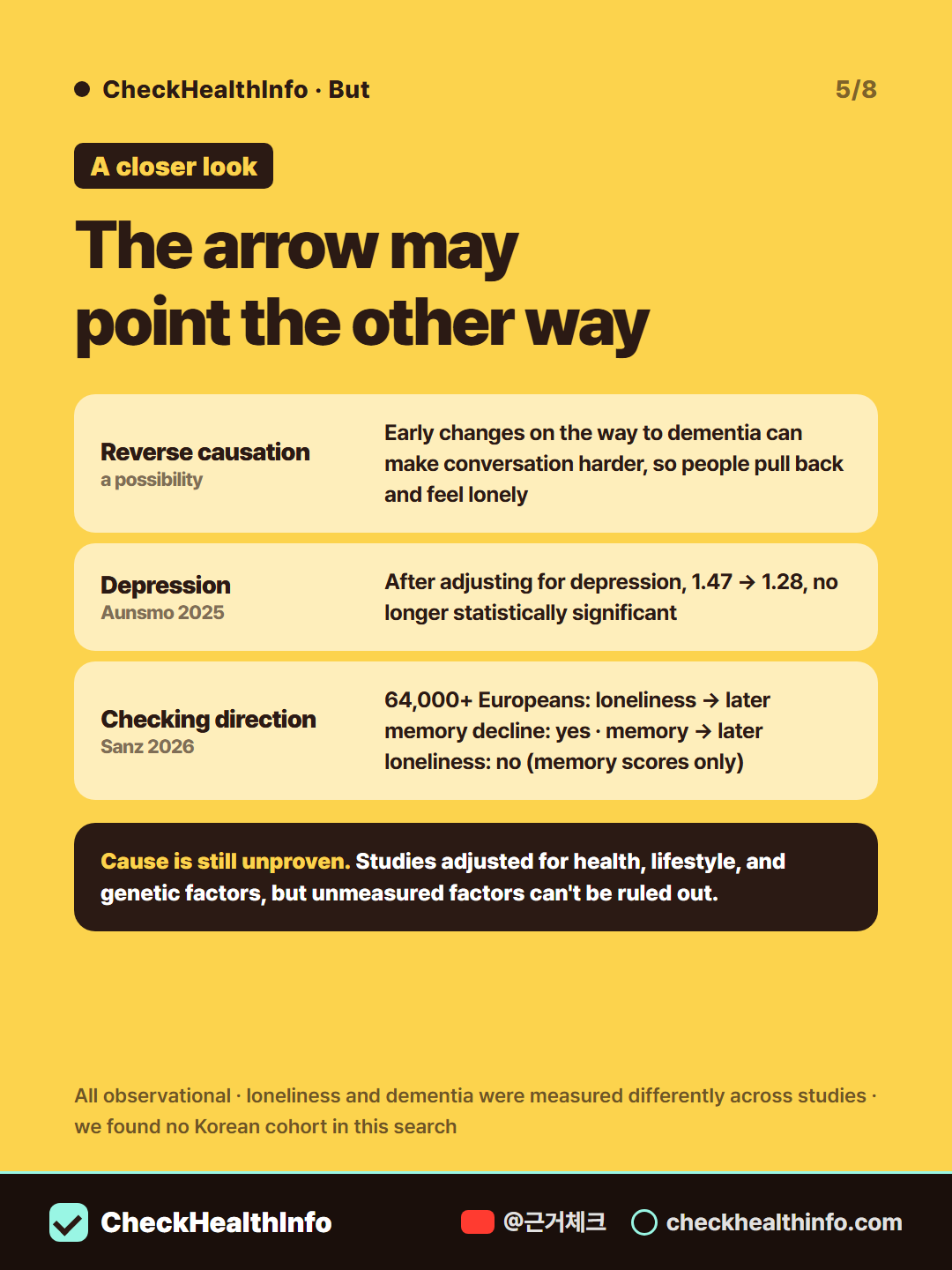
Reverse causation — The possibility that cause and effect run the other way. Here, it means early changes on the way to dementia could lead to loneliness.
Verdict 1. “People who feel lonely for a long time (chronic loneliness) develop dementia more often”
Mostly true · Evidence grade B
In plain words Dementia was more common in lonely people, especially those whose loneliness lasted. But early dementia could also lead to loneliness, so we cannot say loneliness is the cause.
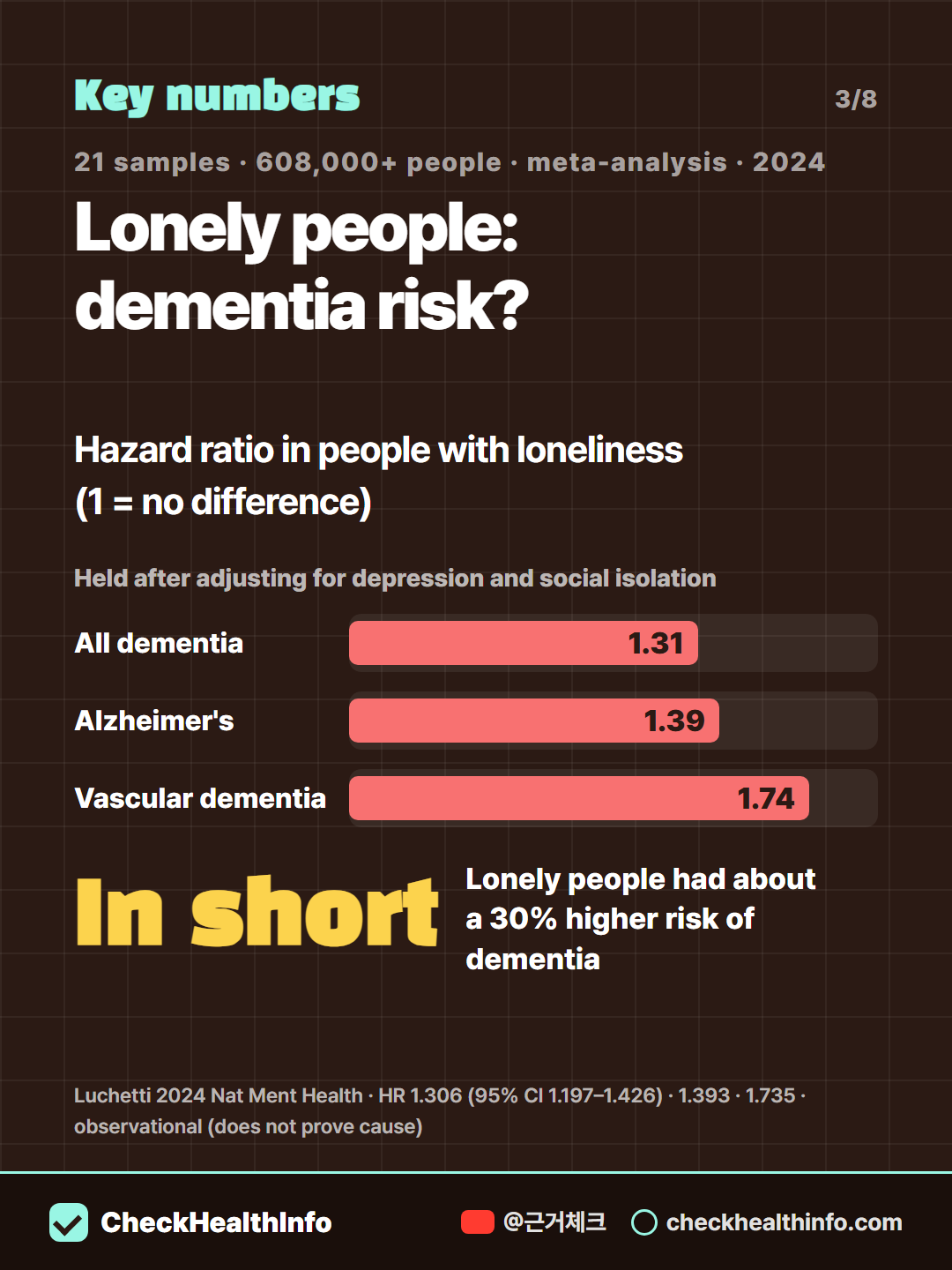
- In the largest meta-analysis of loneliness and dementia (21 samples, more than 608,000 people), people with loneliness had a hazard ratio for dementia of 1.306 (95% confidence interval 1.197–1.426). For Alzheimer's disease it was 1.393, and for vascular dementia 1.735. The link remained after adjusting for depression, social isolation, and other risk factors. In plain words, lonely people had about a 30% higher risk of developing dementia. This is a relative difference. [1] In absolute terms, in two cohorts from the UK and US, people with high cumulative loneliness had 372.8 more dementia cases per 100,000 person-years than those without — roughly 3.7 extra cases per 1,000 people per year. [7]
- Another meta-analysis of 32 longitudinal studies on social relationships and dementia found a relative risk of 1.42 (1.26–1.60) for loneliness. For social isolation the estimate was 1.58, but the confidence interval was wide (0.80–3.12), so the result was not statistically significant. High social engagement was linked to less dementia (relative risk 0.81, 0.74–0.89). [2]
- A US study of more than 12,000 people followed for 10 years found loneliness was associated with a 40% higher dementia risk, even after adjusting for social isolation. [9]
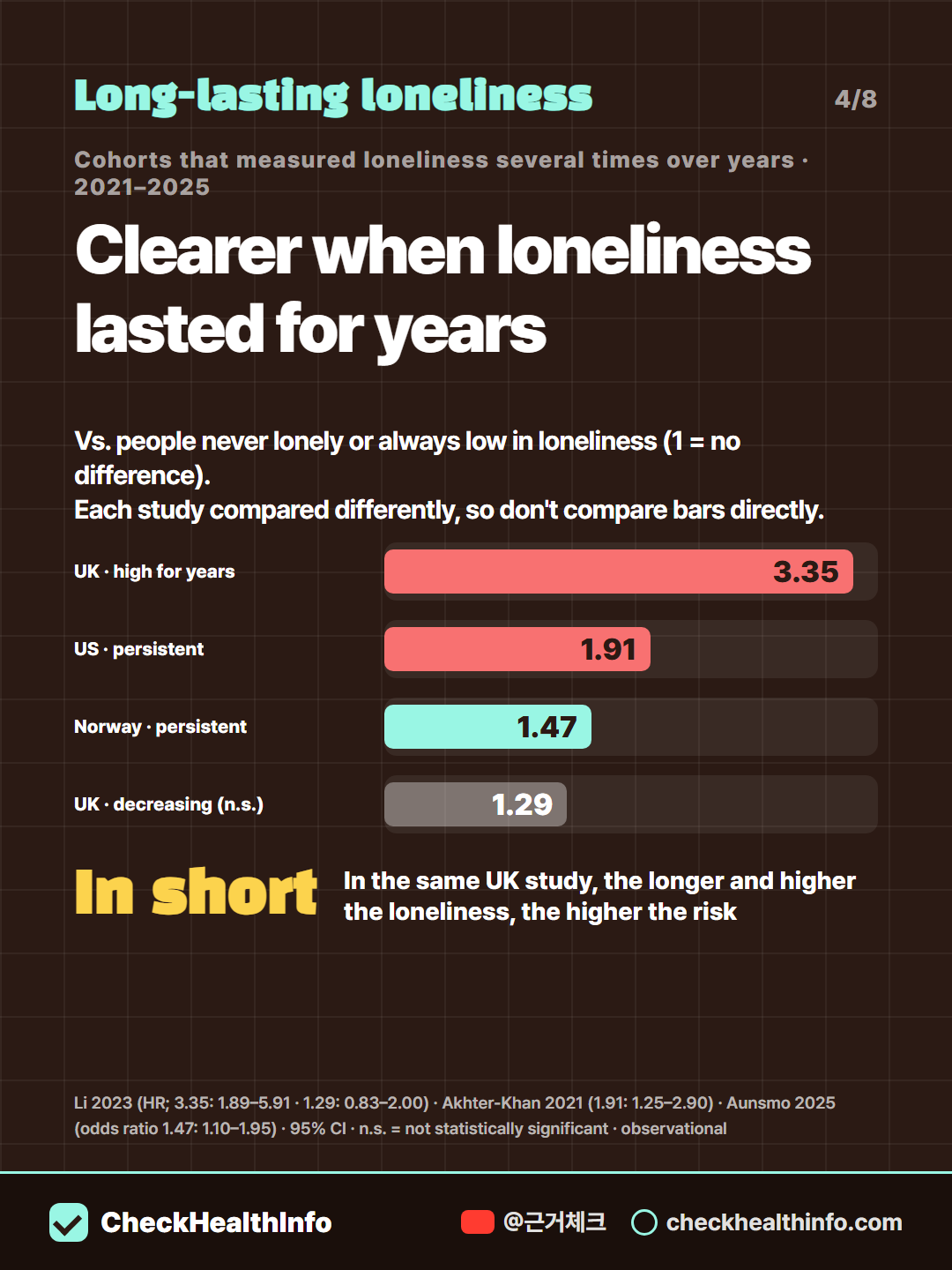
- Studies that tracked how long loneliness lasted pointed the same way. In 6,722 older adults in England, measured several times over 8 years, those with long-term high loneliness had a hazard ratio of 3.35 (1.89–5.91) compared with those whose loneliness stayed low. [4] In the US Framingham study (2,880 people), persistent loneliness in midlife had a hazard ratio of 1.91 (1.25–2.90). [5] In Norway's HUNT study (9,389 people), persistent loneliness had an odds ratio for dementia of 1.47 (1.10–1.95). [6] Combining more than 16,000 adults aged 50 and older in the UK and US, people with high cumulative loneliness had a 98% higher risk of dementia. [7]
- A systematic review of 20 studies on how loneliness changes over time also concluded that persistent or increasing loneliness was linked to greater cognitive decline and higher dementia risk. [3]
- But all of these studies only observed people. Early changes on the way to dementia can make conversation harder, leading people to avoid gatherings and become lonely (reverse causation). In the Norwegian study, adjusting for depression weakened the odds ratio to 1.28 (0.95–1.72), so it was no longer statistically significant. [6] On the other hand, in data from more than 64,000 Europeans, loneliness predicted later memory decline, but memory did not predict later loneliness (memory scores, not dementia diagnoses). [8]
The takeaway Study after study, in several countries, found more dementia in people with loneliness, especially long-lasting loneliness. But all are observational, so it is not yet clear whether loneliness directly causes dementia.
The strongest evidence comes from meta-analyses and a systematic review, which start at grade A under our rules. Because they pool observational studies rather than randomized trials, we lowered the grade one step to B. Both meta-analyses reported large differences between studies, but the results pointed the same way and the confidence intervals were narrow, so we did not lower it further. The two meta-analyses partly include the same studies. Because it is not clear that loneliness is the cause, the rating is “Mostly true” (How we rate, sections 1–2).
Verdict 2. “Among people whose loneliness passed, dementia risk was not clearly higher”
Mostly true · Evidence grade C
In plain words Dementia did not clearly increase in people whose loneliness passed. But the numbers have wide ranges and the results partly conflict, so “no link at all” has not been shown. And in the Norwegian study, becoming lonely later in life was also linked to dementia — if you have just become lonely, don't brush it off as temporary; take steps to help it pass.
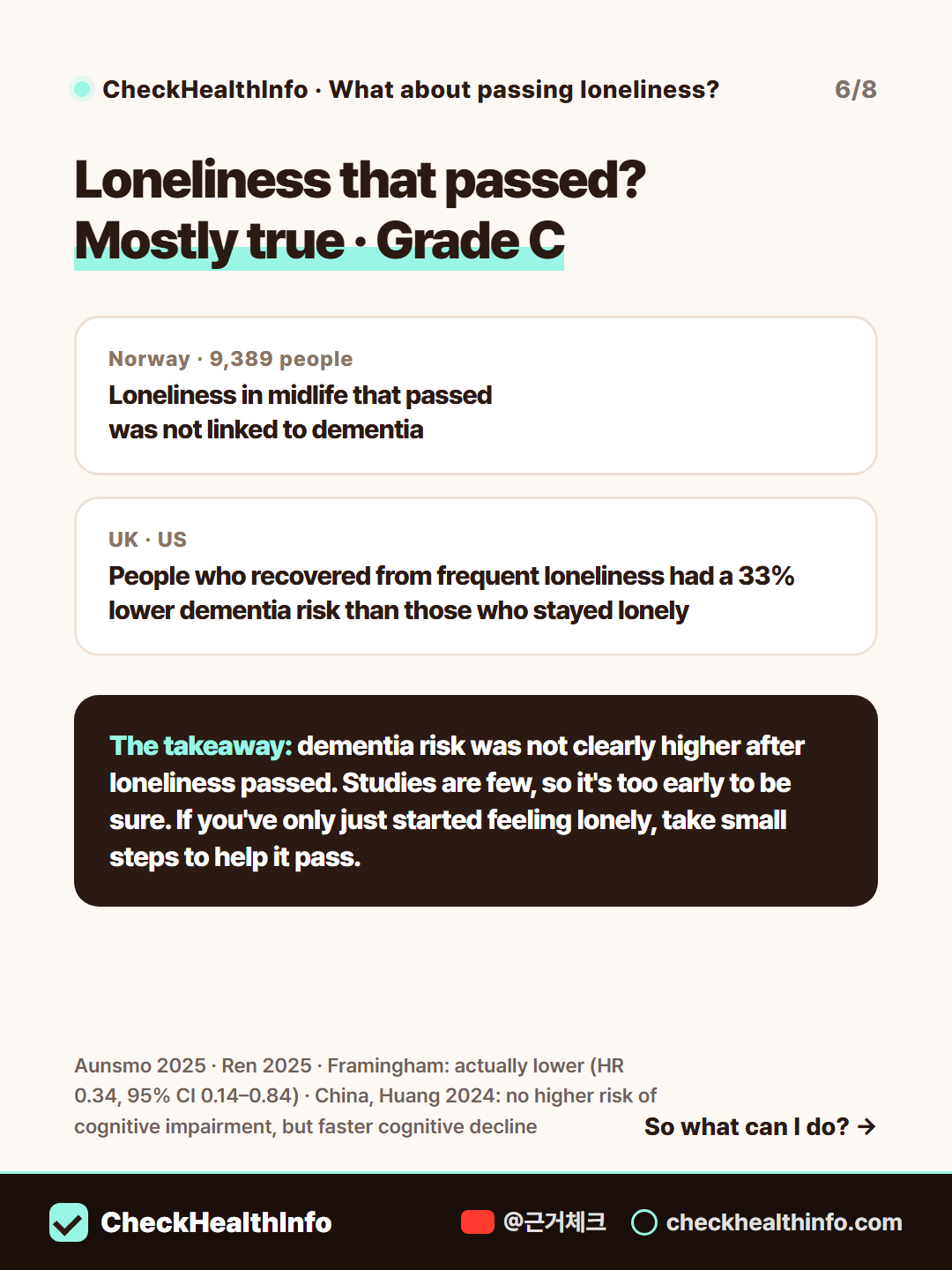
- In Norway's HUNT study, loneliness in midlife that passed was not linked to dementia; only persistent or newly developed loneliness was. [6]
- In the US Framingham study, transient loneliness had a hazard ratio of 0.34 (0.14–0.84) compared with no loneliness — actually lower risk. The researchers suggested that recovering from loneliness may be a sign of resilience to dementia risk. But the confidence interval is wide, and this does not mean that brief loneliness lowers dementia risk. [5]
- In the English study, the group whose loneliness kept decreasing had a hazard ratio of 1.29, but the confidence interval was wide (0.83–2.00), so the difference was not statistically significant. [4]
- In a study of 7,299 older adults in China, among the loneliness patterns only persistent loneliness was linked to a higher risk of cognitive impairment. However, cognitive function declined faster even with transient loneliness. Social isolation was linked to higher risk of cognitive impairment even when it was short-lived. [10]
- In UK and US data, people who recovered from frequent loneliness had a 33% lower dementia risk than those who stayed frequently lonely. [7]
The takeaway Among people whose loneliness passed, dementia risk was not clearly higher; the higher risk was in people whose loneliness lasted. But the studies are few, so we cannot be sure it is entirely unrelated.
The direct evidence comes from cohorts that measured loneliness two or more times and separated out loneliness that passed, so we started at B. The results conflict — no link in Norway, not significant in England, actually lower in Framingham, and only faster cognitive decline in China — and the confidence intervals are wide. Not finding a difference is not the same as showing there is none, so we lowered the grade one step to C for uncertainty (How we rate, sections 1–2).
What you can do
In plain words In this search we found no trial that tested whether easing loneliness lowers dementia risk. Still, it carries little risk, so while it is not proven, it is worth trying.
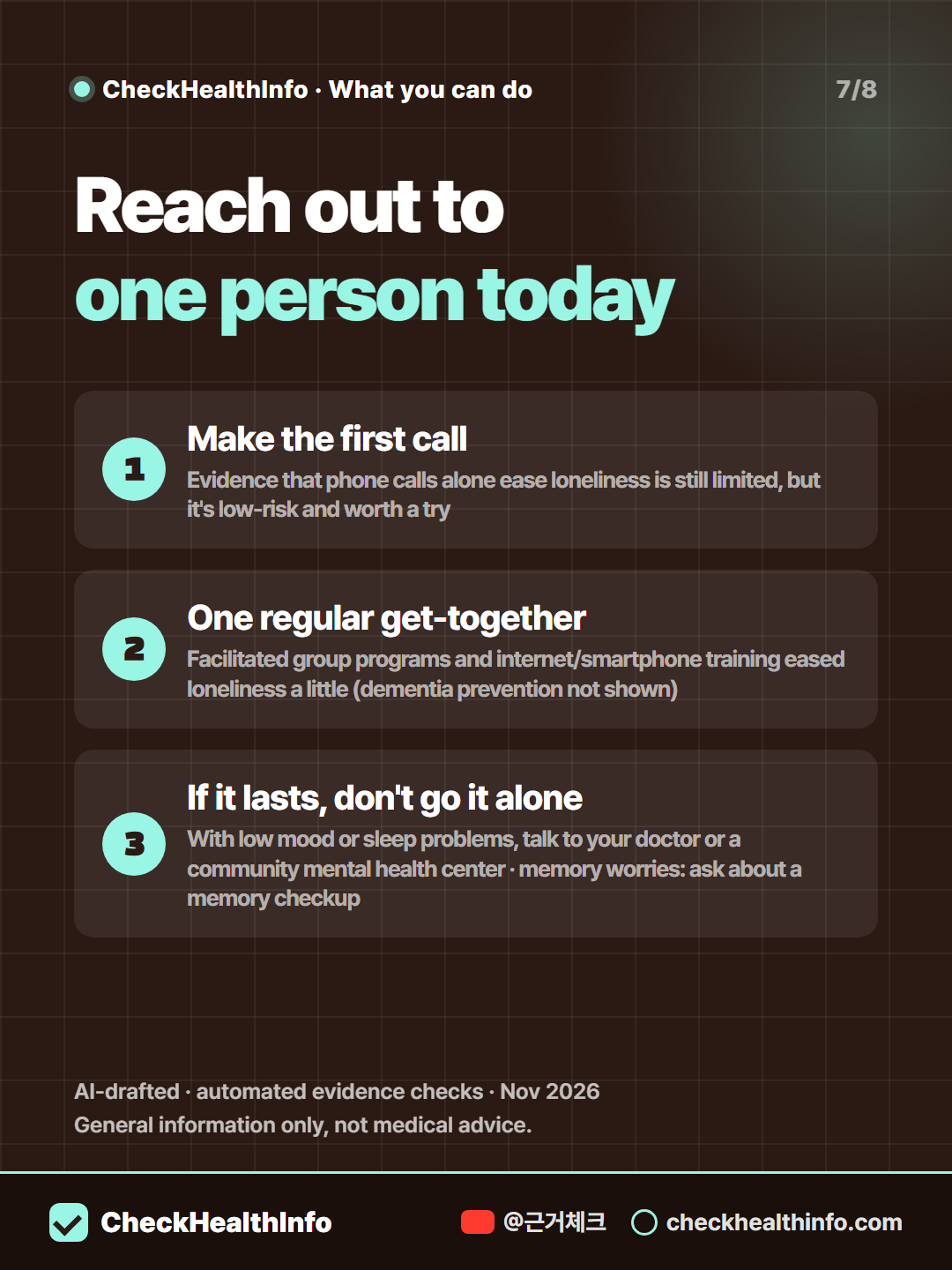
- Ideas to try: reach out to one person today, set up one regular get-together, or learn to use video calls if family lives far away.
- In a review of studies in older adults living in the community, facilitated group programs (standardized mean difference −0.27) and internet-use training (−0.22) reduced loneliness a little. Evidence for simple group activities and phone calls was still insufficient (these studies did not look at dementia). [11]
- Whether you feel lonely may matter more than whether you live alone. But having very few social contacts (social isolation) deserves attention too.
- If loneliness lasts, or comes with low mood or sleep problems, talk to your doctor or a community mental health center. If you are worried about your memory, ask your doctor about a memory checkup. (In Korea, local public health centers, mental health welfare centers, and dementia care centers offer this help.)
Limits of this verdict
- All of these are observational studies. They adjusted for other health, lifestyle, and genetic factors, but factors that were not measured cannot be ruled out. Depression may be a link in the chain between loneliness and dementia (a mediator), or a shared cause of both (a confounder).
- Reverse causation — early changes on the way to dementia leading to loneliness — cannot be fully ruled out.
- Loneliness was measured differently across studies, from a single question to the UCLA Loneliness Scale. Dementia was also identified differently: self- or family-reported doctor diagnoses, telephone cognitive test scores, and in-person cognitive assessment at age 70 or older. The Norwegian study included only people assessed at age 70 or older. Both meta-analyses reported large differences between studies.
- Several studies used the same English (ELSA) and US (HRS) data, so their participants overlap.
- In this search we found no cohort that tracked loneliness over time and dementia in older adults in Korea. We also could not identify in PubMed the study behind the “38%” figure in a Korean news report, so we did not use that number.
- This article covers loneliness and dementia or cognitive function only; it does not cover how living alone affects lifespan.
- Grades follow section 1 of How we rate. We check for new studies in a monthly PubMed review, and any change in a verdict is recorded in Corrections.
Card news
Video (in Korean)
References
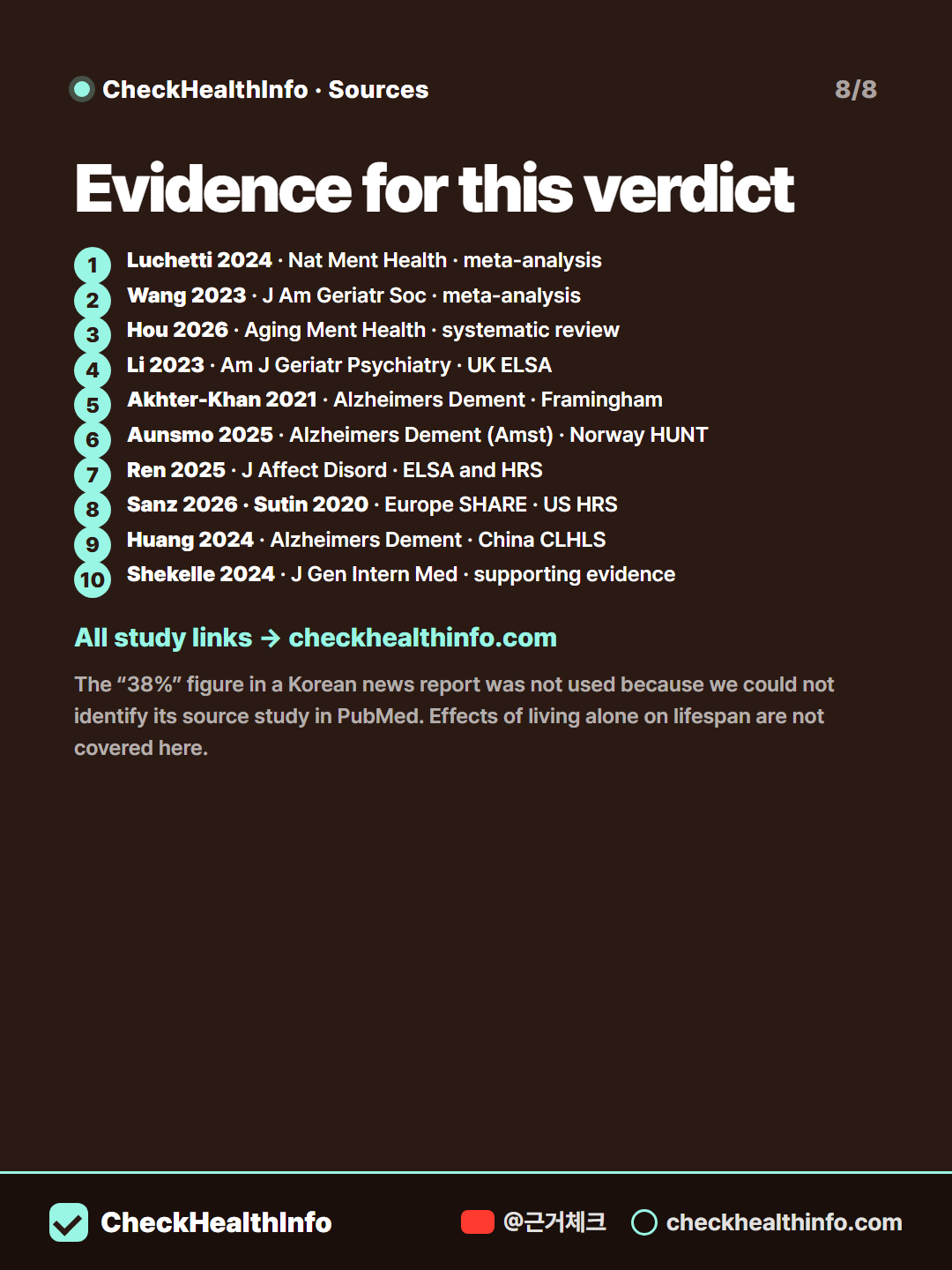
- Luchetti M, Aschwanden D, Sesker AA, et al. A Meta-analysis of Loneliness and Risk of Dementia using Longitudinal Data from >600,000 Individuals. Nat Ment Health 2024;2(11):1350-1361. PMID 39802418. PubMed abstract · Full article · Free full text
- Wang S, Molassiotis A, Guo C, et al. Association between social integration and risk of dementia: A systematic review and meta-analysis of longitudinal studies. J Am Geriatr Soc 2023;71(2):632-645. PMID 36307921. PubMed abstract · Full article
- Hou T, Ho MH, Lin CC. Understanding the impact of social isolation and loneliness on cognitive function in older adults: longitudinal evidence of trajectories and influencing factors-a systematic review. Aging Ment Health 2026:1-13. PMID 42480060. PubMed abstract · Full article
- Li Y, Wang X, Guo L, et al. Eight-Year Trajectories of Late-Life Loneliness and Incident Dementia: A Nationally Representative Cohort Study. Am J Geriatr Psychiatry 2023;31(7):475-486. PMID 36549995. PubMed abstract · Full article
- Akhter-Khan SC, Tao Q, Ang TFA, et al. Associations of loneliness with risk of Alzheimer's disease dementia in the Framingham Heart Study. Alzheimers Dement 2021;17(10):1619-1627. PMID 33760348. PubMed abstract · Full article · Free full text
- Aunsmo RH, Strand BH, Bergh S, et al. Loneliness trajectories and dementia risk: Insights from the HUNT cohort study. Alzheimers Dement (Amst) 2025;17(3):e70154. PMID 40735047. PubMed abstract · Full article · Free full text
- Ren Z, Luo Y, Liu Y, et al. Prolonged loneliness and risk of incident cognitive decline and dementia: A two-cohort study. J Affect Disord 2025;378:254-262. PMID 40044082. PubMed abstract · Full article
- Sanz A, Tomás JM, Abella M, et al. A longitudinal study of the relationship between loneliness and memory. Arch Gerontol Geriatr 2026;146:106211. PMID 41905079. PubMed abstract · Full article
- Sutin AR, Stephan Y, Luchetti M, et al. Loneliness and Risk of Dementia. J Gerontol B Psychol Sci Soc Sci 2020;75(7):1414-1422. PMID 30365023. PubMed abstract · Full article · Free full text
- Huang QM, Zhang PD, Shen D, et al. Analysis of changes in social isolation, loneliness, or both, and subsequent cognitive function among older adults: Findings from a nationwide cohort study. Alzheimers Dement 2024;20(8):5674-5683. PMID 38946708. PubMed abstract · Full article · Free full text
- Shekelle PG, Miake-Lye IM, Begashaw MM, et al. Interventions to Reduce Loneliness in Community-Living Older Adults: a Systematic Review and Meta-analysis. J Gen Intern Med 2024;39(6):1015-1028. PMID 38200279. PubMed abstract · Full article · Free full text
General information only, not medical advice. It does not replace your own clinician’s diagnosis or treatment. If loneliness lingers, or comes with low mood or trouble sleeping, talk with your doctor or a mental health professional. If you are worried about your memory, ask your doctor about a memory checkup.