If you sleep more than 9 hours a day, is it actually bad for your heart?
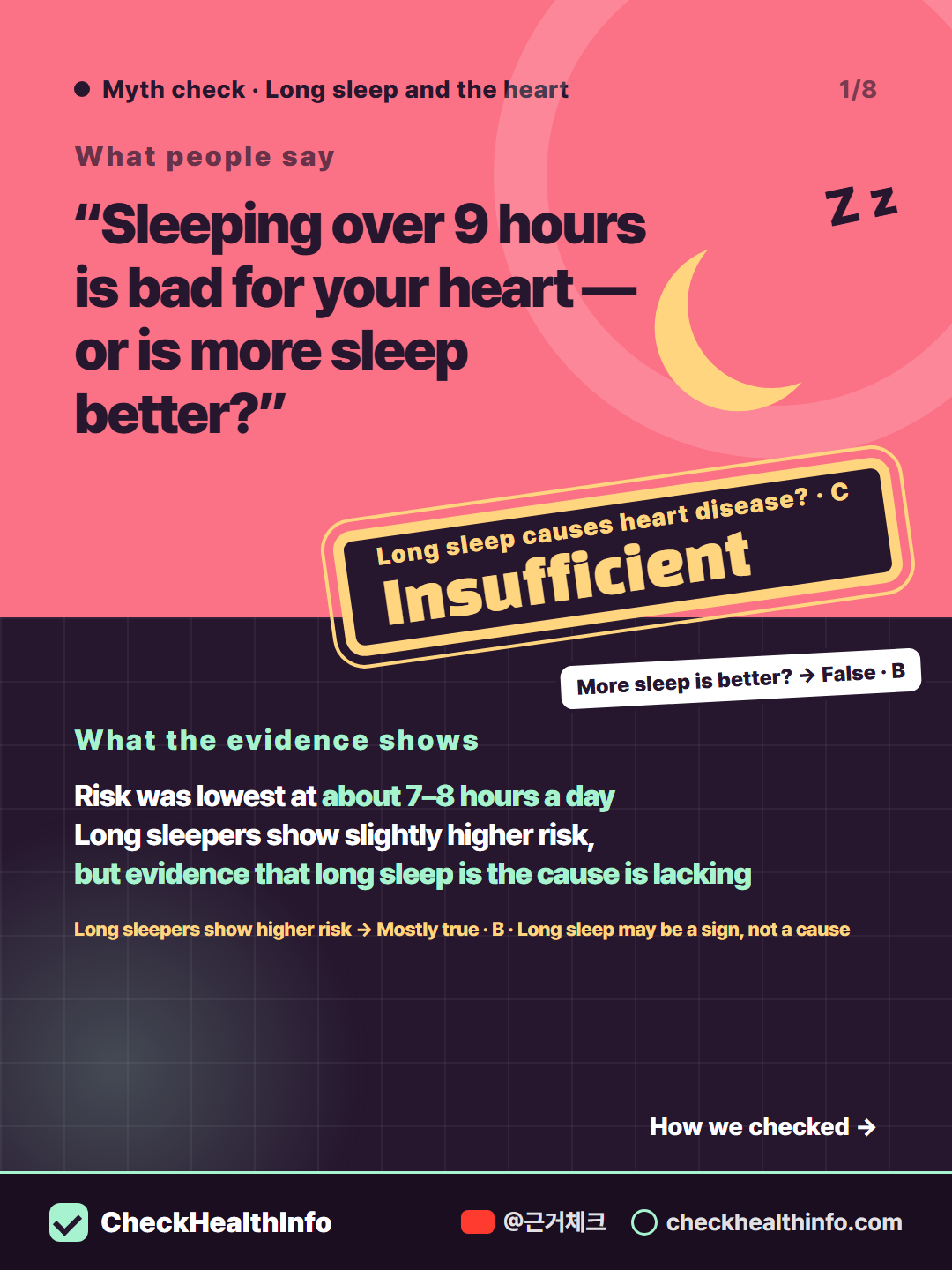
Is more sleep always better for your health, do people who sleep more than 9 hours a day show higher cardiovascular and death risk, and does long sleep itself cause heart disease?

We checked this verdict against 15 sources, such as published studies and clinical guidelines. · How checked: AI-drafted · automated evidence checks
Verdicts at a glance
| Claim | Verdict |
|---|---|
| The more you sleep, the better for your health | False · Evidence grade B |
| People who sleep more than 9 hours a day show a higher risk of cardiovascular disease and death | Mostly true · Evidence grade B |
| Sleeping more than 9 hours itself causes heart disease | Insufficient evidence · Evidence grade C |
Bottom line — In analyses pooling studies that followed millions of people, risk was lowest at around 7 to 8 hours of sleep a day, and it was higher with both longer and shorter sleep. So “the more you sleep, the better for your health” is rated False (Evidence grade B). Across many studies, long sleepers consistently showed somewhat more cardiovascular disease and death, so “people who sleep more than 9 hours a day show a higher risk of cardiovascular disease and death” is rated Mostly true (Evidence grade B). However, a genetic analysis found no link between a built-in tendency to sleep long and cardiovascular disease, and overall the results are mixed, so “sleeping long itself causes heart disease” is rated Insufficient evidence (Evidence grade C). Long sleep may be less a cause of heart disease than a sign of other health problems, such as chronic illness or depression. Rather than forcing yourself to sleep less, it is better to look into why your sleep has gotten longer.
Relative risk · hazard ratio — numbers that compare how often a disease or death occurs in two groups. A value above 1 means it occurs more often; it is not one person’s chance of getting sick.
95% confidence interval — the range likely to contain the true value. If it includes 1, it is hard to say there is a real difference.
Meta-analysis · cohort study — a study that pools and recalculates results from many studies, and a study that follows many people over a long time.
Mendelian randomization — a method that uses gene variants fixed at birth as a stand-in for a person’s “built-in” sleep length, to reduce the effect of illness changing sleep and to test whether sleep length is a cause.
Association vs. cause — two things showing up together (association) is different from one thing causing the other (cause).
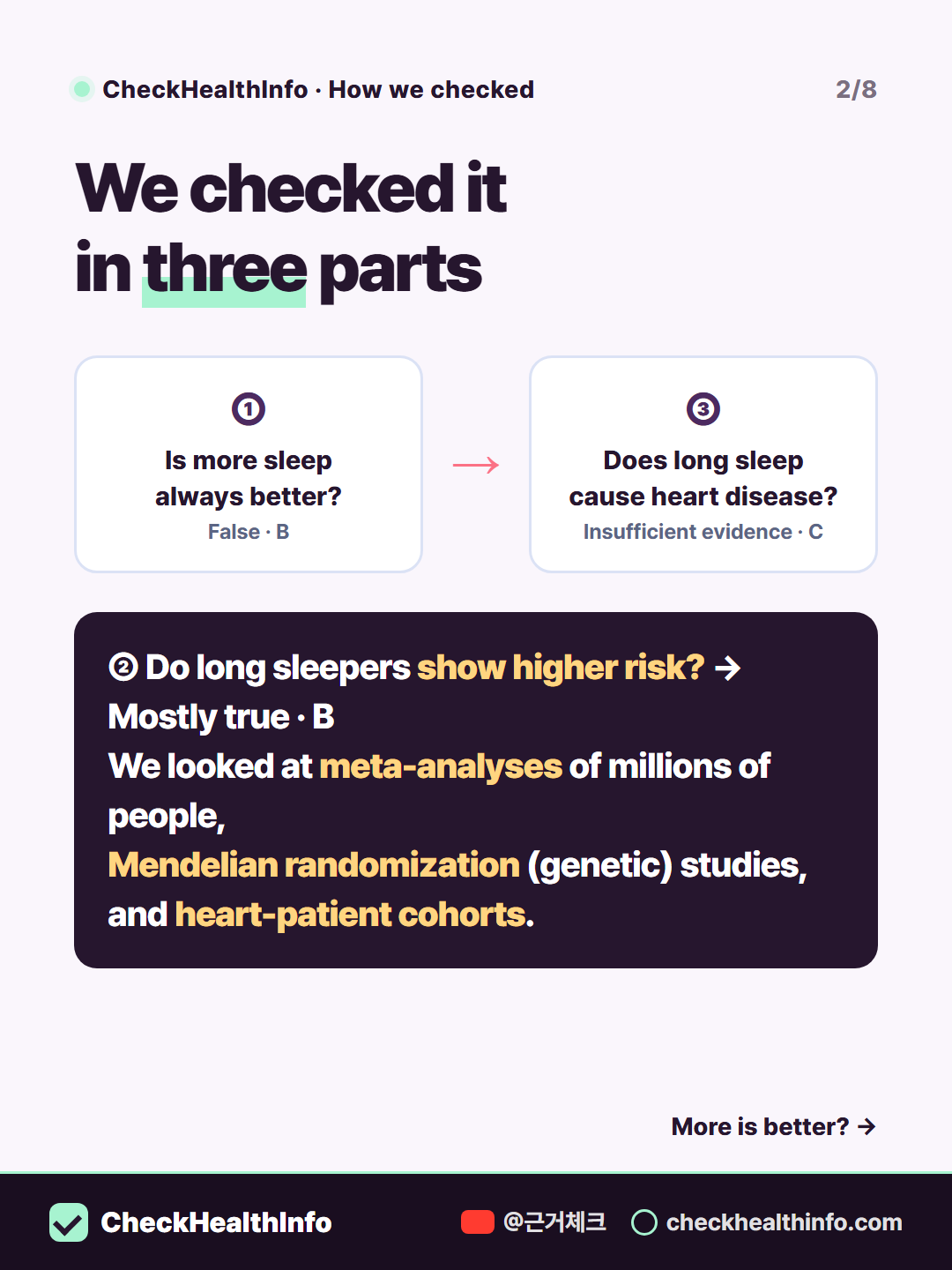
A recent health news story described a study that followed heart patients who sleep more than 9 hours a day, so we checked a question many long sleepers ask. Common claims mix “the more sleep, the better” with the opposite idea, “sleeping more than 9 hours is bad for your heart,” so we split the verdict into three.
Verdict 1. “The more you sleep, the better for your health”
False · Evidence grade B
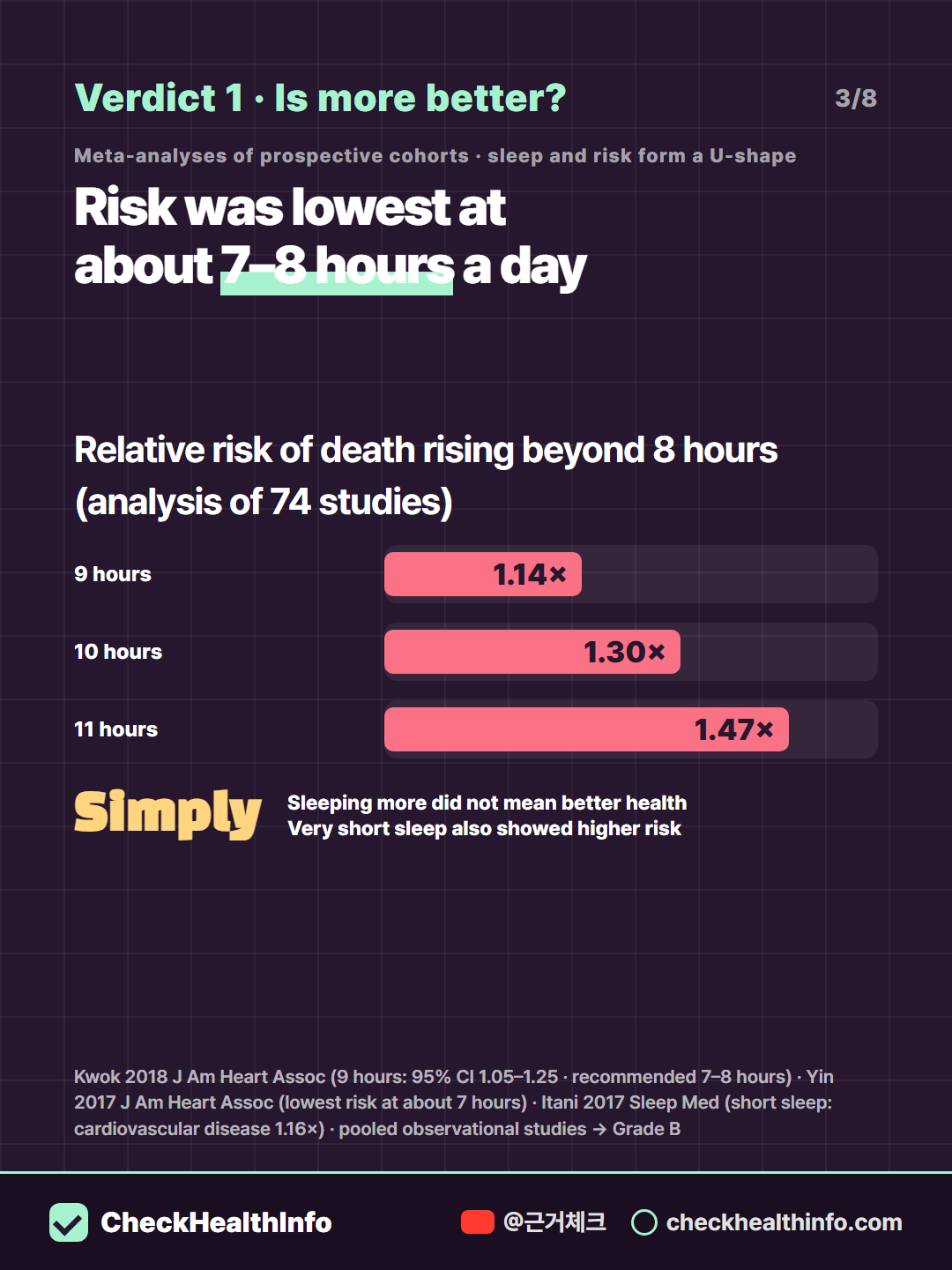
In plain words Risk was lowest at around 7 hours a day and higher with both longer and shorter sleep. There is no evidence that sleeping more makes you healthier.
- In a dose-response meta-analysis of prospective cohort studies, sleep duration showed a U-shaped relationship with death, cardiovascular disease, coronary heart disease, and stroke, with the lowest risk at about 7 hours a day. For each hour above 7 hours, the relative risk of cardiovascular disease was 1.12 (95% confidence interval 1.08–1.16); for each hour below, it was 1.06 (1.03–1.08). [1]
- In another meta-analysis of 74 studies, self-reported sleep of more than 8 hours was linked to a modestly higher risk of death: relative risk 1.14 (1.05–1.25) at 9 hours, 1.30 (1.19–1.42) at 10 hours, and 1.47 (1.33–1.64) at 11 hours. In this analysis, sleep shorter than 7 hours showed no clear difference in death, and the authors concluded that moving away from the recommended 7 to 8 hours was linked to higher risk. [2]
- In contrast, a meta-analysis of 153 studies found that short sleepers also had higher risk: relative risk 1.12 (1.08–1.16) for death and 1.16 (1.10–1.23) for cardiovascular disease. [3]
- The American Academy of Sleep Medicine and the Sleep Research Society issued a joint expert-consensus recommendation on how much sleep adults need (the recommended number of hours is not in the abstract, so we do not cite it) [4], and the American Heart Association added sleep health as a new item in its eight measures of cardiovascular health, called Life’s Essential 8. [5]
Why grade B: The strongest evidence is systematic reviews and meta-analyses (an A-level design), but they pool observational studies, so we lowered the grade by one level. The sleep societies’ consensus statement and the American Heart Association advisory do not give numbers on this claim in their abstracts, so we used them only as supporting evidence. On the long-sleep side, the results pointed the same way.
Verdict 2. “People who sleep more than 9 hours a day show a higher risk of cardiovascular disease and death”
Mostly true · Evidence grade B
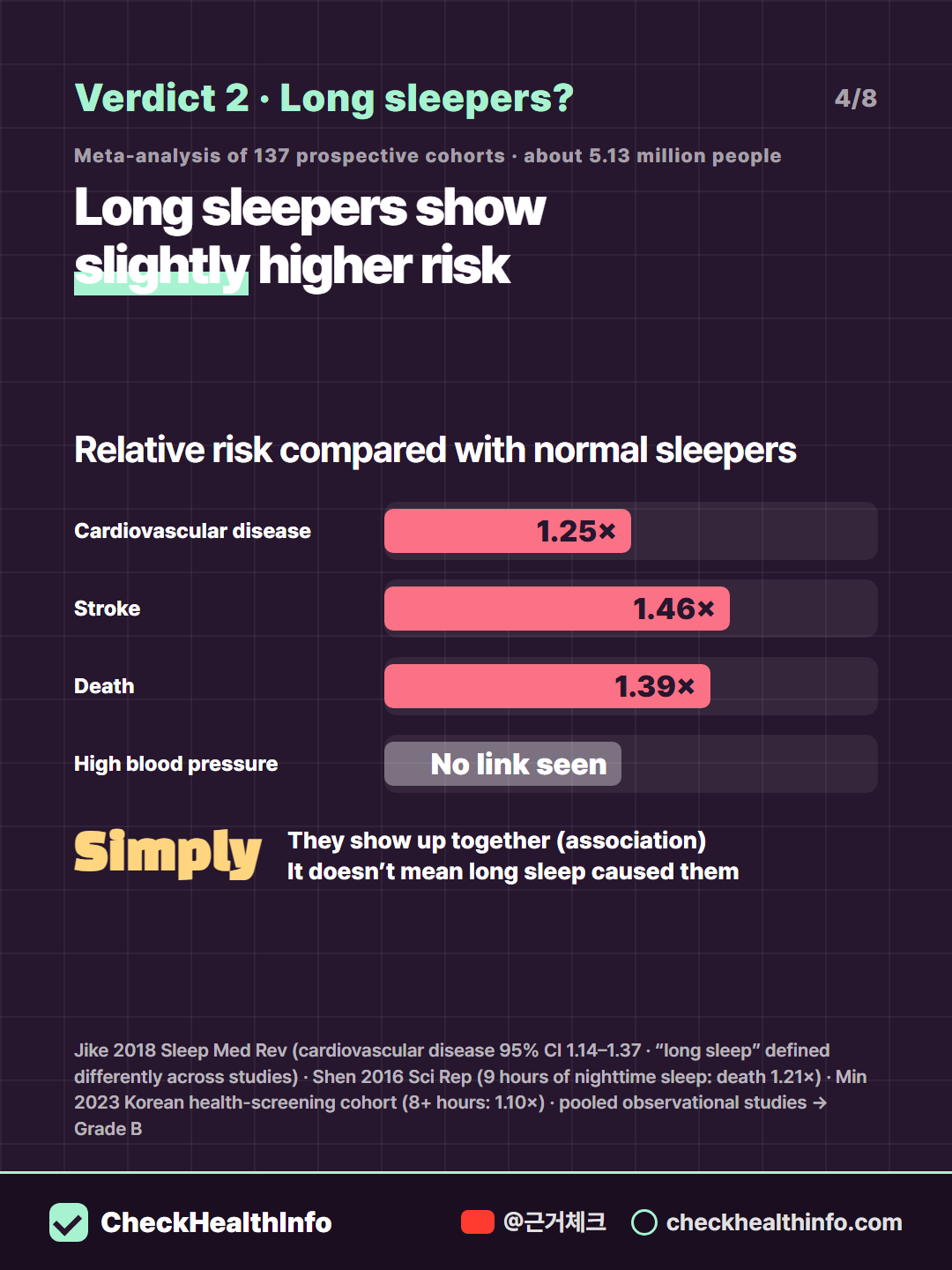
In plain words Across many studies, long sleepers consistently showed somewhat more cardiovascular disease and death, but the increase was small, and results in heart patients were mixed. This means the two “show up together,” not that long sleep “causes” disease.
- In a meta-analysis of 137 prospective cohort studies with about 5.13 million people, long sleepers, compared with normal sleepers, had a relative risk of 1.39 (95% confidence interval 1.31–1.47) for death, 1.25 (1.14–1.37) for cardiovascular disease, 1.46 (1.26–1.69) for stroke, and 1.24 (1.13–1.37) for coronary heart disease. There was no link with high blood pressure (1.01, 0.95–1.07). The authors said it still needs to be shown whether the link is causal and whether it can be changed. [6]
- In a dose-response meta-analysis using 7 hours of nighttime sleep as the reference, the relative risk of death was 1.21 (1.18–1.24) at 9 hours, 1.37 (1.32–1.42) at 10 hours, and 1.55 (1.47–1.63) at 11 hours, and the pattern was the same for total 24-hour sleep including naps. It held even in people who had no cardiovascular disease or cancer at the start. [7]
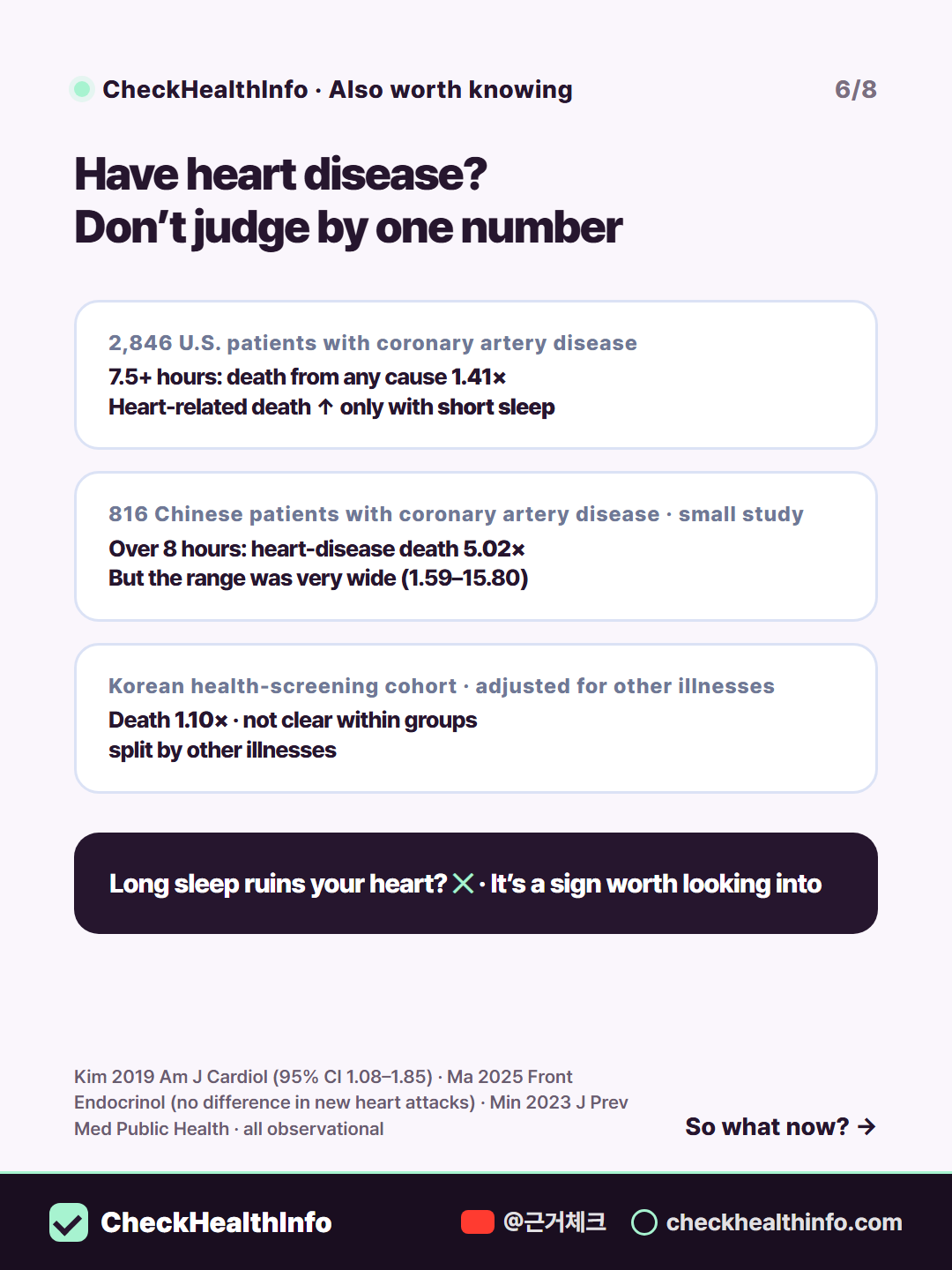
- In a Korean cohort of about 114,000 health-screening participants followed for a median of 9.1 years, people who slept 8 hours or more had a hazard ratio for death from any cause of 1.10 (1.01–1.20), even after adjusting for a combined score of 21 other illnesses. [8]
- Among 2,846 U.S. patients who already had coronary artery disease, those who slept 7.5 hours or more had a hazard ratio for death from any cause of 1.41 (1.08–1.85), but cardiovascular death was higher only in short sleepers. [9]
- Among 816 Chinese patients with coronary artery disease, those who slept more than 8 hours had a hazard ratio for death from coronary artery disease of 5.02 (1.59–15.80), but the confidence interval was very wide, and there was no link with new heart attacks (0.98, 0.30–3.21). [10]
Why grade B: The strongest evidence is systematic reviews and meta-analyses (an A-level design), but they pool observational studies, so we lowered the grade by one level. The claim is about risk “showing up” higher (an association), which these studies address directly. We rated it “Mostly true” rather than “True” because the increase is small, the link with coronary heart disease was not clear when measured per extra hour of sleep (1.05, 1.00–1.10), and results in heart patients were mixed, so the evidence supports a narrower claim.
Verdict 3. “Sleeping more than 9 hours itself causes heart disease”
Insufficient evidence · Evidence grade C
In plain words No link was seen between a built-in tendency to sleep long and heart disease, and some results suggest that sleeping more than before may be a sign of other health problems. But the results conflict, so we cannot say for sure that long sleep is not a cause either.
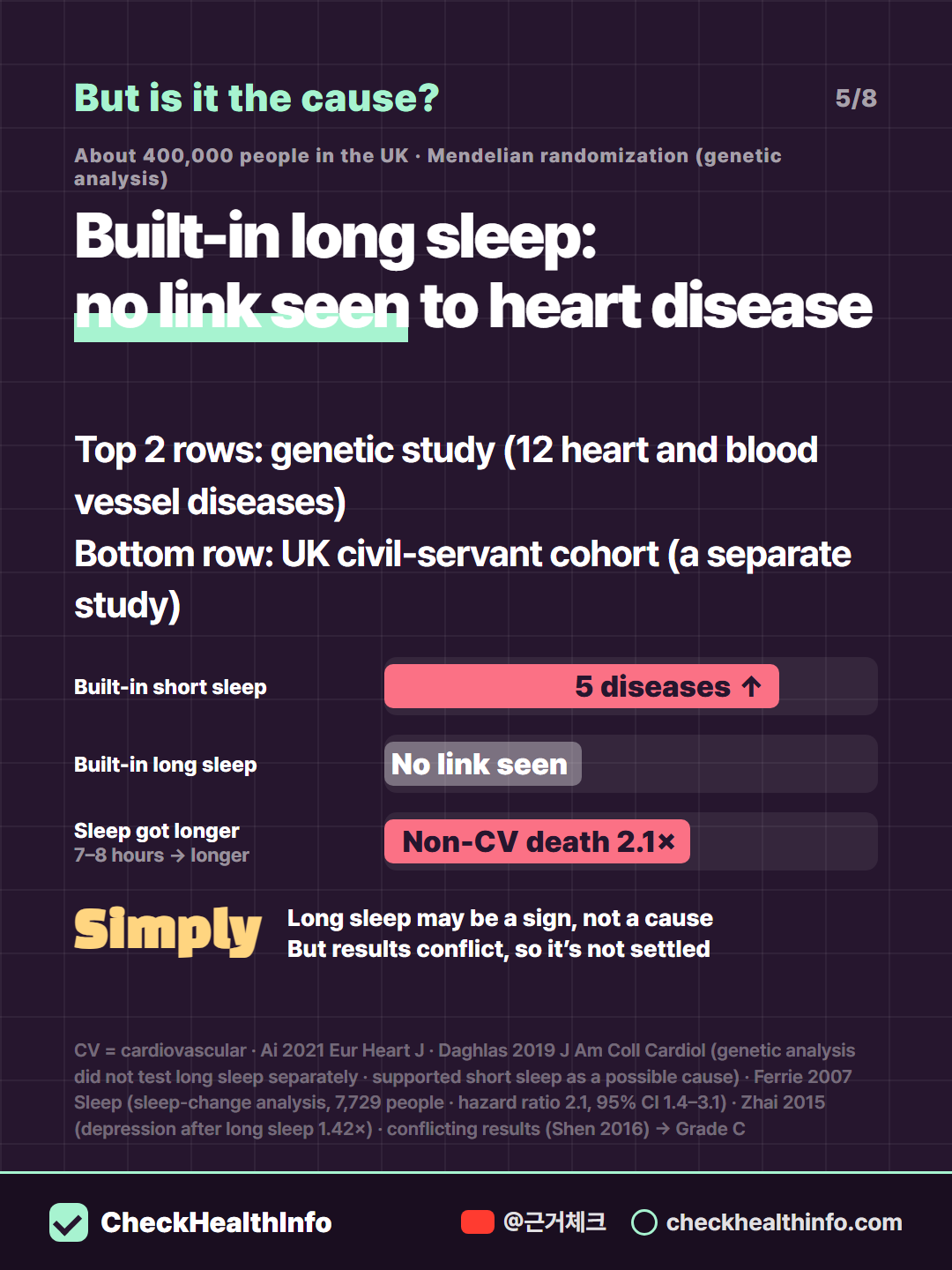
- In a Mendelian randomization study using the genetic data of about 400,000 people in the UK Biobank, a genetic tendency toward short sleep raised the risk of five cardiovascular diseases, including high blood pressure, coronary artery disease, and heart attack. A genetic tendency toward long sleep showed no link with any of the 12 cardiovascular diseases studied (the gene variants linked to long sleep have small effects, so a small risk could have been missed). The authors concluded that long sleep is unlikely to cause most cardiovascular diseases. [11]
- In the same UK Biobank data, people who slept more than 9 hours had a higher risk of heart attack (hazard ratio 1.34; 95% confidence interval 1.13–1.58). This study’s Mendelian randomization looked only at short sleep and overall sleep length, and it supported short sleep as a possible cause (long sleep was not analyzed separately). [12]
- In a cohort of British civil servants (7,729 people in the analysis of sleep change), people who had slept 7 to 8 hours and later slept longer had a hazard ratio of 2.1 (1.4–3.1) for death from causes other than cardiovascular disease. Sleeping more than before may be a sign of another health problem. [13]
- In a meta-analysis of seven studies, long sleepers had a relative risk of 1.42 (1.04–1.92) for later developing depression. Short sleepers had a similar 1.31 (1.04–1.64), so this is not unique to long sleep. [14]
- The Korean cohort above concluded that the link remained even after adjusting for other illnesses, but when people with and without other illnesses were analyzed separately, the link was not clear in either group (splitting into groups means fewer people, which makes it harder to judge). [8] A review of 42 studies noted that self-reported sleep time does not closely match measured sleep, and warned about measurement error, reporting bias, confounding, and reverse causation. [15]
- On the other hand, one analysis found that the link remained even in people with no cardiovascular disease or cancer at the start. [7]
Why grade C: The evidence that most directly tests cause is Mendelian randomization and cohort studies (a B-level design), but the results conflict, so we lowered the grade by one level. The depression meta-analysis and the review were used only as supporting evidence. There is also no evidence that firmly rules out a causal link, so we rated it “Insufficient evidence” rather than “False.”
Also worth knowing
- Short sleep may be the bigger concern. In the genetic analyses, short sleep was the one supported as a possible cause. [11] [12] Don’t take this as “long sleep is bad, so cut back.”
- The studies looked at usual habits. Most asked people once how many hours they usually sleep, so these numbers don’t apply to sleeping in for a day or two on the weekend.
- 7 to 8 hours is the range where average risk was lowest. It isn’t the one right number for every person. Waking up refreshed and not feeling sleepy during the day are also good guides.
What you can do
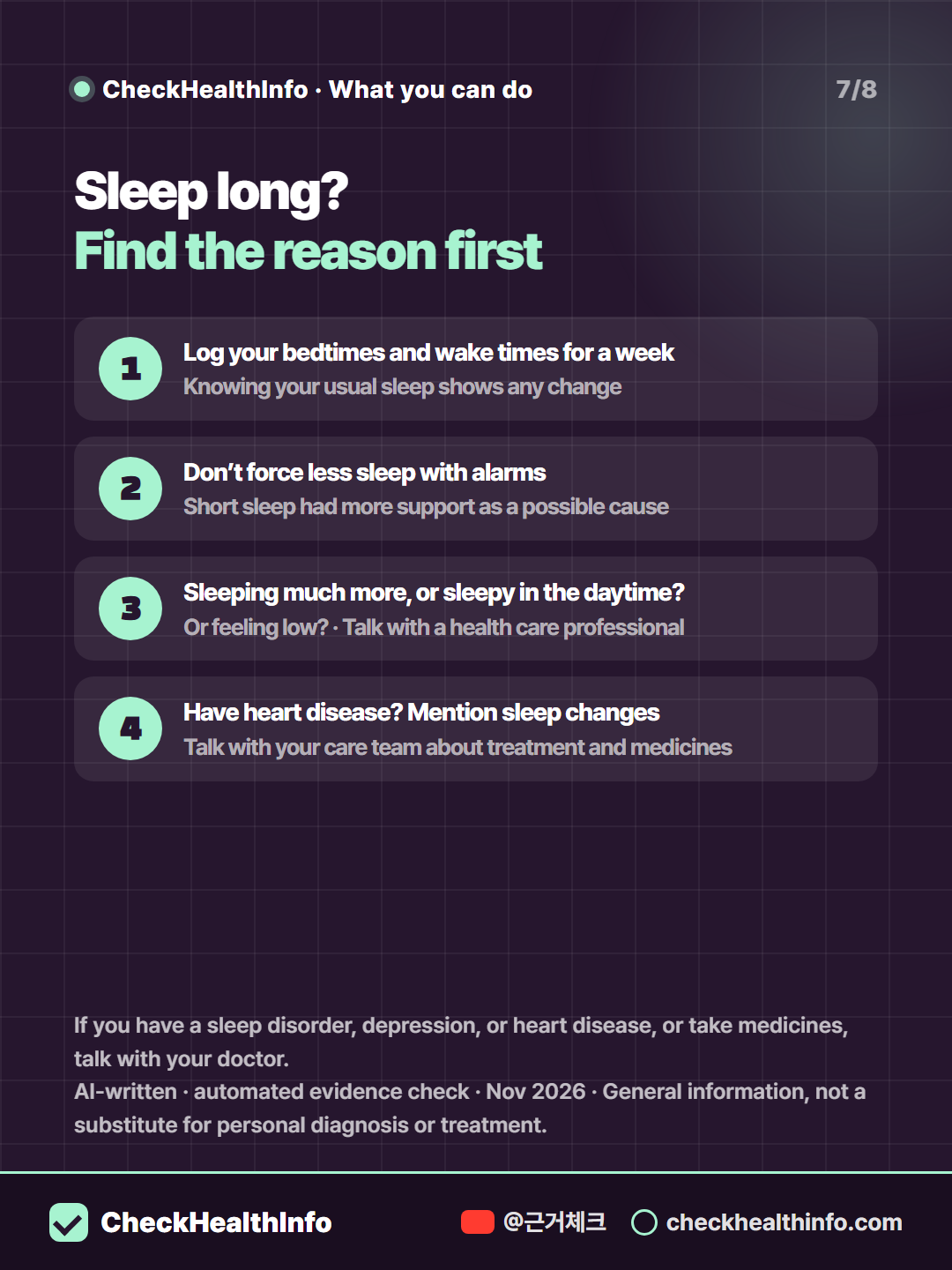
- For one week, write down when you fall asleep and when you wake up. You need to know your usual sleep to notice whether it has gotten longer or shorter.
- Don’t set alarms to force yourself to sleep less just because you sleep long. Short sleep had more support as a possible cause.
- If your sleep has suddenly increased, if you feel sleepy during the day even after a long sleep, or if your mood has been low, talk with a health care professional.
- If you have heart disease, mention changes in your sleep at your checkups. Talk with your care team about treatment and medicines.
This article covers how sleep duration relates to cardiovascular disease and death. It does not cover sleeping pills, or treatment and medicines for sleep disorders, depression, or heart disease.
Limitations of this verdict
- Most of the evidence is observational, so differences other than sleep time (age, chronic illness, depression, income, exercise, and so on) may be mixed in, and sleep time was mostly self-reported.
- “Long sleep” was defined differently across studies (8 hours or more, more than 9 hours, 7.5 hours or more, and so on).
- Mendelian randomization uses gene variants as a stand-in for a built-in sleep tendency, which is not the same as sleep getting longer because of illness, and it studied mostly white British people.
- The studies of heart patients were small and came from a single region or hospital system.
- The recommended number of hours in the sleep societies’ consensus statement is not in the PubMed abstract, so we did not cite it.
- This article was prompted by a health news story. We do not evaluate any news outlet or person, and we did not use numbers from the article.
- Grades follow section 1 of our rating method. We check new studies in our monthly PubMed review, and if a verdict changes, we record it in our corrections log.
Card news
Video (in Korean)
References
- Yin J, Jin X, Shan Z, et al. Relationship of Sleep Duration With All-Cause Mortality and Cardiovascular Events: A Systematic Review and Dose-Response Meta-Analysis of Prospective Cohort Studies. J Am Heart Assoc 2017;6(9). PMID 28889101. PubMed abstract · Full article · Free full text
- Kwok CS, Kontopantelis E, Kuligowski G, et al. Self-Reported Sleep Duration and Quality and Cardiovascular Disease and Mortality: A Dose-Response Meta-Analysis. J Am Heart Assoc 2018;7(15):e008552. PMID 30371228. PubMed abstract · Full article · Free full text
- Itani O, Jike M, Watanabe N, Kaneita Y. Short sleep duration and health outcomes: a systematic review, meta-analysis, and meta-regression. Sleep Med 2017;32:246-256. PMID 27743803. PubMed abstract · Full article
- Watson NF, Badr MS, Belenky G, et al. Recommended Amount of Sleep for a Healthy Adult: A Joint Consensus Statement of the American Academy of Sleep Medicine and Sleep Research Society. Sleep 2015;38(6):843-4. PMID 26039963. PubMed abstract · Full article · Free full text
- Lloyd-Jones DM, Allen NB, Anderson CAM, et al. Life's Essential 8: Updating and Enhancing the American Heart Association's Construct of Cardiovascular Health: A Presidential Advisory From the American Heart Association. Circulation 2022;146(5):e18-e43. PMID 35766027. PubMed abstract · Full article · Free full text
- Jike M, Itani O, Watanabe N, et al. Long sleep duration and health outcomes: A systematic review, meta-analysis and meta-regression. Sleep Med Rev 2018;39:25-36. PMID 28890167. PubMed abstract · Full article
- Shen X, Wu Y, Zhang D. Nighttime sleep duration, 24-hour sleep duration and risk of all-cause mortality among adults: a meta-analysis of prospective cohort studies. Sci Rep 2016;6:21480. PMID 26900147. PubMed abstract · Full article · Free full text
- Min S, Shin WK, De la Torre K, et al. Sleep Duration, Comorbidities, and Mortality in Korean Health Examinees: A Prospective Cohort Study. J Prev Med Public Health 2023;56(5):458-466. PMID 37828873. PubMed abstract · Full article · Free full text
- Kim JH, Hayek SS, Ko YA, et al. Sleep Duration and Mortality in Patients With Coronary Artery Disease. Am J Cardiol 2019;123(6):874-881. PMID 30598240. PubMed abstract · Full article · Free full text
- Ma R, Wang R, Wang B, et al. The influence of sleep duration on patients with coronary artery disease: a four-year observational study. Front Endocrinol (Lausanne) 2025;16:1555880. PMID 40391016. PubMed abstract · Full article · Free full text
- Ai S, Zhang J, Zhao G, et al. Causal associations of short and long sleep durations with 12 cardiovascular diseases: linear and nonlinear Mendelian randomization analyses in UK Biobank. Eur Heart J 2021;42(34):3349-3357. PMID 33822910. PubMed abstract · Full article
- Daghlas I, Dashti HS, Lane J, et al. Sleep Duration and Myocardial Infarction. J Am Coll Cardiol 2019;74(10):1304-1314. PMID 31488267. PubMed abstract · Full article · Free full text
- Ferrie JE, Shipley MJ, Cappuccio FP, et al. A prospective study of change in sleep duration: associations with mortality in the Whitehall II cohort. Sleep 2007;30(12):1659-66. PMID 18246975. PubMed abstract · Full article · Free full text
- Zhai L, Zhang H, Zhang D. Sleep duration and depression among adults: a meta-analysis of prospective studies. Depress Anxiety 2015;32(9):664-70. PMID 26047492. PubMed abstract · Full article
- Kurina LM, McClintock MK, Chen JH, et al. Sleep duration and all-cause mortality: a critical review of measurement and associations. Ann Epidemiol 2013;23(6):361-70. PMID 23622956. PubMed abstract · Full article · Free full text
General information only, not medical advice. It does not replace your own clinician’s diagnosis or treatment. If your sleep has recently increased a lot, you feel sleepy during the day even after long sleep, or your mood is low, talk to your doctor or healthcare provider. If you have heart disease, discuss any treatment or medicine with your care team. For emergency symptoms such as chest pain or shortness of breath, call your local emergency number right away.