Always listening to music: does it really lower dementia risk by 39%?
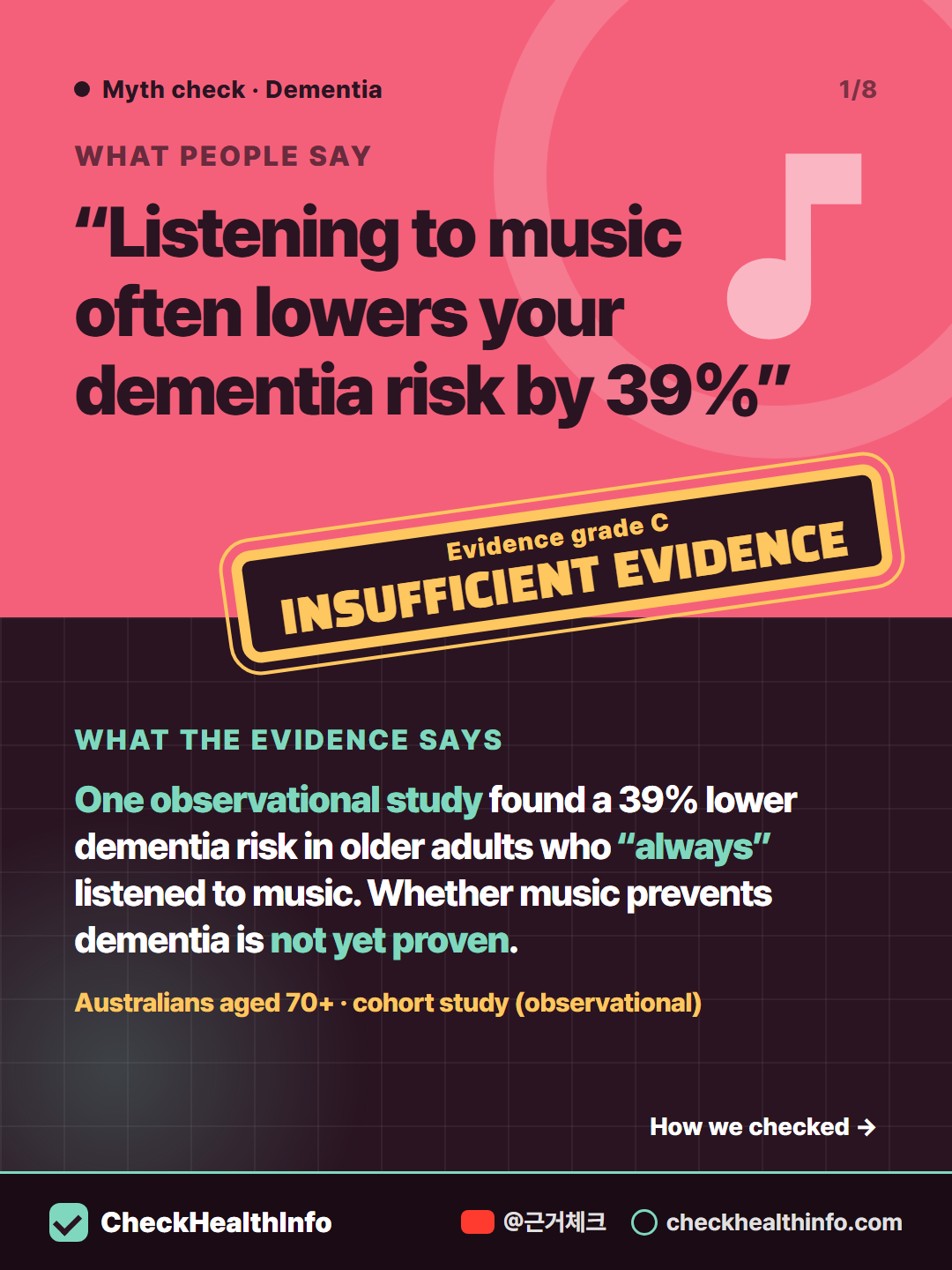
Does listening to music often really lower your risk of dementia by 39%?

We checked this verdict against 5 sources, such as published studies and clinical guidelines. · How checked: AI-drafted · automated evidence checks
Verdicts at a glance
| Claim | Verdict |
|---|---|
| Listening to music often lowers your risk of dementia by 39% | Insufficient evidence · Evidence grade C |
Bottom line — The “39% lower dementia risk” figure does come from a real study. In one observational study of Australians aged 70 and older, people who “always” listened to music had a 39% lower risk of dementia than people who listened never, rarely or sometimes. But it has not been shown that music itself prevents dementia, so this claim is rated Insufficient evidence. Enjoy music for its own sake, and if you are worried about your memory, talk to your doctor or health care team.
Cohort study — An observational study that follows many people over a long time. It shows that two things go together, but it is less certain than a randomized trial about cause and effect.
Reverse causation — When cause and effect run the other way. For example, if dementia starts slowly and people become less active early on, studies may find that “less active people get more dementia.”
Hazard ratio and relative risk — These compare the risk in one group with the risk in another. A value of 1 means no difference; less than 1 means lower risk. “39% lower” is a relative difference; it is not the same as how many fewer people actually got dementia (the absolute difference).
95% confidence interval — The range in which the true value is likely to fall. If the range includes 1, we cannot say for sure that there is a difference. The UK study in this article used a stricter 99% confidence interval.
Claim. “Listening to music often lowers your risk of dementia by 39%”
Insufficient evidence · Evidence grade C
In plain words: One observational study found less dementia in older adults who always listened to music. But we don’t yet know whether that was because of the music, or because people who were already healthier and more active also listened to more music.
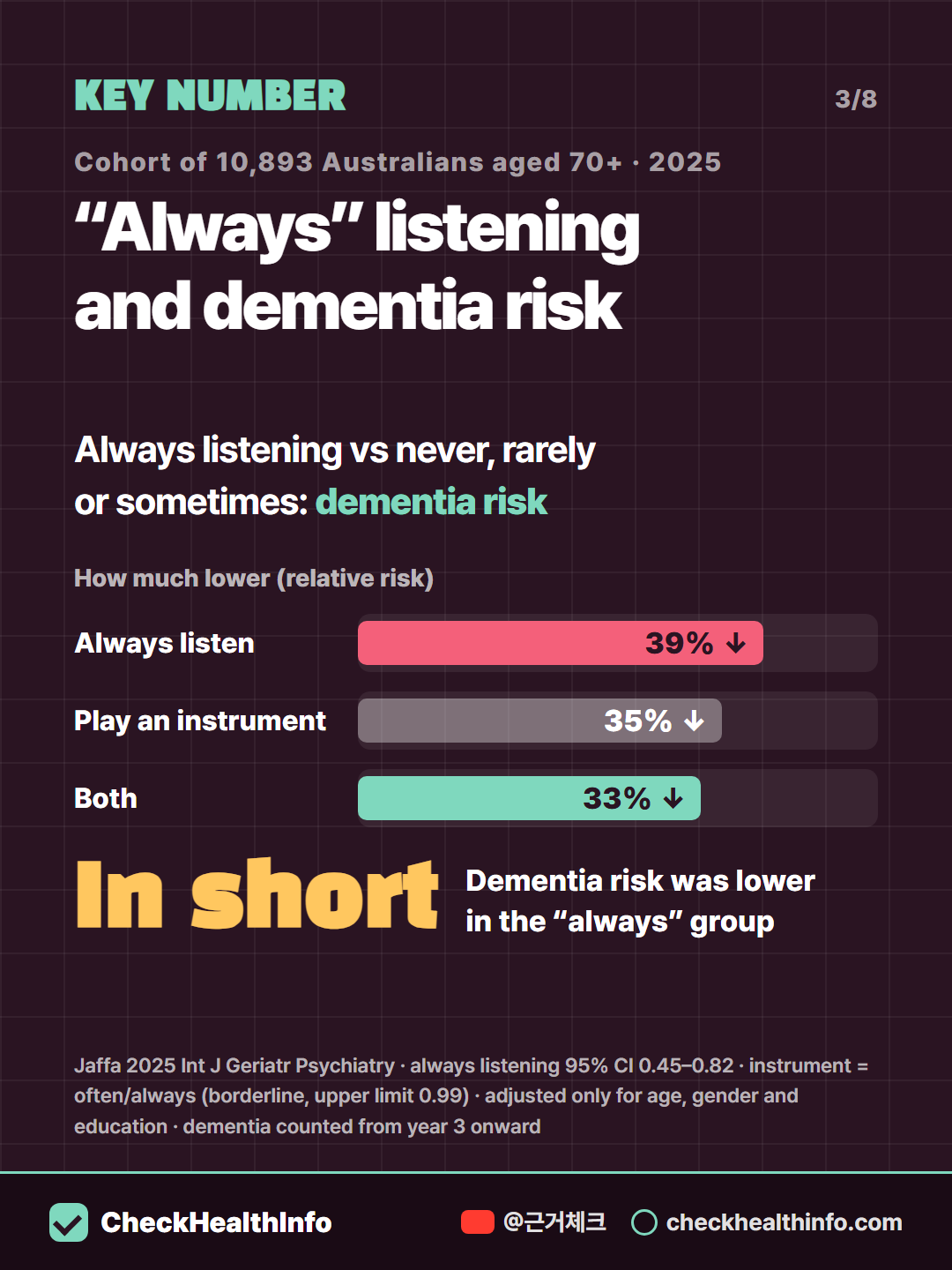
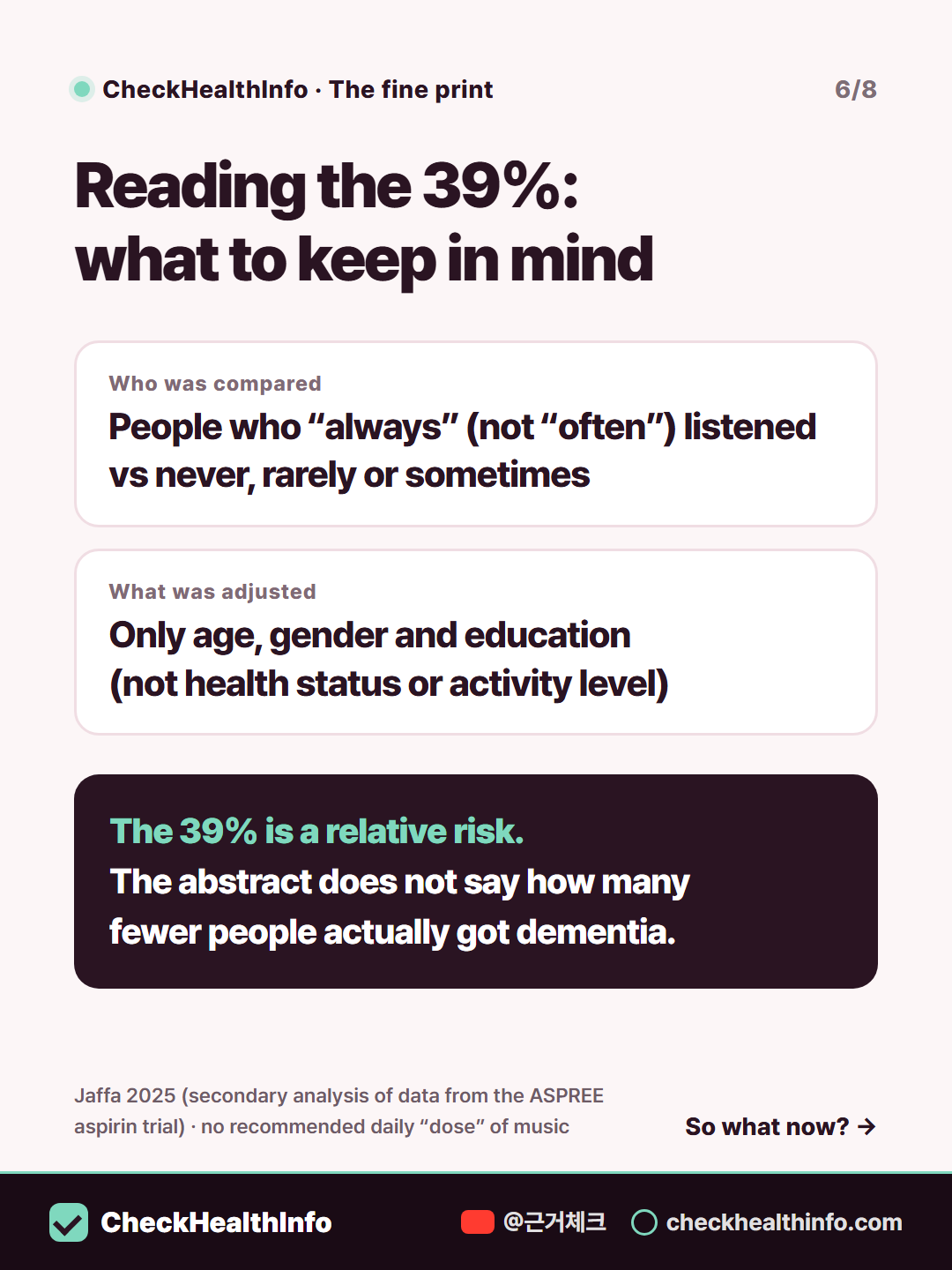
- In a cohort study of 10,893 community-dwelling Australians aged 70 and older without dementia (a secondary analysis of data from the ASPREE aspirin trial and its ALSOP sub-study), people who said they “always” listened to music had a 39% lower risk of dementia than people who listened never, rarely or sometimes (95% confidence interval 0.45 to 0.82; only dementia from year 3 onward was analyzed). The study compared people who listened “always,” not “often.” In plain words, dementia risk was lower in the “always” group (a relative difference, adjusted for age, gender and education). [1]
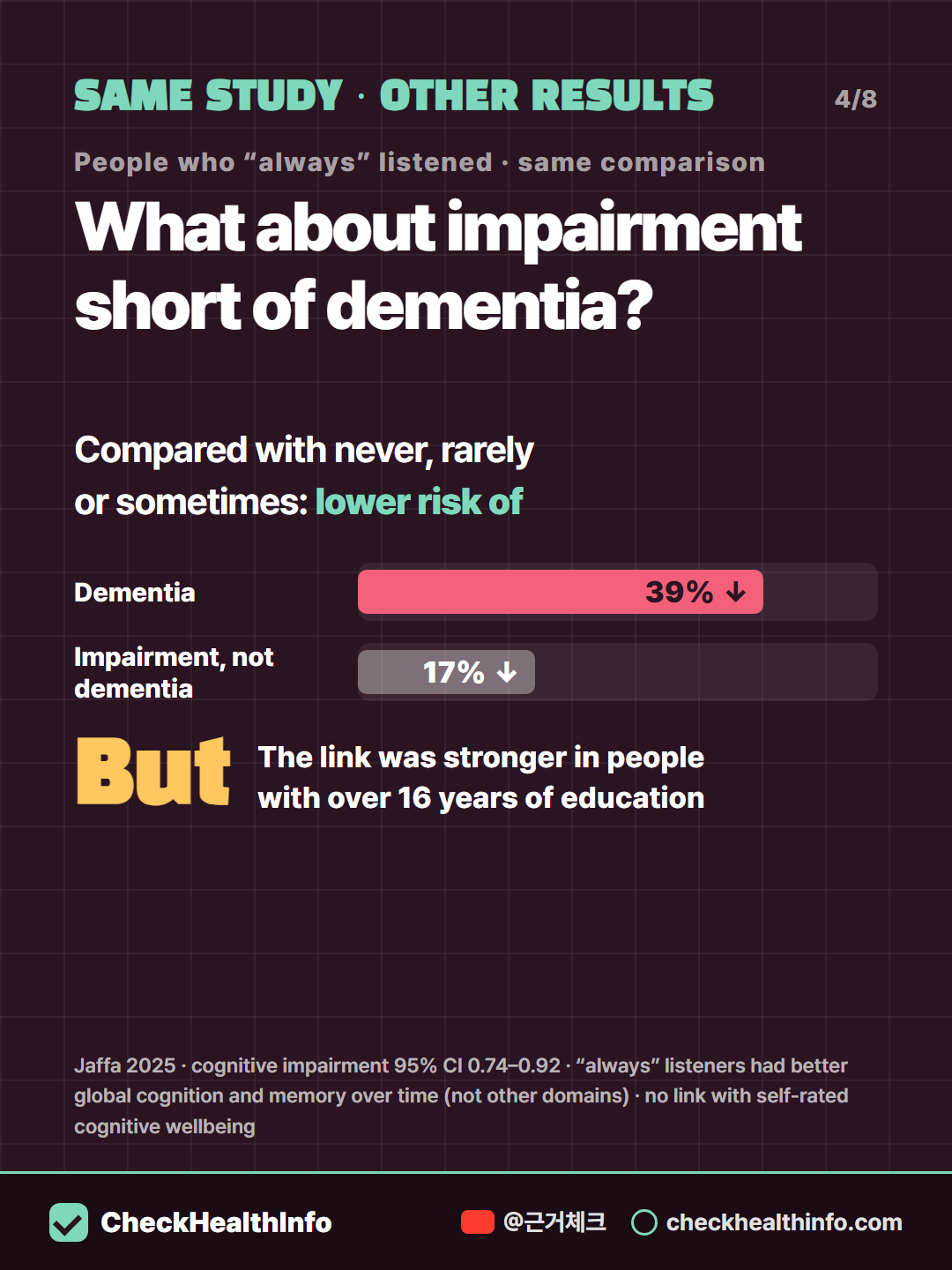
- In the same study, people who always listened to music also had a 17% lower risk of cognitive impairment without dementia (95% confidence interval 0.74 to 0.92), and people who often or always played an instrument had a 35% lower risk of dementia (95% confidence interval 0.42 to 0.99). People who both listened and played had a 33% lower risk of dementia (95% confidence interval 0.51 to 0.89). However, the study adjusted only for age, gender and education, and the link was stronger in people with more than 16 years of education. People who always listened had better global cognition and memory over time, but not in other cognitive domains, and there was no link with self-rated cognitive wellbeing. [1]
- A study of 19 leisure activities in the same ALSOP data (10,318 people), which also adjusted for education, socioeconomic status and health factors, found a hazard ratio of 0.93 (95% confidence interval 0.86 to 0.99) for “passive mental activities,” a group that combined listening to music or the radio with reading and watching television. Because this does not measure music listening alone, it cannot be compared directly with the 39% above. [2]
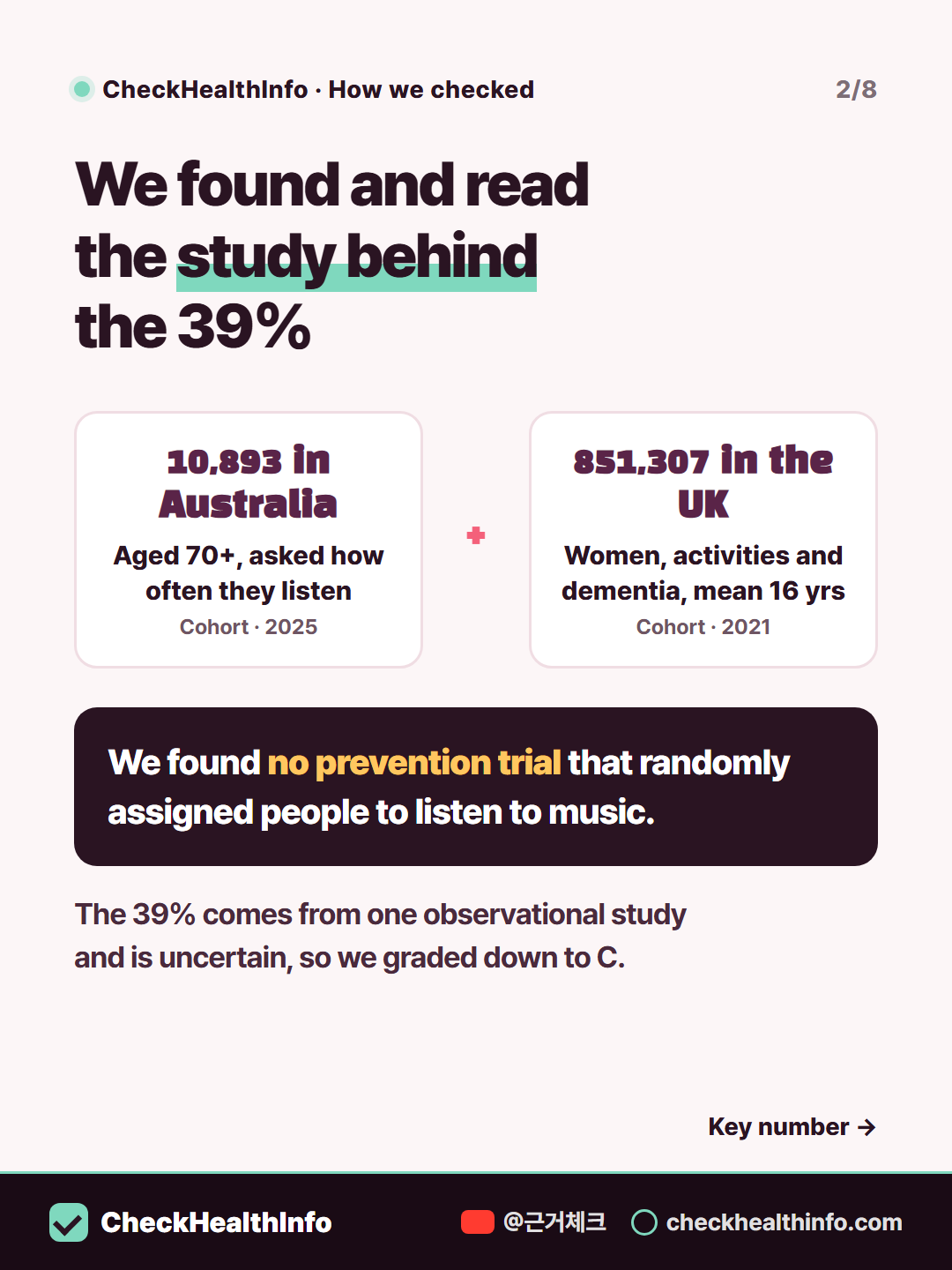
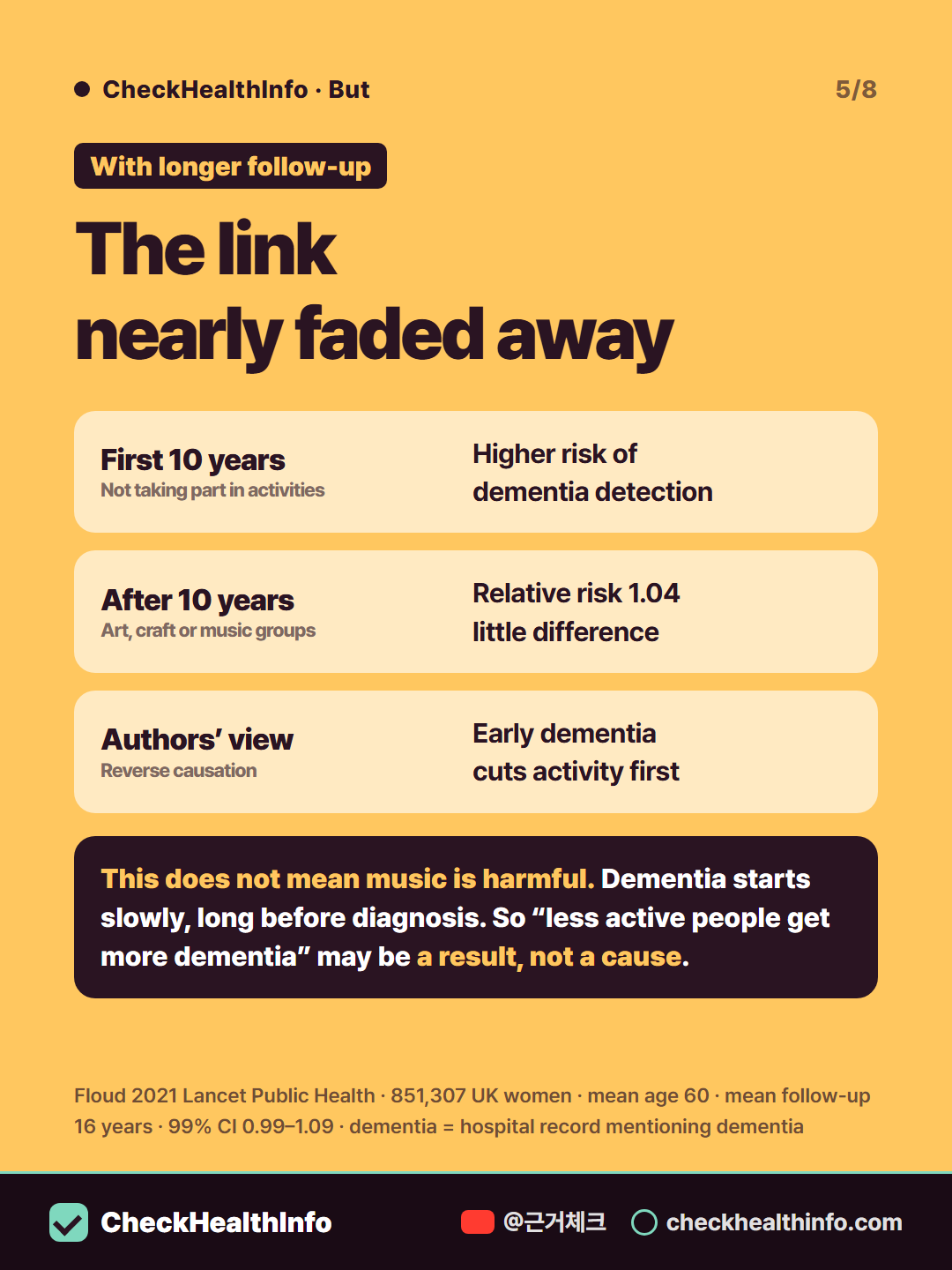
In a study that followed 851,307 UK women (mean age 60) for a mean of 16 years, not taking part in activities such as art, craft or music groups was linked to dementia only in the first 10 years; after 10 years there was little association (relative risk 1.04, 99% confidence interval 0.99 to 1.09). In this study, dementia was counted from hospital records that mentioned dementia. The researchers concluded that activity drops long before dementia is diagnosed mainly because the slow onset of dementia reduces activity, not because inactivity causes dementia. [3]
In plain words, “less dementia in people who always listen to music” may not be an effect of music. It may reflect activity dropping off before dementia is diagnosed. The Australian study reduced this problem somewhat by counting dementia only from year 3, but that delay is shorter than the 10 years seen in the UK study.
The strongest evidence that directly addresses the claim (music listening → 39% lower dementia risk) is a large cohort study, so under section 1 of our rating method we started at B. The meta-analysis on playing an instrument and the meta-analysis of music interventions in people who already have cognitive impairment look at a different exposure or population, so we used them only as supporting evidence. The 39% comes from a single cohort study (another analysis of the same data is not an independent replication), it adjusted only for age, gender and education, and its confidence interval (0.45 to 0.82) is fairly wide. In a study with long follow-up, the link between activities and dementia nearly disappeared after 10 years, which points to reverse causation. So we judged the results uncertain (reason 3) and graded down one level, to C. We did not grade down for indirectness (reason 1), because the study looked directly at music listening and dementia. The 39% figure is real, but it has not been shown in people that listening to music lowers dementia risk (cause and effect), so the rating is “Insufficient evidence” (section 2 — this does not mean the claim is false).
Playing an instrument — A meta-analysis of three prospective cohort studies (two from the US, one from Japan) linked playing an instrument with a lower risk of dementia (hazard ratio 0.64, 95% confidence interval 0.41 to 0.98). This is about playing, not listening, and there are few studies. [4]
People who already have cognitive impairment — A meta-analysis of 19 randomized trials (1,024 people) of music-based interventions in people with mild cognitive impairment or dementia found improvements in cognitive scores (MMSE), executive function and episodic memory. This is evidence about treatment and care, not about preventing dementia. [5]
Music and memory: what to keep in mind
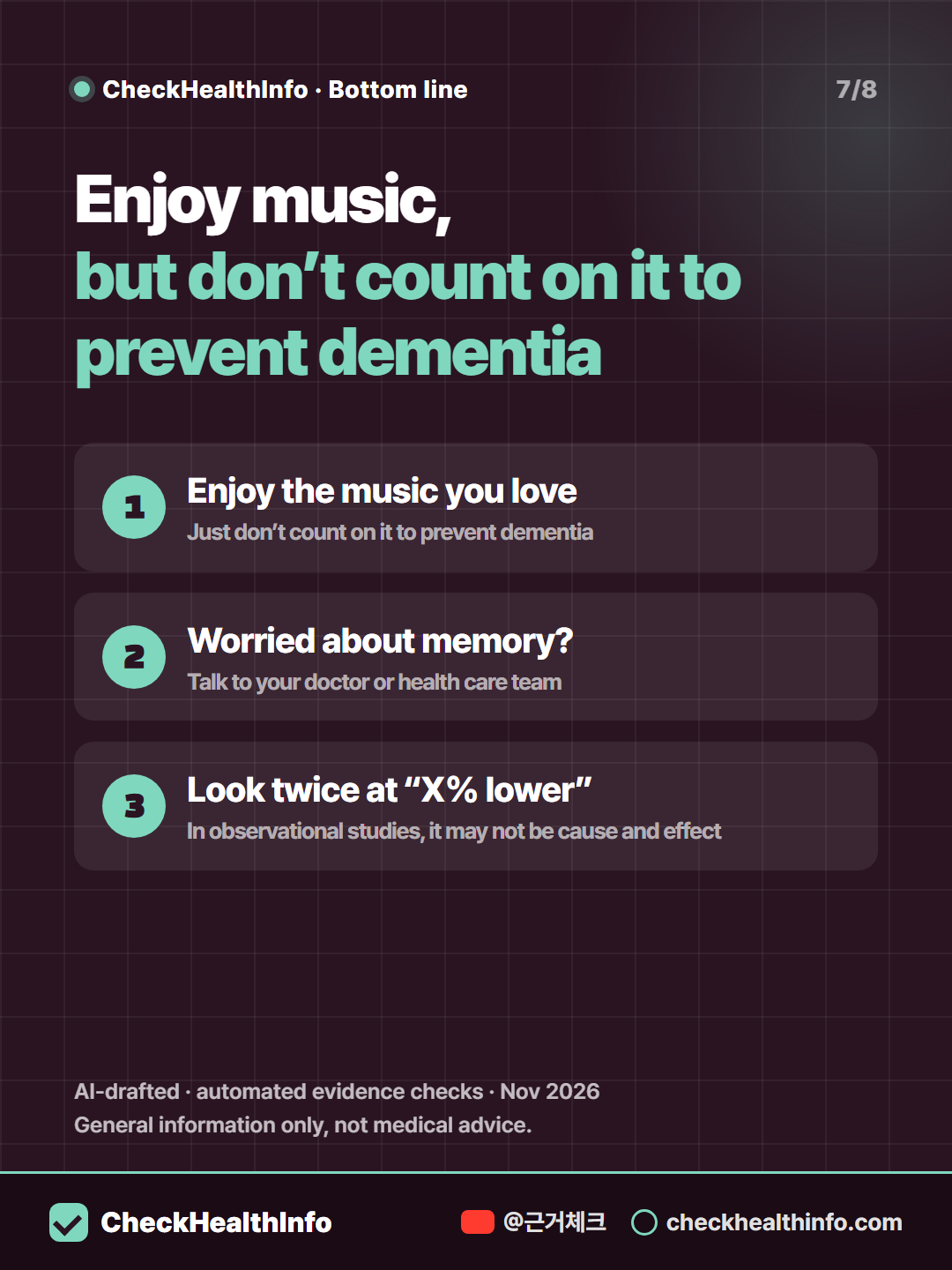
- Enjoy the music you love — This verdict is not telling you to stop listening. Just don’t count on music to prevent dementia, or put off other health care because of it.
- If you are worried about your memory — Talk to your doctor or health care team.
- Look twice at “X% lower” — In observational studies, a number like this may show that two things go together, not that one causes the other. Check who was studied and what they were compared with.
Scope: This verdict covers only whether listening to music lowers the later risk of dementia in adults who do not have dementia. Music therapy for people who already have dementia is not rated; it is mentioned only as supporting evidence.
Limitations of this verdict
- All of these are observational studies, so they cannot prove that music itself lowers dementia risk. People who always listen to music may have more education or be healthier and more active.
- The abstract of the Australian study does not give the number of dementia cases, so we cannot tell how many fewer people who always listened actually got dementia (the absolute difference).
- “Always” listening was a single survey answer, so we do not know how much or what kind of music people actually listened to, and there is no recommended daily “dose.”
- Most of the data come from Western countries such as Australia and the UK. In our search, we did not find studies of music listening and dementia in Korean adults.
- We did not find any prevention trial that randomly assigned people to listen to music and then tracked dementia.
- The grade follows section 1 of our rating method. We check PubMed monthly for new studies, and any change in the verdict is logged on our corrections page.
Card news
Video (in Korean)
Easy version (in Korean)
Full evidence (in Korean)
References
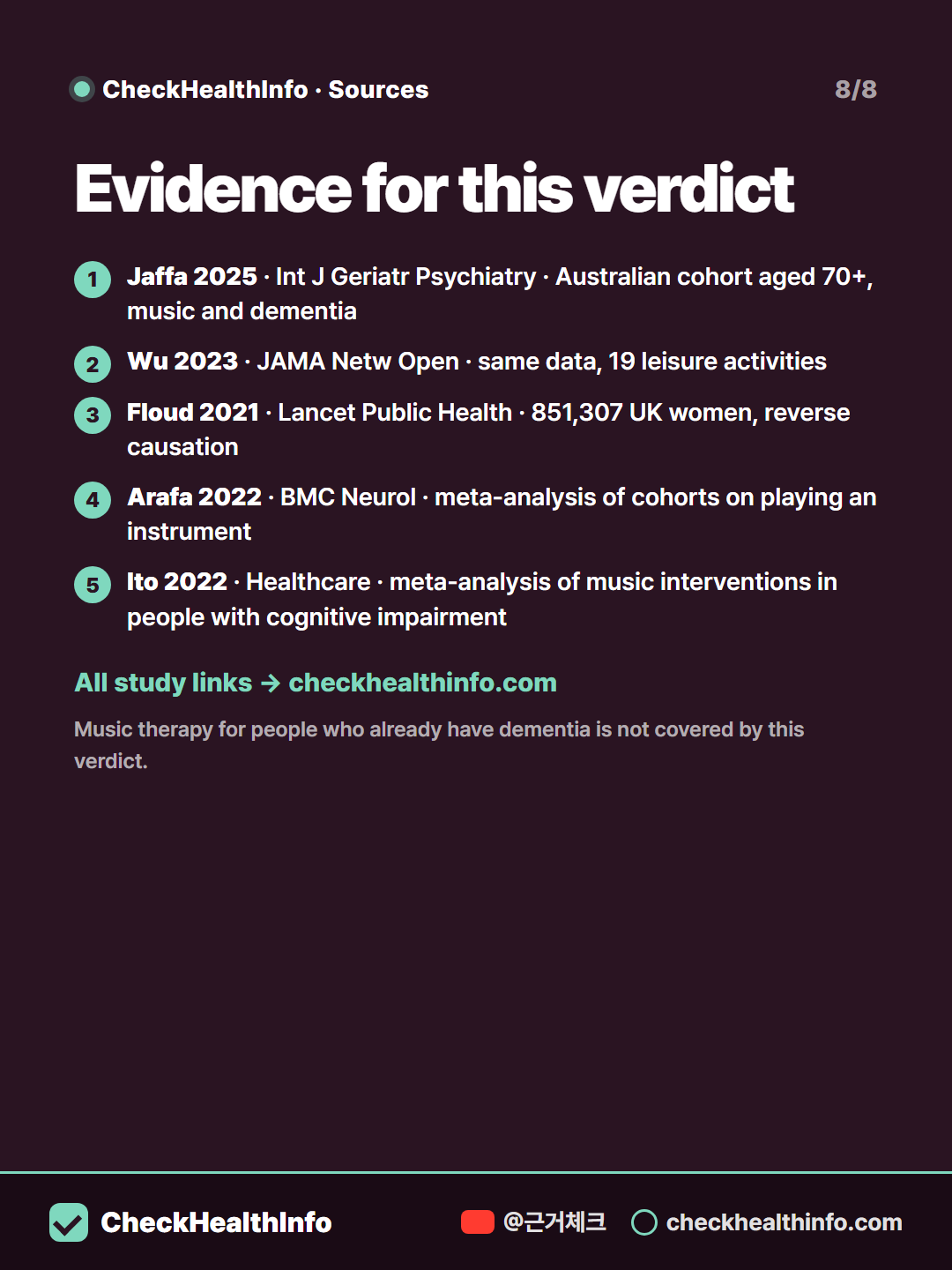
- Jaffa E, Wu Z, Owen A, et al. What Is the Association Between Music-Related Leisure Activities and Dementia Risk? A Cohort Study. Int J Geriatr Psychiatry 2025;40(10):e70163. PMID 41088732. PubMed abstract · Full article
- Wu Z, Pandigama DH, Wrigglesworth J, et al. Lifestyle Enrichment in Later Life and Its Association With Dementia Risk. JAMA Netw Open 2023;6(7):e2323690. PMID 37450299. PubMed abstract · Full article · Free full text
- Floud S, Balkwill A, Sweetland S, et al. Cognitive and social activities and long-term dementia risk: the prospective UK Million Women Study. Lancet Public Health 2021;6(2):e116-e123. PMID 33516288. PubMed abstract · Full article · Free full text
- Arafa A, Teramoto M, Maeda S, et al. Playing a musical instrument and the risk of dementia among older adults: a systematic review and meta-analysis of prospective cohort studies. BMC Neurol 2022;22(1):395. PMID 36303117. PubMed abstract · Full article · Free full text
- Ito E, Nouchi R, Dinet J, et al. The Effect of Music-Based Intervention on General Cognitive and Executive Functions, and Episodic Memory in People with Mild Cognitive Impairment and Dementia: A Systematic Review and Meta-Analysis of Recent Randomized Controlled Trials. Healthcare (Basel) 2022;10(8). PMID 36011119. PubMed abstract · Full article · Free full text
General information only, not medical advice. It does not replace your own clinician’s diagnosis or treatment. If you are worried about your memory, talk to your doctor or health care team.