Normal weight but a growing belly: does it raise diabetes risk?
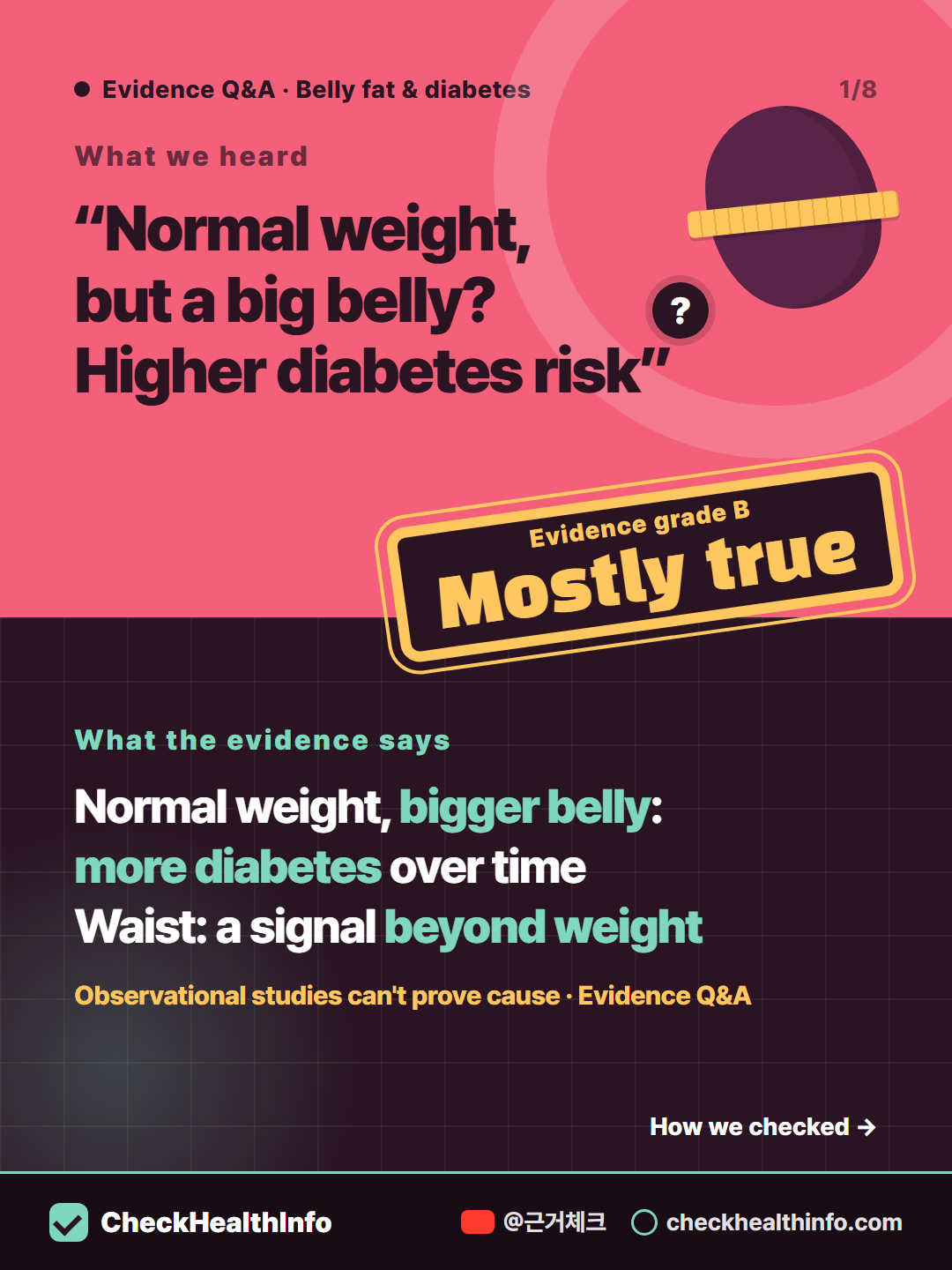
Even at a normal weight (BMI), does a large waist (abdominal obesity) raise the risk of diabetes?

We checked this verdict against 13 sources, such as published studies and clinical guidelines. · How checked: AI-drafted · automated evidence checks
Verdicts at a glance
| Claim | Verdict |
|---|---|
| Even at a normal weight (BMI), a large waist (abdominal obesity) raises the risk of diabetes | Mostly true · Evidence grade B |
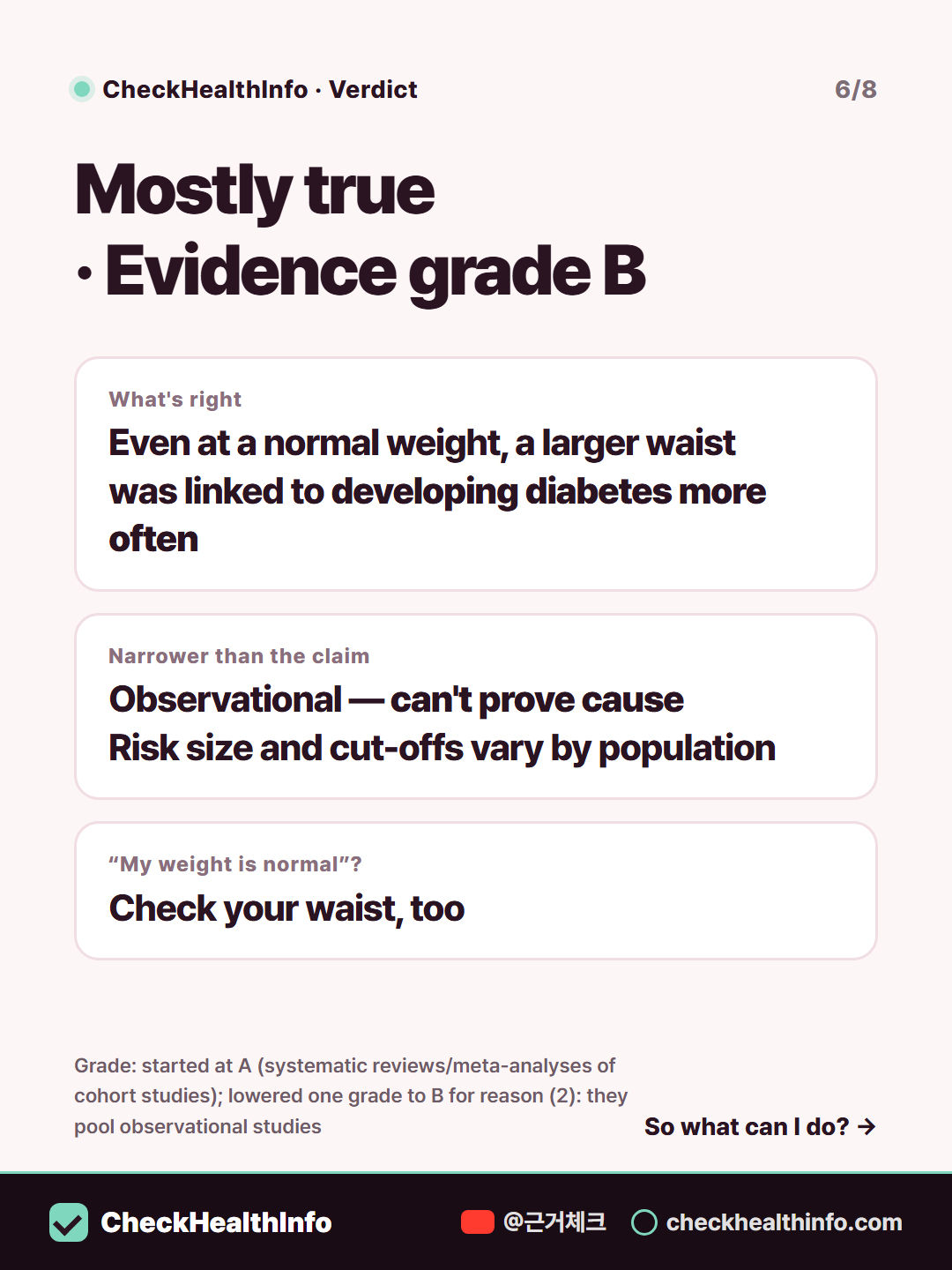
Bottom line — When cohort studies that followed people over time are pooled, people with larger waists developed type 2 diabetes more often, and the researchers concluded that this link was independent of body mass index (BMI). Studies that looked only at people with a normal weight found the same: those with a bigger belly had more diabetes. So the claim that “even at a normal weight (BMI), a large waist (abdominal obesity) raises the risk of diabetes” is rated Mostly true (Evidence grade B). Because all of these are observational studies, they can't prove that belly fat itself is the cause. Checking your waist as well as your weight, and working on it with regular exercise and healthy eating, isn't certain to help, but it's worth trying.
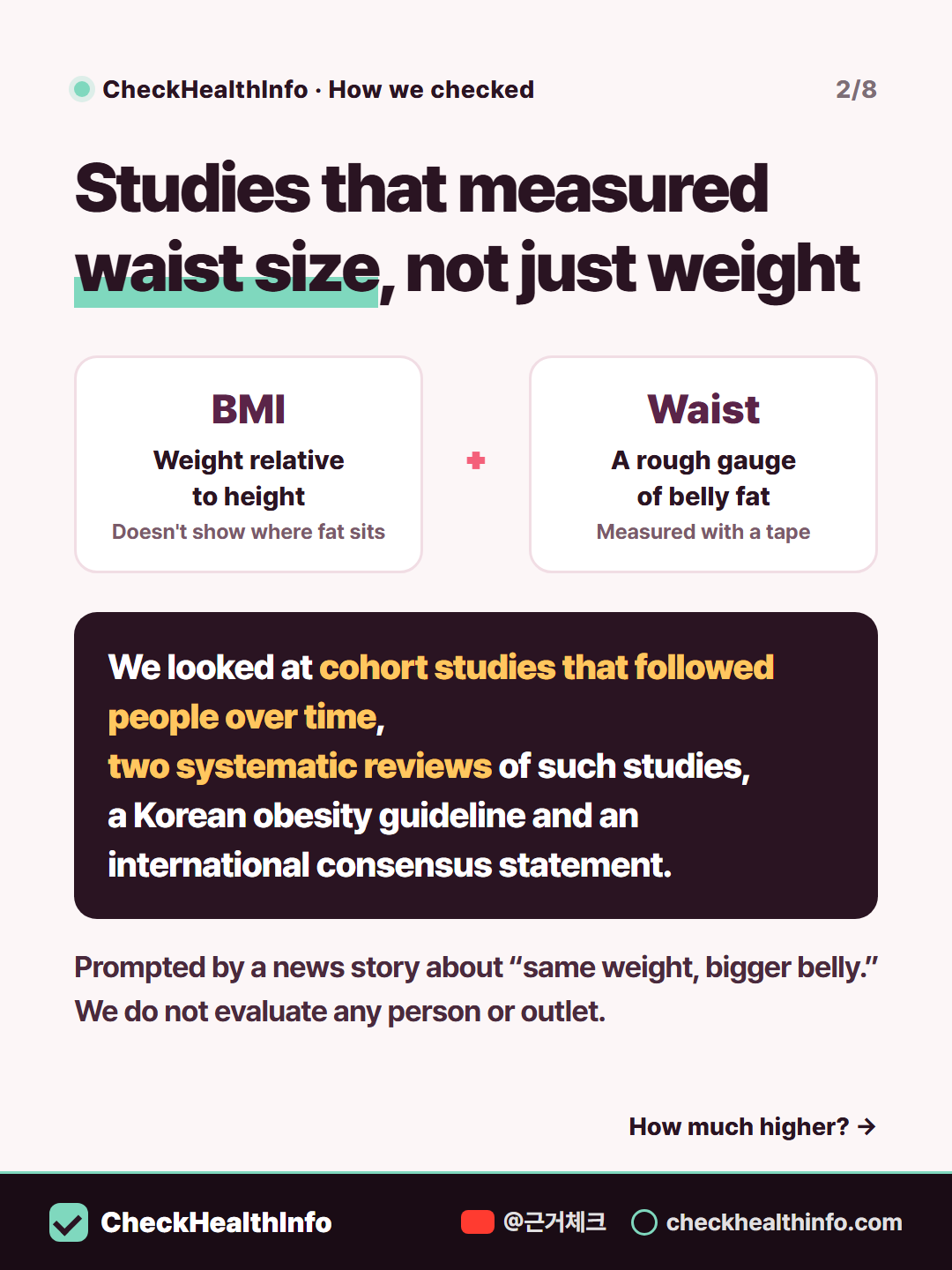
Body mass index (BMI) — Weight in kilograms divided by height in meters squared. It shows how heavy you are for your height, but not whether the fat is around your belly or elsewhere.
Abdominal obesity and normal-weight central obesity — Abdominal obesity means a waist circumference above a set cut-off. Normal-weight central obesity means a BMI in the normal range but a large waist.
Cohort study — An observational study that measures people without the disease and follows them for years to see who develops it. Compared with a cross-sectional study, which surveys people at one point in time, it shows the order of events better (whether the large waist came before the diabetes).
Relative risk and hazard ratio — How many times higher one group's risk is than another's. A value of 1 means no difference; above 1 means higher risk.
Odds ratio — A comparison of the odds of having a condition between two groups. A value of 1 means no difference. It is not exactly the same as “times the risk.”
95% confidence interval (CI) — The range in which the true result plausibly lies. For a ratio, if the range includes 1, the difference is not considered statistically clear.
Verdict. “Even at a normal weight (BMI), a large waist (abdominal obesity) raises the risk of diabetes”
Mostly true · Evidence grade B
In plain terms Even at a normal weight, people with a bigger belly tended to develop diabetes more often. Waist size is a signal of risk that the bathroom scale can miss.
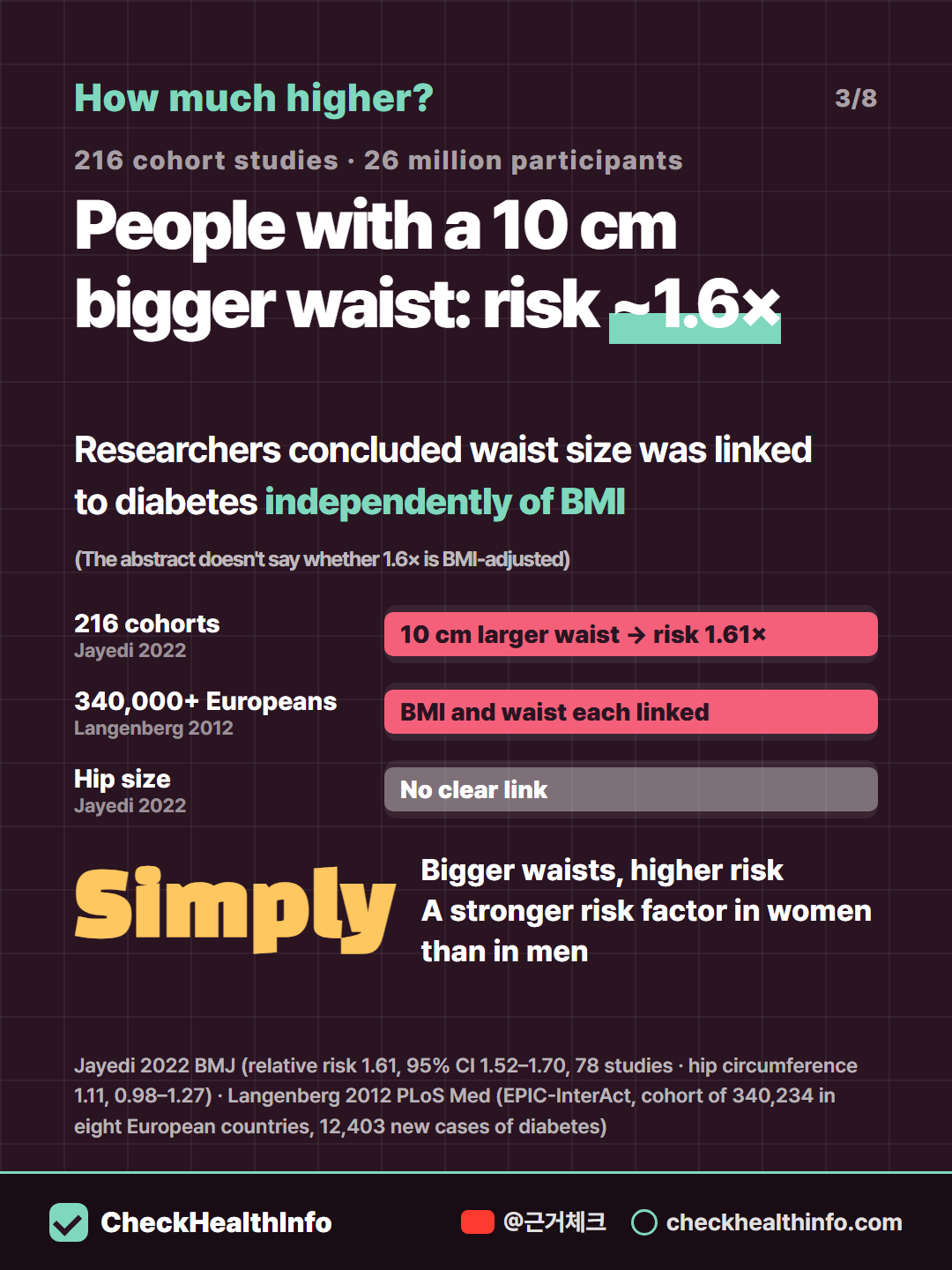
- A pooled analysis of 216 cohorts — In a meta-analysis of 216 cohort studies of the general adult population (26 million participants, 2.3 million of whom developed type 2 diabetes), people whose waist was 10 cm larger than others' had a relative risk of type 2 diabetes of 1.61 (95% CI 1.52–1.70; 78 studies). The researchers concluded that waist circumference was strongly and linearly associated with diabetes risk independently of overall adiposity (BMI). Hip circumference showed no clear association (1.11, 95% CI 0.98–1.27). [1]
- More than 340,000 people followed in Europe — In a case-cohort study drawing on 340,234 people at 26 centers in eight European countries, including 12,403 who developed diabetes, BMI and waist circumference were each independently associated with diabetes, and waist circumference was a stronger risk factor in women than in men. Among overweight people, those with a large waist developed diabetes at rates similar to people with obesity. [3]
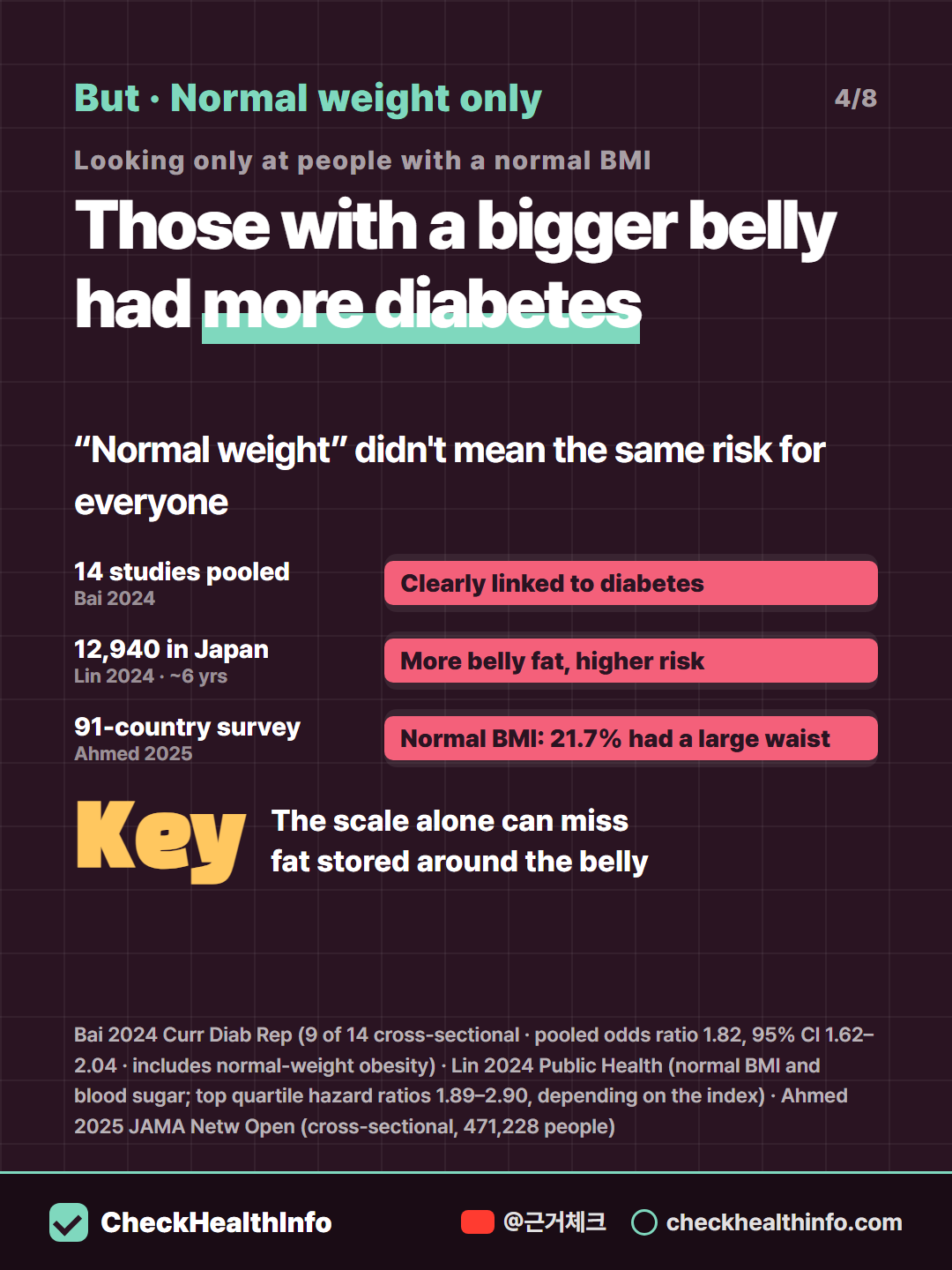
- A review of normal-weight studies — A systematic review and meta-analysis of 14 studies (334,438 people) on normal-weight obesity and normal-weight central obesity found a clear association with type 2 diabetes (pooled odds ratio 1.82, 95% CI 1.62–2.04), and the association was consistent across sex, region and how the condition was defined. [2]
- A cohort of Japanese adults with a normal weight — In 12,940 Japanese adults with a normal BMI and normal blood sugar followed for a median of 6 years, those in the top quartile of belly-fat indices, including waist circumference, had hazard ratios for diabetes of 1.89 to 2.90, depending on the index. Data from 10,830 people in China showed the same. [4] In 5,606 normal-weight adults at a health checkup center in China followed for about 2 years, normal-weight central obesity was associated with a hazard ratio of 1.39 (95% CI 1.13–1.71) for cardiometabolic disease, and diabetes risk was similarly higher. [5]
Grade: We started at A (systematic reviews and meta-analyses of cohort studies) and lowered it one grade to B for reason (2) in our method: they pool observational studies rather than randomized trials. The direction of the results was the same across regions, sexes and definitions, so we did not lower it further. The evidence supports the claim, but it shows an association in observational studies, so it can't prove that belly fat is the cause, and the size of the risk and the cut-offs differ by population and sex — hence “Mostly true.”
But — a “normal” weight doesn't always mean a normal waist
- About one in five — In a cross-sectional survey of 471,228 people in 91 countries, 21.7% (95% CI 21.5–21.8) of people with a normal BMI had abdominal obesity (waist 80 cm or more in women, 94 cm or more in men). In an analysis that accounted for other factors, they had an odds ratio of 1.81 (95% CI 1.72–1.90) for having diabetes. The researchers said BMI alone may not be enough to identify these high-risk people. [9] In 26,825 people in the US National Health and Nutrition Examination Survey, the odds ratio for diabetes in people with normal-weight central obesity, compared with normal-weight people without it, was 2.37 (95% CI 1.75–3.23). [10] Both are one-time surveys, so they can't tell whether the belly fat or the diabetes came first.
However — narrower than the claim
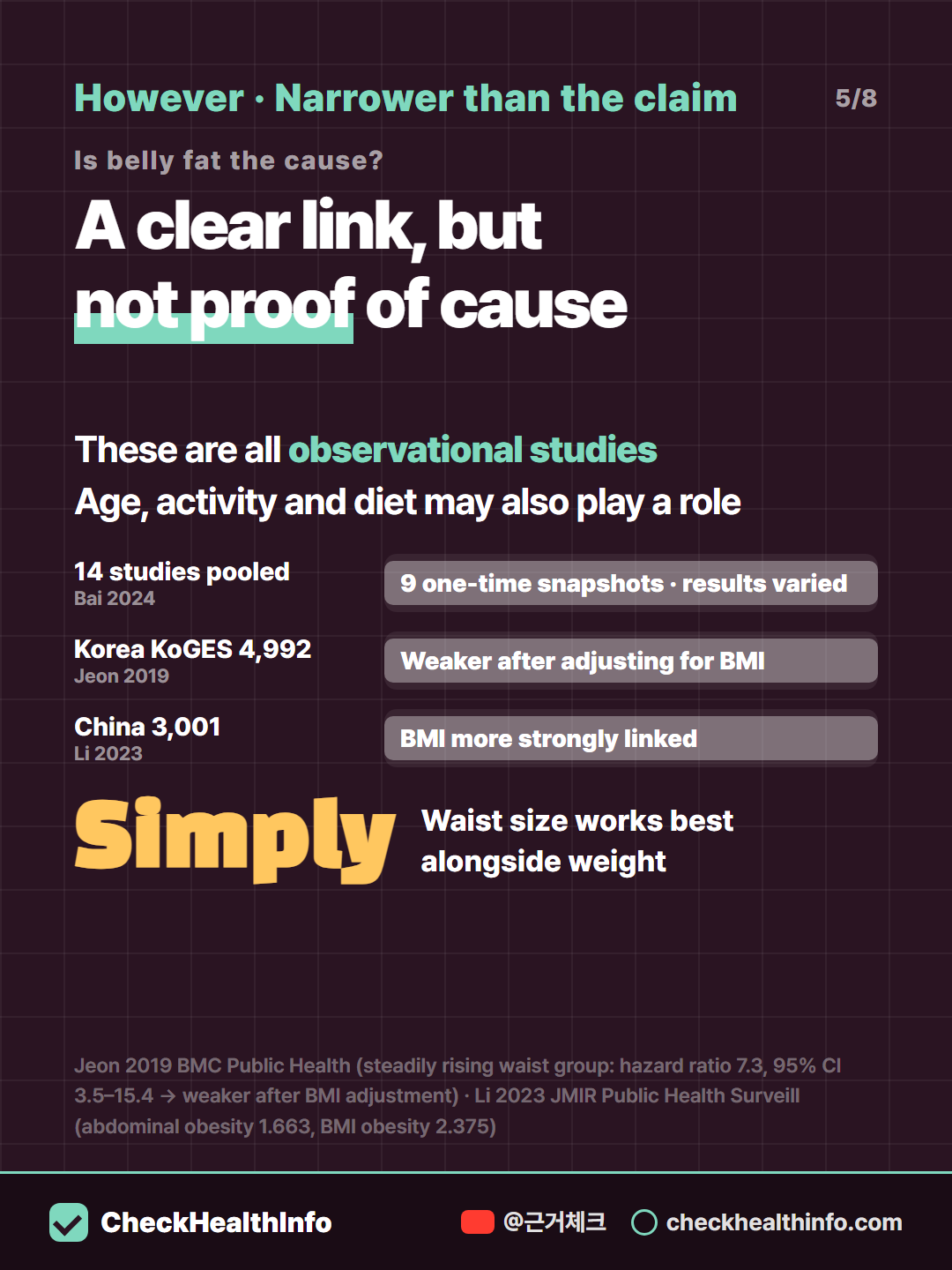
- Cause can't be established — All of these are observational studies, so other factors such as age, physical activity and diet may also play a role. In the review of normal-weight studies, 9 of the 14 studies were cross-sectional, the quality of evidence was mixed, and results varied considerably between studies (I² 64%). Its pooled results also included normal-weight obesity, which is defined by body-fat percentage rather than waist size. [2]
- Look at weight and waist together — In 4,992 Koreans aged 40 and older in the Korean Genome and Epidemiology Study (KoGES), the group whose waist started high and kept growing had a hazard ratio for diabetes of 7.3 (95% CI 3.5–15.4) compared with the lowest group, but the association weakened after further adjustment for BMI. [6] In a cohort of 3,001 people in China, both abdominal obesity (hazard ratio 1.663) and obesity by BMI (2.375) were linked to higher risk, and BMI was more strongly associated than waist circumference. [7] Waist size doesn't replace weight; it's a signal to look at alongside weight.
- How to read the numbers — The 1.61 per 10 cm is the pooled value from the 78 studies that analyzed waist circumference, and the finding that the link is independent of BMI is the researchers' conclusion (a pooled BMI-adjusted value is not given in the abstract). Results differed greatly between studies, and the full paper reported signs of publication bias (small studies with weaker results may be missing from the published record). [1] The 1.89–2.90 range in the Japanese cohort covers several belly-fat indices, not waist circumference alone. [4]
How many centimeters is too many?
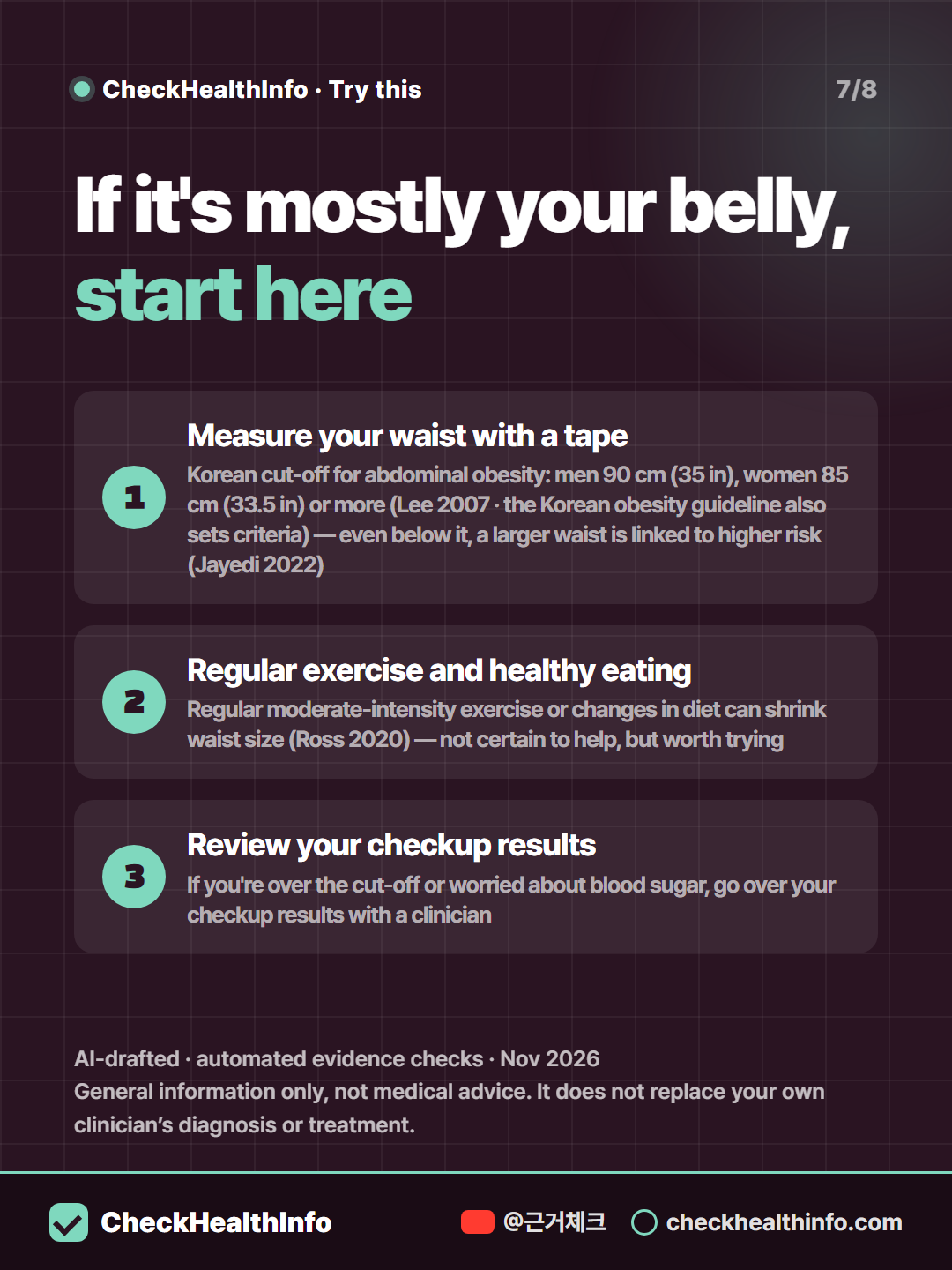
- The Korean cut-off — The waist cut-offs widely used for abdominal obesity in Korea, 90 cm (about 35 in) for men and 85 cm (about 33.5 in) for women, were proposed from 1998 Korea National Health and Nutrition Examination Survey data on 6,561 adults as the point where the odds ratio for having two or more metabolic risk factors rose sharply. [11] The Korean Society for the Study of Obesity guideline also includes criteria for diagnosing abdominal obesity. [12]
- There's no single cut-off — The international survey used 94 cm or more for men and 80 cm or more for women [9], and in a KoGES cohort of 6,206 Koreans, the waist sizes that best predicted new diabetes were 85 cm for men and 80 cm for women. In that cohort, diabetes incidence rose clearly as waist size increased. [8] In plain terms, the pooled cohort analysis found that risk rose with waist size without a sharp break at any particular cut-off [1], so being just under the cut-off is no reason to relax.
If it's mostly your belly
- Measure your waist with a tape — An international consensus statement says BMI alone isn't enough to properly assess the cardiometabolic risk of excess fat and recommends measuring waist circumference as a “vital sign.” [13]
- Regular exercise and healthy eating — The same statement says waist size can be reduced with regular moderate-intensity exercise or changes in diet. [13] We did not check whether, or by how much, a smaller waist lowers diabetes risk, but these habits carry little risk, so while not certain to help, they're worth trying.
- Review your checkup results — If your waist is above the cut-off or you're worried about your blood sugar, talk with a doctor or nurse about your checkup or blood test results. If you're already being treated for diabetes, follow your care plan.
Scope: This verdict covers the link between waist size (abdominal obesity) and developing type 2 diabetes in people with a normal weight. It does not cover the diagnosis or treatment of diabetes, or medicines.
Limitations of this verdict
- All of the evidence is observational, and many of the studies that looked directly at normal-weight central obesity were cross-sectional. [2]
- Our PubMed search did not find a nationwide Korean cohort from the National Health Insurance Service (NHIS) that looked directly at normal-weight central obesity and new diabetes. The Korean evidence comes from a community cohort (KoGES) and national nutrition survey data. [6] [8] [11]
- In Korea, a BMI of 23–24.9 is considered pre-obesity, but most cited studies counted a BMI of 18.5–24.9 (or 18–24) as normal weight. The cut-offs for normal weight and abdominal obesity also differed between studies. [5] [9]
- The Chinese health-checkup cohort had a short follow-up of about 2 years, and the abstract doesn't give a figure for diabetes alone. [5]
- The grade follows section 1 of our rating method. We check for new studies in our monthly PubMed review and log any change to a verdict in our corrections log.
Card news
Video (in Korean)
References
- Jayedi A, Soltani S, Motlagh SZ, et al. Anthropometric and adiposity indicators and risk of type 2 diabetes: systematic review and dose-response meta-analysis of cohort studies. BMJ 2022;376:e067516. PMID 35042741. PubMed abstract · Full article
- Bai J, Zhang Y, He L, et al. Normal Weight Central Obesity and its Impact on Type 2 Diabetes Mellitus. Curr Diab Rep 2024;25(1):3. PMID 39503788. PubMed abstract · Full article
- Langenberg C, Sharp SJ, Schulze MB, et al. Long-term risk of incident type 2 diabetes and measures of overall and regional obesity: the EPIC-InterAct case-cohort study. PLoS Med 2012;9(6):e1001230. PMID 22679397. PubMed abstract · Full article
- Lin M, Xie Y, Hong L, et al. Abnormal adiposity indices are associated with an increased risk of diabetes in a non-obese Asian population. Public Health 2024;226:144-151. PMID 38064777. PubMed abstract · Full article
- Cheng Y, Zheng H, Yin H, et al. Association between normal-weight central obesity and cardiometabolic disorders: a longitudinal analysis from health check-up data. BMC Cardiovasc Disord 2026;26(1). PMID 42902148. PubMed abstract · Full article
- Jeon J, Jung KJ, Jee SH. Waist circumference trajectories and risk of type 2 diabetes mellitus in Korean population: the Korean genome and epidemiology study (KoGES). BMC Public Health 2019;19(1):741. PMID 31196038. PubMed abstract · Full article
- Li S, Wang Y, Ying Y, et al. Independent and Joint Associations of BMI and Waist Circumference With the Onset of Type 2 Diabetes Mellitus in Chinese Adults: Prospective Data Linkage Study. JMIR Public Health Surveill 2023;9:e39459. PMID 36630180. PubMed abstract · Full article
- Choi SJ, Keam B, Park SH, et al. Appropriate waist circumference cut-offs to predict diabetes in the Korean population - the Korean Genome and Epidemiology Study -. Circ J 2010;74(7):1357-63. PMID 20519877. PubMed abstract · Full article
- Ahmed KY, Aychiluhm SB, Thapa S, et al. Cardiometabolic Outcomes Among Adults With Abdominal Obesity and Normal Body Mass Index. JAMA Netw Open 2025;8(10):e2537942. PMID 41105408. PubMed abstract · Full article
- Jin X, Liu J, Cao Q, et al. Normal-weight central obesity: implications for diabetes mellitus. Front Nutr 2023;10:1239493. PMID 37810923. PubMed abstract · Full article
- Lee SY, Park HS, Kim DJ, et al. Appropriate waist circumference cutoff points for central obesity in Korean adults. Diabetes Res Clin Pract 2007;75(1):72-80. PMID 16735075. PubMed abstract · Full article
- Kim KK, Haam JH, Kim BT, et al. Evaluation and Treatment of Obesity and Its Comorbidities: 2022 Update of Clinical Practice Guidelines for Obesity by the Korean Society for the Study of Obesity. J Obes Metab Syndr 2023;32(1):1-24. PMID 36945077. PubMed abstract · Full article
- Ross R, Neeland IJ, Yamashita S, et al. Waist circumference as a vital sign in clinical practice: a Consensus Statement from the IAS and ICCR Working Group on Visceral Obesity. Nat Rev Endocrinol 2020;16(3):177-189. PMID 32020062. PubMed abstract · Full article
General information only, not medical advice. It does not replace your own clinician’s diagnosis or treatment. If your waist is above the cut-off or you’re worried about your blood sugar, talk with a doctor or nurse about your checkup results. If you’re already being treated for diabetes, follow your care plan.