Are raw oysters in winter a norovirus risk?
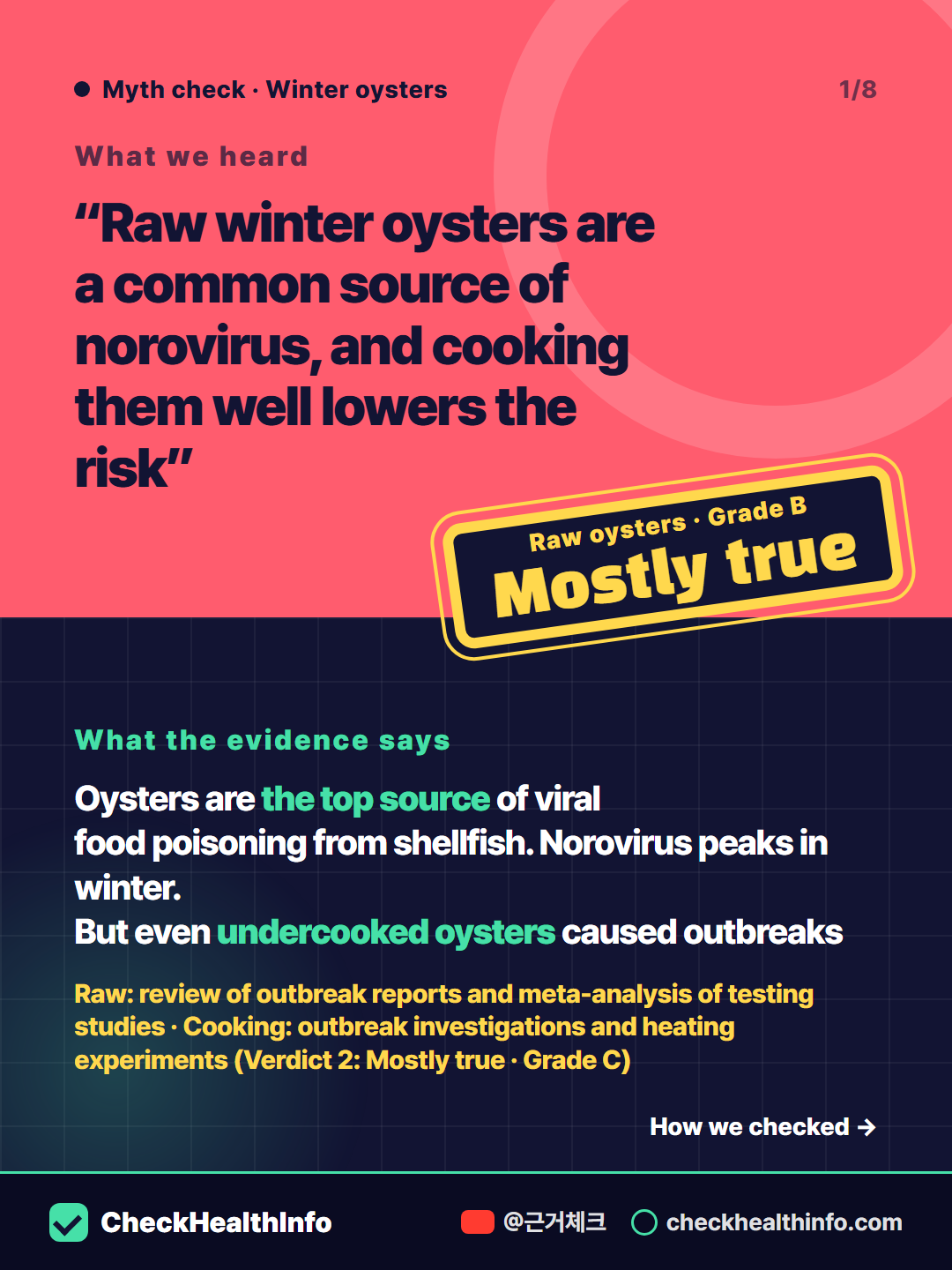
Are raw oysters in winter a common cause of norovirus food poisoning, and does cooking them thoroughly lower the risk?

We checked this verdict against 13 sources, such as published studies and clinical guidelines. · How checked: AI-drafted · automated evidence checks
Verdicts at a glance
| Claim | Verdict |
|---|---|
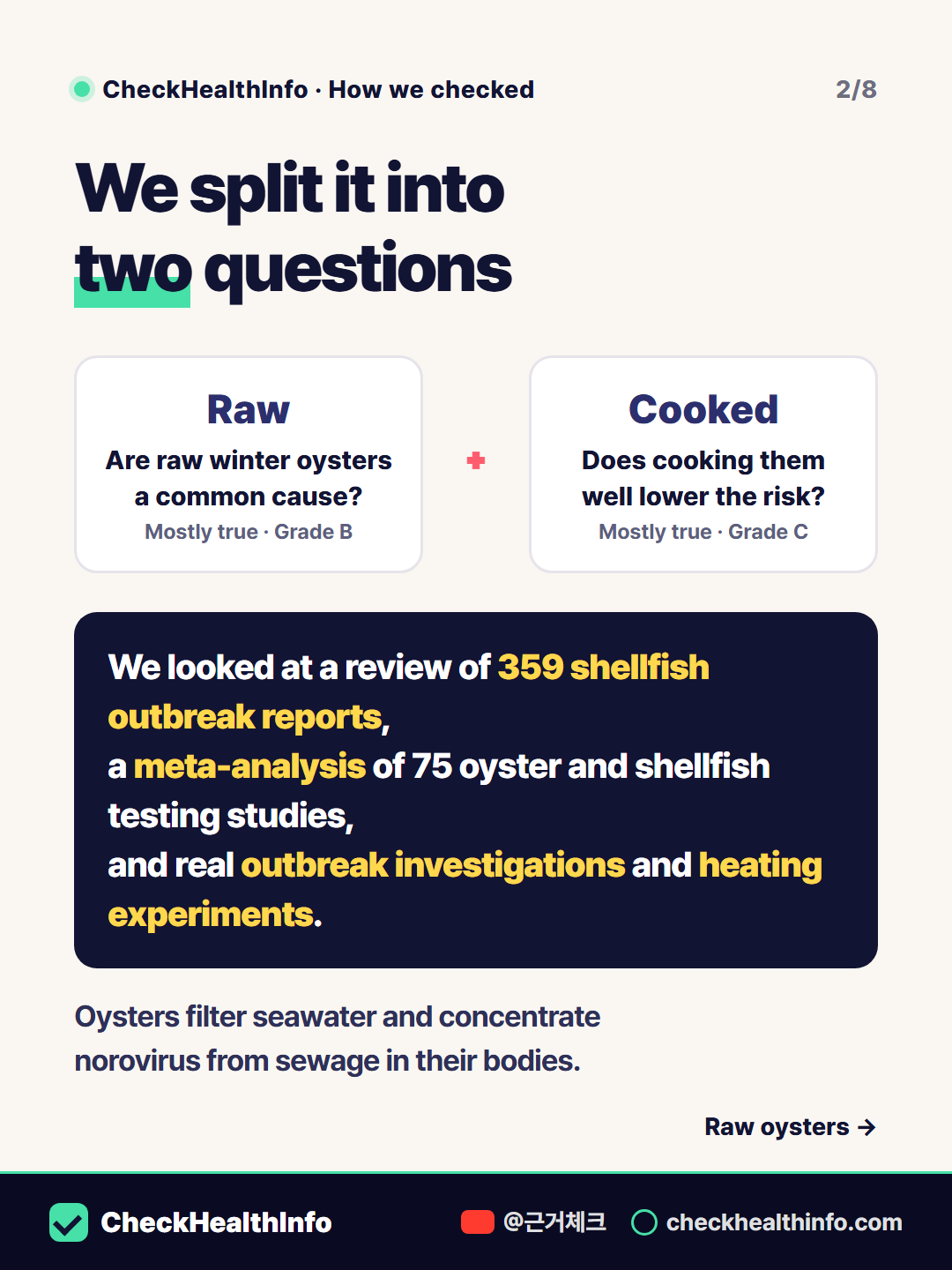
| Raw oysters in winter are a common cause of norovirus food poisoning | Mostly true · Evidence grade B |
| Cooking oysters thoroughly lowers the risk of norovirus food poisoning | Mostly true · Evidence grade C |
Bottom line — When reports of viral food poisoning outbreaks linked to shellfish are pooled, most were caused by norovirus, and oysters were the most common shellfish, behind more than half of the outbreaks. Norovirus was also found more often in oysters and other shellfish in winter than in summer. So the claim that “raw oysters in winter are a common cause of norovirus food poisoning” is rated Mostly true (Evidence grade B) — but norovirus food poisoning also often comes from other sources, such as institutional catering, groundwater and people’s hands. The claim that “cooking oysters thoroughly lowers the risk” is also Mostly true (Evidence grade C) — heat reduces the virus, but outbreaks have happened even after people ate undercooked steamed oysters, so oysters need to be cooked all the way through.
Norovirus — A virus that causes stomach flu (vomiting and diarrhea). It spreads through water, food and hands contaminated with human feces.
“For raw consumption” vs. “for cooking” oysters — In Korea, oysters labeled “for raw consumption” are sold to be eaten raw (this is not a guarantee that they are free of norovirus). Oysters labeled “for cooking” or “eat cooked” must be cooked before eating.
Systematic review, meta-analysis — A review that gathers all relevant studies using a set method (systematic review), and an analysis that pools their results into one estimate (meta-analysis).
Outbreak investigation — When many people get food poisoning at once, investigators compare what sick and healthy people ate to find the food that caused it.
Relative risk, risk ratio — How many times more often the disease occurred compared with the comparison group. A value of 1 means no difference.
Odds ratio — Another way to express “how many times.” When a disease is rare it can be read much like a relative risk, but when the disease is common, as in an outbreak, it comes out larger than the actual increase in risk.
95% confidence interval — The range in which the true value is likely to lie. If the range for a ratio crosses 1, we cannot be confident there is a real difference.
On November 11, 2026, a TV news report said that Korea’s Ministry of Food and Drug Safety (MFDS), together with local governments, would run intensive sampling and testing of winter seafood such as oysters for raw consumption and gwamegi (half-dried fish) until February 26, 2027, testing oysters for E. coli and norovirus. Prompted by this, we checked a common saying: “Raw oysters in winter are a common cause of norovirus food poisoning, and cooking them thoroughly lowers the risk.” Because it mixes two different statements, we split it into two verdicts.
Verdict 1. “Raw oysters in winter are a common cause of norovirus food poisoning”
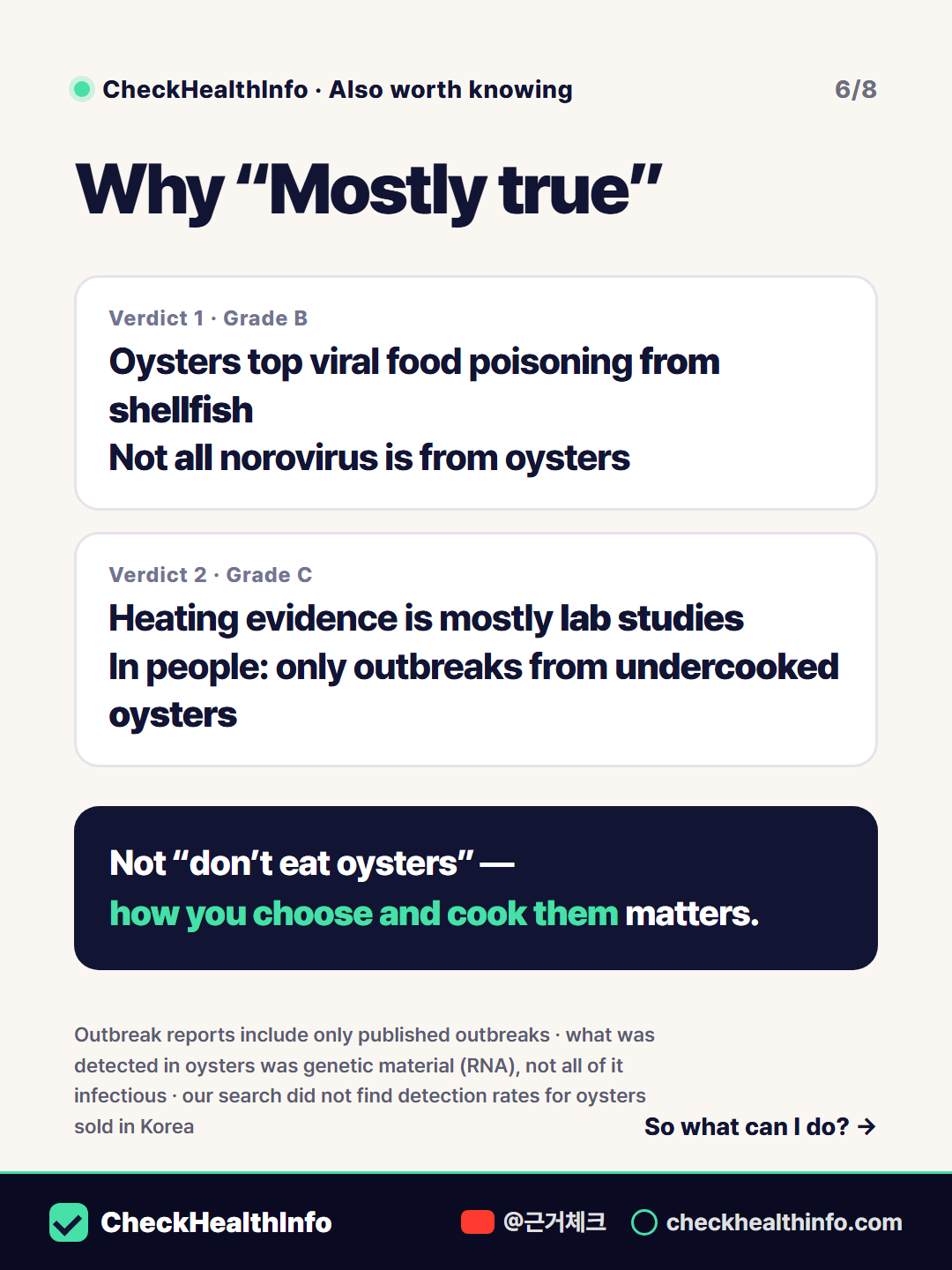
Mostly true · Evidence grade B
In plain terms More than half of reported viral food poisoning outbreaks linked to shellfish involved oysters, and norovirus was found in oysters and other shellfish more often in winter. But looking at all norovirus food poisoning, there are many other routes besides oysters.
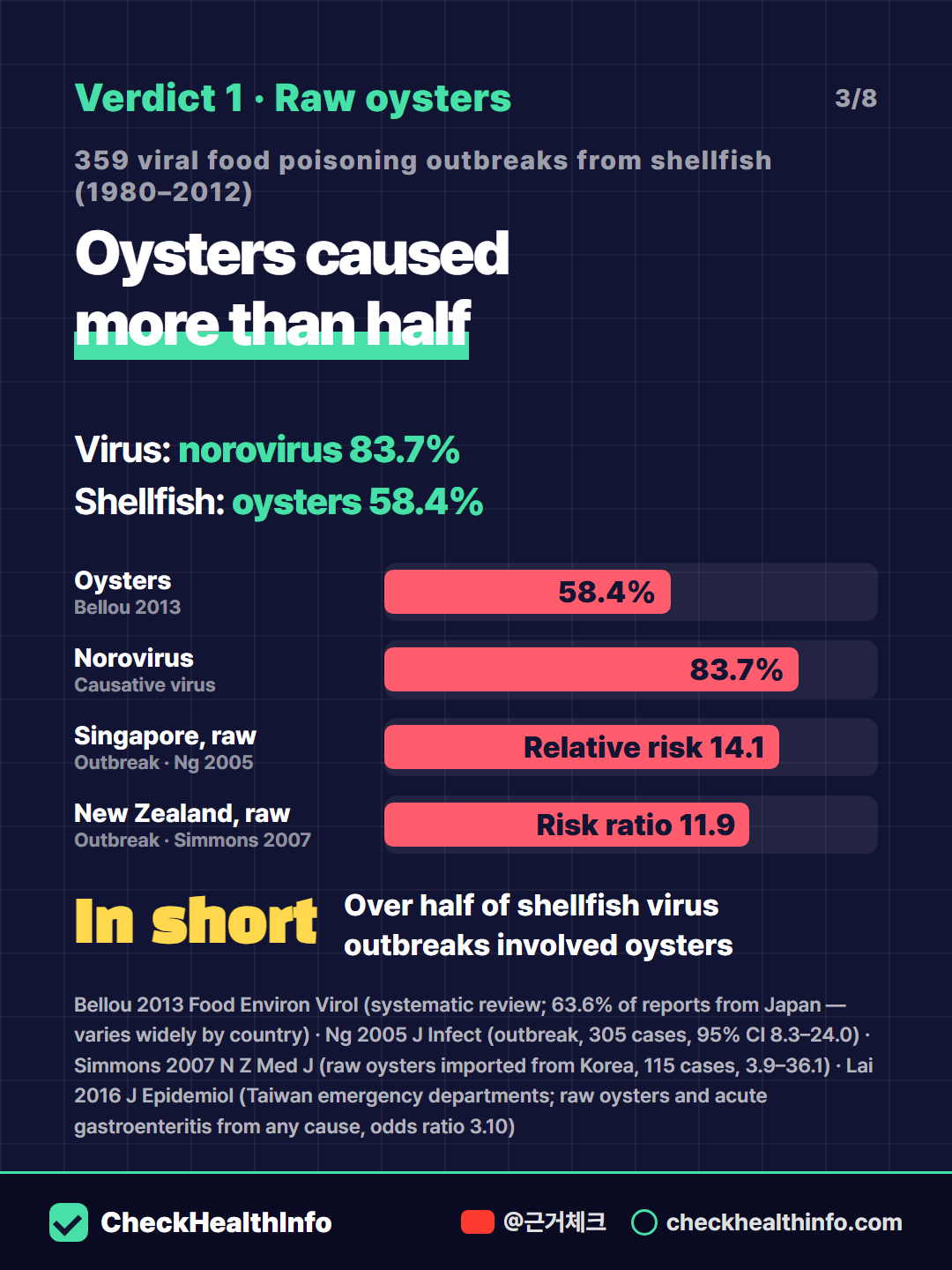
- Oysters feed by filtering seawater, and they concentrate norovirus from seawater contaminated with sewage. [13] A systematic review of 359 viral food poisoning outbreaks linked to shellfish from 1980 to 2012 found that 83.7% were caused by norovirus and 12.8% by hepatitis A virus, and that oysters were the most common shellfish, at 58.4%. Seawater contaminated with sewage and undercooking were often named as causes. [1]
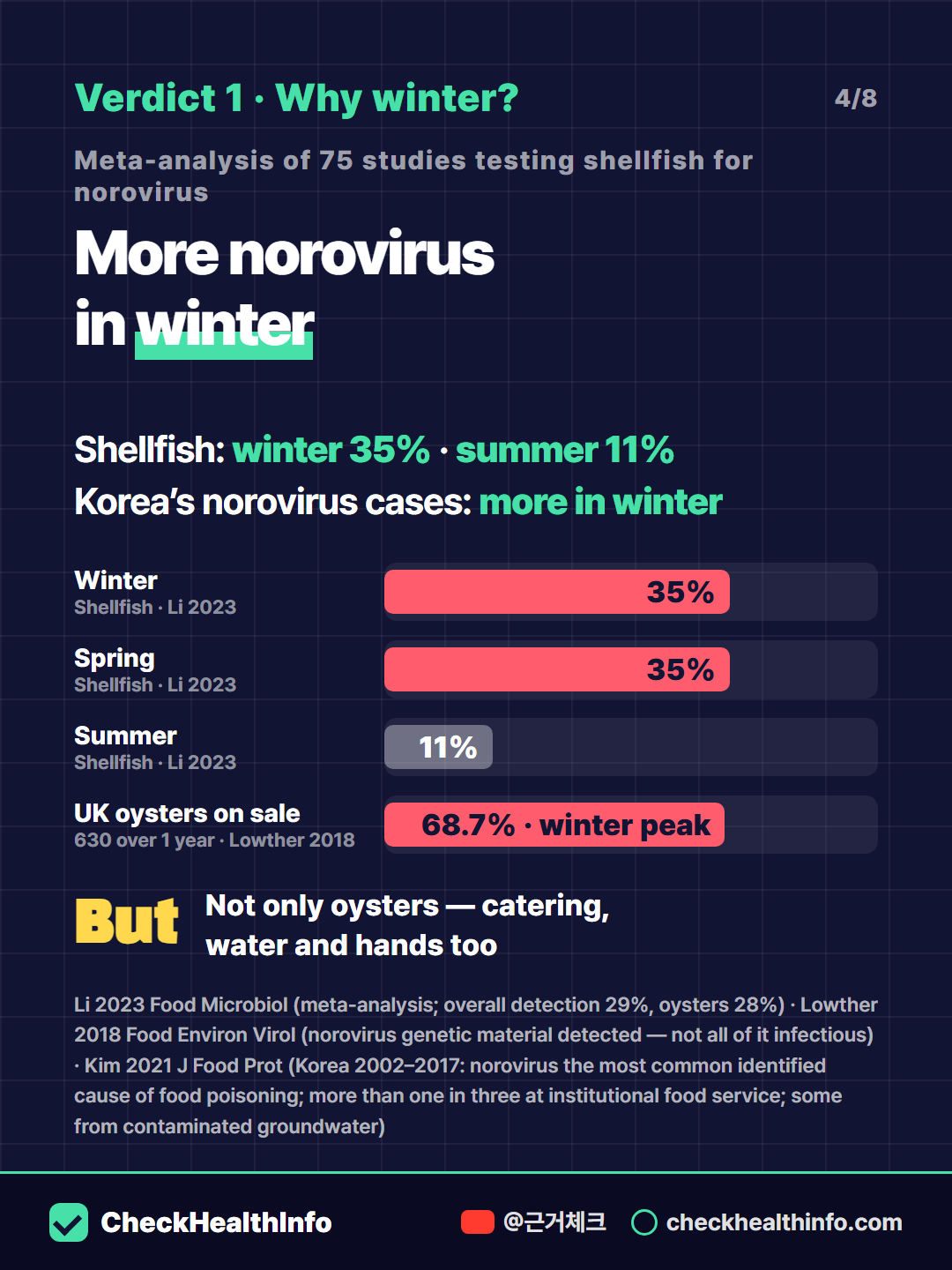
- A meta-analysis of 75 studies that tested shellfish for norovirus found an overall detection rate of 29% (95% confidence interval 23–35%) and 28% in oysters. By season, the rate was 35% in winter and 35% in spring, higher than 11% in summer. [2]
- A one-year survey of 630 oyster samples on sale in the UK found norovirus genetic material (RNA) in 68.7%, with a clear winter peak. Finding the genetic material does not mean all of the virus was infectious. Detection rates were high even in oysters that met E. coli hygiene standards. [3]
- In real outbreaks, people who ate raw oysters were also at higher risk. In an outbreak investigation in Singapore linked to frozen raw oysters (305 cases), the relative risk for eating oysters was 14.1 (95% confidence interval 8.3–24.0) [4], and in a New Zealand outbreak caused by raw oysters imported from Korea (115 cases), the risk ratio was 11.9 (3.9–36.1). The packaging said the oysters should be cooked, but that did not prevent the outbreak. [5]
- A case-control study of emergency department patients in Taiwan (612 matched pairs) also found that eating raw oysters was linked to acute gastroenteritis from any cause (adjusted odds ratio 3.10, 95% confidence interval 1.61–5.94). [6]
A study of Korea’s official food poisoning statistics from 2002 to 2017 found that norovirus was the most common cause among food poisoning cases with an identified cause, and that it was clearly more common in cold winter months. But more than one in three outbreaks happened at institutional food service facilities such as school cafeterias, and at some facilities the cause was groundwater contaminated with the virus that was used to wash or prepare food. [7] Norovirus also spreads through contaminated hands, water and other foods.
Grade: We started from a systematic review of reported shellfish-related outbreaks and a meta-analysis of detection studies, but because the pooled data are observational (outbreak reports and detection surveys), we lowered the grade one step, to B. The individual studies all pointed in the same direction. It is “Mostly true” rather than “True” because oysters are the most common food in viral food poisoning caused by shellfish; this does not mean most norovirus food poisoning comes from oysters.
Verdict 2. “Cooking oysters thoroughly lowers the risk of norovirus food poisoning”
Mostly true · Evidence grade C
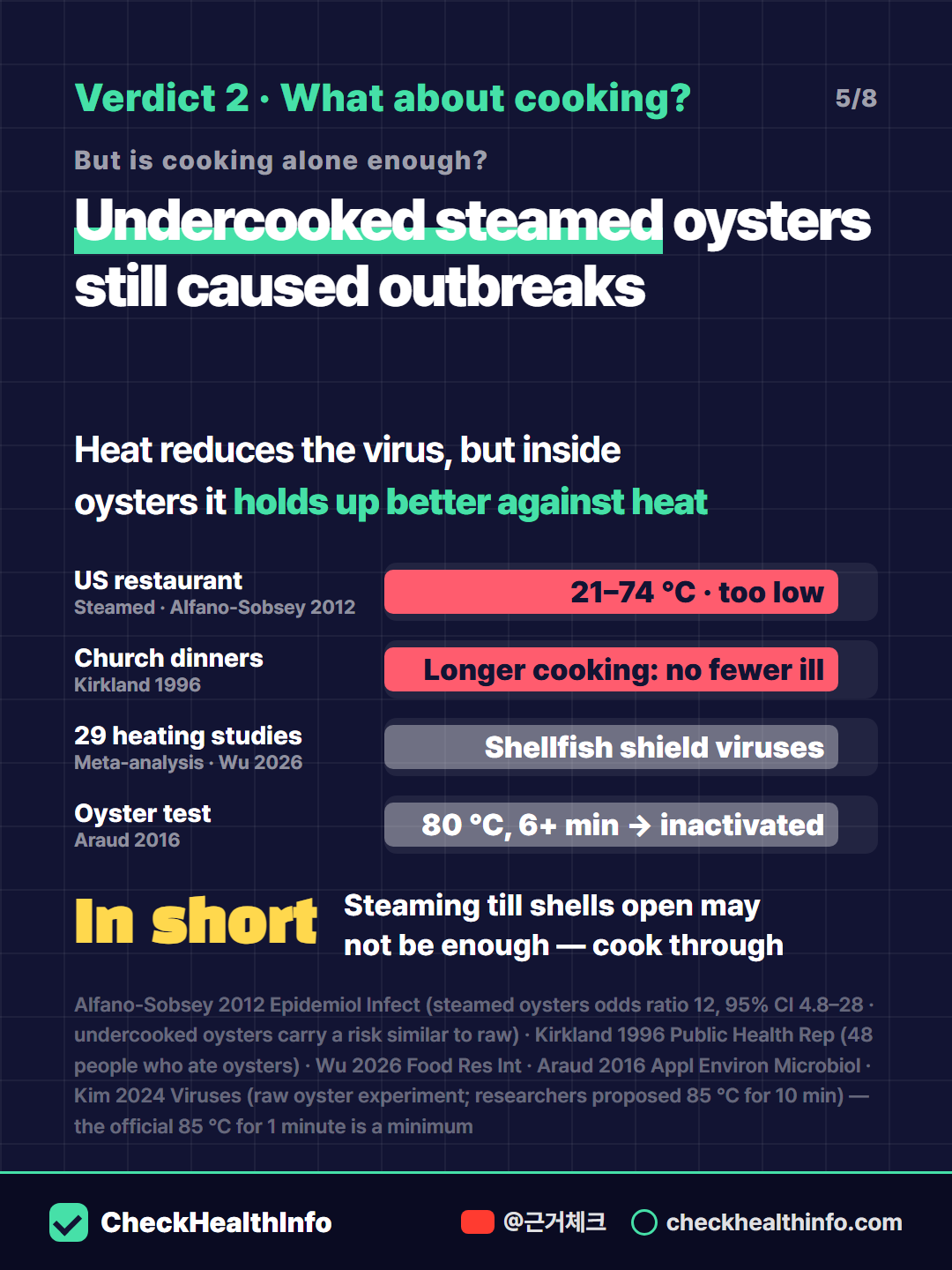
In plain terms Heat reduces norovirus. But inside oysters the virus holds up better against heat, and outbreaks have happened even after people ate undercooked steamed oysters. Do not just cook the outside — cook oysters all the way through.
- A meta-analysis of 29 heat-inactivation studies on viruses in various foods found that the type of food had the biggest effect on how well viruses withstood heat, and that shellfish protected viruses from heat the most. [8]
- In an experiment with live oysters, oyster tissue protected viruses from heat, and heating at 80 °C for more than 6 minutes fully inactivated the enteric viruses inside the oysters (except hepatitis A virus). [9]
- In a Korean experiment using human norovirus in raw oysters, the amount of virus considered likely to be infectious (measured indirectly) fell to less than one-tenth after heating at 85 °C for 10 minutes, and by more than 99% after 15–20 minutes at 100 °C. The researchers proposed 85 °C for 10 minutes (or 100 °C for 5 minutes) as the best heating conditions for oysters. The official standard (core temperature of at least 85 °C for at least 1 minute) is a minimum, and in the experiments, the longer the oysters were heated, the more the virus was reduced. [10]
In a restaurant outbreak in the US in which more than 200 people became ill, eating steamed oysters was strongly linked to illness (odds ratio 12, 95% confidence interval 4.8–28). The final temperature of the steamed oysters was 21–74 °C, not enough to inactivate the virus, and the researchers concluded that undercooked oysters carry a risk similar to raw oysters. The illness also spread to some of the sick people’s family members. [11]
In outbreaks at two church dinners (48 people who ate oysters; 56% became ill), the more oysters people ate, the higher their risk, and illness rates were no lower among people who ate oysters cooked longer (this was a small investigation, so it is hard to treat it as evidence that cooking does not work). [12]
A review of oyster heating studies also noted outbreaks from cooked oysters and concluded that undercooked oysters carry a risk similar to raw oysters. [13]
Grade: We found no study that directly compared people’s food poisoning risk by how thoroughly oysters were cooked. The only evidence from people is outbreak investigations (observational studies) showing that food poisoning happened even with undercooked oysters, so we lowered the grade one step for indirectness, and because the heating experiments were not studies in people, the grade can be at most C. So we rated it C. The KDCA and MFDS prevention guidance (below) is official advice pointing in the same direction.
If you love oysters
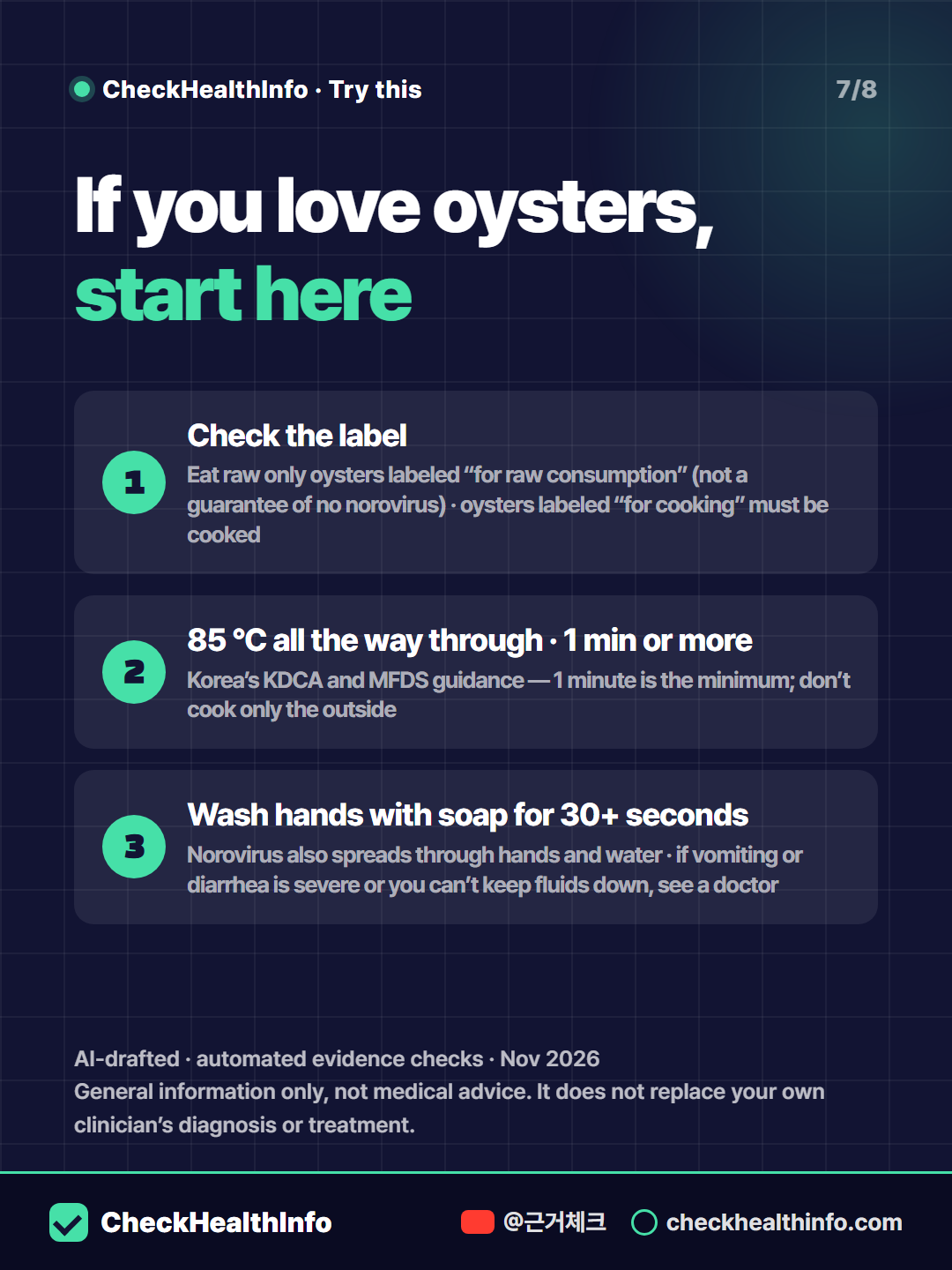
- Check the label — For oysters you will eat raw, check for the “for raw consumption” label (though this is not a guarantee that they are free of norovirus). The MFDS advises that oysters labeled “for cooking” or “eat cooked” must always be heated to a core temperature of 85 °C for at least 1 minute (Ministry of Food and Drug Safety, Korea Policy Briefing, November 22, 2024).
- At least 85 °C all the way through, for at least 1 minute — The Korea Disease Control and Prevention Agency (KDCA) norovirus prevention guidance advises cooking food thoroughly (heating to a core temperature of at least 85 °C for at least 1 minute) (KDCA press release, January 16, 2026). One minute is the minimum. Do not just steam oysters until the shells open or cook only the outside.
- Wash your hands with soap for at least 30 seconds — Norovirus also spreads through hands and water. After going out, before eating and after using the toilet, wash your hands with soap under running water for at least 30 seconds, and drink boiled water (KDCA).
- If vomiting or diarrhea is severe, or you cannot keep fluids down, see a doctor.
Scope: This verdict covers the link between oysters (raw and cooked) and norovirus food poisoning. It does not cover bacterial food poisoning or the treatment of norovirus infection.
Limitations of this verdict
- Outbreak reports include only outbreaks that were reported or published, so they vary greatly by country (63.6% of the reports in the systematic review came from Japan).
- The norovirus detected in oysters was genetic material (RNA), which does not mean all of it was infectious virus. Detection rates vary widely by region, year and testing method, and our search did not separately find detection rates for oysters sold in Korea.
- Most of the evidence on heating comes from laboratory studies, so how much cooking lowers people’s food poisoning risk has not been confirmed in numbers. Methods for directly measuring whether norovirus in oysters is infectious are still limited, so experiments used substitute viruses or indirect measurements.
- This verdict does not mean you should not eat oysters. Choose oysters managed for raw consumption, and cook “for cooking” oysters all the way through.
- This article was prompted by a November 11, 2026 TV news report on the MFDS inspections. It does not evaluate any media outlet or person.
- The grade follows section 1 of our rating method. We check for new studies in our monthly PubMed review, and if a verdict changes, we record it in our corrections log.
Card news
Video (in Korean)
References
- Bellou M, Kokkinos P, Vantarakis A. Shellfish-borne viral outbreaks: a systematic review. Food Environ Virol 2013;5(1):13-23. PMID 23412719. PubMed abstract · Full article
- Li Y, Xue L, Gao J, et al. A systematic review and meta-analysis indicates a substantial burden of human noroviruses in shellfish worldwide, with GII.4 and GII.2 being the predominant genotypes. Food Microbiol 2023;109:104140. PMID 36309442. PubMed abstract · Full article
- Lowther JA, Gustar NE, Powell AL, et al. A One-Year Survey of Norovirus in UK Oysters Collected at the Point of Sale. Food Environ Virol 2018;10(3):278-287. PMID 29722006. PubMed abstract · Full article · Free full text
- Ng TL, Chan PP, Phua TH, et al. Oyster-associated outbreaks of Norovirus gastroenteritis in Singapore. J Infect 2005;51(5):413-8. PMID 16321654. PubMed abstract · Full article
- Simmons G, Garbutt C, Hewitt J, et al. A New Zealand outbreak of norovirus gastroenteritis linked to the consumption of imported raw Korean oysters. N Z Med J 2007;120(1264):U2773. PMID 17972982. PubMed abstract
- Lai CC, Ji DD, Wu FT, et al. Etiology and Risk Factors of Acute Gastroenteritis in a Taipei Emergency Department: Clinical Features for Bacterial Gastroenteritis. J Epidemiol 2016;26(4):216-23. PMID 26639752. PubMed abstract · Full article · Free full text
- Kim JG, Kim JS, Kim JG. Characteristics of Norovirus Food Poisoning Outbreaks in Korea in the 2000s. J Food Prot 2021;84(3):472-480. PMID 33108448. PubMed abstract · Full article
- Wu W, Havelaar AH, Montazeri N. Thermal inactivation kinetics of foodborne viruses across food matrices: a Bayesian meta-analysis and predictive framework. Food Res Int 2026;245(Pt 2):120750. PMID 42914440. PubMed abstract · Full article
- Araud E, DiCaprio E, Ma Y, et al. Thermal Inactivation of Enteric Viruses and Bioaccumulation of Enteric Foodborne Viruses in Live Oysters (Crassostrea virginica). Appl Environ Microbiol 2016;82(7):2086-99. PMID 26826225. PubMed abstract · Full article · Free full text
- Kim SH, Roy PK, Jeon EB, et al. Inactivation of Human Norovirus GII.4's Infectivity in Fresh Oysters (Crassostrea gigas) through Thermal Treatment in Association with Propidium Monoazide. Viruses 2024;16(1):110. PMID 38257810. PubMed abstract · Full article · Free full text
- Alfano-Sobsey E, Sweat D, Hall A, et al. Norovirus outbreak associated with undercooked oysters and secondary household transmission. Epidemiol Infect 2012;140(2):276-82. PMID 21524343. PubMed abstract · Full article
- Kirkland KB, Meriwether RA, Leiss JK, et al. Steaming oysters does not prevent Norwalk-like gastroenteritis. Public Health Rep 1996;111(6):527-30. PMID 8955700. PubMed abstract · Free full text
- Mirmahdi RS, Montazeri N. Progress and challenges in thermal inactivation of norovirus in oysters. Crit Rev Food Sci Nutr 2025;65(31):7311-7324. PMID 40007190. PubMed abstract · Full article
General information only, not medical advice. It does not replace your own clinician’s diagnosis or treatment. If vomiting or diarrhea is severe or you cannot keep fluids down, see a doctor.