Taking probiotics? Can they also prevent colorectal cancer?
Can healthy people prevent colorectal cancer by taking probiotics?

We checked this verdict against 5 sources, such as published studies and clinical guidelines. · How checked: AI-drafted · automated evidence checks
Verdicts at a glance
| Claim | Verdict |
|---|---|
| Taking probiotics can prevent colorectal cancer | Insufficient evidence · Evidence grade C |
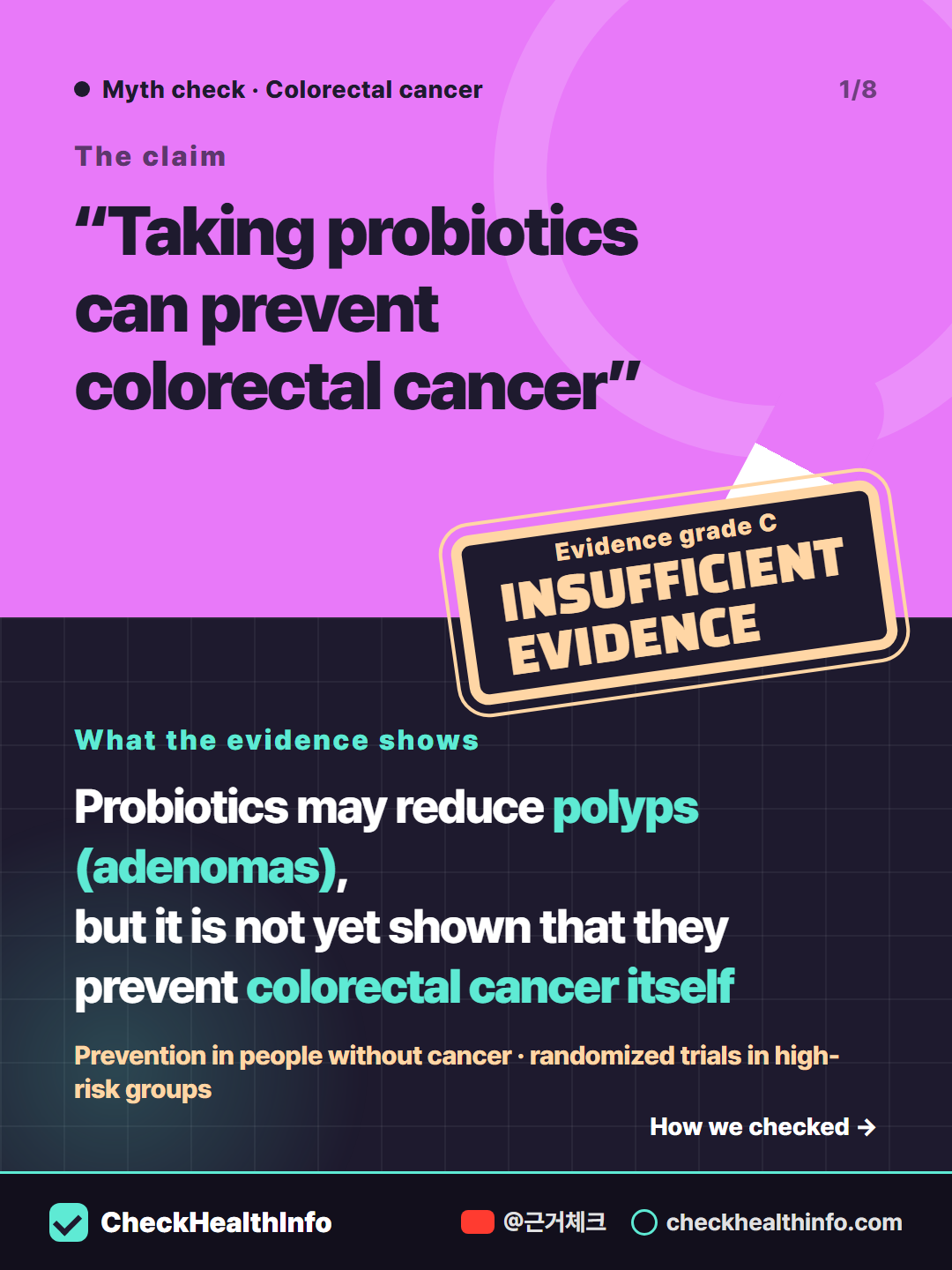
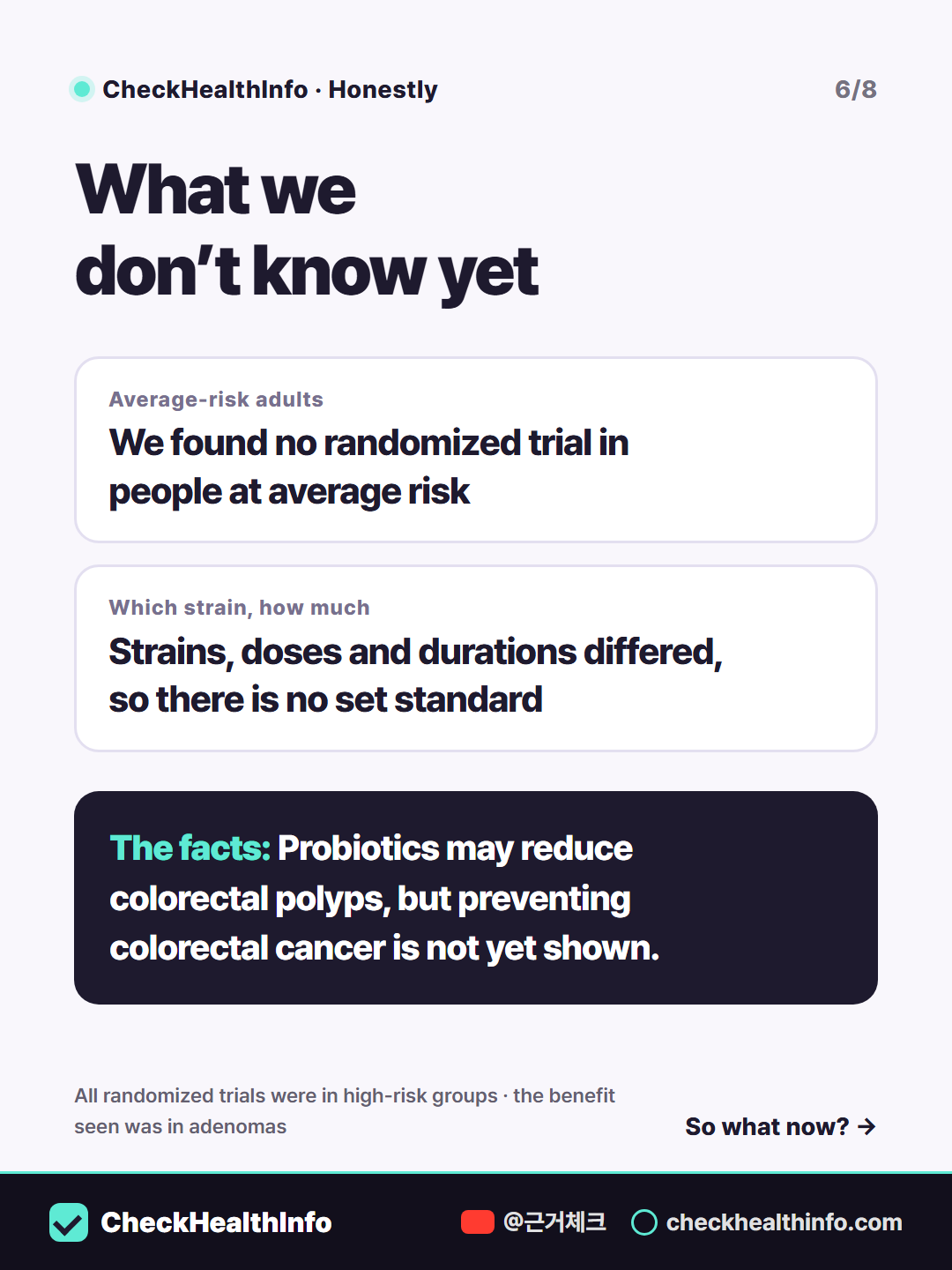
Bottom line — Some trials suggest probiotics may reduce colorectal polyps (adenomas), but it has not yet been shown in people that they prevent colorectal cancer itself. So the claim that “taking probiotics can prevent colorectal cancer” is rated “Insufficient evidence.” That does not mean it is false. Taking probiotics is not a substitute for colorectal cancer screening.
Probiotics — Live microorganisms that may benefit the gut when taken. Prebiotics are ingredients that feed these microbes; synbiotics combine the two.
Adenoma — A type of colorectal polyp that can turn into colorectal cancer over time. It can be found and removed during colonoscopy.
Randomized trial — A study that assigns people by chance to take probiotics or not, then compares the groups. It is more reliable than an observational study for judging cause and effect.
Odds ratio — A number comparing two groups. A value of 1 means no difference; below 1 means fewer cases. If the 95% confidence interval includes 1, chance cannot be ruled out.
Claim. “Taking probiotics can prevent colorectal cancer”
Insufficient evidence · Evidence grade C
In plain terms Some trials found slightly fewer colorectal polyps in people taking probiotics, but none has shown fewer cases of colorectal cancer. The trials were also done in people at high risk of colorectal cancer, not in healthy, average-risk adults.
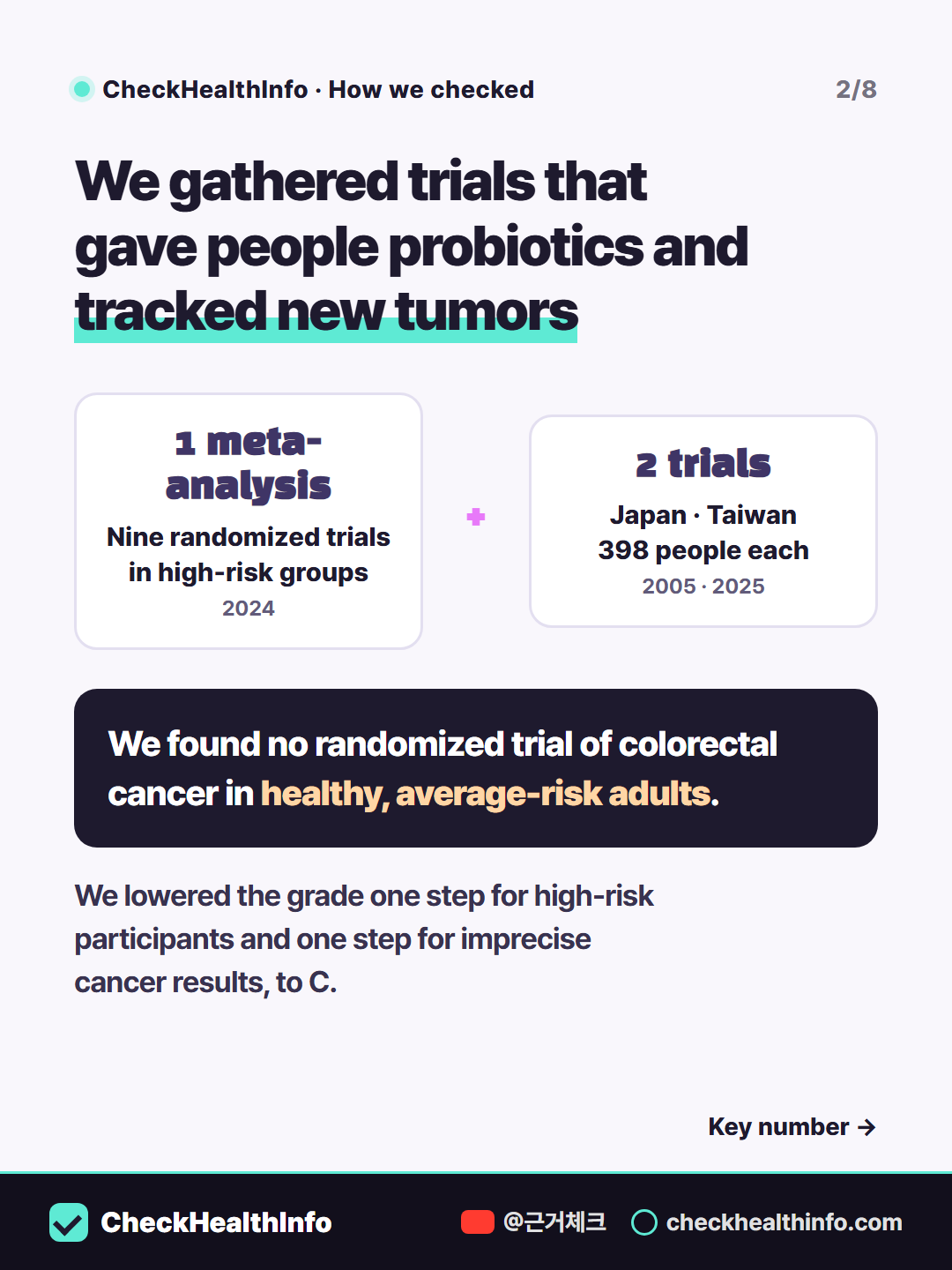
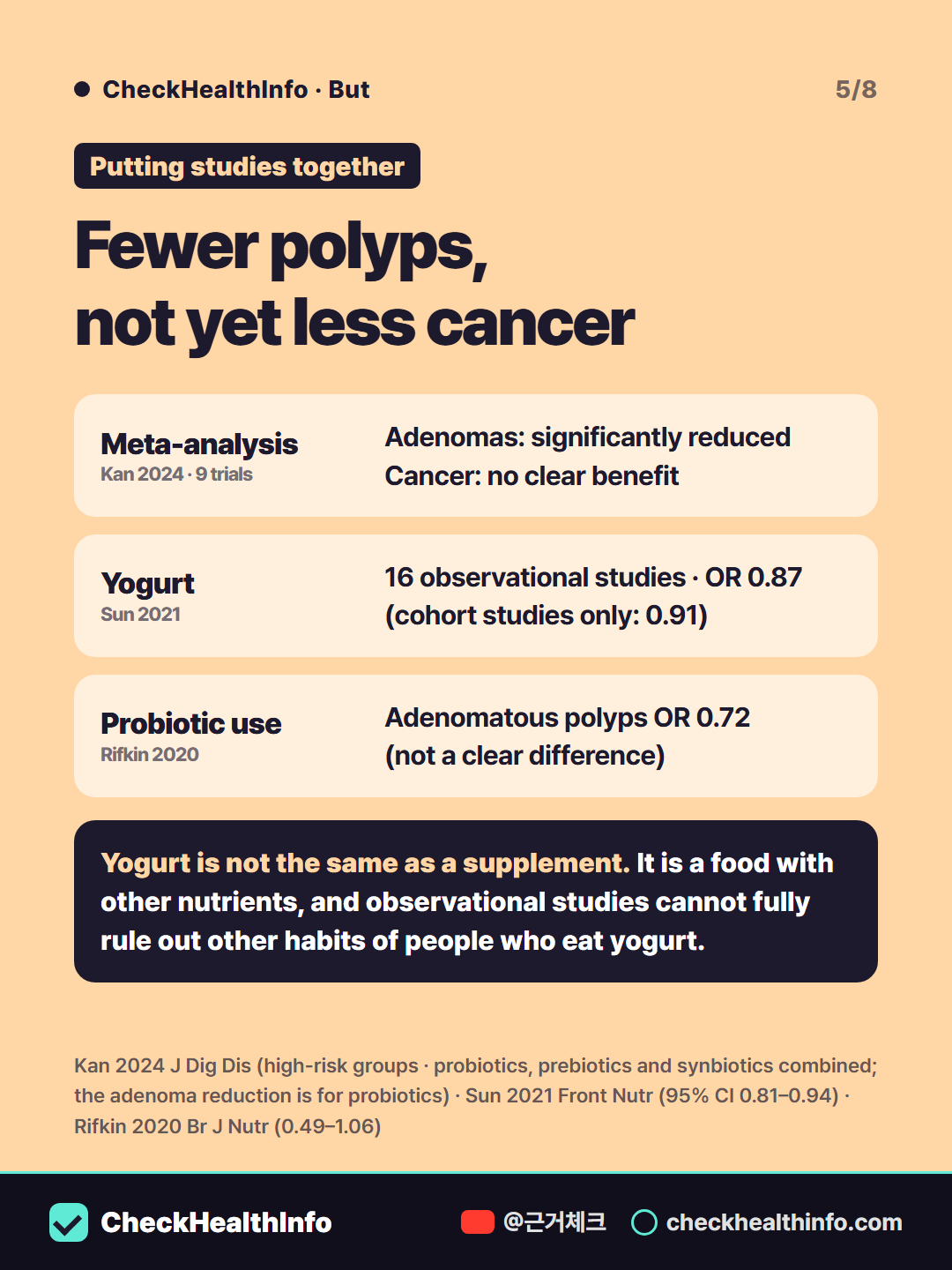
- A meta-analysis of nine randomized trials of probiotics, prebiotics or synbiotics in people at high risk of colorectal cancer (such as people who had polyps removed) found that probiotics significantly reduced new adenomas, but showed no clear benefit for colorectal cancer. The authors concluded that probiotics may help prevent colorectal cancer, but that larger randomized trials are needed (the abstract does not report effect sizes). [1]
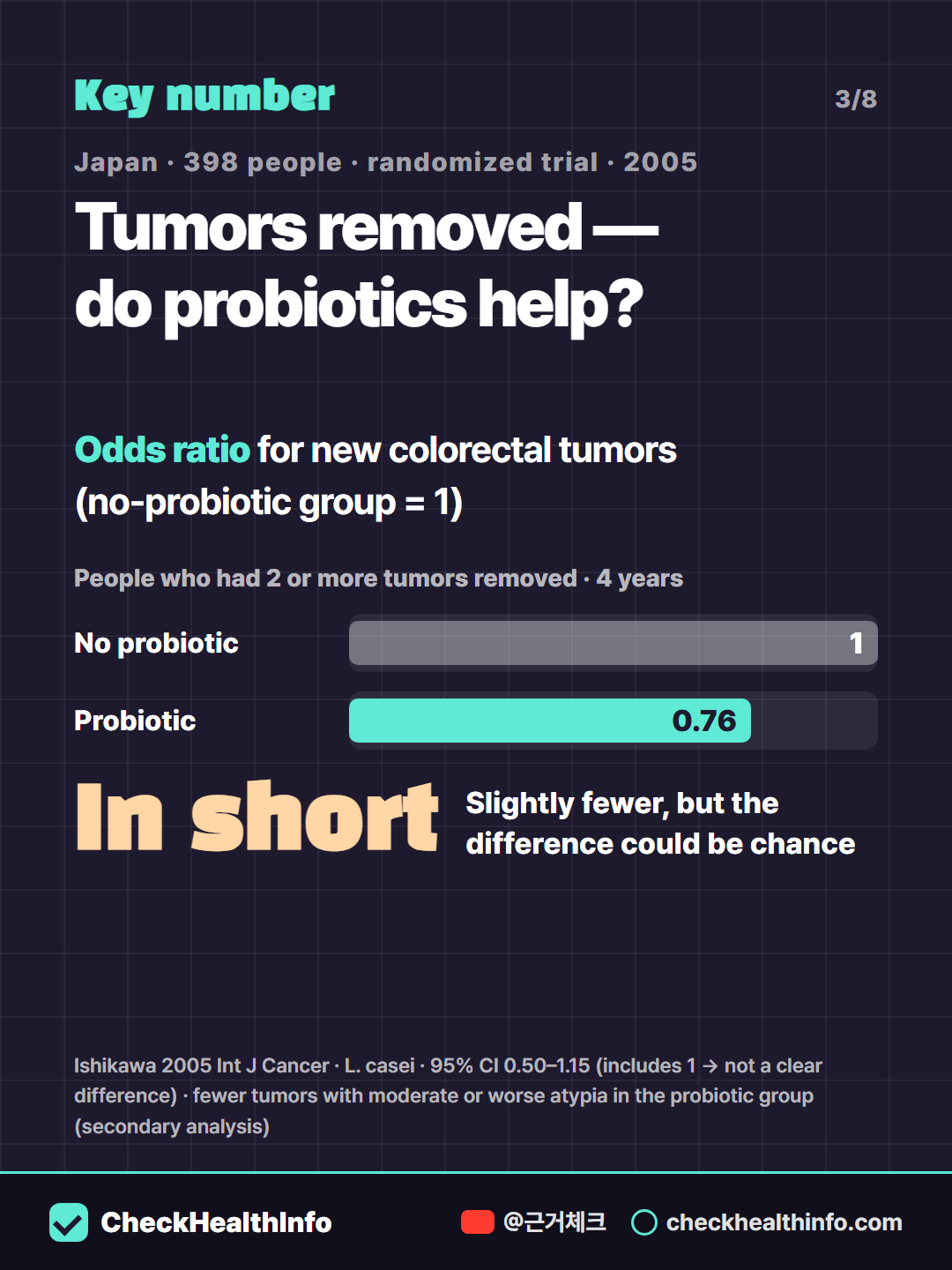
- In a Japanese trial, 398 people who had had two or more colorectal tumors removed were randomly assigned to groups. The odds ratio for new colorectal tumors in the probiotic (L. casei) group was 0.76 (95% confidence interval 0.50–1.15; 380 of the 398 people who completed the study were analyzed). In plain terms, there were slightly fewer, but chance could not be ruled out. Tumors with moderate or worse atypia were significantly less common in the probiotic group, but this was a secondary analysis, not the main outcome. [2]
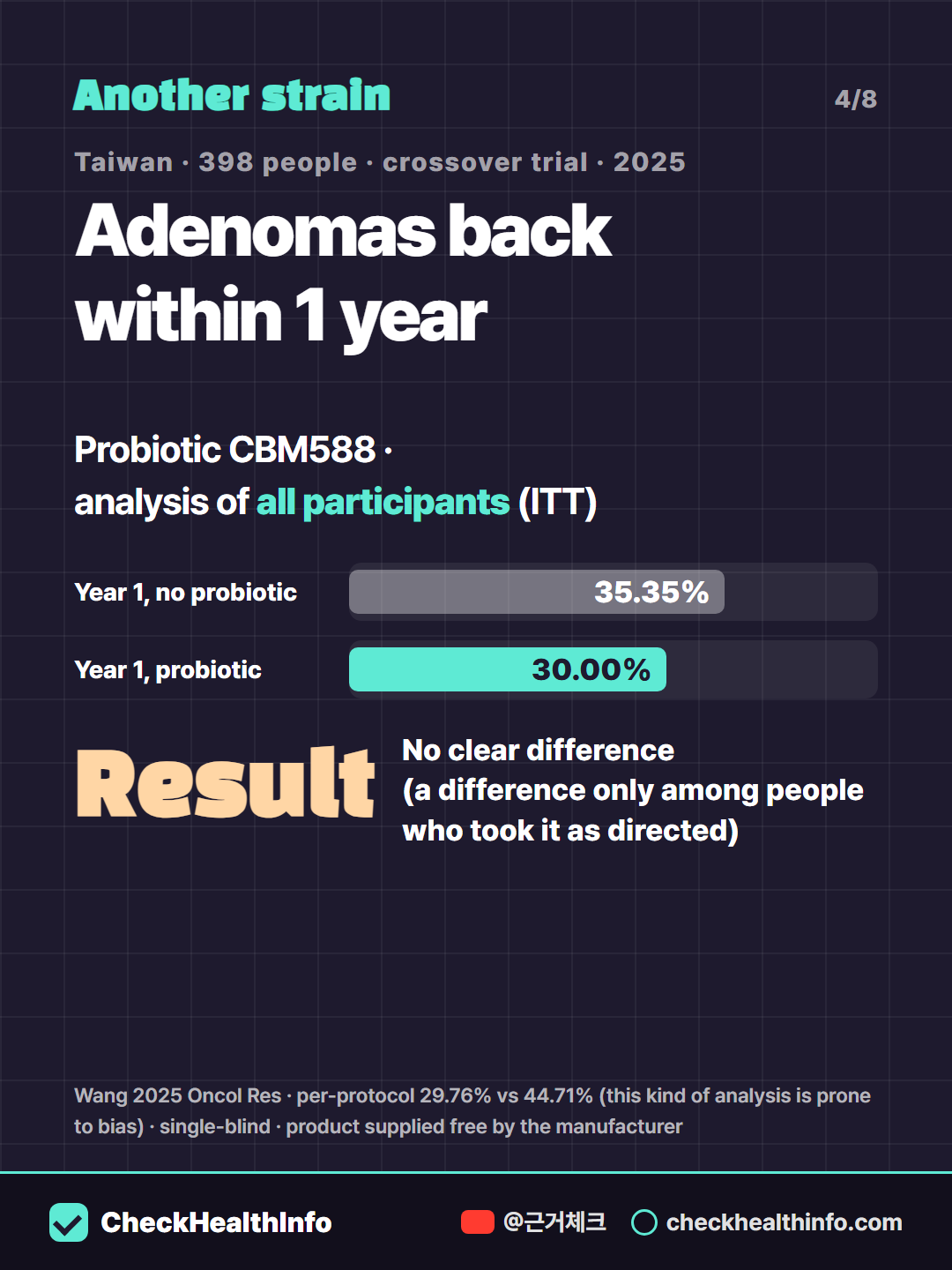
- In a crossover trial in Taiwan of 398 people with a history of adenomas (probiotic CBM588), the analysis of all participants found no clear difference in adenoma recurrence at one year (30.00% vs 35.35%). An analysis limited to people who took it as directed showed a difference (29.76% vs 44.71%), but this kind of analysis loses the benefits of randomization and is prone to bias. [3]
- The picture is a little different for food. A meta-analysis of sixteen observational studies found that people who ate more yogurt were somewhat less likely to have colorectal cancer (odds ratio 0.87, 95% confidence interval 0.81–0.94). Looking only at cohort studies, the association was weaker (0.91, 0.86–0.97). Yogurt is not the same as a probiotic supplement, and observational studies cannot fully rule out other habits of people who eat yogurt. [4]
- In a US colonoscopy-based case-control study, the odds ratio for adenomatous polyps with probiotic use was 0.72 (95% confidence interval 0.49–1.06), which was not a clear difference. [5]
The highest level of evidence is a meta-analysis of randomized trials, so we started at A. Because the trials enrolled people at high risk of colorectal cancer rather than healthy, average-risk adults, and the benefit seen was in adenomas (a precursor) rather than cancer, we lowered the grade one step to B for indirectness (grading method, section 1, reason 1). Because there was no clear difference in colorectal cancer itself, and the individual trials (398 people each) are too small to judge an uncommon outcome like cancer, we lowered it one more step to C for imprecision (reason 3). We did not raise the grade for the yogurt studies, because yogurt is a food, a different exposure from a supplement. There is not yet enough evidence in people that probiotics prevent colorectal cancer, so the rating is “Insufficient evidence” (section 2: this does not mean the claim is false).
What you can do
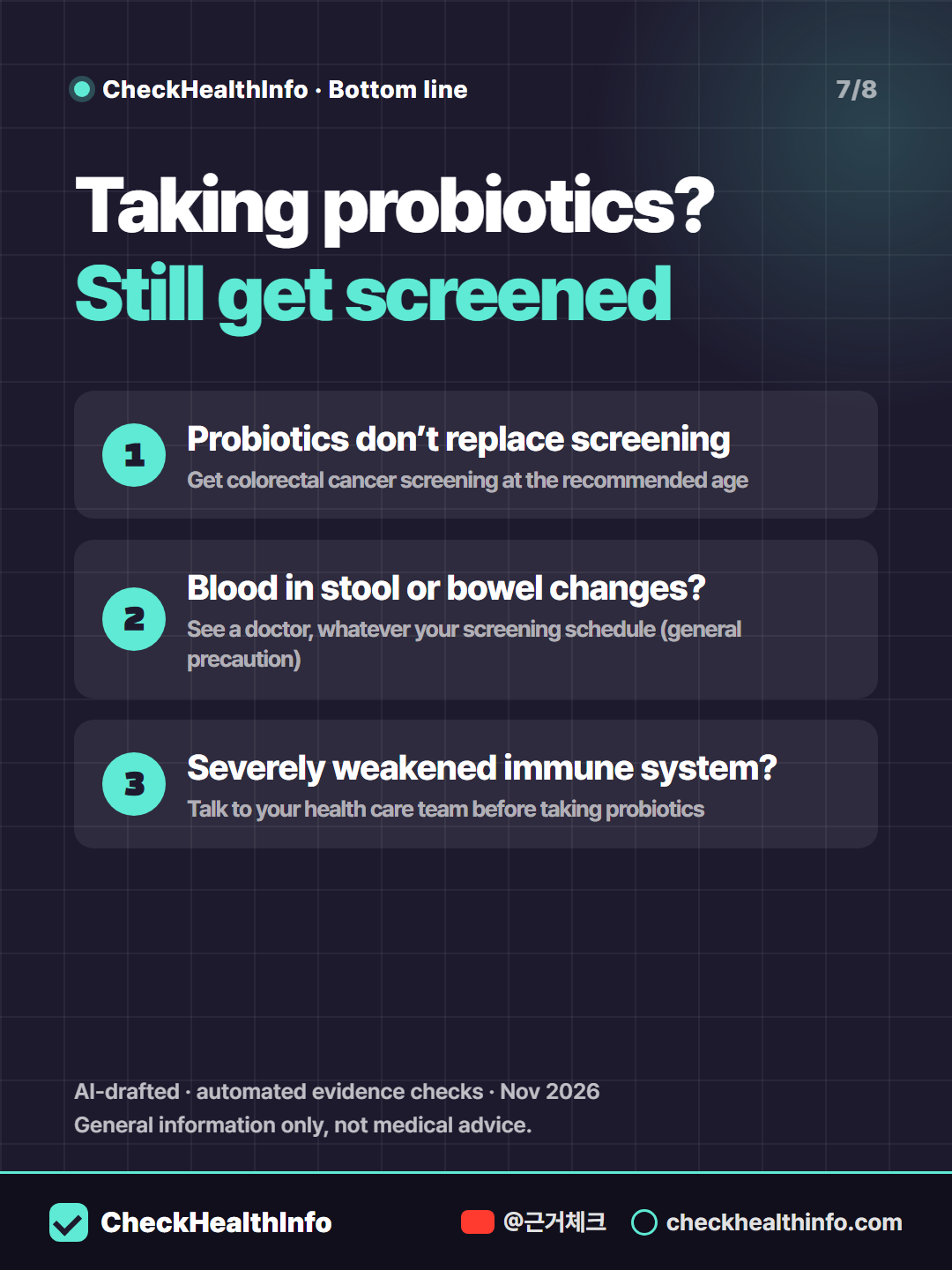
- Probiotics don’t replace screening — Get colorectal cancer screening at the age recommended where you live.
- If you notice blood in your stool, a change in bowel habits or unexplained weight loss — See a doctor, whatever your screening schedule (general precaution).
- If your immune system is severely weakened — Talk to your health care team before taking probiotic products (general precaution).
Scope: This rating covers only whether people without colorectal cancer can prevent it by taking probiotics. It does not cover probiotic use during surgery or chemotherapy after a colorectal cancer diagnosis.
Limitations of this rating
- All the randomized trials were in people at high risk of colorectal cancer (two individual trials enrolled people who had colorectal polyps or tumors removed), so the results may not apply directly to healthy, average-risk adults. We found no randomized trial of colorectal cancer in average-risk adults.
- Strains (such as L. casei and CBM588), doses and durations differed between trials, so there is no standard for which probiotic to take or how much.
- The Taiwanese trial was single-blind, and the manufacturer supplied the product free of charge (the authors state it had no role in study design or analysis).
- We did not find a large cohort study of probiotic supplement use and colorectal cancer. We also did not find a clinical guideline on probiotics for colorectal cancer prevention in PubMed, so none is cited.
- The grade follows section 1 of our grading method. We check PubMed every month for new studies, and any change to a rating is logged in our corrections log.
Card news
Video (in Korean)
References
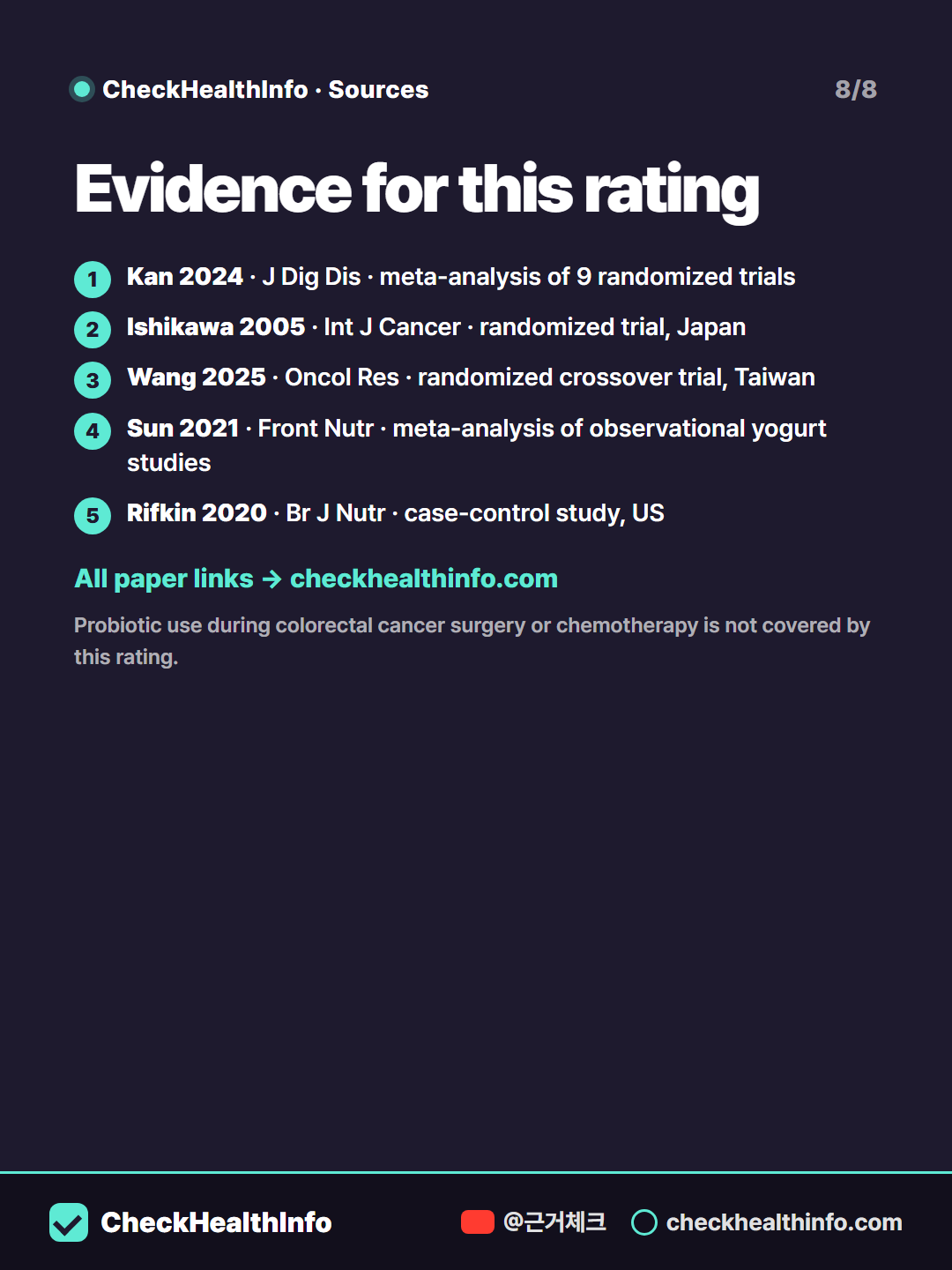
- Kan HX, Cao Y, Ma Y, et al. Efficacy and safety of probiotics, prebiotics, and synbiotics for the prevention of colorectal cancer and precancerous lesion in high-risk populations: A systematic review and meta-analysis of randomized controlled trials. J Dig Dis 2024;25(1):14-26. PMID 38126945. PubMed abstract · Full article
- Ishikawa H, Akedo I, Otani T, et al. Randomized trial of dietary fiber and Lactobacillus casei administration for prevention of colorectal tumors. Int J Cancer 2005;116(5):762-7. PMID 15828052. PubMed abstract · Full article
- Wang JW, Hsu WH, Yu FJ, et al. Clostridium butyricum MIYAIRI 588 Reduces Colorectal Adenomatous Polyp Recurrence: A Randomized Crossover Trial. Oncol Res 2025;33(12):3907-3922. PMID 41425719. PubMed abstract · Full article · Free full text
- Sun J, Song J, Yang J, et al. Higher Yogurt Consumption Is Associated With Lower Risk of Colorectal Cancer: A Systematic Review and Meta-Analysis of Observational Studies. Front Nutr 2021;8:789006. PMID 35047546. PubMed abstract · Full article · Free full text
- Rifkin SB, Giardiello FM, Zhu X, et al. Yogurt consumption and colorectal polyps. Br J Nutr 2020;124(1):80-91. PMID 32077397. PubMed abstract · Full article · Free full text
General information only, not medical advice. It does not replace your own clinician’s diagnosis or treatment. If you notice blood in your stool or a change in bowel habits, see a doctor, and get colorectal cancer screening at the recommended age.