If you quit smoking, will you gain weight? Is quitting still worth it?
If you quit smoking, do you really gain weight? Does gaining weight reduce the benefits of quitting?

We checked this verdict against 6 sources, such as published studies and clinical guidelines. · How checked: AI-drafted · automated evidence checks
Verdicts at a glance
| Claim | Verdict |
|---|---|
| If you quit smoking, you gain weight | Mostly true · Evidence grade B |
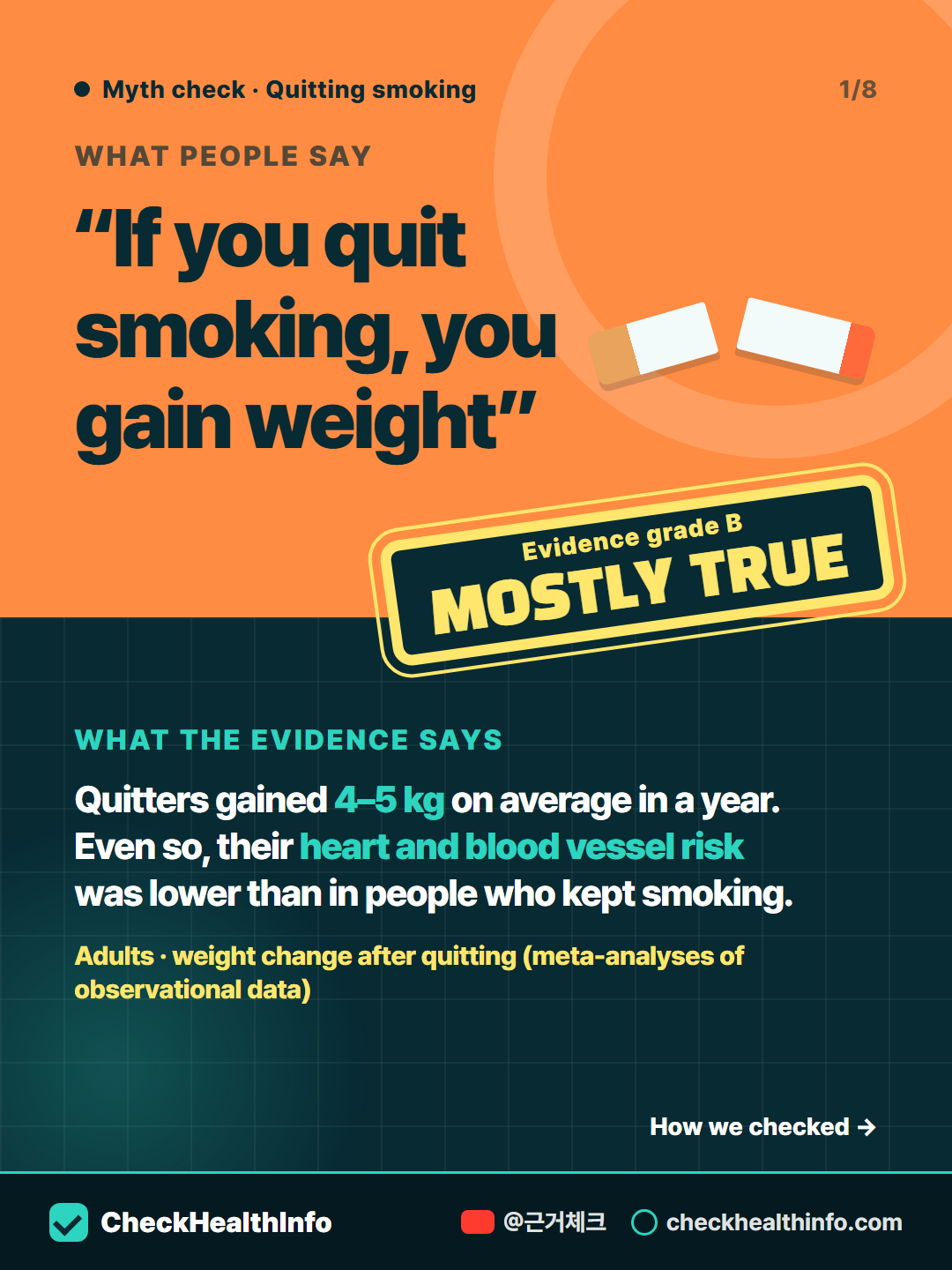
Bottom line — Across studies that weighed people after they quit smoking, quitters gained an average of 4–5 kg over one year. So the claim that “if you quit smoking, you gain weight” is rated “Mostly true.” Here is what the evidence shows: quitters gained 4–5 kg on average over a year (about 2.6 kg more than people who kept smoking), but not everyone gains weight (an estimated 16% lost weight). And even with weight gain, their risk of cardiovascular disease and death was lower than in people who kept smoking (cohort studies). Quit first; worry about weight second.
Meta-analysis — An analysis that pools the results of several studies into a single estimate.
Cohort study — An observational study that follows many people over a long time. It shows that two things go together, but it is less certain than a randomized trial about cause and effect.
Hazard ratio and relative risk — Compare the risk in one group with the risk in another (the hazard ratio compares how fast events happen over time). A value of 1 means no difference; less than 1 means lower risk. It does not mean one person’s own chance changes by that amount.
95% confidence interval — The range in which the true value is likely to fall. If the range includes 1, we cannot say for sure that there is a difference.
Claim. “If you quit smoking, you gain weight”
Mostly true · Evidence grade B
In plain words Most people who quit gained some weight, and the average was 4–5 kg over a year. But the amount varied a lot from person to person, so not everyone gains weight. And even with weight gain, the risk of heart and blood vessel disease was lower than in people who kept smoking.
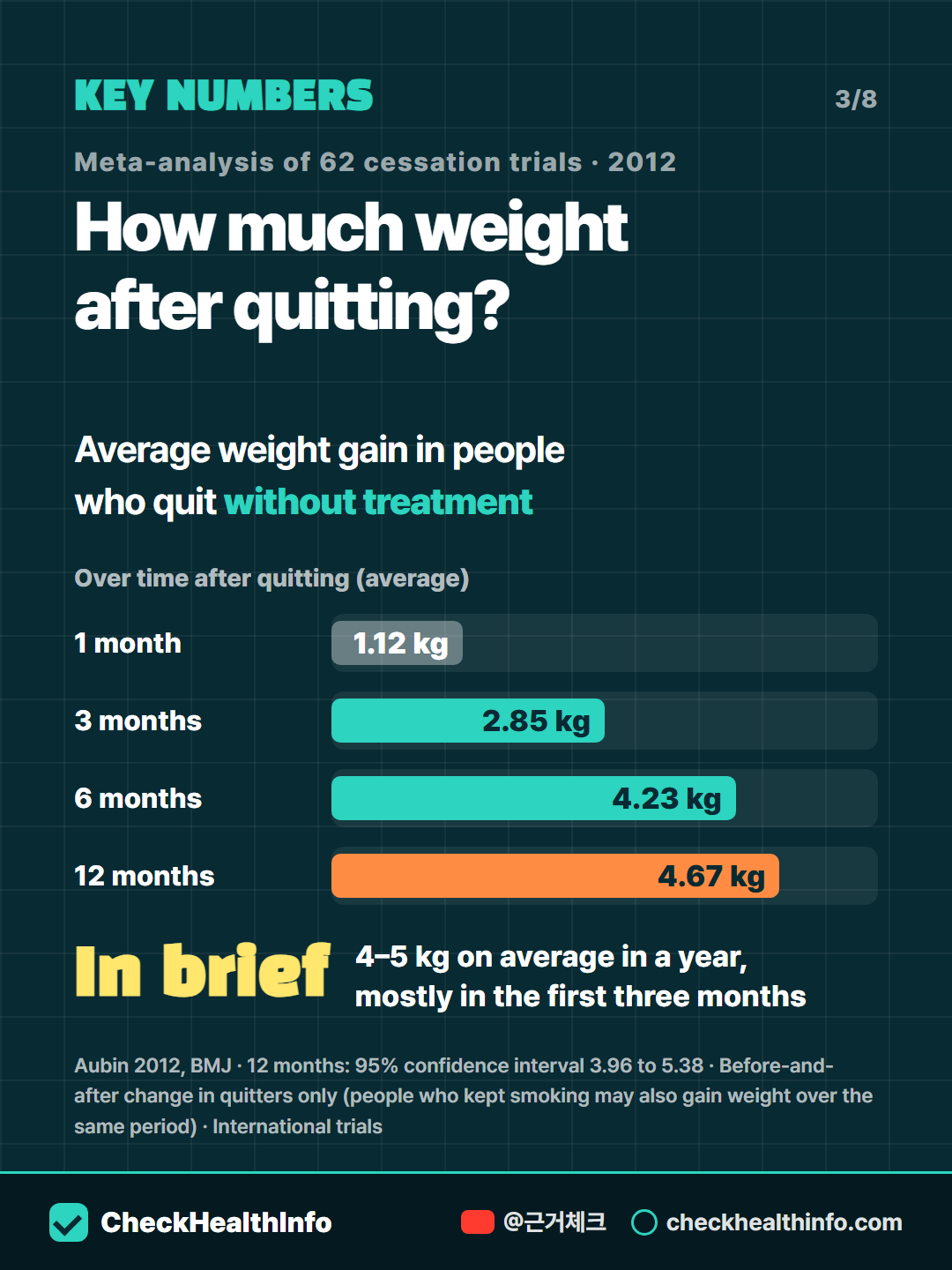
- A meta-analysis of weight change in people who quit, drawn from 62 smoking cessation trials, found that people who quit without treatment gained an average of 1.12 kg after 1 month, 2.85 kg after 3 months, 4.23 kg after 6 months and 4.67 kg after 12 months (95% confidence interval 3.96 to 5.38). Most of the weight gain happened in the first 3 months after quitting. In plain words, people gained 4–5 kg on average over a year, mostly in the first three months. [1]
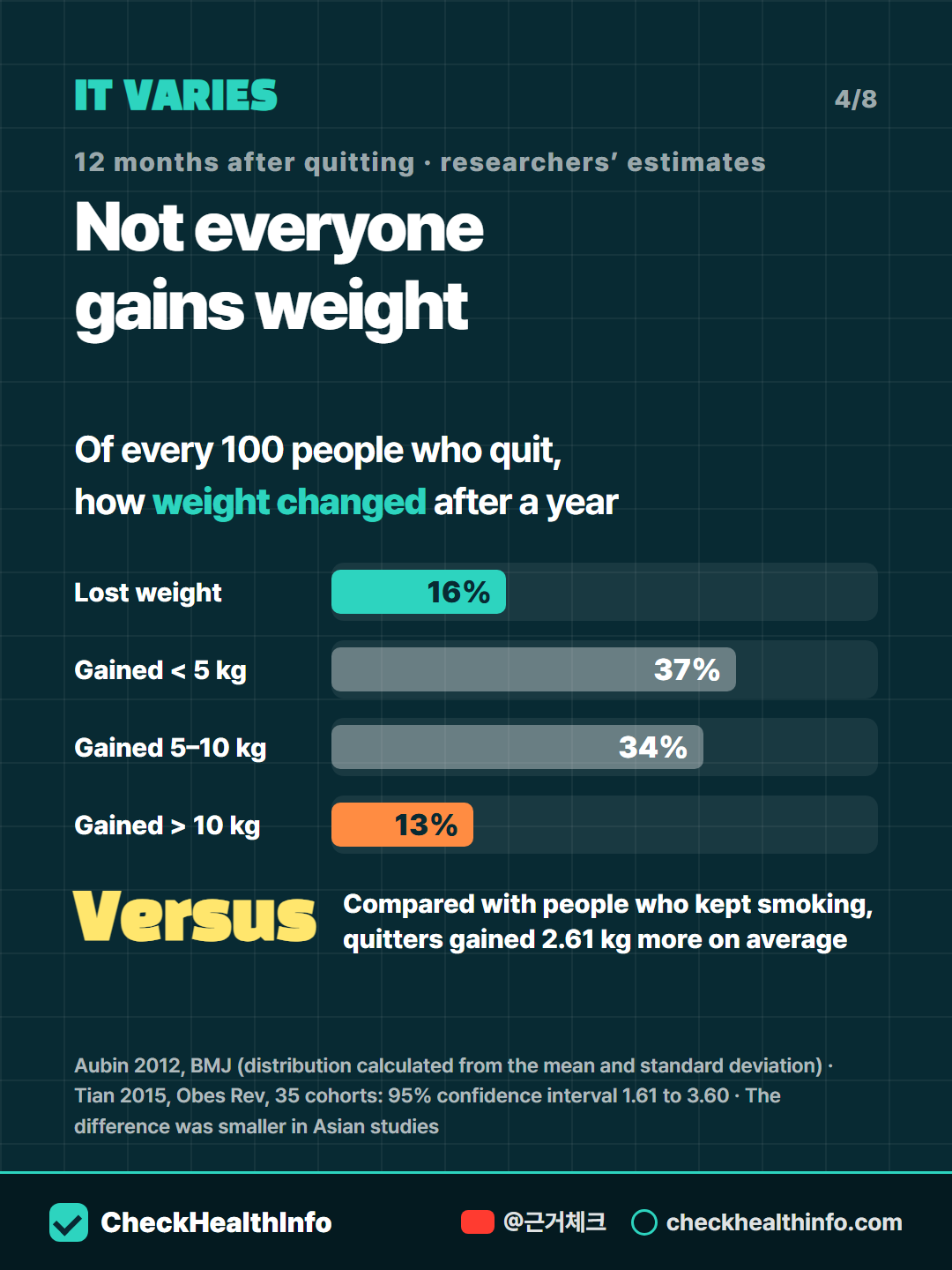
- Based on the same study’s calculations from the mean and standard deviation, an estimated 16% had lost weight 12 months after quitting, 37% had gained less than 5 kg, 34% had gained 5–10 kg and 13% had gained more than 10 kg. In plain words, the change varied widely, and about one or two in ten actually lost weight. The 4.67 kg figure is a before-and-after change in quitters only, so it does not subtract the weight that people who kept smoking may also have gained over the same period. [1]
- A meta-analysis of 35 prospective cohort studies (63,403 quitters and 388,432 people who kept smoking) found that quitters gained an average of 4.10 kg (95% confidence interval 2.69 to 5.51) and gained 2.61 kg more than people who kept smoking (95% confidence interval 1.61 to 3.60). The difference in weight gain was much larger in North American studies than in Asian studies, and larger in studies with longer follow-up. In plain words, the extra weight linked to quitting was about 2.6 kg on average. [2]
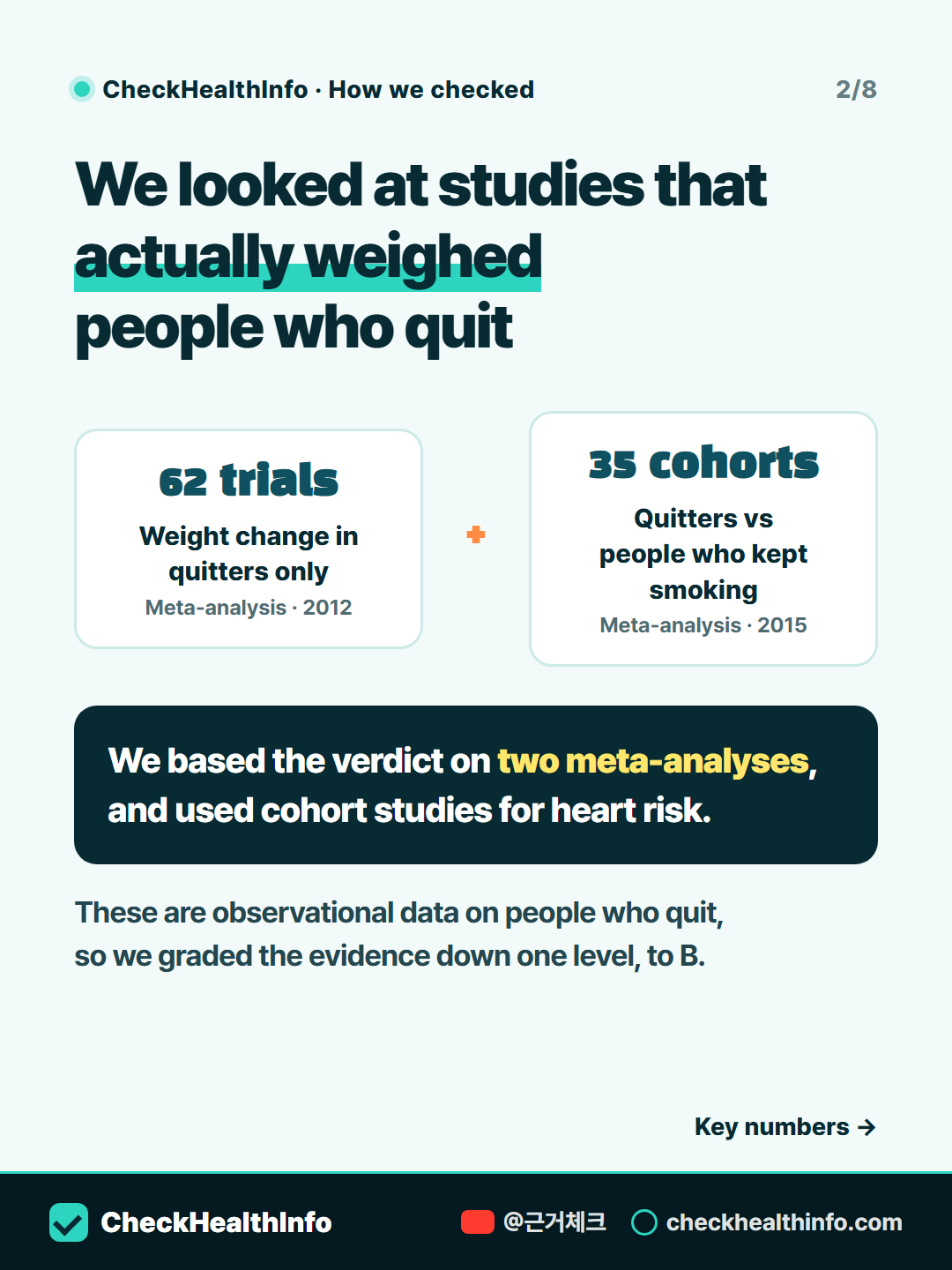
The highest level of evidence is meta-analyses (one pooling quitters from 62 cessation trials, one pooling 35 cohort studies), so we started at A. But weight change in quitters is not a randomized comparison; it comes from observing people who quit. So under reason (2) in section 1 of our rating method we graded down one level, to B. We did not grade down for indirectness (reason 1), because the studies weighed people directly after quitting, or for inconsistency (reason 3), because both meta-analyses agree that average weight goes up. On average weight goes up, but about 16% lost weight, so not everyone gains. That is why the rating is “Mostly true” rather than “True” (supported, but the population is narrower than claimed; section 2).
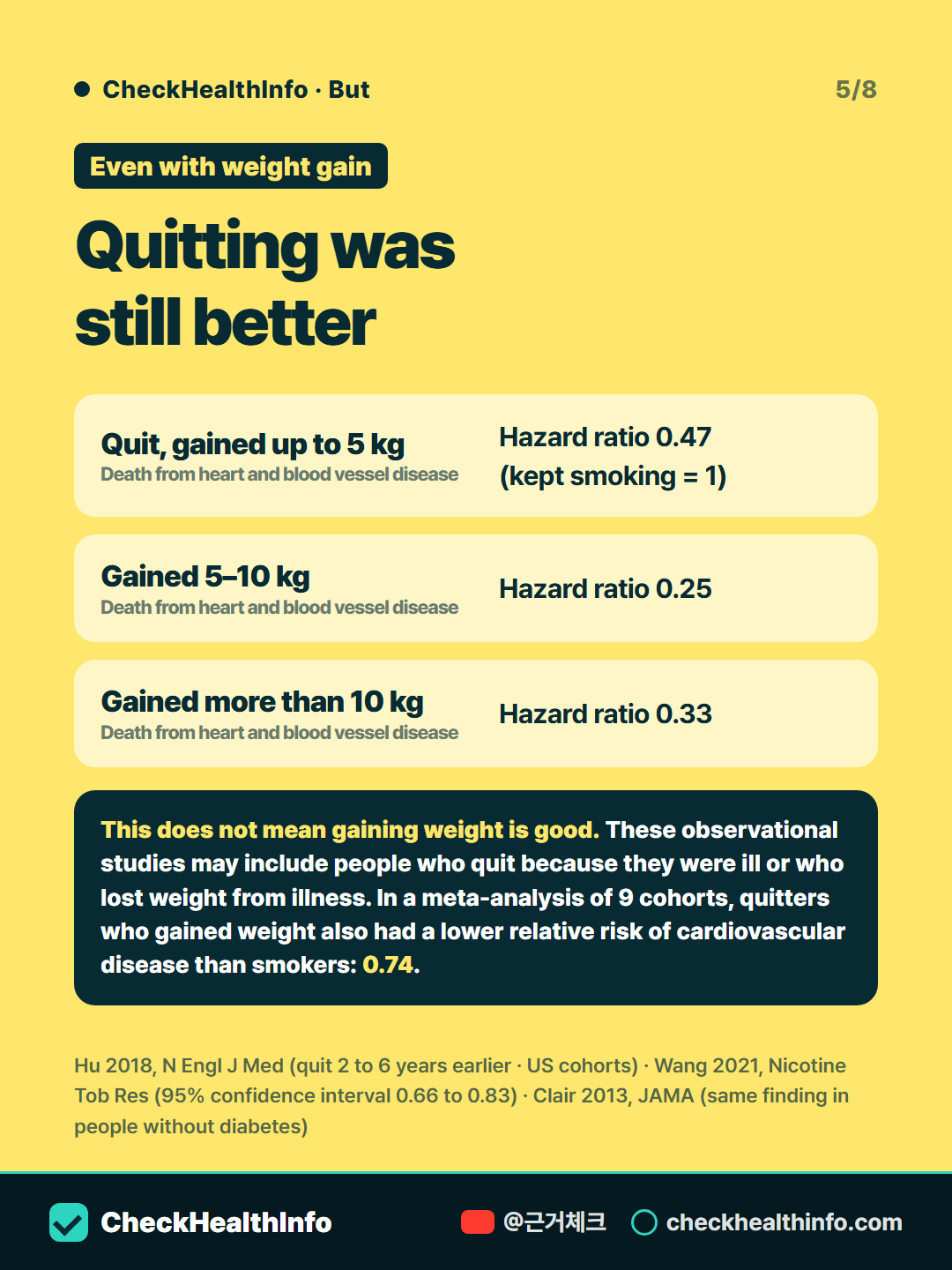
Death from cardiovascular disease — An analysis of three US cohorts found that people who had quit 2 to 6 years earlier had a lower risk of death from cardiovascular disease than people who kept smoking, even when they gained weight (hazard ratio 0.47 with a 0.1–5.0 kg gain, 0.25 with a 5.1–10.0 kg gain, and 0.33 with a gain of more than 10 kg [95% confidence interval 0.18 to 0.60]). For quitters who did not gain weight, it was 0.69. The risk looked even lower in quitters who gained weight than in those who did not. This may partly be because the group that did not gain weight included people who quit because they were ill or who lost weight because of illness (reverse causation), so it does not mean that gaining weight is good. These cohorts were made up of US health professionals, which limits how far the results apply to others. [3]
Cardiovascular disease — A meta-analysis of nine cohort studies also found that, compared with people who smoked, the relative risk of cardiovascular disease was 0.74 (95% confidence interval 0.66 to 0.83) in quitters who gained weight and 0.86 (0.80 to 0.92) in quitters who did not, so it was lower with or without weight gain. [4] The Framingham study likewise reported that, in people without diabetes, weight gain after quitting did not weaken the drop in cardiovascular disease risk (hazard ratio for recent quitters 0.47, 95% confidence interval 0.23 to 0.94; in people with diabetes the trend was similar but not statistically clear). [5]
In plain words, even with weight gain, the risk of heart and blood vessel disease was lower than in people who kept smoking.
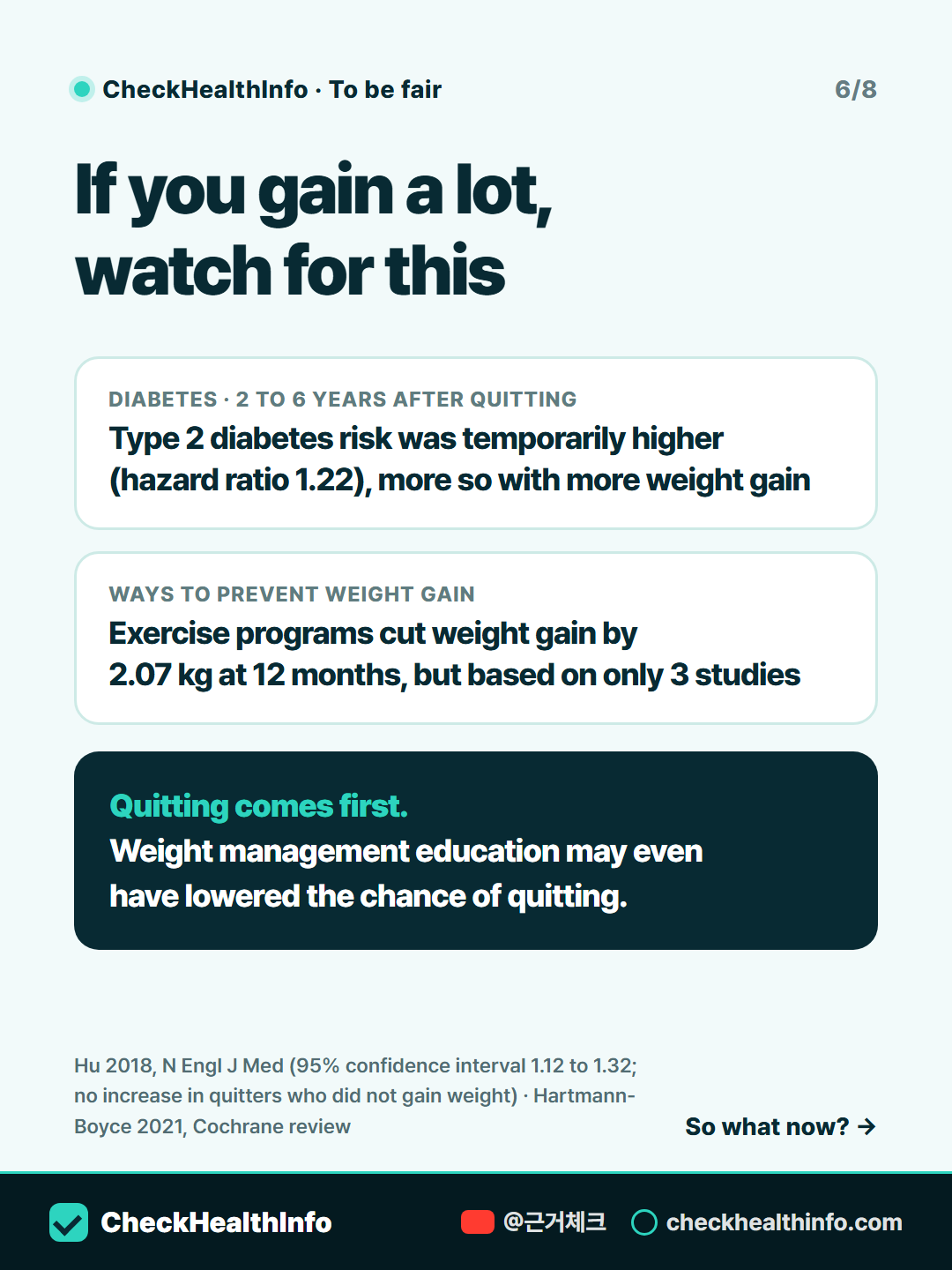
Diabetes — In the same US study, people who had quit 2 to 6 years earlier had a temporarily higher risk of type 2 diabetes (hazard ratio 1.22, 95% confidence interval 1.12 to 1.32), and the more weight they gained, the higher the risk. Quitters who did not gain weight did not have a higher risk of diabetes. [3]
Ways to prevent weight gain — In a Cochrane review, exercise programs reduced weight gain at 12 months by an average of 2.07 kg, but this came from only 3 studies (182 people), and the review concluded that no approach has yet been shown, with moderate or higher certainty, to prevent long-term weight gain. Weight management education may even have lowered the chance of quitting (low to very low certainty). That is why quitting comes first. [6]
Tips if you are quitting
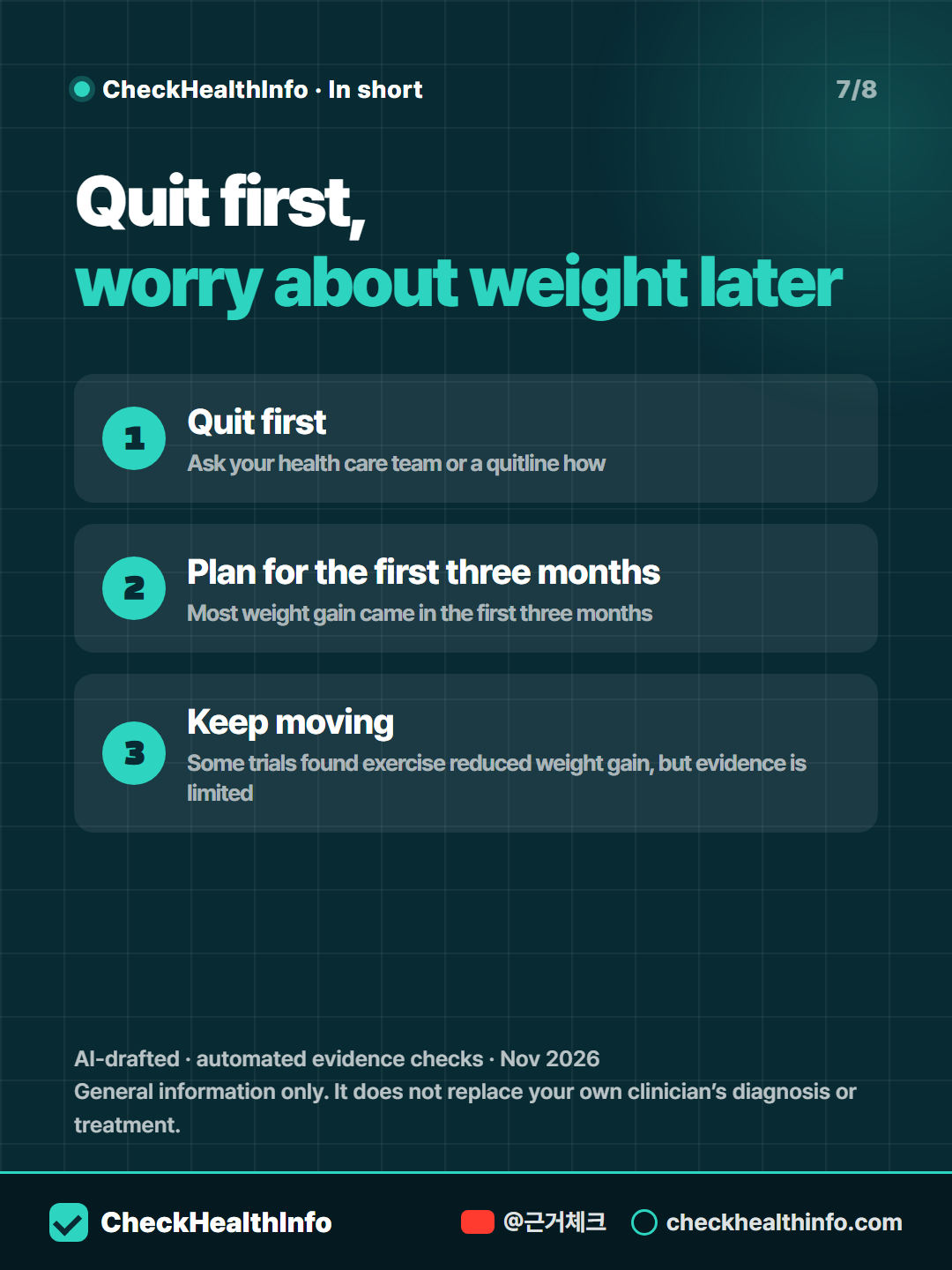
- Quit first — Don’t put off quitting because of weight worries. Talk with your health care team or a local stop-smoking program (such as a quitline) about ways to quit.
- Be ready for the first three months — In the studies, most weight gain happened in the first 3 months after quitting.
- Keep moving — Some trials found that exercise reduced weight gain, but the research is still limited. Stay active in a way that does not get in the way of quitting.
- If you are at risk of diabetes — In the studies, gaining a lot of weight after quitting was linked to a higher risk of diabetes for several years, so ask about checking your blood sugar at your regular checkups.
Scope: This verdict covers only weight change after adults quit smoking, and whether that weight gain reduces the cardiovascular and survival benefits of quitting. It does not cover medicines used to help people quit and their effect on weight, or e-cigarettes.
Limitations of this verdict
- All of this is observational data, so we cannot fully rule out factors other than quitting. The trial meta-analysis looked only at people who stayed quit, who may be a selected group.
- The 16% and 13% figures are not actual counts; they are estimates calculated from the mean and standard deviation.
- The size of the weight gain comes mostly from Western studies; in Asian studies, the difference between quitters and smokers was smaller.
- An erratum is linked in PubMed to the meta-analysis of 35 cohort studies (Tian 2015). It is not a retraction, and the numbers we cite match the current PubMed abstract, but we have not checked the erratum text.
- The grade follows section 1 of our rating method. We check new studies in our monthly PubMed review, and if the verdict changes, we record it in our corrections log.
Card news
Video (in Korean)
References
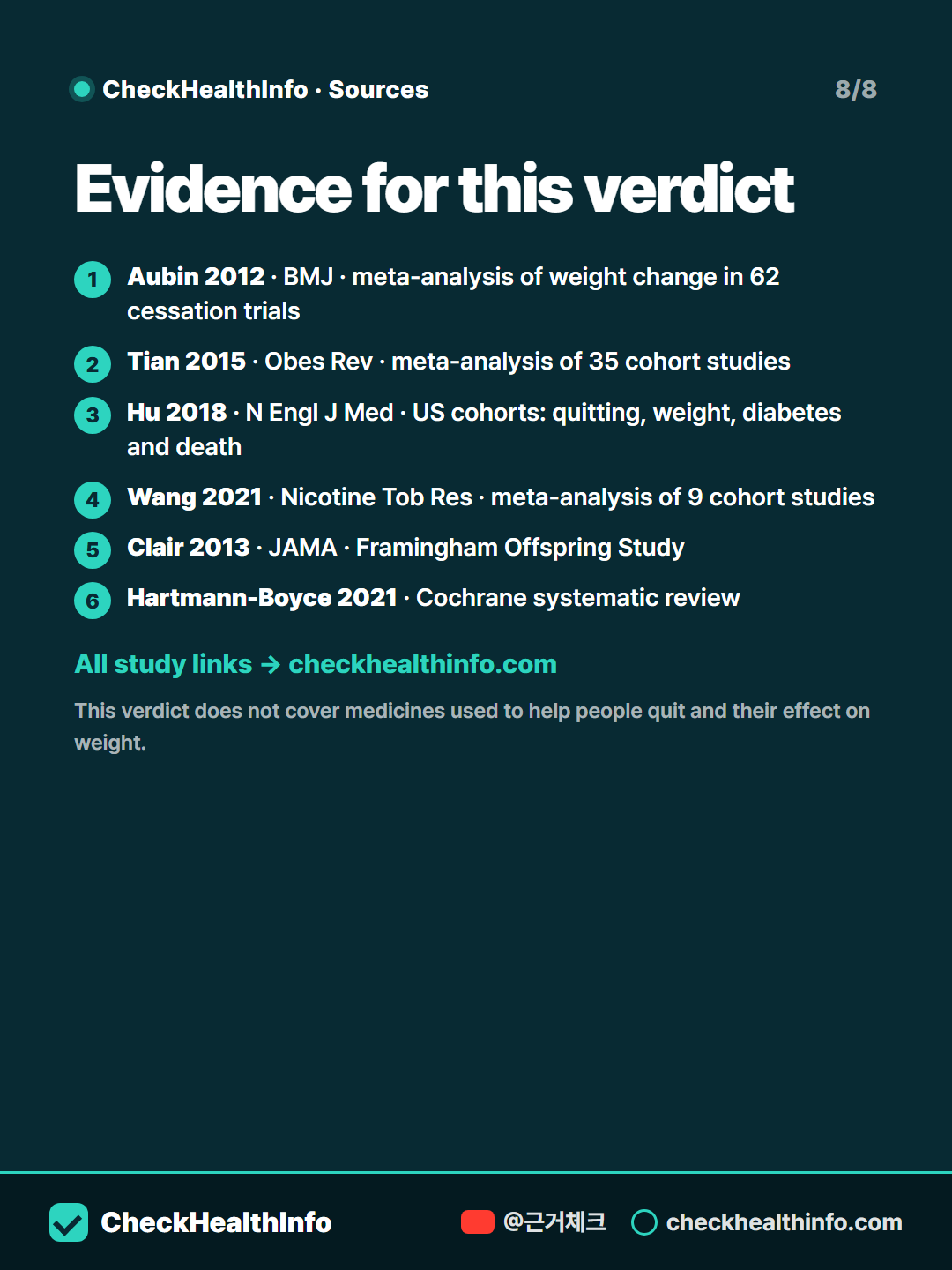
- Aubin HJ, Farley A, Lycett D, et al. Weight gain in smokers after quitting cigarettes: meta-analysis. BMJ 2012;345:e4439. PMID 22782848. PubMed abstract · Full article · Free full text
- Tian J, Venn A, Otahal P, et al. The association between quitting smoking and weight gain: a systematic review and meta-analysis of prospective cohort studies. Obes Rev 2015;16(10):883-901. PMID 26114839. PubMed abstract · Full article
- Hu Y, Zong G, Liu G, et al. Smoking Cessation, Weight Change, Type 2 Diabetes, and Mortality. N Engl J Med 2018;379(7):623-632. PMID 30110591. PubMed abstract · Full article · Free full text
- Wang X, Qin LQ, Arafa A, et al. Smoking Cessation, Weight Gain, Cardiovascular Risk, and All-Cause Mortality: A Meta-analysis. Nicotine Tob Res 2021;23(12):1987-1994. PMID 33876246. PubMed abstract · Full article
- Clair C, Rigotti NA, Porneala B, et al. Association of smoking cessation and weight change with cardiovascular disease among adults with and without diabetes. JAMA 2013;309(10):1014-21. PMID 23483176. PubMed abstract · Full article · Free full text
- Hartmann-Boyce J, Theodoulou A, Farley A, et al. Interventions for preventing weight gain after smoking cessation. Cochrane Database Syst Rev 2021;10(10):CD006219. PMID 34611902. PubMed abstract · Full article · Free full text
General information only, not medical advice. It does not replace your own clinician’s diagnosis or treatment. Ask your health care team or a stop-smoking program (such as a quitline) about ways to quit.