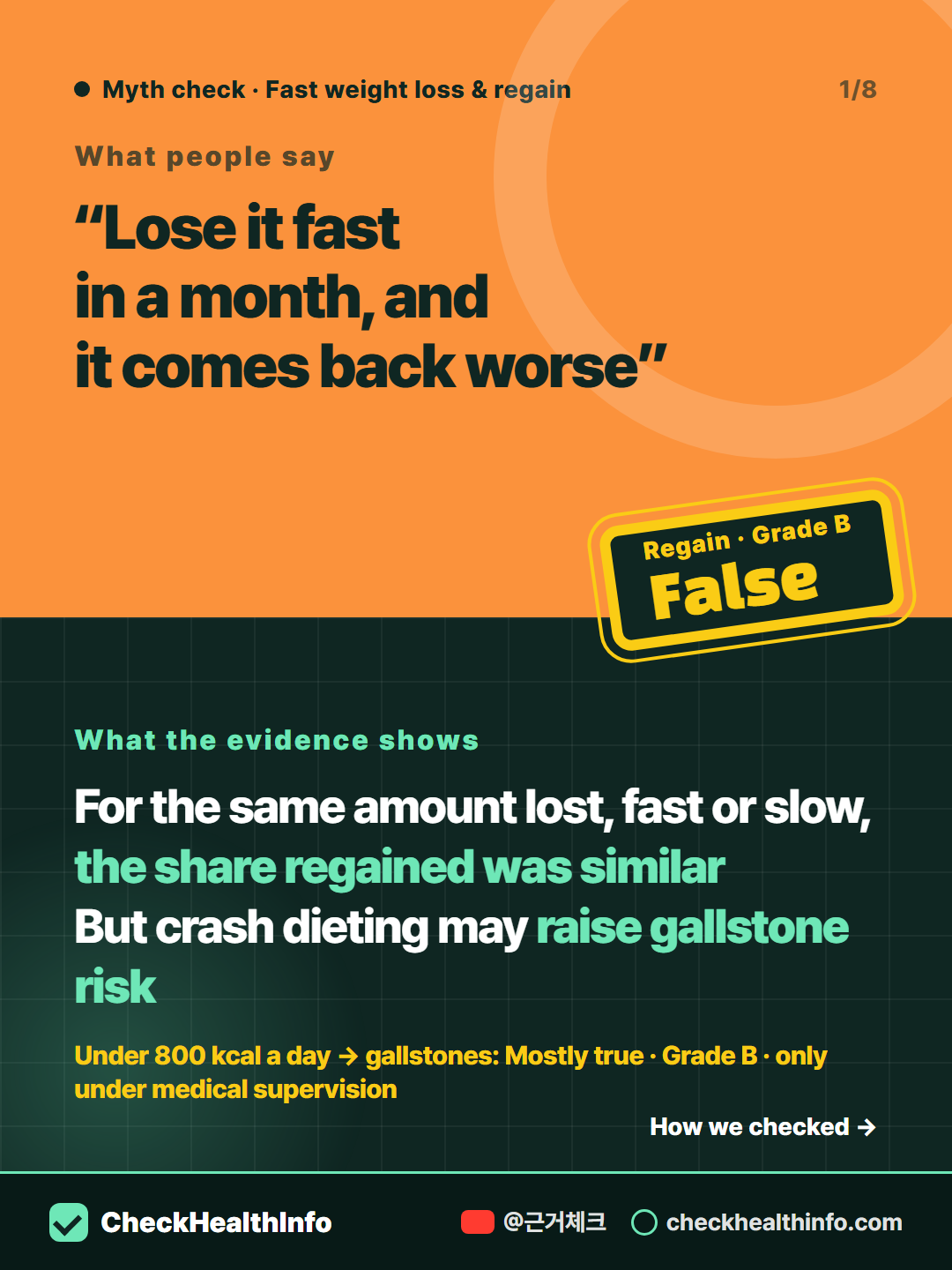
Lose weight fast in a month — will it come back worse?
Does losing weight quickly lead to more weight regain (the “yo-yo” effect) than losing it slowly? And does losing weight fast by eating next to nothing cause other health problems?

We checked this verdict against 13 sources, such as published studies and clinical guidelines. · How checked: AI-drafted · automated evidence checks
Verdicts at a glance
Bottom line — In randomized trials that had people lose the same target amount either quickly or slowly, the share of weight regained was almost the same (more than 70% in both groups). So the claim that “losing weight quickly leads to more weight regain than losing it slowly” is rated False. But at either pace most of the weight came back, so keeping it off after the diet matters more than how fast you lose it. Separately, the claim that “losing weight quickly on fewer than 800 kcal a day raises the risk of gallstones” is rated Mostly true. In a large Swedish comparison, gallstones needing hospital care were about three times as common, although few people were affected. Very-low-calorie diets should be followed only under medical supervision.
Weight regain (“yo-yo” effect) — Lost weight coming back. Here it is measured as the percentage of lost weight that was regained, or as kilograms regained.
Very-low-calorie diet — A diet providing fewer than 800 kcal a day. In the studies it was used as a set diet within a structured weight-loss program.
Lean mass (fat-free mass) — Body weight minus fat (muscle, bone, water, and so on). It is often used to track muscle changes.
Resting metabolic rate — The energy the body uses at rest.
Meta-analysis — An analysis that combines the results of several studies on the same question and recalculates the overall effect.
Hazard ratio — How many times higher or lower the risk is in one group than in another. A value of 1 means no difference; above 1 means higher risk.
95% confidence interval — The range within which the true result plausibly lies. If the range for a ratio includes 1, the difference is not considered statistically significant.
Number needed to harm — How many people would need to use an approach for one additional person to be harmed.
Why weight comes back, and the belief in losing it slowly
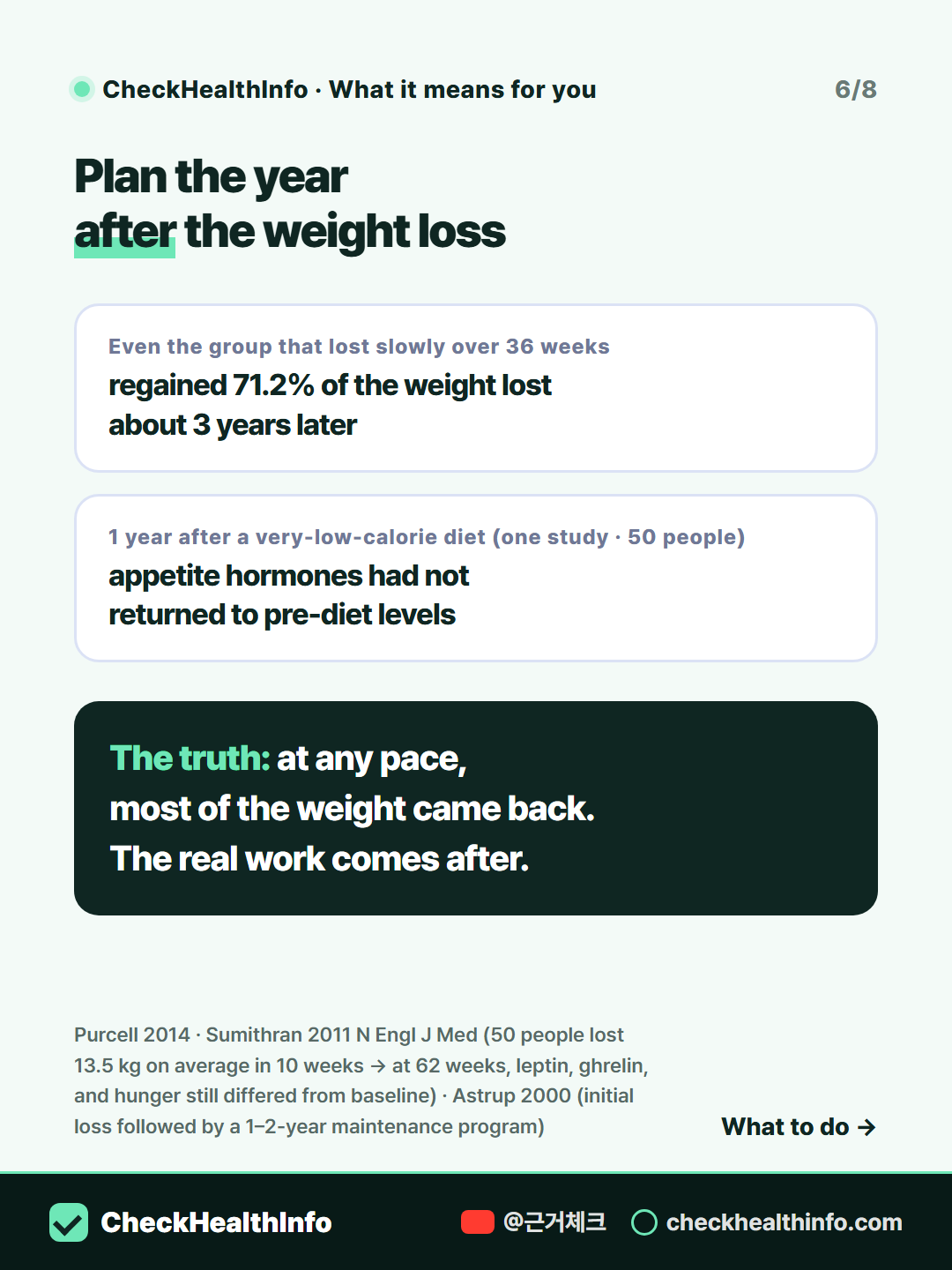
- In a study of 50 people with overweight or obesity who lost an average of 13.5 kg over 10 weeks on a very-low-calorie diet, fullness hormones (such as leptin) fell while the hunger hormone ghrelin and appetite rose. One year later (week 62), these hormones and hunger had still not returned to pre-diet levels. In short, in this study the body was still sending “eat more” signals a year after weight loss (a single study without a control group). [10]
- Current weight-loss guidelines recommend gradual weight loss, based on the belief that weight lost quickly comes back faster (as stated in the abstract of the Australian trial below). This verdict looks only at weight regain; it does not address other reasons, such as safety, that guidelines may have for recommending gradual loss. [1]
Claim 1. “Losing weight quickly over a short period leads to worse weight regain (the ‘yo-yo’ effect) than losing it slowly”
False · Evidence grade B
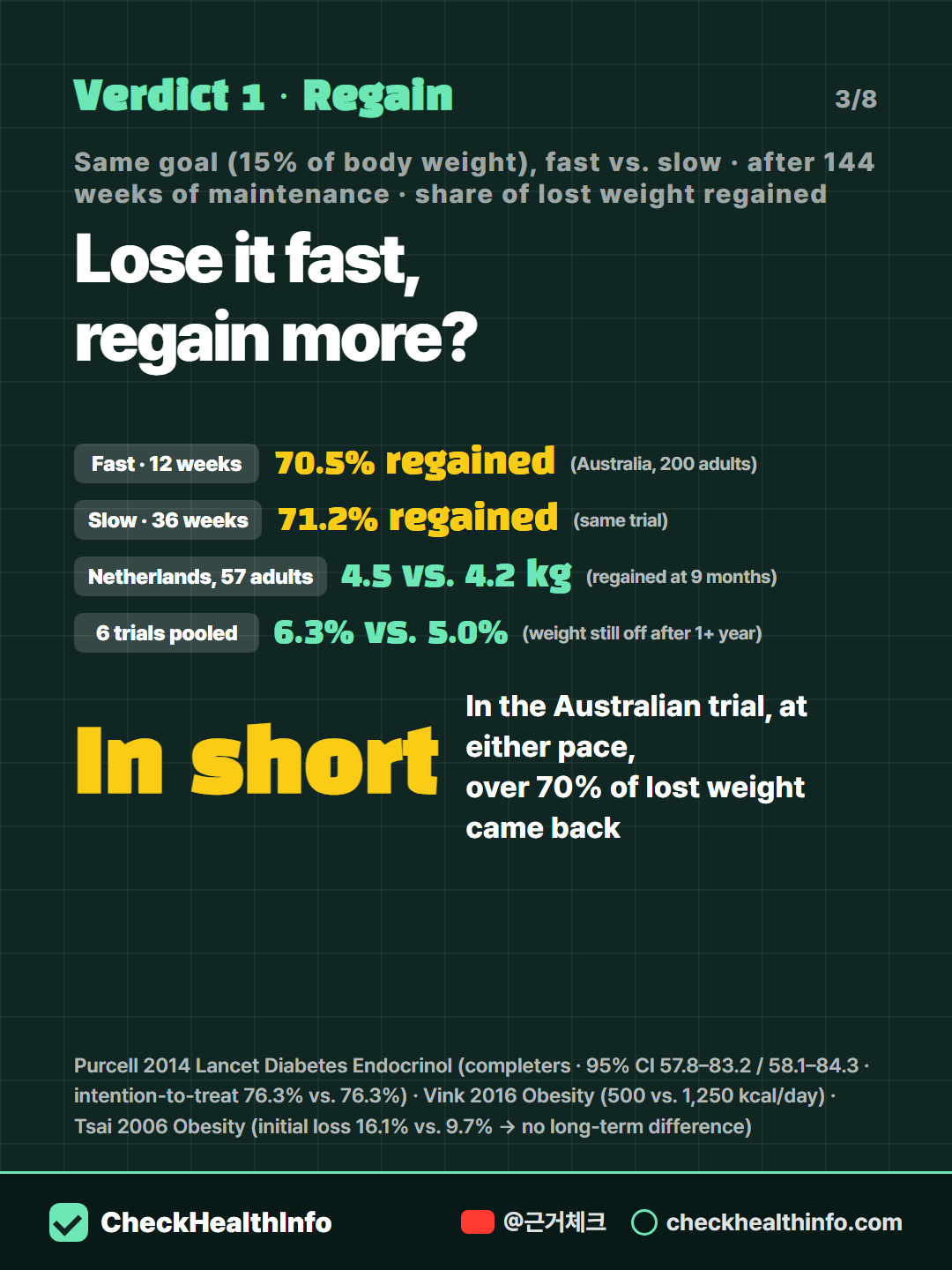
In short When people lost the same amount, those who lost it quickly did not regain more, and those who lost it slowly did not regain less. In both groups, more than 70% came back.
- Australian randomized trial (200 adults) — Adults with obesity aiming to lose 15% of their body weight were assigned to rapid loss over 12 weeks (97 people) or gradual loss over 36 weeks (103 people). Within the set time, 81% of the rapid group and 50% of the gradual group lost at least 12.5%. These participants then followed a weight-maintenance diet for 144 weeks. Among those who completed the study, the share of lost weight regained was 71.2% in the gradual group (95% confidence interval 58.1–84.3) and 70.5% in the rapid group (57.8–83.2). In an intention-to-treat analysis that also included dropouts among those who reached the target, both groups regained 76.3%. The researchers concluded that the rate of weight loss did not affect the proportion of weight regained within 144 weeks. [1]
- Dutch randomized trial (57 adults) — People who lost weight on 500 kcal a day for 5 weeks and those who ate 1,250 kcal a day for 12 weeks lost similar amounts (−9.0 kg and −8.2 kg). Nine months later, weight regained did not differ (4.5 kg and 4.2 kg). [2]
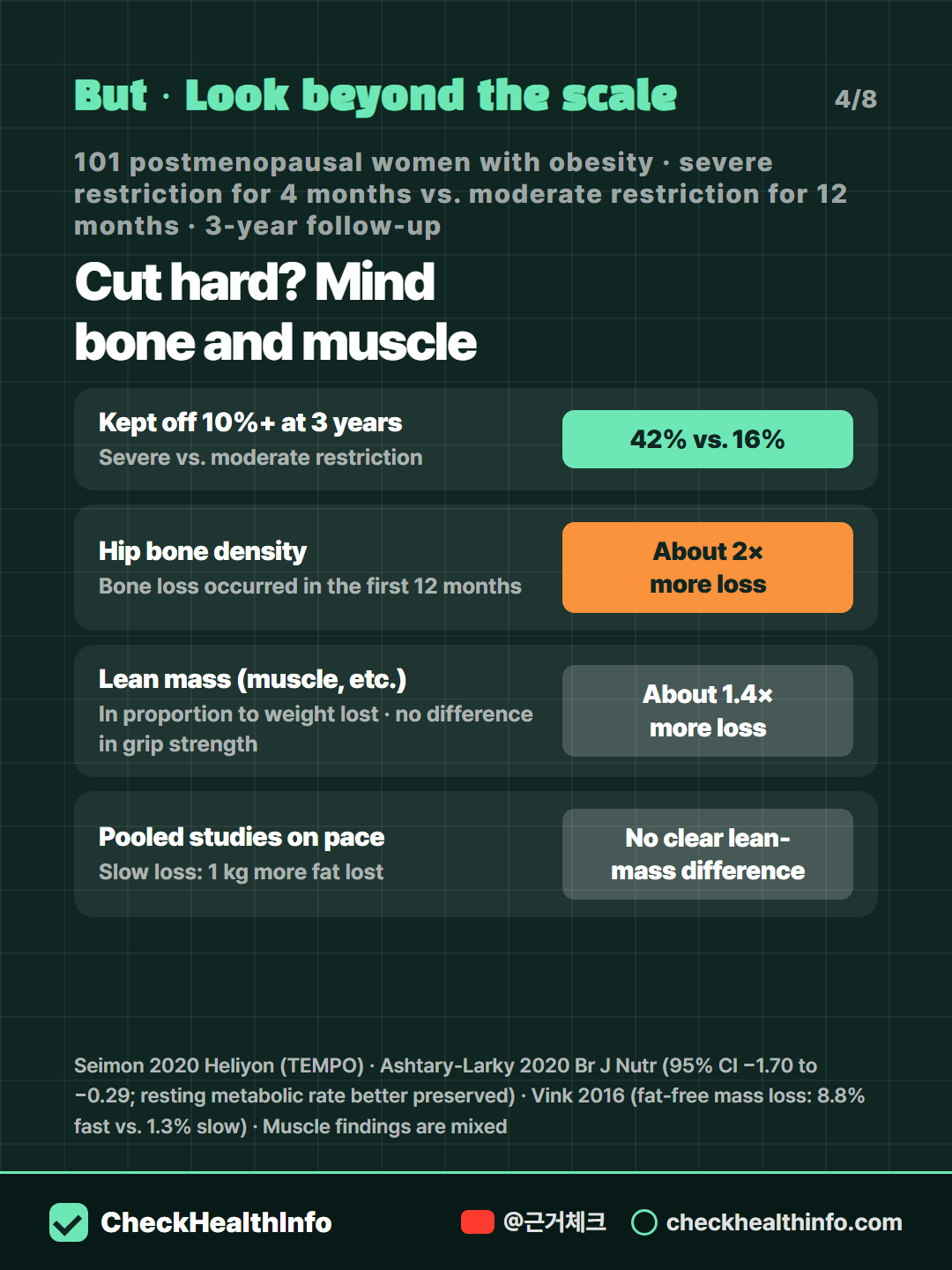
- Three-year trial in 101 postmenopausal women with obesity — The group that cut calories by 65–75% for the first 4 months using total meal replacements was more likely to have kept off at least 10% of their weight at 36 months than the group that cut calories by 25–35% for 12 months (42% vs. 16%). [4]
- First-month pace analysis — When U.S. women with obesity (average age 59.3 years) were grouped by how fast they lost weight in the first month, the fast losers had still lost more at 18 months (−10.9 kg vs. −3.7 kg in the slow group), and weight regained between months 6 and 18 did not differ between groups. Because this was an observational analysis that grouped trial participants after the fact, people who were naturally better at losing weight may simply have lost it faster. [5]
However, some results showed that people who lost more also regained more — this seems to reflect how much was lost, not how fast.
- In a meta-analysis of six randomized trials comparing very-low-calorie and low-calorie diets, initial weight loss was greater with the very-low-calorie diet (16.1% vs. 9.7%), but after more than a year the weight still kept off did not differ significantly (6.3% vs. 5.0%). In effect, the group that lost more also regained more and ended up in a similar place. [3]
- In the same three-year trial, the severe-restriction group lost about 1.4 times as much lean mass (in proportion to the extra weight lost; no difference in loss of grip strength) and about twice as much hip bone mineral density, with the bone loss occurring in the first 12 months. [4]
- Findings on muscle are mixed. In the 500 kcal group, the percentage of fat-free mass lost was 8.8%, higher than in the slow group (1.3%), and people who lost more fat-free mass tended to regain more weight (a modest association). [2] A small comparison study also found greater loss of skeletal muscle with rapid weight loss. [9] However, a meta-analysis of studies comparing weight-loss rates found no clear difference in fat-free mass; gradual loss instead led to about 1 kg more fat loss (95% confidence interval −1.70 to −0.29) and better preserved resting metabolic rate. [6] A review also suggested that differences in fat-free mass and resting metabolic rate during rapid loss shrink after 2–4 weeks of stability at the new weight. [7] [8]
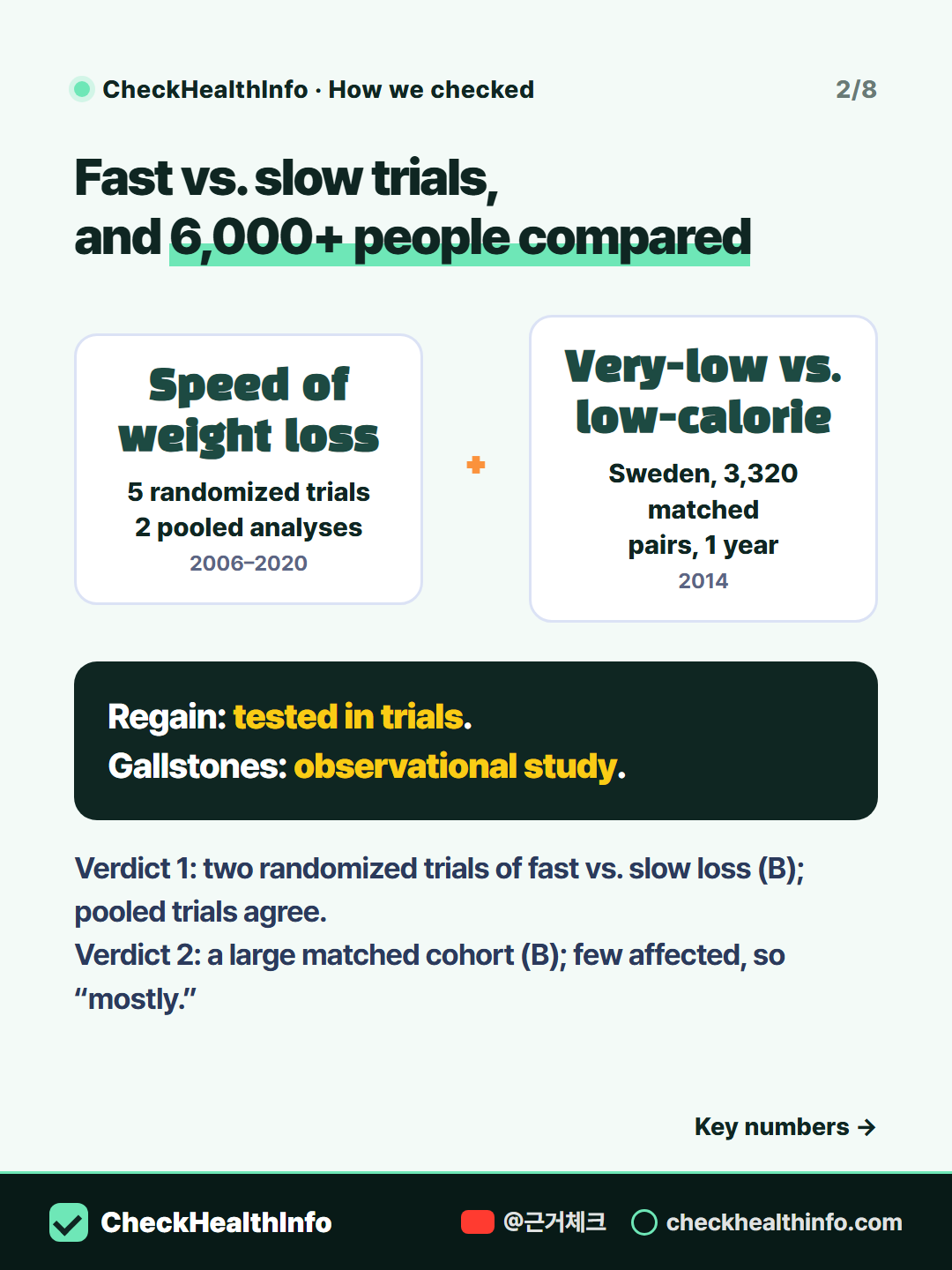
Evidence grade: The most direct evidence is two randomized trials (B) that assigned people to lose the same target amount quickly or slowly; neither found a difference in regain. A meta-analysis comparing very-low- and low-calorie diets pointed the same way, but it compared calorie levels rather than speed and looked only at weight still lost, so it is indirect and did not raise the grade. Label: False — reliable trials found no difference in regain, which contradicts the claim. This does not mean that losing weight quickly is fine.
Claim 2. “Losing weight quickly on fewer than 800 kcal a day raises the risk of gallstones needing hospital care compared with losing weight on 1,200–1,500 kcal a day”
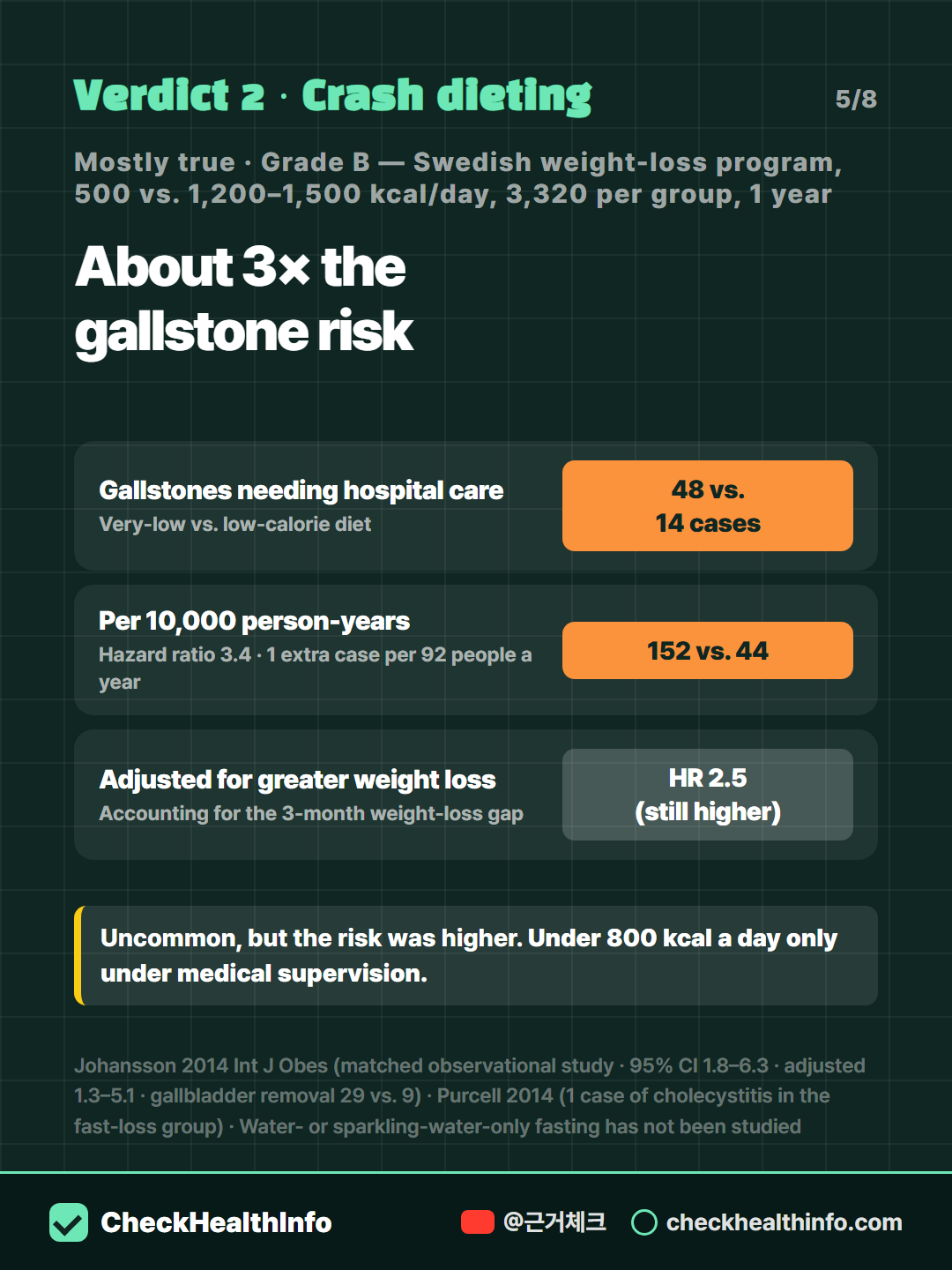
Mostly true · Evidence grade B
In short Among people who ate very little (500 kcal a day) to lose weight, gallstones needing hospital care were about three times as common. Still, few people were affected, and part of the difference came from losing more weight.
- 28 weight-loss centers in Sweden — People who lost weight for three months on 500 kcal a day were matched with people on 1,200–1,500 kcal a day by age, sex, body mass index, waist circumference, and gallstone history (3,320 in each group) and compared for one year. Weight loss at one year was greater with the very-low-calorie diet (−11.1 kg vs. −8.1 kg). Gallstones needing hospital care occurred in 48 vs. 14 people — 152 vs. 44 per 10,000 person-years (hazard ratio 3.4, 95% confidence interval 1.8–6.3). That works out to one extra case for every 92 people who used the very-low-calorie diet over one year. Gallbladder removal for gallstones was also more common (29 vs. 9; hazard ratio 3.2). [13]
- Australian randomized trial — One person in the 12-week rapid-loss group developed gallbladder inflammation (cholecystitis) during weight loss and needed gallbladder removal (a single case). [1]
However, after adjusting for the difference in weight lost over three months, the hazard ratio for gallstones fell to 2.5 (95% confidence interval 1.3–5.1), and the result for gallbladder removal became borderline (hazard ratio 2.2, 95% confidence interval 0.9–5.2, which includes 1). Losing more weight explained part of the risk, but not all of it. Because this was an observational study, the groups may still have differed in ways that matching did not capture. [13]
Evidence grade: The most direct evidence is a large matched cohort (B), and the confidence interval is well above 1, so the grade was not lowered. Label: Mostly true — the relative risk was about three times higher, but the absolute risk was low, the evidence rests essentially on one cohort, and it does not directly address water- or sparkling-water-only fasting, so the scope and size are narrower than the claim.
Two common misunderstandings
- “If you lose weight slowly, it won’t come back” — Not so. Even the group that lost weight slowly over 36 weeks regained 71.2% of the weight lost. [1]
- “Since it all evens out, you might as well starve to lose it fast” — Also not so. Rapid weight loss in the studies happened within set diets and structured programs; no study tested drinking only water or sparkling water. Even within those programs, costs such as gallstones and bone loss appeared. [4] [13] A review suggesting that a larger initial weight loss may help long-term maintenance assumed it would be followed by a 1–2-year maintenance program (dietary change, nutrition education, behavior therapy, and physical activity). [11]
What it means for you
- In the Australian trial, the goal was to lose 15% of body weight, and within about three years more than 70% of the lost weight had come back. In short, whether it takes three months or nine months to lose the weight, what happens afterward is what counts. In our view, when planning a diet, it helps to write down how you will spend the year after the weight loss before deciding how fast to lose it. [1]
- In a small study of women with overweight or obesity (18 re-measured after one year), those whose moderate-to-vigorous physical activity increased during the year after weight loss tended to regain less weight (an association). The benefit isn’t certain, but because it is low-risk, it is worth a try. [12]
What you can do starting today
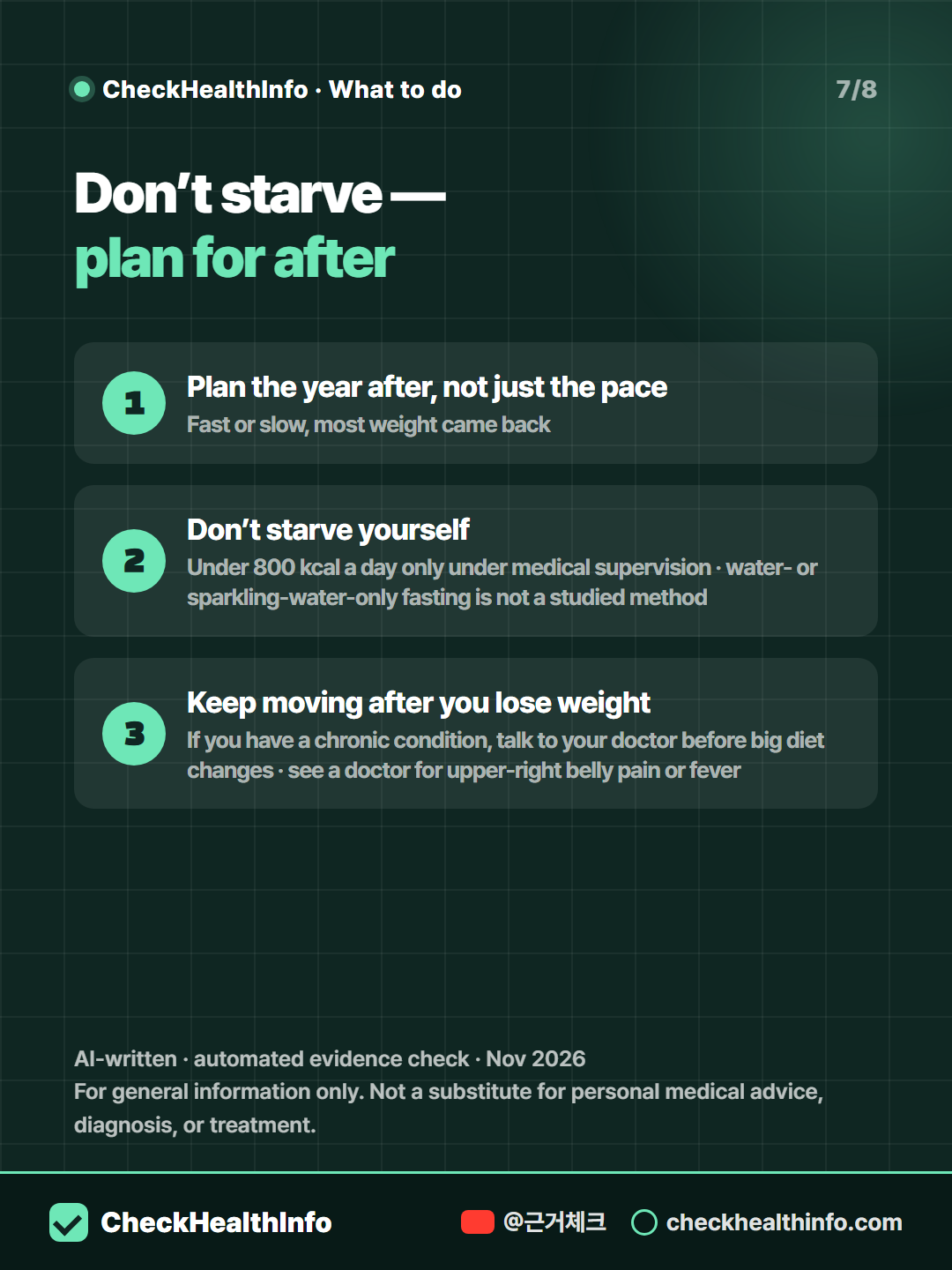
- Plan for the year after, not just the pace — Fast or slow, most of the weight came back. [1]
- Don’t starve yourself — Follow a very-low-calorie diet (fewer than 800 kcal a day) only under medical supervision. Getting by on water or sparkling water alone is not a method that has been studied. [13]
- Keep moving after you lose weight — If you have a chronic condition or take medicines, talk to your doctor before making big changes to your diet. See a doctor if you have pain in the upper right abdomen, fever, or yellowing of the eyes. [12]
Scope: This verdict covers the speed of weight loss and weight regain, and very-low-calorie weight loss and gallstones. It does not cover medicines or treatment and is not a personal diet prescription.
Limitations of this verdict
- Rapid weight loss in the trials took place within set diets and structured programs. No study examined drinking only water or sparkling water. [1] [13]
- In the Australian trial, regain was compared only among people who lost at least 12.5%, and because the share reaching that goal differed (81% vs. 50%), the two groups may have differed in makeup. [1]
- The meta-analysis of very-low- vs. low-calorie diets dates from 2006 and includes only six trials. [3] The bone-loss finding comes from a single trial in postmenopausal women. [4] Findings on muscle vary between studies. [2] [6]
- The gallstone evidence rests essentially on one observational Swedish cohort followed for one year. Participants chose their program themselves (per the full text), and the very-low-calorie diet in the study was a low-fat formula diet. [13]
- Grades follow section 1 of our evidence criteria. We check PubMed monthly for new studies, and any change in a verdict is recorded in our corrections log.
Card news
Video (in Korean)
References
- Purcell K, Sumithran P, Prendergast LA, et al. The effect of rate of weight loss on long-term weight management: a randomised controlled trial. Lancet Diabetes Endocrinol 2014;2(12):954-62. PMID 25459211. PubMed abstract · Full article
- Vink RG, Roumans NJ, Arkenbosch LA, et al. The effect of rate of weight loss on long-term weight regain in adults with overweight and obesity. Obesity (Silver Spring) 2016;24(2):321-7. PMID 26813524. PubMed abstract · Full article
- Tsai AG, Wadden TA. The evolution of very-low-calorie diets: an update and meta-analysis. Obesity (Silver Spring) 2006;14(8):1283-93. PMID 16988070. PubMed abstract · Full article
- Seimon RV, Wild-Taylor AL, McClintock S, et al. 3-Year effect of weight loss via severe versus moderate energy restriction on body composition among postmenopausal women with obesity - the TEMPO Diet Trial. Heliyon 2020;6(6):e04007. PMID 32613096. PubMed abstract · Full article · Free full text
- Nackers LM, Ross KM, Perri MG. The association between rate of initial weight loss and long-term success in obesity treatment: does slow and steady win the race?. Int J Behav Med 2010;17(3):161-7. PMID 20443094. PubMed abstract · Full article · Free full text
- Ashtary-Larky D, Bagheri R, Abbasnezhad A, et al. Effects of gradual weight loss v. rapid weight loss on body composition and RMR: a systematic review and meta-analysis. Br J Nutr 2020;124(11):1121-1132. PMID 32576318. PubMed abstract · Full article
- Fogarasi A, Gonzalez K, Dalamaga M, et al. The Impact of the Rate of Weight Loss on Body Composition and Metabolism. Curr Obes Rep 2022;11(2):33-44. PMID 35133628. PubMed abstract · Full article
- Coutinho SR, With E, Rehfeld JF, et al. The impact of rate of weight loss on body composition and compensatory mechanisms during weight reduction: A randomized control trial. Clin Nutr 2018;37(4):1154-1162. PMID 28479016. PubMed abstract · Full article
- Bagheri R, Ashtary-Larky D, Elliott BT, et al. The effects of gradual vs. rapid weight loss on serum concentrations of myokines and body composition in overweight and obese females. Arch Physiol Biochem 2023;129(3):821-828. PMID 33502906. PubMed abstract · Full article
- Sumithran P, Prendergast LA, Delbridge E, et al. Long-term persistence of hormonal adaptations to weight loss. N Engl J Med 2011;365(17):1597-604. PMID 22029981. PubMed abstract · Full article
- Astrup A, Rössner S. Lessons from obesity management programmes: greater initial weight loss improves long-term maintenance. Obes Rev 2000;1(1):17-9. PMID 12119640. PubMed abstract · Full article
- Casanova N, Beaulieu K, Oustric P, et al. Increases in physical activity are associated with a faster rate of weight loss during dietary energy restriction in women with overweight and obesity. Br J Nutr 2023;129(8):1451-1461. PMID 35249565. PubMed abstract · Full article
- Johansson K, Sundström J, Marcus C, et al. Risk of symptomatic gallstones and cholecystectomy after a very-low-calorie diet or low-calorie diet in a commercial weight loss program: 1-year matched cohort study. Int J Obes (Lond) 2014;38(2):279-84. PMID 23736359. PubMed abstract · Full article · Free full text
General information only, not medical advice. It does not replace your own clinician’s diagnosis or treatment. Follow a very-low-calorie diet (under 800 kcal a day) only under medical supervision. If you have a chronic condition or have had gallstones or gallbladder disease, talk with your doctor before making big changes to your diet, and see a doctor if you have pain in the upper right abdomen, fever or yellowing of the eyes.