Can reading newspapers and books regularly lower your risk of dementia?
Do older adults who often do mentally active things, such as reading newspapers and books, really have a lower risk of dementia? And does reading itself lower that risk?

We checked this verdict against 9 sources, such as published studies and clinical guidelines. · How checked: AI-drafted · automated evidence checks
Verdicts at a glance
| Claim | Verdict |
|---|---|
| Older adults who often do cognitive activities such as reading newspapers and books have a lower dementia risk | Mostly true · Evidence grade B |
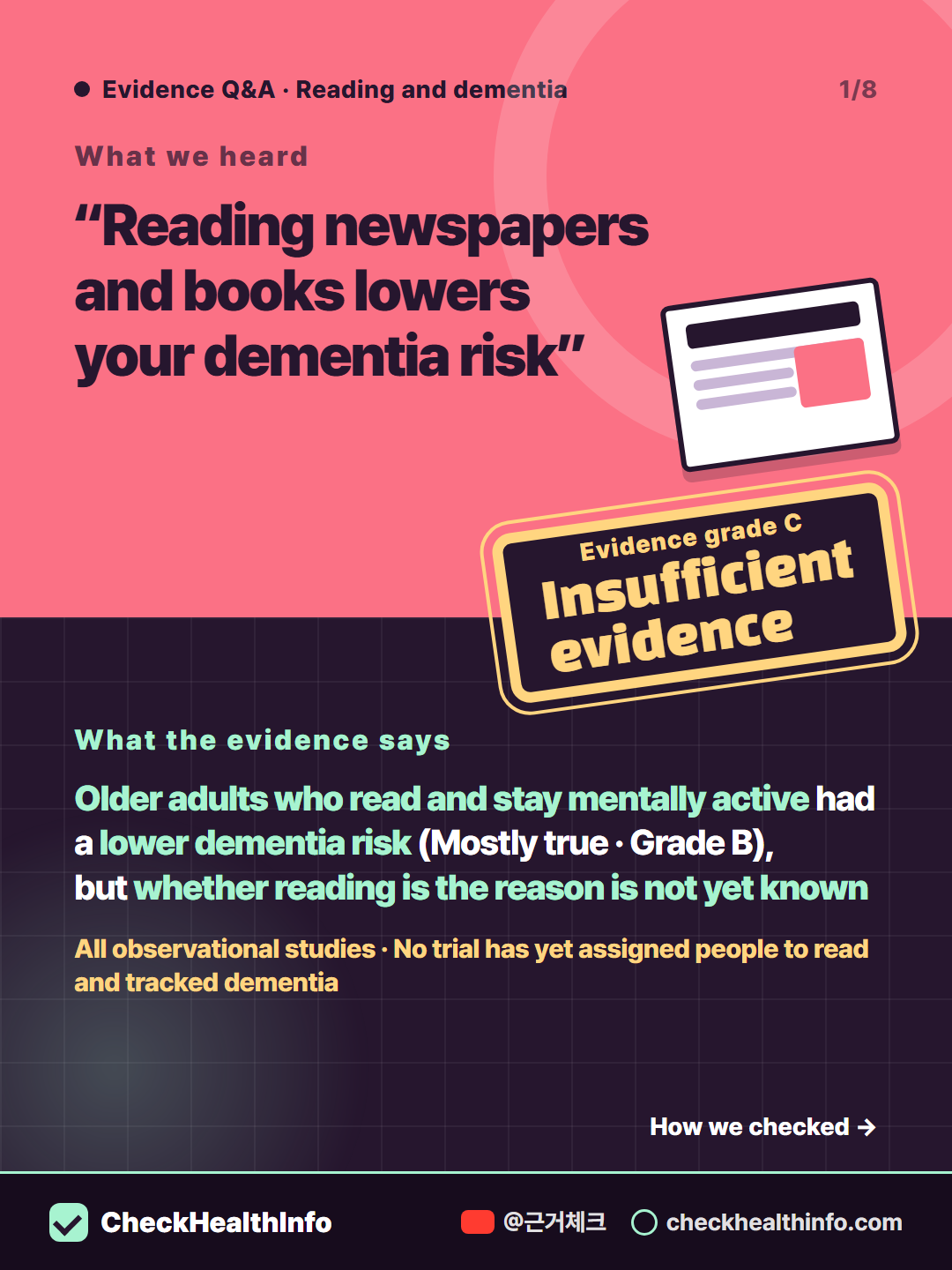
| Reading newspapers and books regularly lowers dementia risk | Insufficient evidence · Evidence grade C |
Bottom line — Observational studies in several countries have repeatedly found that older adults who read books or newspapers and do other mentally active things have a lower risk of dementia. So “older adults who often do cognitive activities such as reading newspapers and books have a lower dementia risk” is rated Mostly true (Evidence grade B). But “reading newspapers and books lowers dementia risk” is rated Insufficient evidence (Evidence grade C): no trial has yet assigned people to read and then tracked who developed dementia, and in the study with the longest follow-up the link faded over time, which suggests that dementia, developing slowly, may cut back reading first. The takeaway: we can’t yet say that reading prevents dementia, but it is an enjoyable habit with almost no downside, so even without proof it is worth a try.
Observational study (cohort study) — A study that records how people already live and then checks years later who developed a disease. It shows that two things go together, but it cannot establish which one causes the other.
Reverse causation — When cause and effect run the other way. Here, instead of “reading lowers dementia risk,” it may be that “dementia, developing slowly, makes people read less.”
Relative risk · hazard ratio — The risk of disease in one group divided by the risk in the comparison group. A value below 1 means that group’s risk is lower.
Odds ratio — Read much like a relative risk, but when the disease is common it can make the difference look somewhat larger than it really is.
95% confidence interval — The range that likely contains the true value. If it includes 1, there may be no real difference.
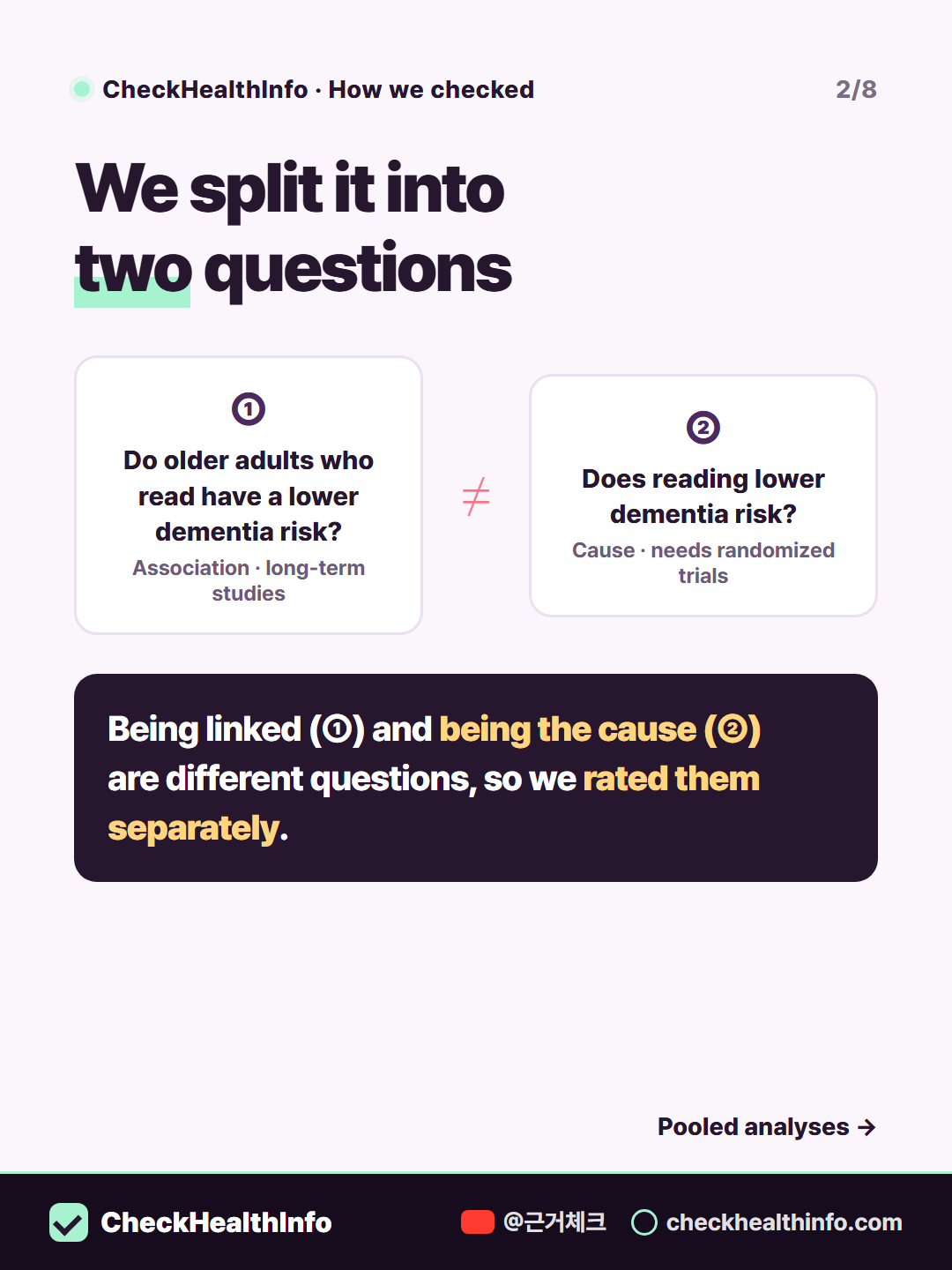
A recent news story covered a Japanese study suggesting that reading the newspaper aloud and summarizing the main points may help older adults maintain their memory. We split the question of whether reading newspapers and books really lowers dementia risk into two parts and checked each.
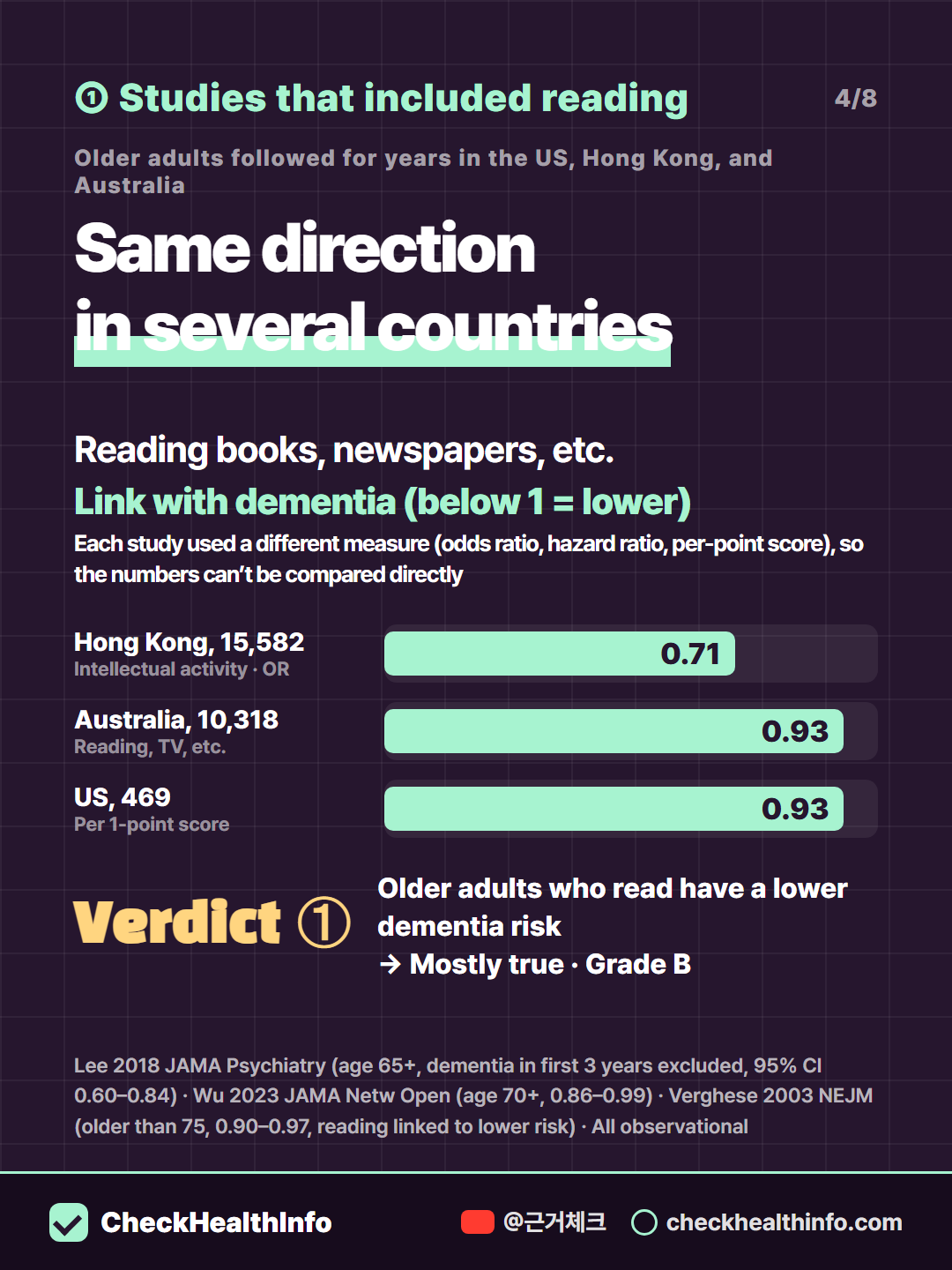
Verdict 1. “Older adults who often do cognitive activities such as reading newspapers and books have a lower dementia risk”
Mostly true · Evidence grade B
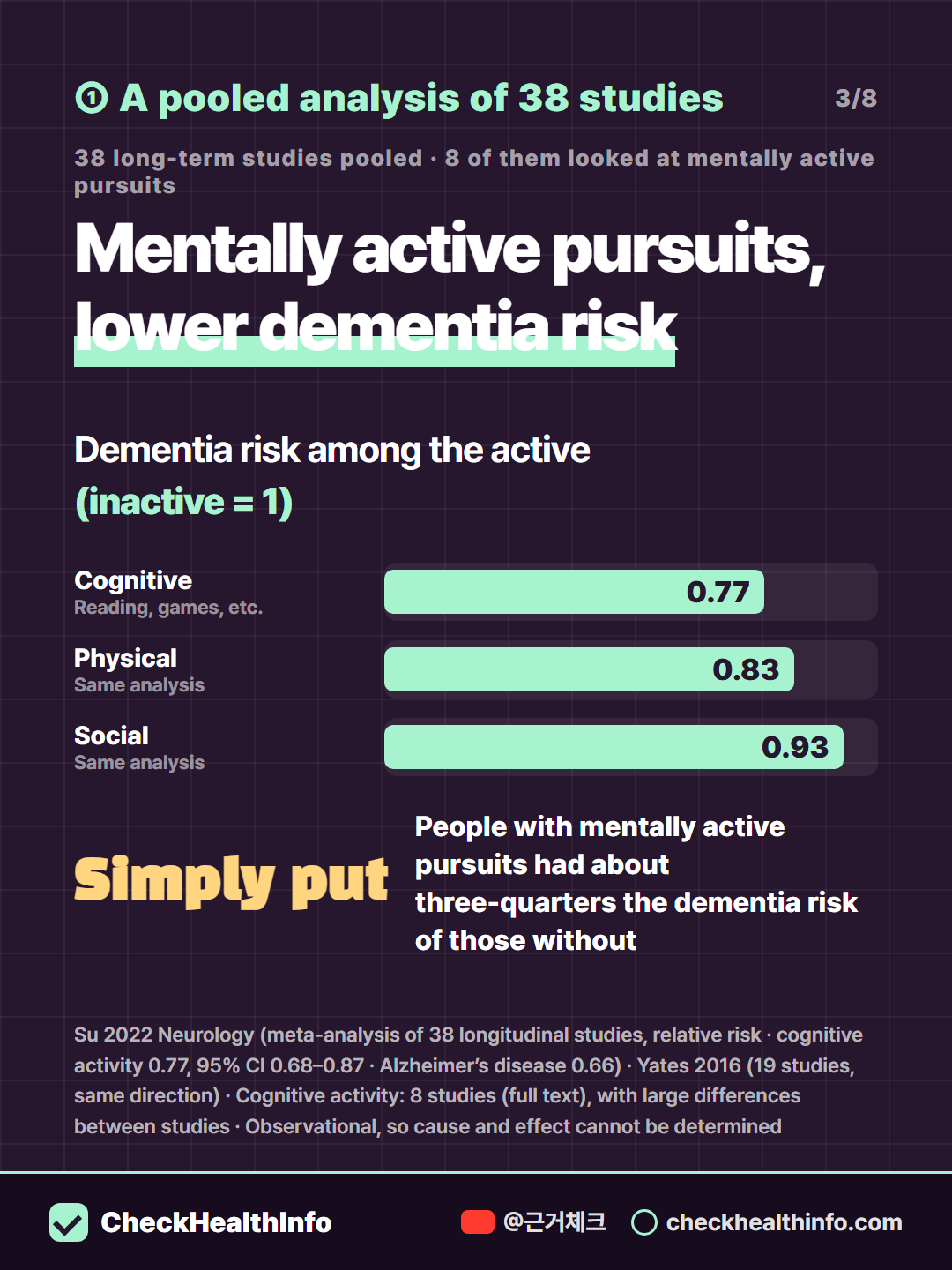
Simply put Across many studies, older adults who read and keep their minds active had a lower dementia risk. But this means the two go together, not that reading is the reason.
- In a meta-analysis pooling 38 long-term studies, the relative risk of dementia (all causes) among people who did cognitive activities was 0.77 (95% confidence interval 0.68–0.87), and for Alzheimer’s disease it was 0.66 (0.52–0.85). Simply put, people with mentally active pursuits had about three-quarters the dementia risk of those without (per the full text, this figure comes from the 8 of the 38 studies that looked at cognitive activity; results varied widely between studies, and reading was not analyzed on its own). In the same analysis, physical activity (0.83) and social activity (0.93) were also linked to lower dementia risk. [1]
- Another meta-analysis of 19 observational studies also found that taking part in cognitive leisure activities was linked to a lower dementia risk (hazard ratio 0.58, 95% confidence interval 0.46–0.74, among other estimates). The two meta-analyses partly overlap in the studies they included. [2]
- In a US study that followed 469 adults older than 75 for a median of 5.1 years, reading, board games, playing a musical instrument, and dancing were linked to a lower dementia risk, and each 1-point increase in the cognitive-activity score came with a dementia hazard ratio of 0.93 (0.90–0.97). The link remained after excluding people who might already have had early dementia. [3]
- In a Hong Kong study of 15,582 adults aged 65 or older, the odds ratio for dementia among people who did intellectual activities such as reading books, newspapers, or magazines and playing board games or mahjong was 0.71 (0.60–0.84). This was after excluding people who developed dementia within the first 3 years and adjusting for exercise, diet, smoking, illnesses, depression, and other factors. [4]
- In an Australian study of 10,318 adults aged 70 or older, adult literacy activities such as writing, using a computer, and taking classes (hazard ratio 0.89) and passive mental activities, which grouped reading books and newspapers with watching TV and listening to music (0.93), were linked to lower dementia risk. [5]
- In a Taiwanese study that followed 1,962 adults aged 64 or older for 14 years, people who read at least once a week had less cognitive decline — a drop in cognitive test scores, not dementia (odds ratio at 14 years 0.54, 0.34–0.86). [6]
Grade: The strongest evidence comes from meta-analyses, which start at A on our scale; we moved down one level to B because they pool observational studies rather than randomized trials. We did not lower it further because studies from several countries pointed in the same direction and the confidence intervals stayed below 1 (although results varied widely between studies and there were signs of publication bias, so this was a borderline call). It is “Mostly true” rather than “True” because, although the link keeps showing up, these studies cannot tell whether reading is the reason (other differences such as education and health, or reverse causation), and with very long follow-up the link weakened substantially (see Verdict 2).
Evidence grades run in four levels, from A (high) to D (very low). Pooled observational studies are moved down one level to B. See our rating method for details.
Verdict 2. “Reading newspapers and books regularly lowers dementia risk”
Insufficient evidence · Evidence grade C
Simply put It has not yet been shown that reading prevents dementia. This does not mean the claim is wrong; it means the studies needed to confirm it have not been done.
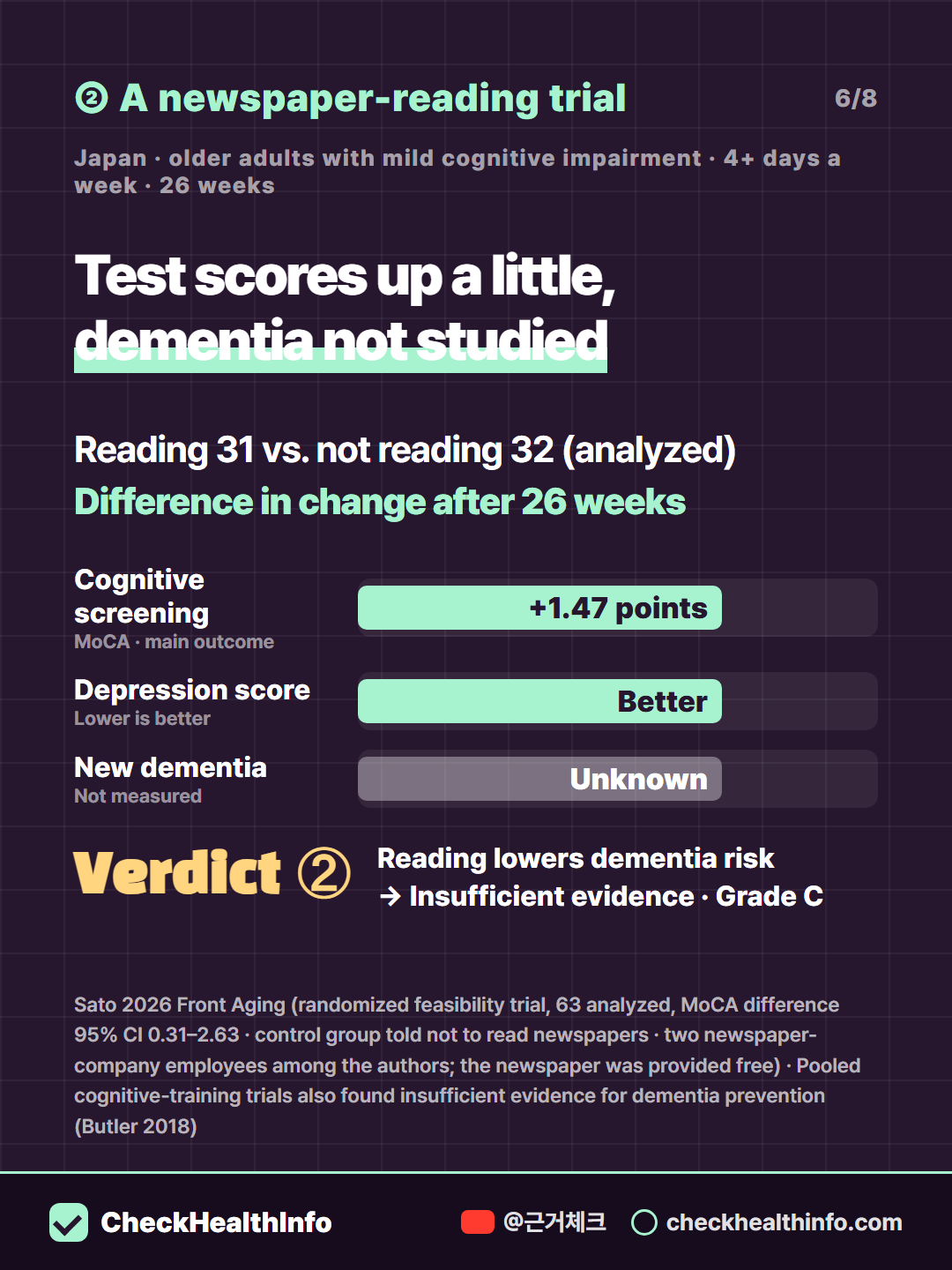
- The Japanese trial in the news selected 64 of 163 applicants aged 60 or older who did not subscribe to a newspaper (per the full text, only people with mild cognitive impairment), randomly assigned them, and compared 26-week changes in 31 people who read the newspaper and 32 who did not (one person was lost to follow-up). The reading group read at least 4 days a week (per the full text: reading a front-page article, reading the column aloud, doing the newspaper quiz, and writing down the main points). On the main outcome, a cognitive screening test (MoCA), their change in score was 1.47 points better than the non-reading group’s (95% confidence interval 0.31–2.63). Depression scores and how far people got around in daily life (life-space) were also better. Simply put, after six months of regular reading, test scores were a little better, but the trial did not look at whether fewer people developed dementia. [8]
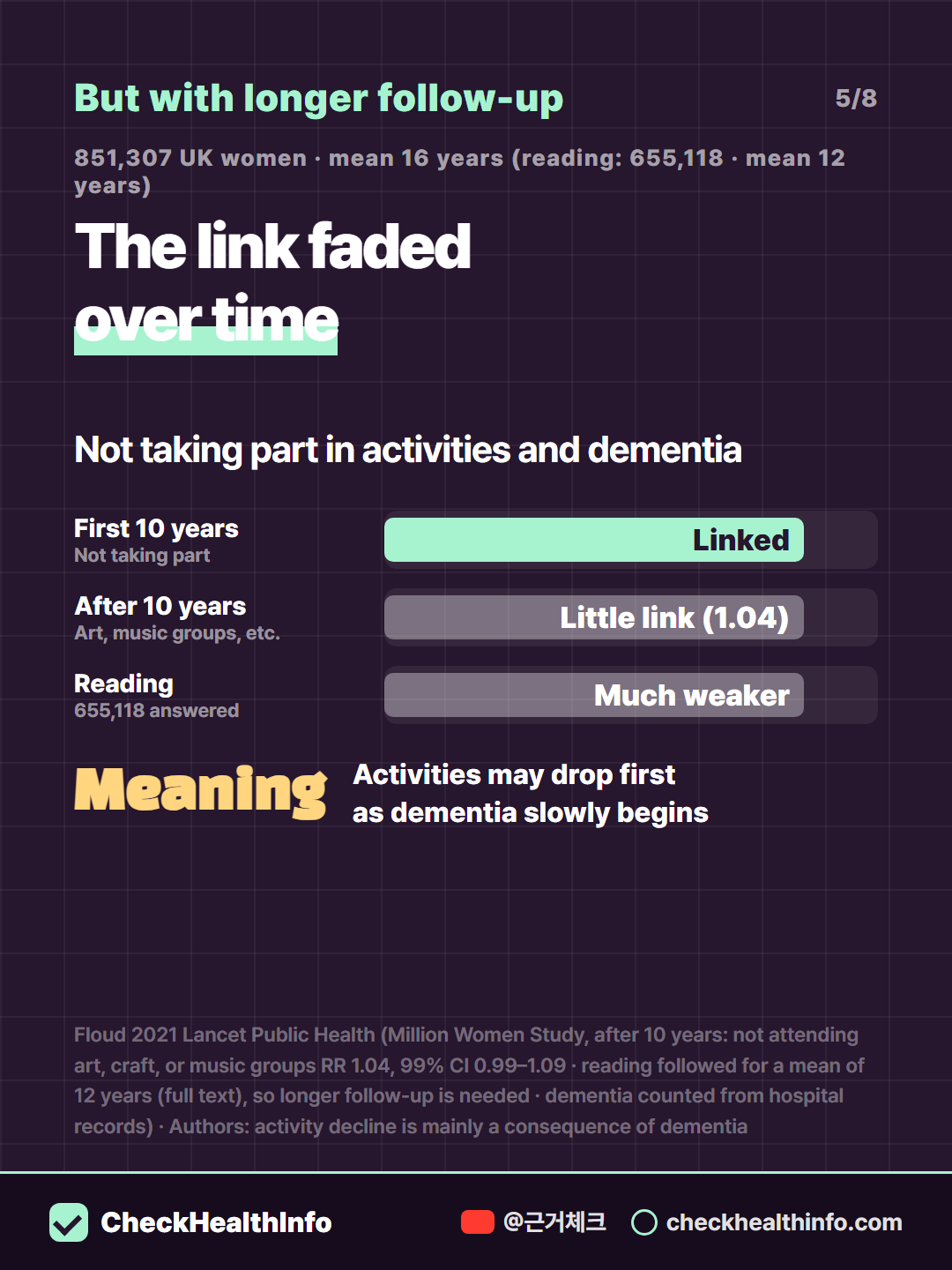
- However, in a study that followed 851,307 UK women (mean age 60) for a mean of 16 years, not taking part in adult education classes, art, craft, or music groups, or volunteer work was linked to dementia only in the first 10 years, with little link after that (for example, not attending art, craft, or music groups: relative risk 1.04, 99% confidence interval 0.99–1.09). For reading, reported by 655,118 women, the link likewise weakened substantially over time (reading was asked about separately in 2006, so mean follow-up was shorter at 12 years, and the authors said longer follow-up is needed, per the full text). The researchers concluded that activities decline before dementia mainly because dementia develops slowly and reduces activity, not because inactivity causes dementia. [7]
- On the other hand, the Hong Kong study (dementia in the first 3 years excluded) and the US study (people with possible early dementia excluded) reported that the link remained. But with follow-up of only about 5 years, reverse causation is hard to rule out, and the authors of the US study said controlled trials are needed to confirm a protective effect. [3] [4]
- A systematic review of randomized cognitive-training trials also concluded that training improves scores on the trained tasks but that evidence for preventing cognitive decline or dementia is insufficient (the same conclusion as our brain-training verdict). [9]
Grade: In our search, we found no trial that randomly assigned people to read and then tracked dementia. The most direct evidence, the Japanese trial, was a small feasibility trial of 63 people over 26 weeks that measured test scores rather than dementia, so on its own it would rate below C. Starting instead from large observational studies (B), we moved down one level to C because studies with long and short follow-up disagree. The label is “Insufficient evidence”: this does not mean reading has been shown not to help.
If you are worried about your memory, try this
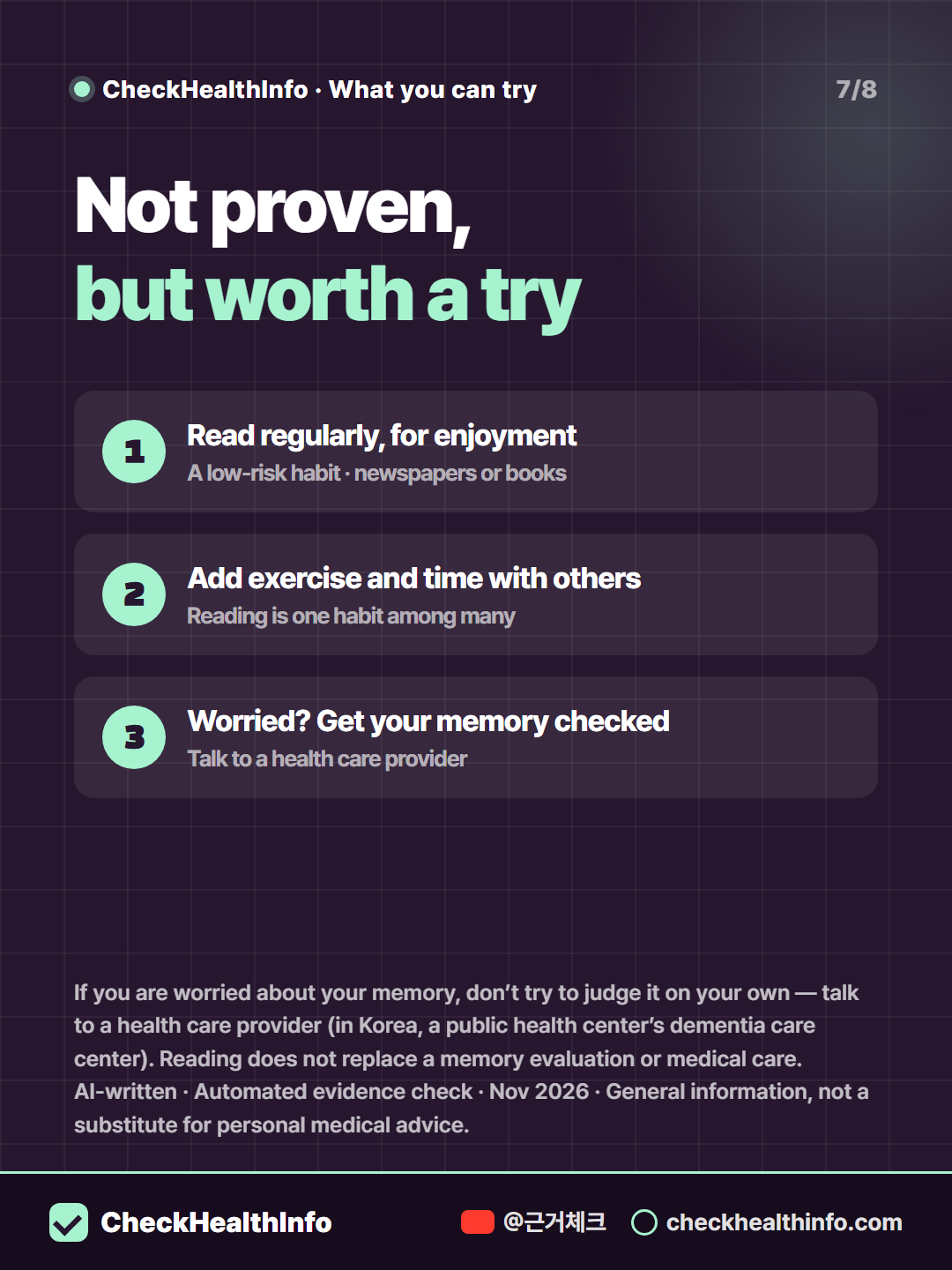
- Read regularly, for enjoyment — It has not been shown to prevent dementia, but it is an enjoyable habit with almost no downside. Newspapers, books — whatever you enjoy.
- Add exercise and time with others — In the same analysis, physical and social activity were also linked to lower dementia risk (again, observational studies). [1]
- If you are worried about your memory, don’t try to judge it on your own. Talk to a health care provider (in Korea, a public health center’s dementia care center). Reading does not replace a memory evaluation or medical care.
Scope: This verdict covers cognitive activities such as reading newspapers and books and new cases of dementia in older adults. It does not cover dementia medicines or treatment, brain-game apps, or paper vs. digital reading.
Limitations of this verdict
- All evidence for Verdict 1 comes from observational studies. People who enjoy reading may differ in other ways, such as having more education, being healthier, or seeing other people more often, and each study adjusted for different factors.
- The Hong Kong study reported an odds ratio, and because dementia was a fairly common outcome (8.7%), it may make the risk reduction look somewhat larger. The Taiwanese study looked at cognitive decline, not dementia.
- The Japanese newspaper trial was small (63 analyzed) and short (26 weeks), and its outcome was test scores, not dementia. According to the full text, the control group was told not to read newspapers during the study and had little contact with the research team, so extra attention and contact may have played a role, and it is not clear whether the people giving the tests knew who was in which group. We did not cite the MMSE result reported in the abstract because its confidence interval and p-value do not match, and a correction notice was issued for a figure error (placement of a significance marker). The intervention combined newspaper reading with reading the column aloud, a quiz, and writing down the main points. Two employees of the newspaper company were co-authors, and the company provided the newspaper free of charge.
- In the UK study, dementia was counted from hospital records that mentioned dementia (milder cases are more likely to be missed), and only UK women were studied. Its reading comparison was “no reading at all vs. any reading.” For reading, the researchers themselves said longer follow-up is needed.
- There is no guideline on how many minutes a day to read or what to read. In our search, we did not find a study of reading and new dementia in Korean adults.
- This article was prompted by a news story. We do not evaluate any news outlet or person.
- Grades follow section 1 of our rating method. We check for new studies in our monthly PubMed review, and any change in a verdict is recorded in our corrections log.
Card news
Video (in Korean)
References
- Su S, Shi L, Zheng Y, et al. Leisure Activities and the Risk of Dementia: A Systematic Review and Meta-analysis. Neurology 2022;99(15):e1651-e1663. PMID 35948447. PubMed abstract · Full article · Free full text
- Yates LA, Ziser S, Spector A, et al. Cognitive leisure activities and future risk of cognitive impairment and dementia: systematic review and meta-analysis. Int Psychogeriatr 2016;28(11):1791-1806. PMID 27502691. PubMed abstract · Full article
- Verghese J, Lipton RB, Katz MJ, et al. Leisure activities and the risk of dementia in the elderly. N Engl J Med 2003;348(25):2508-16. PMID 12815136. PubMed abstract · Full article
- Lee ATC, Richards M, Chan WC, et al. Association of Daily Intellectual Activities With Lower Risk of Incident Dementia Among Older Chinese Adults. JAMA Psychiatry 2018;75(7):697-703. PMID 29847678. PubMed abstract · Full article · Free full text
- Wu Z, Pandigama DH, Wrigglesworth J, et al. Lifestyle Enrichment in Later Life and Its Association With Dementia Risk. JAMA Netw Open 2023;6(7):e2323690. PMID 37450299. PubMed abstract · Full article · Free full text
- Chang YH, Wu IC, Hsiung CA. Reading activity prevents long-term decline in cognitive function in older people: evidence from a 14-year longitudinal study. Int Psychogeriatr 2021;33(1):63-74. PMID 32498728. PubMed abstract · Full article · Free full text
- Floud S, Balkwill A, Sweetland S, et al. Cognitive and social activities and long-term dementia risk: the prospective UK Million Women Study. Lancet Public Health 2021;6(2):e116-e123. PMID 33516288. PubMed abstract · Full article · Free full text
- Sato M, Negoto S, Nakano S, et al. Cognitive and behavioral benefits of newspaper reading in community-dwelling older adults: a feasibility randomized controlled trial. Front Aging 2026;7:1929793. PMID 42761073. PubMed abstract · Full article · Free full text
- Butler M, McCreedy E, Nelson VA, et al. Does Cognitive Training Prevent Cognitive Decline?: A Systematic Review. Ann Intern Med 2018;168(1):63-68. PMID 29255842. PubMed abstract · Full article
General information only, not medical advice. It does not replace your own clinician’s diagnosis or treatment. If you are worried about your memory, don’t try to figure it out on your own — talk to a health care provider.