If you run too much, could it actually shorten your life?
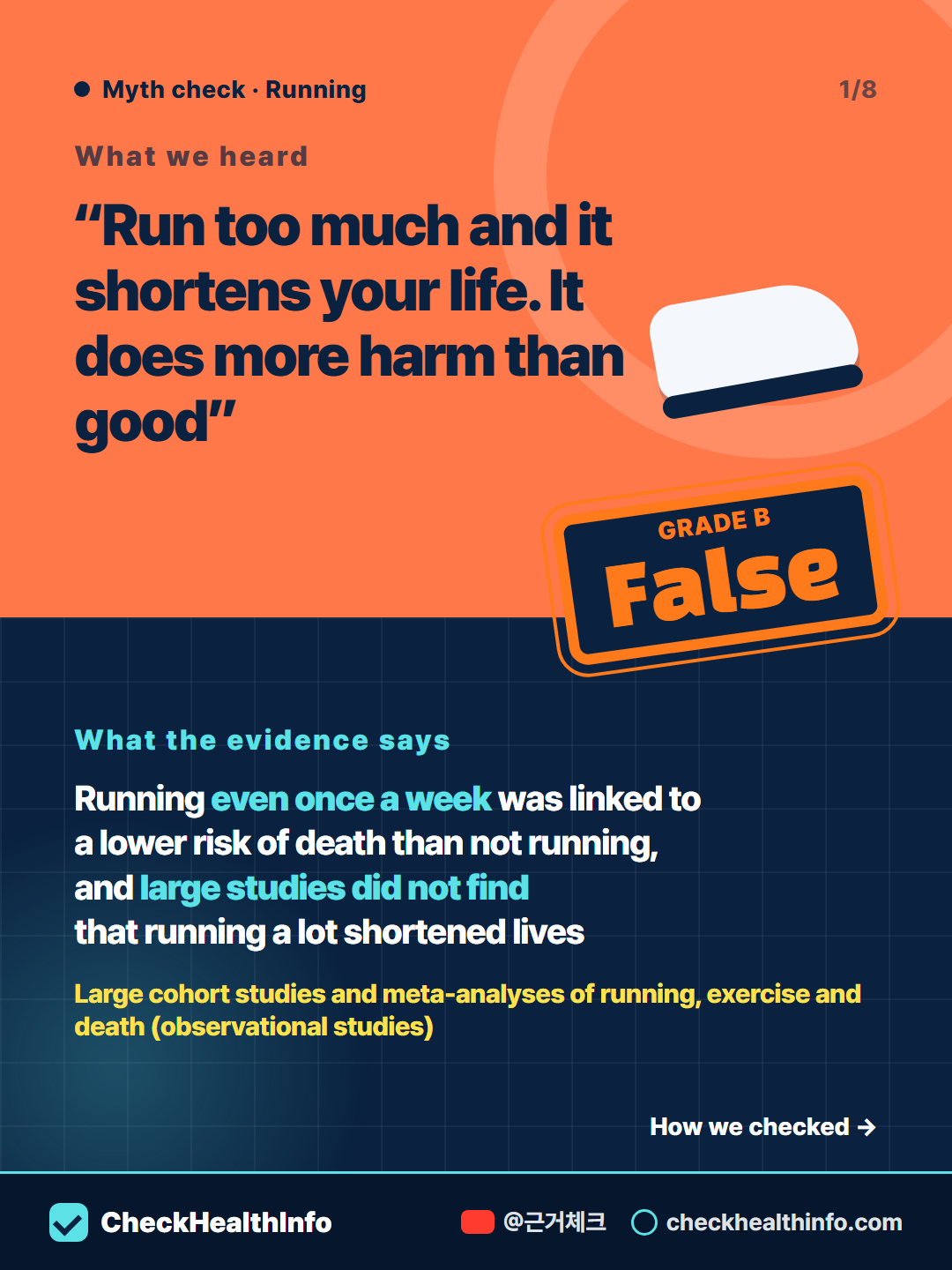
Does running too much shorten your life and make your muscles break down (rhabdomyolysis), so that it actually harms you?

We checked this verdict against 12 sources, such as published studies and clinical guidelines. · How checked: AI-drafted · automated evidence checks
Verdicts at a glance
| Claim | Verdict |
|---|---|
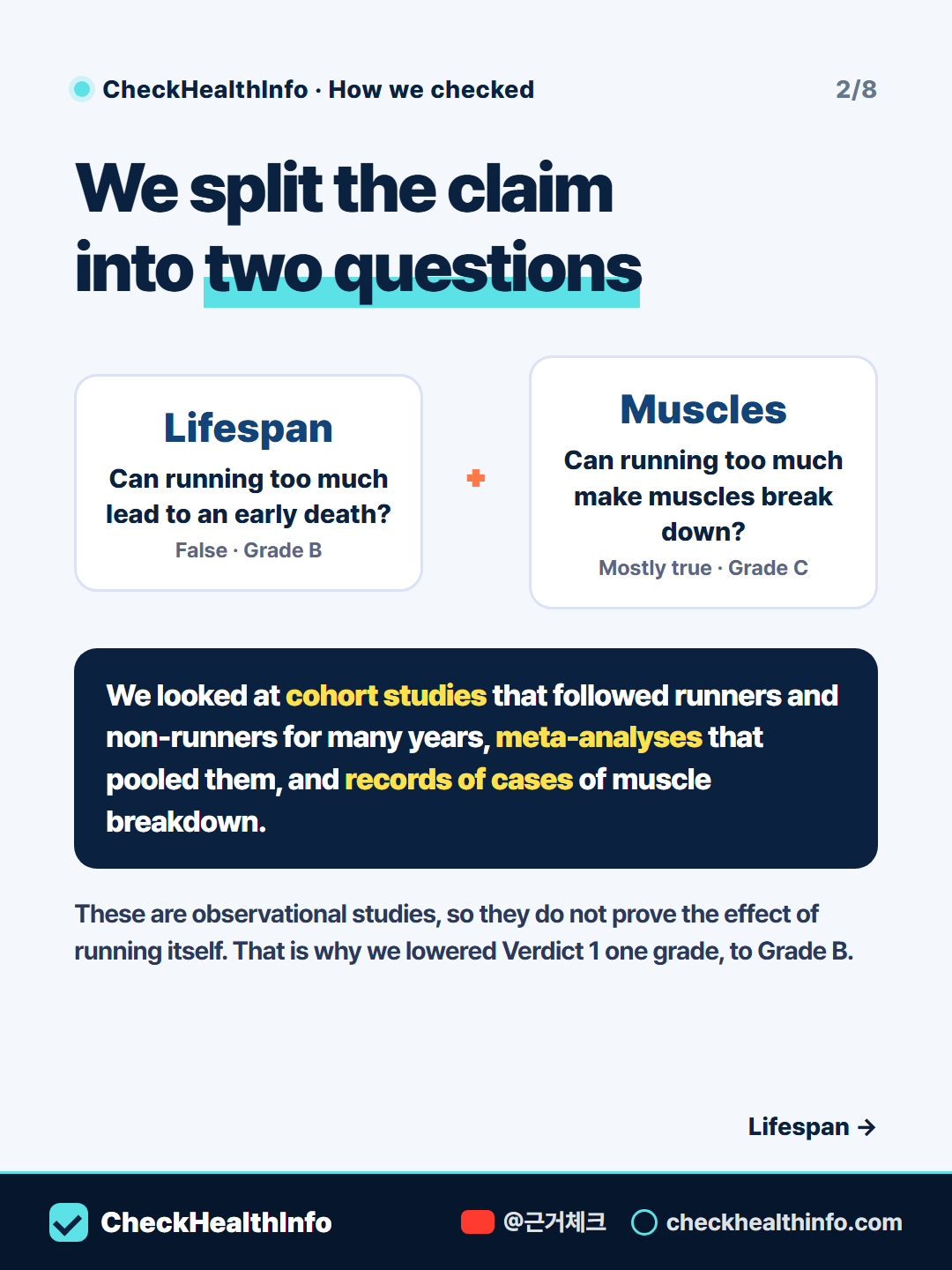
| Running too much shortens your life, so it actually does more harm than good | False · Evidence grade B |
| Running too much makes your muscles break down (rhabdomyolysis) | Mostly true · Evidence grade C |
Bottom line — Large studies have not confirmed the claim that running a lot shortens your life and does more harm than good. In an analysis that pooled studies of running, runners had a 27% lower risk of death than non-runners, and the authors concluded that running even once a week is better than not running. However, running more did not keep adding more benefit. Muscle breakdown (rhabdomyolysis) can really happen after extremely hard exercise, but it was rare in the general population and most people recovered. So the claim that “running a lot shortens your life” is rated False, and the claim that “running a lot makes your muscles break down” is rated Mostly true (limited to rare, extreme situations).
Cohort study — An observational study that follows many people over a long time to look at the link between a habit (for example, running) and illness or death. It shows a link but cannot prove that the habit is the cause.
Meta-analysis — An analysis that pools the results of several studies into one estimate.
Hazard ratio — The ratio of the risk of death between the two groups being compared. A value of 1 means the risk is the same; 0.73 means the risk is 27% lower.
95% confidence interval — The range in which the true value is likely to lie. If the range crosses 1, we cannot be confident there is a real difference, and the wider the range, the less certain the result.
Rhabdomyolysis — A condition in which muscle cells break down and leak their contents into the blood. It is often described as muscles “melting.”
Per 100,000 person-years — The number of cases that would occur if 100,000 people were followed for 1 year.
This claim mixes two different questions, so we gave two separate verdicts: (1) does running too much shorten your life, so that it does more harm than good, and (2) does running too much make your muscles break down?
Verdict 1. “Running too much shortens your life, so it actually does more harm than good”
False · Evidence grade B
In plain terms In large studies, people who ran had a lower risk of death no matter how much they ran, and no study confirmed that running a lot shortened lives. However, running more did not keep adding more benefit.
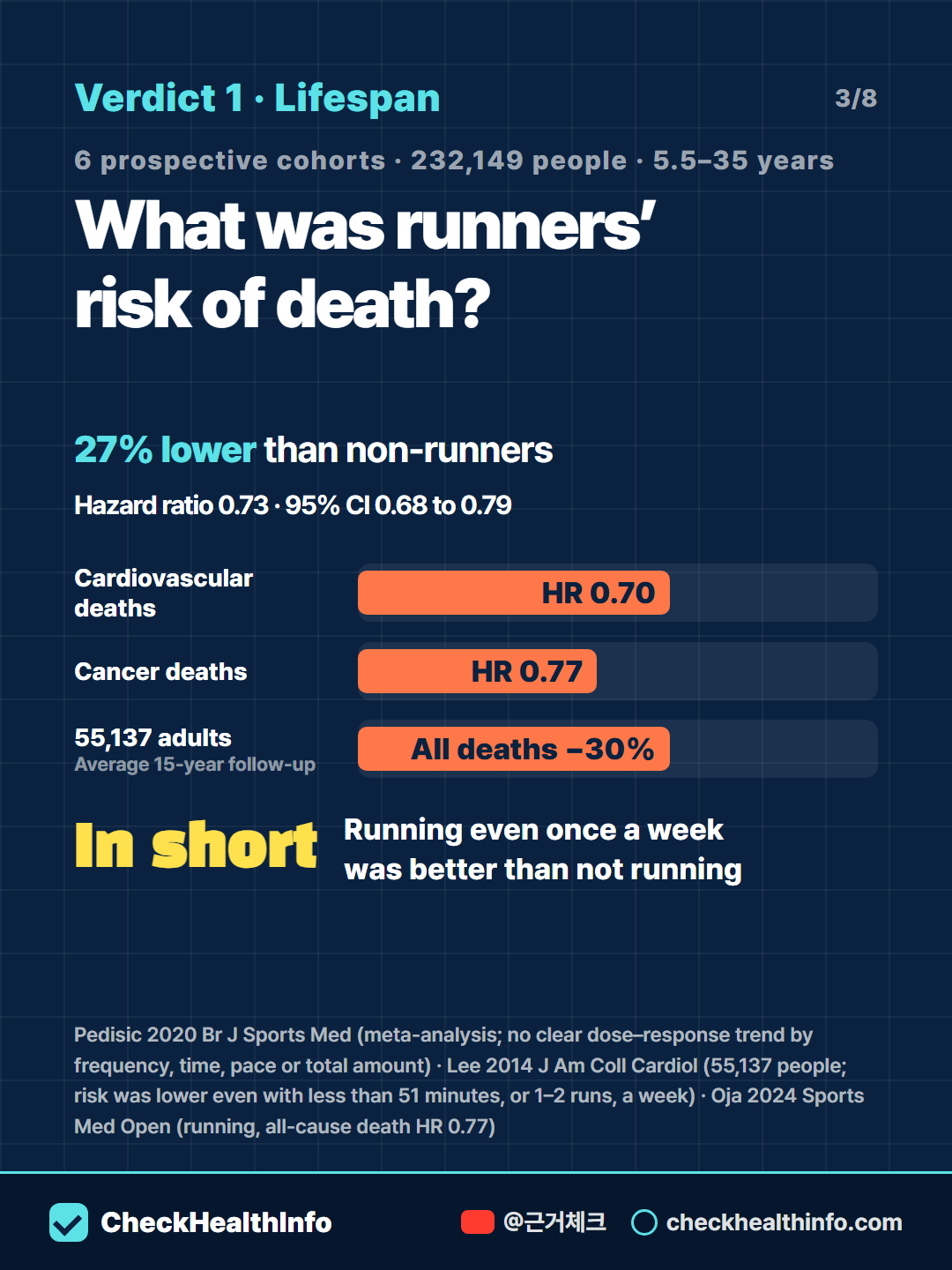
- A meta-analysis that pooled 6 prospective cohorts on running and death (14 studies, 232,149 people, 5.5–35 years of follow-up) found that runners had a 27% lower risk of death from any cause than non-runners (hazard ratio 0.73, 95% confidence interval 0.68 to 0.79). Their risk of death from cardiovascular disease (0.70) and from cancer (0.77) was also lower. There was no clear dose–response trend by weekly frequency, time, pace or total amount, and the authors concluded that running even once a week is better than not running, but that running more may not necessarily bring more benefit. [1]
- A 2024 meta-analysis that pooled studies by type of sport also found that running was linked to a 23% lower risk of death from any cause (hazard ratio 0.77). [2]
- In a study that followed 55,137 adults for an average of 15 years, runners had a 30% lower risk of death from any cause, and the benefit was similar across levels of running time, distance, frequency and pace. Even running less than 51 minutes, or only 1–2 times, a week was linked to a lower risk. [3]
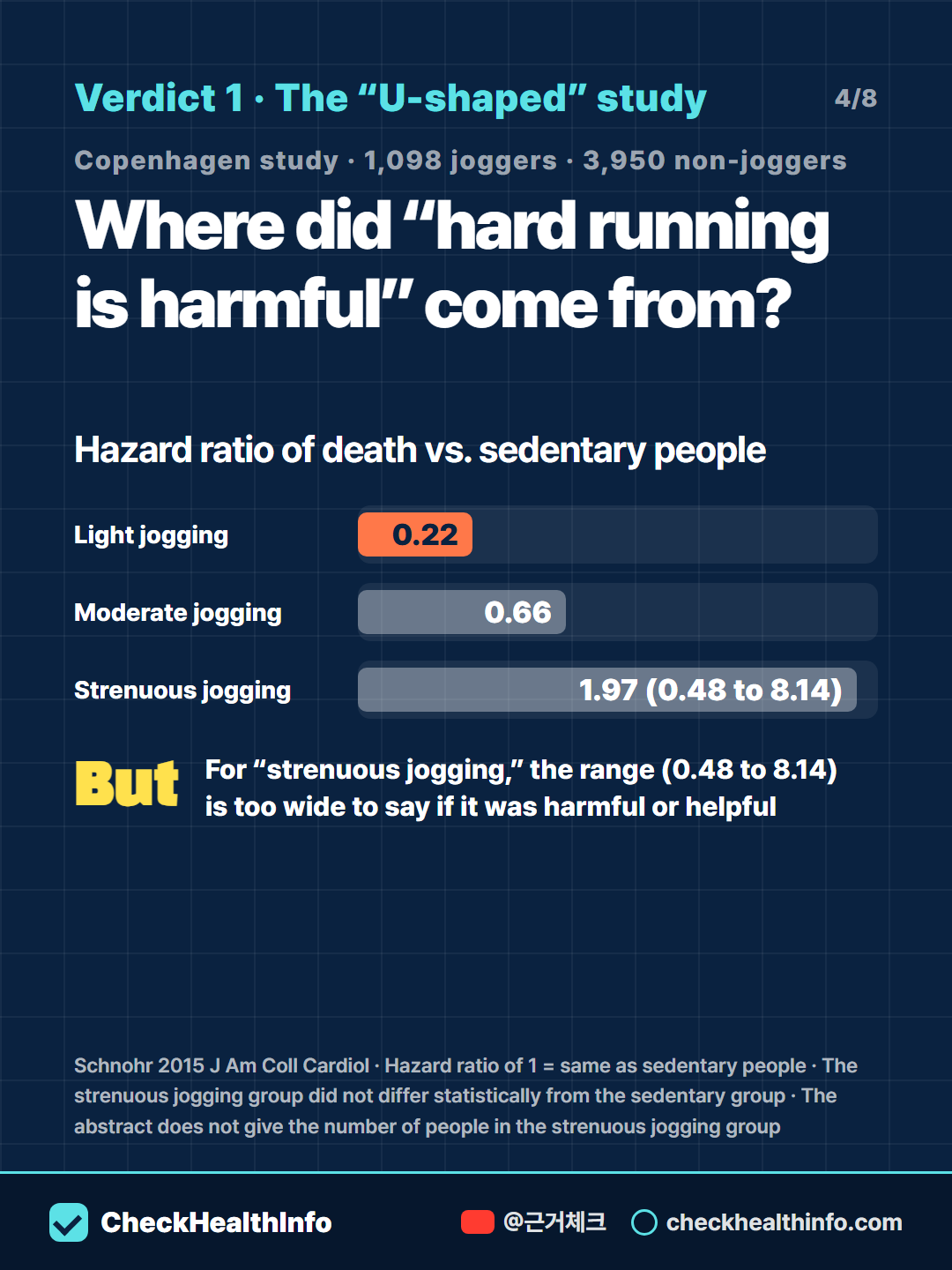
- The Copenhagen City Heart Study, often cited as evidence that “running a lot is harmful,” compared 1,098 healthy joggers with 3,950 healthy non-joggers. Light joggers had the lowest risk of death (hazard ratio 0.22). For strenuous joggers, the estimated hazard ratio was 1.97, pointing toward a higher risk than in sedentary people, but the difference was not statistically significant, and the authors suggested a “U-shaped” relationship. [4]
- However, the 95% confidence interval for this “strenuous jogging” group was very wide, 0.48 to 8.14, so the result cannot tell us whether strenuous jogging was harmful or helpful. In plain terms, this one result is not enough to say that “running a lot shortens your life.” [4]
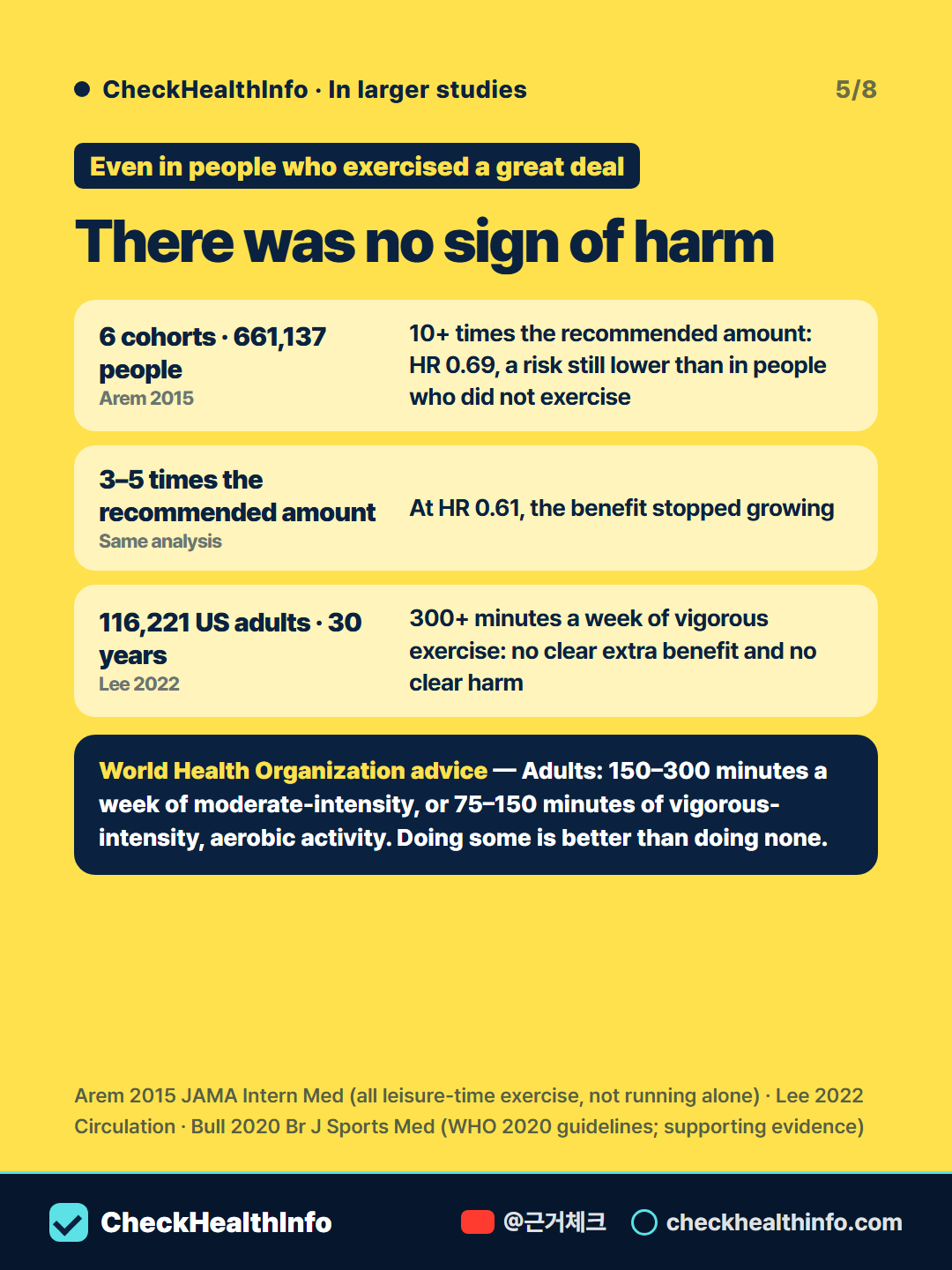
- A pooled analysis of 6 US and European cohorts (661,137 people) that looked at all leisure-time exercise, not running alone, found that even people who did 10 or more times the recommended minimum had a lower risk of death than people who did not exercise (hazard ratio 0.69), and the authors reported no evidence of harm. However, the benefit stopped growing at around 3–5 times the recommended amount (hazard ratio 0.61). [5]
- In a study that followed 116,221 US adults for 30 years, people who did 300 minutes or more a week of vigorous exercise also showed no clear extra benefit and no clear harm. [6]
- The World Health Organization’s 2020 guidelines advise adults to do 150–300 minutes a week of moderate-intensity, or 75–150 minutes of vigorous-intensity, aerobic activity, and state that doing some is better than doing none. [7]
Grade: It starts at A (meta-analyses of observational cohort studies), and we lowered it one grade to B because the studies pooled were observational, not randomized trials. The two studies that showed no harm at very high amounts are supporting evidence that looked at all leisure-time exercise, and the 2024 meta-analysis overlaps with the first meta-analysis in its authors and cohorts, so we did not count it as an independent confirmation. We did not treat the wide confidence interval in the Copenhagen study as a conflicting result. People who run very large amounts for years, such as ultramarathon runners, have rarely been studied and are outside the scope of this verdict.
Verdict 2. “Running too much makes your muscles break down (rhabdomyolysis)”
Mostly true · Evidence grade C
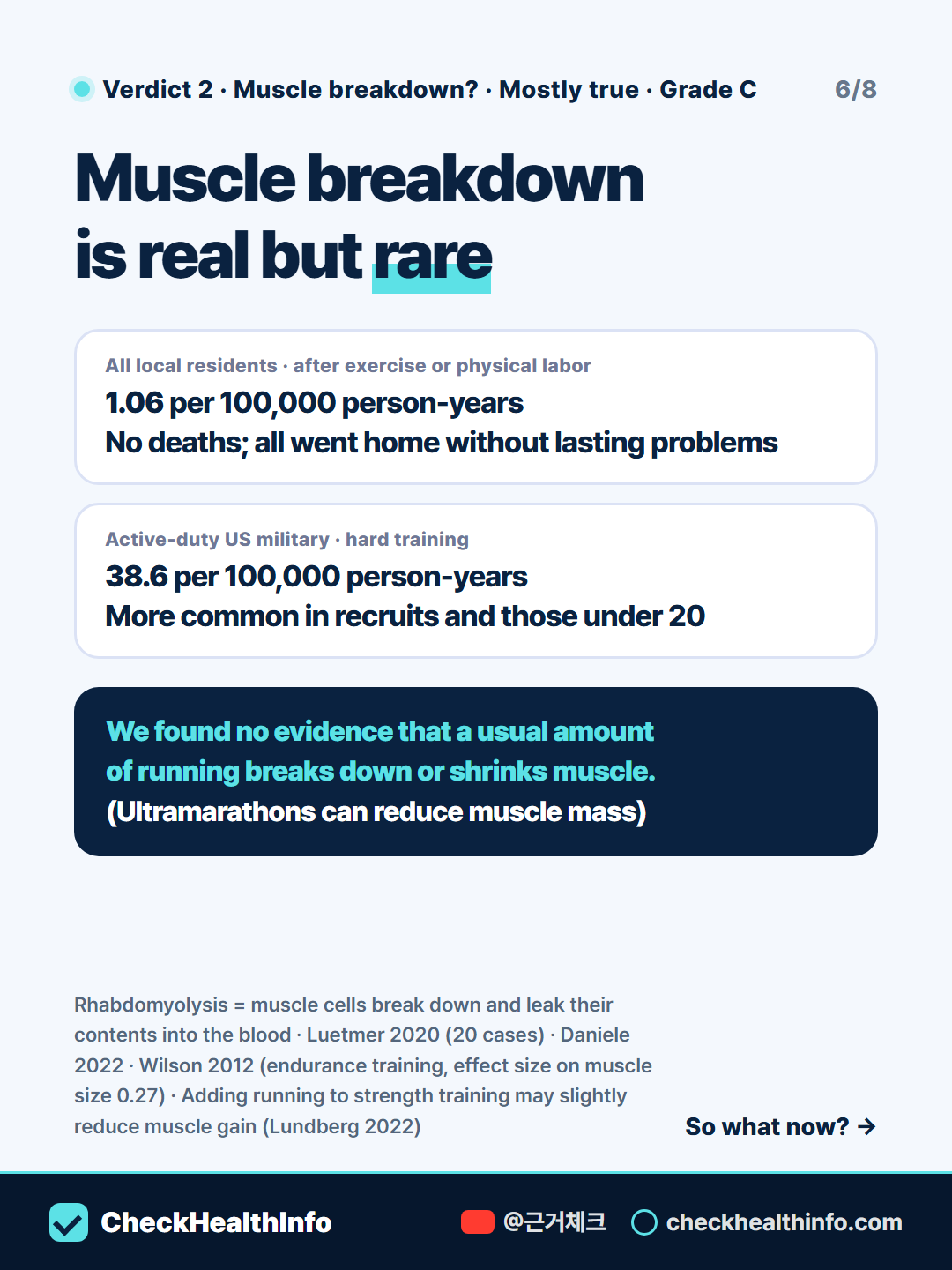
In plain terms Muscle breakdown can really happen after extremely hard exercise, but it was rare, about 1 case per 100,000 local residents per year, and everyone recovered. We found no evidence that a usual amount of running breaks down or shrinks muscle (very long races such as ultramarathons can reduce muscle mass).
- In a population-based study of all the medical records in one US county (Olmsted County), 20 of 431 cases of rhabdomyolysis (4.9%) occurred after heavy physical exertion such as exercise or physical labor (exertional rhabdomyolysis), and the rate was 1.06 per 100,000 person-years (95% confidence interval 0.59 to 1.52). In plain terms, among all local residents, whether or not they exercised, it occurred in about 1 in 100,000 people per year. The causes were endurance exercise (7 cases), physical labor (5) and strength training (4). There were no deaths; 5 of the 20 people had kidney injury, 16 were admitted to the hospital (median stay 2 days), and all were discharged without lasting problems. [8]
- With extreme training, however, it was much more common. In a surveillance report on active-duty US military members, there were 513 cases of exertional rhabdomyolysis in 2021, or 38.6 per 100,000 person-years. It was more common in men, people under 20 and recruits, and the report advised suspecting it especially after hard exercise in hot, humid weather. [9]
- A review of ultramarathons (races longer than a marathon) noted that after a race, a marker of muscle damage (creatine kinase) can rise as high as 100,000–200,000 U/L, but these changes are usually temporary and return to normal after the race. It also noted that an energy shortfall can reduce muscle mass along with body fat. [10]
- If the claim means that “running makes you lose muscle”: in a meta-analysis of 21 exercise studies, muscle size increased rather than decreased even with endurance training alone (effect size 0.27, smaller than 1.23 for strength training). However, when running (but not cycling) was added to strength training, gains in muscle size and strength were smaller. [11] Another meta-analysis of 15 studies also found that muscle fiber growth was slightly smaller with combined strength and aerobic training than with strength training alone (standardized mean difference −0.23), and the difference was clearer in type I muscle fibers when the aerobic training was running (the authors called this a preliminary finding). [12]
Grade: It starts at B (observational studies that counted cases of exertional rhabdomyolysis), and we lowered it one grade to C because the evidence is indirect: running was not counted separately, and the data included conditions unlike everyday running, such as military training. We used the meta-analyses of muscle size only as supporting evidence.
If you run
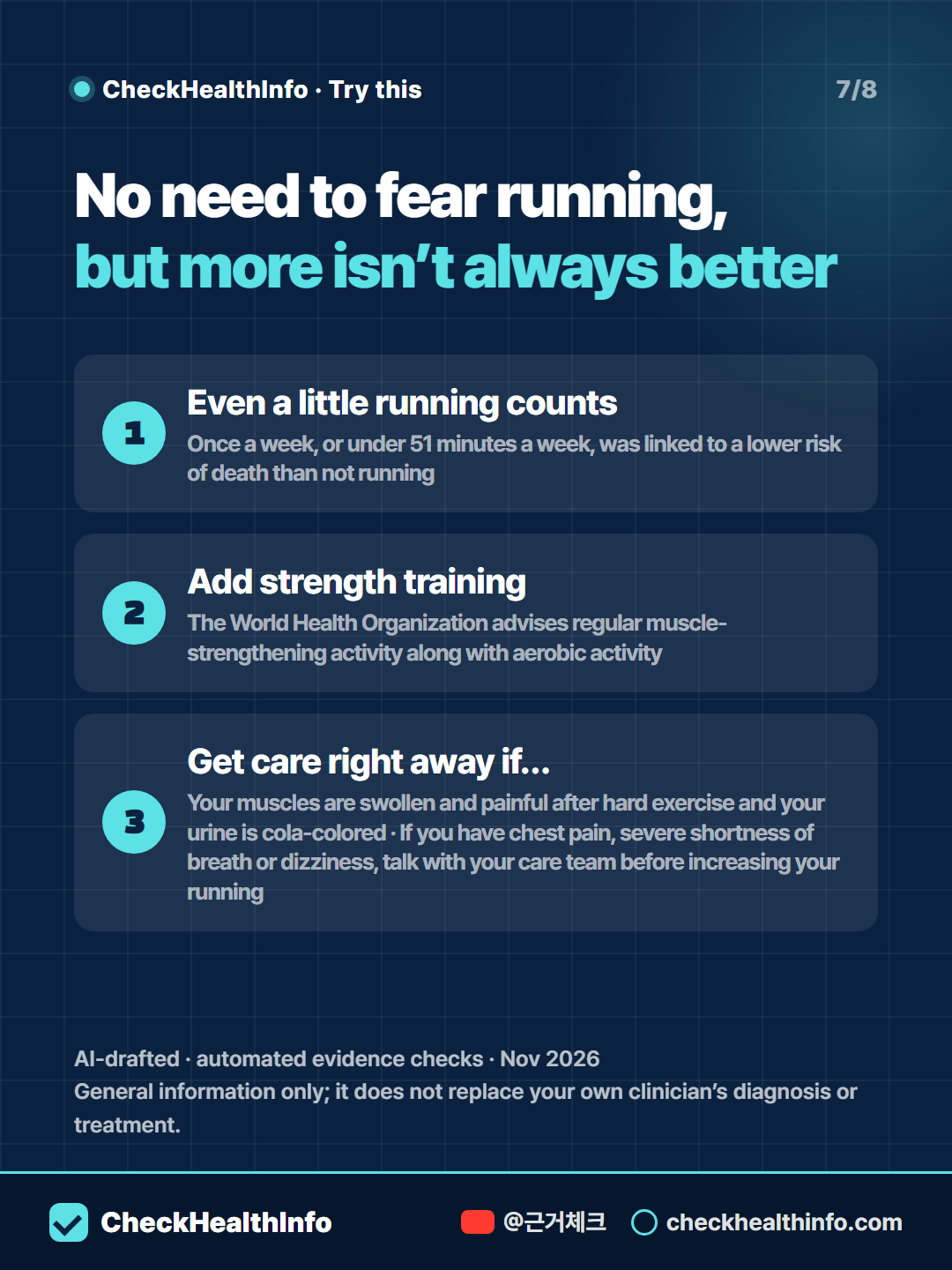
- Even a little running counts — Running once a week, or for less than 51 minutes a week, was linked to a lower risk of death than not running. [1] [3]
- If you run a lot, there is no need to be afraid, but more isn’t always better — The benefit stopped growing beyond a certain amount. [5] [6]
- Add strength training — The World Health Organization advises regular muscle-strengthening activity along with aerobic activity. [7]
- Get care right away if you notice these signs — If your muscles become swollen and painful after hard exercise and your urine turns dark (cola-colored), get medical care right away. [9] If you have heart disease, or have chest pain, severe shortness of breath or dizziness, talk with your care team before you increase your running.
Scope: This verdict covers how running and amount of exercise relate to death in the general adult population, and rhabdomyolysis caused by exercise. It does not cover exercise prescriptions for people with heart disease, athletes’ race performance, or medicines and treatment.
Limitations of this verdict
- The evidence for Verdict 1 is all observational studies and meta-analyses of them, so it cannot prove that running causes longer life. Healthier people may have run more, other lifestyle habits may play a role, and the amount of running was mostly self-reported in questionnaires.
- The Copenhagen study’s abstract does not give the number of people in the “strenuous jogging” group. The studies of about 660,000 and 116,000 people looked at all leisure-time exercise, not running alone.
- People who run very large amounts for years, such as ultramarathon runners, have rarely been studied, so this verdict cannot tell us about the long-term effects of such extreme amounts.
- The general-population data for Verdict 2 come from only 20 cases in one county, and mild cases that never came to a hospital may have been missed.
- Grades follow section 1 of our rating method. We check PubMed for new studies every month, and if a verdict changes, we record it in our corrections log.
Card news
Video (in Korean)
References
- Pedisic Z, Shrestha N, Kovalchik S, et al. Is running associated with a lower risk of all-cause, cardiovascular and cancer mortality, and is the more the better? A systematic review and meta-analysis. Br J Sports Med 2020;54(15):898-905. PMID 31685526. PubMed abstract · Full article
- Oja P, Memon AR, Titze S, et al. Health Benefits of Different Sports: a Systematic Review and Meta-Analysis of Longitudinal and Intervention Studies Including 2.6 Million Adult Participants. Sports Med Open 2024;10(1):46. PMID 38658416. PubMed abstract · Full article · Free full text
- Lee DC, Pate RR, Lavie CJ, et al. Leisure-time running reduces all-cause and cardiovascular mortality risk. J Am Coll Cardiol 2014;64(5):472-81. PMID 25082581. PubMed abstract · Full article · Free full text
- Schnohr P, O'Keefe JH, Marott JL, et al. Dose of jogging and long-term mortality: the Copenhagen City Heart Study. J Am Coll Cardiol 2015;65(5):411-9. PMID 25660917. PubMed abstract · Full article
- Arem H, Moore SC, Patel A, et al. Leisure time physical activity and mortality: a detailed pooled analysis of the dose-response relationship. JAMA Intern Med 2015;175(6):959-67. PMID 25844730. PubMed abstract · Full article · Free full text
- Lee DH, Rezende LFM, Joh HK, et al. Long-Term Leisure-Time Physical Activity Intensity and All-Cause and Cause-Specific Mortality: A Prospective Cohort of US Adults. Circulation 2022;146(7):523-534. PMID 35876019. PubMed abstract · Full article · Free full text
- Bull FC, Al-Ansari SS, Biddle S, et al. World Health Organization 2020 guidelines on physical activity and sedentary behaviour. Br J Sports Med 2020;54(24):1451-1462. PMID 33239350. PubMed abstract · Full article · Free full text
- Luetmer MT, Boettcher BJ, Franco JM, et al. Exertional Rhabdomyolysis: A Retrospective Population-based Study. Med Sci Sports Exerc 2020;52(3):608-615. PMID 31652234. PubMed abstract · Full article · Free full text
- Daniele D, Murray J. Update: Exertional rhabdomyolysis, active component, U.S. Armed Forces, 2017-2021. MSMR 2022;29(4):15-20. PMID 35608521. PubMed abstract
- Knechtle B, Nikolaidis PT. Physiology and Pathophysiology in Ultra-Marathon Running. Front Physiol 2018;9:634. PMID 29910741. PubMed abstract · Full article · Free full text
- Wilson JM, Marin PJ, Rhea MR, et al. Concurrent training: a meta-analysis examining interference of aerobic and resistance exercises. J Strength Cond Res 2012;26(8):2293-307. PMID 22002517. PubMed abstract · Full article
- Lundberg TR, Feuerbacher JF, Sünkeler M, et al. The Effects of Concurrent Aerobic and Strength Training on Muscle Fiber Hypertrophy: A Systematic Review and Meta-Analysis. Sports Med 2022;52(10):2391-2403. PMID 35476184. PubMed abstract · Full article · Free full text
General information only, not medical advice. It does not replace your own clinician’s diagnosis or treatment. If your muscles become swollen and painful after hard exercise and your urine turns cola-colored, get medical care right away. If you have heart disease, or have chest pain, severe shortness of breath or dizziness, talk with your care team before you increase your running.