Empty-stomach coffee after a bad night: does blood sugar rise more?
After a poor night’s sleep, does drinking strong coffee before breakfast make your blood sugar rise more after you eat sugar? And does a daily morning coffee habit raise your long-term risk of diabetes?

We checked this verdict against 10 sources, such as published studies and clinical guidelines. · How checked: AI-drafted · automated evidence checks
Verdicts at a glance
| Claim | Verdict |
|---|---|
| After a poor night’s sleep, drinking strong coffee before breakfast makes your blood sugar rise more after you eat sugar | Mostly true · Evidence grade B |
| A daily morning coffee habit raises your long-term risk of type 2 diabetes | False · Evidence grade B |
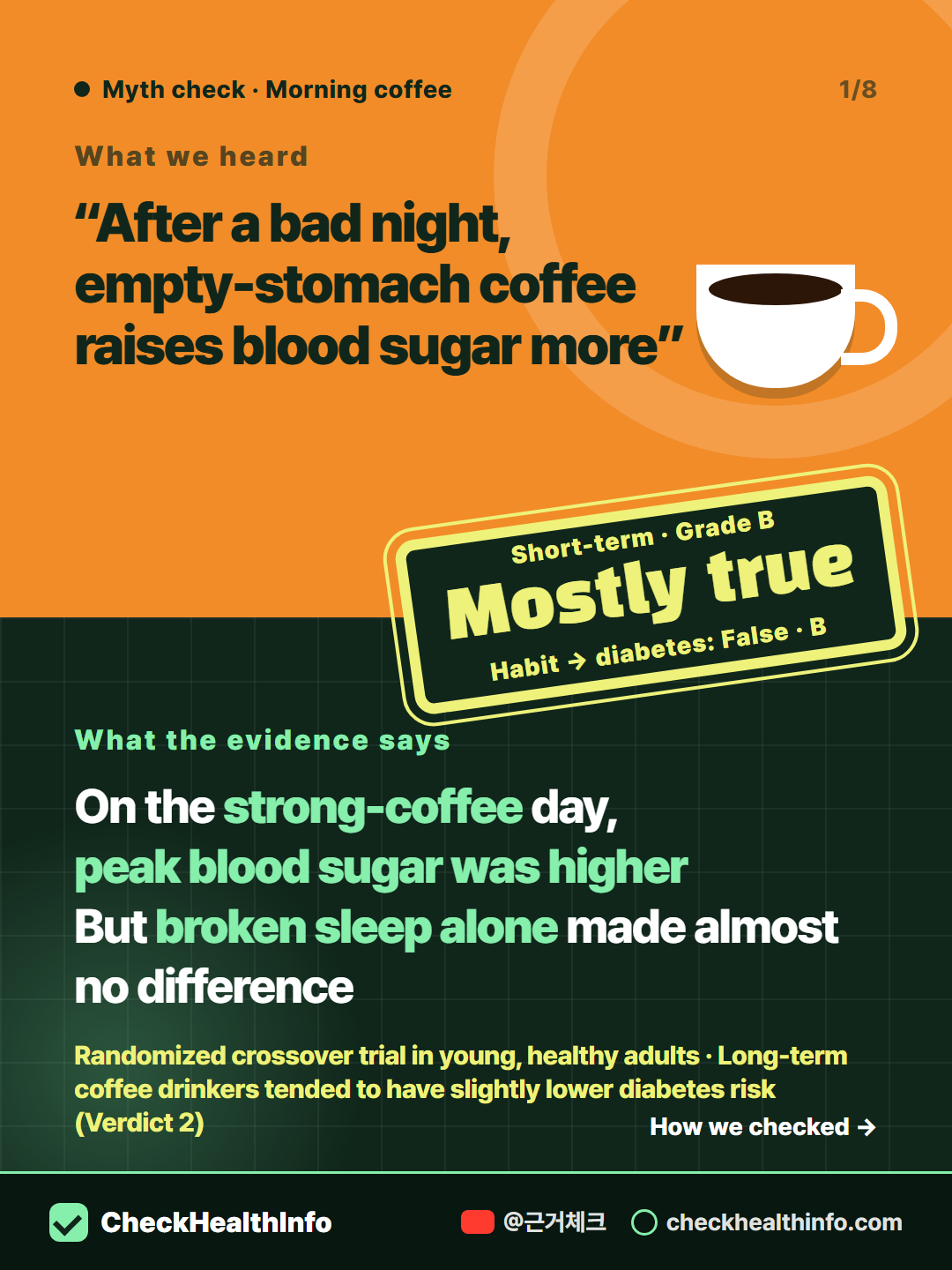
Bottom line — In a randomized crossover trial in the UK, after a night of waking up every hour, participants who drank strong black coffee the next morning and then had a glucose drink reached a higher peak blood sugar than when they skipped the coffee. So “after a poor night’s sleep, drinking strong coffee before breakfast makes your blood sugar rise more after you eat sugar” is rated Mostly true (Evidence grade B). But in that same trial, the difference came from the coffee, not from the broken sleep, and the participants were young, healthy adults. Studies that followed coffee drinkers for years found they were, if anything, slightly less likely to develop diabetes, so “a daily morning coffee habit raises your long-term risk of type 2 diabetes” is rated False (Evidence grade B). The takeaway: strong coffee can briefly push blood sugar higher, but there is no evidence that a coffee habit itself leads to diabetes.
Glucose tolerance test — You drink a set amount of glucose dissolved in water, and blood sugar and insulin are measured over 2 hours. It is not the same as eating breakfast.
Peak blood sugar — The highest blood sugar level reached after taking in sugar. mmol/L is a unit of blood sugar.
Insulin sensitivity — How well insulin lowers blood sugar. Lower sensitivity means the same amount of insulin lowers blood sugar less.
Randomized crossover trial — The same people go through every condition (for example, a coffee day and a no-coffee day) in a randomly assigned order, and the results are compared.
Systematic review and meta-analysis — A review that collects all relevant studies using set methods (systematic review) and combines their results into one estimate (meta-analysis).
Relative risk — How often a disease occurs in one group compared with another. 1 means no difference; 0.79 means 21% lower risk.
95% confidence interval — The range in which the true value is likely to fall.
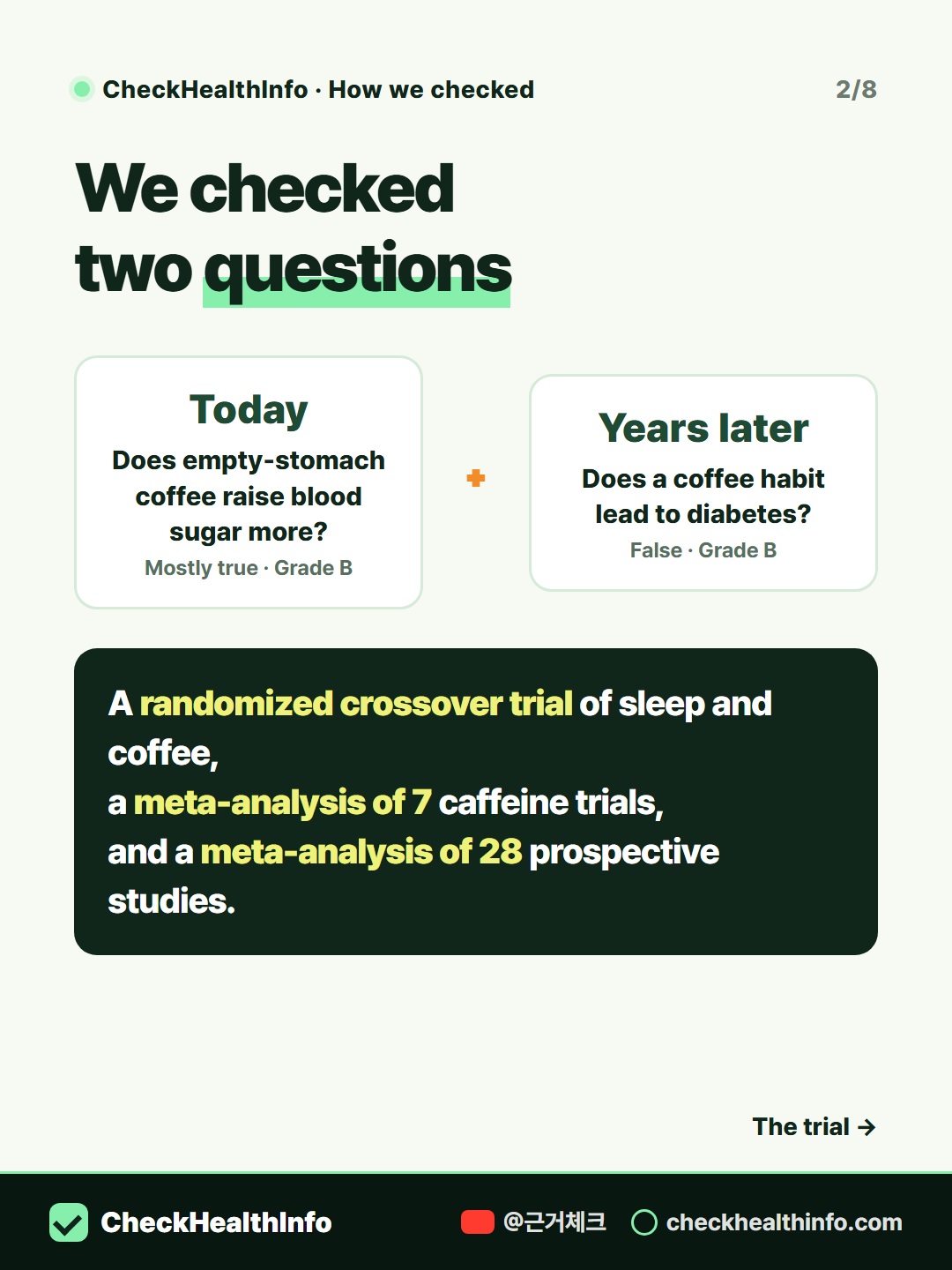
A recent Korean news story said that drinking coffee on an empty stomach after a poor night’s sleep makes blood sugar rise more after a meal. Many people reach for coffee first thing in the morning, so we checked whether this is true and whether a morning coffee habit leads to diabetes. Because the short-term blood sugar response and the long-term diabetes risk point in different directions, we split this into two verdicts.
Verdict 1. “After a poor night’s sleep, drinking strong coffee before breakfast makes your blood sugar rise more after you eat sugar”
Mostly true · Evidence grade B
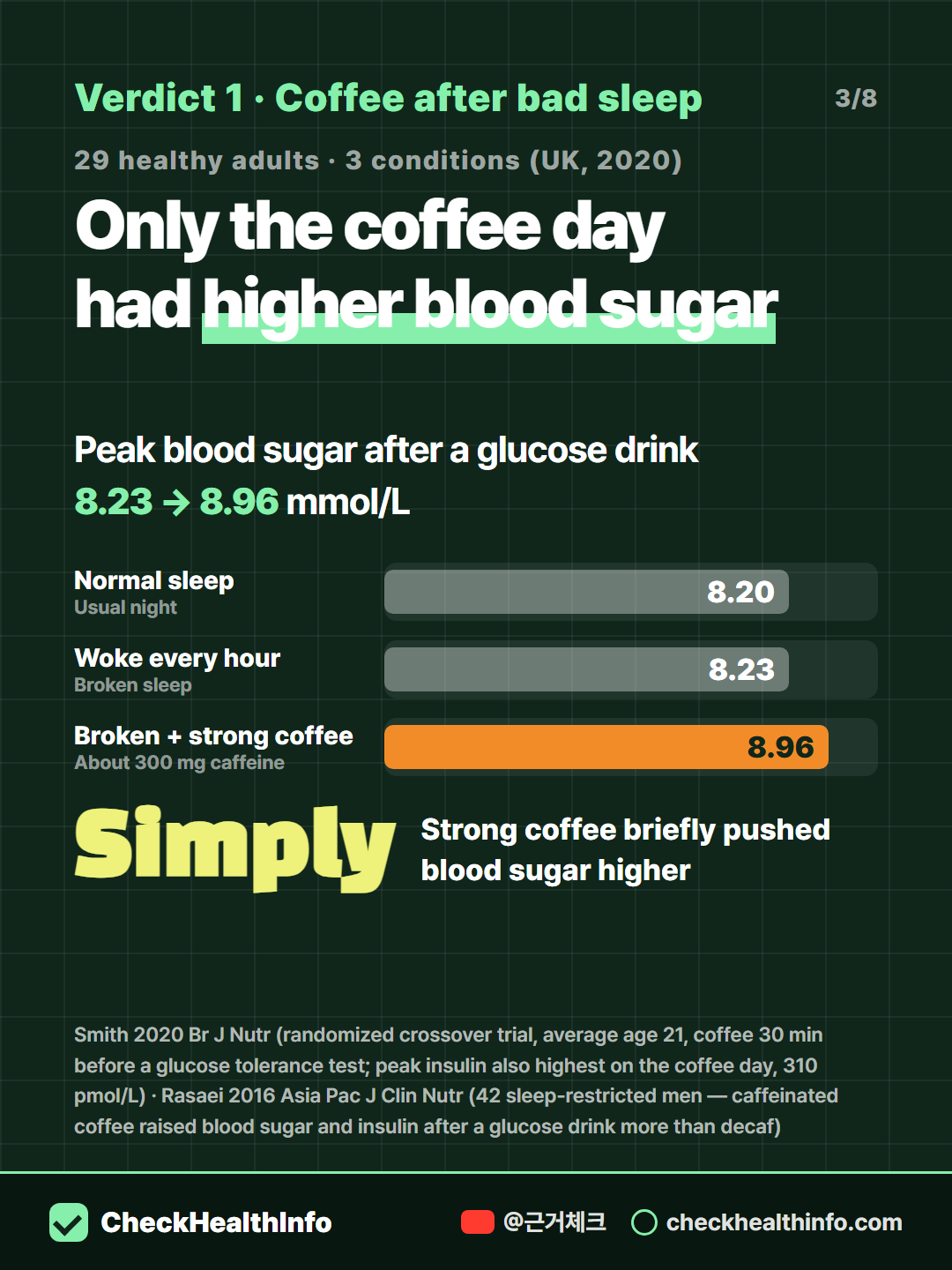
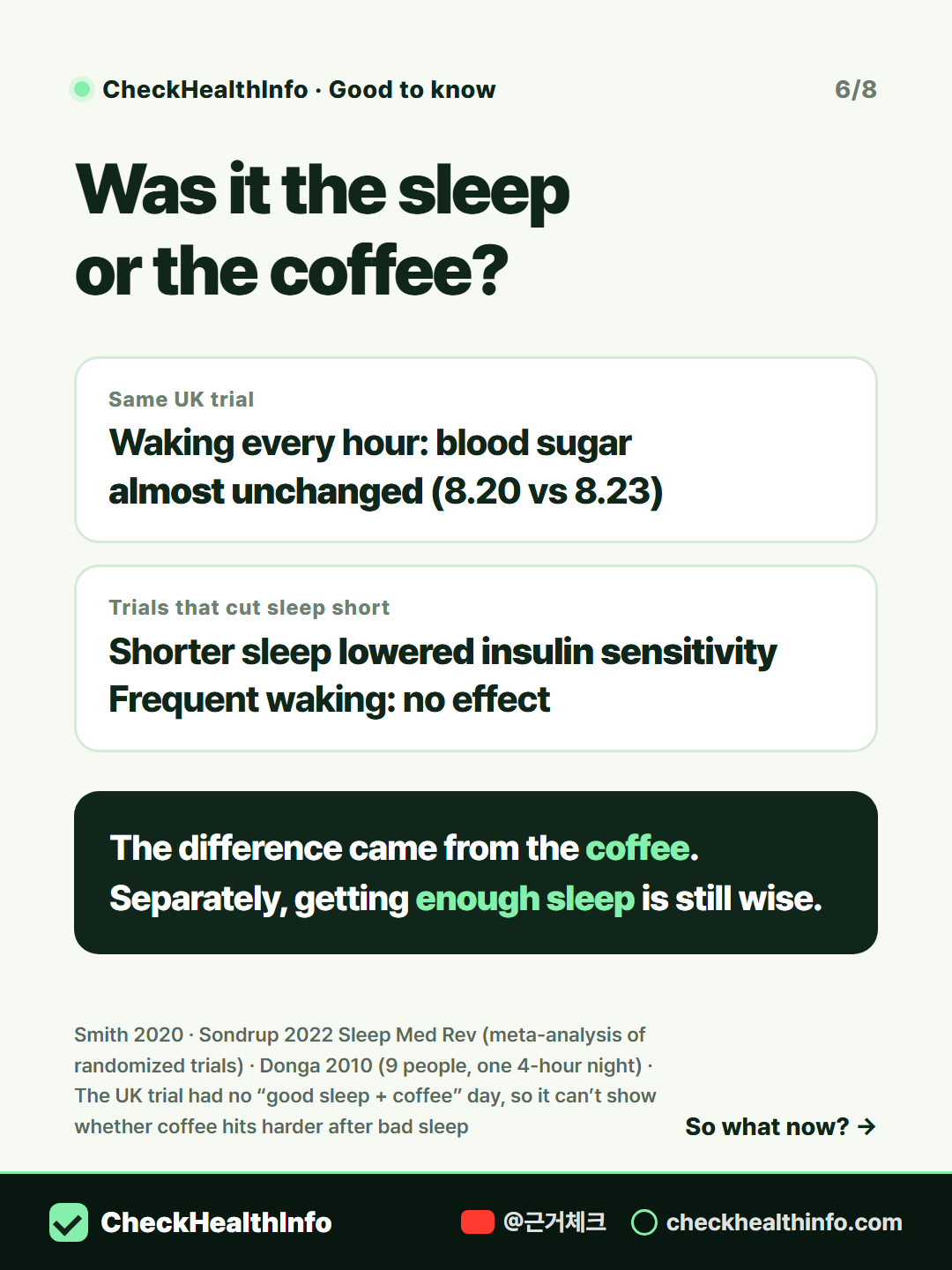
In plain terms Drinking strong caffeinated coffee on an empty stomach and then eating sugar soon after can briefly push your blood sugar higher. But in that trial, the difference came from the coffee, not from the poor sleep.
- In a randomized crossover trial in the UK, 29 healthy adults (average age 21) went through three conditions — a normal night’s sleep, a night of waking for 5 minutes every hour, and the same kind of broken night followed by strong black coffee (about 300 mg of caffeine) about 1 hour after waking. The coffee was taken 30 minutes before a glucose tolerance test. Peak blood sugar was almost the same after normal sleep (8.20 mmol/L) and broken sleep (8.23 mmol/L), but higher on the broken-sleep-plus-coffee day (8.96 mmol/L), and the overall rise in blood sugar was also larger. The researchers concluded that strong caffeinated coffee can weaken the body’s ability to handle sugar (glucose tolerance). [1]
- In a randomized crossover trial of 42 healthy men whose sleep was cut to 4 hours in bed for three nights, blood sugar and insulin during a glucose tolerance test were higher during the caffeinated-coffee period than during the decaf period. Comparing caffeinated with decaf alone, an insulin resistance marker was also higher, but the overall comparison of all three conditions was not clear. Fasting blood sugar did not differ. [2]
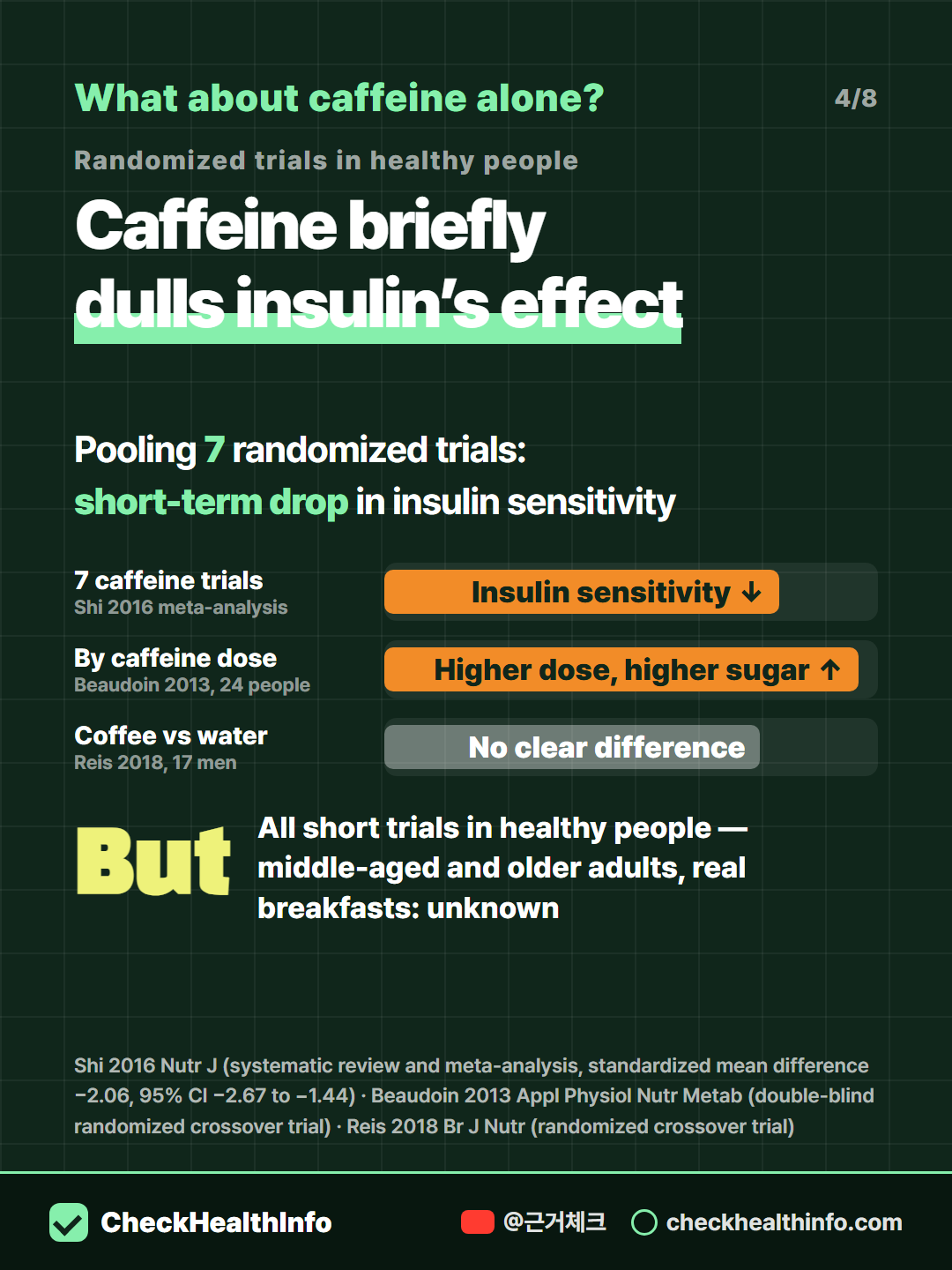
- A meta-analysis of 7 randomized trials in which healthy people were given caffeine or a placebo found that caffeine lowered insulin sensitivity in the short term (standardized mean difference −2.06; 95% confidence interval −2.67 to −1.44). [3] In a double-blind trial of 24 healthy men and women, the more caffeine people took, the more their blood sugar rose during a glucose tolerance test. [4]
Grade: The highest-level evidence is a meta-analysis of 7 caffeine trials, but those trials gave caffeine alone and did not study poor sleep or coffee directly (indirect evidence), so we lowered the grade one level, from A to B. The two randomized crossover trials that addressed the claim most directly point the same way, so the grade is B. It is “Mostly true” because the participants were young, healthy adults, blood sugar was measured with a glucose drink rather than breakfast, and the coffee was strong (about 300 mg of caffeine). In a trial of 17 healthy men, regular coffee showed no clear difference, but this was not a result in the opposite direction, so we did not lower the grade further.
Verdict 2. “A daily morning coffee habit raises your long-term risk of type 2 diabetes”
False · Evidence grade B
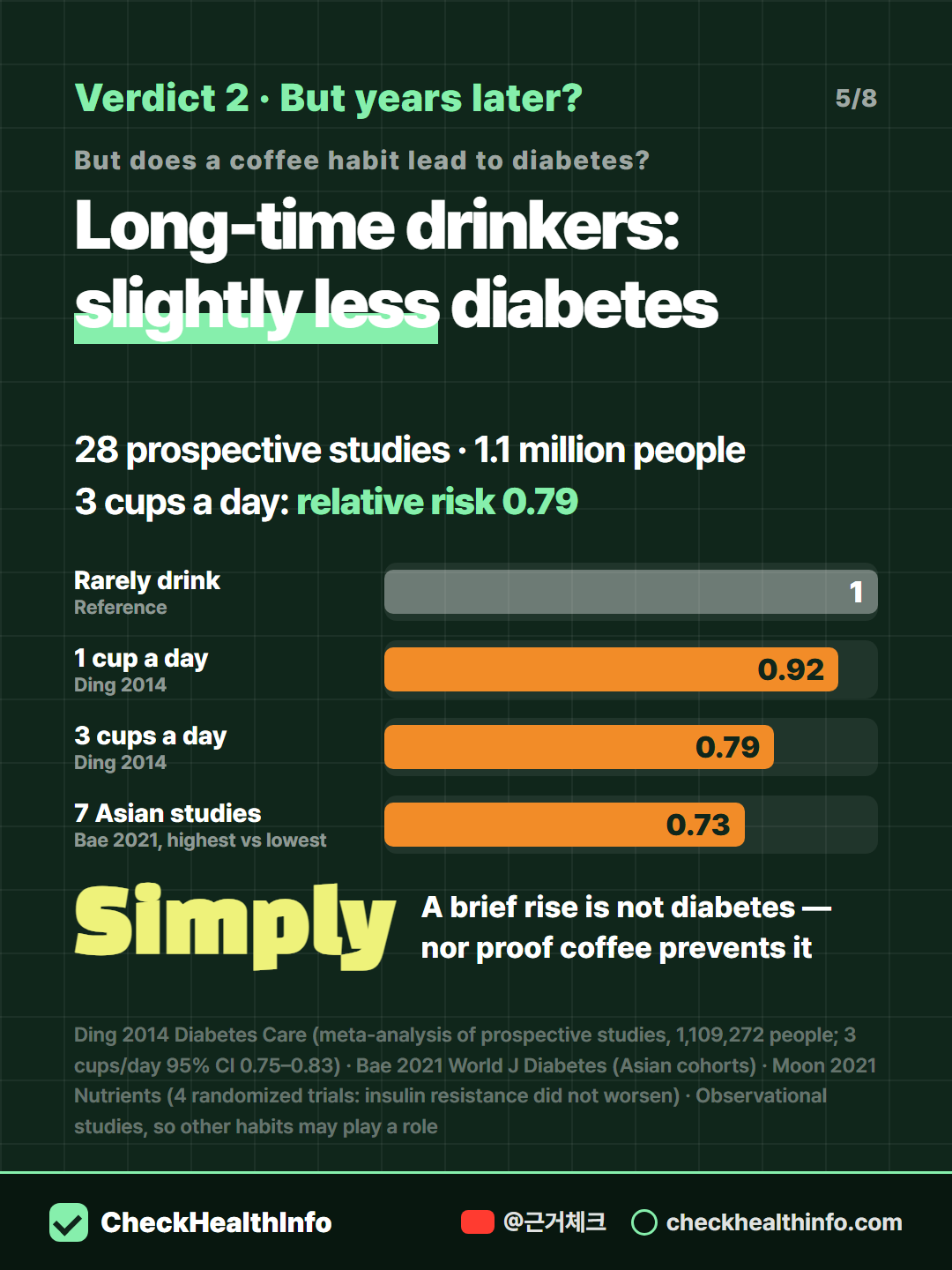
In plain terms Coffee briefly raising blood sugar is not the same as coffee drinkers getting more diabetes over time. Studies that followed people for years found coffee drinkers were slightly less likely to develop diabetes. That does not mean coffee prevents diabetes.
- A meta-analysis of 28 prospective studies (1,109,272 people; 45,335 cases of type 2 diabetes) found that, compared with people who rarely drank coffee, the relative risk of diabetes was 0.92 for 1 cup a day and 0.79 for 3 cups a day. For decaf coffee, each additional daily cup was linked to a relative risk of 0.94. [8]
- An analysis of 7 cohort studies in Asian populations also found a relative risk of 0.73 for the highest versus lowest coffee intake, and 8% lower risk for each daily cup. [9]
- A meta-analysis of 4 randomized trials (268 people) in which people drank coffee for at least a week found a slight overall drop in an insulin resistance marker (HOMA-IR; mean difference −0.13, 95% CI −0.24 to −0.03), but no clear difference (−0.04) once the young, healthy, normal-weight group was excluded. Either way, it did not get worse. [10] The meta-analysis of short-term caffeine trials also noted that longer trials are needed to judge coffee’s long-term effects. [3]
Grade: The evidence started at A because it comes from meta-analyses of prospective studies, but we lowered it one level to B because it pools observational studies, not randomized trials. It is “False” because reliable studies (grade B) point in the opposite direction from the claim. Because these are observational studies, other habits of coffee drinkers may have influenced the results.
Your morning coffee: things to try
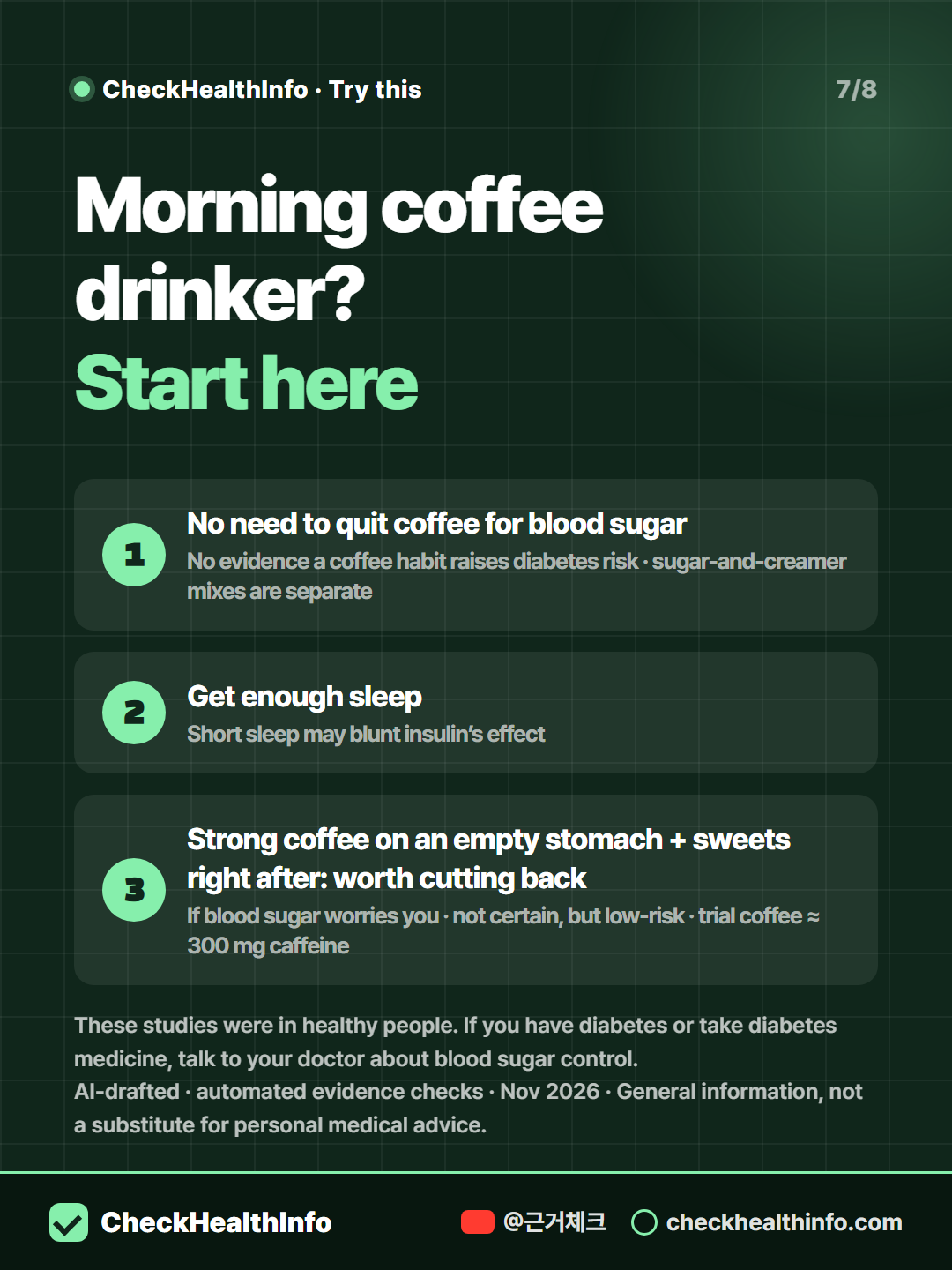
- You don’t need to give up coffee because of blood sugar or diabetes — there is no evidence that a coffee habit raises diabetes risk. Coffee mixes with sugar and creamer are a separate question.
- Get enough sleep — trials have found that cutting sleep short can lower insulin sensitivity.
- If you are concerned about your blood sugar, it may be worth cutting back on very strong coffee (about 300 mg of caffeine in the trial) on an empty stomach followed right away by something sweet. It is not yet clear whether this makes a difference to your health, but it is an easy, low-risk step.
- These studies were in healthy people. If you have diabetes or take diabetes medicine, talk to your doctor about blood sugar control.
Scope: This verdict covers the short-term effects of coffee (caffeine) and sleep on blood sugar after eating sugar, and the link between coffee habits and type 2 diabetes risk. It does not cover diabetes treatment or medicines, caffeine sensitivity, or coffee during pregnancy.
Limitations
- The trial behind Verdict 1 was a short study in young, healthy adults. We do not know whether the same applies to middle-aged or older adults, people with prediabetes or diabetes, regular-strength coffee, or a real breakfast.
- The UK trial did not include a “good sleep plus coffee” condition, so it did not show whether coffee has a bigger effect after a poor night’s sleep.
- These trials did not look at whether a brief extra rise in blood sugar affects health.
- The studies behind Verdict 2 are observational, so we cannot conclude that coffee itself is responsible, and they did not separate morning coffee on an empty stomach or coffee with sugar and creamer.
- We could not open the original news article while writing this. The “51%” in its headline is not in the study abstract, so we did not use it. It may be a different measure in the full (paywalled) paper, so this does not mean the figure is wrong.
- This article was prompted by a news story in November 2026. We do not evaluate any news outlet or person.
- Grades follow section 1 of our methods. We check for new studies in our monthly PubMed review, and any change in a verdict is logged in our corrections log.
Card news
Video (in Korean)
References
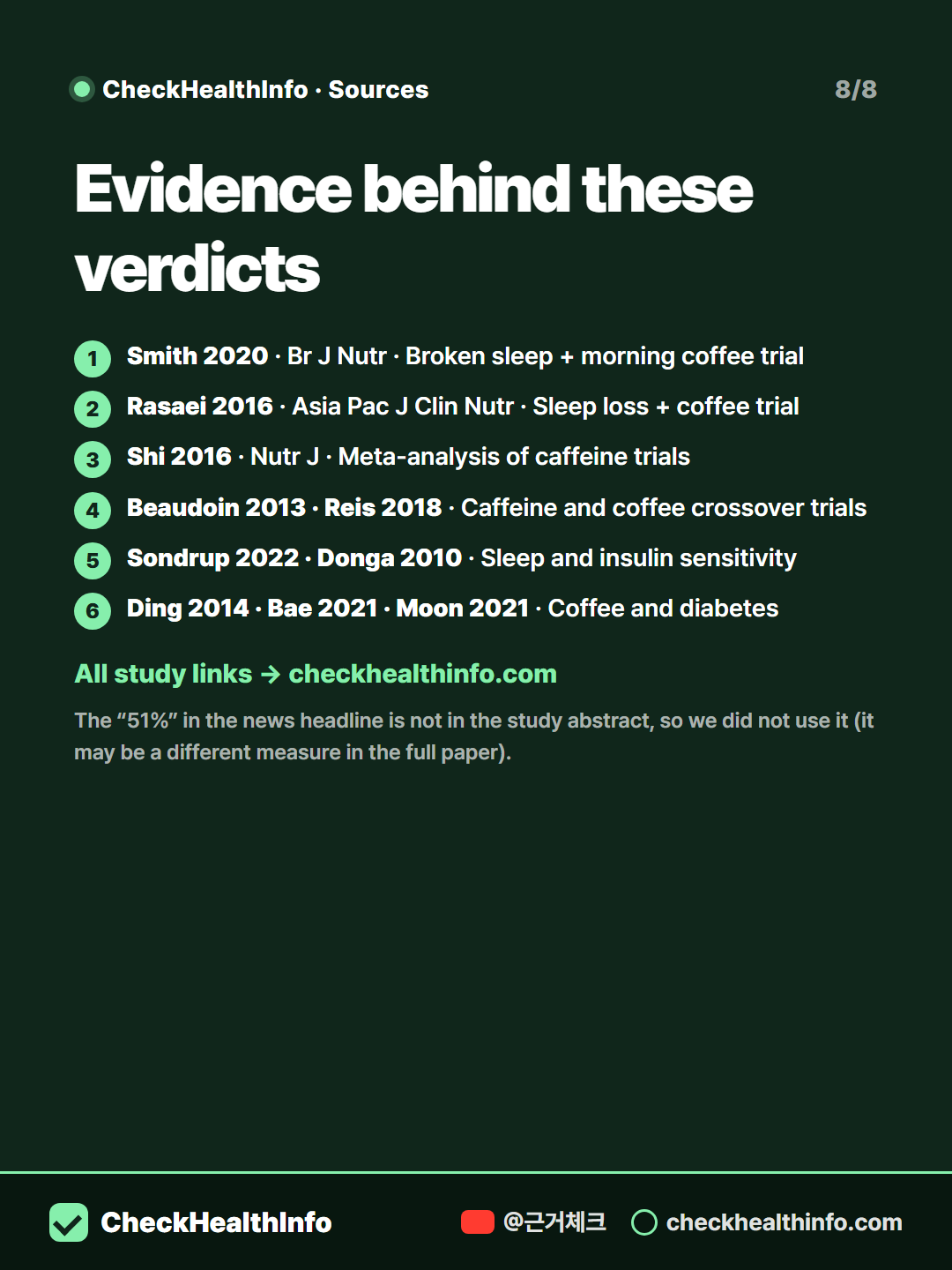
- Smith HA, Hengist A, Thomas J, et al. Glucose control upon waking is unaffected by hourly sleep fragmentation during the night, but is impaired by morning caffeinated coffee. Br J Nutr 2020;124(10):1114-1120. PMID 32475359. PubMed abstract · Full article
- Rasaei B, Talib RA, Noor MI, et al. Simultaneous coffee caffeine intake and sleep deprivation alter glucose homeostasis in Iranian men: a randomized crossover trial. Asia Pac J Clin Nutr 2016;25(4):729-739. PMID 27702715. PubMed abstract · Full article
- Shi X, Xue W, Liang S, et al. Acute caffeine ingestion reduces insulin sensitivity in healthy subjects: a systematic review and meta-analysis. Nutr J 2016;15(1):103. PMID 28031026. PubMed abstract · Full article · Free full text
- Beaudoin MS, Allen B, Mazzetti G, et al. Caffeine ingestion impairs insulin sensitivity in a dose-dependent manner in both men and women. Appl Physiol Nutr Metab 2013;38(2):140-7. PMID 23438224. PubMed abstract · Full article
- Reis CEG, Paiva CLRDS, Amato AA, et al. Decaffeinated coffee improves insulin sensitivity in healthy men. Br J Nutr 2018;119(9):1029-1038. PMID 29514721. PubMed abstract · Full article
- Sondrup N, Termannsen AD, Eriksen JN, et al. Effects of sleep manipulation on markers of insulin sensitivity: A systematic review and meta-analysis of randomized controlled trials. Sleep Med Rev 2022;62:101594. PMID 35189549. PubMed abstract · Full article
- Donga E, van Dijk M, van Dijk JG, et al. A single night of partial sleep deprivation induces insulin resistance in multiple metabolic pathways in healthy subjects. J Clin Endocrinol Metab 2010;95(6):2963-8. PMID 20371664. PubMed abstract · Full article
- Ding M, Bhupathiraju SN, Chen M, et al. Caffeinated and decaffeinated coffee consumption and risk of type 2 diabetes: a systematic review and a dose-response meta-analysis. Diabetes Care 2014;37(2):569-86. PMID 24459154. PubMed abstract · Full article
- Bae JM. Coffee consumption and risk of type 2 diabetes mellitus in Asians: A meta-epidemiological study of population-based cohort studies. World J Diabetes 2021;12(6):908-915. PMID 34168737. PubMed abstract · Full article
- Moon SM, Joo MJ, Lee YS, et al. Effects of Coffee Consumption on Insulin Resistance and Sensitivity: A Meta-Analysis. Nutrients 2021;13(11):3976. PMID 34836231. PubMed abstract · Full article
General information only, not medical advice. It does not replace your own clinician’s diagnosis or treatment. The studies described here included healthy people without diabetes. If you have diabetes or take diabetes medicine, talk with your doctor about managing your blood sugar.