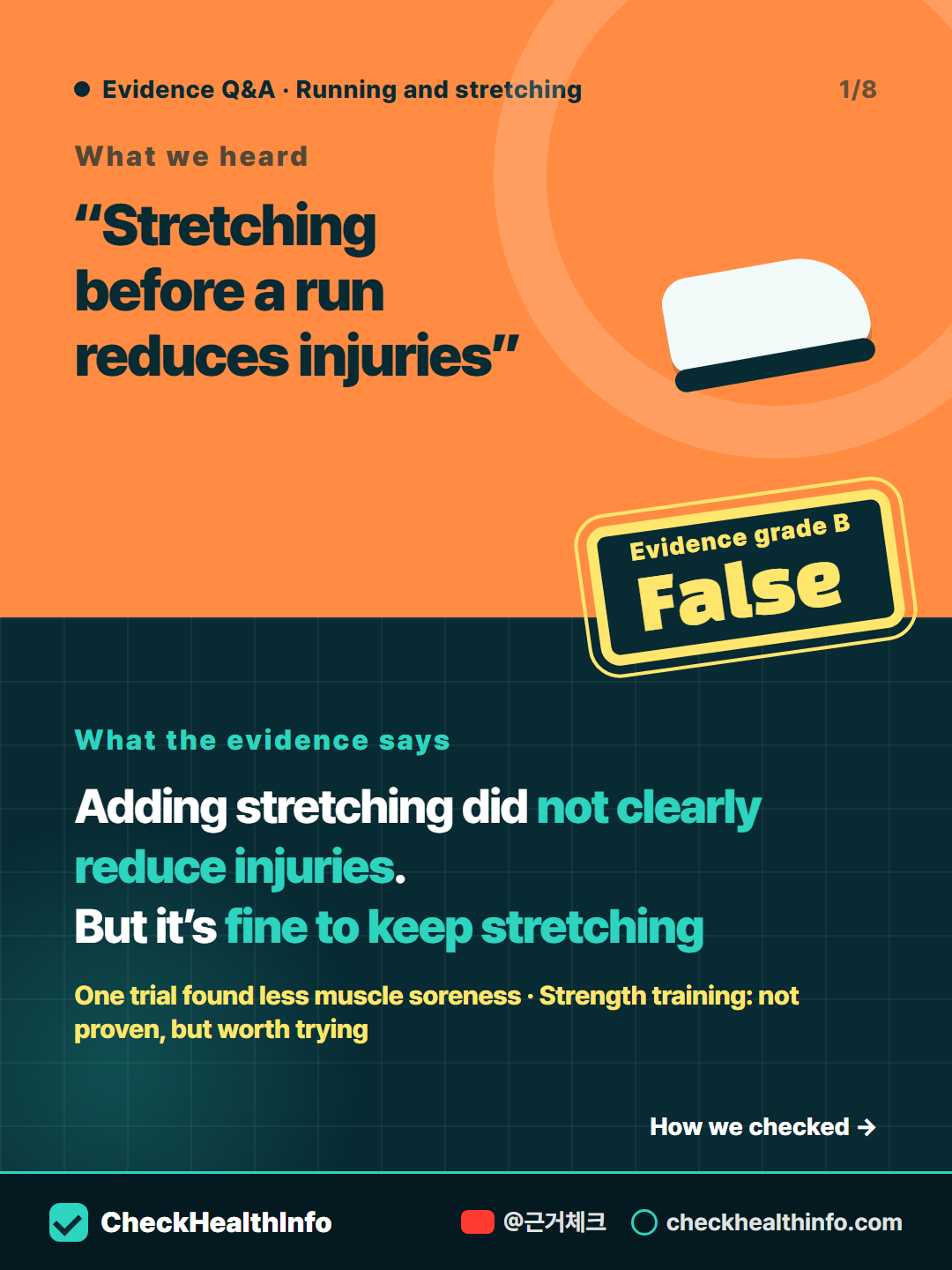
Stretching before a run: does it prevent injuries?
Does stretching before a run (or other exercise) reduce injuries? If not, what helps?

We checked this verdict against 11 sources, such as published studies and clinical guidelines. · How checked: AI-drafted · automated evidence checks
Verdicts at a glance
| Claim | Verdict |
|---|---|
| Stretching before a run (or other exercise) reduces injuries | False · Evidence grade B |
Bottom line — In large trials that randomly split people into groups, adding stretching before exercise did not clearly reduce overall injuries. So the claim that “stretching before a run (or other exercise) reduces injuries” is rated False. That does not mean stretching is harmful — one trial found less muscle soreness, and it is fine to keep stretching. But rather than relying on stretching alone to prevent injuries, it is worth trying brief stretches followed by light movement, plus regular strength training.
Static stretching — Holding a muscle in a stretched position without moving, usually for 20–30 seconds or so. This is what most people mean by “stretching.”
Randomized trial — A study that assigns people by chance (like drawing lots) to two or more groups, gives only one group the intervention, and compares the results. It is the best design for testing cause and effect.
Relative risk (RR) / hazard ratio (HR) — A comparison of injury risk in one group versus another. A value of 1 means no difference; below 1 means fewer injuries.
Odds ratio (OR) — A comparison of the odds that something happens in one group versus another. A value of 1 means no difference.
95% confidence interval (CI) — The range in which the true result is likely to lie. If the range includes 1, the difference is not considered statistically significant.
Verdict: “Stretching before a run (or other exercise) reduces injuries”
False · Evidence grade B
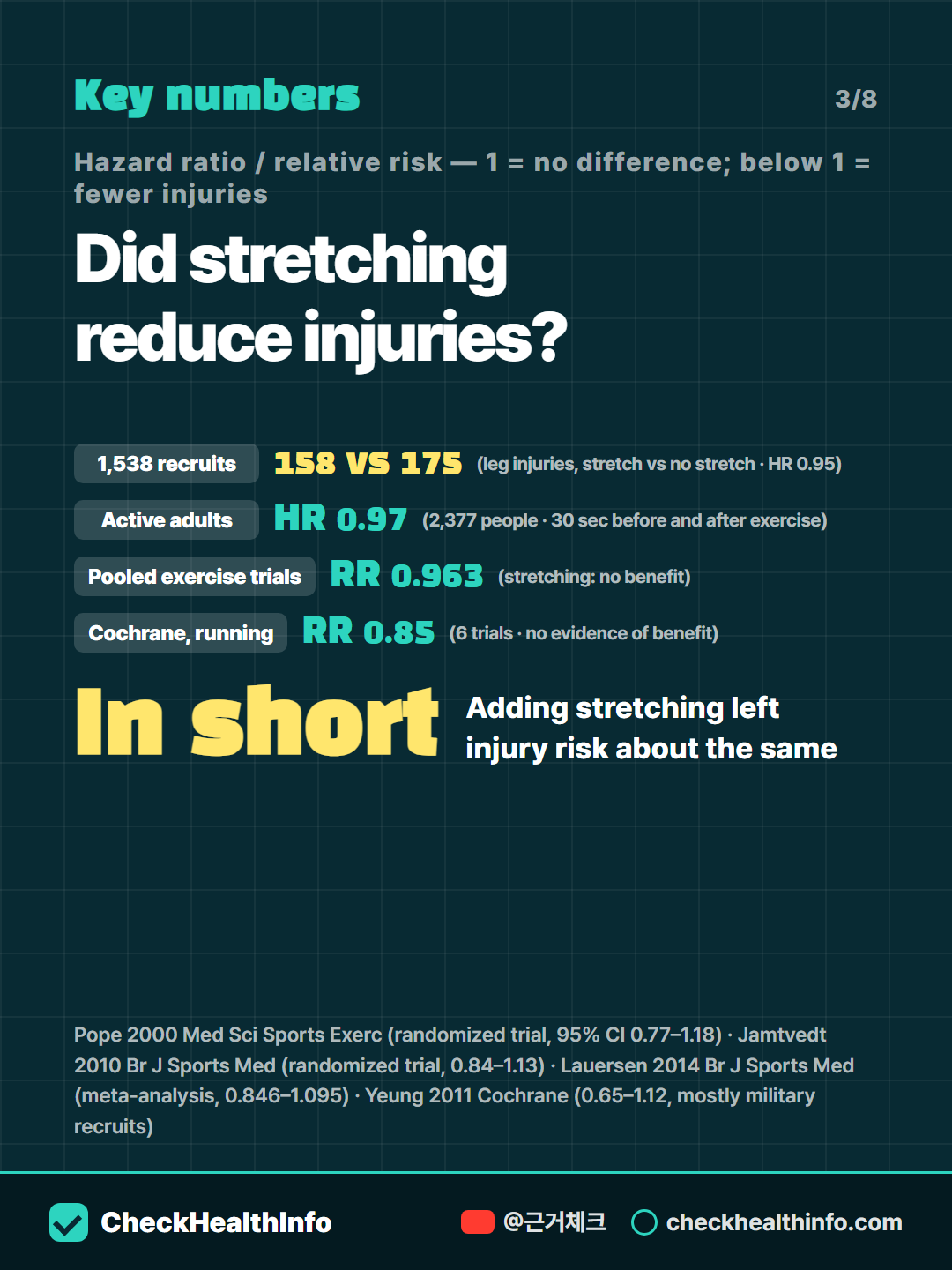
In plain terms Adding stretching before exercise left injury risk about the same.
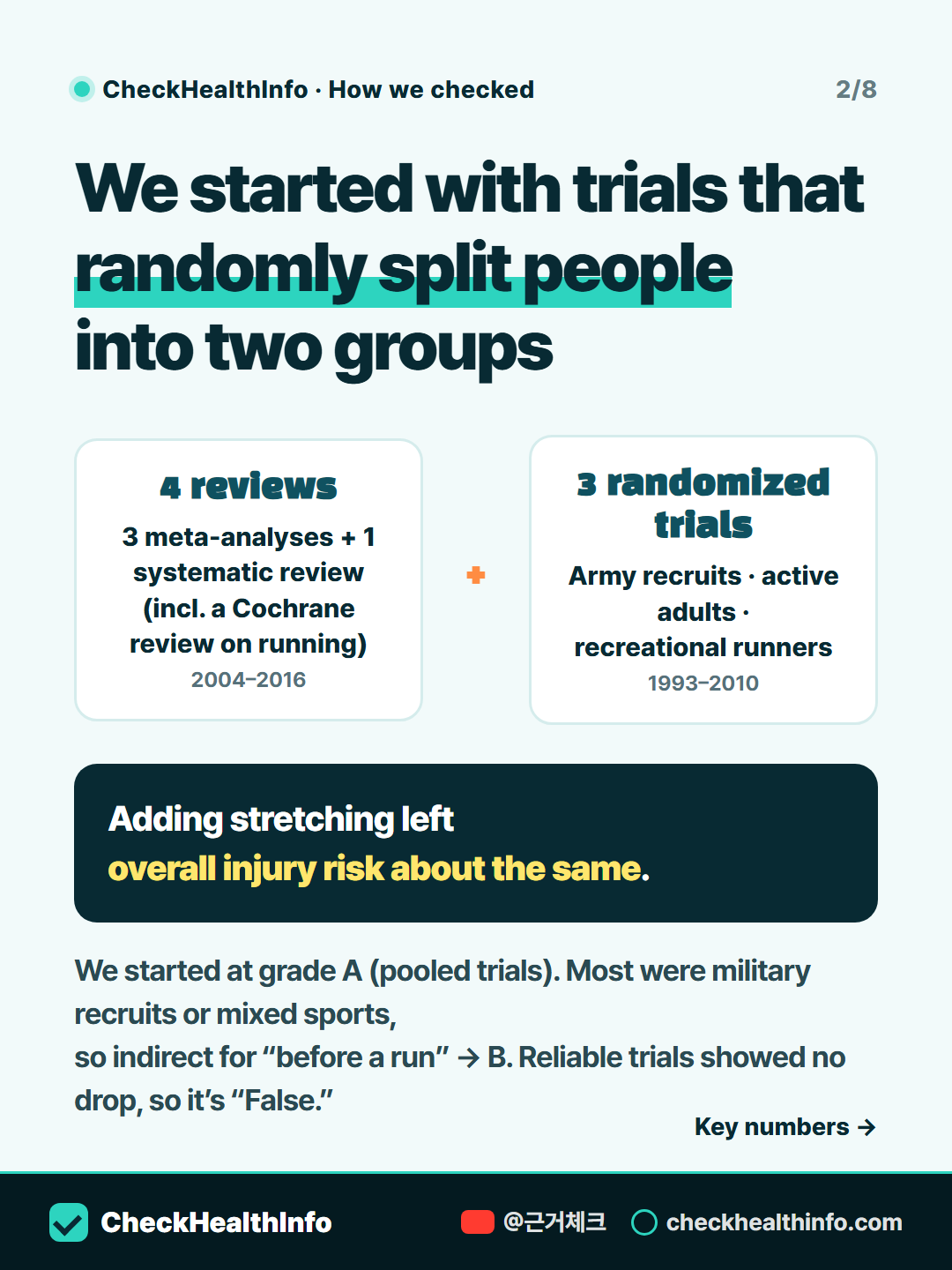
- Army recruit trial — 1,538 male army recruits were randomly assigned to two groups. Both groups did an active warm-up, and one group also did a 20-second static stretch for each of six major leg muscle groups. Over 12 weeks of training, there were 158 leg injuries in the stretching group and 175 in the control group, with no meaningful difference in overall injury risk (HR 0.95; 95% CI 0.77–1.18). Fitness and age predicted injury risk. [5]
- Trial in active adults — In an online trial of 2,377 adults who exercised regularly, 30-second static stretches before and after exercise did not clearly reduce overall injury risk (HR 0.97; 95% CI 0.84–1.13). [6]
- Trial in recreational runners — In a trial of 421 male recreational runners, the group taught warm-up, cool-down and stretching exercises had 5.5 injuries per 1,000 hours of running, no different from 4.9 in the control group. [7]
- Pooled trials — In a meta-analysis that pooled 25 randomized trials of exercise programs, stretching showed no benefit (RR 0.963; CI 0.846–1.095). [1] A Cochrane review of trials to prevent running injuries likewise found no evidence that stretching reduces soft-tissue injuries of the lower limb (6 trials, 5,130 participants; RR 0.85; 95% CI 0.65–1.12). This result is uncertain enough to be compatible with either fewer or more injuries. [2] Another meta-analysis of stretching and sports injuries (OR 0.93; CI 0.78–1.11) [3] and a systematic review of stretching studies also found no clear effect on overall injuries. [4]
Grade: We started at A (systematic reviews and meta-analyses of randomized trials). Downgrade for indirectness: most included trials involved military training (19 of the 25 trials in the Cochrane review) or a mix of sports, few involved everyday recreational runners, and some had people stretch both before and after exercise. Because this evidence is indirect for “stretching before a run,” we lowered the grade one step to B. Results pointed the same way and the largest meta-analysis had a narrow confidence interval, so we did not lower it further. Reliable trials showed that injuries did not fall, contrary to the claim, so it is rated “False.”
You don’t need to give up stretching
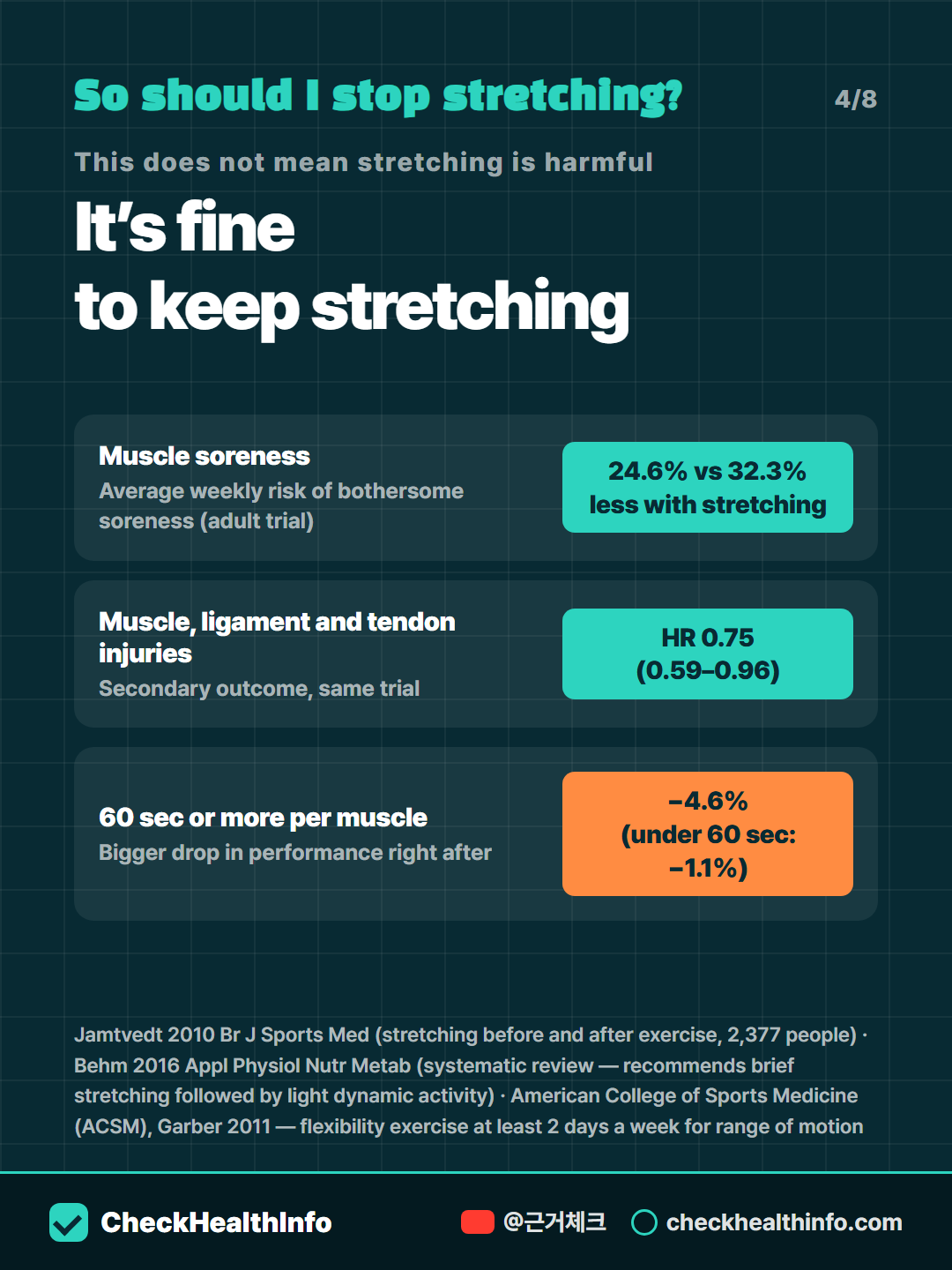
- Muscle soreness — In the trial of active adults, the stretching group’s average weekly risk of bothersome soreness was 24.6%, lower than 32.3% in the group that did not stretch (OR 0.69; 95% CI 0.59–0.82). Muscle, ligament and tendon injuries — a prespecified secondary outcome — were also less common (0.66 vs 0.88 injuries per person-year; HR 0.75; 95% CI 0.59–0.96). The researchers concluded that stretching may reduce the risk of “some injuries.” Note that these outcomes were self-reported by participants, without blinding. [6]
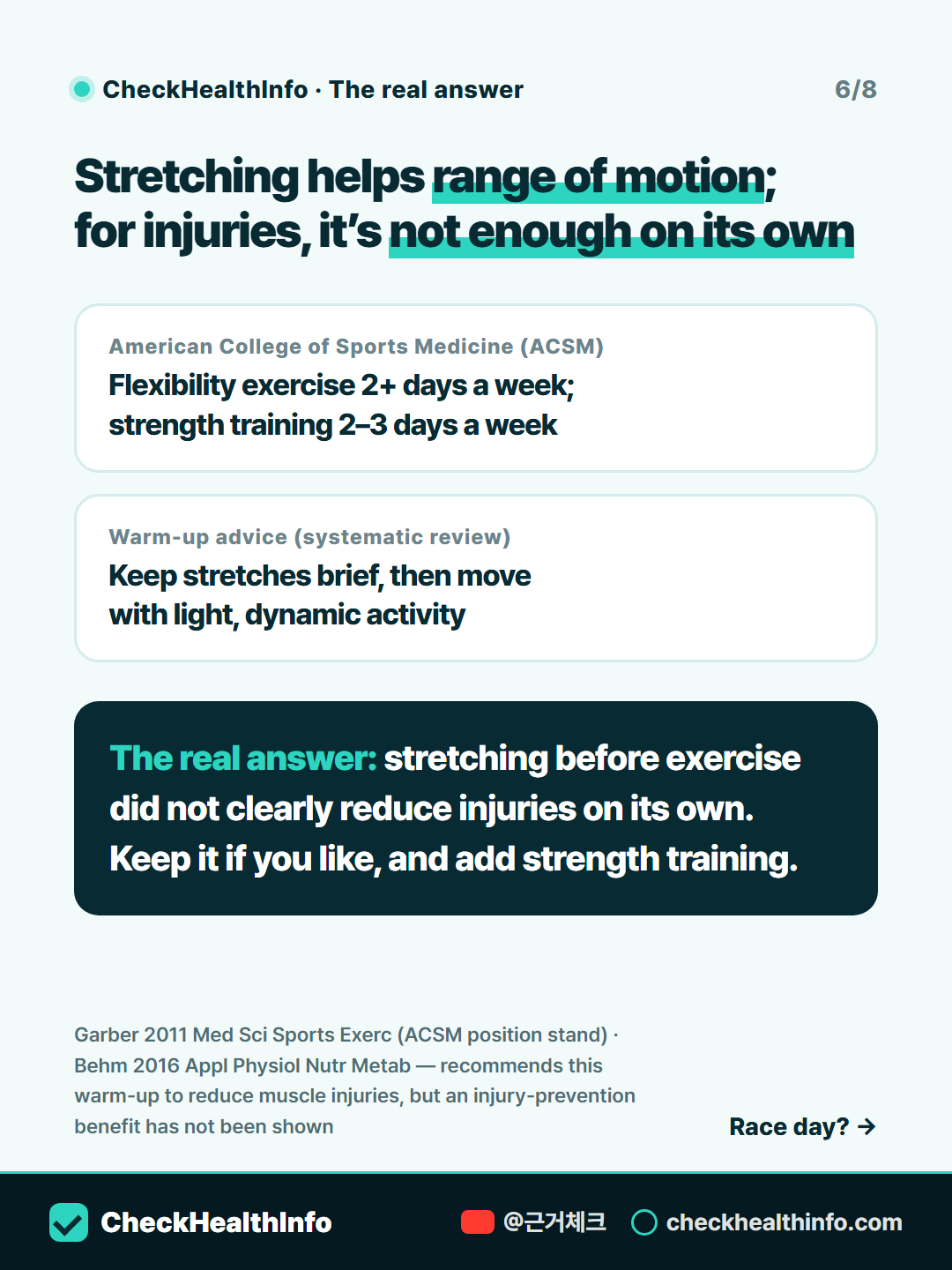
- Range of motion — To maintain joint range of motion, the American College of Sports Medicine (ACSM) recommends flexibility exercises for each major muscle–tendon group (60 seconds in total per exercise) on at least 2 days a week. [8]
- Keep it short — Static stretching for 60 seconds or more per muscle caused a larger drop in performance right afterward (−4.6%, versus −1.1% for under 60 seconds). The systematic review recommended a warm-up that adds dynamic activity after stretching, to reduce muscle injuries and increase range of motion. However, in the same review static stretching had no clear effect on injuries and there were no injury data for dynamic stretching, so an injury-prevention benefit has not been shown. [4]
But — was strength training any different?
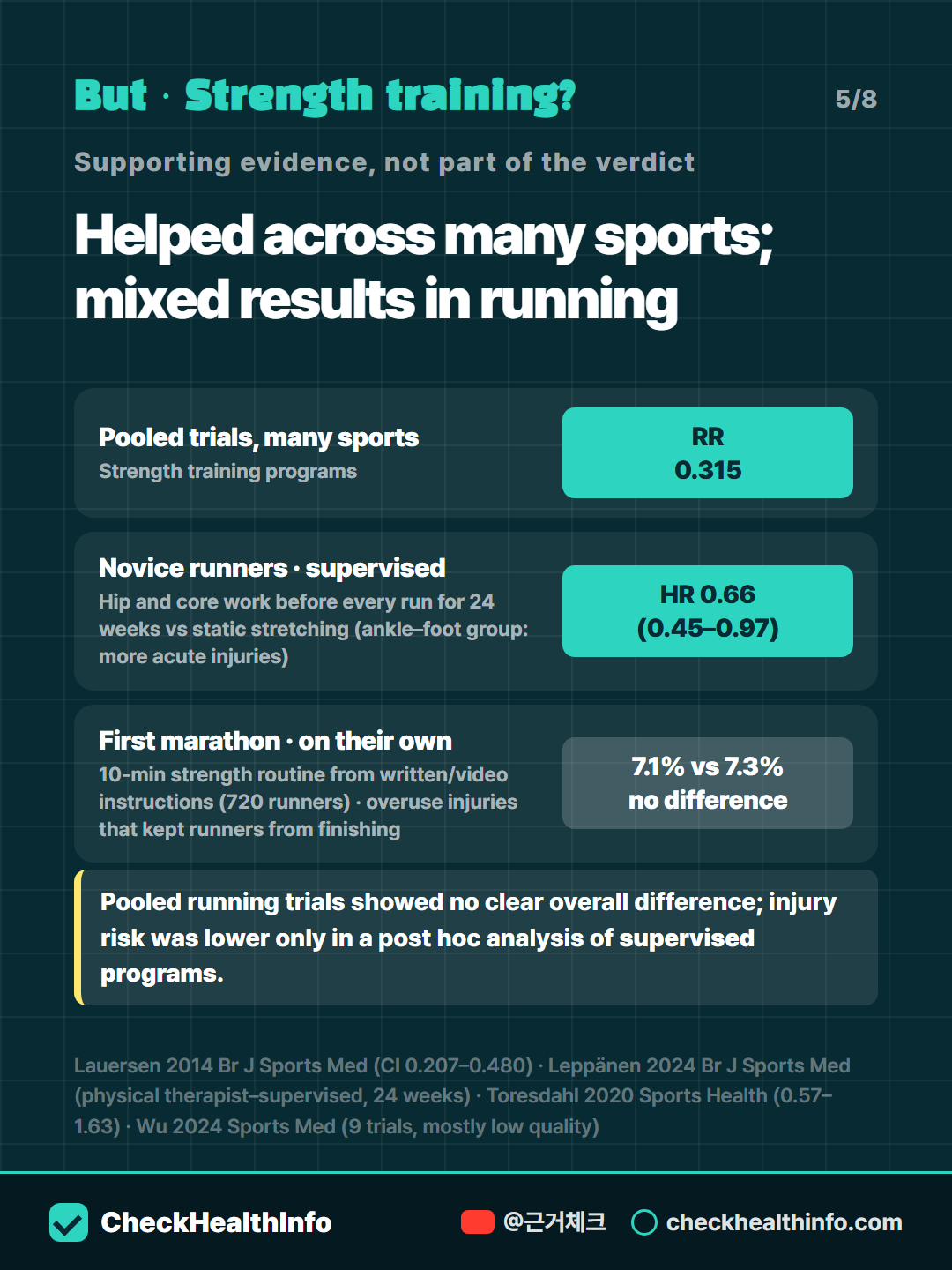
- In a meta-analysis of randomized trials across many sports, strength training programs — unlike stretching — sharply lowered injury risk (RR 0.315; CI 0.207–0.480). Proprioception (balance) training also had an RR of 0.550 (CI 0.347–0.869). Most of these trials involved sports other than running, and results varied from study to study. [1]
- Studies of runners alone are still mixed. In a three-arm trial in adult novice runners, the group that did physical therapist–supervised hip and core exercises before running had fewer lower-limb injuries than the group that did static stretching (HR 0.66; 95% CI 0.45–0.97). This was a program done before every run for 24 weeks. The ankle-and-foot exercise group had no difference in overuse injuries and actually had more acute injuries (HR 3.60; 95% CI 1.20–10.86). [10]
- By contrast, among 720 first-time marathon runners, a 10-minute strength routine done on their own from written and video instructions (3 times a week for 12 weeks) did not reduce overuse injuries that kept runners from finishing the marathon (7.1% vs 7.3%; RR 0.97; 95% CI 0.57–1.63). [11]
- A meta-analysis of 9 endurance-running trials also found no clear overall difference; injury risk was lower only in a post hoc analysis of supervised programs. The authors concluded that exercise-based programs do not appear to reduce running injuries, and most included studies were of low quality. [9]
- Because these studies do not directly test whether stretching reduces injuries, we did not use them to grade the verdict — only as supporting evidence for what else you can do.
If you’re running a race
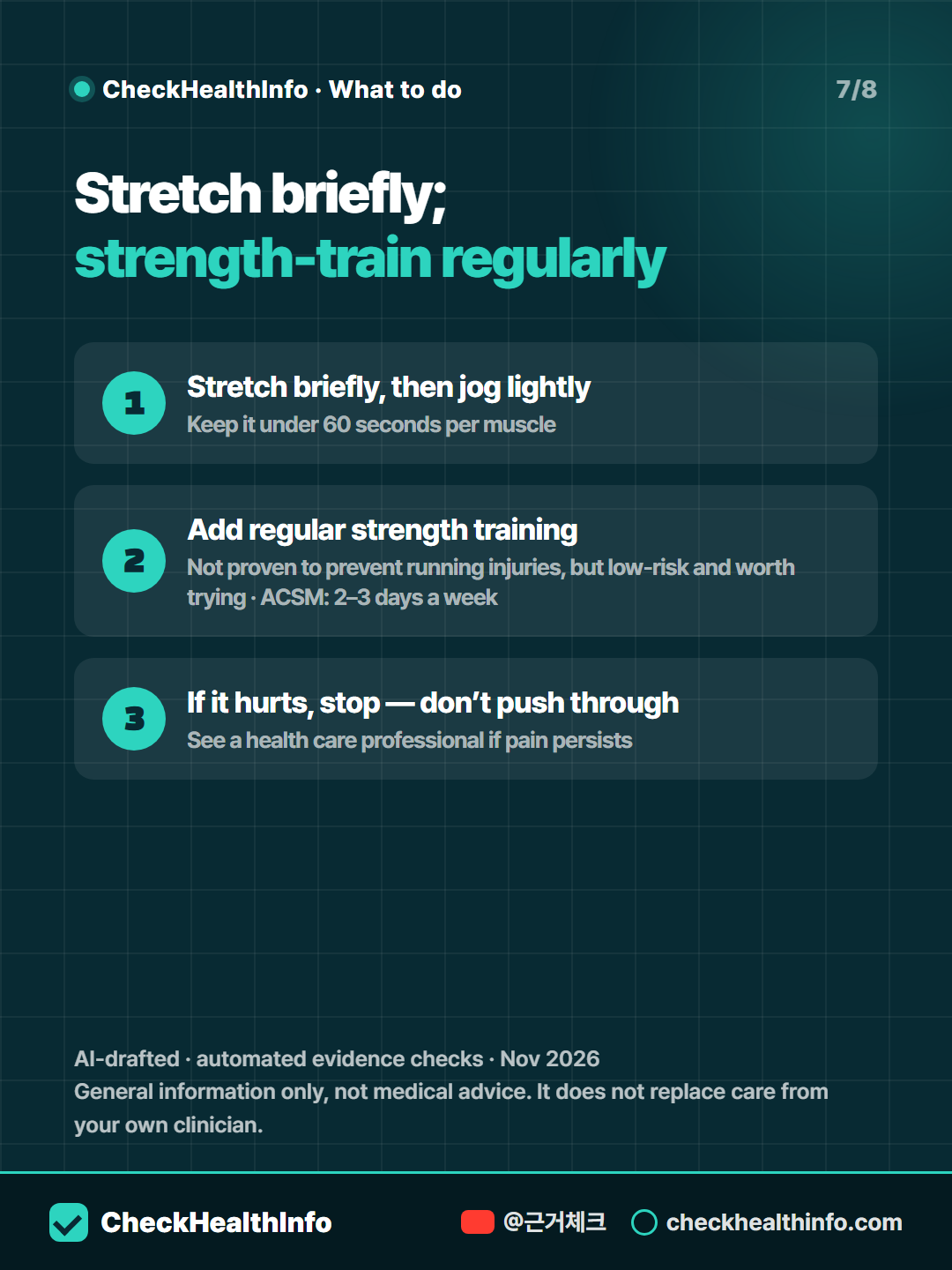
- Stretching is fine — keep it brief — Rather than holding each stretch for 60 seconds or more, keep stretches short, then jog lightly to get moving. This has not been shown to prevent injuries, but it matches the review’s advice and is low-risk. [4]
- Add regular strength training — This is something to do regularly, not for the first time right before a race. It is not certain that it prevents running injuries, but the ACSM recommends strength training 2–3 days a week, and it is low-risk and worth trying. If it is hard to do on your own, working with a coach or physical therapist is one option. [8] [10]
- If it hurts, stop — don’t push through — If you feel pain while running, stop rather than pushing through. If you already have pain or it persists, see a health care professional.
Scope: This verdict covers stretching before exercise and injuries during exercise (mostly in the legs). It does not cover other race risks such as heart problems, or the treatment of injuries.
Limitations
- Most trials involved military training or a mix of sports, so the evidence is indirect for everyday recreational runners and marathon participants. [2]
- Stretching methods and durations varied across trials (20–30 seconds; before exercise, or before and after). [5] [6]
- The Cochrane review judged every included trial to be at unclear or high risk of bias in at least one area. [2]
- This verdict is about overall injuries. A secondary outcome showed fewer injuries of some types, such as muscle, ligament and tendon injuries. [6] There are no injury data for dynamic stretching. [4]
- The strength-training evidence comes mainly from other sports; in running, benefits were seen only with supervised programs (one physical therapist–supervised trial and a post hoc analysis of pooled trials). [9] [10]
- The grade follows section 1 of our methods. We check for new studies in our monthly PubMed review, and any change in the verdict is logged in our corrections.
Card news
Video (in Korean)
References
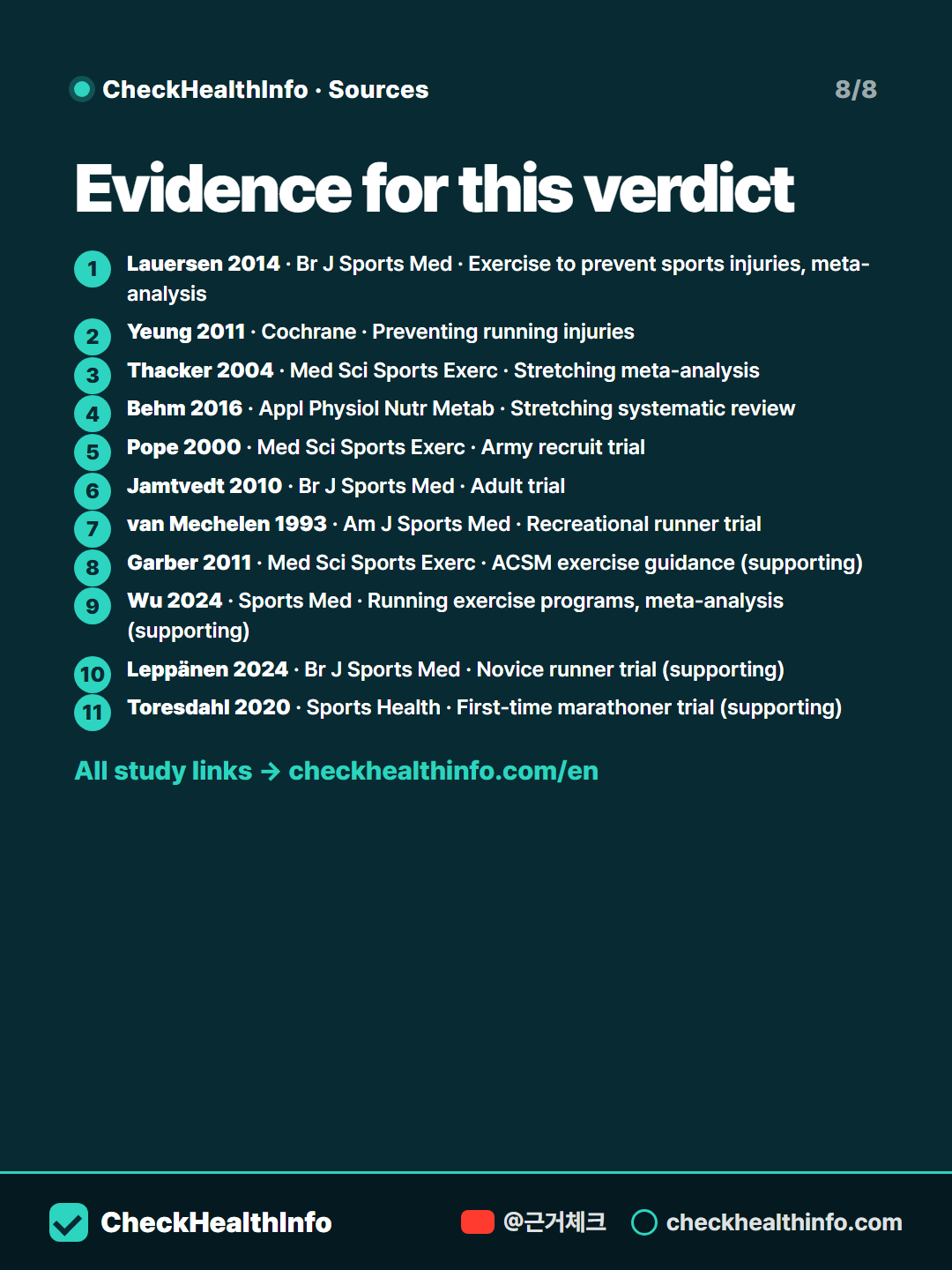
- Lauersen JB, Bertelsen DM, Andersen LB. The effectiveness of exercise interventions to prevent sports injuries: a systematic review and meta-analysis of randomised controlled trials.. Br J Sports Med 2014;48(11):871-7. PMID 24100287. PubMed abstract · Full article
- Yeung SS, Yeung EW, Gillespie LD. Interventions for preventing lower limb soft-tissue running injuries.. Cochrane Database Syst Rev 2011;2011(7):CD001256. PMID 21735382. PubMed abstract · Full article
- Thacker SB, Gilchrist J, Stroup DF, et al. The impact of stretching on sports injury risk: a systematic review of the literature.. Med Sci Sports Exerc 2004;36(3):371-8. PMID 15076777. PubMed abstract · Full article
- Behm DG, Blazevich AJ, Kay AD, et al. Acute effects of muscle stretching on physical performance, range of motion, and injury incidence in healthy active individuals: a systematic review.. Appl Physiol Nutr Metab 2016;41(1):1-11. PMID 26642915. PubMed abstract · Full article
- Pope RP, Herbert RD, Kirwan JD, et al. A randomized trial of preexercise stretching for prevention of lower-limb injury.. Med Sci Sports Exerc 2000;32(2):271-7. PMID 10694106. PubMed abstract · Full article
- Jamtvedt G, Herbert RD, Flottorp S, et al. A pragmatic randomised trial of stretching before and after physical activity to prevent injury and soreness.. Br J Sports Med 2010;44(14):1002-9. PMID 19525241. PubMed abstract · Full article
- van Mechelen W, Hlobil H, Kemper HC, et al. Prevention of running injuries by warm-up, cool-down, and stretching exercises.. Am J Sports Med 1993;21(5):711-9. PMID 8238713. PubMed abstract · Full article
- Garber CE, Blissmer B, Deschenes MR, et al. American College of Sports Medicine position stand. Quantity and quality of exercise for developing and maintaining cardiorespiratory, musculoskeletal, and neuromotor fitness in apparently healthy adults: guidance for prescribing exercise.. Med Sci Sports Exerc 2011;43(7):1334-59. PMID 21694556. PubMed abstract · Full article
- Wu H, Brooke-Wavell K, Fong DTP, et al. Do Exercise-Based Prevention Programs Reduce Injury in Endurance Runners? A Systematic Review and Meta-Analysis.. Sports Med 2024;54(5):1249-1267. PMID 38261240. PubMed abstract · Full article
- Leppänen M, Viiala J, Kaikkonen P, et al. Hip and core exercise programme prevents running-related overuse injuries in adult novice recreational runners: a three-arm randomised controlled trial (Run RCT).. Br J Sports Med 2024;58(13):722-732. PMID 38724071. PubMed abstract · Full article
- Toresdahl BG, McElheny K, Metzl J, et al. A Randomized Study of a Strength Training Program to Prevent Injuries in Runners of the New York City Marathon.. Sports Health 2020;12(1):74-79. PMID 31642726. PubMed abstract · Full article
General information only, not medical advice. It does not replace your own clinician’s diagnosis or treatment. If something already hurts or pain continues while you run, don’t push through it — see a health care professional. If you have chest pain, severe shortness of breath or dizziness, stop right away and call 911 (119 in Korea).