Is black tea better than green tea for your blood vessels?
Do black tea drinkers have a lower risk of cardiovascular disease and death than green tea drinkers? And is drinking tea itself good for your blood vessels?

We checked this verdict against 11 sources, such as published studies and clinical guidelines. · How checked: AI-drafted · automated evidence checks
Verdicts at a glance
| Claim | Verdict |
|---|---|
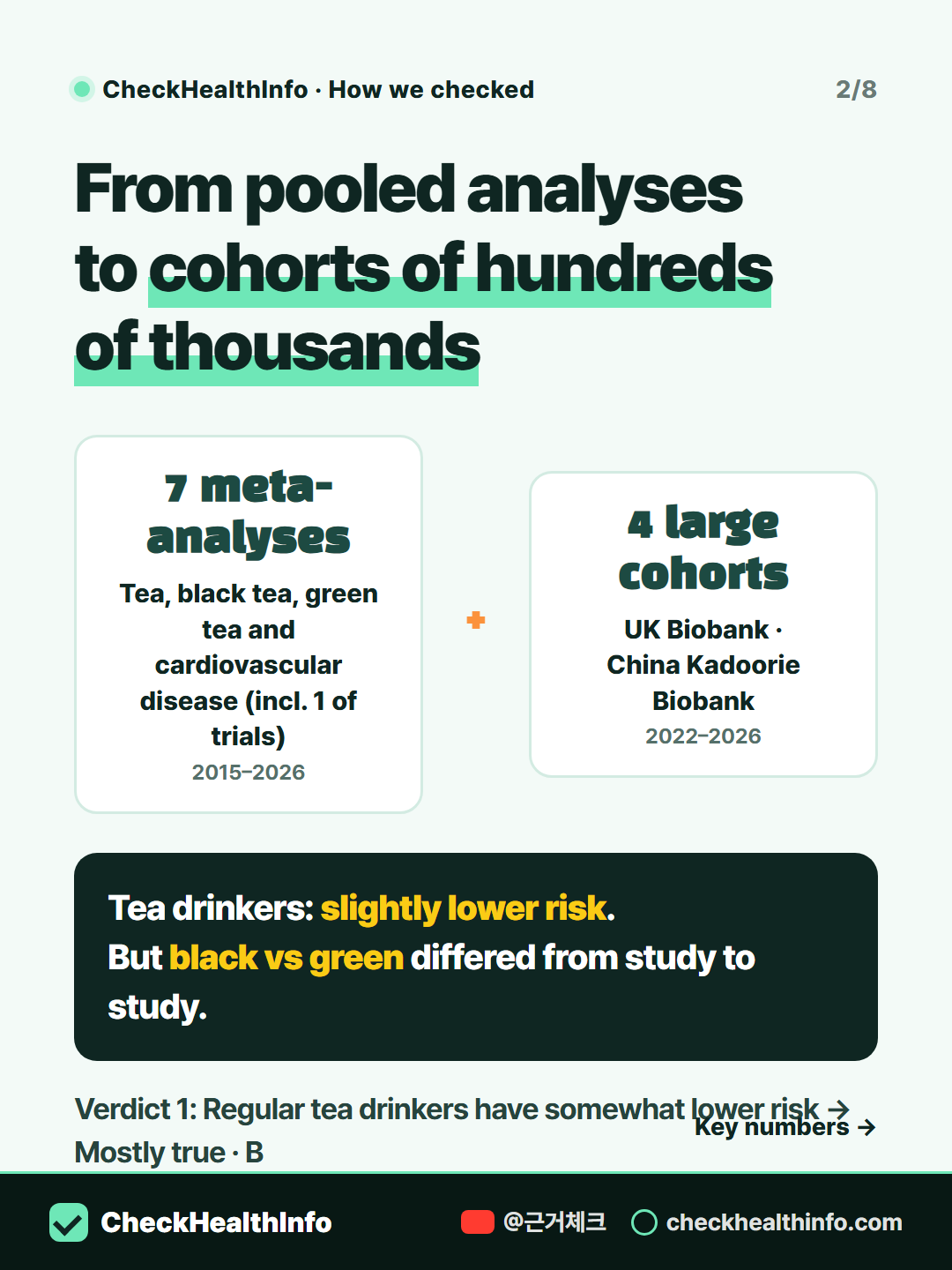
| People who regularly drink tea (black or green) tend to have a lower risk of cardiovascular disease and death than people who do not | Mostly true · Evidence grade B |
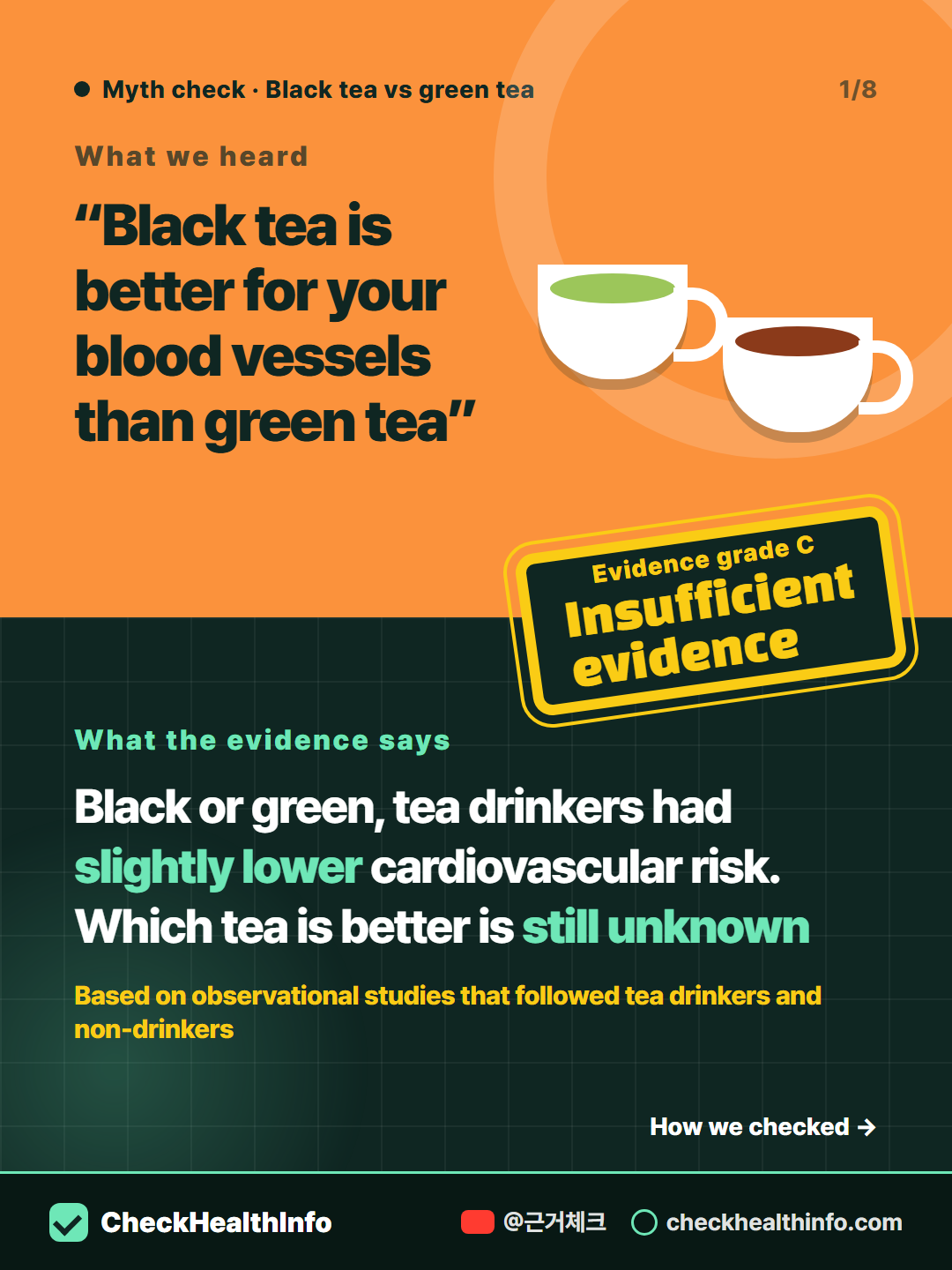
| Black tea is better for cardiovascular health than green tea | Insufficient evidence · Evidence grade C |
Bottom line — Whether they drank black or green tea, people who regularly drank tea had a somewhat lower risk of cardiovascular disease and death than people who did not. But we found no trial that compared black and green tea head to head, and which tea looked better depended on the study. So the claim that “regular tea drinkers have a lower cardiovascular risk” is rated Mostly true, and the claim that “black tea is better for your blood vessels than green tea” is rated Insufficient evidence. Enjoying the tea you like, without drinking it very hot, is a reasonable choice.
Cohort study (a type of observational study) — Researchers follow people who do and do not drink tea for years and compare how often they develop disease. Because people chose their own habits rather than being assigned to drink tea, differences in other lifestyle factors can affect the results.
Meta-analysis — A method that pools the results of several studies on the same question into one estimate.
Relative risk / hazard ratio (e.g., 0.86) — The risk in one group compared with the risk in a reference group, shown as a ratio. Below 1 means lower risk. If the 95% confidence interval crosses 1, the result is not statistically significant.
Verdict 1: “People who regularly drink tea (black or green) have a lower risk of cardiovascular disease and death than people who do not”
Mostly true · Evidence grade B
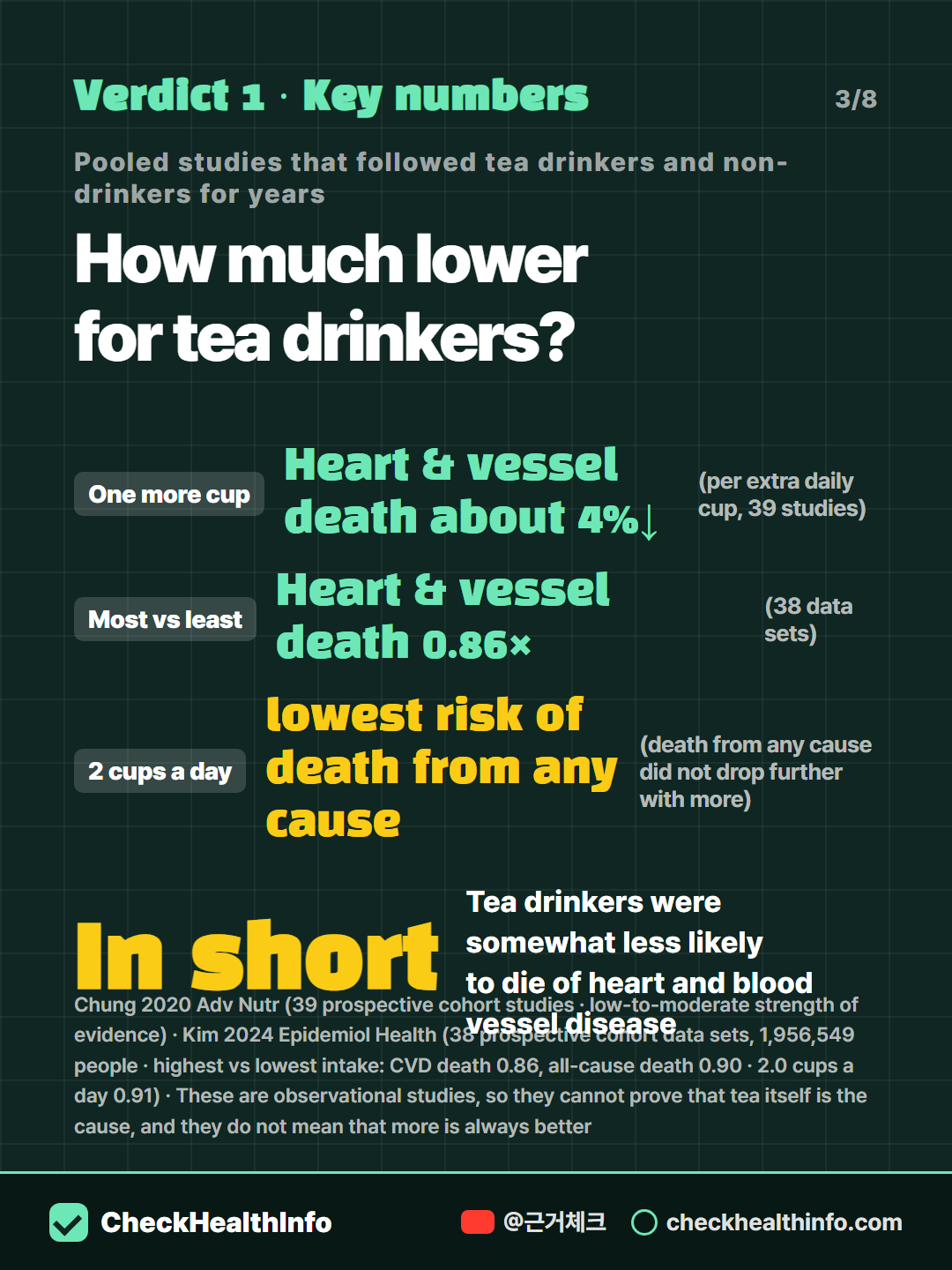
In plain terms Tea drinkers were somewhat less likely to develop or die of heart and blood vessel disease, but the difference is small, and we cannot conclude that tea itself is the reason.
- Pooled studies — In a meta-analysis of 38 prospective cohort data sets (1,956,549 people), the highest tea intake group, compared with the lowest, had 0.86 times the risk of cardiovascular death (95% confidence interval 0.79–0.94) and 0.90 times the risk of death from any cause. Risk of death from any cause was lowest at 2.0 cups a day (0.91), and death from any cause did not fall further at higher intake. [1]
- Another meta-analysis of 39 cohort studies found that each additional daily cup of tea was linked to an average 4% lower risk of cardiovascular death, 4% lower risk of stroke and 2% lower risk of developing cardiovascular disease. The researchers rated the strength of evidence as low to moderate and noted that studies at higher risk of bias tended to show larger associations. Because these are observational associations, they do not mean that drinking more and more keeps lowering risk. [2]
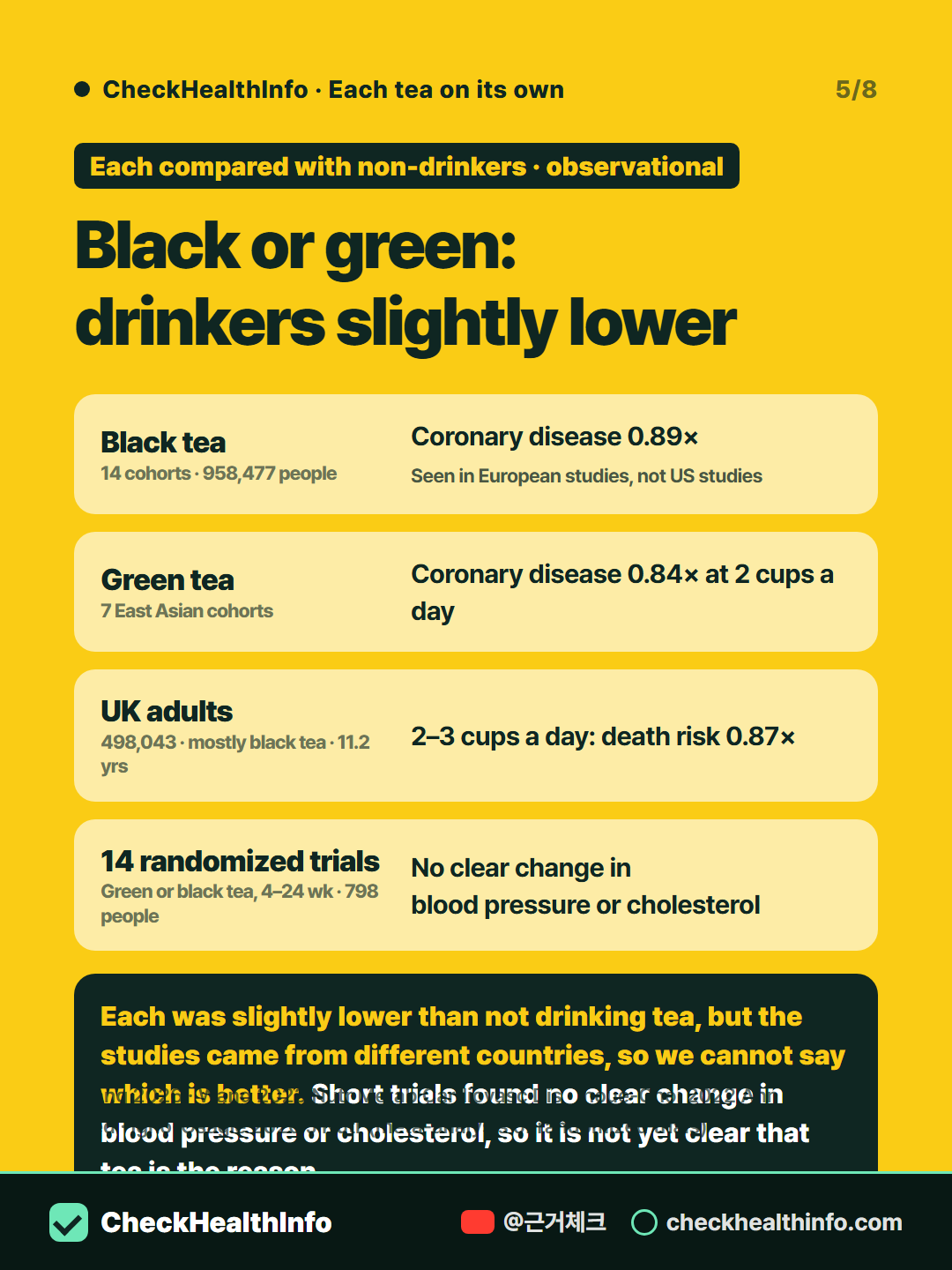
- The UK, where most people drink black tea — In a study that followed 498,043 adults aged 40 to 69 for a median of 11.2 years, people who drank 2 to 3 cups a day had 0.87 times the risk of death (0.84–0.91) of non-drinkers. Deaths from cardiovascular disease, ischemic heart disease and stroke showed the same pattern. Cup size and tea strength were not measured. [3]
- The Chinese study of nearly 486,000 people — In 485,934 adults followed for a mean of 9.05 years, habitual tea drinkers had 0.888 times the risk of vascular disease (0.857–0.921). [4]
- But in randomized trials — When 14 randomized trials (798 people) that had participants drink green or black tea for 4 to 24 weeks were pooled, there was no clear change in blood pressure, cholesterol or triglycerides. However, the trials were small and short, so they may not have been able to detect changes. [5]
Grade: the evidence starts at A because it comes from meta-analyses of prospective cohort studies, but we lowered it one grade to B because these pool observational studies rather than randomized trials (reason 2 in our rating method). The direction was broadly consistent across studies, but the difference is small and it is not confirmed that tea itself is the cause, so the label is “Mostly true.”
Verdict 2: “Black tea is better for cardiovascular health than green tea”
Insufficient evidence · Evidence grade C
In plain terms Whether they drank black or green tea, tea drinkers had slightly less cardiovascular disease, and which tea looked better differed from study to study.
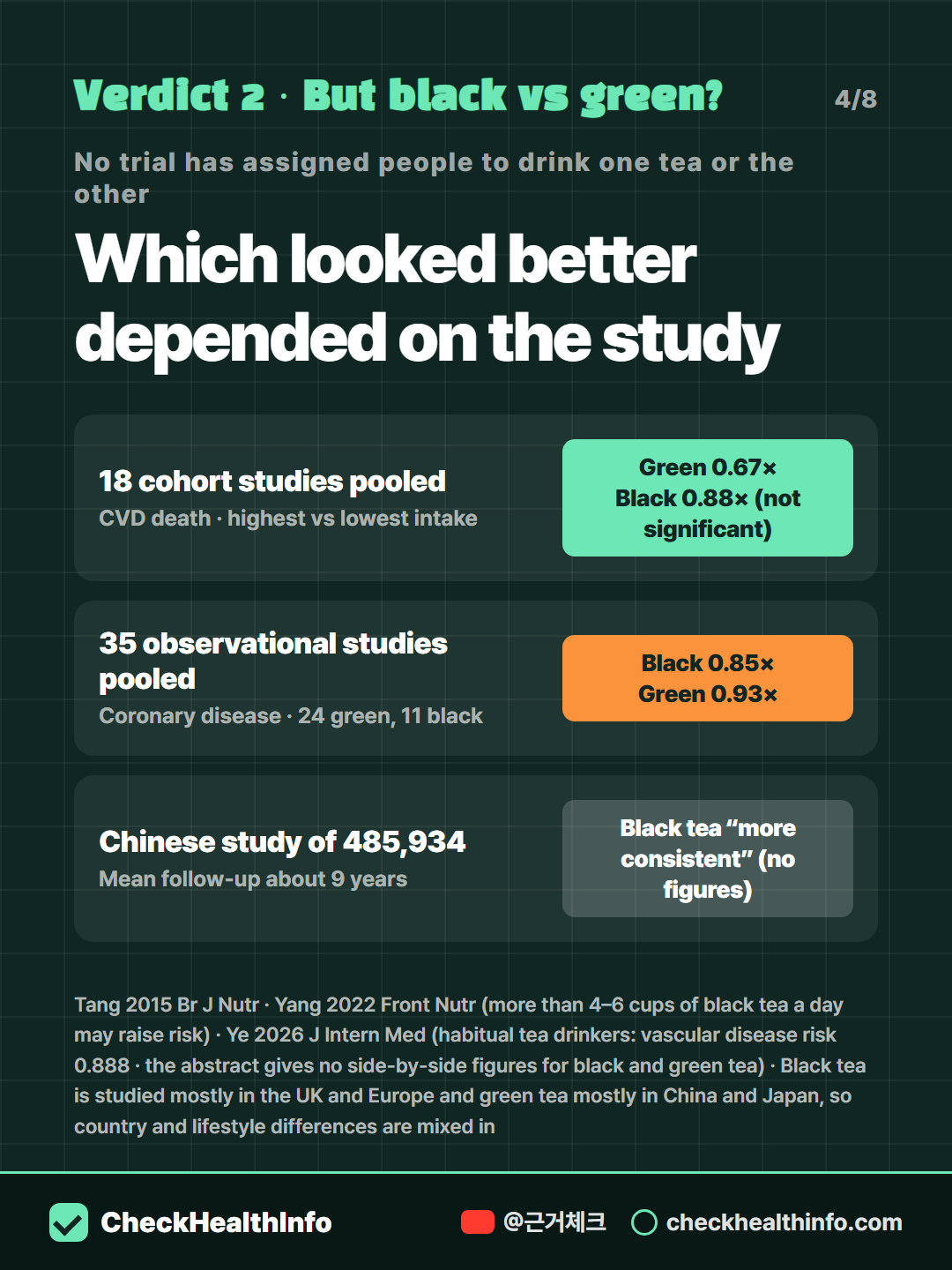
- The study the news report appears to describe — In the Chinese study of 485,934 people, the researchers wrote that black tea showed “more consistent” associations than green tea. But the abstract gives no figures comparing the risks for black and green tea side by side. “More consistent” does not mean “a larger effect.” [4]
- Pooled studies where green tea looked stronger — In a meta-analysis of 18 cohort studies, the highest intake group had 0.67 times the risk of cardiovascular death for green tea (0.46–0.96, statistically significant) and 0.88 times for black tea (0.77–1.01, not statistically significant). [8]
- Pooled studies where black tea looked stronger — In 35 observational studies of coronary artery disease (24 on green tea, 11 on black tea), risk was 0.85 times for black tea (0.76–0.96) and 0.93 times for green tea (0.88–0.99); both were lower. However, the authors reported that more than 4 to 6 cups of black tea a day may raise risk, and the green tea association was clear only in Asia. [9]
- Each tea on its own — A meta-analysis of 14 black tea cohort studies (958,477 people) found 0.89 times the risk of coronary heart disease, with moderate differences between studies; the link was seen in European studies but not in US studies. [10] A meta-analysis of seven East Asian green tea cohort studies (772,922 people) found 0.84 times the risk at 2 cups a day. [11]
- Black tea has been studied mainly in the UK and Europe, and green tea mainly in China and Japan, so differences in country and lifestyle are mixed in, and the figures cannot be set side by side to pick a winner. We found no randomized trial that assigned people to black or green tea and compared cardiovascular disease.
Grade: the most direct evidence for this claim is a large cohort that looked at black and green tea within the same population (B). The meta-analyses by tea type each compared drinkers with non-drinkers, not with each other, so we used them only as supporting evidence. Because the results were inconsistent (reason 3 in our rating method) — no study showed a statistically significant difference between the two teas, and the tea that looked stronger was reversed between studies — we lowered it one grade to C. There is not yet enough evidence that black tea is better, so the label is “Insufficient evidence.” This does not mean the claim is false.
Does how you drink it matter?
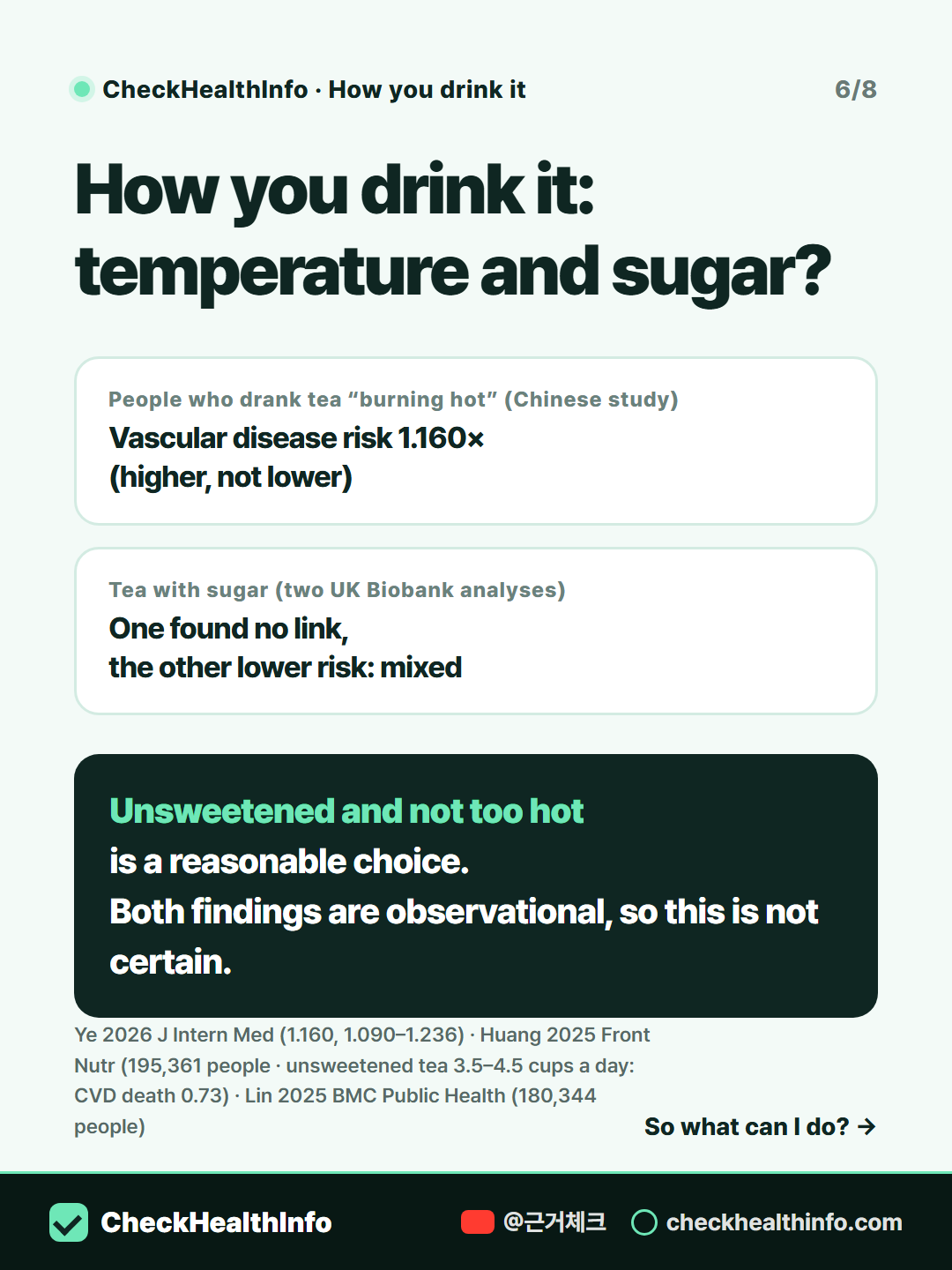
- Very hot tea — In the Chinese study, people who drank tea “burning hot” had a higher risk of vascular disease, 1.160 times (1.090–1.236). This comes from a single observational study. [4]
- Tea with sugar — The results were mixed. In a UK Biobank study of 195,361 people, only unsweetened tea (3.5 to 4.5 cups a day) was linked to a lower risk of cardiovascular death (0.73), and sugar-sweetened tea showed no consistent association. [6] In an analysis of 180,344 people from the same data, sugar-sweetened tea was also linked to lower risk of death from any cause. [7]
If you enjoy tea
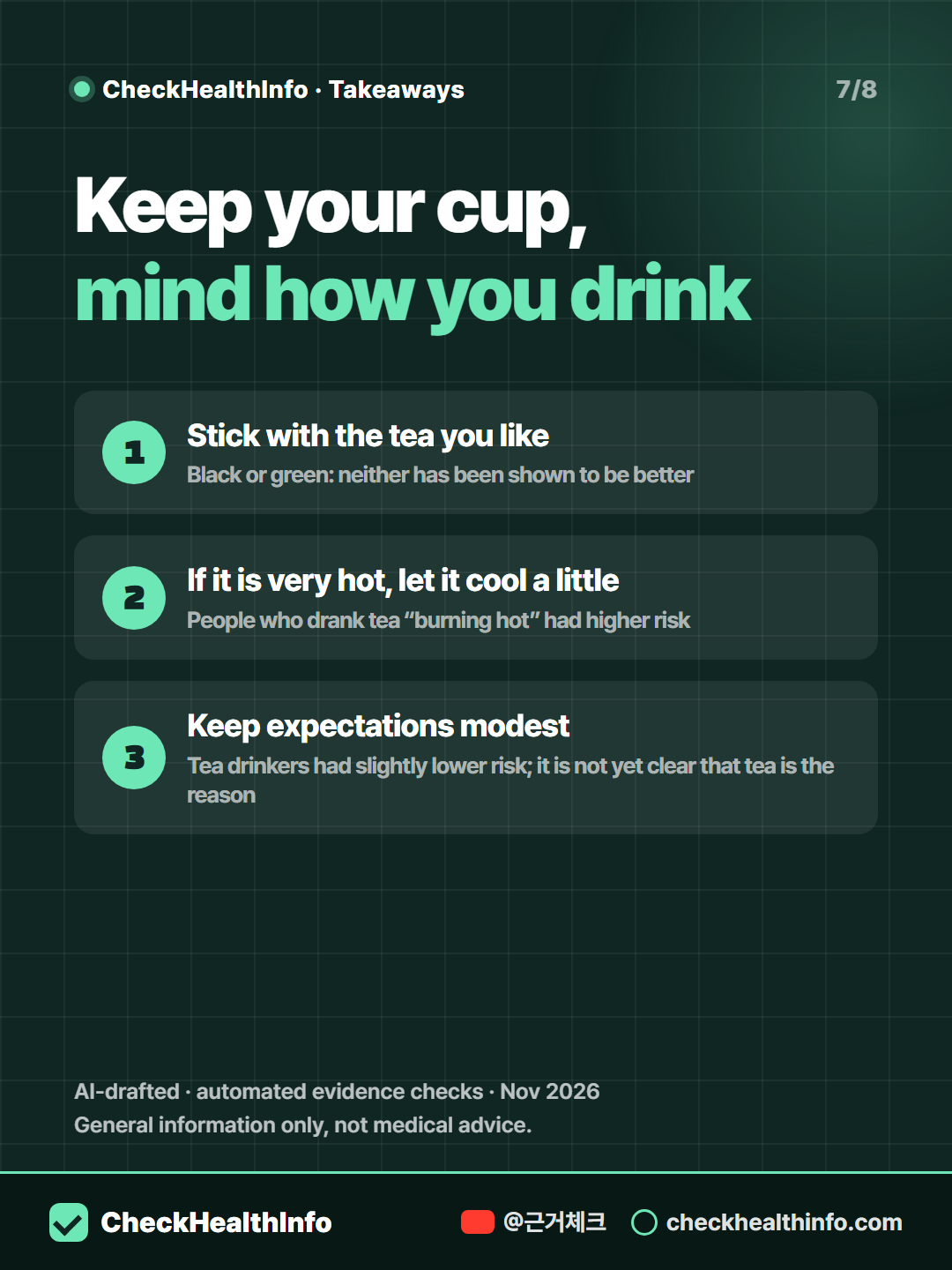
- Stick with the tea you like — Drinkers of black tea and of green tea each had somewhat lower risk than non-drinkers, and neither has been shown to be better. There is no evidence-based reason to switch from green to black tea.
- If it is very hot, let it cool a little — This is not certain, but it is a low-risk habit worth trying. [4]
- Keep expectations modest — These findings do not show that drinking tea prevents cardiovascular disease. The basics come first: not smoking, staying active and managing blood pressure.
Scope: this verdict covers the habit of drinking tea (black or green) and its association with cardiovascular disease and death. It does not cover caffeine sensitivity, interactions with medicines, or tea during pregnancy.
Limitations of this verdict
- Most of the evidence is observational, so other lifestyle differences among tea drinkers (smoking, exercise, diet and so on) may have affected the results, and people who stopped drinking tea because of poor health may have ended up in the “non-drinker” group. In the Chinese study, risk was lowest in people who drank tea, did not smoke and were physically active, so these habits may cluster together and affect the results. [4]
- The studies looked at different outcomes (all vascular disease, cardiovascular death, coronary artery disease), so their figures cannot be compared directly.
- The randomized trials were short (4 to 24 weeks) and small, so they may have lacked the power to detect changes in blood pressure or cholesterol. [5]
- The UK study did not measure cup size or tea strength. [3] The Chinese study’s abstract gives no figures by tea type. [4]
- Grades follow section 1 of our rating method. New studies are checked in our monthly PubMed review, and any change in a verdict is recorded in our corrections log.
Card news
Video (in Korean)
References
- Kim Y, Je Y. Tea consumption and risk of all-cause, cardiovascular disease, and cancer mortality: a meta-analysis of thirty-eight prospective cohort data sets. Epidemiol Health 2024;46:e2024056. PMID 38938012. PubMed abstract · Full article
- Chung M, Zhao N, Wang D, et al. Dose-Response Relation between Tea Consumption and Risk of Cardiovascular Disease and All-Cause Mortality: A Systematic Review and Meta-Analysis of Population-Based Studies. Adv Nutr 2020;11(4):790-814. PMID 32073596. PubMed abstract · Full article
- Inoue-Choi M, Ramirez Y, Cornelis MC, et al. Tea Consumption and All-Cause and Cause-Specific Mortality in the UK Biobank : A Prospective Cohort Study. Ann Intern Med 2022;175(9):1201-1211. PMID 36037472. PubMed abstract · Full article
- Ye Z, Wang Y, Qu Y, et al. Habitual tea consumption is associated with lower cardiovascular disease risk. J Intern Med 2026. PMID 42902821. PubMed abstract · Full article
- Igho-Osagie E, Cara K, Wang D, et al. Short-Term Tea Consumption Is Not Associated with a Reduction in Blood Lipids or Pressure: A Systematic Review and Meta-Analysis of Randomized Controlled Trials. J Nutr 2020;150(12):3269-3279. PMID 33188386. PubMed abstract · Full article
- Huang H, Zhang L, Zhang D, et al. The associations of unsweetened, sugar-sweetened, and artificially sweetened tea consumption with all-cause and cause-specific mortality in 195,361 UK Biobank participants: a large prospective cohort study. Front Nutr 2025;12:1649279. PMID 40823011. PubMed abstract · Full article
- Lin Z, Zeng M, Ji Y, et al. Association of sugar-sweetened, artificially sweetened, and unsweetened tea with all-cause and cause-specific mortality: a prospective cohort study in UK biobank. BMC Public Health 2025;25(1):2834. PMID 40830941. PubMed abstract · Full article
- Tang J, Zheng JS, Fang L, et al. Tea consumption and mortality of all cancers, CVD and all causes: a meta-analysis of eighteen prospective cohort studies. Br J Nutr 2015;114(5):673-83. PMID 26202661. PubMed abstract · Full article
- Yang X, Dai H, Deng R, et al. Association between tea consumption and prevention of coronary artery disease: A systematic review and dose-response meta-analysis. Front Nutr 2022;9:1021405. PMID 36505265. PubMed abstract · Full article
- Wang ZM, Lian XQ, Long Q, et al. Black tea consumption and the risk of coronary heart disease: a systematic review and meta-analysis of cohort studies. Nutr Metab Cardiovasc Dis 2026;36(5):104369. PMID 41152040. PubMed abstract · Full article
- Wang ZM, Zhao D, Wang H, et al. Green tea consumption and the risk of coronary heart disease: A systematic review and meta-analysis of cohort studies. Nutr Metab Cardiovasc Dis 2023;33(4):715-723. PMID 36849317. PubMed abstract · Full article
General information only, not medical advice. It does not replace your own clinician’s diagnosis or treatment. If you are sensitive to caffeine, are pregnant or take medicines, ask your health care provider how much tea is right for you.