Instant noodles, chips and other ultra-processed foods: do they raise dementia risk?
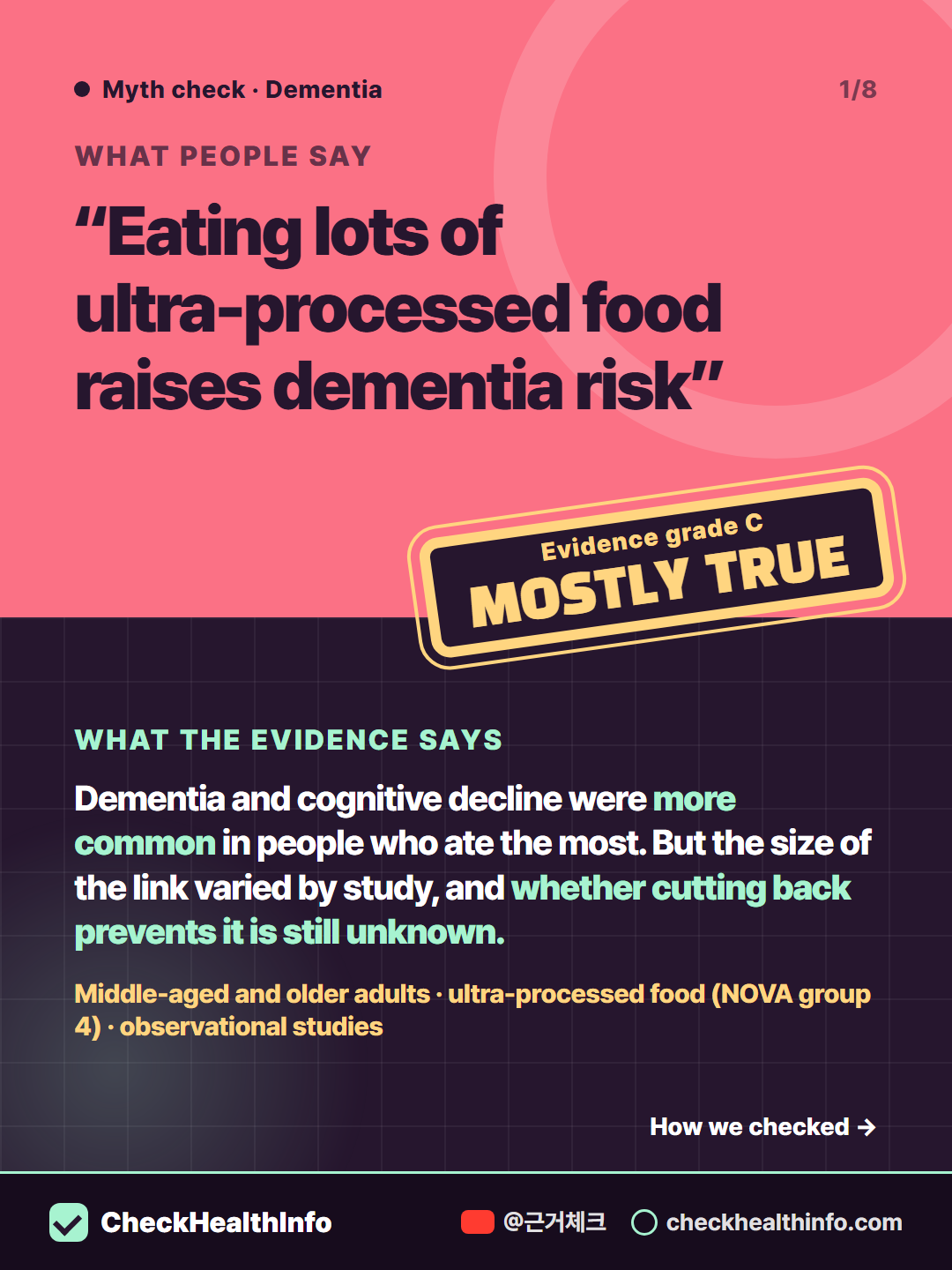
Does eating a lot of ultra-processed food, like instant noodles, chips, soda and processed meat, raise the risk of dementia? And can cutting back on ultra-processed food prevent dementia?

We checked this verdict against 16 sources, such as published studies and clinical guidelines. · How checked: AI-drafted · automated evidence checks
Verdicts at a glance
| Claim | Verdict |
|---|---|
| People who eat more ultra-processed food have more dementia and cognitive decline | Mostly true · Evidence grade C |
| Cutting back on ultra-processed food prevents dementia | Insufficient evidence · Evidence grade C |
Bottom line — Many studies found more dementia and cognitive decline in people who ate the most ultra-processed food. So the claim that “people who eat more ultra-processed food have more dementia and cognitive decline” is rated “Mostly true” (evidence grade C). But all of these studies are observational, and the size of the association varied widely from study to study. The claim that “cutting back on ultra-processed food prevents dementia” is rated “Insufficient evidence” (evidence grade C). That does not mean it is false — it means no trial in people has yet shown that cutting back lowers the risk of dementia. The takeaway: eating less ultra-processed food carries little risk and may help weight, blood sugar, and heart health, so it is worth trying — but it is too early to count on it alone to prevent dementia.
Ultra-processed food (NOVA group 4) — Food made in factories through several industrial steps, with additives you would not find in a home kitchen. Examples include instant noodles, chips and snack foods, soft drinks, processed meats such as ham and sausages, and mass-produced bread. Researchers sort foods into four groups by how processed they are (the NOVA classification); the fourth group is ultra-processed food. If the ingredient list includes even one item rarely used in home kitchens, such as flavors, colors, emulsifiers, or sweeteners, the product is likely ultra-processed. [16]
Cohort study — An observational study that follows many people over a long time. It shows that two things go together, but it is less certain than a randomized trial about cause and effect.
Meta-analysis — An analysis that pools the results of several studies.
Hazard ratio and relative risk — Both compare how likely an outcome is in one group versus another. A value of 1 means no difference; greater than 1 means higher risk. It does not mean one person’s own chance changes by that amount.
I² — A measure of how much the pooled studies disagree with each other. The higher it is, the more the results differ between studies.
Claim 1. “People who eat more ultra-processed food have more dementia and cognitive decline”
Mostly true · Evidence grade C
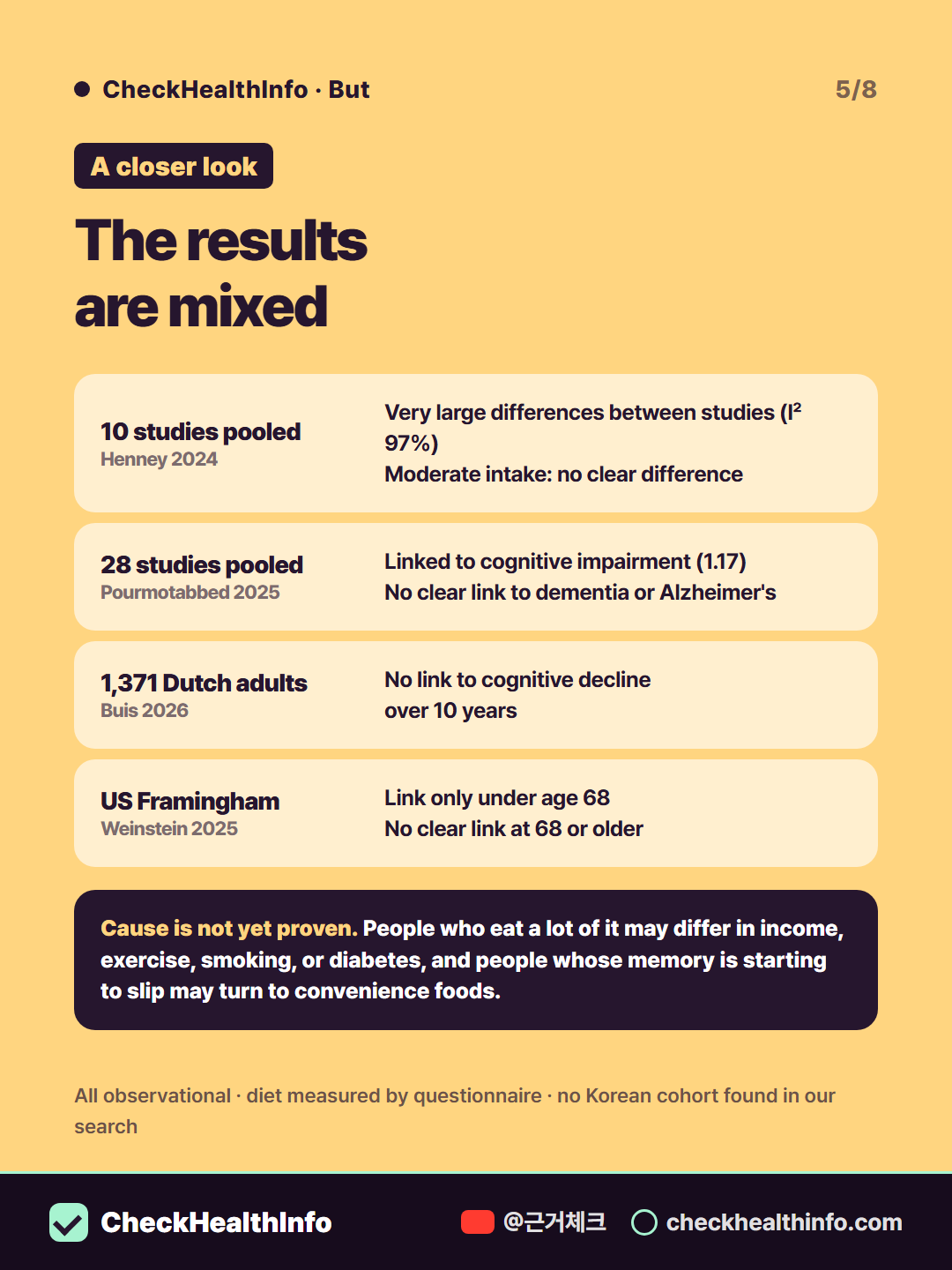
In plain words Dementia and memory decline were more common among people who ate the most ultra-processed food. But how much higher the risk was varied widely, and some studies found no link at all.
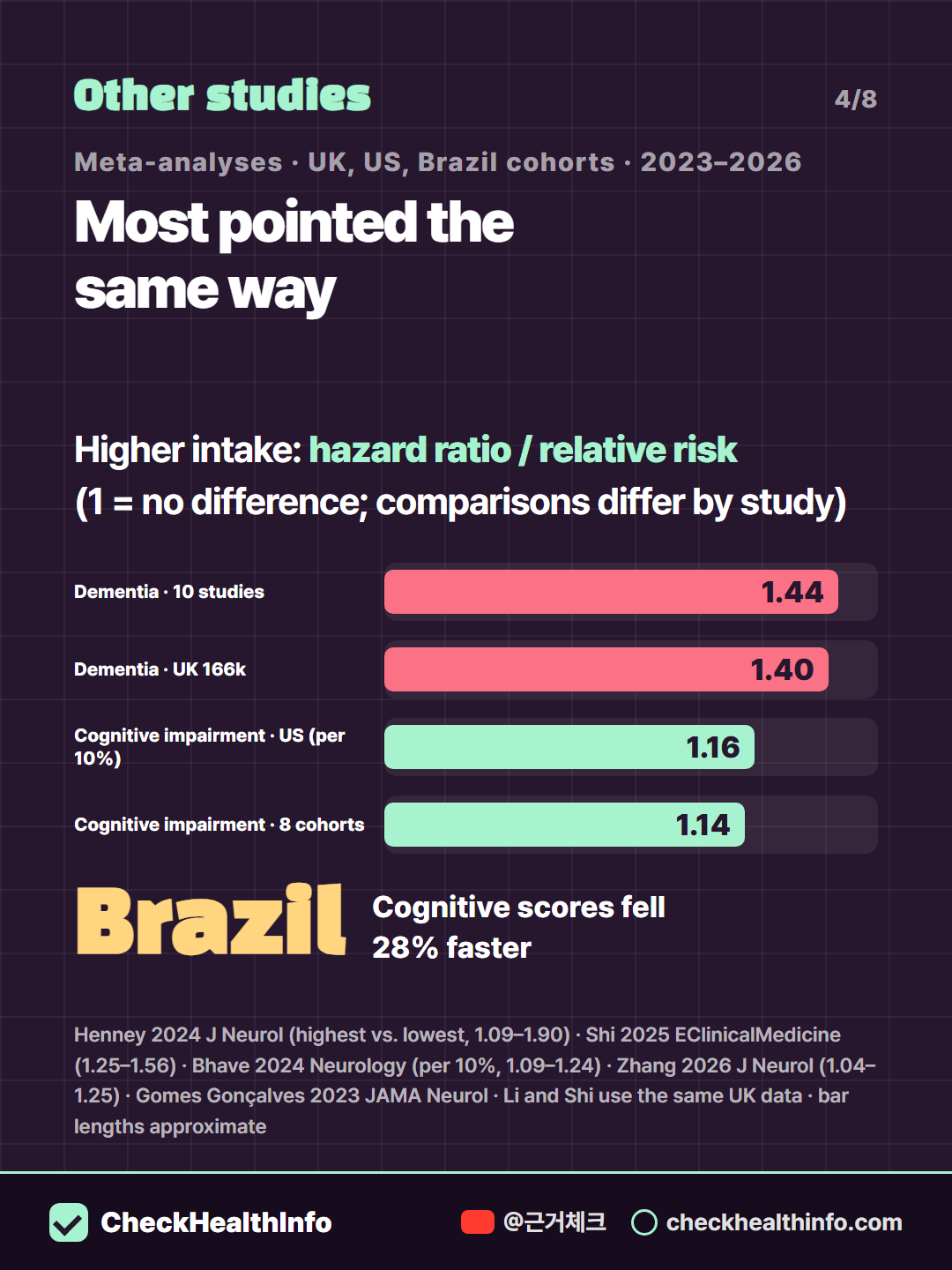
- A meta-analysis of ten observational studies on dementia, including mild cognitive impairment (eight of them longitudinal; more than 867,000 people), found that those who ate the most ultra-processed food had a relative risk of dementia of 1.44 (95% confidence interval 1.09 to 1.90) compared with those who ate the least. However, results differed greatly between studies (I² 97.0%), and people with moderate intake showed no clear difference from those with low intake (1.12, 0.96 to 1.31). In plain words, more dementia was seen in people who ate a lot, but not clearly at moderate levels. [1]
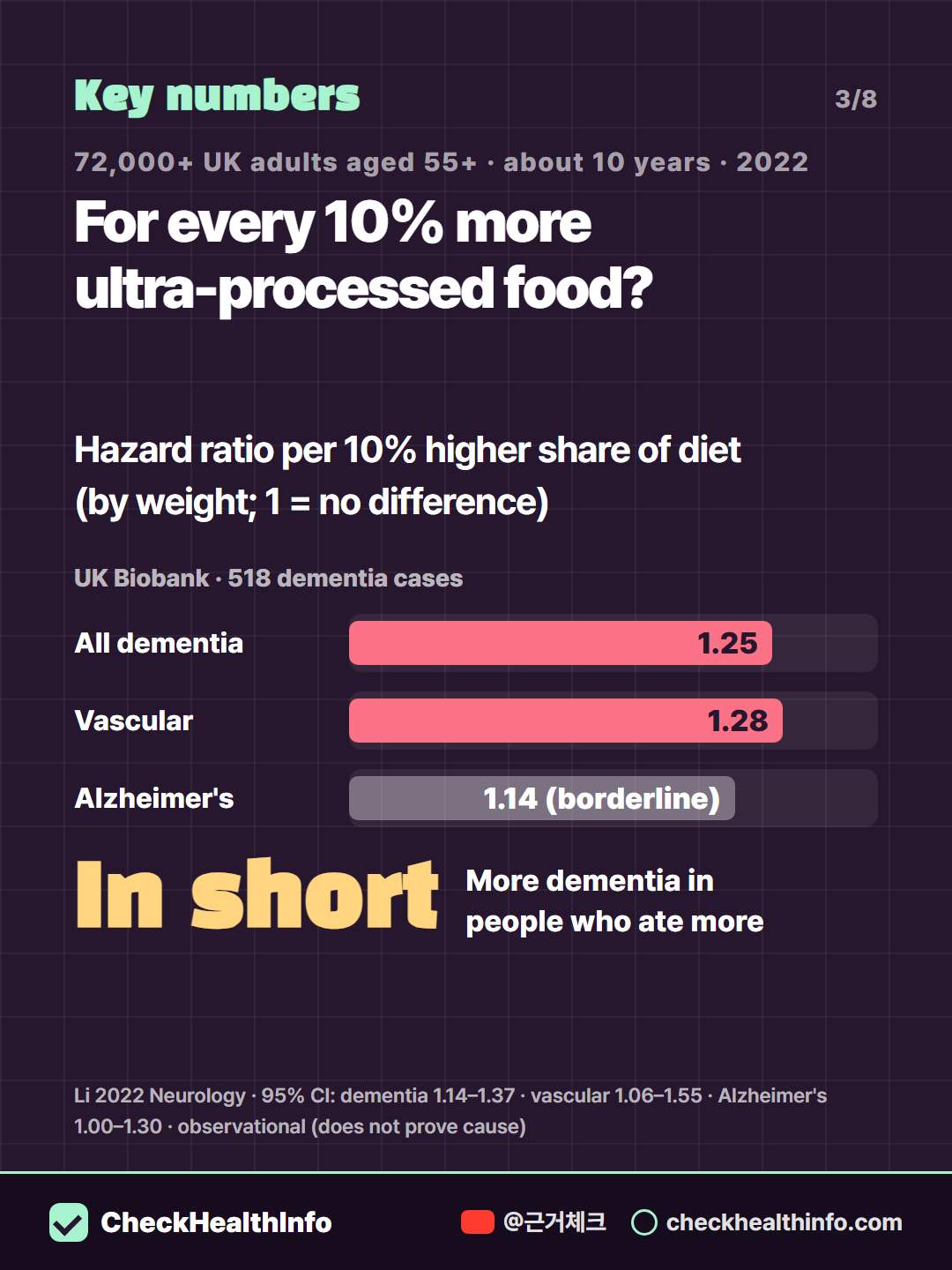
- In the UK Biobank, more than 72,000 adults aged 55 or older without dementia were followed for about 10 years (median 10.0 years), and 518 developed dementia. Each 10% higher share of ultra-processed food in the diet (by weight) was linked to a hazard ratio for dementia of 1.25 (95% confidence interval 1.14 to 1.37). For vascular dementia it was 1.28 (1.06 to 1.55); for Alzheimer’s disease it was borderline at 1.14 (1.00 to 1.30). [4]
- Another analysis of the same UK data, covering more than 166,000 people over a median of 10.5 years, linked ultra-processed food intake to a hazard ratio for dementia of 1.40 (1.25 to 1.56). Because it used the same UK Biobank data, it is not an independent confirmation. [5]
- In the ELSA-Brasil cohort, 10,775 civil servants aged 35 to 74 in six Brazilian cities were followed for about 8 years. Those whose share of daily calories from ultra-processed food was above the lowest quarter had a 28% faster decline in overall cognitive function than those in the lowest quarter. This study measured how fast test scores fell, not dementia diagnoses. [6]
- In the US REGARDS cohort (14,175 people), each 10% higher share of ultra-processed food was linked to a hazard ratio for cognitive impairment of 1.16 (1.09 to 1.24), while each 10% higher share of unprocessed or minimally processed food was linked to a hazard ratio of 0.88 (0.83 to 0.94). The link held regardless of how closely people followed the Mediterranean, DASH, or MIND diets. [7]
But not every study agreed.
- A meta-analysis of 28 studies on neurodegenerative conditions found a higher risk of cognitive impairment (relative risk 1.17, 95% confidence interval 1.06 to 1.30) but no clear link with dementia or Alzheimer’s disease. [2]
- A Dutch study that tested 1,371 adults aged 55 or older four times over 10 years found no link between ultra-processed food intake and cognitive function or decline. [9]
- In the US Framingham Heart Study (1,375 adults aged 60 or older, followed for an average of 12.7 years), each additional daily serving of ultra-processed food was linked to a hazard ratio for Alzheimer’s disease of 1.13 (1.03 to 1.25) only in people younger than 68; there was no clear link at age 68 or older. [8]
- A recent meta-analysis of eight prospective cohorts reported a hazard ratio for cognitive impairment of 1.14 (1.04 to 1.25); the link was clearer under age 60 (1.19) and not clear above age 60. [3]
- A systematic review of five observational studies concluded that results should be interpreted with caution because there were few studies and cognitive measures varied. [10]
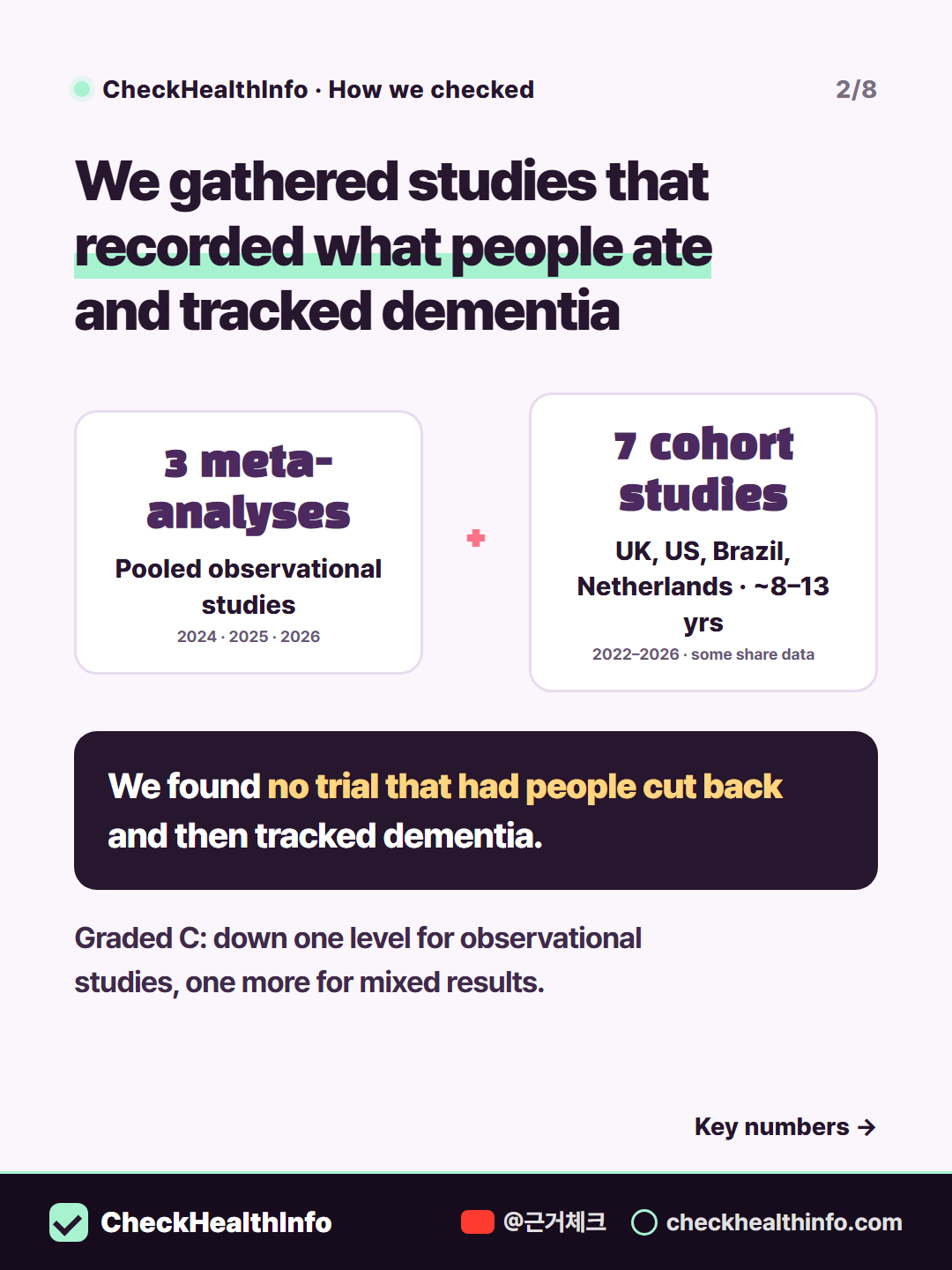
The strongest evidence is meta-analyses of observational studies, so we started at A. We lowered it one level (to B) because the studies pooled were observational rather than randomized, and one more level (to C) because results were inconsistent and varied widely between studies. Most studies pointed the same way, but the strength of the link varied and it showed up only in some groups, which is narrower than the claim. So the label is “Mostly true” (rating method, sections 1 and 2).
Claim 2. “Cutting back on ultra-processed food prevents dementia”
Insufficient evidence · Evidence grade C
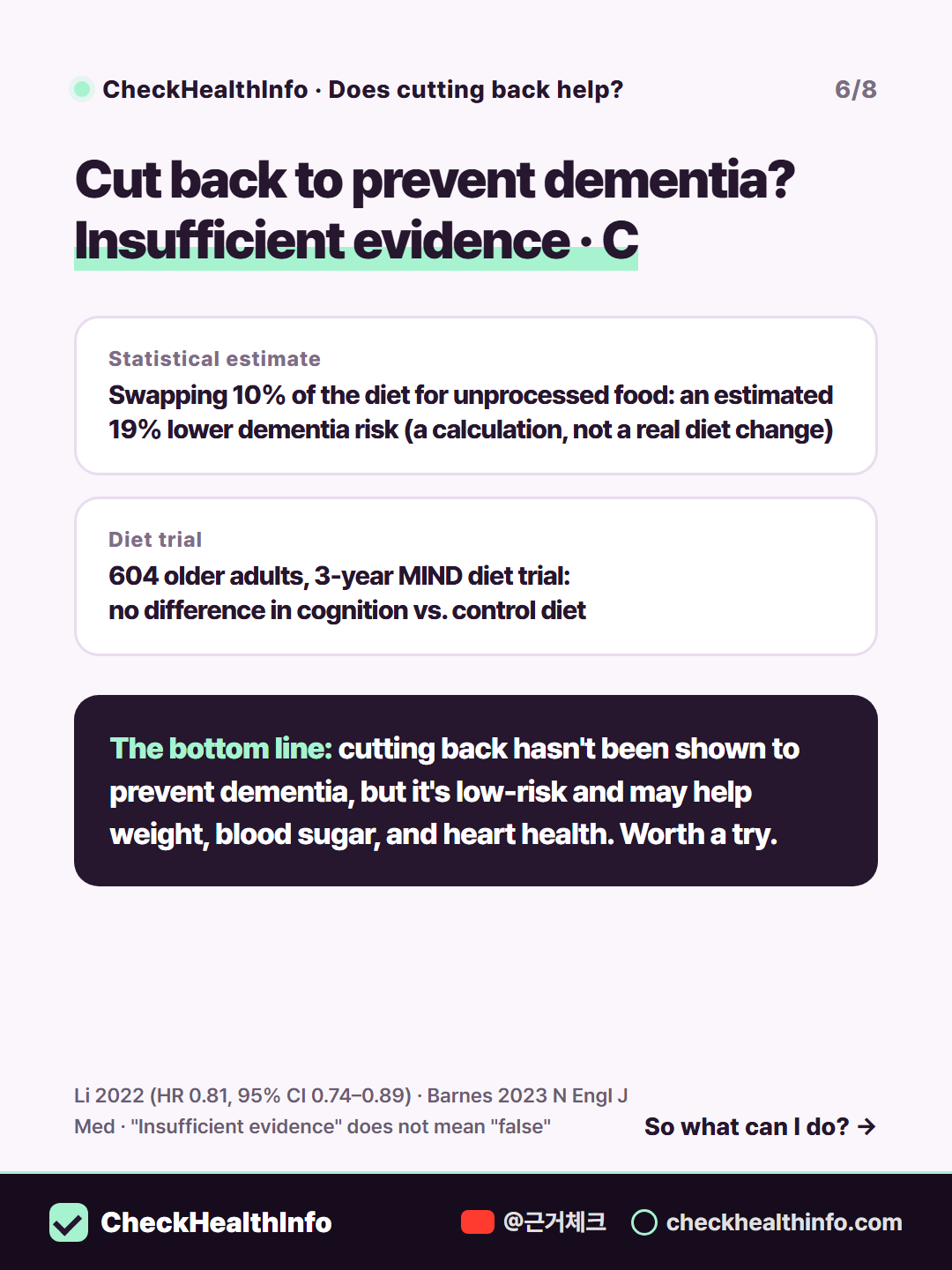
In plain words Our search found no trial that had people cut back on ultra-processed food and then checked whether dementia went down. There are only estimates calculated from observational data. That does not mean the claim is false.
- In a UK Biobank analysis, a statistical model estimated that replacing 10% of the diet (by weight) of ultra-processed food with unprocessed or minimally processed food would be linked to a 19% lower risk of dementia (hazard ratio 0.81, 95% confidence interval 0.74 to 0.89). This is not the result of people actually changing their diet; it is a calculation comparing people who already ate that way. [4]
- In the US REGARDS study, among 7,555 people whose diets were measured twice (at enrollment and at a second visit in 2013–2016), those whose share of ultra-processed food rose by 10% had a hazard ratio of 1.24 (1.12 to 1.37) for later cognitive impairment, measured with a six-item screening test. This is an observational study of diet change. [11]
- But randomized trials that actually changed people’s diets had mixed results. In a 3-year trial, 604 older adults with a family history of dementia were randomly assigned to the MIND diet or a control diet (both with mild calorie restriction and weight-loss support). Cognitive scores improved in both groups with no difference between them (0.205 vs. 0.170; mean difference 0.035, 95% confidence interval −0.022 to 0.092). [12] In the Spanish PREDIMED trial (447 people), Mediterranean diets supplemented with olive oil or nuts led to better scores on some cognitive tests than advice to follow a low-fat diet (334 of 447 completed follow-up testing). This study carries a correction notice (JAMA Intern Med 2018) on reanalyses after deviations from the PREDIMED randomization protocol were found. [13] Neither trial cut ultra-processed food alone — both changed the whole diet — and both measured cognitive test scores, not dementia.
- One effect of ultra-processed food has been confirmed in a randomized trial. Twenty adults admitted to the US National Institutes of Health Clinical Center ate as much as they wanted of an ultra-processed diet and an unprocessed diet for 2 weeks each. On the ultra-processed diet they ate 508 calories more per day and gained 0.9 kg (about 2 pounds). The trial did not measure the brain or cognition; the paper has two correction notices, and the figures cited are from the current abstract. [14]
- An umbrella review of meta-analyses also found that higher ultra-processed food intake was linked to worse outcomes such as cardiovascular death (risk ratio 1.50) and type 2 diabetes, though most of the evidence was rated low or very low quality. [15]
The evidence most directly addressing the claim is a substitution analysis and a diet-change analysis within cohorts, so we started at B. Because these are associations estimated from observational data rather than the results of actually cutting back, we lowered it one level for indirectness, to C. The diet trials did not test reducing ultra-processed food, so we used them only as supporting evidence. “Insufficient evidence” does not mean “false” (rating method, section 2).
What you can do
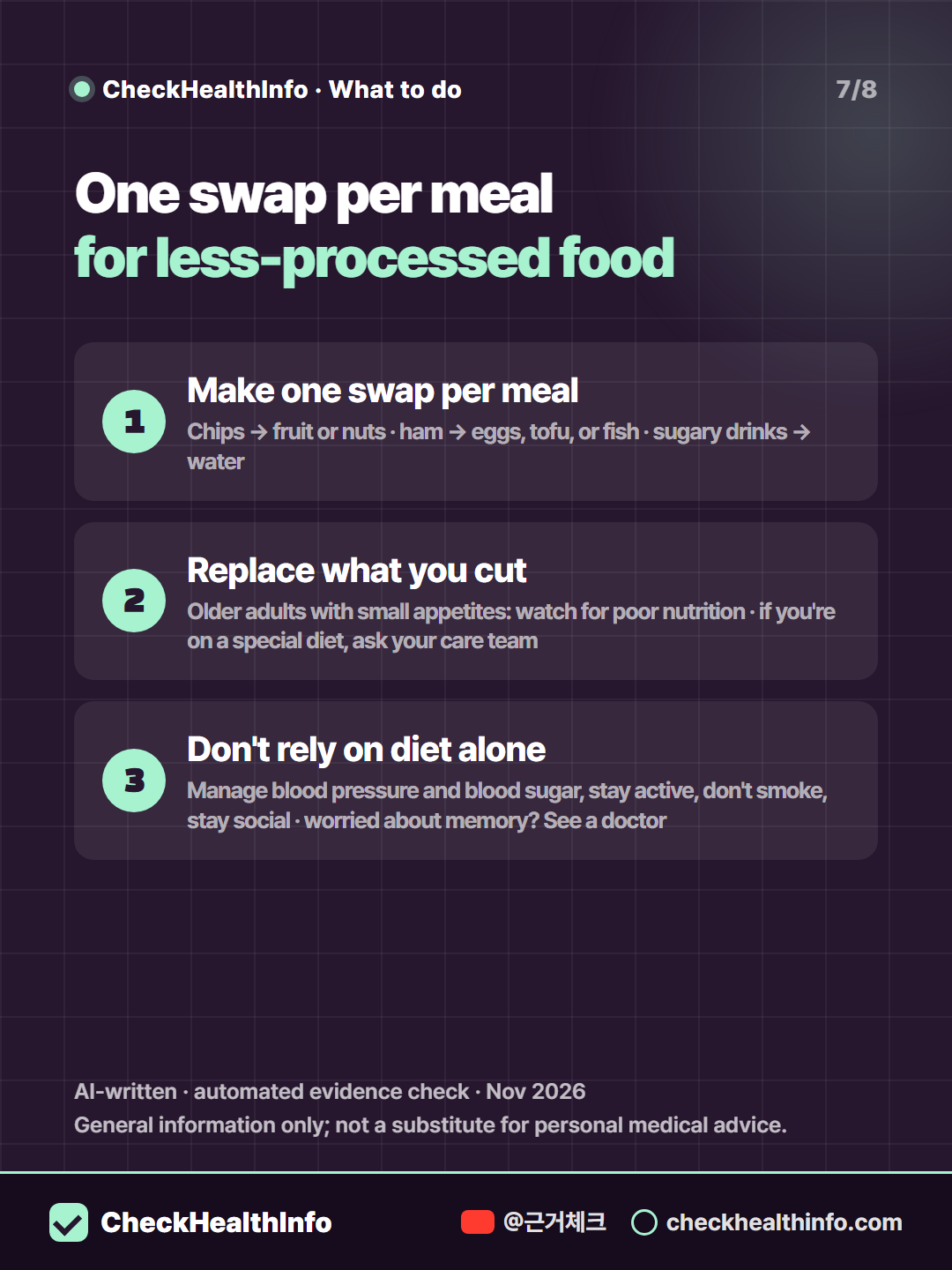
- Make one swap per meal — Swap snack chips for fruit or nuts, ham or sausage for eggs, tofu, or fish, and sugary drinks for water or unsweetened tea. You don’t have to change everything at once.
- Replace what you cut — Older adults with small appetites may not get enough nutrition if they simply drop ultra-processed foods without replacing them. If you are on a special diet for a health condition, talk with your care team first.
- Don’t rely on diet alone — Also manage your blood pressure and blood sugar, stay active, don’t smoke, and stay socially connected. If you are worried about your memory, talk with a doctor.
Scope: This verdict covers only the share of ultra-processed food (NOVA group 4) in the overall diet and later dementia or cognitive decline. It does not rate any single food (such as instant noodles, chips, or blueberries) or any specific additive.
Limitations of this verdict
- All of the evidence for Claim 1 is observational. People who eat a lot of ultra-processed food may also differ in income, education, exercise, smoking, weight, or diabetes. The studies adjusted for these factors, but cannot remove them completely.
- People whose memory is already starting to decline may find shopping and cooking harder and turn to processed foods (reverse causation). The finding that the link was stronger in middle age (under 60 or under 68) eases this concern somewhat but does not rule it out. The weaker link in older groups may reflect smaller numbers of people or the fact that healthier people tend to live longer.
- Diet was mostly measured by questionnaires once or twice. Studies also differed in how they applied the NOVA classification, whether they measured the share by weight or by calories, and how they identified dementia.
- Most studies come from the UK and other parts of Europe, the US, and Brazil. Our search found no Korean cohort on ultra-processed food and dementia.
- One analysis of Framingham data (Wang 2023) was retracted because the authors lacked approval to use the data, so we did not use it. Henney 2024 and Pourmotabbed 2025 finished their searches before it was published; we could not tell from the abstract whether Zhang 2026, which searched through April 2026, included it.
- The two UK Biobank analyses (Li 2022 and Shi 2025) studied the same people, and the meta-analyses may overlap with the cohorts described here.
- We were not able to check whether dementia-prevention guidance from the Korea Disease Control and Prevention Agency (KDCA) or the World Health Organization (WHO) directly addresses ultra-processed food, so none is cited.
- The grade follows our rating method, section 1. We check PubMed monthly for new studies, and any change in the verdict is recorded in our corrections log.
Card news
Video (in Korean)
References
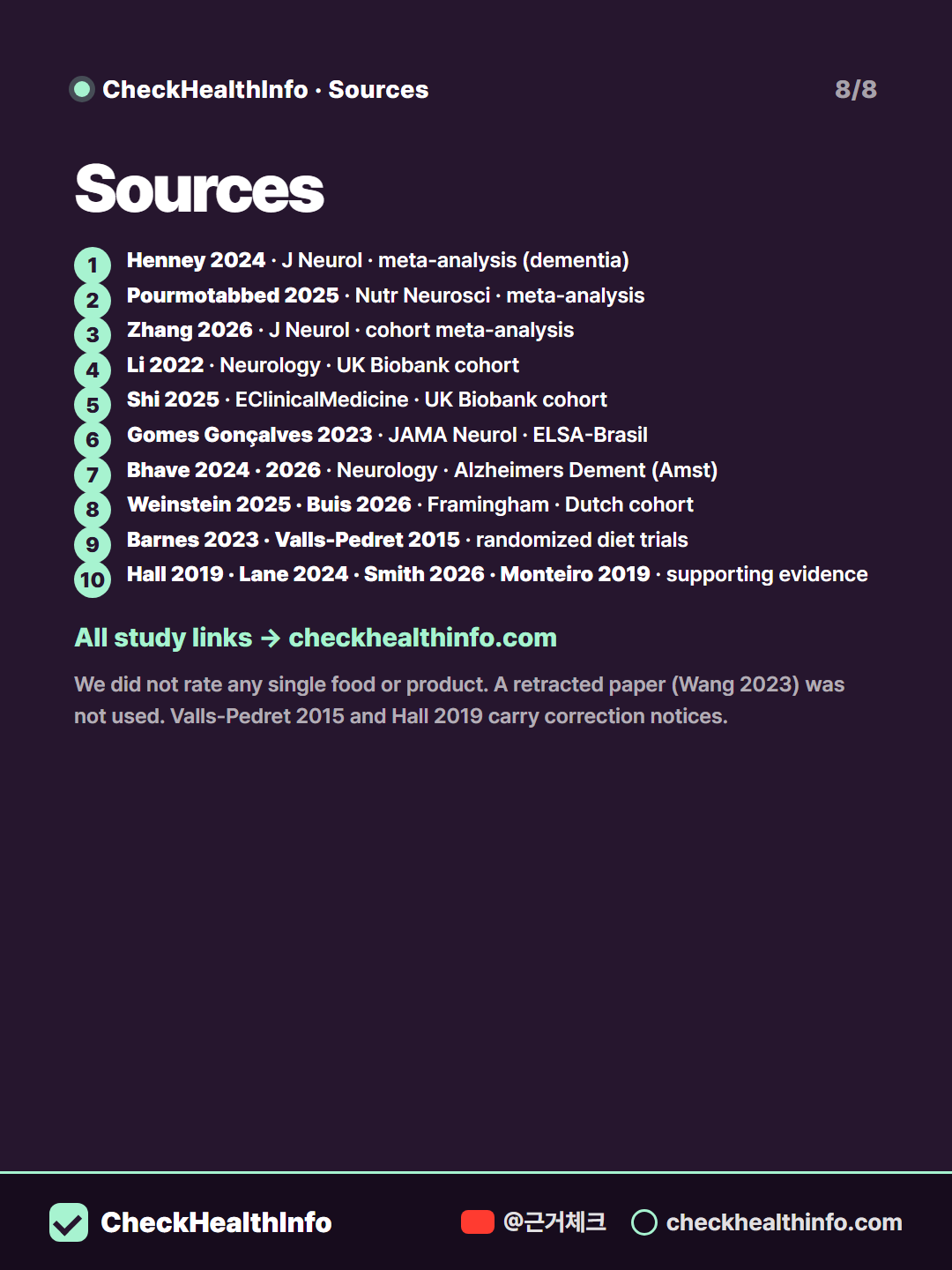
- Henney AE, Gillespie CS, Alam U, et al. High intake of ultra-processed food is associated with dementia in adults: a systematic review and meta-analysis of observational studies.. J Neurol 2024;271(1):198-210. PMID 37831127. PubMed abstract · Full article · Free full text
- Pourmotabbed A, Talebi S, Mehrabani S, et al. The association of ultra-processed food intake with neurodegenerative disorders: a systematic review and dose-response meta-analysis of large-scale cohorts.. Nutr Neurosci 2025;28(1):73-86. PMID 38753992. PubMed abstract · Full article
- Zhang S, Zhuang X, Jiang Y, et al. Association of combined ultra-processed food intake (ultra-processed dietary pattern) with cognitive function impairment: a meta-analysis of prospective cohort studies.. J Neurol 2026;273(6):353. PMID 42228145. PubMed abstract · Full article
- Li H, Li S, Yang H, et al. Association of Ultraprocessed Food Consumption With Risk of Dementia: A Prospective Cohort Study.. Neurology 2022;99(10):e1056-e1066. PMID 36219796. PubMed abstract · Full article
- Shi Y, Lin Y, Zheng Y, et al. Association between different dietary patterns and the risk of major brain disorders: a prospective multi-cohort study.. EClinicalMedicine 2025;90:103616. PMID 41245532. PubMed abstract · Full article · Free full text
- Gomes Gonçalves N, Vidal Ferreira N, Khandpur N, et al. Association Between Consumption of Ultraprocessed Foods and Cognitive Decline.. JAMA Neurol 2023;80(2):142-150. PMID 36469335. PubMed abstract · Full article · Free full text
- Bhave VM, Oladele CR, Ament Z, et al. Associations Between Ultra-Processed Food Consumption and Adverse Brain Health Outcomes.. Neurology 2024;102(11):e209432. PMID 38776524. PubMed abstract · Full article · Free full text
- Weinstein G, Kojis D, Banerjee A, et al. Ultra-processed food consumption and risk of dementia and Alzheimer's disease: The Framingham Heart Study.. J Prev Alzheimers Dis 2025;12(2):100042. PMID 39863327. PubMed abstract · Full article · Free full text
- Buis C, Nicolaou M, Visser M, et al. Ultra-processed food intake and cognitive decline in older adults.. Eur J Nutr 2026;65(2):66. PMID 41711995. PubMed abstract · Full article · Free full text
- Smith M, Watson P, Gallacher J, et al. Ultra-processed food exposure and cognitive outcomes: a systematic review of observational studies.. BMJ Nutr Prev Health 2026;9(1):1-9. PMID 42964942. PubMed abstract · Full article · Free full text
- Bhave VM, Oladele CR, Duskin J, et al. Changes in ultra-processed food consumption or MIND diet adherence and cognitive impairment.. Alzheimers Dement (Amst) 2026;18(1):e70277. PMID 42529790. PubMed abstract · Full article · Free full text
- Barnes LL, Dhana K, Liu X, et al. Trial of the MIND Diet for Prevention of Cognitive Decline in Older Persons.. N Engl J Med 2023;389(7):602-611. PMID 37466280. PubMed abstract · Full article · Free full text
- Valls-Pedret C, Sala-Vila A, Serra-Mir M, et al. Mediterranean Diet and Age-Related Cognitive Decline: A Randomized Clinical Trial.. JAMA Intern Med 2015;175(7):1094-1103. PMID 25961184. PubMed abstract · Full article
- Hall KD, Ayuketah A, Brychta R, et al. Ultra-Processed Diets Cause Excess Calorie Intake and Weight Gain: An Inpatient Randomized Controlled Trial of Ad Libitum Food Intake.. Cell Metab 2019;30(1):67-77.e3. PMID 31105044. PubMed abstract · Full article · Free full text
- Lane MM, Gamage E, Du S, et al. Ultra-processed food exposure and adverse health outcomes: umbrella review of epidemiological meta-analyses.. BMJ 2024;384:e077310. PMID 38418082. PubMed abstract · Full article · Free full text
- Monteiro CA, Cannon G, Levy RB, et al. Ultra-processed foods: what they are and how to identify them.. Public Health Nutr 2019;22(5):936-941. PMID 30744710. PubMed abstract · Full article · Free full text
General information only, not medical advice. It does not replace your own clinician’s diagnosis or treatment. If you are worried about your memory, talk with a doctor or your local dementia support service. If you follow a restricted diet for a health condition, or are eating less and losing weight, talk with your care team before changing your diet.