Does adding a tangerine to spinach help you absorb more iron?
Does eating vitamin C (fruits like tangerines and oranges) with meals help the body absorb more iron from plant foods such as spinach and beans?

We checked this verdict against 9 sources, such as published studies and clinical guidelines. · How checked: AI-drafted · automated evidence checks
Verdicts at a glance
| Claim | Verdict |
|---|---|
| Eating vitamin C with meals increases the absorption of iron from plant foods (non-heme iron) | Mostly true · Evidence grade B |
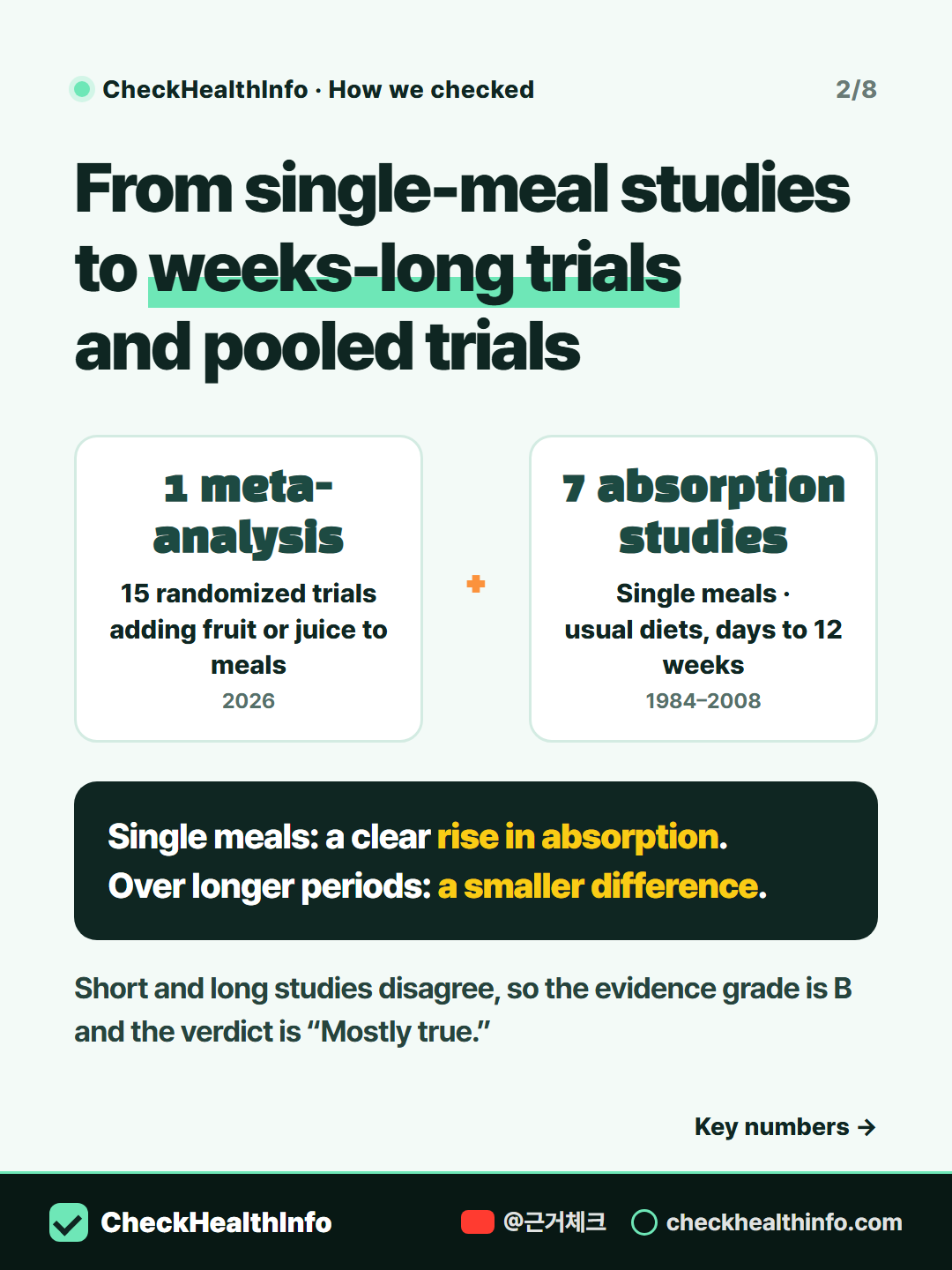
Bottom line — In a single meal, vitamin C clearly increases how much iron the body absorbs from plant foods such as spinach, beans and grains (non-heme iron). But when researchers measured people’s usual diets, with many meals a day over days to weeks, the difference was much smaller. When trials that added fruits or juices rich in vitamin C to meals were pooled, serum ferritin and hemoglobin rose slightly. So the claim that “eating vitamin C with meals increases the absorption of iron from plant foods” is rated Mostly true.
Heme iron, non-heme iron — Iron in meat and fish (heme iron) is absorbed well and is less affected by other foods in the meal. Iron in plant foods (non-heme iron) is absorbed very differently depending on what else is eaten with it.
Single-meal absorption study — People eat a meal containing labeled iron, and researchers measure how much of that iron stays in the body. It measures differences between meals precisely, but the conditions are not the same as everyday eating.
Ferritin — A blood marker that reflects how much iron the body has stored.
Hemoglobin — The protein in red blood cells that carries oxygen; it is used to check for anemia.
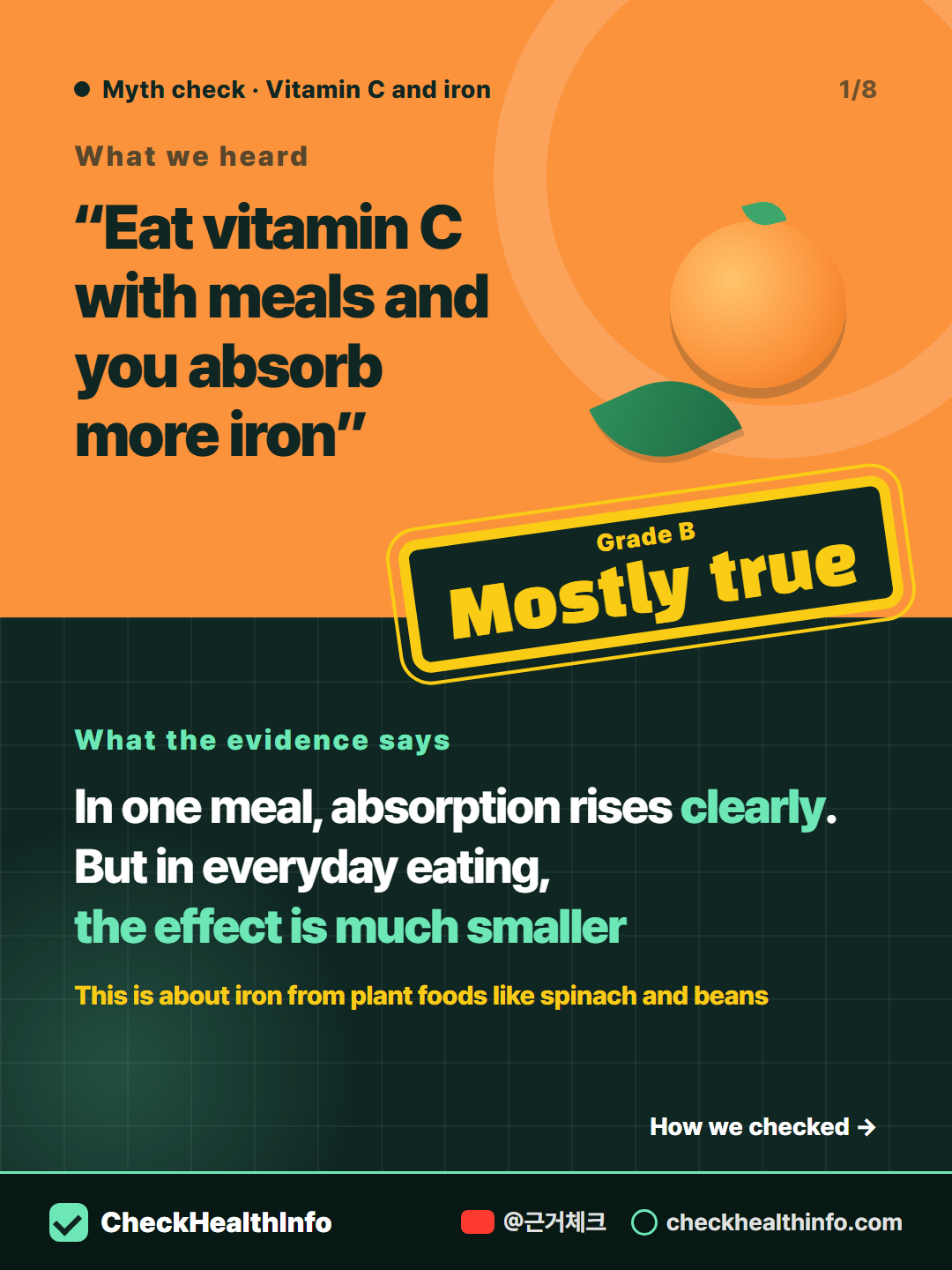
Verdict: “Eating vitamin C with meals increases the absorption of iron from plant foods (non-heme iron)”
Mostly true · Evidence grade B
In plain terms Looking at one meal alone, people absorbed much more iron when vitamin C was added. But across the whole of a usual diet over a longer period, the effect is smaller than many people expect.
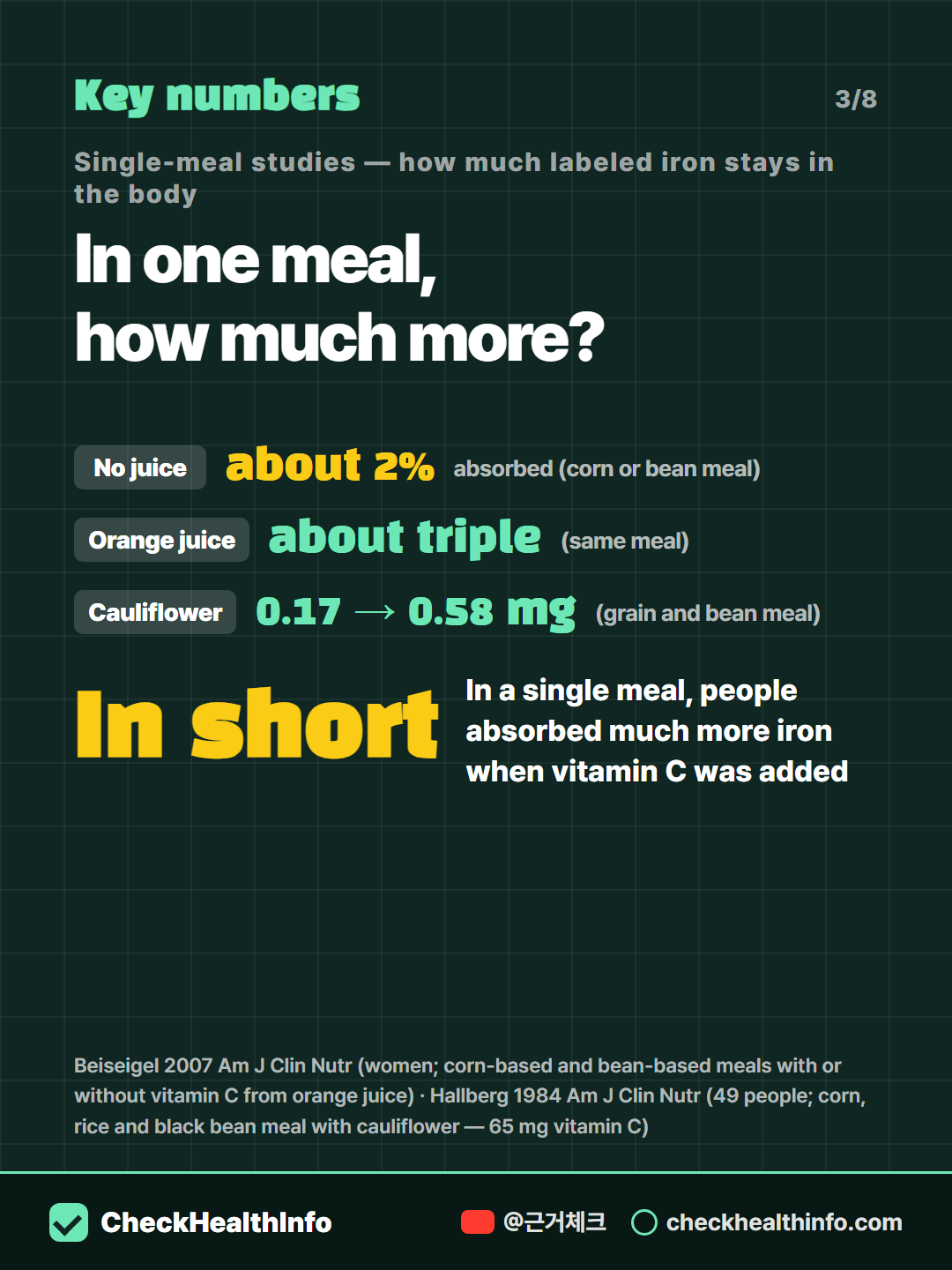
- Single-meal studies — Women who ate a corn-based or a bean-based meal absorbed only about 2% of the iron without vitamin C, but when vitamin C from orange juice was added, absorption roughly tripled. [2] In a study of a corn, rice and black bean meal, adding cauliflower (65 mg of vitamin C) raised non-heme iron absorption from 0.17 mg to 0.58 mg. [3]
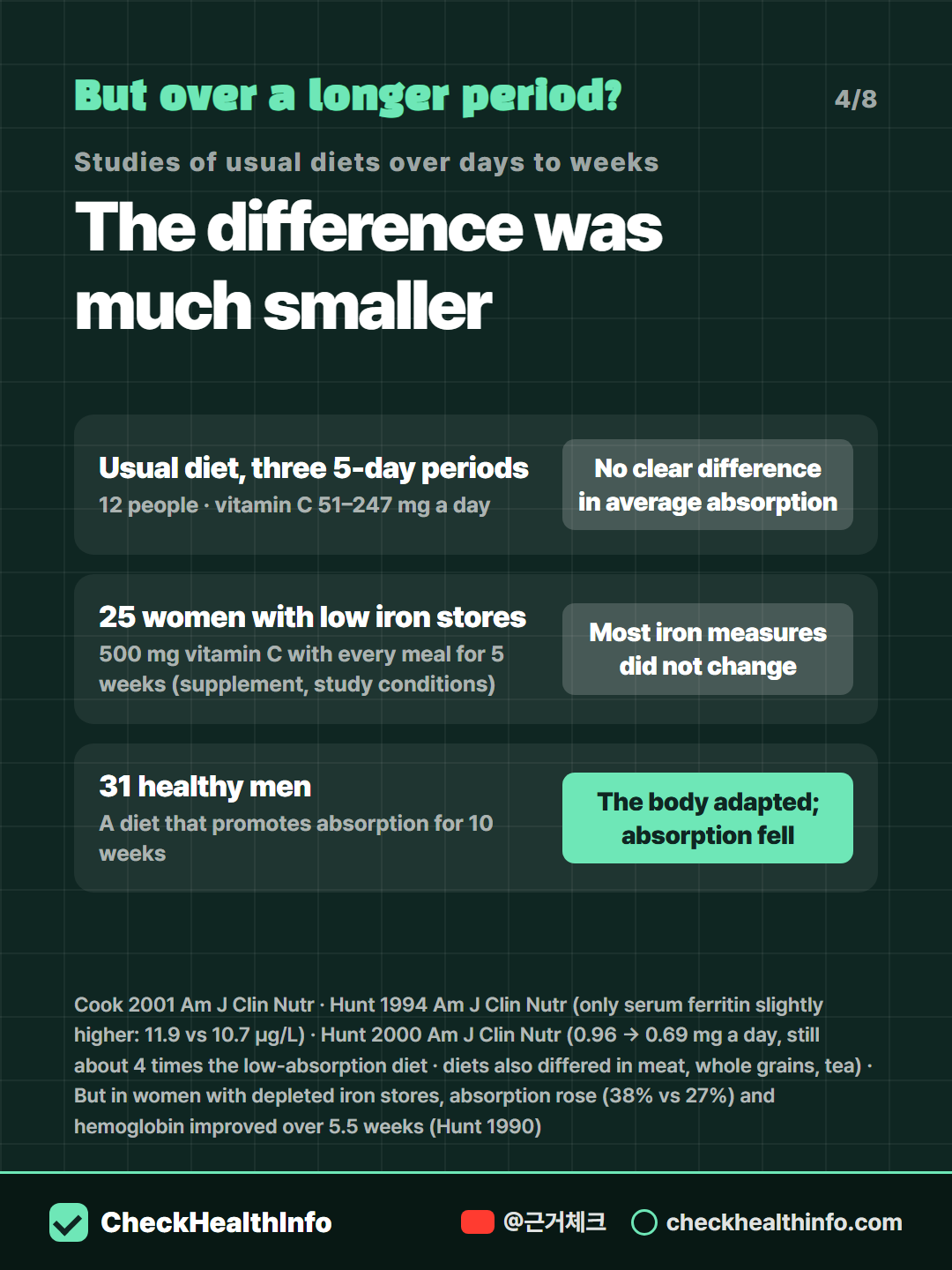
- Usual diets over a longer period — In a study in which 12 people ate their usual diets for three 5-day periods, with vitamin C intake varied from 51 to 247 mg a day, average iron absorption did not differ clearly among the three periods. When all three periods were analyzed together after adjusting for iron status, higher vitamin C intake was linked to higher absorption, and the researchers concluded that the effect of vitamin C in a usual diet is much less pronounced than in single-meal studies. [4]
- In a trial in which 25 women with low iron stores took 500 mg of vitamin C with every meal for 5 weeks (as a supplement, under study conditions), most measures of iron status and absorption did not change; only serum ferritin was slightly higher (11.9 vs. 10.7 μg/L, a borderline statistical result). [5]
- When 31 healthy men ate a diet that promotes iron absorption (differing in meat, vitamin C, whole grains, legumes and tea) for 10 weeks, their bodies adapted and iron absorption fell from 0.96 mg to 0.69 mg a day. Absorption was still about 4 times higher than on a diet that hinders absorption (8 times before adaptation). The researchers said that short-term absorption measurements exaggerate the differences between diets. [7]
- When iron is low — In 11 women whose iron stores were depleted, adding vitamin C for 5.5 weeks raised apparent iron absorption (38% vs. 27%) and improved hemoglobin. Serum ferritin, however, did not change. [6]
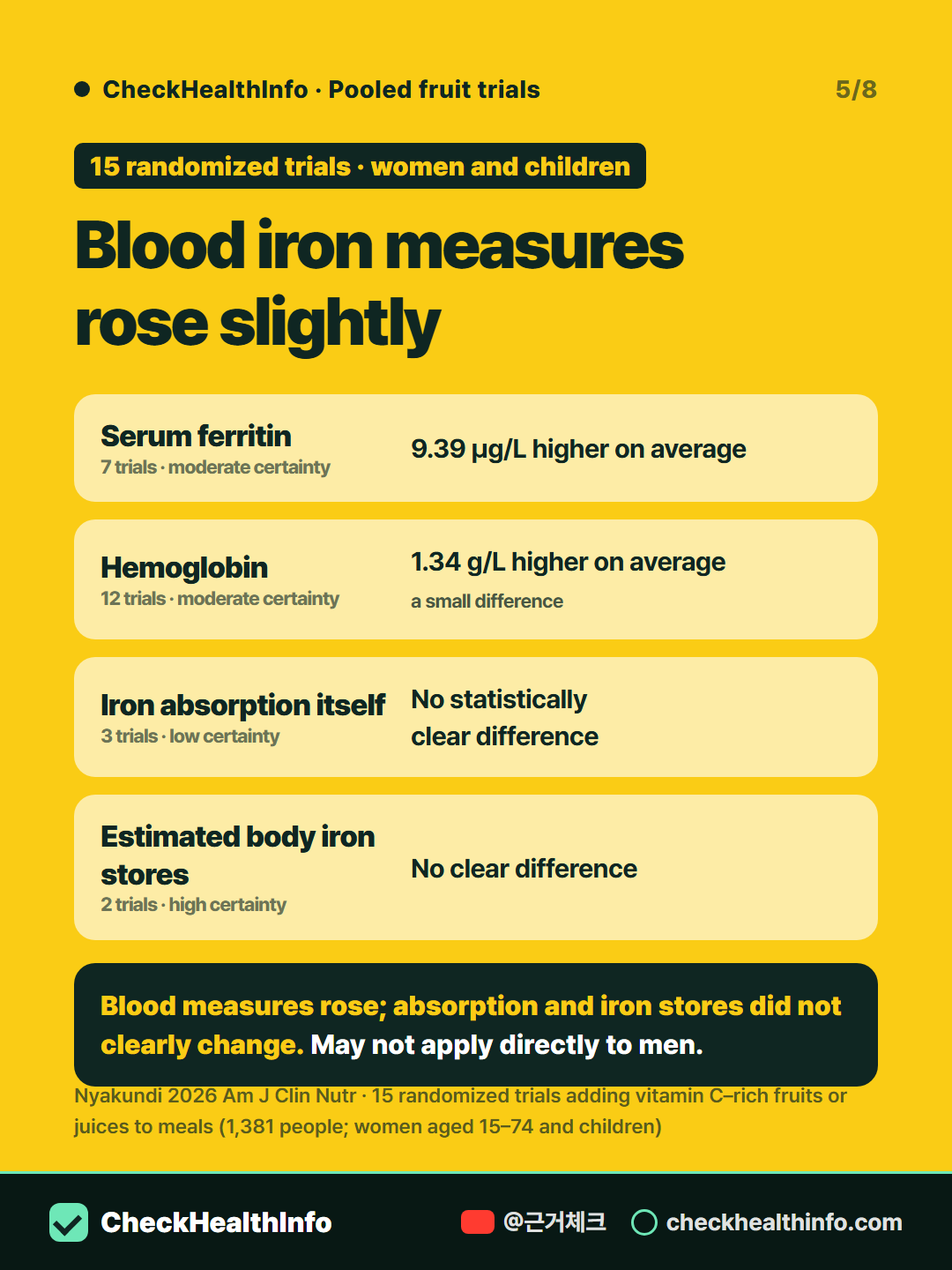
- Pooled fruit trials — A meta-analysis of 15 randomized trials (1,381 women and children) that added vitamin C–rich fruits or juices to meals found that serum ferritin was on average 9.39 μg/L higher and hemoglobin 1.34 g/L higher (moderate certainty). But the pooled result of the 3 trials that measured iron absorption itself was not statistically clear (low certainty), and plasma ferritin and estimated body iron stores did not change (high certainty). The researchers concluded that there was little effect on absorption or body iron stores. [1]
Grade: we started from a meta-analysis of randomized trials that added fruits or juices to meals (A), but lowered it one step to B because the results were inconsistent (reason 3): single-meal studies showed a clear increase in absorption, while studies of usual diets over weeks, and the meta-analysis’s pooled absorption result, showed small or unclear differences. The direction is the same — absorption goes up — but the effect is smaller than the claim suggests, so the label is “Mostly true.”
What about the oxalic acid in spinach?
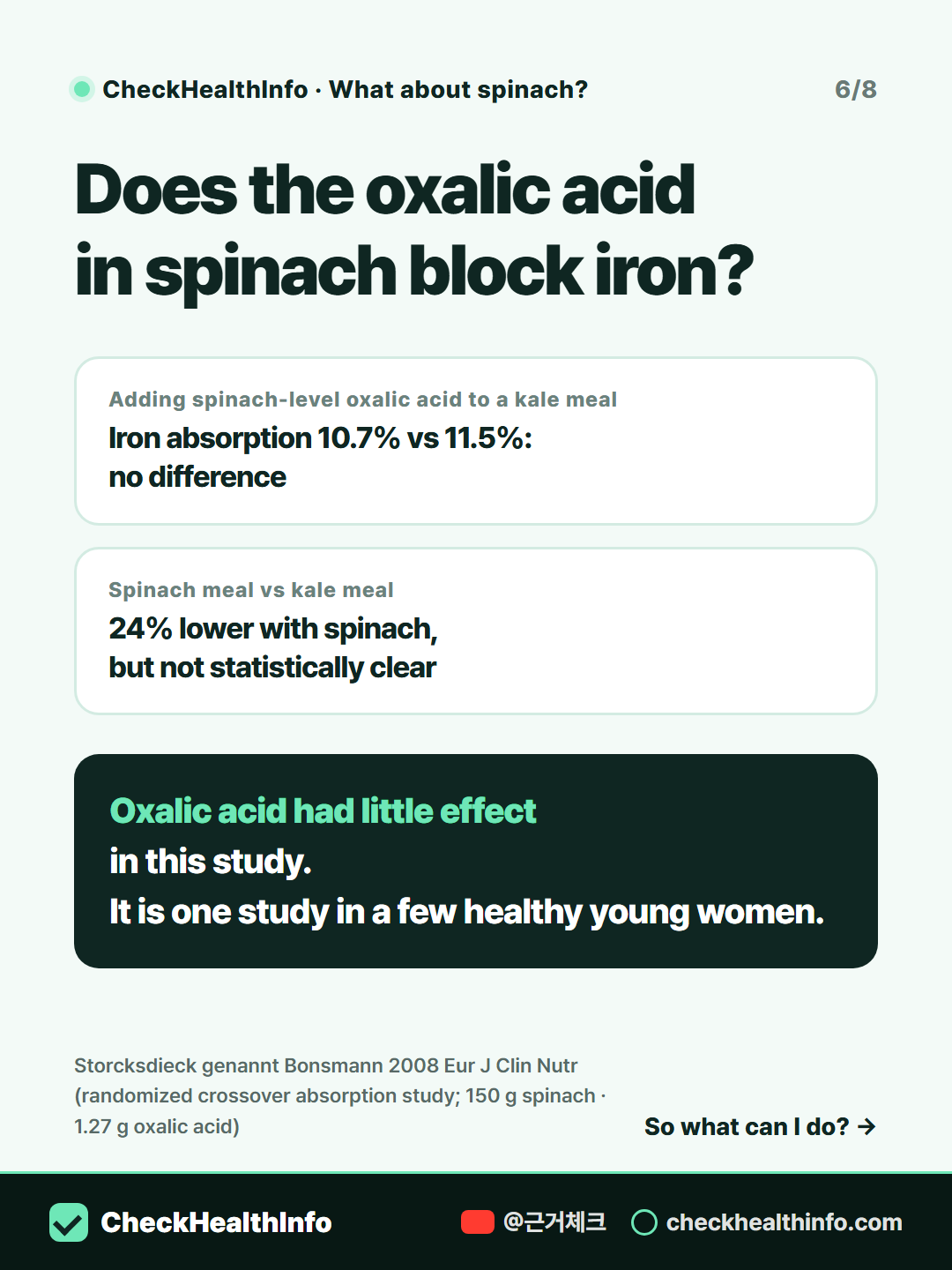
- Some say the oxalic acid in spinach blocks iron absorption. In a randomized crossover absorption study in healthy women, adding the same amount of oxalic acid as in spinach (1.27 g) to a kale meal did not change iron absorption (10.7% vs. 11.5%). Absorption from the spinach meal was 24% lower than from the kale meal, but the difference was not statistically clear. This is a single study in a small number of young women. [8]
If you get your iron from plant foods
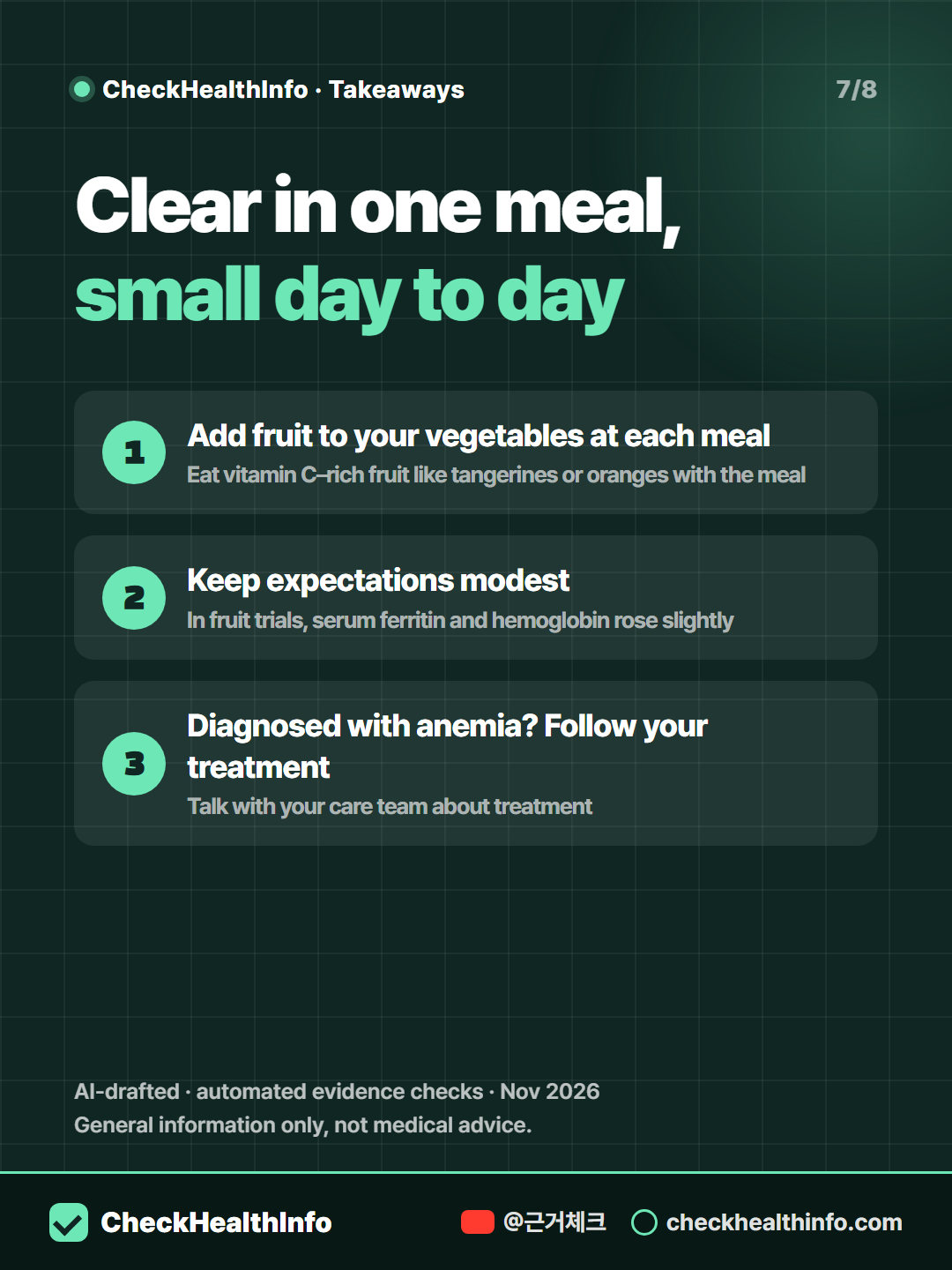
- Add fruit to your vegetables at each meal — In trials that added vitamin C–rich fruits or juices to meals, serum ferritin and hemoglobin rose slightly. [1]
- Keep expectations modest — The large effect seen in single-meal studies does not simply add up day after day. In people with enough iron, the body may reduce absorption on its own. [7]
- If you have been diagnosed with anemia — Follow the treatment you were prescribed, and talk with your care team about your treatment options.
Scope: this verdict covers vitamin C from food and the absorption of iron from plant foods. It does not cover anemia treatment that combines iron supplements with vitamin C.
Limitations of this verdict
- Single-meal absorption studies were mostly done with a set meal eaten after fasting, which is different from everyday eating.
- Healthy men with enough iron partly reduced absorption after weeks on a diet that promotes absorption. [7] Vitamin C helped women whose iron stores were depleted [6], but in a 5-week trial in women with low iron stores, most measures did not change. [5]
- The meta-analysis of fruit trials included women (aged 15–74) and children, so its results cannot be applied directly to adult men, and a 1.34 g/L rise in hemoglobin is a small difference. [1]
- The studies of usual diets over weeks were small, with a few dozen participants or fewer.
- Grades follow section 1 of our rating method. We check PubMed for new studies every month, and if a verdict changes, we record it in our corrections log.
Card news
Video (in Korean)
References
- Nyakundi PN, Nemeth LG, Galgalo DA, et al. Does consuming ascorbate-rich fruits and fruit juices with meals improve iron bioavailability? A systematic review and meta-analysis of interventions. Am J Clin Nutr 2026;124(3):101418. PMID 42349680. PubMed abstract · Full article
- Beiseigel JM, Hunt JR, Glahn RP, et al. Iron bioavailability from maize and beans: a comparison of human measurements with Caco-2 cell and algorithm predictions. Am J Clin Nutr 2007;86(2):388-396. PMID 17684210. PubMed abstract · Full article
- Hallberg L, Rossander L. Improvement of iron nutrition in developing countries: comparison of adding meat, soy protein, ascorbic acid, citric acid, and ferrous sulphate on iron absorption from a simple Latin American-type of meal. Am J Clin Nutr 1984;39(4):577-583. PMID 6538742. PubMed abstract · Full article
- Cook JD, Reddy MB. Effect of ascorbic acid intake on nonheme-iron absorption from a complete diet. Am J Clin Nutr 2001;73(1):93-98. PMID 11124756. PubMed abstract · Full article
- Hunt JR, Gallagher SK, Johnson LK. Effect of ascorbic acid on apparent iron absorption by women with low iron stores. Am J Clin Nutr 1994;59(6):1381-1385. PMID 8198064. PubMed abstract · Full article
- Hunt JR, Mullen LM, Lykken GI, et al. Ascorbic acid: effect on ongoing iron absorption and status in iron-depleted young women. Am J Clin Nutr 1990;51(4):649-655. PMID 2321571. PubMed abstract · Full article
- Hunt JR, Roughead ZK. Adaptation of iron absorption in men consuming diets with high or low iron bioavailability. Am J Clin Nutr 2000;71(1):94-102. PMID 10617952. PubMed abstract · Full article
- genannt Bonsmann SS, Walczyk T, Renggli S, et al. Oxalic acid does not influence nonhaem iron absorption in humans: a comparison of kale and spinach meals. Eur J Clin Nutr 2008;62(3):336-341. PMID 17440529. PubMed abstract · Full article
- Lynch SR, Cook JD. Interaction of vitamin C and iron. Ann N Y Acad Sci 1980;355:32-44. PMID 6940487. PubMed abstract · Full article
This is general information, not medical advice, and it does not replace diagnosis or treatment by your own clinician. If you have been diagnosed with anemia, follow the treatment you were prescribed and talk with your care team about it.