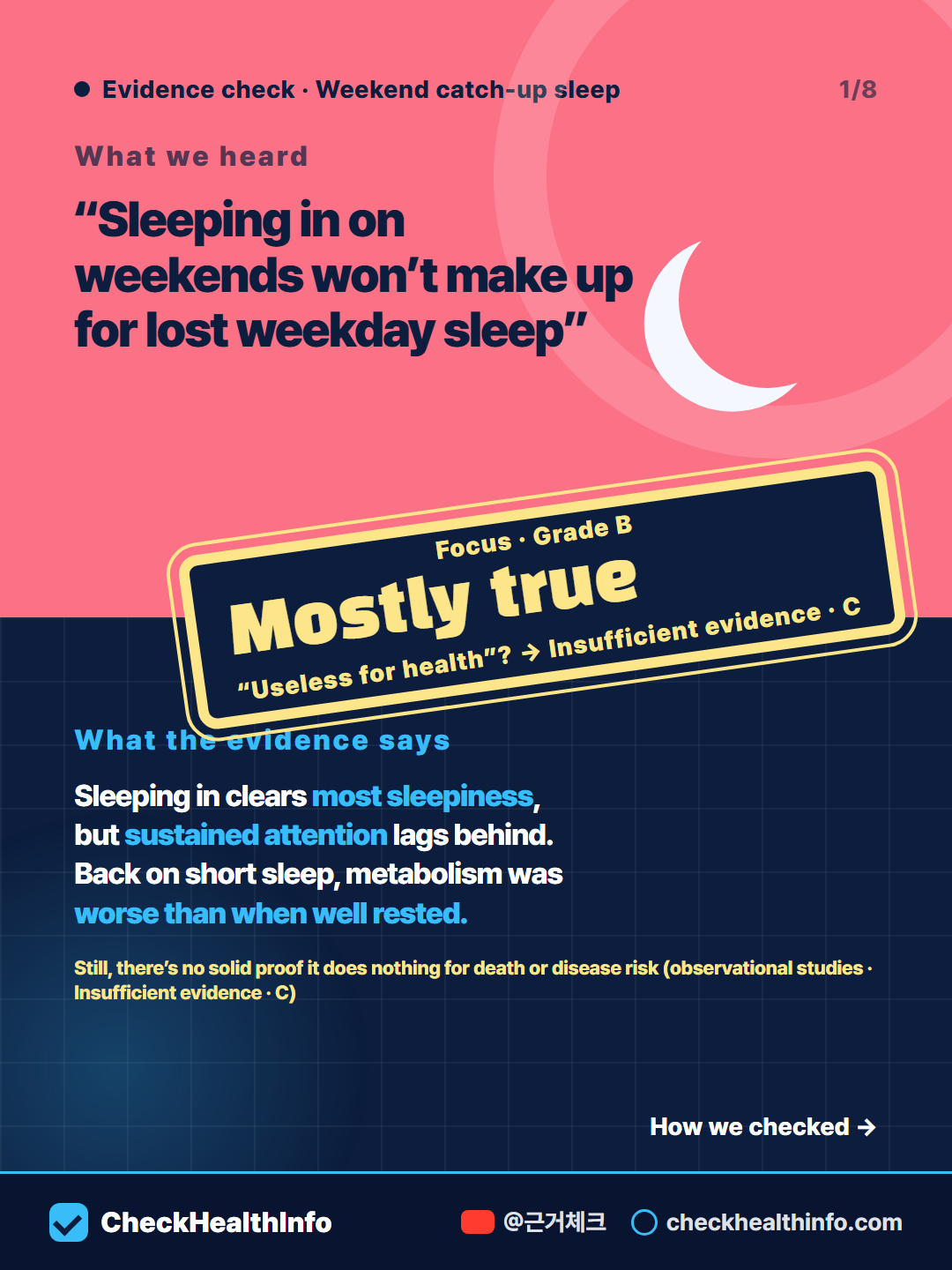
If you catch up on sleep on weekends, does weekday fatigue fully go away?
If you catch up on weekday sleep loss on the weekend, do lost focus and metabolism (insulin sensitivity, evening overeating, weight) recover — and is weekend catch-up sleep useless for the risk of death and disease?

We checked this verdict against 18 sources, such as published studies and clinical guidelines. · How checked: AI-drafted · automated evidence checks
Verdicts at a glance
| Claim | Verdict |
|---|---|
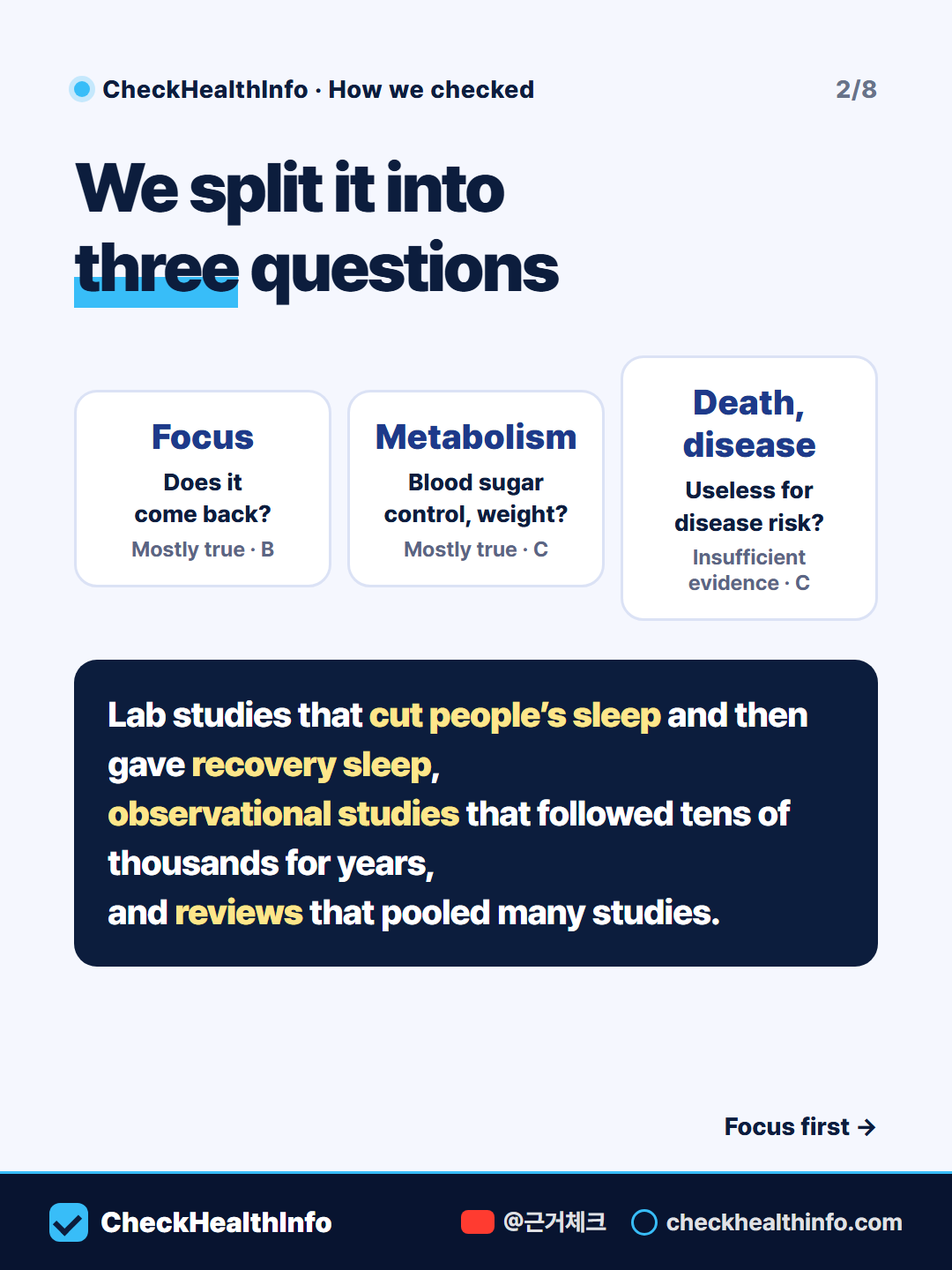
| Even if you catch up on sleep on the weekend, lost focus (attention and reaction speed) does not fully come back | Mostly true · Evidence grade B |
| Even if you catch up on sleep on the weekend, weekend sleep alone does not protect against the metabolic harm of short sleep (insulin sensitivity, overeating in the evening, weight) | Mostly true · Evidence grade C |
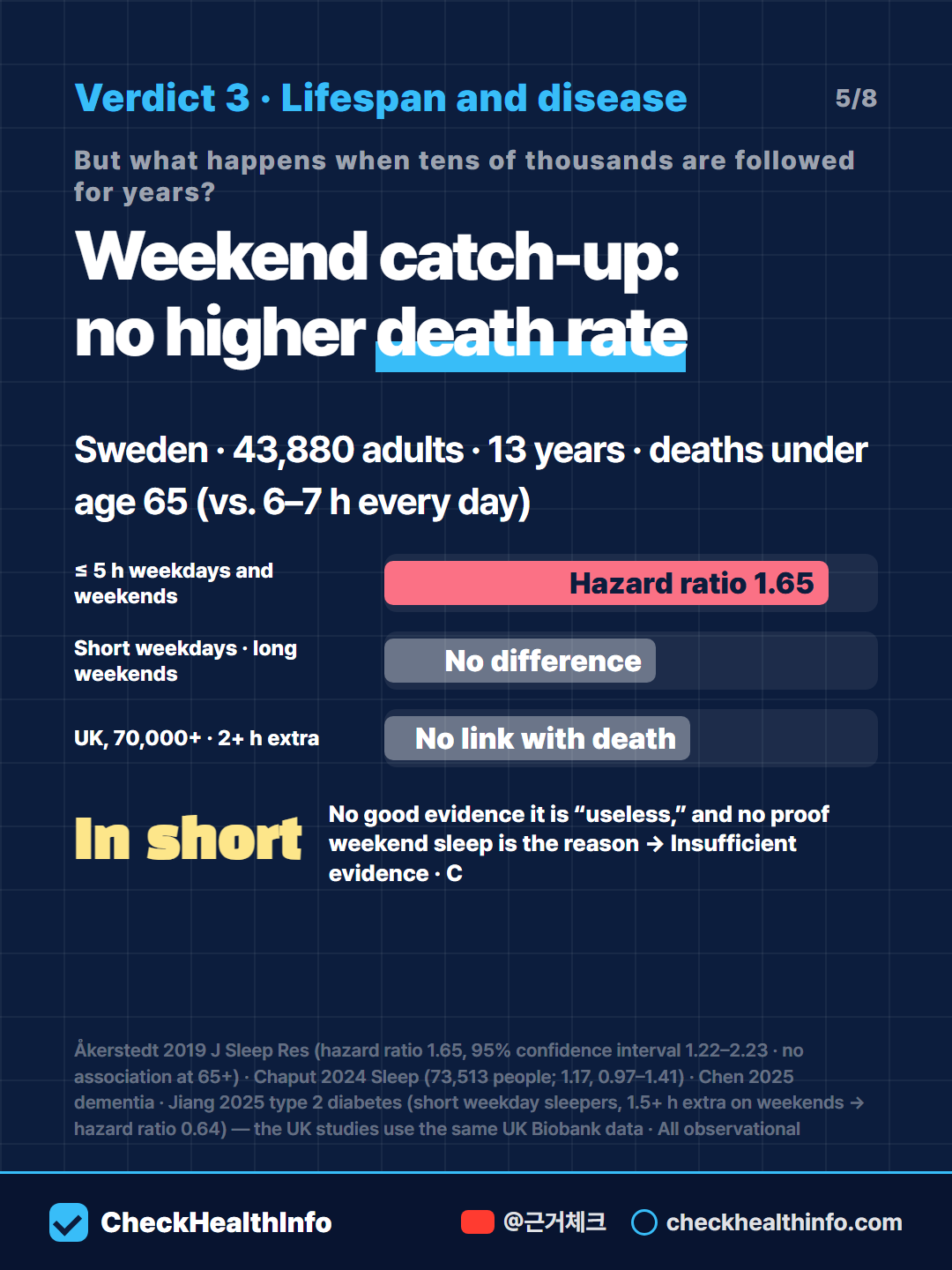
| Even if people who sleep too little on weekdays catch up on weekends, it does nothing to lower the risk of death or disease | Insufficient evidence · Evidence grade C |
Bottom line — In an experiment where people slept 6 hours a night for six nights, as in a typical workweek, and then got 10-hour nights of recovery sleep, sleepiness was back to normal within two nights, but attention test scores did not recover. So “even if you catch up on sleep on the weekend, lost focus does not fully come back” is rated Mostly true (Evidence grade B). In an experiment where people slept as long as they liked on the weekend and then went back to short sleep, insulin sensitivity was lower than when they were well rested, so “weekend sleep alone does not protect against the metabolic harm of short sleep” is also Mostly true (Evidence grade C). But large studies that followed tens of thousands of people for years found that those who slept little on weekdays and longer on weekends did not have higher death rates, and another large study found no link at all. So “catching up on weekends does nothing to lower the risk of death or disease” is rated Insufficient evidence (Evidence grade C). In fact, weekend sleep clears most sleepiness and fatigue but does not fully protect focus or metabolism — and there is no good evidence that it is useless, either.
Recovery sleep (catch-up sleep) — Sleeping longer than usual after a stretch of short sleep. Sleeping in on weekends is one form of it.
Attention test (PVT) — A test in which you press a button as fast as you can whenever a light appears on a screen. It measures the ability to stay focused over time (sustained attention) and reaction speed.
Insulin sensitivity — How well the body responds to insulin to handle blood sugar. When it falls, the body is less able to control blood sugar.
Random assignment · randomized crossover trial — A study that assigns people to conditions by chance, like drawing lots, or has the same people go through several conditions in an order set by chance.
Hazard ratio · odds ratio — Numbers that compare how often something happens in two groups. Above 1 means it happens more often; below 1 means less often.
95% confidence interval — The range in which the true value is likely to fall. If it includes 1, we cannot say there is a clear difference.
Social jet lag — Sleeping at different times on workdays and days off, so that your body clock and your daily schedule fall out of step.
A Korean newspaper health story said that catching up on sleep over the weekend does not fully restore lost focus or metabolism. Many people who are short on sleep during the week wonder about this, so we checked. The claim bundles two things, focus and metabolism, and it often spreads as “weekend sleep is useless for your health,” so we split it into three verdicts.
Verdict 1. “Even if you catch up on sleep on the weekend, lost focus (attention and reaction speed) does not fully come back”
Mostly true · Evidence grade B
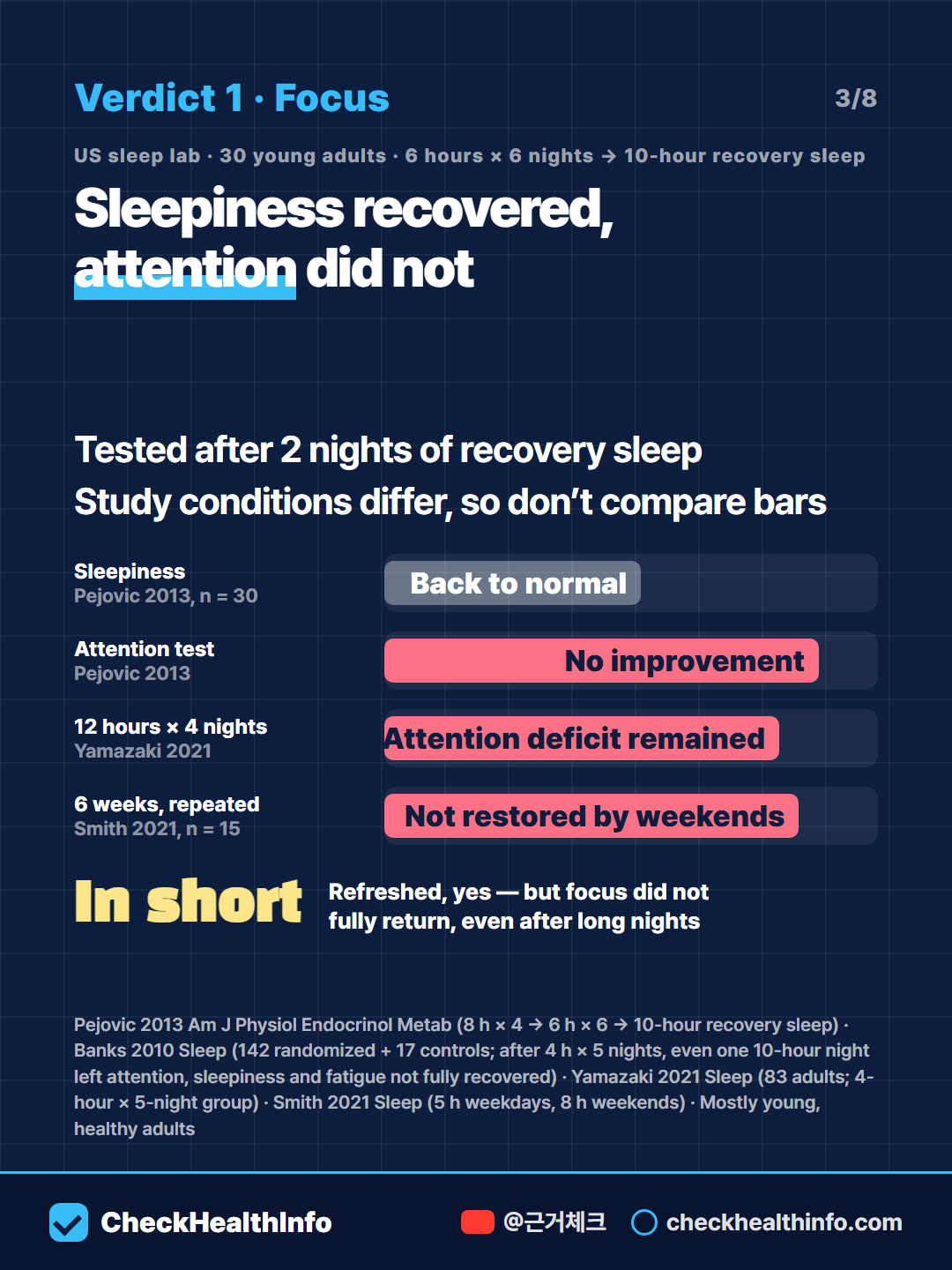
In plain terms Two or more nights of sleeping in clear most sleepiness and fatigue, but several experiments found that sustained attention and reaction speed did not fully return, even after a few days of good sleep.
- In a US sleep lab, 30 healthy young adults (average age 24.7) slept 8 hours for four nights, then 6 hours for six nights, followed by 10-hour nights of recovery sleep. After two recovery nights, sleepiness (both measured and self-rated) and the inflammatory marker IL-6 were back to normal, but attention test scores, which had worsened during short sleep, did not improve. [1]
- In a trial of 159 healthy adults, 142 slept 4 hours a night for five nights and were then randomly assigned to one night of recovery sleep lasting 0 to 10 hours, while 17 spent 10 hours in bed every night. Recovery improved with longer sleep, but even 10 hours in bed (8.96 hours of actual sleep) did not fully restore attention, sleepiness, or fatigue. [2]
- In a study of 83 adults split into a group that slept 4 hours for five nights and a group that stayed awake for 36 hours, both got four nights of 12 hours in bed. In the 4-hour group, other tests recovered, but attention lapses and reaction speed did not fully recover. [3]
- In a study of 15 people who repeated 5 hours of sleep on weekdays and 8 hours on weekends for 6 weeks, two nights of weekend recovery sleep did not restore accuracy on attention and spatial orientation tests. Other tests, such as working memory, learning, and decision-making, were not clearly affected by sleep loss. [4]
Why grade B — The strongest evidence is a trial that randomly assigned the amount of recovery sleep, which is grade B. That trial tested one night of recovery rather than a two-day weekend, but studies with two or four recovery nights and a 6-week repeated study found the same, so we did not lower the grade. It is “Mostly true” because what did not fully return was mainly sustained attention and reaction speed; sleepiness, fatigue, and other thinking tests mostly recovered.
Verdict 2. “Even if you catch up on sleep on the weekend, weekend sleep alone does not protect against the metabolic harm of short sleep (insulin sensitivity, overeating in the evening, weight)”
Mostly true · Evidence grade C
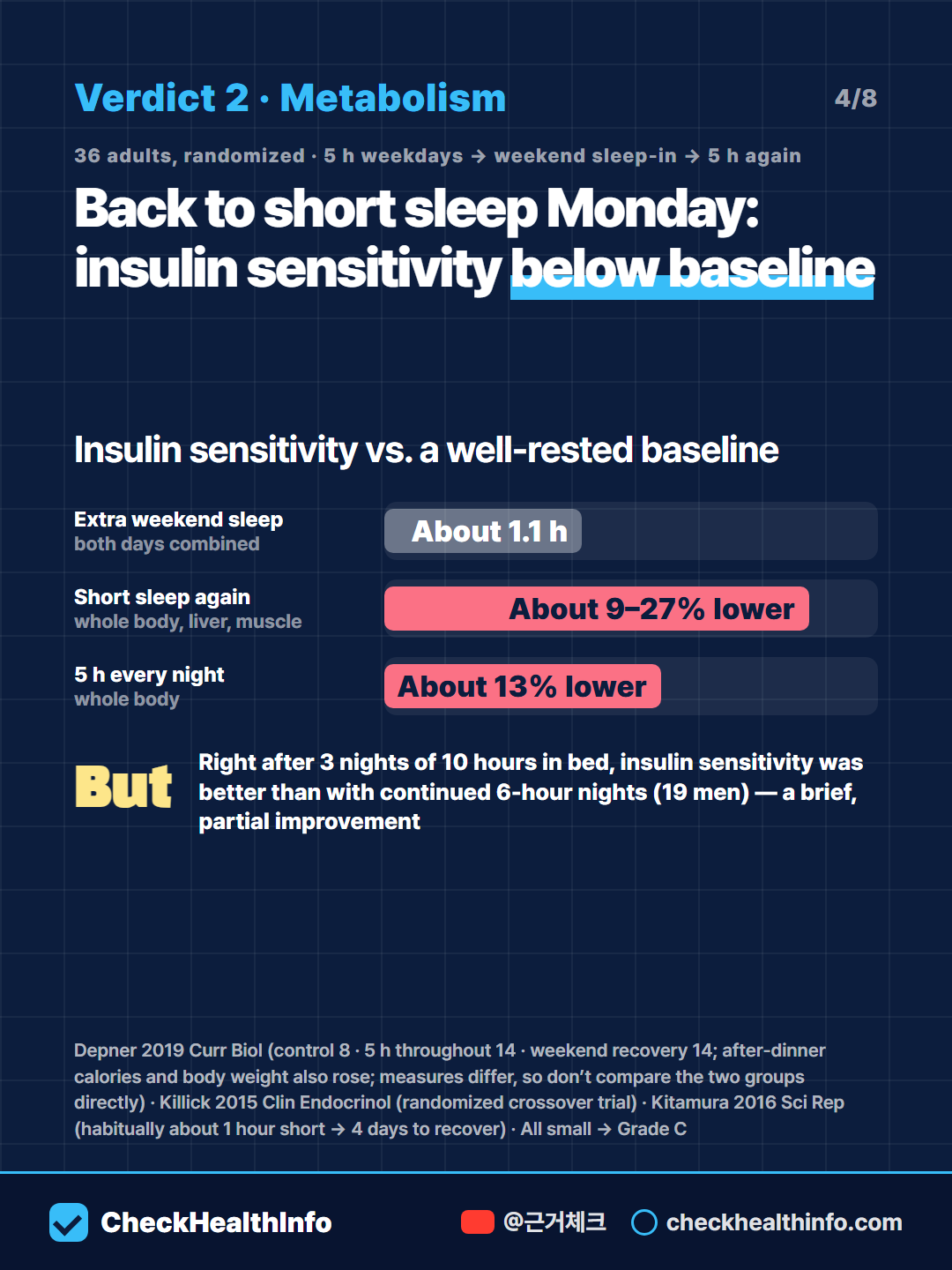
In plain terms Sleeping in may bring a brief, partial improvement, but once short sleep resumed on Monday, the body’s ability to handle blood sugar was weaker than when well rested.
- One experiment randomly assigned healthy young adults to three groups: 8 people slept 9 hours (control), 14 slept only 5 hours for nine nights, and 14 slept 5 hours for five weekdays, then as long as they liked for two weekend days, then 5 hours for two more nights. Even with unlimited weekend sleep, they slept only about 1.1 hours more than at baseline over the whole weekend. Calories eaten after dinner fell over the weekend, but when short sleep resumed, their body clock shifted later, after-dinner calories and body weight rose above baseline, and whole-body, liver, and muscle insulin sensitivity was about 9–27% lower than at baseline. In the group that slept 5 hours throughout, whole-body insulin sensitivity was about 13% lower (the two figures cover different measures, so they should not be compared directly). The researchers concluded that weekend recovery sleep is not an effective way to prevent the metabolic problems of recurring short sleep. [5]
- However, in a randomized crossover trial of 19 men who had slept about 6 hours on weekdays and caught up on weekends for years, three weekend nights of 10 hours in bed led to better insulin sensitivity than continued 6-hour nights. Because this was compared with continued short sleep, it does not show whether they returned to a well-rested state. [6]
- A research letter also reported that two nights of recovery sleep reversed changes in diabetes risk markers caused by a short period of sleep restriction (it has no abstract, so we do not cite numbers). [7]
- In a study that let people sleep longer for several days, people who habitually slept about 1 hour less than their body needed took four days to return to their optimal level. [8]
Why grade C — The most direct evidence is a small randomized study of 36 people, which is grade C. The study showing improvement “right after” catch-up sleep and the study showing harm “once short sleep resumed” measured different moments against different comparisons, so they do not contradict each other, and we did not lower the grade further. These experiments lasted only weeks, so long-term effects on diabetes or weight are unknown.
Verdict 3. “Even if people who sleep too little on weekdays catch up on weekends, it does nothing to lower the risk of death or disease”
Insufficient evidence · Evidence grade C
In plain terms Some observational studies found that people who slept longer on weekends had similar or lower risks, so we cannot say catch-up sleep is useless — but we also cannot tell whether weekend sleep is the reason.
- A Swedish study that followed 43,880 adults for 13 years found that, among those under 65, people who slept 5 hours or less on both weekdays and weekends had a higher death rate than those who slept 6–7 hours on both (hazard ratio 1.65, 95% confidence interval 1.22–2.23). But people who slept little on weekdays and longer on weekends did not differ from the 6–7-hour group. In those 65 and older, no combination was linked to death. [9]
- However, a UK study that measured sleep with wrist devices and followed 73,513 people for an average of 8 years found that sleeping 2 or more extra hours on weekends was not linked to death (hazard ratio 1.17, 95% confidence interval 0.97–1.41) or heart and blood vessel disease (1.05, 0.94–1.18). The results were the same among people who slept less than 6 hours on weekdays. [10]
- A UK study of 85,618 people that looked at day-to-day sleep rather than weekends found that people whose sleep dropped and then quickly rebounded did not have a meaningfully different risk of death from regular sleepers, while those whose sleep dropped without rebounding had a higher risk. [11]
- Among 83,776 UK adults aged 50 and older, those who slept 1 to 1.5 extra hours on weekends had a lower risk of dementia than those who slept 0.5 hours or less extra (hazard ratio 0.64, 95% confidence interval 0.49–0.86), but the other categories showed no meaningful difference. In a study of 80,414 people, short weekday sleepers who slept more than 1.5 extra hours on weekends had a lower risk of type 2 diabetes (hazard ratio 0.64, 95% confidence interval 0.45–0.92). [12] [13]
- A systematic review of 41 studies on sleep timing, regularity, and health found that weekend catch-up sleep was linked to better health outcomes, but the certainty of the evidence ranged from very low to moderate. A meta-analysis of 10 cross-sectional studies found that people with weekend catch-up sleep had lower odds of depression (odds ratio 0.80, 95% confidence interval 0.68–0.90). [14] [15]
- A US National Sleep Foundation expert consensus stated that regular bedtimes and wake times are important, and that weekend catch-up sleep may be beneficial when weekday sleep is too short. [16]
Why grade C — The strongest evidence that looked directly at death and disease is large cohort studies, which start at grade B. Because the results conflict (studies that found lower dementia and diabetes risk among weekend catch-up sleepers versus a large study that found no link with death or cardiovascular disease), we lowered it one step to C. The four UK studies analyzed the same UK Biobank participants in different ways, so they are not independent confirmations. “Insufficient evidence” does not mean the claim is false; it means observational studies alone cannot show either that catch-up sleep is useless or that it lowers risk.
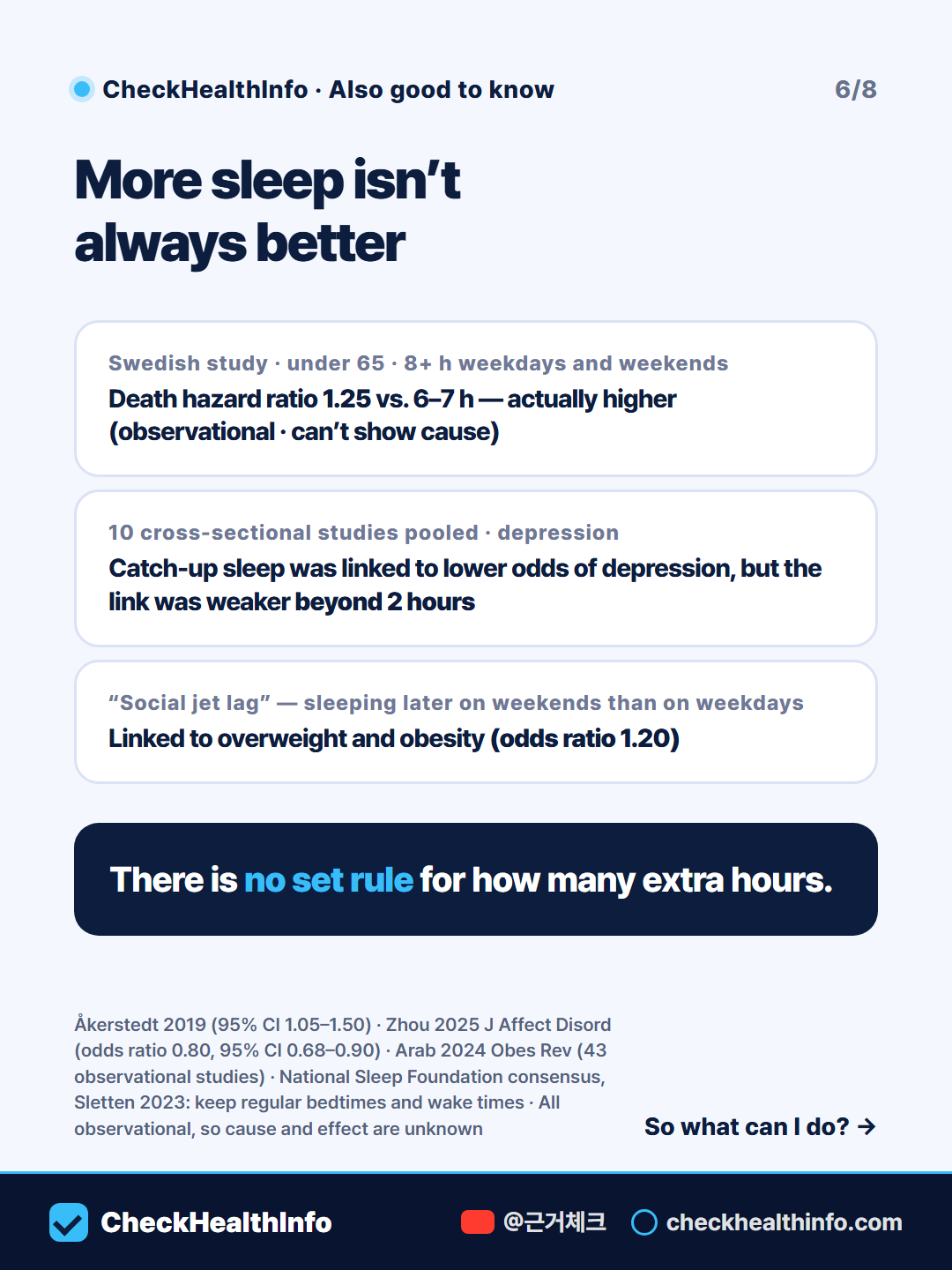
Is more sleep always better?
- In the Swedish study, among those under 65, people who slept 8 hours or more on both weekdays and weekends also had a higher death rate (hazard ratio 1.25, 95% confidence interval 1.05–1.50). Because this was an observational study, we cannot tell whether the longer sleep itself caused the difference. [9]
- In the subgroup analysis of the depression meta-analysis, 0–2 hours of catch-up sleep was linked to lower odds of depression, while more than 2 hours showed a weaker link. [15]
- Social jet lag — sleeping at later times on days off than on workdays — was linked to overweight and obesity (43 observational studies, odds ratio 1.20), and irregular bedtimes and wake times were linked to a range of poor health outcomes. All were observational, so cause and effect are unknown. [17] [18]
- There is no set rule for how many extra hours to sleep.
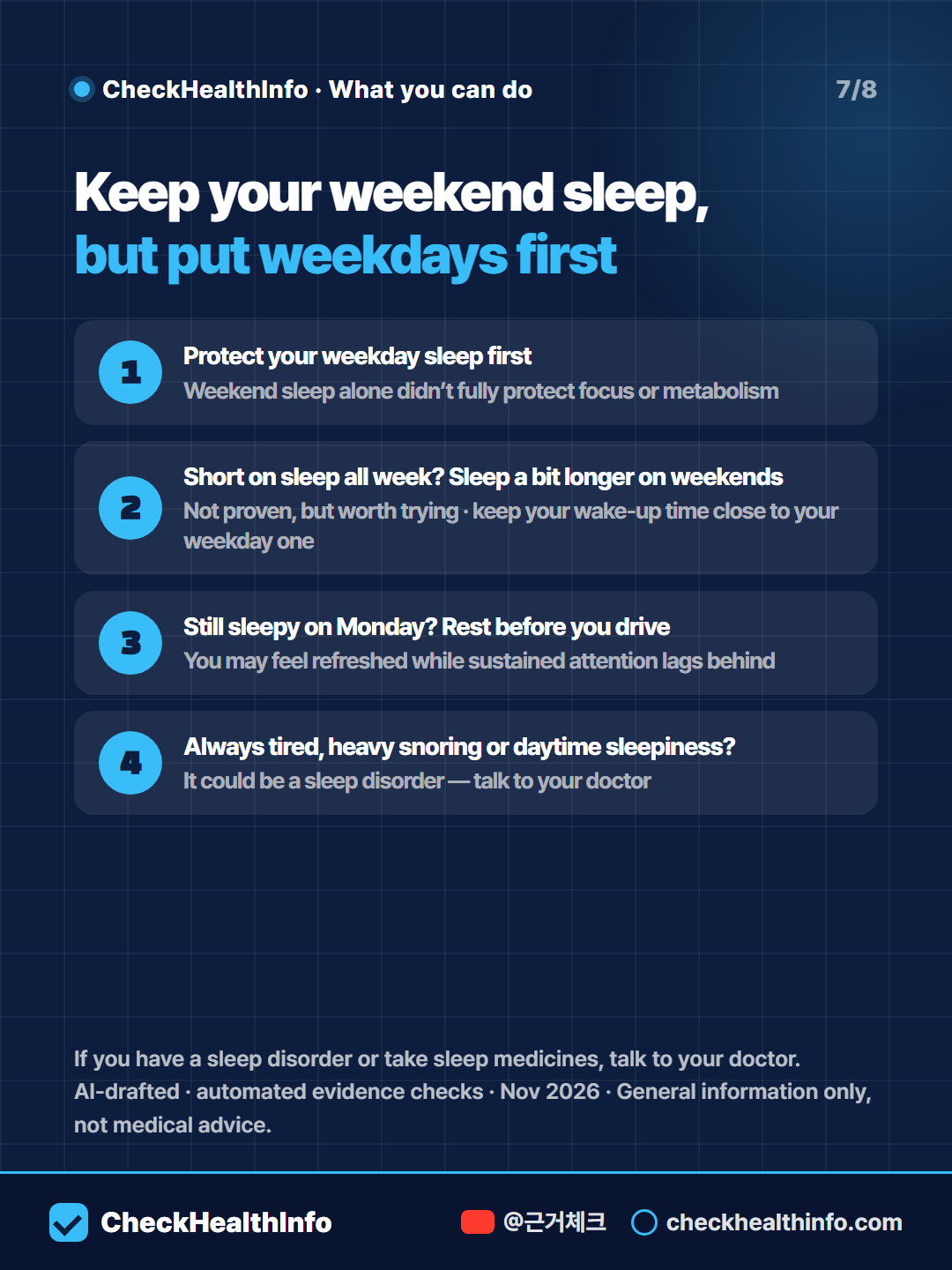
What you can do
- Protect your weekday sleep first. Weekend sleep alone did not fully protect focus or metabolism.
- In weeks when you are short on sleep, try sleeping a little longer on the weekend. It is not proven, but it is low-risk and worth trying. Try to keep your wake-up time close to your weekday one.
- If you still feel sleepy on Monday after a good weekend’s sleep, hold off on driving or stop to rest first. You may feel refreshed while sustained attention has not fully returned.
- If you are always tired, snore heavily, or often feel sleepy during the day, it could be a sleep disorder — talk to your doctor or healthcare provider.
This article covers experiments that cut sleep and then gave recovery sleep, and observational studies of weekend catch-up sleep and the risk of death and disease. It does not cover sleep disorders or sleeping pills and other medicines.
Limitations of this verdict
- The experiments behind Verdicts 1 and 2 mostly involved young, healthy adults who spent days to weeks in a lab, with tens to about a hundred participants. Whether the results apply to middle-aged and older adults, or to real life at home, is unknown. Some studies compared before and after without a control group.
- How much sleep was cut (4–6 hours a night) and how long recovery sleep lasted differed across studies.
- All the studies behind Verdict 3 are observational. People who can sleep longer on weekends may differ in other ways, such as lighter work or caregiving loads or better health, and retired people with no weekday–weekend difference may be mixed in. Most measured sleep once and then followed people for years, and for this review we did not find any study of death or disease in Korean adults.
- This article was prompted by a Korean newspaper health story. We do not evaluate any news outlet or person, and we did not use numbers from the story.
- Grades follow section 1 of How we rate. We check for new studies in our monthly PubMed review, and any change to a verdict is recorded in Corrections.
Card news
Video (in Korean)
References
- Pejovic S, Basta M, Vgontzas AN, et al. Effects of recovery sleep after one work week of mild sleep restriction on interleukin-6 and cortisol secretion and daytime sleepiness and performance. Am J Physiol Endocrinol Metab 2013;305(7):E890-6. PMID 23941878. PubMed abstract · Full article · Free full text
- Banks S, Van Dongen HP, Maislin G, et al. Neurobehavioral dynamics following chronic sleep restriction: dose-response effects of one night for recovery. Sleep 2010;33(8):1013-26. PMID 20815182. PubMed abstract · Full article · Free full text
- Yamazaki EM, Antler CA, Lasek CR, et al. Residual, differential neurobehavioral deficits linger after multiple recovery nights following chronic sleep restriction or acute total sleep deprivation. Sleep 2021;44(4). PMID 33274389. PubMed abstract · Full article · Free full text
- Smith MG, Wusk GC, Nasrini J, et al. Effects of six weeks of chronic sleep restriction with weekend recovery on cognitive performance and wellbeing in high-performing adults. Sleep 2021;44(8). PMID 33630069. PubMed abstract · Full article
- Depner CM, Melanson EL, Eckel RH, et al. Ad libitum Weekend Recovery Sleep Fails to Prevent Metabolic Dysregulation during a Repeating Pattern of Insufficient Sleep and Weekend Recovery Sleep. Curr Biol 2019;29(6):957-967.e4. PMID 30827911. PubMed abstract · Full article · Free full text
- Killick R, Hoyos CM, Melehan KL, et al. Metabolic and hormonal effects of 'catch-up' sleep in men with chronic, repetitive, lifestyle-driven sleep restriction. Clin Endocrinol (Oxf) 2015;83(4):498-507. PMID 25683266. PubMed abstract · Full article · Free full text
- Broussard JL, Wroblewski K, Kilkus JM, et al. Two Nights of Recovery Sleep Reverses the Effects of Short-term Sleep Restriction on Diabetes Risk. Diabetes Care 2016;39(3):e40-1. PMID 26786578. PubMed abstract · Full article · Free full text
- Kitamura S, Katayose Y, Nakazaki K, et al. Estimating individual optimal sleep duration and potential sleep debt. Sci Rep 2016;6:35812. PMID 27775095. PubMed abstract · Full article · Free full text
- Åkerstedt T, Ghilotti F, Grotta A, et al. Sleep duration and mortality - Does weekend sleep matter?. J Sleep Res 2019;28(1):e12712. PMID 29790200. PubMed abstract · Full article · Free full text
- Chaput JP, Biswas RK, Ahmadi M, et al. Device-measured weekend catch-up sleep, mortality, and cardiovascular disease incidence in adults. Sleep 2024;47(11). PMID 38895883. PubMed abstract · Full article
- Li X, Zhang M, Li Z, et al. Acute sleep rebound following sleep restriction is associated with reduced mortality risk. Nat Commun 2026;17(1). PMID 42045198. PubMed abstract · Full article · Free full text
- Chen H, Shen T, Zhao M, et al. Accelerometer-measured weekend catch-up sleep and incident dementia: A prospective cohort study. Alzheimers Dement 2025;21(12):e71001. PMID 41416569. PubMed abstract · Full article · Free full text
- Jiang Y, Su Z, Liu S, et al. Associations of accelerometer-measured weekend sleep catch-up and loss with risk of type 2 diabetes: a prospective cohort study. Diabetes Res Clin Pract 2025;228:112420. PMID 40850509. PubMed abstract · Full article
- Chaput JP, Dutil C, Featherstone R, et al. Sleep timing, sleep consistency, and health in adults: a systematic review. Appl Physiol Nutr Metab 2020;45(10 (Suppl. 2)):S232-S247. PMID 33054339. PubMed abstract · Full article
- Zhou Y, Sun Y, Pan Y, et al. Association of weekend catch-up sleep with depression: A systematic review and meta-analysis. J Affect Disord 2025;378:109-118. PMID 40021063. PubMed abstract · Full article
- Sletten TL, Weaver MD, Foster RG, et al. The importance of sleep regularity: a consensus statement of the National Sleep Foundation sleep timing and variability panel. Sleep Health 2023;9(6):801-820. PMID 37684151. PubMed abstract · Full article
- Arab A, Karimi E, Garaulet M, et al. Social jetlag and obesity: A systematic review and meta-analysis. Obes Rev 2024;25(3):e13664. PMID 38072635. PubMed abstract · Full article · Free full text
- Kalkanis A, Lenkens D, Steiropoulos P, et al. Sleep regularity as an important component of sleep hygiene: a systematic review. Sleep Med Rev 2025;84:102203. PMID 41259946. PubMed abstract · Full article
General information only, not medical advice. It does not replace your own clinician’s diagnosis or treatment. If you are always tired, snore heavily, or often feel sleepy during the day even after catching up on sleep, it could be a sleep disorder — talk to your doctor or healthcare provider. If you still feel sleepy on Monday, hold off on driving or stop to rest first.